
Mauna Kea is sacred ground first, an observatory second
Before planning a single detail of a Mauna Kea trip, sit with this: the mountain is not a neutral backdrop for stargazing. In Hawaiian tradition, the summit region was regarded as sacred, described as the region of the gods[1], and the mountain itself is known to Native Hawaiians as Mauna a Wākea. Observatories have shared the summit with that history for decades, and the arrangement has never been simple: Native Hawaiian groups have opposed further telescope development on the summit for cultural and religious reasons[2], and that opposition remains active today.
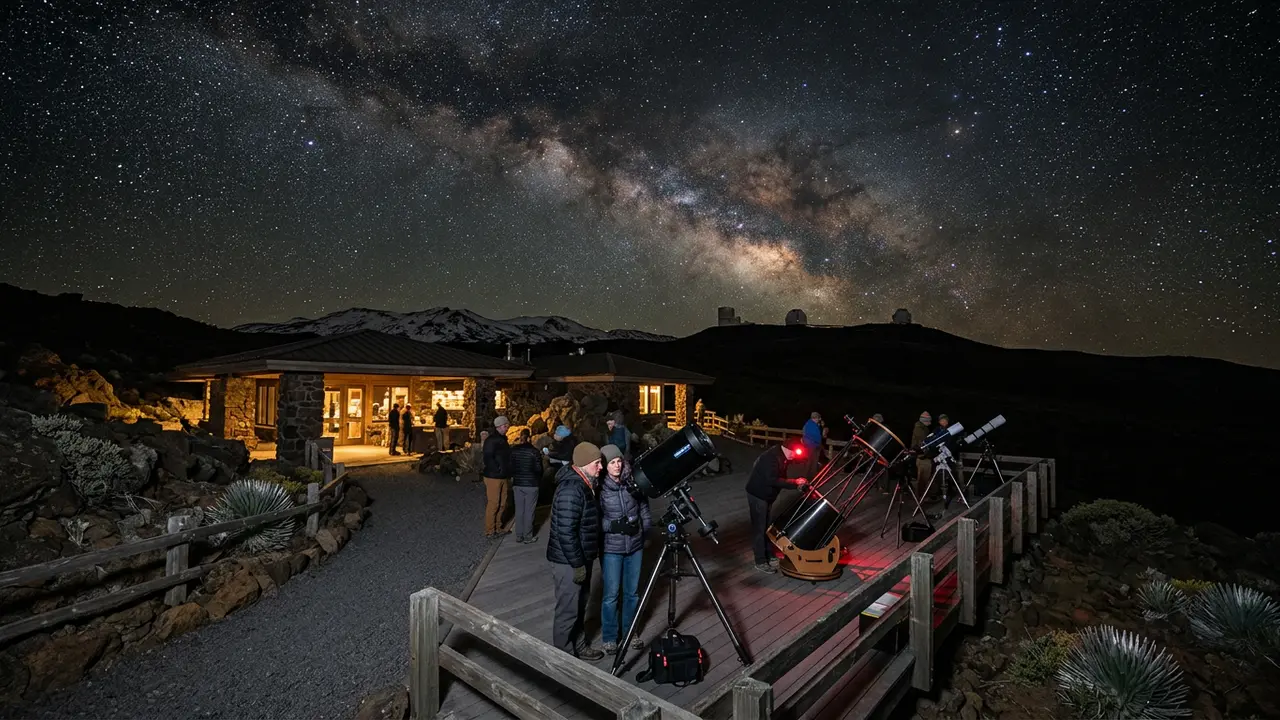
None of this is a footnote to your trip — it's the frame the rest of this guide sits inside. It also points toward a practical answer: general visitors have no real reason to push for the summit itself. The Visitor Information Station (VIS), well below the true summit, is the public, accessible, and culturally appropriate place to look up, built for exactly this purpose and the focus of everything below.
That distinction matters more than it might sound. A trip built around the VIS still delivers a real, dark, high-altitude sky, working telescopes, and staff who can speak to both the astronomy and the culture. What it doesn't do is put you on ground where, for many Native Hawaiians, your presence is part of an ongoing dispute rather than a simple photo opportunity. For the full destination rundown, from lodging to permits, see Mauna Kea Stargazing, and for the deeper history and etiquette behind that framing, see Mauna Kea cultural significance and visitor etiquette.
Why the sky here is exceptional, whatever the season
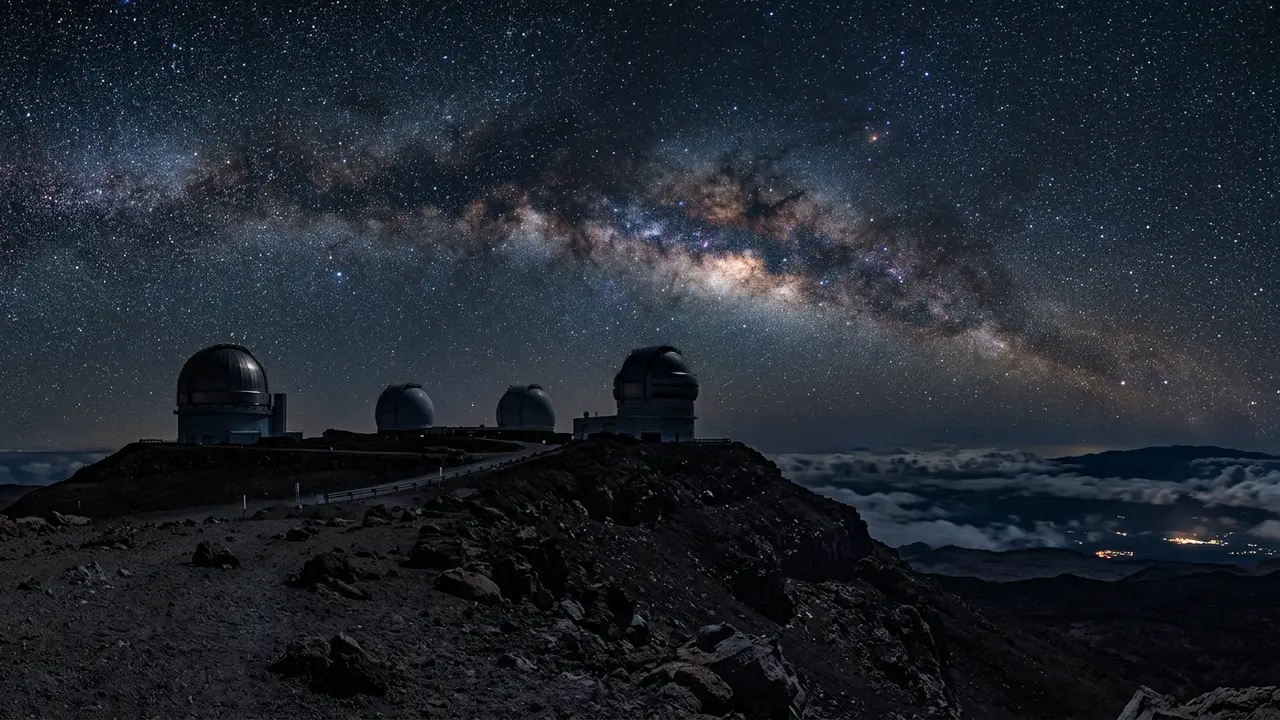
Mauna Kea's summit rises to 13,803 feet (4,207.3 m), the highest point in Hawai'i[3], but the number that actually explains the astronomy is a different one: the trade-wind inversion layer, which averages around 2,000 meters in height[4]. Above that layer, the air stays dry and stable; below it, moisture and cloud collect. Because the summit sits above the inversion, it keeps most cloud cover below itself and stays dry and largely free of atmospheric pollution[5]. Visitors driving up past the VIS sometimes see that inversion directly: a shelf of cloud sitting below the horizon rather than overhead, physical proof of the mechanism keeping the summit clear.
The Canada-France-Hawaii Telescope's own site-testing data puts a number on what that means in practice: images taken at the summit hold sub-arcsecond quality at least 75% of the time[6], a sign of how consistently clear and stable conditions are. Annual precipitation at the summit averages only about 15 cm, and most of that falls as winter snow[7], not rain. That's a genuinely rare combination for a mountain this tall: most high peaks trade altitude for storms, and Mauna Kea mostly doesn't.
That 75% figure is the honest answer to whether there's a bad month at Mauna Kea. There really isn't one. The mountain's reputation among astronomers was built on a summit that sits above the weather most nights of the year, not on hitting one specific calendar window, and that holds for casual stargazers at the VIS just as much as it does for the observatories above them.
~75%
The Visitor Information Station: the stargazing spot built for you
For the overwhelming majority of travelers, the VIS, formally part of the Onizuka Center for International Astronomy, is Mauna Kea stargazing, not a fallback. It sits at 9,200 feet (2,804 m)[8], comfortably above where most of Hawai'i Island's cloud and light pollution collect, with daily hours running 9:00 a.m. to 9:00 p.m.[9] — confirm current hours close to your visit, since the station has posted occasional one-off schedule changes.
The VIS runs free nightly programs, historically built around an after-twilight, laser-guided sky talk from staff, with donations supporting the telescopes used[10]. Exactly how that program runs night to night has shifted over the years, so check the official VIS page for current programming before building an evening around one specific format or a guaranteed look through a particular telescope.
Featured · Destination
Mauna Kea
Mauna Kea is sacred to Native Hawaiians and home to world-class observatories. Here's how to plan respectful, safe Mauna Kea stargazing at the Onizuka VIS.
Most visitors base themselves in Hilo, roughly an hour's drive from the access road turnoff; the closest hotel base to the access road puts you on that side of the island without the longer drive over from Kona. What you actually get at the VIS, format details aside, is real: a dark sky well above the island's haze, staff who can speak to the summit's cultural and scientific context, and a parking lot full of people doing exactly what you came to do.
Expect a working visitor station, not a polished attraction: a small building, a handful of outdoor telescope pads, and a temperature that drops fast once the sun is down, even in summer. Bring the same warm layers you'd pack for a cold-climate destination, and don't count on the small gift shop or restrooms staying open past closing. The Onizuka Center Visitor Station program walks through exactly what a typical evening there looks like, ranger talks and all.
Season by season: is there actually a best time of year?
Here's the honest complication: Mauna Kea doesn't have a single settled best month the way a cloudier destination does, and some of the specific seasonal claims circulating online, that April and May bring the least cloud cover, that you should aim for an April-through-October dry season, trace back to tourism blogs and marketing copy rather than a primary meteorological source. Treat them as reasonable-sounding, not settled.
Recommended tours
Tours are selected for quality, not commission. I earn a small fee if you book — at no extra cost to you.
What the observatory's own site-testing data does confirm is a genuine seasonal wrinkle: high-altitude cirrus cloud is an occasional hazard, present roughly 30% of the time in some years, according to CFHT's site statistics[11]. Cirrus is thin and high, the kind of cloud that can look like nothing from the ground and still wash out a long-exposure astrophotograph. It isn't tied to a single obvious season, which is part of why summit observatories log conditions year-round rather than trusting a calendar.
For a general stargazing trip at the VIS, rather than a professional observing run, most of this cancels out. Any clear night works. If your travel dates are flexible, plan around the moon phase instead of chasing a specific month — a bright moon will wash out the Milky Way over a given week far more reliably than the season ever will.
Practically, that means booking your trip around your own schedule and the moon calendar, then treating the VIS's cloud conditions on any given evening as something to check the day of, not something to plan around six months out. For how to actually read that day-of forecast, transparency versus seeing, and which tool to trust, see the Mauna Kea stargazing forecast guide.
Getting there safely: roads, vehicles, and altitude
Two hard rules govern how far up Maunakea Access Road you can actually drive, and they exist for real safety reasons, not bureaucracy. 2WD vehicles are not permitted above the Visitor Information Station[12]; beyond that point, only dependable, fully operable 4WD or AWD vehicles are permitted for summit travel[13]. Most rental sedans, and plenty of rental SUVs, don't qualify, and rental agreements often prohibit summit driving outright regardless of drivetrain — check the contract, not just the badge on the vehicle.
Altitude is the other real constraint, and it applies whether you're driving further or not. The drop in atmospheric pressure and oxygen with increasing elevation can cause altitude sickness, which can become life-threatening[14]. The VIS's own safety guidance is direct: acclimate for at least 30 minutes at the VIS before going any higher[15]. People with heart or lung conditions, pregnant travelers, and anyone who has recently been scuba diving are typically advised against going higher at all.
None of this is reason to skip Mauna Kea. It's reason to plan the visit around the VIS rather than the summit, treat the road above it as somewhere most travelers simply don't need to go, and take the acclimatization guidance as seriously as the vehicle rules.
| Visitor Information Station | Summit | |
|---|---|---|
| Elevation | 9,200 ft (2,804 m) | 13,803 ft (4,207.3 m) |
| Vehicle needed | Any vehicle reaching the turnoff | Dependable 4WD/AWD only |
| Who it's for | General visitors, families, casual stargazers | Acclimatized visitors with proper vehicles |
| Cultural status | Public visitor facility | Sacred summit, contested development |
Bases on the Waimea, or Kamuela, side of the island sit closer to the access-road turnoff than either coastal city; Kamuela Inn is a straightforward option there if shortening the drive matters more to you than staying near the ocean. Travelers with a genuine reason to reach the true summit should book a permitted operator, such as Mauna Kea Summit Adventures or Hawaii Forest & Trail, rather than attempting the drive alone.
Planning your night: where to stay and what to bring
Where you base yourself changes the shape of the whole trip. Hilo sits closest to the Maunakea Access Road turnoff, generally under an hour away; Kona adds real driving time on both ends of a stargazing night but pairs well with a beach-and-summit itinerary. On the Hilo side, Arnott's Lodge is a long-running budget option built around exactly this kind of early-start, late-return trip. On the Kona side, Outrigger Kona Resort & Spa suits travelers splitting the trip between beach days and a night on the mountain.
Pack for a genuine temperature swing. Whatever the weather is doing at sea level, conditions at the VIS turn cold fast once the sun is down:
- Warm layers — a winter jacket, hat, and gloves, even if you're visiting straight from a beach afternoon
- A headlamp with a red-light mode, so you don't wreck your own or anyone else's night vision
- Closed shoes with good tread for uneven volcanic ground in the dark
- Water and snacks — there's nothing to buy once you're past the last town on the way up
- A downloaded or printed map of the access road, since cell service becomes unreliable above the VIS
Featured · Article
What Is Astrotourism? The Complete Beginner's Guide
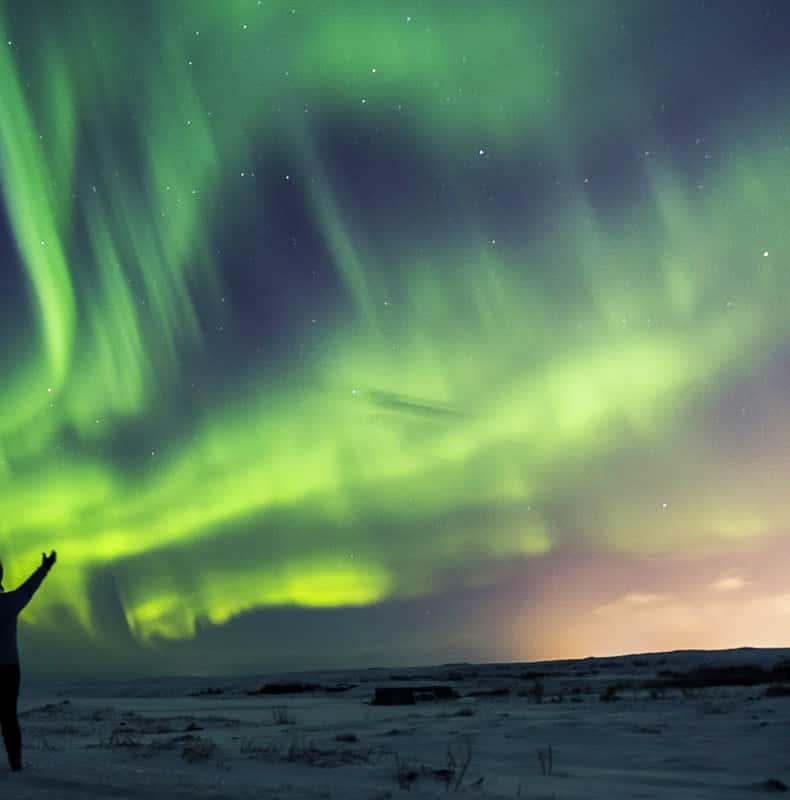
Astrotourism means travel built around dark skies: meteor showers, auroras, the Milky Way. What it means, where to go, and how to plan your first trip.
Give the mountain the respect its history calls for, stop at the VIS rather than pushing higher without a real reason to, and the rest is simple: pick a clear night, check the moon phase, dress warmer than you think you need to, and let a dry, ancient sky do the rest.