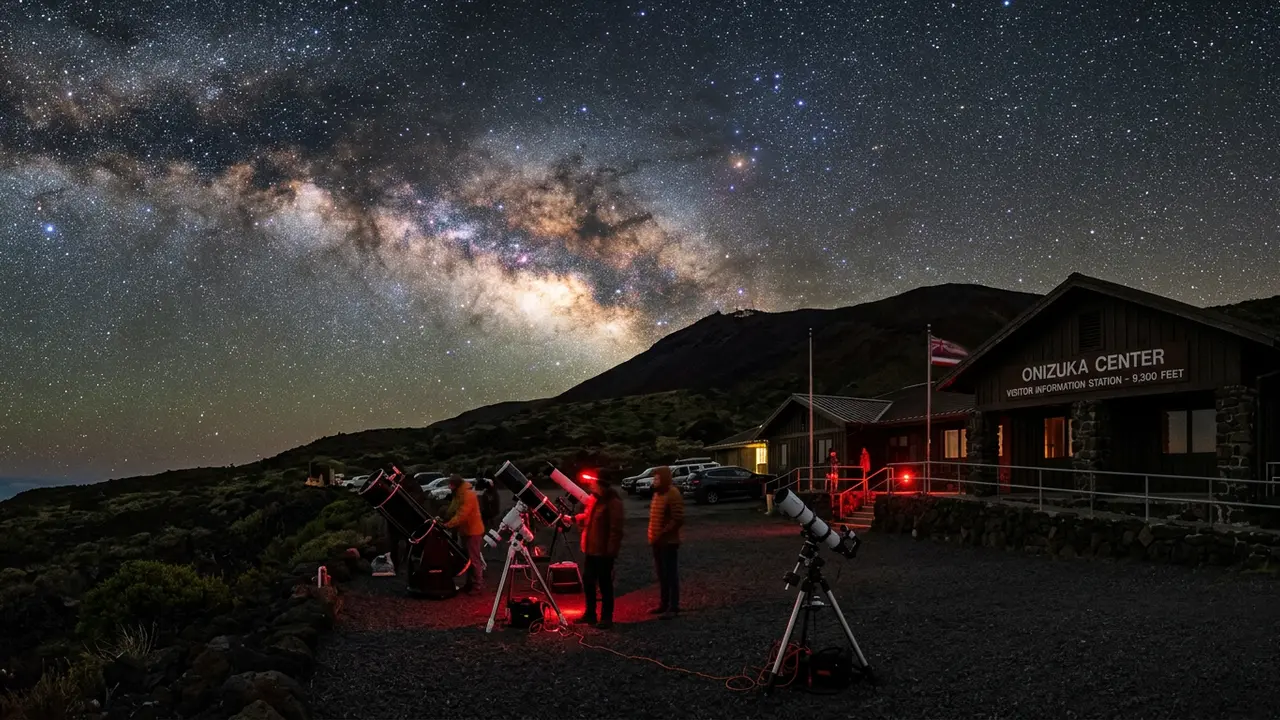
Most visitors chasing Mauna Kea's night sky should never see the summit. The Onizuka Center for International Astronomy Visitor Information Station (VIS) sits at 9,200 feet on the mountain's northern slope, and it's the primary, free, and genuinely welcoming way to experience this sky, not a consolation prize for people who couldn't get a summit permit. Run by the University of Hawaii, the VIS hands out no tickets, no time slots, and no reservations for a normal night out. You show up, acclimatize, and look up.
Why start here instead of the summit
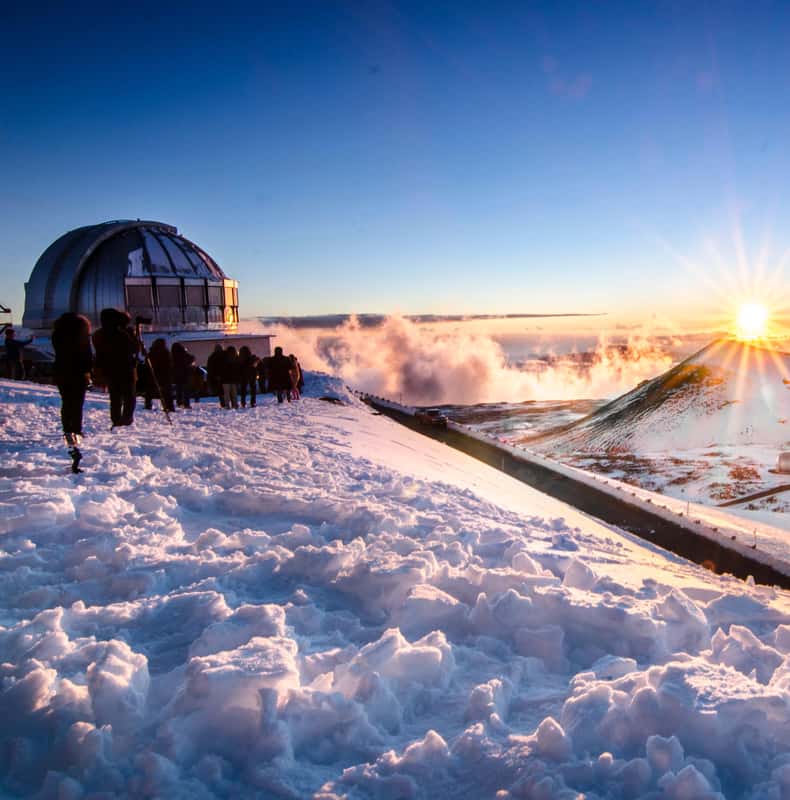
The summit at 13,796 feet holds Mauna Kea's professional observatories, and it comes with real restrictions: a 4x4 vehicle, a permit, and no casual public access. The VIS is the honest alternative for general visitors. No 4x4 is required to reach it; the access road is paved the whole way from Hilo, and once you're there, rangers run free telescopes and evening talks without any of the summit's logistics. If your trip involves the actual peak at all, plan around the VIS first, both to acclimatize and to get the sky you actually came for. Read the full Mauna Kea stargazing guide before you decide how far up the mountain to go.
Altitude is real, even at 9,200 feet
At 9,200 feet the air is noticeably thinner than at sea level, and most people need roughly an hour to acclimatize before it stops feeling uncomfortable. Staff recommend staying at or below VIS altitude if you have a heart condition, are pregnant, recently scuba-dived, or are traveling with children under 13. The summit's added 4,600 feet make the same risks worse, one more reason the VIS, not the peak, is where general visitors belong.
What a night at the VIS looks like
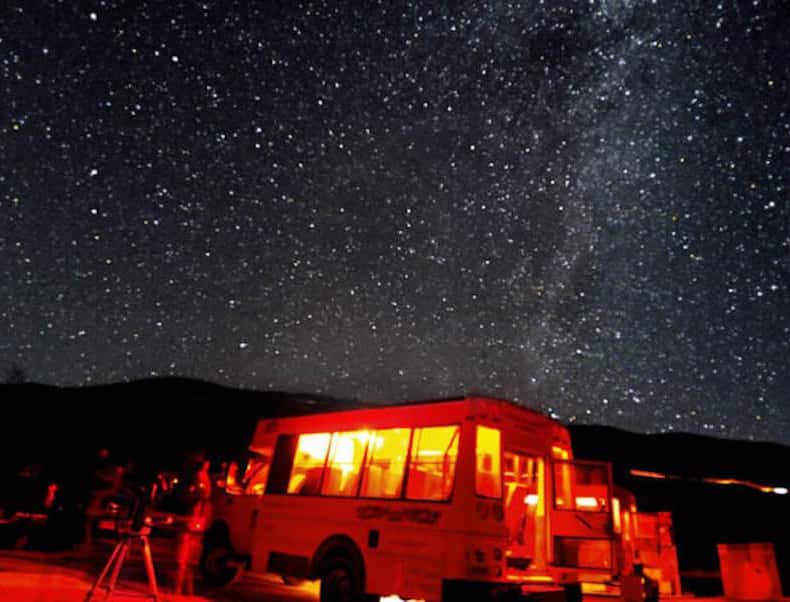
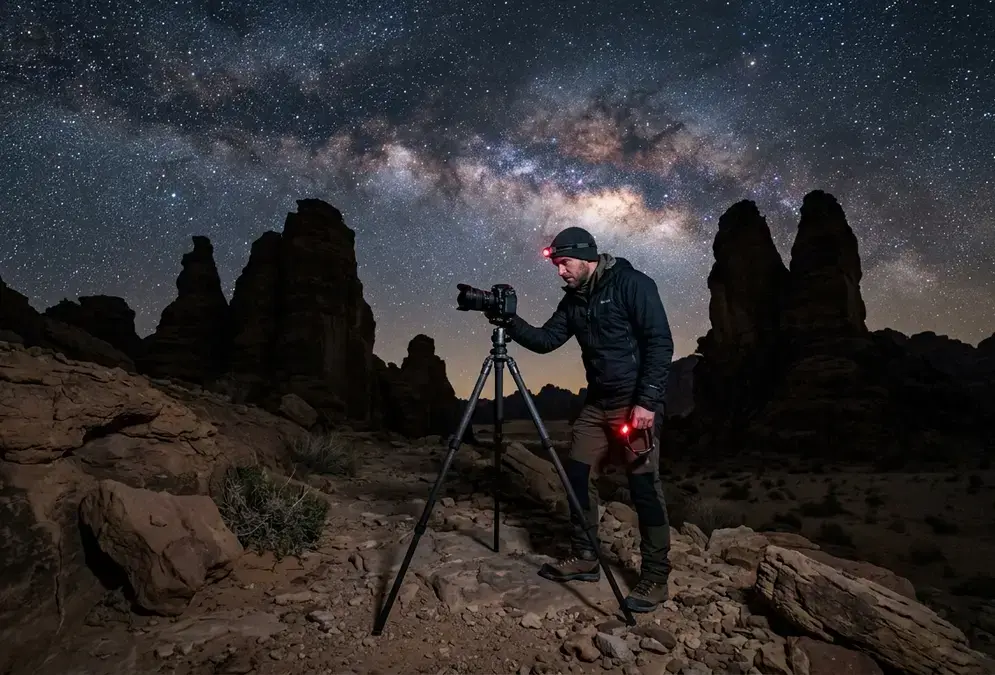
On a clear night the Milky Way is visible without any equipment, and the VIS typically sits at Bortle 1 to 2, about as dark as skies get anywhere in the United States. Rangers set up telescopes and run talks through the evening on the visible sky, on light pollution, and on the observatories overhead. A handful of monthly special programs need advance reservations and fill fast; a routine evening visit doesn't.
Getting there and what to bring
You'll need your own vehicle. There's no public transit up Maunakea Access Road, and rental cars from Hilo make the roughly 45-minute drive. The road to the VIS itself is paved and fine in a standard car; the 4x4 requirement only applies if you try to continue past the VIS toward the summit, which isn't open to casual visitors anyway. Temperatures drop 10 to 20°F colder than in Hilo after dark, so bring a real jacket, water, and a red-light flashlight to protect your night vision on the unlit grounds.
Respect the mountain you're standing on
Mauna Kea, Mauna a Wākea in Hawaiian tradition, is sacred ground, a place where Native Hawaiian belief holds that the line between the physical and spiritual worlds thins. The VIS's free, ranger-led model exists partly to open the mountain to visitors without turning it into a commercial attraction. Keep voices low, stay where rangers direct you, and treat the visit the way a respectful guest would.
Before you go
Hours and program details change, so check the official VIS page before you drive up rather than relying on any schedule printed elsewhere, including this one. As of writing the center runs daily from morning through evening, but weather, staffing, and seasonal adjustments shift that regularly. Call ahead if clouds are forecast; a ranger can tell you honestly whether the night is worth the drive. For the fuller seasonal picture, see the best time to go stargazing at Mauna Kea.