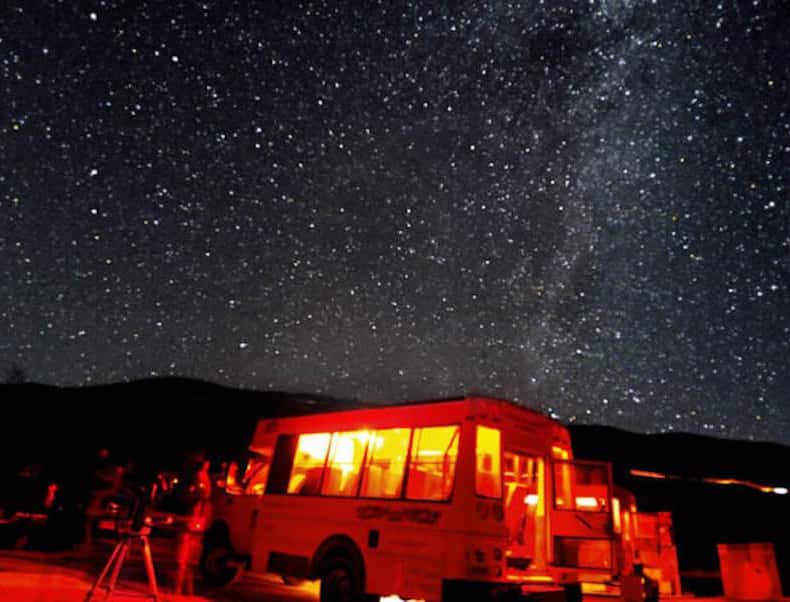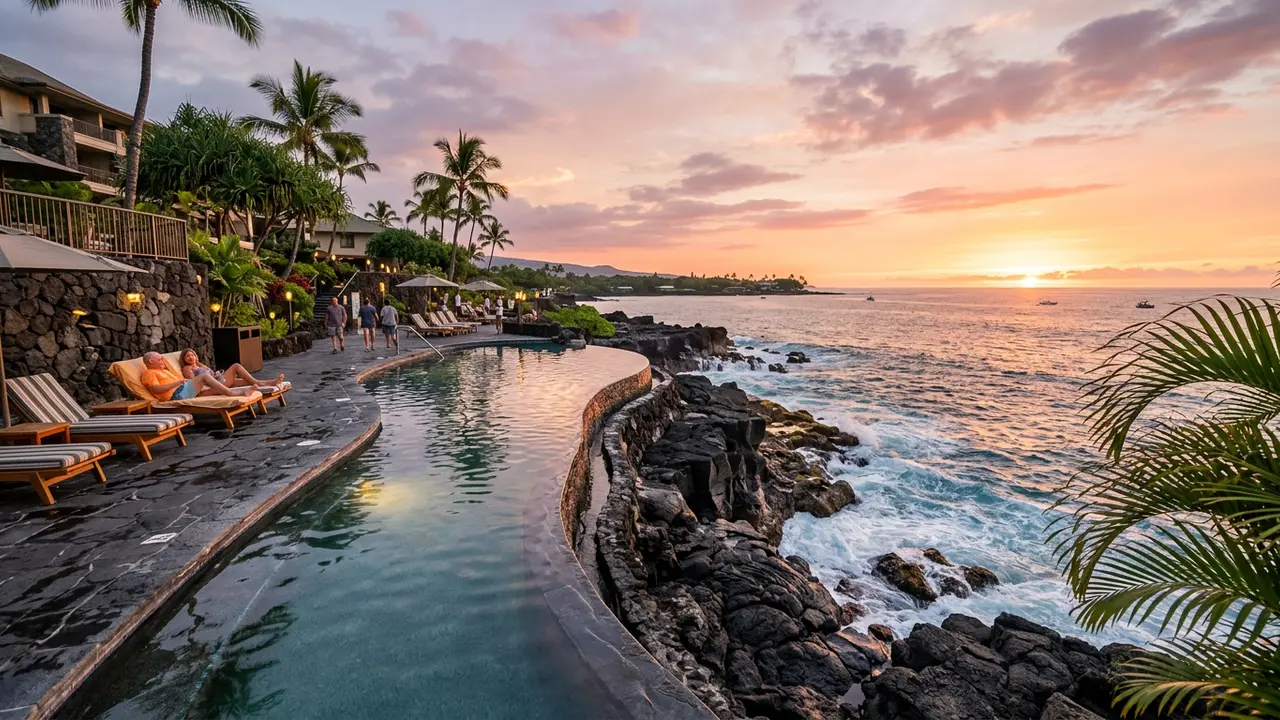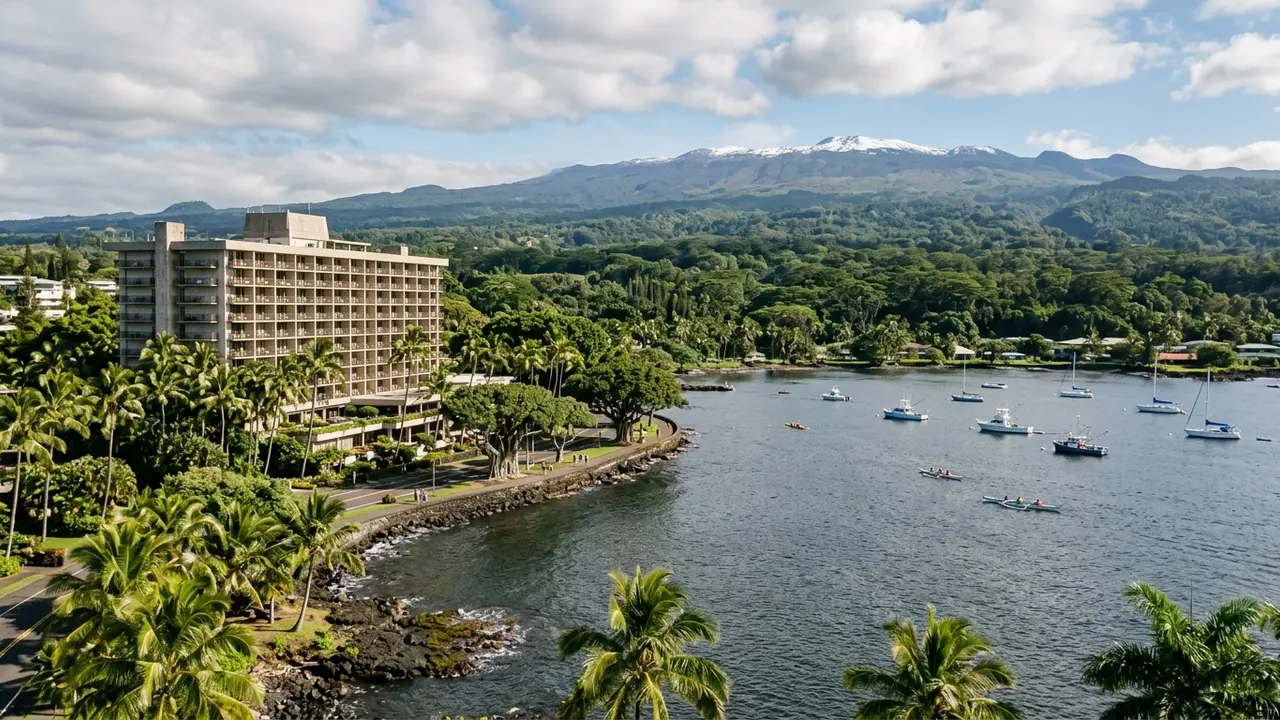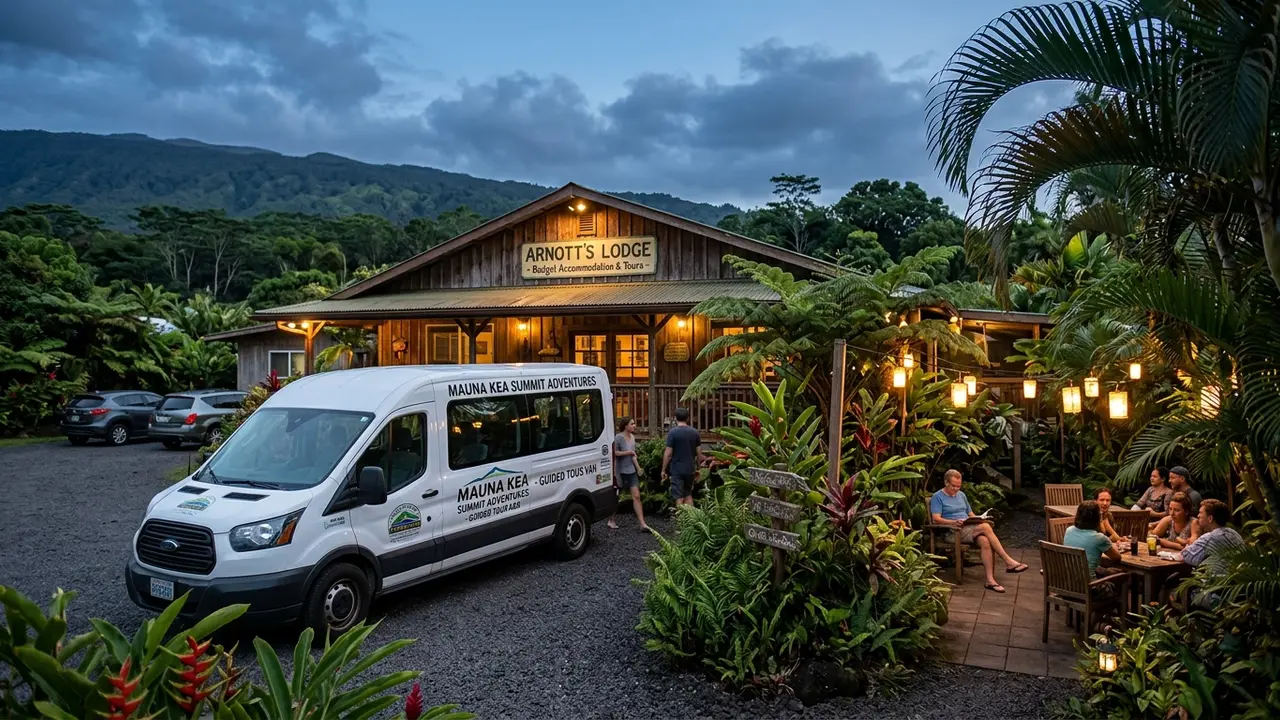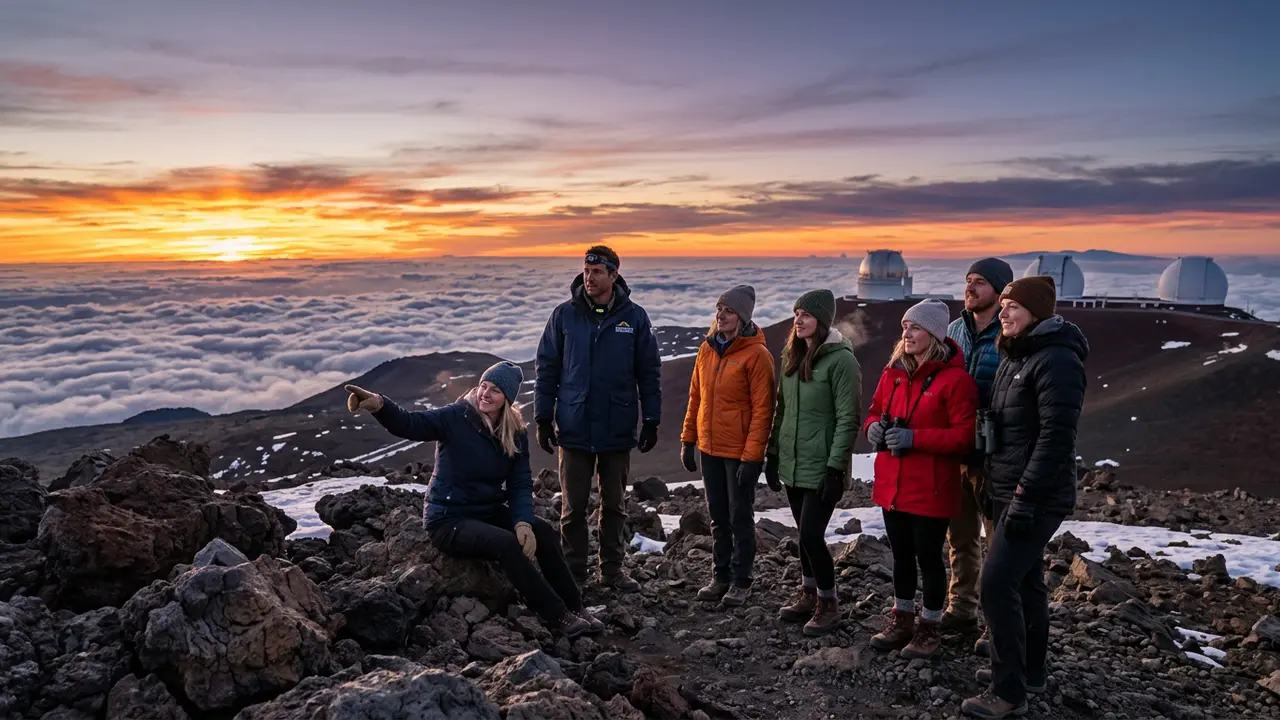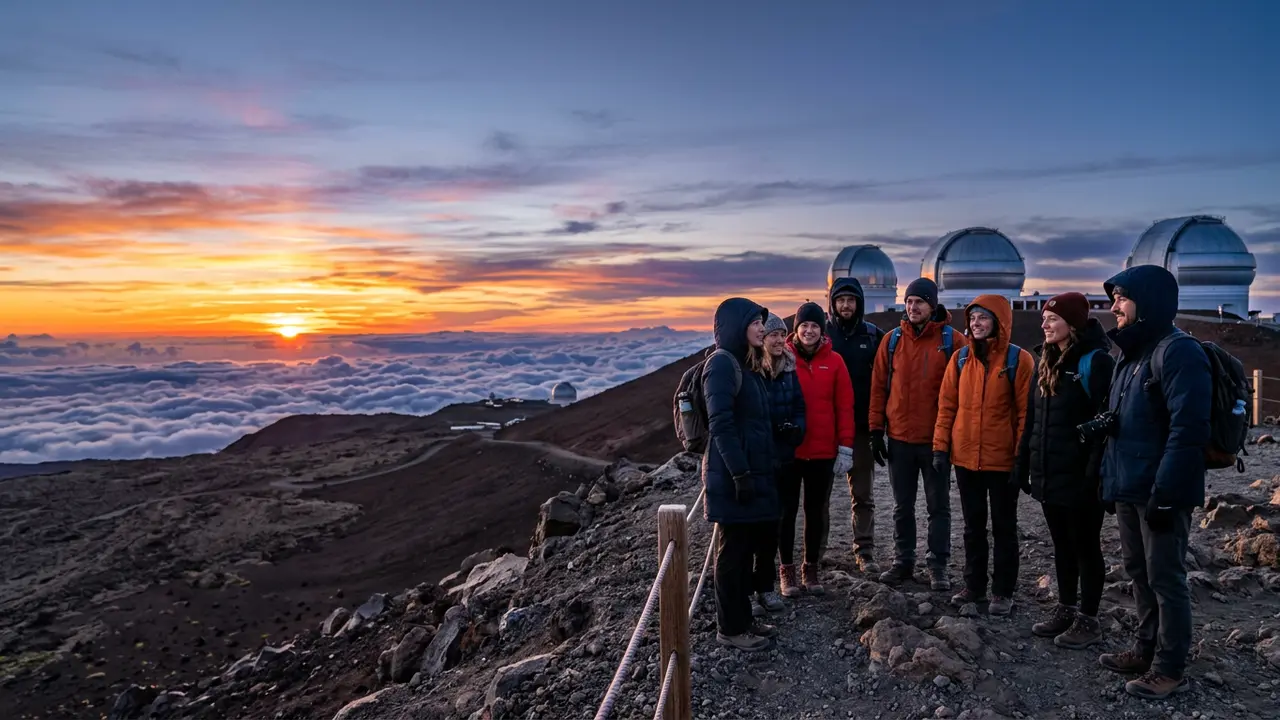
The actual summit of Mauna Kea, 13,796 feet up, is closed to casual, unpermitted visitors. Hawaii Forest & Trail is one of a short list of operators licensed under Hawaiʻi Administrative Rules Chapter 20-26 to bring paying guests there anyway, and its Mauna Kea Summit & Stars Adventure builds a full evening around that access: hotel pickup, a graded drive to elevation, sunset at the summit, and a stargazing session through an 11-inch Celestron telescope once the group has dropped back to a lower, warmer elevation. This is not a DIY drive up Saddle Road on your own schedule. It's the permitted, guided version, and on a mountain this culturally significant, that distinction is the whole point of booking it.
The permit that makes this tour legal
Only a specific roster of companies is allowed to run commercial tours on Mauna Kea lands, and the list is maintained by the University of Hawaiʻi Center for Maunakea Stewardship, not by the tour operators themselves. Hawaii Forest & Trail appears on that official roster under HAR Chapter 20-26. That matters more than it sounds: an unpermitted operator, or a self-guided group driving up Saddle Road without authorization, isn't just cutting corners on comfort, it's operating outside the framework the university and Native Hawaiian stakeholders negotiated for public access to a sacred site. Booking a permitted operator is the respectful way to see this sky, not simply the legal one.
A 7-to-9-hour night, roughly hour by hour
Pickup happens at one of several points on the Kona/Waikoloa side of the island:
- King Kamehameha Courtyard Marriott, Kailua-Kona
- Queen's MarketPlace, Waikoloa Beach Resort
- Waikoloa Plaza, Waikoloa Village
- The Maunakea Visitor Information Center itself, if you'd rather drive there and join partway
From pickup, the drive climbs toward roughly 10,000 feet, where the group stops for a warm picnic dinner and a period of acclimatization before continuing higher. The summit portion is timed around sunset, and once the light drops, the vehicles descend again to a lower elevation for the actual stargazing, since the thin air and biting cold at 13,796 feet aren't where anyone wants to linger with a telescope. Guides set up the 11-inch Celestron, pour hot chocolate and hand out dessert, and keep the group moving between naked-eye orientation and eyepiece time until it's time to head back down.
Price, minimums, and what's actually included
Current pricing runs $329.84 per person, age 13 and up, with taxes and fees already folded in. A tour needs a minimum of four participants to operate, so solo travelers and couples should check group-fill status before locking in a date. Bookings run through the VELTRA platform or directly on Hawaii Forest & Trail's own site, and cancellations inside three business days of departure are charged in full, so this isn't a plan to leave loose until the last minute.
What's included:
- Round-trip transportation in air-conditioned vehicles
- A warm picnic dinner served at moderate elevation before the summit push
- Hooded parkas and warm gloves, provided for the cold at altitude
- Hot chocolate and a sweet dessert during the stargazing portion
- Water and hot tea throughout the tour
- An expert guide covering both astronomy and Hawaiian history
- Use of an 11-inch Celestron telescope
Treat the price as directional rather than fixed. Rates shift and tours sell out with real frequency, so confirm current numbers before you build a trip around this specific figure.
Altitude sickness is real: who should sit this one out
Thirteen thousand, seven hundred ninety-six feet is high enough that altitude sickness is a genuine risk, not a disclaimer nobody expects to matter. The tour's stop at roughly 10,000 feet buys partial acclimatization, not full protection, and the operator is explicit that younger, healthier guests are best suited to the trip. Hawaii Forest & Trail lists respiratory conditions, circulatory or heart conditions, pregnancy, and poor general health as reasons to skip it, and the minimum age is 13. If any of that describes you or a travel companion, talk to a doctor before booking, and consider the free, low-altitude Onizuka Center for International Astronomy Visitor Information Station at 9,200 feet as a genuinely good alternative rather than a consolation prize.
Respecting a sacred mountain
Mauna Kea, Mauna a Wākea in Hawaiian tradition, holds deep spiritual significance for Native Hawaiians, and the permit system Hawaii Forest & Trail operates under exists precisely to balance public access against that significance. Booking a permitted operator, keeping your voice down at the summit, and following your guide's direction rather than wandering off to find your own vantage point are all part of treating the mountain the way a respectful guest should. Skip any temptation toward an unpermitted, DIY summit run via Saddle Road: it isn't just against the rules, it undercuts the stewardship arrangement that keeps the summit open to visitors at all.
Should you start at the Visitor Station first?
If this is your first trip up the mountain, or you're not certain how your body will handle altitude, consider the Onizuka Center Visitor Station program as a lower-stakes first stop. It's free, requires no permit or 4x4, and sits at a far gentler elevation. For the fuller picture of the mountain overall, including when the sky is at its best, see the Mauna Kea stargazing guide and the best time to go stargazing at Mauna Kea.
Ratings and booking timeline
The tour holds a 4.59 out of 5 rating across 81 reviews on VELTRA, with guests specifically praising guide knowledge, both astronomical and cultural, and clear night-sky viewing conditions. That reputation, combined with a four-person minimum and a habit of selling out, means this isn't a tour to plan around a walk-up booking. Reserve a date before finalizing other parts of a Big Island itinerary, and keep a backup night in mind in case weather forces a reschedule.