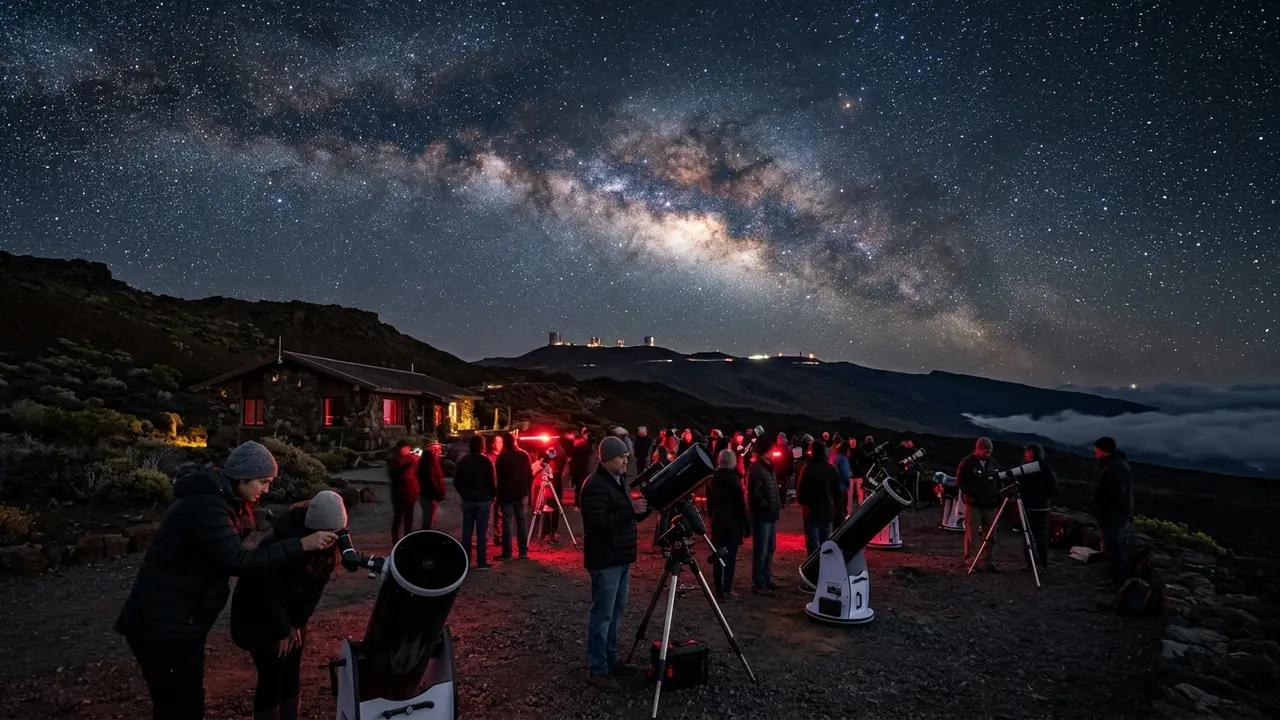

Mauna Kea Is Sacred Ground Before It's a Stargazing Destination
Before anything practical, sit with this: Mauna Kea is not a neutral backdrop for a night under the stars. In Hawaiian tradition, the mountain is a deeply sacred place, regarded as a shrine for worship, a home to the gods, and the piko, or center, of Hawai'i Island[1]. Telescopes have shared the summit with that identity since the 1960s, and the relationship has never been simple.
The Office of Hawaiian Affairs frames its long-running dispute over the mountain's stewardship as being about the state and the university failing to manage the entire mountain for nearly half a century[2], not opposition to any single telescope. A 1998 state audit backed that concern directly: it found the cultural value of Maunakea was largely unrecognized[3], and oversight fell short of protecting the mountain's natural and cultural resources. Summit development, including newer proposed telescopes, remains contested; nothing about that dispute is settled, and this guide won't pretend otherwise.
None of this rules out a great night of stargazing here. It does mean the honest, respectful answer for almost every visitor is the same one this guide keeps returning to: the Onizuka Visitor Information Station, well below the summit, not the summit itself. The sky up at the Visitor Station is dark enough, and the welcome is a lot less complicated. For the full destination rundown, from getting to the island to where to stay, see Mauna Kea Stargazing, and for the fuller history behind that dispute, see Mauna Kea cultural significance and visitor etiquette.
Everything below assumes that starting point. The spots that follow, one you drive to, several you don't, are ranked by how well they let you see the sky without putting you in the middle of a dispute that isn't yours to resolve.
The VIS at 9,200 Feet: Mauna Kea's Real Stargazing Spot
The Onizuka Center for International Astronomy Visitor Information Station, shortened by everyone to the VIS, sits at 9,200 feet (2,804 m) elevation on the Mauna Kea Access Road[4]. That number matters more than any other on this page: high enough to clear most of the Big Island's cloud and light pollution, low enough that ordinary vehicles and ordinary lungs can handle it without special preparation.
The VIS is open daily from 9:00 a.m. to 9:00 p.m.[5], and free public stargazing happens here on any clear night, weather permitting, built around a laser-guided sky presentation once astronomical twilight ends[6]. No booking, no fee, just a parking lot full of people doing the same thing you are. A separate telescope program exists too: a reservation-based session offering two hours with VIS staff at a private stargazing location, free but limited-capacity and offered only about once a month[7], so treat it as a bonus if the dates line up, not the plan itself.
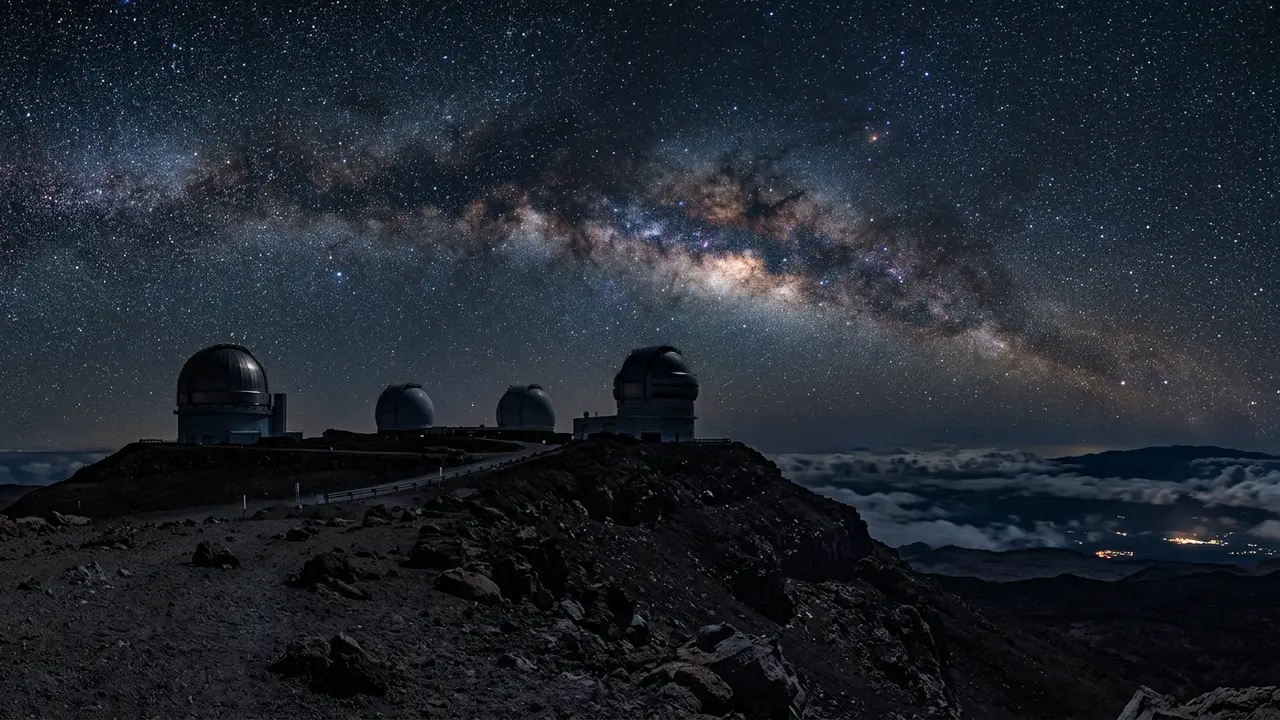
Featured · Destination
Mauna Kea
Mauna Kea is sacred to Native Hawaiians and home to world-class observatories. Here's how to plan respectful, safe Mauna Kea stargazing at the Onizuka VIS.
Arrive with time to spare, and confirm current hours and program status on the official VIS page before building an evening around either format, since both have shifted before.
Expect a working visitor station, not a polished attraction: a small building, a handful of outdoor telescope pads, and a temperature that drops fast once the sun sets, even in the middle of summer. Dress for a genuinely cold night regardless of how warm the coast felt that afternoon, and don't count on the small gift shop or restrooms staying open past closing. The Onizuka Center Visitor Station program covers what a typical evening here looks like, ranger talks included, for anyone who wants the full walkthrough before driving up.
Four Accessible Dark-Sky Spots Away from the Summit
Not every good Mauna Kea-area sky requires the drive up the access road at all. The Big Island has several lower-elevation spots that deliver genuinely dark conditions without the altitude, the 4WD requirement, or the cultural weight of the summit itself:
- Hawaii Volcanoes National Park — pull-offs along Crater Rim Drive, away from the park's own lighting, work well for casual stargazing at essentially sea-level effort.
- Kohala Coast beaches, including Hapuna Beach and Kīholo State Park Reserve, sit on west- and south-facing shoreline clear of Hilo's light dome.
- Puʻu Waʻawaʻa Forest Reserve is an inland reserve set well back from coastal town lighting, known locally for exceptionally dark, clear nights.
- Saddle Road (Daniel K. Inouye Highway) pull-offs dot the route connecting Mauna Kea and Mauna Loa, an easy stop if you're already driving toward the mountain but don't want the full VIS evening.
Hawaii Volcanoes National Park is a straightforward day-trip distance from Hilo, well within reach on a night the mountain's schedule doesn't line up with yours. The Kohala Coast beaches and Saddle Road pull-offs sit similarly close to either coast, which makes any of the four a realistic backup, not just a consolation prize, on a night the VIS drive doesn't fit the plan.
None of these match the VIS for elevation or organized programming, but all four skip the altitude, the drive, and the summit's unresolved history that give some travelers pause. Timing still matters more than you'd think, even at sea level; see the best time for Mauna Kea stargazing for the moon-phase and seasonal specifics this guide doesn't repeat.
What the Mauna Kea Summit Actually Requires
Above the VIS, Mauna Kea climbs to its true summit at 13,803 feet (4,207.3 m), the highest point in Hawai'i[8], and stops being a casual stop. The access road above the VIS runs eight miles and climbs nearly 5,000 feet, including unpaved sections[9], and 2WD vehicles are not permitted past the VIS at all; summit travel requires a dependable, fully operable 4WD or AWD vehicle[10].
Most rental car agencies go further and prohibit their vehicles from the summit outright, even 4WD models, primarily because the road itself is dangerous[11]; check your rental contract rather than assuming a badge on the vehicle settles the question. Summit access is also time-boxed: the road above the VIS is open only from 30 minutes before sunrise to 30 minutes after sunset[12], which rules out overnight stargazing at the top even for a visitor with a qualifying vehicle.
| VIS | Summit | |
|---|---|---|
| Vehicle needed | Any vehicle that reaches the turnoff | Dependable 4WD/AWD only, rental cars often barred |
| Access window | Daily, 9 a.m.-9 p.m. | 30 min before sunrise to 30 min after sunset only |
| Elevation | 9,200 ft (2,804 m) | 13,803 ft (4,207.3 m) |
| Best for | General stargazers, families, casual visitors | Visitors with a qualifying vehicle and a specific reason to go higher |
Rangers stationed at the VIS check vehicles headed further up and turn back anything that doesn't qualify, so don't expect to talk your way past in a rented sedan. Wind exposure at the true summit makes the cold worse than the elevation alone would suggest, on top of the altitude risk covered next.
Recommended tours
Tours are selected for quality, not commission. I earn a small fee if you book — at no extra cost to you.
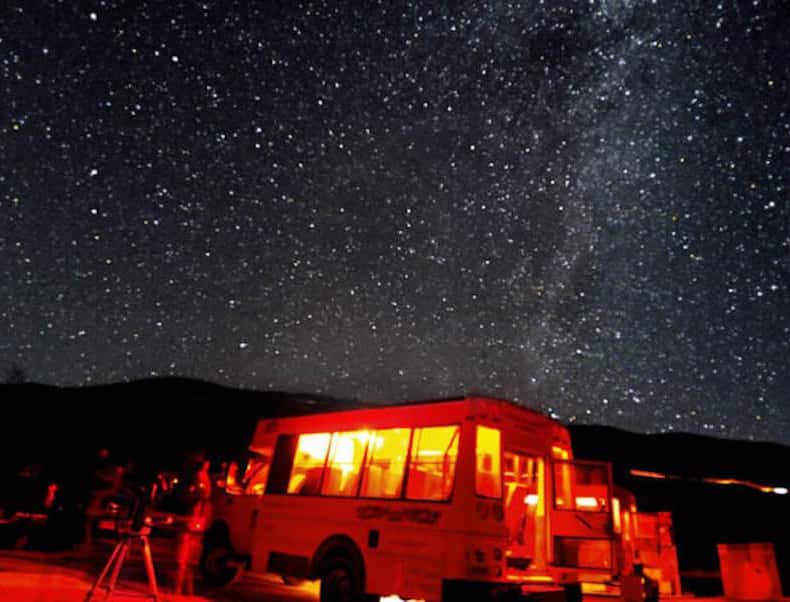
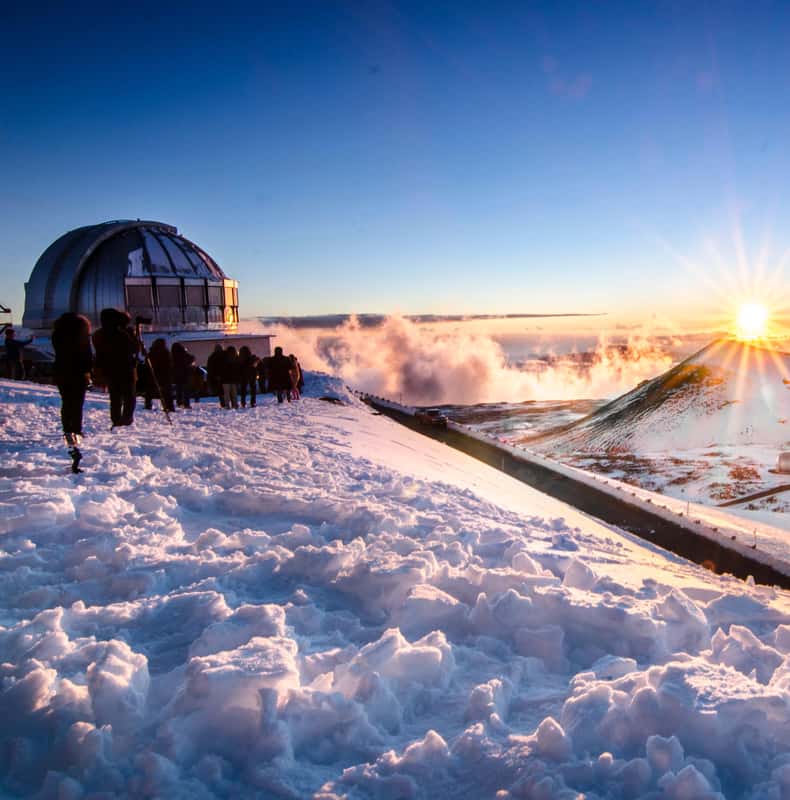
This isn't a section written to talk you into the drive. It's here so that if you have a genuine reason and a qualifying vehicle, you know exactly what the road demands before you're on it. For visitors with that reason, a permitted operator like Mauna Kea Summit Adventures or Hawaii Forest & Trail handles the vehicle, the permit, and the altitude briefing that a self-guided visit can't.
Acclimatize Before You Go Any Higher
Altitude is the other real constraint, and it applies at the VIS itself, not just above it. Visitors are advised to spend at least 30 minutes acclimating at 9,200 feet before continuing any further up the mountain[13]. Pregnant travelers, people in poor health, and children under 13 shouldn't go above the VIS at all[14], guidance that exists because altitude sickness at this elevation is a real risk, not a theoretical one.
Treat the acclimatization stop as part of the stargazing plan, not a delay before it. Thirty minutes in the parking lot, layered up against the cold, watching the sky start to come out, is a perfectly good way to spend the wait, and it's usually enough time to catch the VIS's exhibits or a ranger talk before the telescopes come out.
Featured · Article
What Is Astrotourism? The Complete Beginner's Guide
Astrotourism means travel built around dark skies: meteor showers, auroras, the Milky Way. What it means, where to go, and how to plan your first trip.
Headache, nausea, and shortness of breath are the common early signs of altitude sickness, and they show up here just as they would on a much taller mountain elsewhere; fitness doesn't make you immune to them. If any of that hits during the acclimatization stop, stay at the VIS rather than pushing on, and don't hesitate to turn around entirely if it doesn't ease.
Planning Your Night: Base, Gear, and Timing
Where you stay decides how early your night starts. Hilo sits closest to the Mauna Kea Access Road turnoff, generally under an hour's drive; Kona and Waimea both add time but suit travelers building the mountain into a wider Big Island trip. On the Hilo side, a hotel base on the Hilo side and the budget-friendly Arnott's Lodge both put you within easy reach of an evening at the VIS; upcountry in Waimea, Kamuela Inn shortens the drive further still.
Pack for a real temperature swing, whatever the forecast says at sea level:
13 facilities
- Warm layers: a proper jacket, hat, and gloves, even arriving straight from a beach afternoon
- A red-light headlamp, protecting your own night vision and everyone else's
- Closed shoes with real tread, for uneven, unlit ground after dark
- Water and snacks, since there's nothing to buy once you're past the last town on the way up
- A downloaded map of the access road, since cell service gets unreliable above the VIS
Check the moon phase before you lock in a date, wherever you land. A bright moon washes out the fainter parts of the Milky Way at the VIS the same way it does anywhere else, so a night near new moon still beats a technically clearer night with a bright moon sitting overhead.
None of this requires the summit. A clear night, the VIS or one of the Big Island's lower-elevation spots, and the right layers are the whole plan.