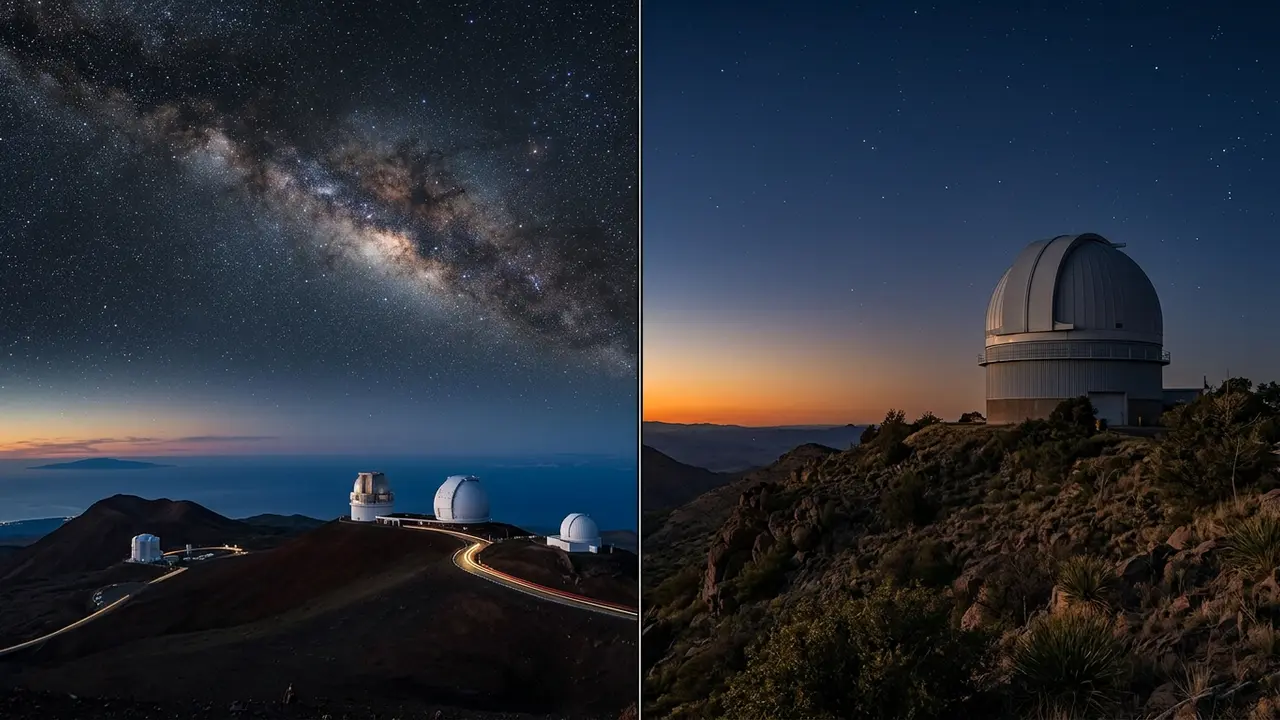

Two dark-sky landmarks, one very different question
Mauna Kea and McDonald Observatory both show up on every ranking of America's best stargazing, and the comparison isn't wrong. It's just incomplete. The real split between them isn't sky darkness; it's who gets to stand where, and what that costs in permission, planning, and respect.
Start with the fact that shapes everything else about a Mauna Kea trip: the mountain is sacred to Native Hawaiians, described by the Office of Hawaiian Affairs as a shrine for worship, a home to the gods, and the piko, the umbilical cord, of Hawai'i Island[1]. Summit telescope development has been contested for decades, and that dispute remains active and unresolved today; this isn't a settled matter of the past. General visitors never reach the true summit at all. They stop at the Onizuka Center Visitor Information Station, thousands of feet below it, which is where practically every Mauna Kea stargazing trip should happen, and where the rest of this comparison focuses.
Big Bend's McDonald Observatory carries none of that weight. It's a public university research facility in the Davis Mountains of West Texas that runs ticketed evening programs several nights a week, open to whoever buys a ticket. That difference, not the quality of either sky, is the honest starting point for choosing between them:
- Mauna Kea: world-class summit science, sacred and contested ground, public access capped at 9,200 feet[9]
- Big Bend / McDonald Observatory: a research-grade telescope open to the public, inside the world's largest dark-sky reserve, no cultural negotiation required
Mauna Kea's summit: extraordinary science on ground that isn't neutral
None of what follows is a footnote to Mauna Kea's cultural weight; it sits alongside it, not beneath it. In 2015, Hawai'i's own governor acknowledged the state's failure to the mountain directly: "We have in many ways failed the mountain. Whether you see it from a cultural perspective or from a natural resource perspective, we have not done right by a very special place," said Governor David Ige[2]. A 2005 NASA environmental review went further, finding the cumulative impact of astronomy-related activity on the mountain's cultural resources substantial and adverse[3]. A 1998 state audit found the University of Hawai'i's management of the Maunakea Science Reserve inadequate to protect natural resources, at a time when the mountain's cultural value was largely unrecognized[4]. These aren't historical footnotes either; they're part of why the dispute over summit development remains active today.
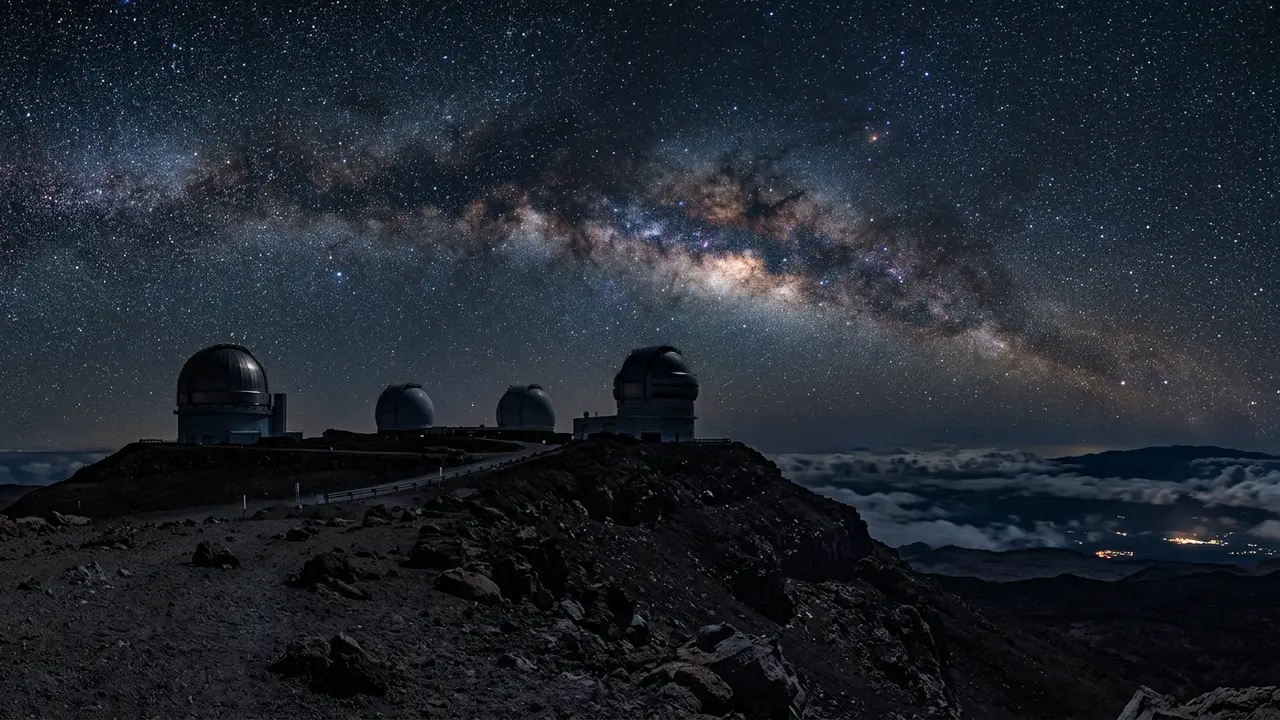
That history sits on top of one of the most scientifically productive patches of ground on the planet. The summit rises to 13,802 feet (4,207 m)[5], and twelve facilities house thirteen telescopes at or around it[6]. The named list reads like an astronomy syllabus: thirteen large telescopes in total[7], including the twin-domed Keck Observatory, the Subaru Telescope, Gemini North, the James Clerk Maxwell Telescope, and the Canada-France-Hawai'i Telescope. Site testing decades ago found the location superb for nighttime observing because of its thin air, constant trade winds, and position surrounded by open ocean[8], a combination that keeps the summit above most of the atmosphere's turbulence and moisture.
Featured · Destination
Mauna Kea
Mauna Kea is sacred to Native Hawaiians and home to world-class observatories. Here's how to plan respectful, safe Mauna Kea stargazing at the Onizuka VIS.
None of that science is available to a casual visitor, and it isn't meant to be. The summit isn't an overlook with a better view if you push a little further up the road. It's a working research site standing on ground where a real, unresolved dispute exists over what belongs there at all, and that's the frame every visitor should carry, not an afterthought to it.
What the public actually gets: the Visitor Information Station
For everyone without a research badge, Mauna Kea stargazing means the Onizuka Center Visitor Information Station, sitting at 9,200 feet (2,804 m)[9], several thousand feet below the summit. That's the honest answer to "can I visit Mauna Kea's observatories": you can visit the mountain, not the telescopes, and the VIS is a genuinely good version of that trip. It offers a real dark sky, working telescopes on-site, and staff who can speak to both the astronomy and the mountain's history in the same conversation.
Getting there and staying safely comes with real rules, not just recommendations. Children under 13, pregnant visitors, and anyone in poor health are advised against going above the VIS; only dependable, fully operable 4WD or AWD vehicles are permitted for travel beyond that point; and the summit area itself closes to visitors from 30 minutes after sunset until 30 minutes before sunrise[10]. None of that is bureaucracy for its own sake. It's the same altitude and access logic that keeps almost every visitor, correctly, at the VIS rather than pushing higher without a documented reason to.
9,200 ft
In practice, that means planning an evening at the VIS itself, not a summit sunset drive, unless you've booked with an operator permitted for exactly that kind of trip. The Onizuka Center Visitor Station program walks through what a typical night there actually looks like. It's a legitimately good stargazing night on its own terms. It's also the practical ceiling on how far a general Mauna Kea visit goes, and the alternative three time zones away in West Texas doesn't have that ceiling at all.
Big Bend and McDonald Observatory: the fully public alternative
McDonald Observatory sits on Mount Locke (2,070 m / 6,790 ft) and Mount Fowlkes (2,030 m / 6,660 ft) in the Davis Mountains near Fort Davis, Texas[11], not literally inside Big Bend National Park itself, which lies roughly three hours further south[12]. Both sit within the same Greater Big Bend International Dark Sky Reserve, a designation covering more than 15,000 square miles across west Texas and northern Mexico, the largest reserve of its kind on Earth[13]. That regional scale, not a single park boundary, is what actually protects the sky over both sites.
The observatory's flagship research instrument, the Hobby-Eberly Telescope, carries a 10-meter aperture[14], putting it in the same size class as Mauna Kea's Keck domes. The difference is what happens to that science after dark on a public night. McDonald Observatory runs its Star Party evening program every Tuesday, Friday, and Saturday at the Rebecca Gale Telescope Park, letting visitors look through numerous telescopes of various sizes[15]. It's a two-hour open-air constellation tour with live telescope views, priced between $5 and $25[16]. General daytime admission runs Tuesday through Saturday, 12 to 5 p.m., with every visitor checking in first at the Frank N. Bash Visitor Center[17].
There's no summit dispute here, no capped access point partway up the mountain, no altitude briefing. Buy a ticket, show up on the right night, and look through telescopes that professional astronomers use for research the other nights of the week. If you're chasing something bigger than a single evening program, the annual Texas Star Party gathers amateur astronomers from across the country nearby, under the same reserve's skies.
Side by side: sky quality, access, and cost
Put the practical differences next to each other and the choice mostly makes itself, depending on what you actually want out of the trip. Mauna Kea's summit offers thinner air and a genuinely rare sky window, but the entire public experience happens below it, at the VIS. Big Bend hands over a real observatory-grade telescope at a normal ticket price, inside a reserve larger than several U.S. states combined.
Cost is the clearest divide. A McDonald Observatory Star Party runs $5 to $25[16] for a two-hour program with live telescope views, no reservation drama beyond buying a ticket, no altitude briefing required. Mauna Kea's VIS program is free and donation-supported, but reaching it means real elevation gain, a genuine altitude-sickness risk for some visitors, and vehicle rules that rule out most rental sedans above the station. Neither cost structure is really a downside; they're built for two different kinds of travelers, and the table below makes the split concrete.
| Mauna Kea (Visitor Information Station) | Big Bend (McDonald Observatory) | |
|---|---|---|
| Research telescopes | 13 across 12 facilities, up to 10 m (Keck) | 10 m Hobby-Eberly Telescope |
| Public program | Free nightly stargazing at the VIS | Ticketed Star Parties, Tue/Fri/Sat, $5-$25 |
| Visitor hours | VIS: 9 a.m.-9 p.m. daily | Visitor Center: Tue-Sat, 12-5 p.m. |
| Cultural status | Sacred summit, development contested | No comparable dispute |
Which one actually fits your trip
If you're already island-hopping through Hawai'i and want a stargazing night that folds into a bigger trip, the VIS is an easy, worthwhile add, as long as you go in carrying the mountain's history rather than treating it as a photo backdrop. Pair it with the deeper context in Mauna Kea cultural significance and visitor etiquette before you go, and check Best stargazing spots on Mauna Kea for exactly where to set up once you're there. The observatories themselves, what they study and why they were built on that particular summit, get their own full treatment in Mauna Kea observatories explained; this piece isn't the place to repeat that ground.
If straightforward access matters more than island scenery, Big Bend wins outright. McDonald Observatory's Star Parties need nothing but a ticket and a clear sky, and the surrounding dark-sky reserve rewards a multi-night stay rather than one evening stop. For a fuller regional comparison beyond just the observatory itself, see Joshua Tree vs Big Bend stargazing.
Neither destination has the objectively better sky. Mauna Kea wins on summit-class science and a sky sitting above the weather; Big Bend wins on access, cost, and a night that doesn't require anyone's permission. Pick based on the trip you're already taking, not on which mountain sounds more impressive on a list.
Featured · Article
Uluru Cultural Significance and Visitor Etiquette
Uluru is Anangu land under joint management. Here's why the 2019 climb closure is settled policy, what you can't photograph, and real visitor etiquette.