Texas Star Party
Early May, timed to the spring new moon annual

Texas Star Party 2027: Dates, Location, and What to Expect

May 2-9, 2027
One week, Sunday to Sunday (May 2-9, 2027)
Prude Guest Ranch, 201 Prude Guest Ranch Rd, Fort Davis, TX 79734, USA
All events

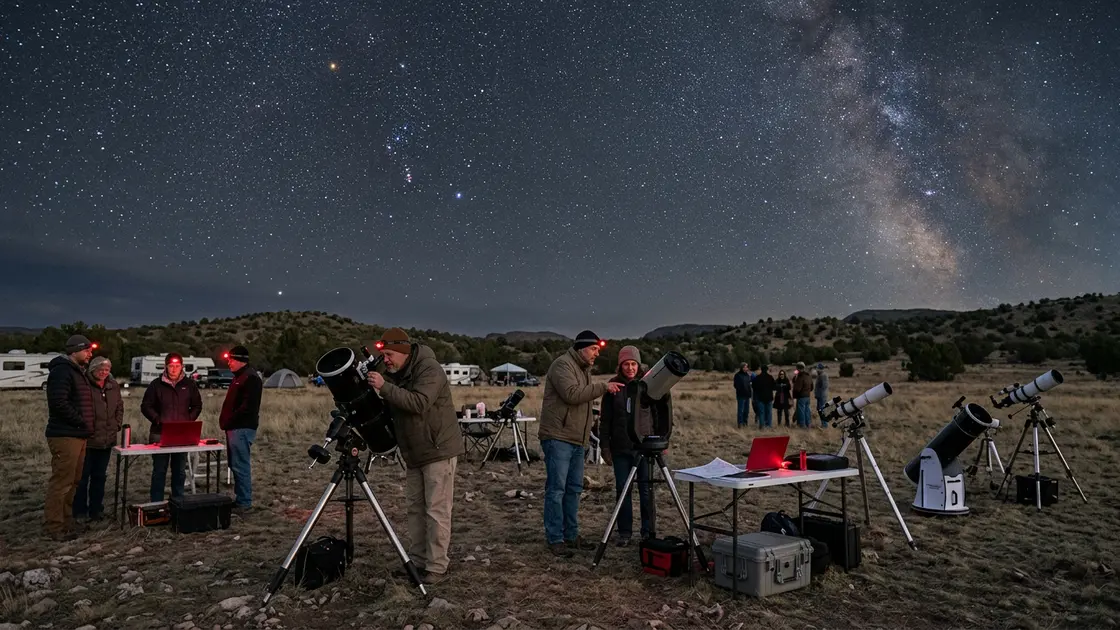
Fort Davis, Texas fills up every May with telescopes instead of tourists. For one week, hundreds of amateur astronomers haul truck-bed observatories, dobsonians, and lawn chairs onto the fields of a working cattle ranch in a remote stretch of West Texas high desert, well off the interstate. The Texas Star Party is one of the oldest and largest amateur astronomy gatherings in North America, founded in 1979 and still drawing attendees from across the continent and overseas to the same ranch every spring.

When it runs: May 2-9, 2027

The 2027 edition is scheduled for May 2-9, a full week timed to the spring new moon so the sky stays dark for the whole event rather than one lucky night. That's the real difference between TSP and a meteor shower or eclipse: instead of a single peak to plan around, attendees get seven nights of Bortle 2 observing, with daytime hours filled by speaker talks, vendor exhibits, and equipment demos on the observing field itself.

Where it happens: Prude Ranch, Fort Davis

TSP has run at the Prude Guest Ranch for decades, a working cattle ranch at 201 Prude Guest Ranch Rd in Fort Davis. The ranch sits at roughly 5,040 feet elevation, delivering Bortle Class 2 skies, and is about 12 miles from the University of Texas' McDonald Observatory, close enough for a daytime visit to one of the country's premier research observatories without eating into a night of observing.

Registration: apply, don't just sign up

TSP doesn't work like buying a festival ticket. You apply during the announced application window, get selected through a random drawing, and only then complete online registration and pay TSP fees. Exact 2027 pricing hadn't been published as of this writing; check texasstarparty.org directly once the application period opens, since the process, and the fee schedule with it, can shift year to year.

What the week actually looks like

  • Nightly observing on open fields, with room for everything from casual eyepiece viewing to serious astrophotography rigs
  • Daytime speaker programs and workshops covering everything from beginner astronomy to professional research
  • Vendor row for telescope and camera gear, useful for testing equipment before buying
  • A close-knit community that leans heavily on mentoring, with experienced attendees regularly walking beginners through their first real dark-sky session

Is it beginner-friendly?

Yes. Despite the depth of expertise on the field, TSP has a long track record of welcoming first-timers. Astronomy clubs like the Houston Astronomical Society even publish their own Beginner's Checklist for the Texas Star Party to help newcomers show up prepared. You don't need your own telescope to get something out of the week: plenty of the community's best views come from borrowing an eyepiece for a few minutes at someone else's setup.

Building a trip around it

TSP is a single week, but the skies that make it worth attending don't disappear the other 51. If Prude Ranch has you thinking about other places worth a genuinely dark trip, the best dark sky parks in the world covers a dozen certified parks and reserves elsewhere worth the drive. And if you're arriving without a full kit, our stargazing gear guide covers what's actually worth packing versus what the vendor tents can talk you into buying on-site.

Best Dark Sky Parks in the World: 12 to Visit

One week at Prude Ranch is a start. This ranking covers a dozen certified dark-sky parks and reserves worldwide worth building a trip around beyond the Texas Star Party.

Read the planning guide

Highlights

  • Founded in 1979, one of the oldest and largest amateur astronomy gatherings in North America
  • 2027 edition runs May 2-9 at Prude Ranch, Fort Davis, Texas, timed to the spring new moon week
  • Prude Ranch sits about 12 miles from the University of Texas' McDonald Observatory, under Bortle Class 2 skies at roughly 5,040 feet elevation
  • Organized by Texas Star Party, Inc., a 501(c)(3) nonprofit, with support from McDonald Observatory
  • Registration is application-based: apply during the open window, get selected through a random drawing, then complete online registration and pay TSP fees
  • Beginners are welcome, with resources like the Houston Astronomical Society's Beginner's Checklist to help first-timers prepare

Practical information

Hours

Observing fields run nightly from dusk through dawn; daytime hours (roughly 9 AM onward) fill with speaker talks, workshops, and vendor exhibits on-site

Best time

Any night during the May 2-9 week counts, since the whole event is timed to the new moon rather than a single peak night

Tips

Apply during the announced application window rather than waiting, since attendance is capped and selected by random drawing, not first-come-first-served. Elevation here is over 5,000 feet, so desert nights stay cold even in May.

Getting there

No public transit; a car is required. Fort Davis sits in a remote stretch of West Texas high desert, well off the interstate.

Price

Application-based registration; 2027 fees had not been published as of this writing (check texasstarparty.org closer to the event)

Tags

texas star party star party fort davis prude ranch mcdonald observatory west texas amateur astronomy

Frequently asked questions

When is the Texas Star Party 2027?

The 2027 Texas Star Party runs May 2-9, 2027 at Prude Ranch in Fort Davis, Texas, timed to the spring new moon for the darkest skies of the week.

Where is the Texas Star Party held?

At the Prude Guest Ranch, 201 Prude Guest Ranch Rd, Fort Davis, TX 79734, a working cattle ranch about 12 miles from the University of Texas' McDonald Observatory.

Do I need to register for the Texas Star Party?

Yes. Registration is application-based: you apply during the announced window, get selected through a random drawing, then complete online registration and pay TSP fees. 2027 pricing had not been published as of this writing.

Can beginners attend the Texas Star Party?

Yes. TSP has a long history of welcoming first-timers, and astronomy clubs like the Houston Astronomical Society publish their own Beginner's Checklist to help newcomers prepare. You don't need your own telescope to get something out of the week.

What should I bring to the Texas Star Party?

Warm layers for cold desert nights at over 5,000 feet elevation, sun protection for daytime programs, a red-light flashlight to protect your night vision, and your own optics if you have them, though borrowing time at someone else's eyepiece is part of the culture.

How far is the Texas Star Party from McDonald Observatory?

Prude Ranch is about 12 miles from the University of Texas' McDonald Observatory, close enough for a daytime visit without cutting into a night of observing.

What are the skies like at the Texas Star Party?

Bortle Class 2, among the darkest ratings on the scale, at an elevation of roughly 5,040 feet, which is a large part of why the event has run at Prude Ranch for decades.