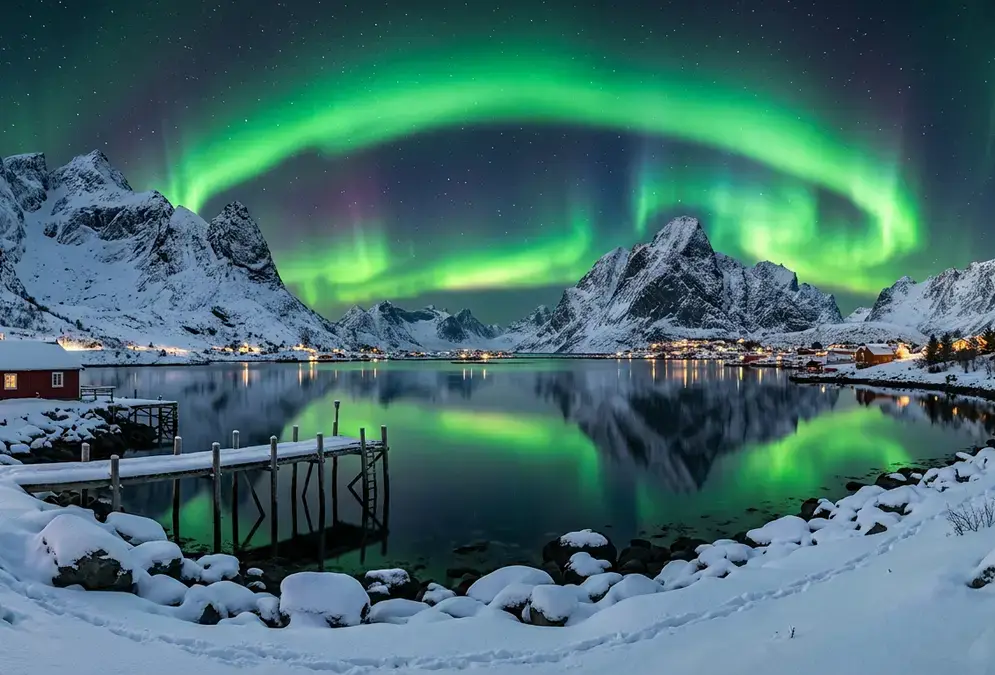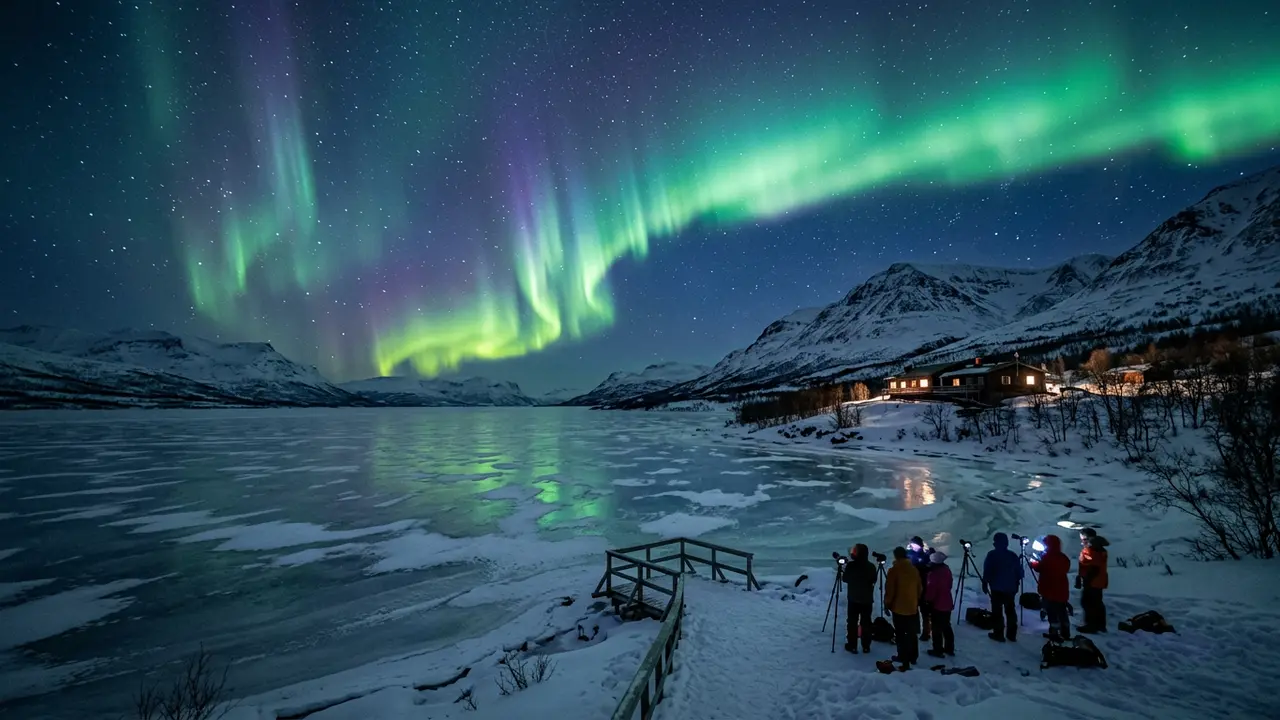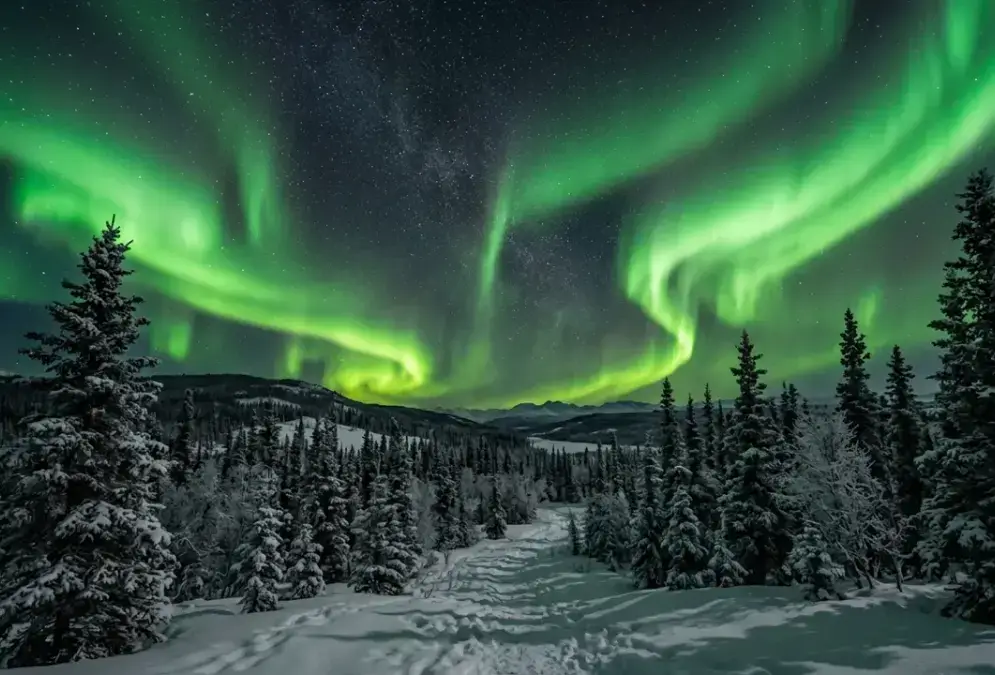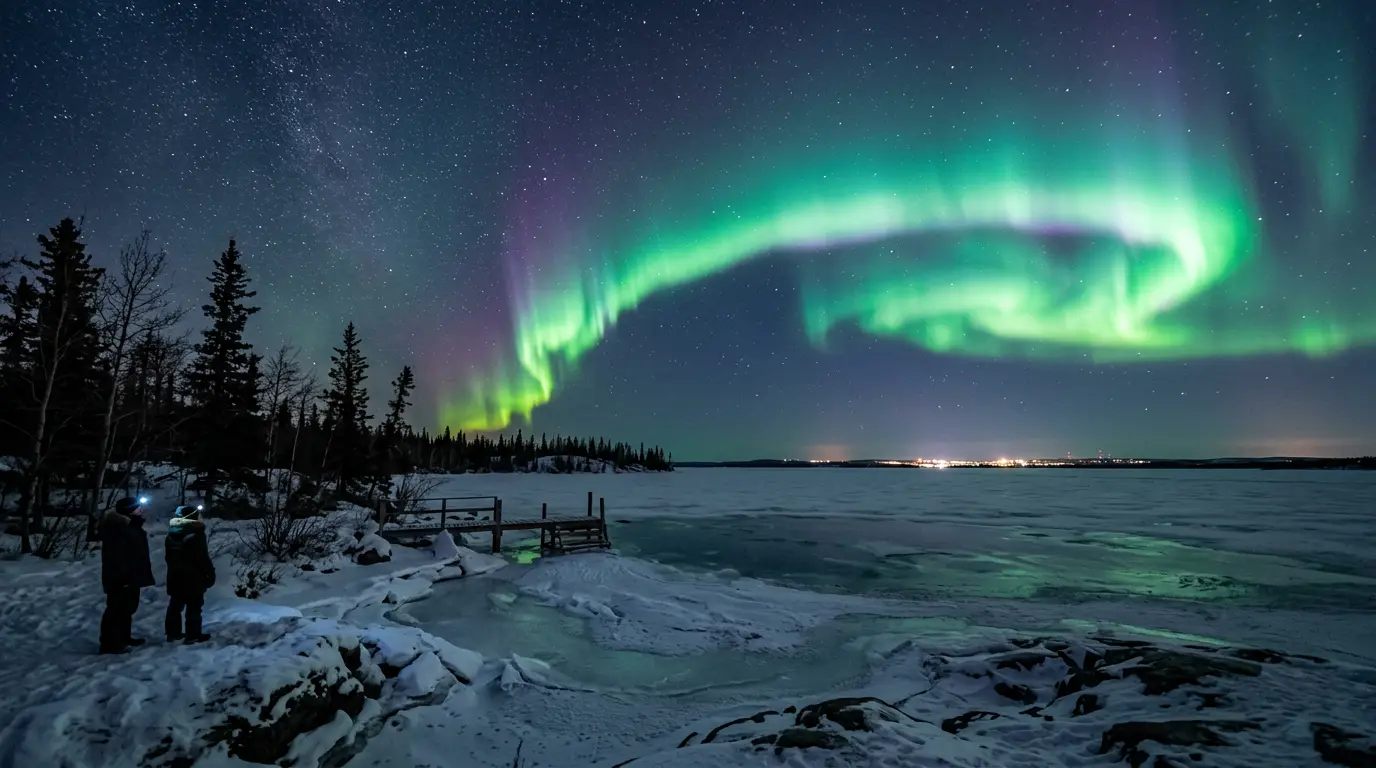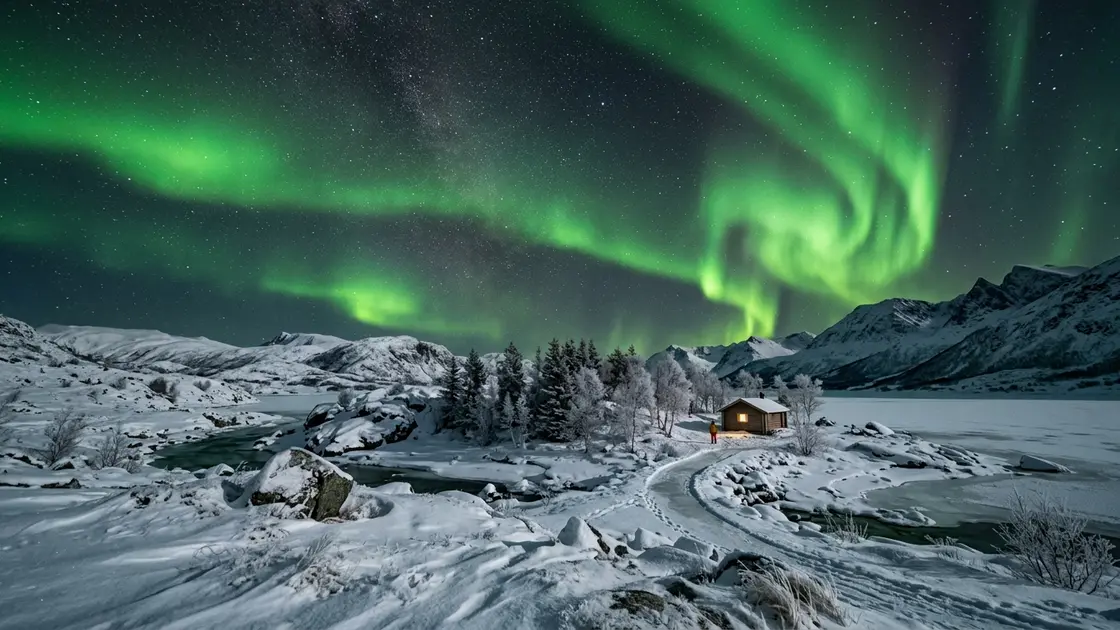
Aurora season doesn't arrive on a single date and it doesn't peak once, either. It's a six-month window, roughly September through April, when nights get dark enough for the northern lights to actually show up, plus two shorter stretches inside it, near the equinoxes, when geomagnetic storms measurably pick up. The 2026-27 season sits past the sharpest point of the current solar cycle, but that matters less than it sounds: strong individual storms keep happening for years after a solar maximum passes, and none of the destinations that reliably deliver aurora need a record year to earn the trip.
When aurora season actually runs
Above roughly 60°N, the northern lights are up there year-round. What changes with the season is whether the sky gets dark enough, long enough, to see them. Through the Arctic summer the sun barely dips below the horizon and the sky never gets past twilight; even a destination as far south as Fairbanks doesn't return to real darkness until late August. Aurora season proper runs from September through April, with the longest, darkest viewing windows from November to February.
That six-month stretch isn't evenly good. Deep winter buys the most hours of darkness but also the coldest nights and, in wetter climates, more cloud cover to contend with. The shoulder months, September-October and February-March, trade some darkness for milder weather and better odds of an active sky, which is worth understanding before you pick dates.
The equinox effect: your best odds twice a year
Twice a year, near the spring and autumn equinoxes, Earth's magnetic field lines up with the solar wind in a way that makes geomagnetic storms measurably more likely, a mechanism space physicists call the Russell-McPherron effect. In practice: late September through October, and February through March, are nearly twice as likely to see a geomagnetic storm as other stretches of the season.
That's a documented seasonal pattern, not a guarantee for any single night, and it holds regardless of where the solar cycle happens to sit. If you can only build a trip around one week of the six-month season, an equinox week beats a random week in December.
What the 2026-27 solar cycle means for your trip
Solar Cycle 25 reached its maximum in October 2024, when NASA and NOAA jointly confirmed the Sun had peaked in its roughly 11-year cycle. That puts 2026-27 past the sharpest point of activity, in the cycle's declining phase.
A declining phase is not a bad forecast. Solar flares and coronal mass ejections grow less frequent as a cycle winds down, but strong individual storms keep occurring for years after the peak passes; the Sun doesn't switch off in an orderly line the day the average pulls back. Space.com's space-weather coverage puts it plainly: the chances for strong flares or geomagnetic storms are not over just because the cycle has turned. 2026-27 should still deliver good nights, especially around the equinoxes above, and it's a fair season worth taking rather than one to write off.
Space.com's space-weather desk has also argued the strongest displays of this cycle may still be ahead, even past the official maximum, pointing to a pattern where the years right after a peak keep producing excellent shows. That's reason to stay optimistic heading into 2027 and 2028, not a reason to treat 2026-27 as a placeholder season while you wait.
Where to go: six places, six different odds
For a direct side-by-side shortlist, start with the best places to see the northern lights.
- Tromsø — inside the auroral oval at 69.6°N; aurora becomes visible at a Kp of just 2, among the lowest thresholds anywhere, with peak season running November through February.
- Abisko — a rain-shadow microclimate in Swedish Lapland keeps skies clearer than nearby Arctic spots, sometimes clear on nights Tromsø is clouded out.
- Fairbanks — sits directly under the auroral oval; a three-night stay gets roughly a 90% chance of a sighting, per the city's own tourism bureau.
- Yellowknife — up to 240 aurora-visible nights a year, the payoff of a dry subarctic climate paired with a position almost directly beneath the oval.
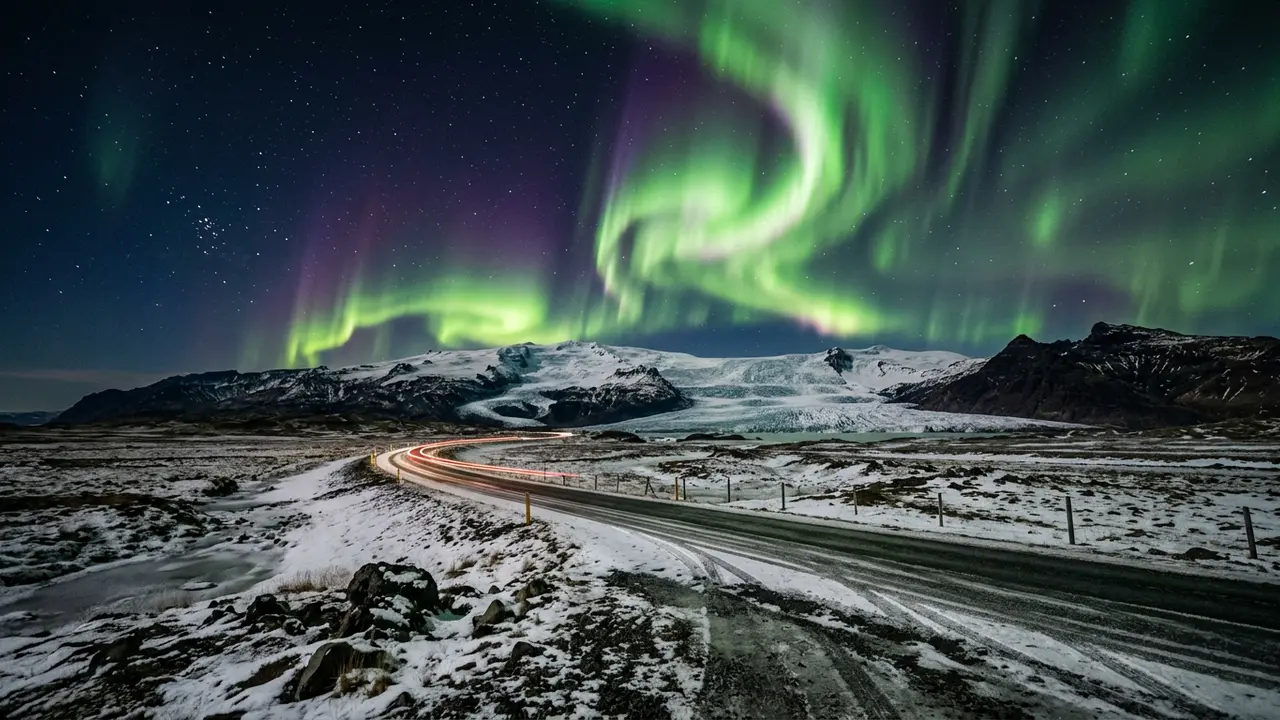
- Iceland — trades single-city reliability for range: a whole island and a 1,330 km ring road to hunt for a gap in the cloud.
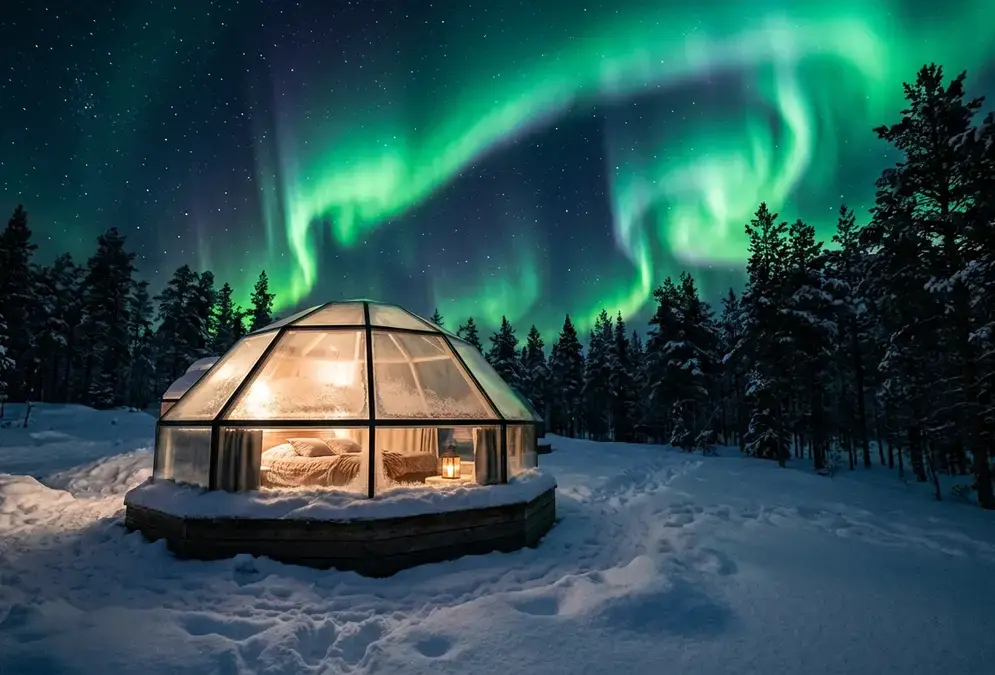
- Finnish Lapland — six bases spread across a region the size of Portugal, from Rovaniemi's Arctic Circle crossing to Kakslauttanen's glass igloos.
What time of night to actually watch
Across virtually every destination on this list, the most productive window sits around midnight: 10 PM to 2 AM local time, per NOAA's Space Weather Prediction Center. Stronger geomagnetic storms push that window earlier into the evening and later into the morning, so a strong Kp reading is worth stepping outside for even at 9 PM.
None of this replaces checking a real forecast the night you're actually there. The Kp index measures how disturbed Earth's magnetic field currently is on a 0-9 scale, and how to read it before you travel is worth five minutes before any aurora trip. For picking an app to track it, see the aurora forecast apps worth using; a plain likelihood score beats refreshing five tabs at 11 PM in a parking lot.
If you're planning your first aurora trip, our full beginner's guide on how to see the northern lights walks through the auroral oval, timing, and gear before you book anything. And for the actual physics behind the display, see what causes the northern lights.