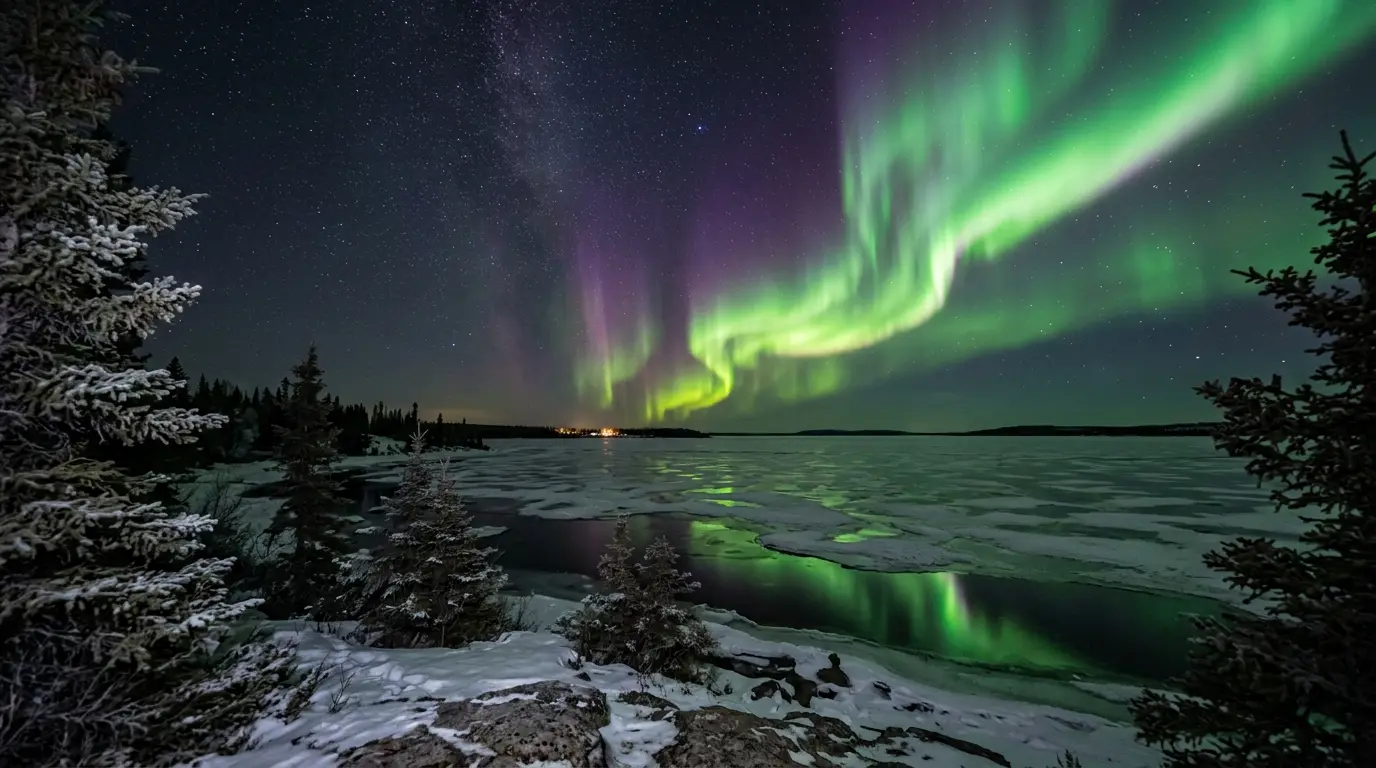
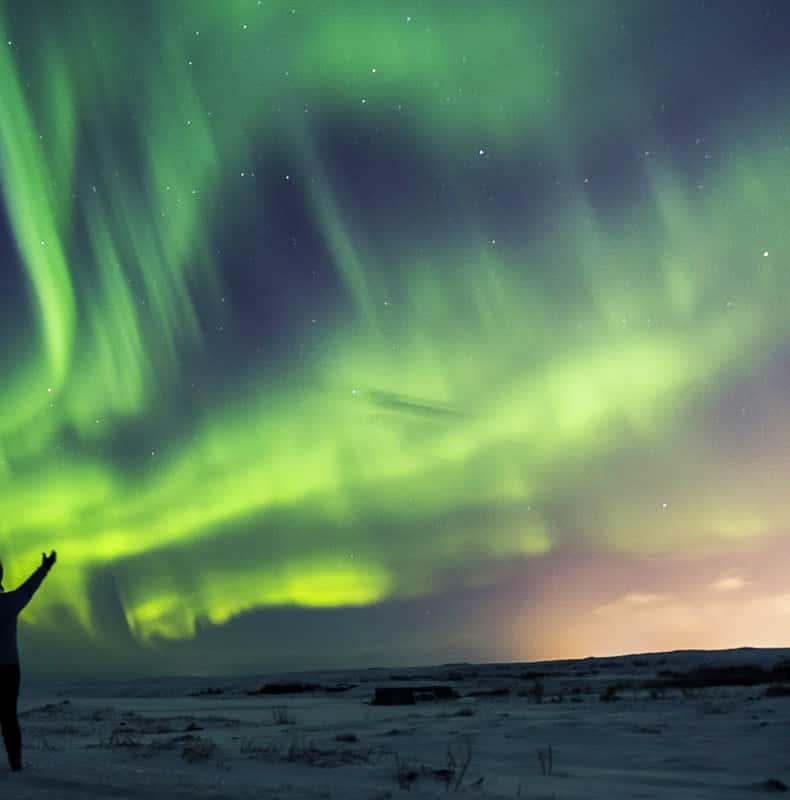
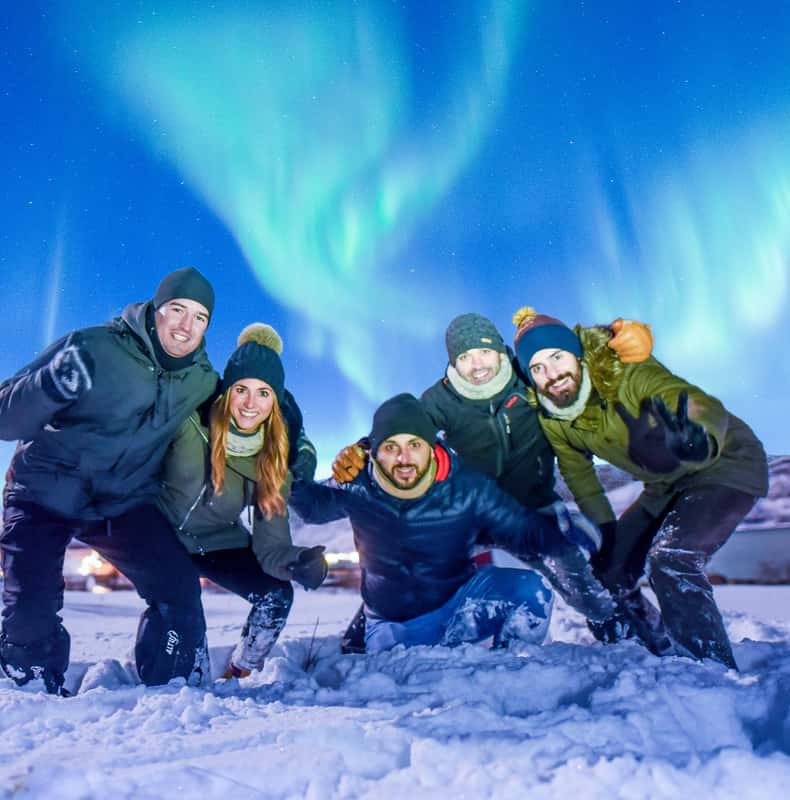
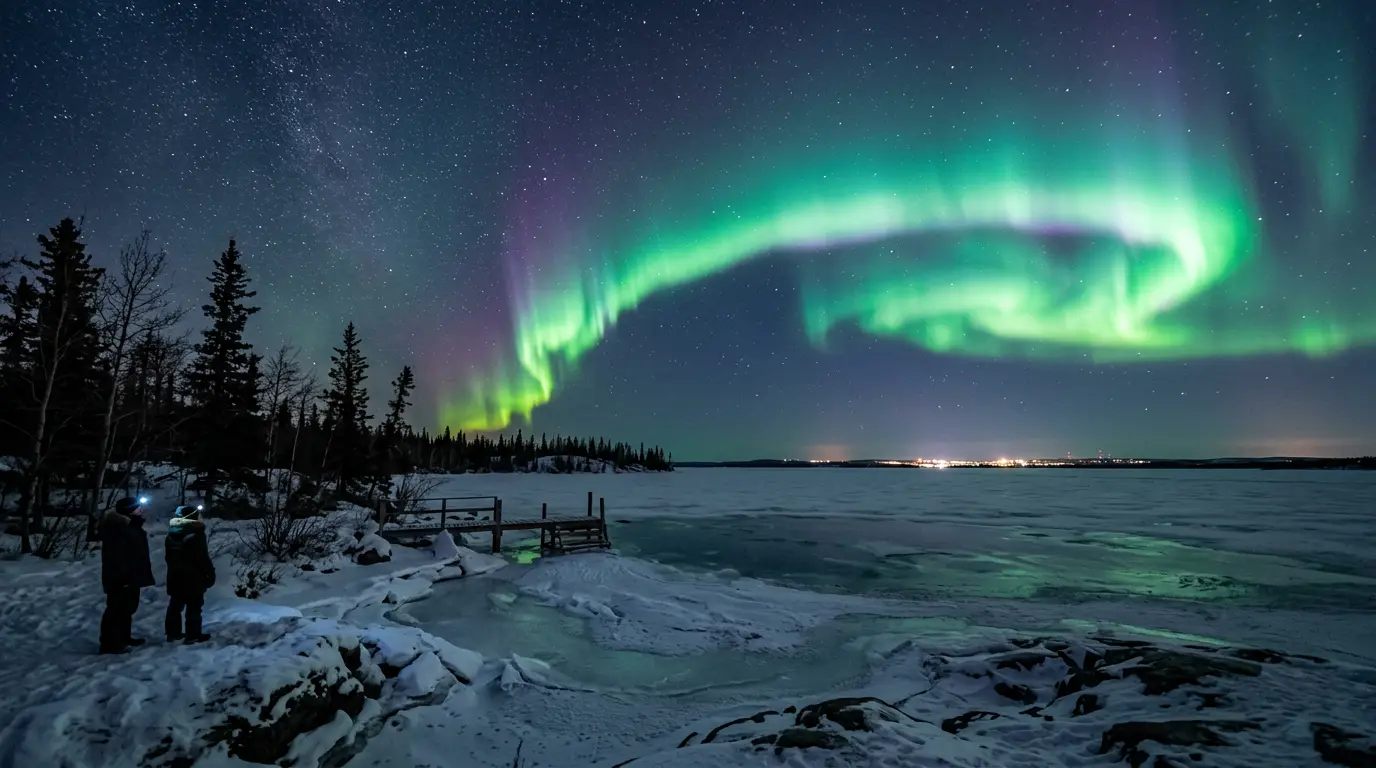
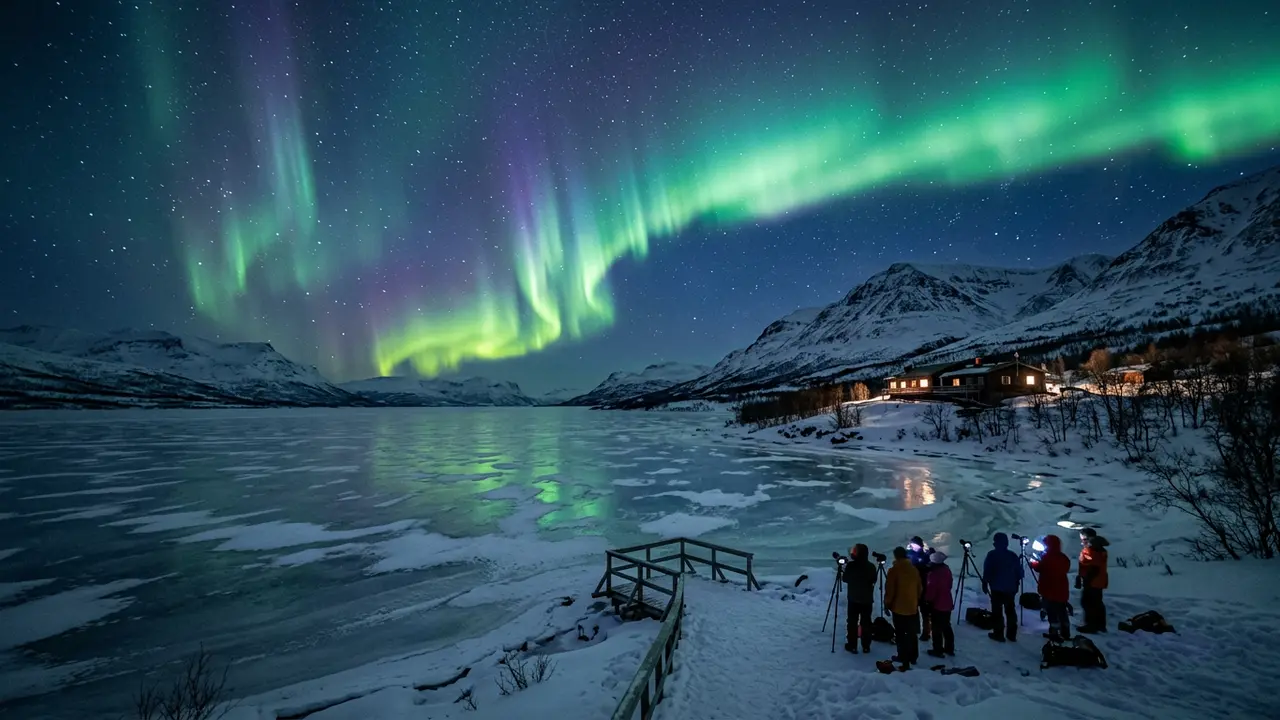
Bright green and purple aurora borealis curtain over a frozen lake near Yellowknife, illustrating the best places to see the northern lights

Best Places to See the Northern Lights, Ranked

Yellowknife, Abisko, Tromsø, Fairbanks, Iceland, and Finnish Lapland — ranked by aurora frequency, clear-sky odds, and how easy each one is to actually reach.

Our top pick

Yellowknife Northern Lights

Travelers who want the best statistical odds and don't mind the cost of getting there

Yellowknife wins on raw statistics: its dry continental climate gives it among the highest clear-night rates of any aurora hub, sitting almost directly beneath the auroral oval. European travelers prioritizing accessibility should look at Abisko instead, where the Blue Hole microclimate pushes clear-sky odds past 70%. First-time aurora hunters who want reliability without sacrificing comfort tend to land on Tromsø, thanks to its 69.6°N latitude and the deepest aurora-tour infrastructure anywhere.

Local tourism boards report some of the highest clear-night rates of any aurora hub in Yellowknife's dry continental climate, making it one of the most reliable aurora destinations on Earth.

Runner-up: #2 Abisko — Europe's clearest skies, thanks to the Blue Hole microclimate

Yellowknife wins on raw statistics: its dry, continental interior climate gives it among the highest clear-night rates of any aurora hub, sitting almost directly beneath the auroral oval at 68.7°N magnetic latitude. But "best" depends on what you're optimizing for. Abisko holds Europe's strongest clear-sky record thanks to a rain-shadow microclimate locals call the Blue Hole, tearing a window through cloud cover that blankets the rest of the continent. Tromsø trades a few percentage points of clear-sky odds for the deepest aurora-tour infrastructure anywhere, hundreds of operators running boat trips, mountain-station stays, and dog-sledding chases for travelers who'd rather book a guide than gamble on a rental car in the Arctic dark.

This ranking weighs three things: statistical aurora frequency and clear-sky odds, geomagnetic latitude relative to the auroral oval (65°+ magnetic latitude sees 150+ aurora nights a year), and how easy each place actually is to reach from an international airport. December and January bring the longest, darkest nights across the whole aurora oval, worth checking against where to go stargazing in December or January if you're building a trip around the calendar rather than a single destination. For month-by-month odds and moon-phase timing across the full season, see the aurora season guide.

Ranked list

How we chose

The places on this list were selected against the following editorial criteria.

  • Statistical aurora frequency and clear-night probability, the frequency of visible displays multiplied by clear-sky odds
  • Geomagnetic latitude relative to the auroral oval, zones at 65°+ magnetic latitude see 150+ aurora nights a year
  • Accessibility and infrastructure, proximity to an international airport, tour density, and season length

On the map

Pin numbers match the ranking below.

Interactive map — loads as you scroll (requires JavaScript)

Reporter notebook

Insider tips

Best time

Book at least three nights, everywhere

Even Yellowknife's best-in-the-world odds mean nothing on a cloudy night. Three nights minimum turns a coin-flip trip into a near-certainty almost everywhere on this list except Iceland, where budget more like four.

Money tip

Self-drive destinations skip the tour markup

Fairbanks and Iceland are the two places on this list where a rental car does everything a guided tour does, at a fraction of the cost. Tromsø and Abisko reward booking a tour instead, since the best viewpoints often sit outside town on private land or require local knowledge of where the clouds break.

In this guide

6 places
  1. Yellowknife Northern Lights

    Travelers who want the best statistical odds and don't mind the cost of getting there

    Yellowknife Northern Lights

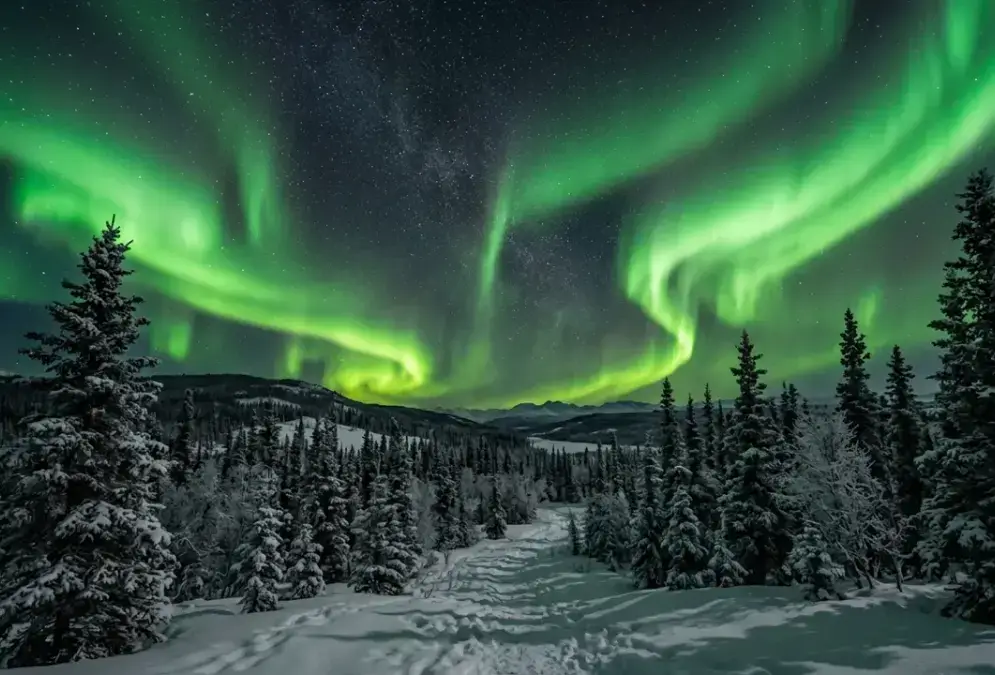
    Yellowknife sits almost directly beneath the auroral oval at 68.7°N magnetic latitude, and its continental interior climate strips out the coastal cloud cover that dogs Norway and Iceland. The result is one of the highest clear-night rates of any aurora destination, often cited as clearer than coastal Scandinavia. The season runs unusually long, from late August to mid-April, and on a clear night the aurora over Great Slave Lake is close to guaranteed rather than hoped for. The trade-off is cost and cold: flights routing through Edmonton or Calgary, then a domestic hop north, and winter lows that drop to −40°C.

    Pros

    • Among the highest clear-night frequency in the Arctic, often cited as clearer than coastal Scandinavian destinations
    • Sits directly under the auroral oval, so aurora is close to guaranteed on a clear night
    • Long season, late August through mid-April
    • Dog sledding and Indigenous cultural tourism fill the daytime hours

    Cons

    • Remote and expensive, domestic flights from southern Canada on top of the international leg
    • Extreme cold, averaging −20°C and dropping to −40°C
    • Thinner tour infrastructure than Tromsø or Abisko
  2. Abisko Stargazing

    European travelers who'd rather chase clear skies than tour-operator variety

    Abisko Stargazing

    Abisko's clear-sky odds beat every other aurora destination in Europe, and the reason is geography rather than luck. Mountains to the west wring the moisture out of Atlantic storm systems before they reach the village, opening what locals call the Blue Hole, a 10-to-20-square-kilometer gap in the cloud cover that holds even when the rest of northern Sweden is socked in. Aurora Sky Station runs heated viewing platforms on the hillside above town with real-time forecasts, useful given how much smaller and quieter Abisko is than Tromsø, a few hundred kilometers west.

    Pros

    • Strongest clear-sky data record of any aurora viewpoint in Europe
    • The Blue Hole rain-shadow effect holds clear skies even during continent-wide cloud cover
    • Quieter than Tromsø, with heated observation platforms and real-time forecasts at Aurora Sky Station

    Cons

    • Small village with far fewer restaurants and tour operators than Tromsø
    • 95 km from the nearest airport at Kiruna
    • Slightly shorter season than the North American destinations on this list
  3. Northern Lights in Tromsø

    First-time aurora hunters, groups, and families who want backup plans for a cloudy night

    Northern Lights in Tromsø

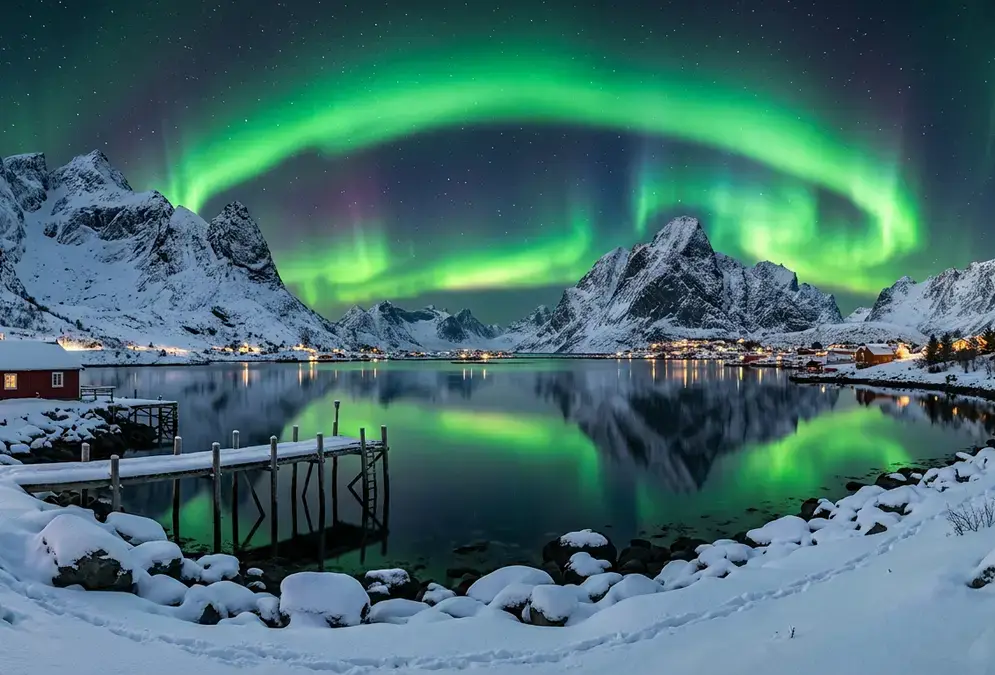
    Tromsø is the pick for a first aurora trip. It sits at 69.6°N, directly under the oval, with clear-night odds a few points behind Abisko's but backed by the deepest tour infrastructure anywhere: boat trips chasing clear patches along the fjords, mountain-station lodges, dog sledding, and hundreds of operators competing for your evening. It's also a real city, with museums, restaurants, and direct flights from most European hubs, so a cloudy night doesn't sink the whole trip.

    Pros

    • Deepest aurora-tour infrastructure of any city on Earth, hundreds of operators and lodging styles
    • Direct flights from most major European cities
    • Long season, September through April, with best activity January through March
    • A real Arctic city with museums and restaurants beyond aurora viewing

    Cons

    • More coastal cloud cover than inland Abisko, roughly 65–70% clear-night odds versus Abisko's 70%+
    • Peak season (December–February) brings crowds and higher prices
    • Polar night from late November to mid-January means near-total darkness around the clock
  4. Fairbanks Northern Lights

    North Americans who want strong odds without an international flight

    Fairbanks Northern Lights

    Fairbanks is North America's answer to Abisko: an interior continental climate that keeps coastal moisture and cloud cover away, at 64.8°N directly under the oval. For US travelers it's the easiest serious aurora trip on this list, direct flights from Seattle or Denver, no passport, and a season that runs late August to mid-April. A growing cluster of aurora-focused lodges outside town now rivals the Nordic destinations for glass-roof cabins and heated viewing decks.

    Pros

    • Continental interior climate delivers more clear nights than coastal Alaska towns
    • Direct flights from the Lower 48, no passport required
    • Long season with best odds January through March
    • Growing lodge cluster built specifically around aurora viewing

    Cons

    • Remote interior location, still a 6-8 hour flight from most of the Lower 48
    • Extreme cold, averaging −15°C and dropping to −40°C
    • Less mature international tour infrastructure than Tromsø
  5. Northern Lights in Iceland

    Road-trippers and families who want a full trip, not just an aurora chase

    Northern Lights in Iceland

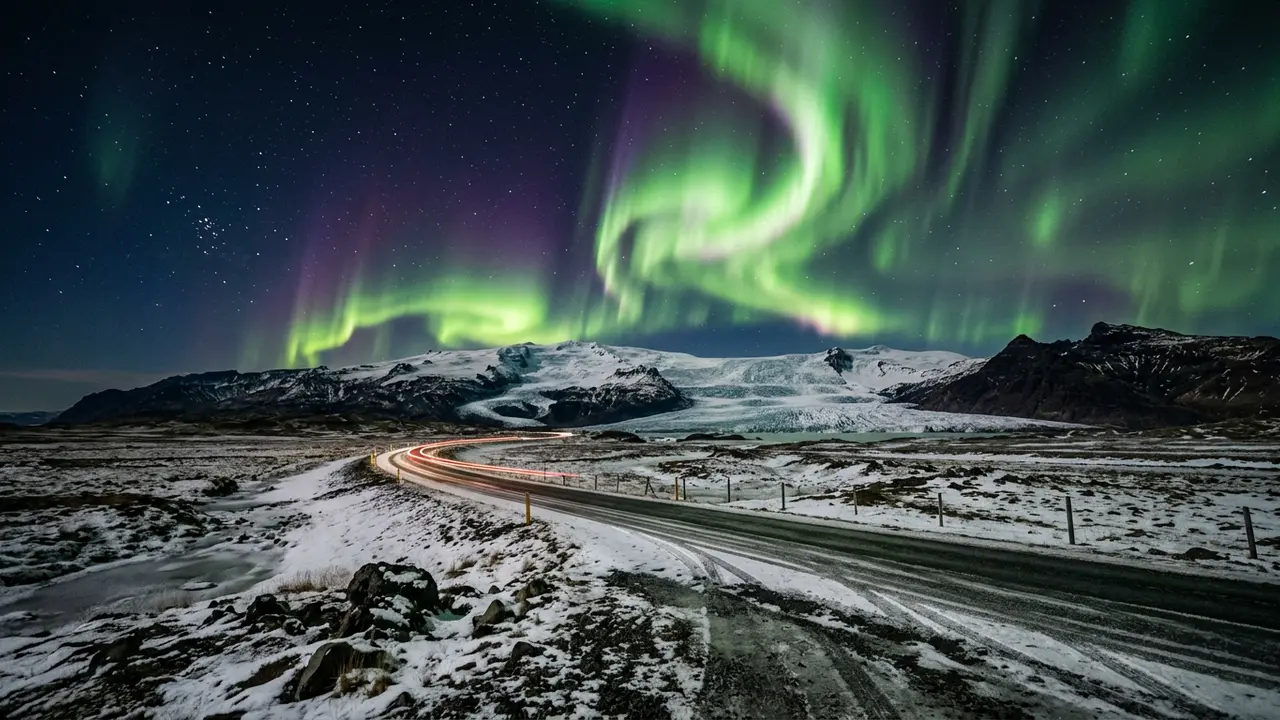
    Iceland trades aurora odds for flexibility. At 64°N its maritime climate delivers lower clear-sky odds, roughly 50–60%, than any inland destination on this list, but it's the only major aurora country where every viewing site is driveable from a single airport. Rent a car at Keflavík and the whole north coast opens up; Akureyri and Lake Mývatn run noticeably clearer than Reykjavík. Budget three nights minimum, a single planned evening here is closer to a coin flip than a plan.

    Pros

    • Only major aurora country where every viewing site is reachable by car from one airport
    • Non-aurora attractions bundled in, the Golden Circle, waterfalls, glaciers, hot springs
    • Northern coast towns like Akureyri average clearer skies than Reykjavík

    Cons

    • Lowest clear-night odds of any destination on this list, 50–60%
    • Lower aurora frequency overall than Scandinavia or North America's interior
    • Expensive; a 3-night minimum stay is the realistic way to hedge against cloud
  6. Northern Lights in Finnish Lapland

    Travelers who want a quieter alternative to Tromsø or Abisko, with skiing on the side

    Northern Lights in Finnish Lapland

    Finnish Lapland sits in the same latitude band as Abisko without its rain-shadow advantage, which puts its clear-night odds closer to Tromsø's in practice. Rovaniemi, at 66.5°N, is the main gateway, with a growing cluster of aurora lodges and strong winter-sports infrastructure alongside the aurora viewing. It's the quieter alternative to book when Tromsø and Abisko are full over a new-moon weekend.

    Pros

    • Quieter than Tromsø or Abisko, in the same reliable latitude band
    • Growing lodge cluster with strong winter-sports infrastructure
    • Accessible via direct flights to Rovaniemi for European travelers

    Cons

    • No rain-shadow microclimate advantage like Abisko's Blue Hole
    • Fewer international tour operators and smaller lodge selection than Tromsø or Abisko
    • Less brand recognition, so trip planning takes more research

Pick your priority before you pick a destination. Chasing the best statistical odds points to Yellowknife; prioritizing clear skies without leaving Europe points to Abisko; wanting a forgiving first trip with tour backup points to Tromsø. Every destination on this list sits within or close to the auroral oval, so a strong geomagnetic storm can put on a show even at the bottom of this ranking, on a clear night in Finnish Lapland or Iceland just as easily as in Yellowknife.

None of these six places guarantee a sighting. Aurora activity depends on solar output as much as location, and even the best-odds destination loses to a cloudy week. Budget at least three nights wherever you go, check a real-time Kp forecast rather than a seasonal average, and build in a daytime itinerary you'd be happy with even if the sky never cooperates. If you'd rather book a stay built around aurora forecasting and heated viewing decks than DIY the whole trip, browse lodges across the Aurora Belt.

Frequently asked questions

Where is the best place to see the northern lights?

Yellowknife has among the best statistical odds on Earth. Its dry, continental interior climate sits almost directly beneath the auroral oval, giving it one of the highest clear-night rates of any aurora hub, often cited as clearer than coastal Scandinavian destinations. If you're weighing accessibility as much as odds, Abisko and Tromsø are the strongest European alternatives.

Is Tromsø or Abisko better?

Abisko has higher statistical clear-sky odds, over 70% thanks to its rain-shadow Blue Hole microclimate, and it's quieter. Tromsø trades a few points of clear-sky odds for the deepest aurora-tour infrastructure anywhere, plus direct flights from most of Europe and a real city to fall back on if clouds roll in. First-timers who want backup plans tend to prefer Tromsø; travelers chasing clear skies above all else lean Abisko.

Do you need a tour?

No, but it depends where you are. Fairbanks and Iceland are both self-drive destinations where a rental car gets you to a dark viewpoint as well as any guide could. In Tromsø and Abisko, a tour or local guide is worth it, since the clearest patches of sky often require knowing the terrain and microclimate patterns a first-time visitor won't.

When is the best time of year to see the northern lights?

Aurora season runs roughly late August through April across the Northern Hemisphere's aurora belt, with the longest, darkest nights, and generally the most reliable viewing, from December through March. Exact timing varies by destination and by the moon phase in a given month.

How many nights should you plan for an aurora trip?

Three nights minimum almost anywhere on this list, since a single cloudy night can shut out even Yellowknife's best-in-the-world odds. Iceland's maritime climate and lower clear-sky odds make four nights a safer bet there.

Is Iceland or Norway better for the northern lights?

Norway, specifically Tromsø, has meaningfully better aurora odds: it sits farther north under the auroral oval with more predictable clear-night frequency. Iceland's advantage is flexibility, every viewing site is driveable from one airport, and the trip bundles well with the Golden Circle, waterfalls, and glaciers if the aurora doesn't cooperate on a given night.

Can you see the northern lights from a city, or do you need to leave town?

You generally need to get outside city light pollution, even in aurora-belt cities like Tromsø or Fairbanks. A strong geomagnetic storm can produce an aurora bright enough to see from a city center, but for a reliable display, plan on driving at least 20 to 30 minutes from downtown to a dark viewpoint.

Further reading

Sources

  1. 2026 Best Places to See the Northern Lights — Ranked by Reliability | Aurora Atlas (opens in a new tab)

    “Tromsø sits directly under the auroral oval at 69.6°N and has the deepest aurora-tour infrastructure of any city in the world.”

  2. 2026 Best Places to See the Northern Lights — Ranked by Reliability | Aurora Atlas (opens in a new tab)

    “Abisko has the strongest data record of any aurora viewpoint in Europe and is the only place on this list where statistically clear-sky odds exceed 70%.”

  3. 2026 Best Places to See the Northern Lights — Ranked by Reliability | Aurora Atlas (opens in a new tab)

    “Yellowknife reports more clear aurora nights per winter than anywhere in Scandinavia.”

  4. I put Abisko's cloud-busting weapon to the test during a Sweden northern lights adventure and was not disappointed | Space (opens in a new tab)

    “This effectively tears a 10-20 square kilometer 'Blue Hole' in the clouds above Abisko and provides a window to the stars even on the cloudiest of nights.”

  5. Aurora Forecast | Geophysical Institute, University of Alaska Fairbanks (opens in a new tab)

    “The 'quiet' state of the aurora is on average a thin oval band situated around 67-68 degrees in geomagnetic latitude.”