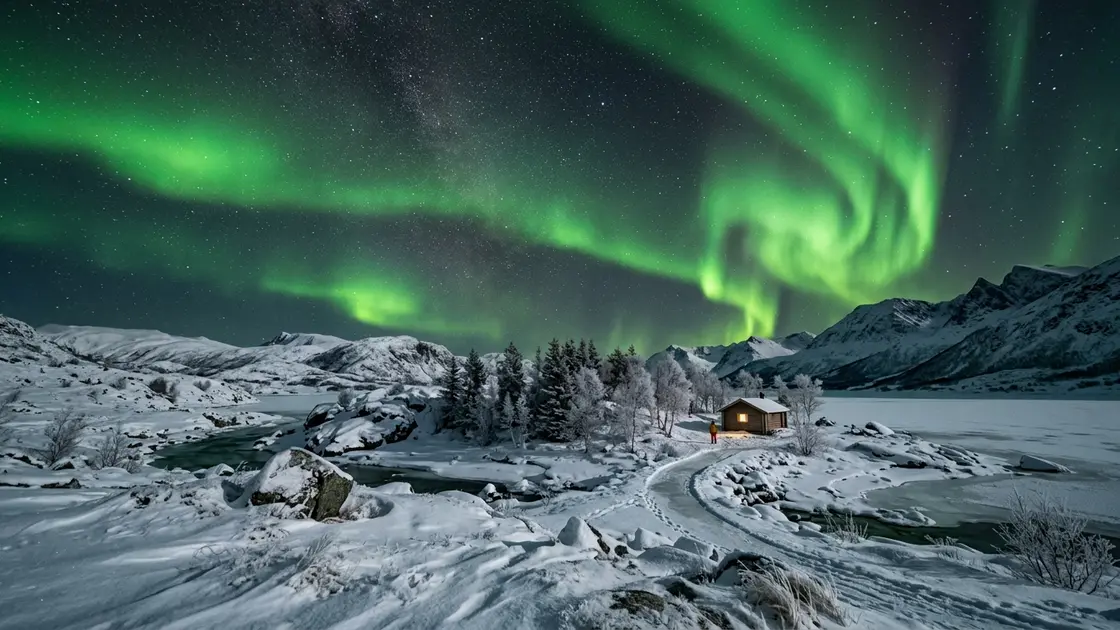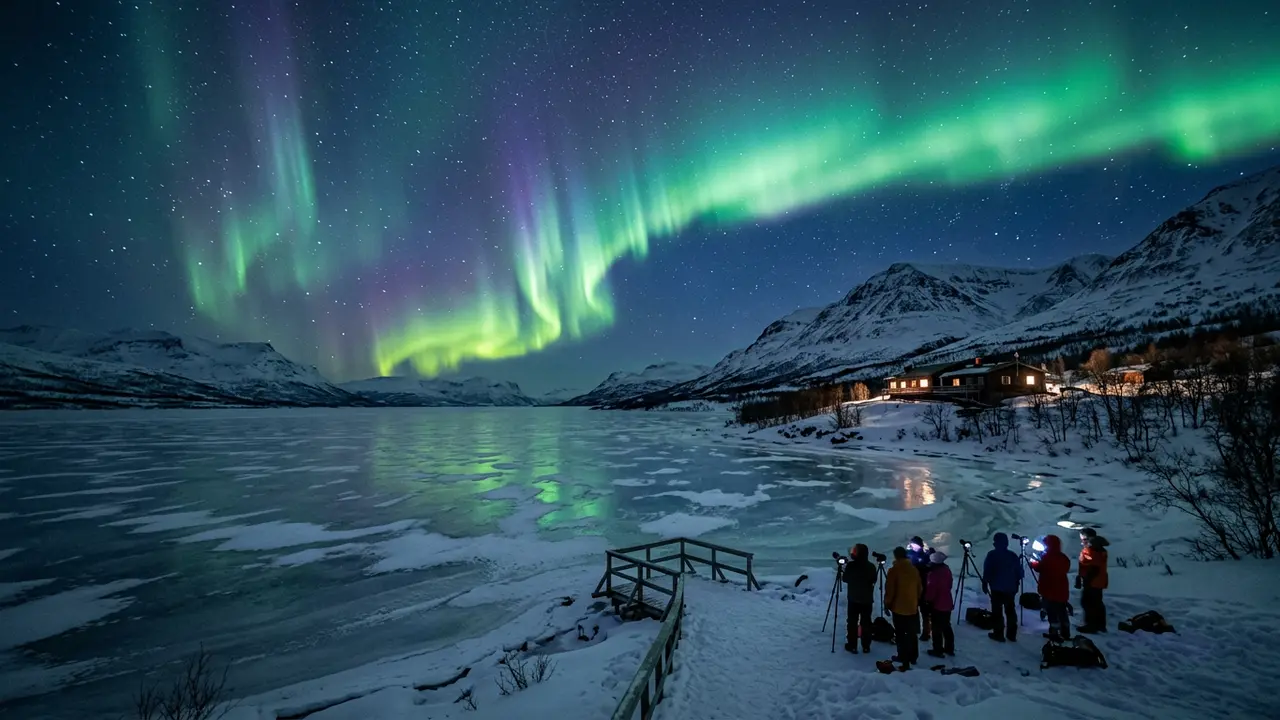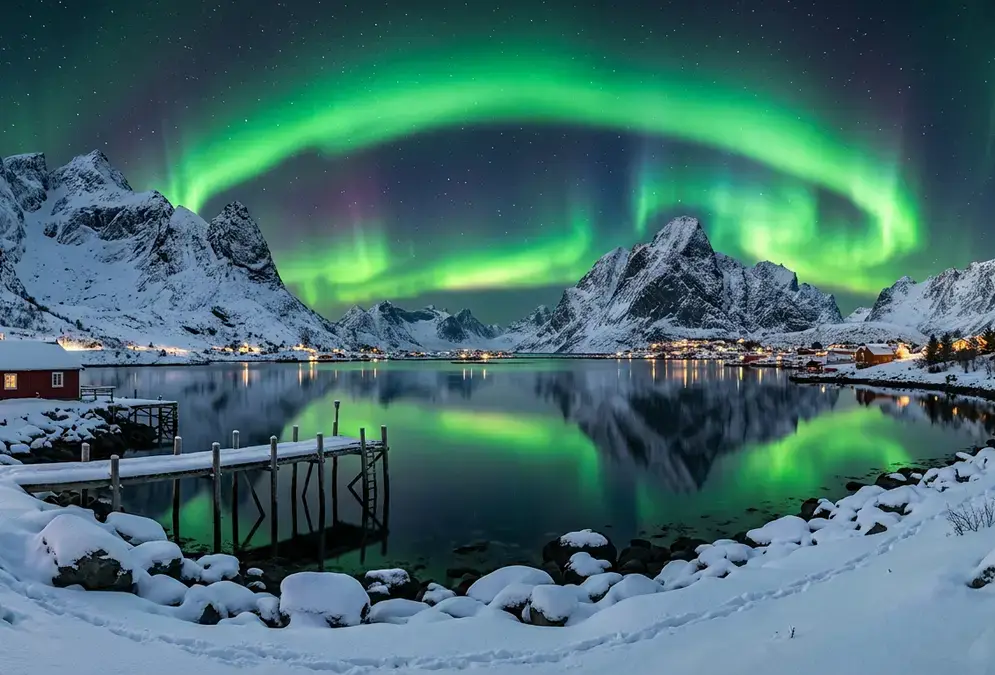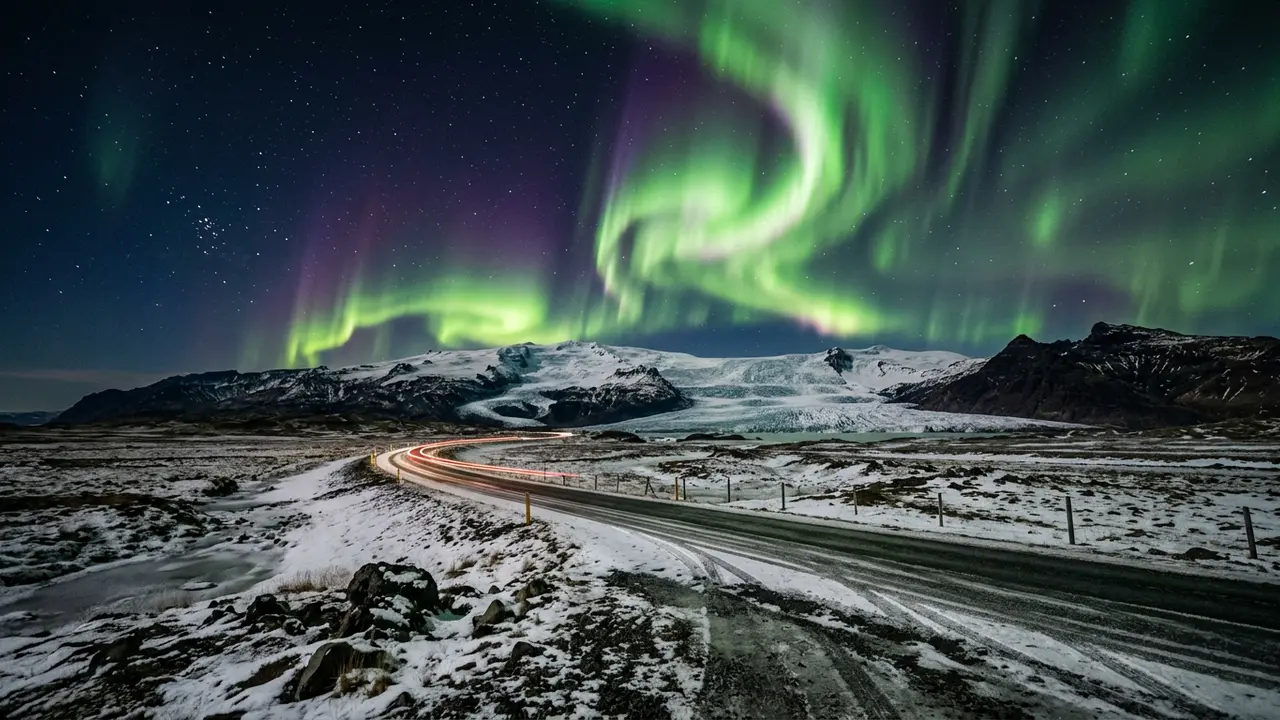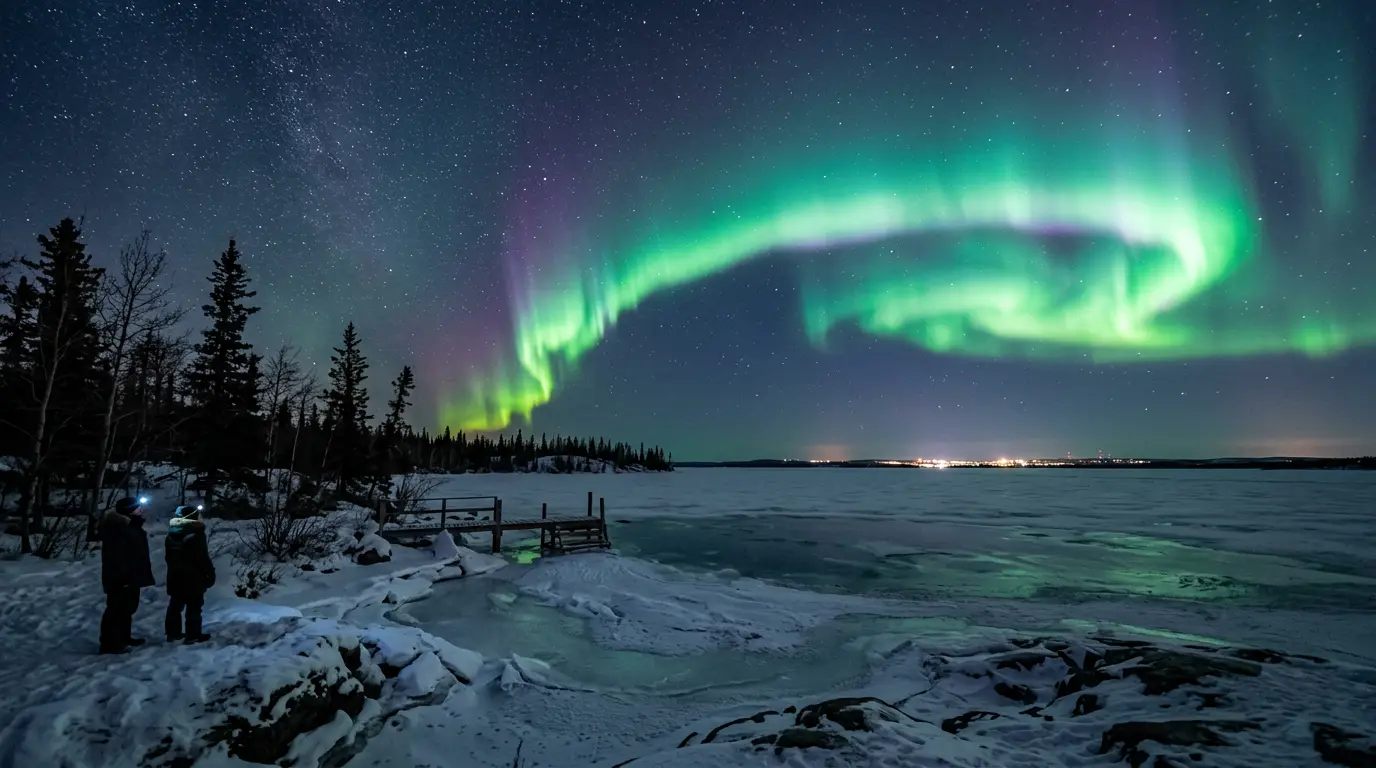
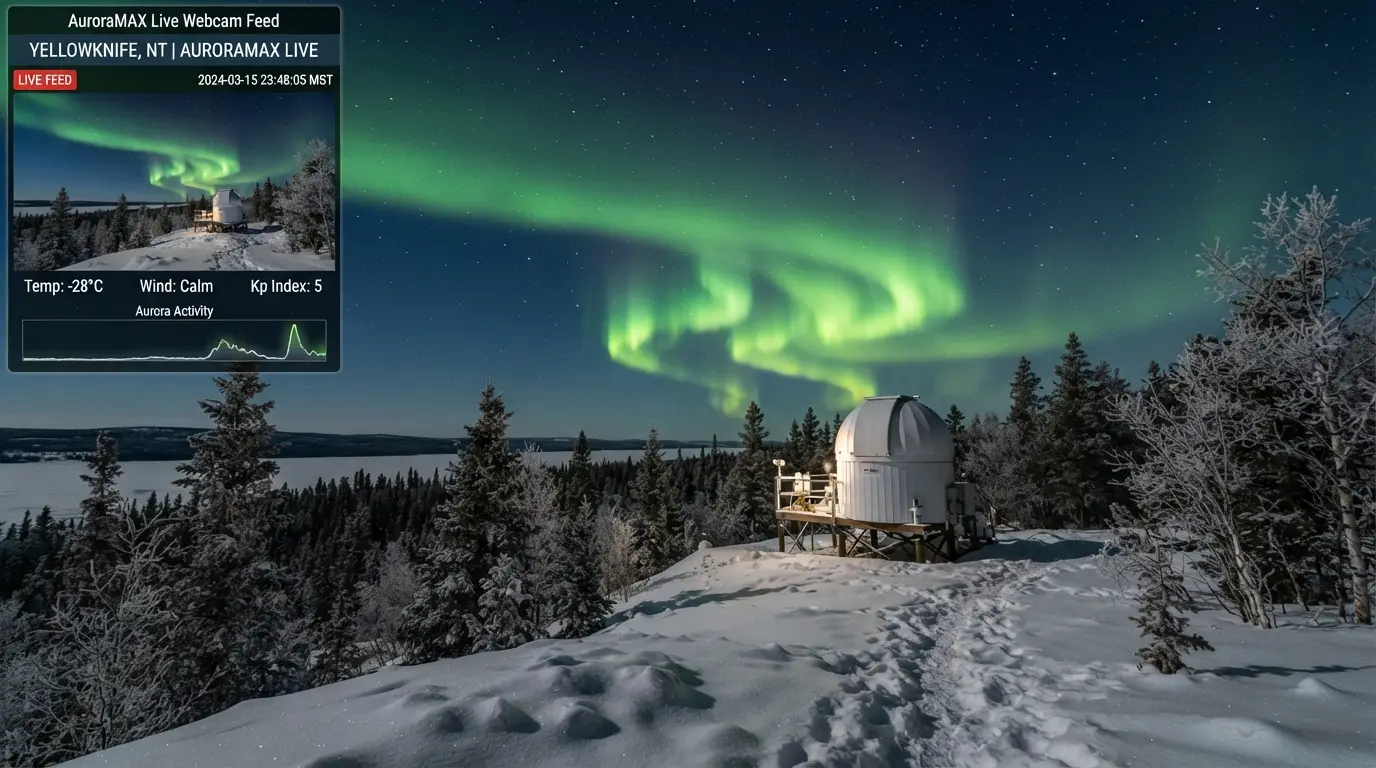
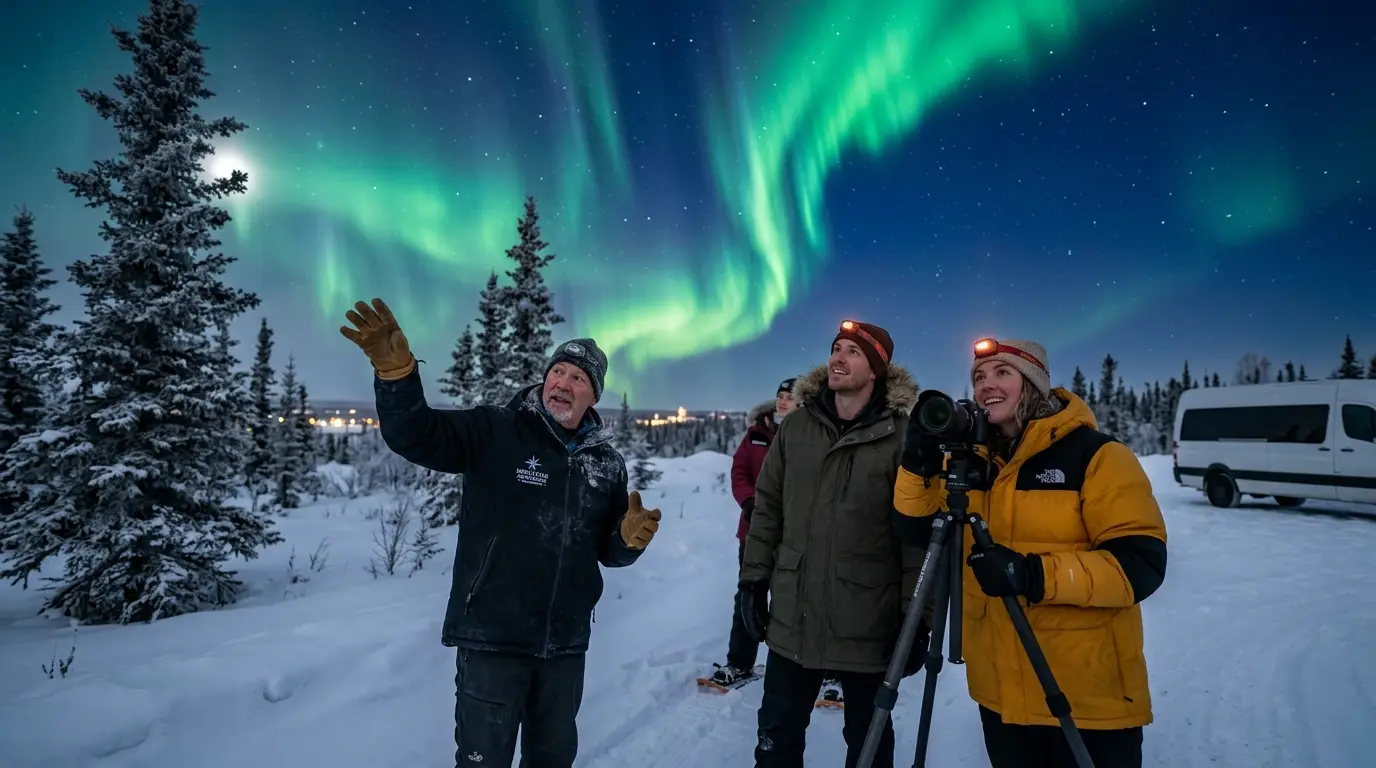
Aurora borealis over Great Slave Lake near Yellowknife, Canada's northern lights capital in the Northwest Territories
stargazing dark sky astrotourism

Northern Lights in Yellowknife: Canada's Aurora Capital

Yellowknife sits beneath the auroral oval: up to 240 aurora nights per year. Guide to seasons, viewing spots, Indigenous-led tours, and cold-weather planning.

Darkness: Bortle 1-5
Latitude: 62°N
Best months: mid-Aug to mid-Apr

Dark-sky facts

Darkness
Bortle 1-5
Best months
mid-Aug to mid-Apr
Country
Canada
Coordinates
62.45°N, 114.37°W
Night access
Aurora viewing is possible roughly mid-August through mid-April, with peak-season tours operating nightly from 9:00 PM to 2:00 AM. Downtown Yellowknife and Great Slave Lake viewing areas are accessible 24/7, but guided aurora tours, dog sledding, and ice fishing operate on seasonal schedules that vary by operator. Check directly with your chosen tour company for current hours before booking flights.
Costs & fees
Aurora viewing from public areas is free. Guided aurora tours range from CAD 100–300 per person per night depending on the operator, group size, and inclusions (heated shelter, hot drinks, outerwear rental, photography guidance). Remote fly-in lodge packages that include aurora viewing, meals, and accommodation start around CAD 1,500–3,000 per person for a two-to-three-night stay. Confirm current pricing directly with operators before booking.

The Milky Way casts a faint shadow. Zodiacal light and airglow are obvious.

This destination rates Bortle 1-5 on the 9-level Bortle dark-sky scale, where 1 is a pristine dark sky and 9 is an inner-city sky. The Milky Way casts a faint shadow. Zodiacal light and airglow are obvious.

On this page

Updated

Yellowknife sits at 62.45°N, almost directly beneath the auroral oval, the ring-shaped zone of maximum geomagnetic activity where solar particles funnel into Earth's upper atmosphere and ignite the northern lights. Most aurora destinations hover at the edge of this ring. Yellowknife is inside it. That geophysical advantage, paired with a subarctic continental climate that produces some of the driest, clearest winter skies in North America, gives the city a verified aurora-visibility window of up to 240 nights per year, the highest frequency of any accessible city on the continent.

This hub page is the practical planning resource for an aurora trip to Yellowknife: when to go, which season fits your tolerance for cold, where to view from, the Indigenous-led operators that add cultural depth most aurora destinations cannot offer, and the logistics of reaching a subarctic fly-in city at the edge of Great Slave Lake.

The sky this month

Computed for Yellowknife at 62°N. Updates nightly.

  • First quarter tonight, 36% illuminated

    Next new moon August 12. The nights either side of it are the darkest of the month.

  • No astronomical darkness right now

    At 62°N the summer sun never sinks far enough below the horizon for a fully dark sky. Proper darkness returns in September.

    Hours of astronomical darkness by month at Yellowknife: January 12 hours, February 10 hours, March 7 hours, April 1 hours, May 0 hours, June 0 hours, July 0 hours, August 0 hours, September 6 hours, October 9 hours, November 12 hours, December 13 hours.

  • Perseids active now

    Peaks August 12. Up to 100 meteors per hour at maximum. The 2026 peak lands on a new moon — a dark-sky year with zero lunar washout.

    See the Perseids guide
  • Aurora season resumes in September

    Summer nights stay too bright for the aurora at this latitude. Book for the darker months and plan around the new moon.

    Northern lights season guide
New moons August 12 September 10 October 10
Add new-moon reminders Full sky calendar

Where to go stargazing in July

The auroral-oval advantage

Yellowknife's aurora reliability starts with geography. The city sits near 68 degrees magnetic latitude even though its geographic coordinate is 62.45°N. Earth's north magnetic pole, which the oval wraps around, currently sits in the Canadian Arctic north of Ellesmere Island. The oval bends south over the Northwest Territories, placing Yellowknife directly under the band of maximum occurrence. The practical result: aurora is frequently visible at Kp 1–2, a threshold low enough that quiet solar-wind conditions still produce displays. Most European aurora destinations need Kp 3 or higher for the same visibility.

The second factor is sky clarity, and this is where Yellowknife pulls ahead of coastal rivals. The city has a subarctic continental climate (Köppen Dfc) with less than 300mm of annual precipitation (11.6 inches). Winters are cold and dry. Contrast Tromsø, Norway, where Atlantic moisture delivers frequent cloud cover: Yellowknife's low humidity means more cloud-free winter nights. Environment and Climate Change Canada consistently ranks the city among the sunniest Canadian destinations in winter.

NWT Tourism data reports a three-night aurora detection rate of 95% or higher during peak season (mid-November through early April). That is not a guarantee of a brilliant show. Intensity depends on solar wind and interplanetary magnetic field conditions. But a three-night stay nearly always produces visible aurora.

One more tailwind for 2026 travelers: Solar Cycle 25 is near its maximum, meaning heightened solar activity, more frequent coronal mass ejections (CMEs), and stronger geomagnetic storms. The NOAA Space Weather Prediction Center projects elevated aurora frequency through at least 2027.

Month by month

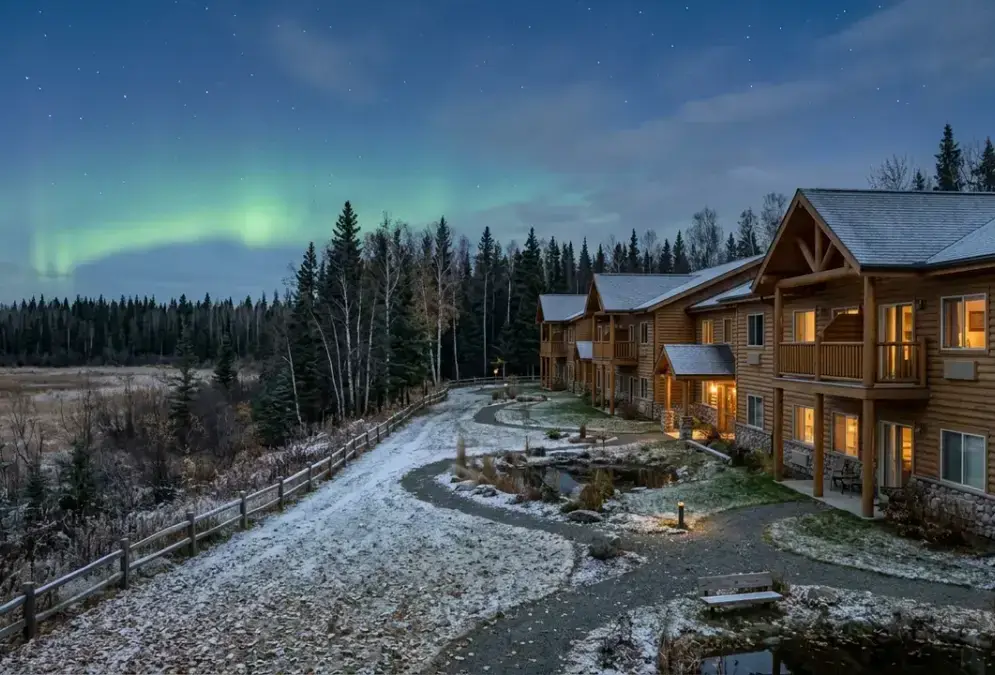
Aurora season in Yellowknife splits into two windows: fall (mid-August through September), which offers warmer temperatures and open-water reflections, and winter (mid-November through early April), which brings colder but statistically clearer skies. The city sits directly under the Auroral Oval, so geomagnetic activity is rarely the limiting factor; cloud cover is what actually decides whether you see anything on a given night. All three lodges in this ranking have different seasonal calendars: Blachford Lake Lodge's guided excursions run roughly late August through April, the Explorer Hotel's wake-up call service operates through both aurora seasons, and Nova Inn is available year-round with no seasonal programming.

  • January: Peak — Peak winter season: longest nights, coldest and clearest skies. Blachford Lake Lodge's guided excursions and the Explorer Hotel's wake-up call service both fully operational.
  • February: Peak — Still deep winter with excellent aurora odds. Cold — routinely below -30°C — but the clear, stable air rewards anyone who dresses for it.
  • March: Peak — Spring equinox often brings a statistical uptick in geomagnetic activity. Still reliably dark and cold; all lodge aurora programming running at full capacity.
  • April: Fair — Early April still workable; by late April nights shorten fast and the aurora season winds down. Blachford Lake Lodge's winter season typically wraps by mid-month.
  • May: Off-season — Near-continuous daylight as midnight sun approaches. No meaningful darkness for aurora viewing at any lodge.
  • June: Off-season — Summer solstice — effectively no darkness. Aurora viewing is not possible this month.
  • July: Off-season — Midnight sun continues through mid-month. Darkness does not return in time for meaningful aurora viewing.
  • August: Good — Darkness returns in the second half of the month. Fall aurora season begins with warmer temperatures. Blachford Lake Lodge's guided excursions typically resume late August.
  • September: Peak — Peak fall season: warmer than winter, open water for lake reflections, autumn equinox activity uptick. One of the best months for a more comfortable aurora experience.
  • October: Good — Workable dark nights but transitional weather — cloudier than the deep-winter months. Lodges operate but conditions are less predictable.
  • November: Good — Winter season kicks in around mid-November. Long dark nights return, though early winter can bring more cloud cover than January–March.
  • December: Peak — Longest nights of the year. Peak winter aurora season with all lodge programming fully operational. The Explorer Hotel's wake-up call service and Blachford's guided excursions run nightly.

Going in January? See what else the sky offers that month

When to go

Yellowknife has two distinct aurora seasons, and the choice between them is mostly a trade-off between temperature and water reflections.

Fall aurora: mid-August to end of September

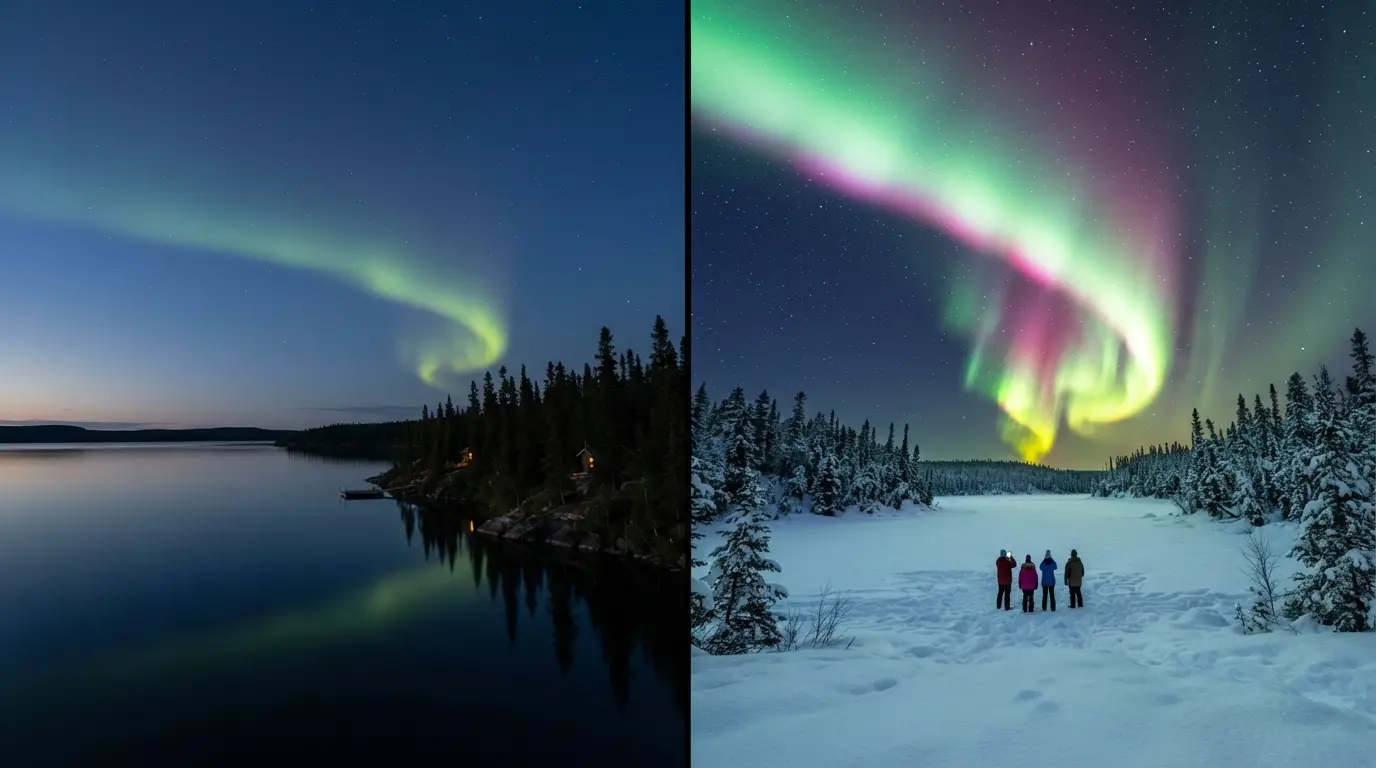
Fall offers the gentlest introduction to subarctic aurora viewing. Great Slave Lake is still ice-free, so aurora reflections in open water are possible, something winter visitors never get. Temperatures sit between 0°C and 15°C, far warmer than the deep winter. The trade-offs: nights are shorter (true astronomical darkness only returns by late August), and September brings increased cloud cover from autumn weather systems. Fall coincides with the September equinox, when Earth's magnetic field geometry relative to the solar wind produces a statistically measured 20–30% boost in geomagnetic activity — the equinox effect.

Winter aurora: November to early April

This is the peak window. Darkness deepens to 16–18 hours per day by December, and the cold air holds almost no moisture. Photographers prize the atmospheric transparency on these nights: a hard, almost blue-black sky that makes even faint aurora pop. January averages -26°C (-15°F), and -40°C is common on clear nights. Tour operators run heated viewing shelters, teepees, and cabins for a reason. The March equinox provides the same geomagnetic boost as September, with the bonus of longer daylight for daytime activities and temperatures that ease to around -10°C.

Which to pick: March is the sleeper choice. You get the equinox boost, manageable cold, enough darkness for a full aurora session, and daylight for dog sledding or ice-road exploration. If you want aurora reflections on open water, late August or early September is your only window. See how that timing compares against five other aurora destinations in Northern Lights Season 2026-27.

Month by month

Aurora season in Yellowknife splits into two windows: fall (mid-August through September), which offers warmer temperatures and open-water reflections, and winter (mid-November through early April), which brings colder but statistically clearer skies. The city sits directly under the Auroral Oval, so geomagnetic activity is rarely the limiting factor; cloud cover is what actually decides whether you see anything on a given night. All three lodges in this ranking have different seasonal calendars: Blachford Lake Lodge's guided excursions run roughly late August through April, the Explorer Hotel's wake-up call service operates through both aurora seasons, and Nova Inn is available year-round with no seasonal programming.

  • January: Peak — Peak winter season: longest nights, coldest and clearest skies. Blachford Lake Lodge's guided excursions and the Explorer Hotel's wake-up call service both fully operational.
  • February: Peak — Still deep winter with excellent aurora odds. Cold — routinely below -30°C — but the clear, stable air rewards anyone who dresses for it.
  • March: Peak — Spring equinox often brings a statistical uptick in geomagnetic activity. Still reliably dark and cold; all lodge aurora programming running at full capacity.
  • April: Fair — Early April still workable; by late April nights shorten fast and the aurora season winds down. Blachford Lake Lodge's winter season typically wraps by mid-month.
  • May: Off-season — Near-continuous daylight as midnight sun approaches. No meaningful darkness for aurora viewing at any lodge.
  • June: Off-season — Summer solstice — effectively no darkness. Aurora viewing is not possible this month.
  • July: Off-season — Midnight sun continues through mid-month. Darkness does not return in time for meaningful aurora viewing.
  • August: Good — Darkness returns in the second half of the month. Fall aurora season begins with warmer temperatures. Blachford Lake Lodge's guided excursions typically resume late August.
  • September: Peak — Peak fall season: warmer than winter, open water for lake reflections, autumn equinox activity uptick. One of the best months for a more comfortable aurora experience.
  • October: Good — Workable dark nights but transitional weather — cloudier than the deep-winter months. Lodges operate but conditions are less predictable.
  • November: Good — Winter season kicks in around mid-November. Long dark nights return, though early winter can bring more cloud cover than January–March.
  • December: Peak — Longest nights of the year. Peak winter aurora season with all lodge programming fully operational. The Explorer Hotel's wake-up call service and Blachford's guided excursions run nightly.

Going in January? See what else the sky offers that month

Where to view the aurora

You can see the northern lights from downtown Yellowknife, but you should not rely on it. The city core sits at roughly Bortle 5–6 on the dark-sky scale, enough light pollution to wash out fainter displays and kill the contrast that makes aurora photography work.

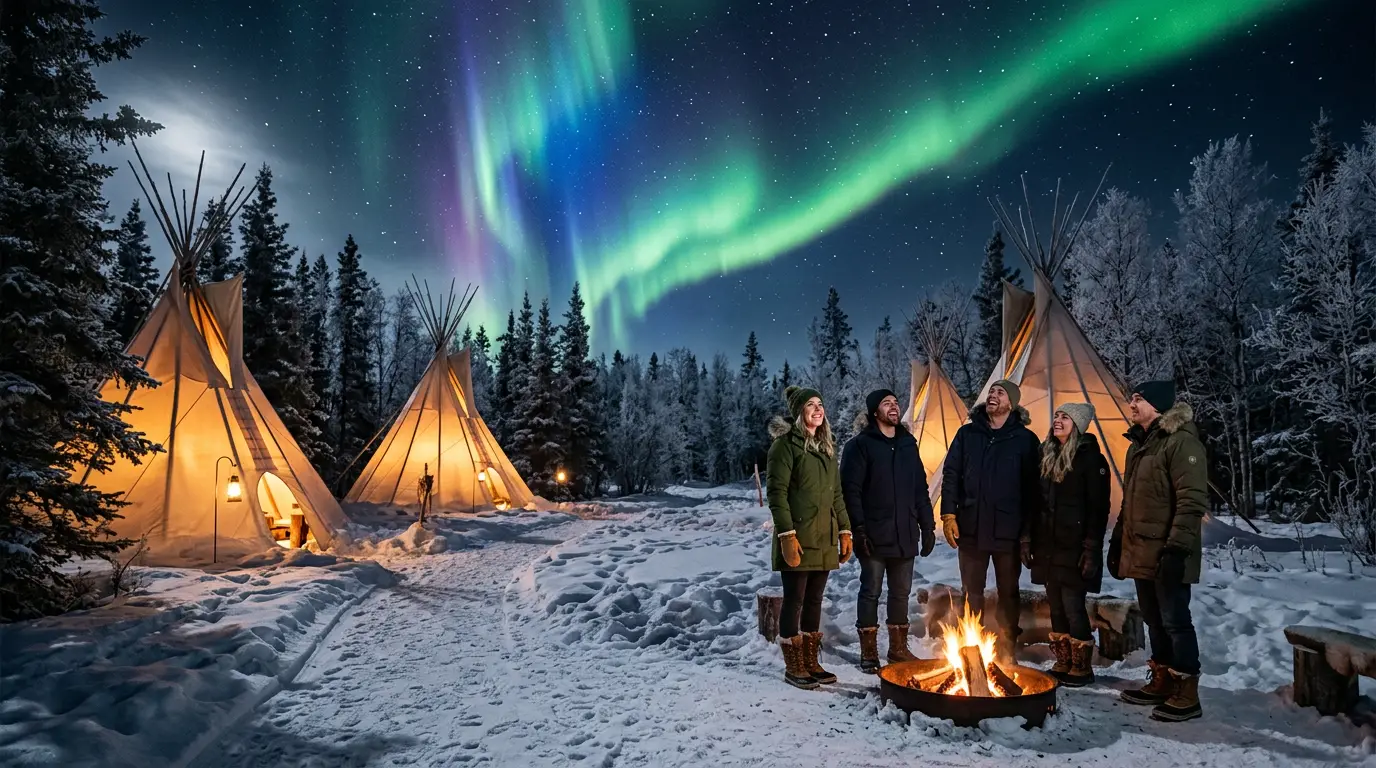
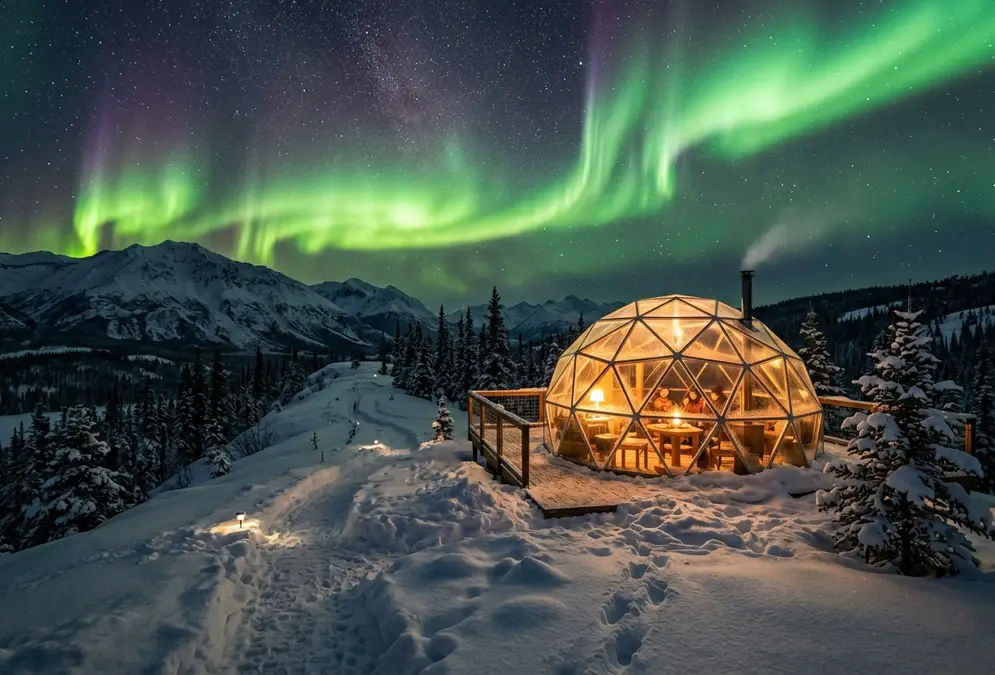
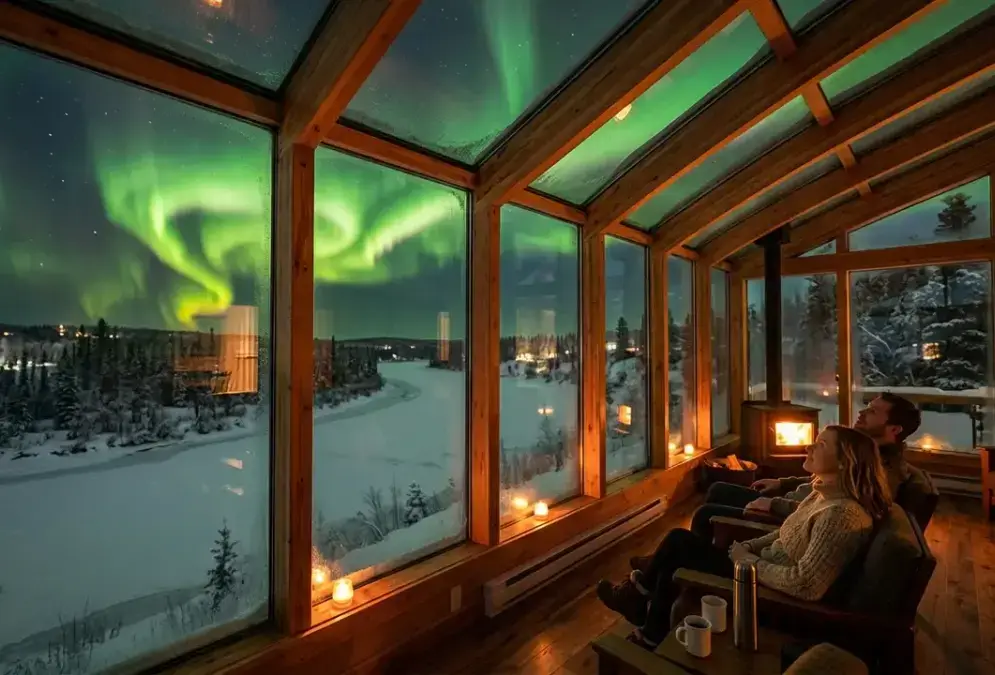
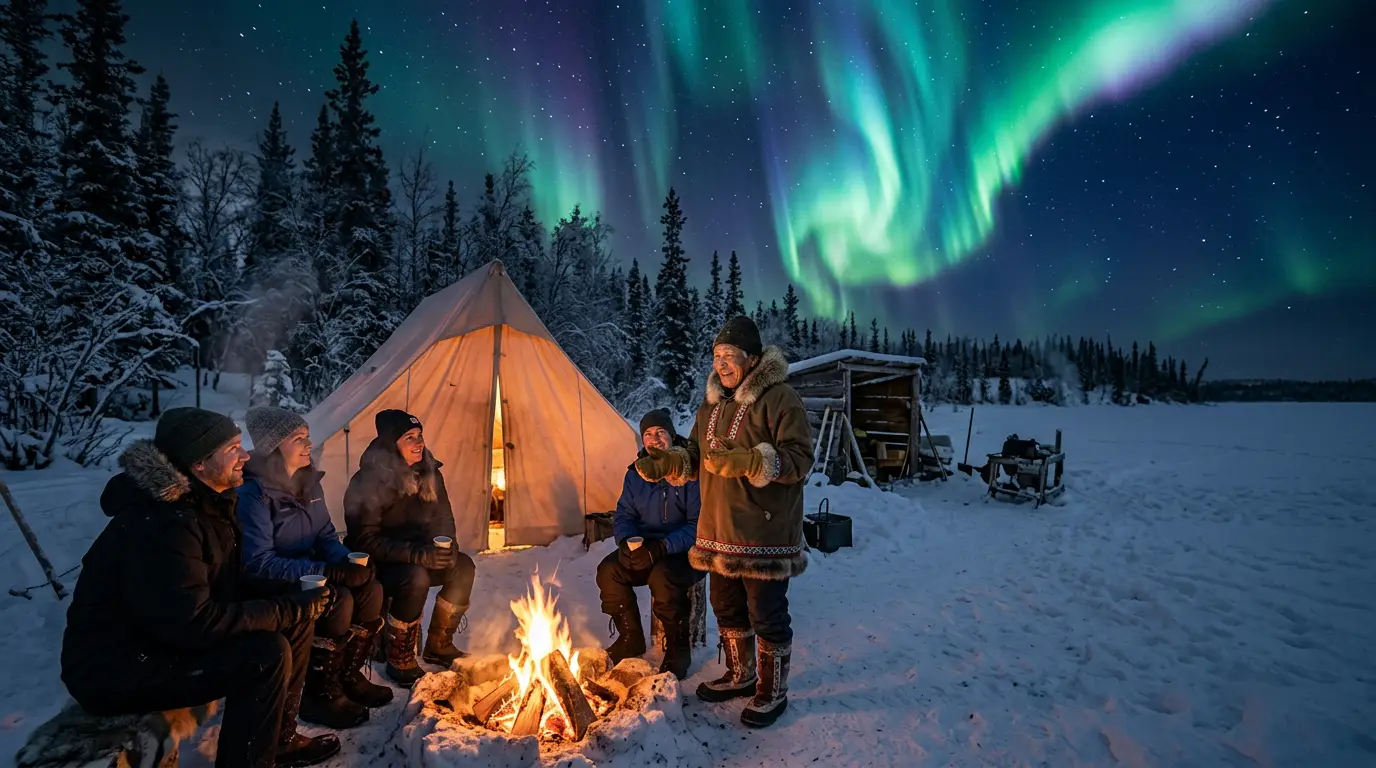
Most visitors book an aurora tour that drives 15–30 minutes outside city limits into Bortle 2–3 skies. The standard setup: a heated viewing shelter or teepee, hot drinks, a guide monitoring space-weather data through the night, and hotel pickup and drop-off. Some operators provide winter outerwear rated to -40°C, which means you do not need to buy expedition gear for a three-night trip.

Three viewing tiers exist:

  • Aurora Village (west of town on the Ingraham Trail): the largest operation. Heated teepees with Indigenous hospitality, 360-degree swivel chairs, a warm-up lodge, and winter clothing rentals. The scale means more people, but the infrastructure is the most polished and tripod-friendly.
  • Independent tour operators like North Star Adventures and B-Dene Adventures: smaller groups, Dene cultural integration, and less-crowded viewing sites farther from town.
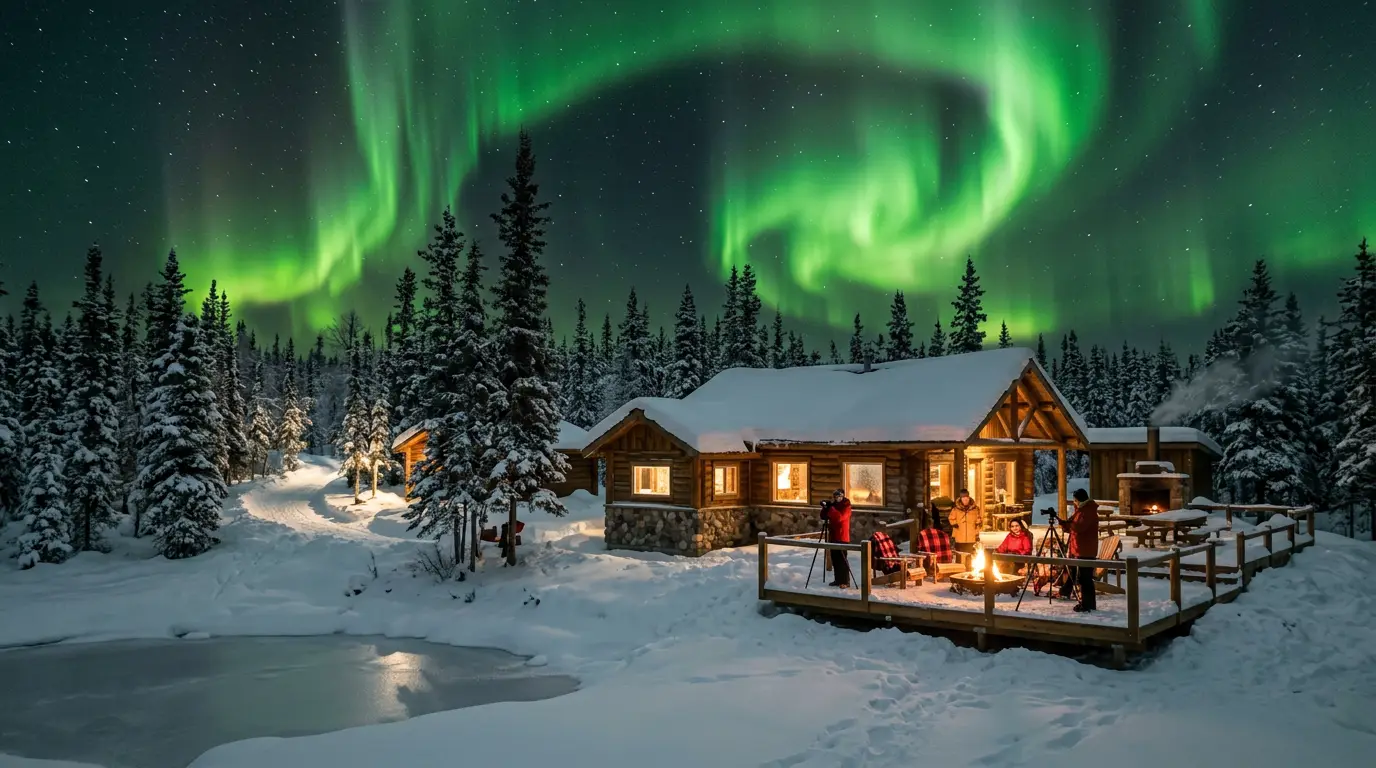
  • Remote fly-in lodges like Blachford Lake Lodge: reached by bush plane, you stay on-site for the duration. These lodges sit under Bortle 1–2 skies on the frozen surface of Great Slave Lake or at remote lake shorelines. The setup is front-porch aurora viewing — walk outside and look up. Privacy and darkness are unmatched, but you commit to the lodge for your entire stay, and weather days are still possible.

Great Slave Lake, the 10th-largest lake in the world, deserves its own mention. Its frozen surface acts as a vast flat foreground for aurora photography, free of tree silhouettes and artificial light. Several tour operators set up viewing stations directly on the lake ice. In fall, before freeze-up in late November, the open water reflects aurora colour across a near-infinite mirror.

All tours

Dene Indigenous aurora experiences

Yellowknife stands on the traditional territory of the Yellowknives Dene First Nation, who have inhabited this landscape for millennia and whose oral tradition includes narratives about the northern lights that predate European contact. This is a cultural layer most other aurora destinations cannot offer.

North Star Adventures, owned by Yellowknives Dene entrepreneur Joe Bailey, combines aurora viewing with storytelling, traditional knowledge, and photography guidance at heated teepee sites. B-Dene Adventures is a family-run Dene operation offering small-group tours built around Dene legends of the aurora: the lights as spirits of ancestors dancing across the sky. Aurora Village incorporates Indigenous hospitality into its larger-scale operation.

Booking an Indigenous-led tour means paying for a guide who grew up under these lights and can read the sky in a way a seasonal worker from elsewhere cannot.

Getting to Yellowknife

Yellowknife is fly-in only for practical purposes. Yellowknife Airport (YZF) handles direct flights from Vancouver, Edmonton, Calgary, and Toronto on Air Canada, WestJet, and Canadian North. Edmonton to Yellowknife is about 1.5 hours in the air; Vancouver to Yellowknife about 2.5 hours. No passenger rail service reaches the Northwest Territories. Highway 3 connects Yellowknife to Alberta, but the drive is remote, subject to winter closures, and not practical for most visitors. It takes two days of driving from Edmonton.

Once you land, the city core is walkable, but aurora tours and winter activities require transport. Most tour operators include hotel pickup. Taxis and rideshare are limited. A rental car is useful if you plan to self-drive to viewing spots along the Ingraham Trail, but winter driving on ice roads requires experience, and the rental-agency winter-tire add-on is mandatory.

Interactive map — loads as you scroll (requires JavaScript)

Tap a pin to open the lodge, tour, or destination page.

How long to stay

Best season

Mid-November through late March for the darkest nights and highest clear-sky probability. March combines the equinox geomagnetic boost with manageable temperatures around -10°C and enough daylight for winter activities. Late August and September offer the mildest temperatures and open-water aurora reflections on Great Slave Lake, but shorter nights and higher autumn cloud cover reduce reliability.

Quietest hours

Aurora activity typically peaks between 10:00 PM and 2:00 AM local time. Tour groups thin out after midnight at major viewing sites, and weeknights (Monday through Thursday) see the lowest visitor numbers across all operators.

Visit duration

Three nights minimum to give yourself a 95% or higher probability of catching visible aurora. Four to five nights is safer if you want a buffer for cloudy nights and time to add dog sledding, ice fishing, or a winter festival.

Winter beyond the aurora

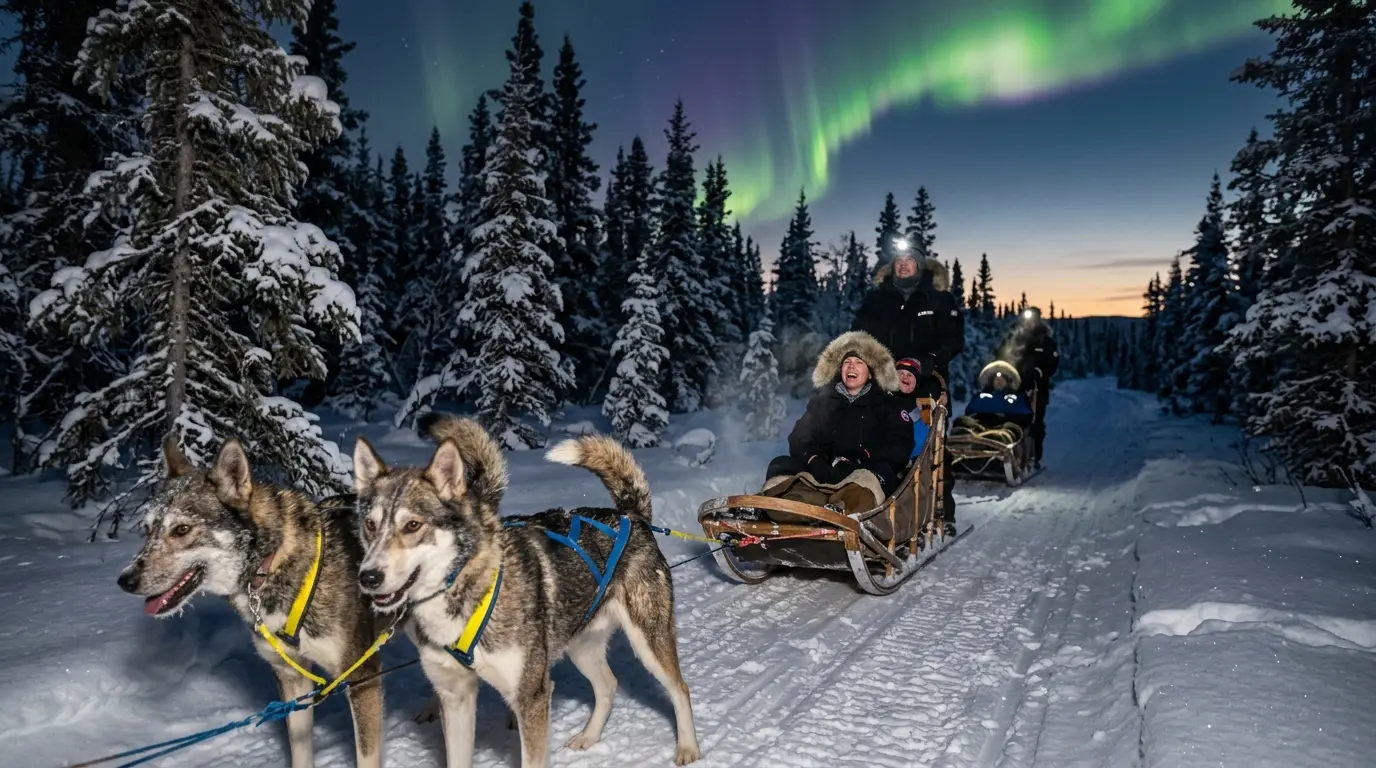
A three-night aurora trip leaves daylight hours open. Yellowknife fills them with activities that justify the journey even on nights the aurora does not cooperate.

  • Dog sledding: several operators run half-day tours on Great Slave Lake and through boreal forest trails. Beck's Kennels and Aurora World are the established names. Expect to pay roughly CAD 150–250 per person for a half-day.
  • Ice fishing: drill through meter-thick ice on Great Slave Lake for lake trout and northern pike. Most operators bundle transportation, gear, a heated shack, and a hot meal for CAD 150–200 per person.
  • Ice roads: the Dettah Ice Road across Yellowknife Bay opens each winter, connecting the city to the Dene community of Dettah. Walking or driving it is one of the stranger, more beautiful travel experiences available: a road that exists only a few months each year, built on frozen lake water.
  • Snowking Winter Festival (March): a castle built entirely from snow and ice on Great Slave Lake, with live music, art shows, and theatre performances inside the frozen walls. Entry is roughly CAD 15–25.
  • Long John Jamboree (late March): ice-carving competitions, snowmobile races, and a sugar shack on the frozen lake. Free entry; food and drink sold on site.

Top lodges at a glance

2 4.1 Modern

Best best balance of aurora amenities and bookability

The Explorer Hotel

Aurora-view rooms, wake-up calls, from ~$220 CAD/night

$$ · CAD $180–$350/night depending on room type and season — check Booking.com for live rates and free cancellation View lodge
3 3.0 Budget

Best cheapest bed under the auroral oval

Nova Inn Yellowknife

Budget in-town hotel, no aurora programming, from ~$160 CAD/night

$ · from C$160/night View lodge
See the full ranking: Best Aurora Lodges in Yellowknife

Reporter notebook

Insider tips

Best time

Book for March, not January

March gives you the March equinox geomagnetic boost, darkness through early April, temperatures that have eased to around -10°C instead of -30°C, and enough daylight to add dog sledding or ice fishing to your trip. January delivers deeper cold for marginal extra darkness.

What to bring

Rent the -40°C gear; don't buy it

Most aurora tour operators and several outdoor outfitters in Yellowknife rent full extreme-cold kits (parka, snow pants, boots, mitts, balaclava) rated to -40°C for roughly CAD 40–60 per day. Unless you live in a place where you will use expedition-weight winter gear again, renting saves you several hundred dollars and the luggage space.

Booking tip

Lock in your aurora tours before your flights

Peak-season tours fill up fast, especially the small-group Indigenous operators like North Star Adventures and B-Dene Adventures. Book tours first, then build your flights around those dates rather than the other way around. If a weather system moves in, most operators let you reschedule within your stay window at no cost.

Frequently asked questions

Why is Yellowknife the best place to see the northern lights?

Yellowknife sits almost directly beneath the auroral oval, the ring-shaped zone of maximum aurora activity driven by Earth's magnetic field. Most aurora destinations sit at the oval's edge; Yellowknife is positioned inside it. Combined with a subarctic continental-dry climate that produces crystal-clear winter nights (less than 300mm annual precipitation), the city offers aurora visibility up to 240 nights per year, the highest frequency of any North American city.

What is the best month to see the northern lights in Yellowknife?

March and late September are the peak months, driven by the equinox effect that boosts geomagnetic activity by 20–30%. March has the edge: you get the equinox boost, deep darkness through early April, temperatures that have eased to around -10°C, and enough daylight for winter activities like dog sledding. September offers milder weather and open-water reflections on Great Slave Lake but brings shorter nights and higher autumn cloud cover.

How many nights should I stay to see the northern lights in Yellowknife?

Three nights is the minimum recommended stay. NWT Tourism data reports a 95% or higher aurora detection rate for visitors staying three or more nights during peak season (mid-November through early April). Four to five nights gives you a stronger buffer for cloudy nights and room to add daytime winter activities without rushing your aurora viewing.

Can you see the northern lights from downtown Yellowknife?

Yes, but quality varies significantly. Downtown Yellowknife has moderate light pollution at Bortle 5–6 on the dark-sky scale. Most visitors book aurora tours that drive 15–30 minutes outside city limits to reach Bortle 2–3 skies. Remote fly-in lodges on Great Slave Lake offer Bortle 1–2 skies with front-porch viewing. Heated shelters, teepees, and cabins are standard at tour operators, making cold-weather waiting comfortable.

How do I get to Yellowknife for the northern lights?

Yellowknife is fly-in only for practical purposes. Yellowknife Airport (YZF) handles direct flights from Vancouver, Edmonton, Calgary, and Toronto on Air Canada, WestJet, and Canadian North. Edmonton to Yellowknife is about 1.5 hours; Vancouver to Yellowknife about 2.5 hours. No passenger rail connects to the Northwest Territories, and the only road (Highway 3 from Alberta) takes two days of driving and is subject to winter closures.

What Kp index do you need to see the northern lights in Yellowknife?

Because Yellowknife sits inside the auroral oval at approximately 68 degrees magnetic latitude, aurora is frequently visible at Kp 1–2, a lower threshold than most aurora destinations, which typically need Kp 3 or higher. On clear nights during peak season, faint aurora is visible almost every night regardless of the forecast Kp. The NOAA OVATION aurora forecast and the local Astronomy North forecast are the recommended tools for real-time planning.

What Indigenous cultural experiences are available with aurora tours?

Several Yellowknife tour operators are Indigenous-owned and incorporate Dene cultural elements alongside aurora viewing. North Star Adventures (Yellowknives Dene-owned) combines storytelling, traditional knowledge, and photography guidance at heated teepee sites. B-Dene Adventures offers Dene-led tours with traditional legends of the aurora as ancestors dancing across the sky. Aurora Village features heated teepees with Indigenous hospitality. This cultural dimension is something most other aurora destinations cannot offer.

How cold does it get during aurora season in Yellowknife?

January, the coldest month, averages -26°C (-15°F), and -40°C is common on clear aurora nights from December through February. Fall aurora season (late August to September) is much milder at 0°C to 15°C. By March, temperatures ease to around -10°C to -5°C. Most tour operators provide heated viewing shelters and rent outerwear rated to -40°C, so you do not need to buy expedition gear for a short trip.

Further reading

Sources