Why This Tour Is Different
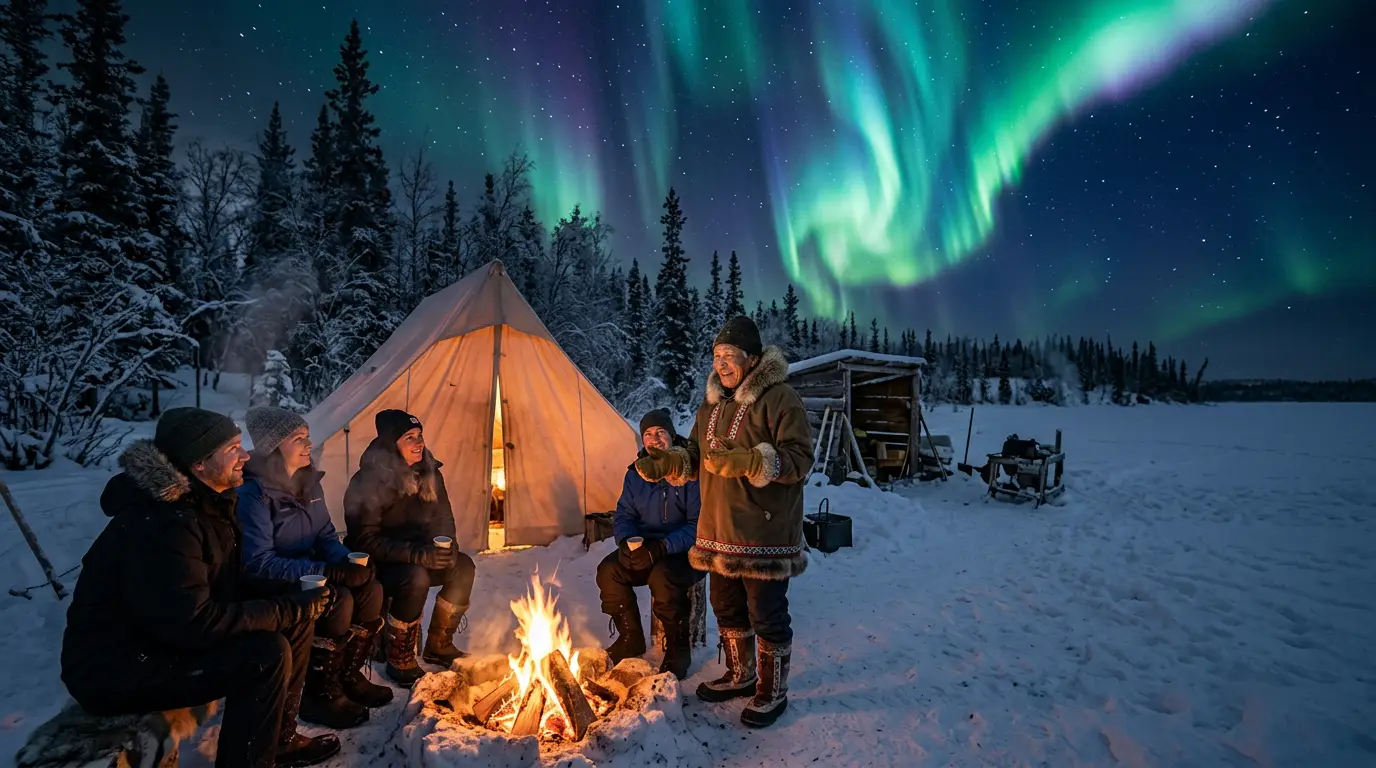
North Star Adventures was the world's first dedicated aurora hunting tour company, founded in 2007 by Joe, a member of the Yellowknives Dene First Nation. Most Yellowknife operators park guests at a heated cabin or teepee and wait. North Star's guides actively hunt clear skies, reading wind, cloud cover, and aurora forecast data in real time to drive wherever conditions are best that night.
The company is 100% Indigenous-owned. Every guide is Indigenous, and the Dene cultural perspective — the northern lights as ancestral spirits dancing — runs through every tour, not bolted on as a marketing footnote. The self-reported sighting success rate is 98%, a number Yellowknife's position beneath the auroral oval makes plausible: the city sits at roughly 68 degrees magnetic latitude, inside the ring where aurora is frequently visible even at Kp 1–2. More on that geophysical advantage in the Yellowknife northern lights guide.
What a Night Actually Looks Like
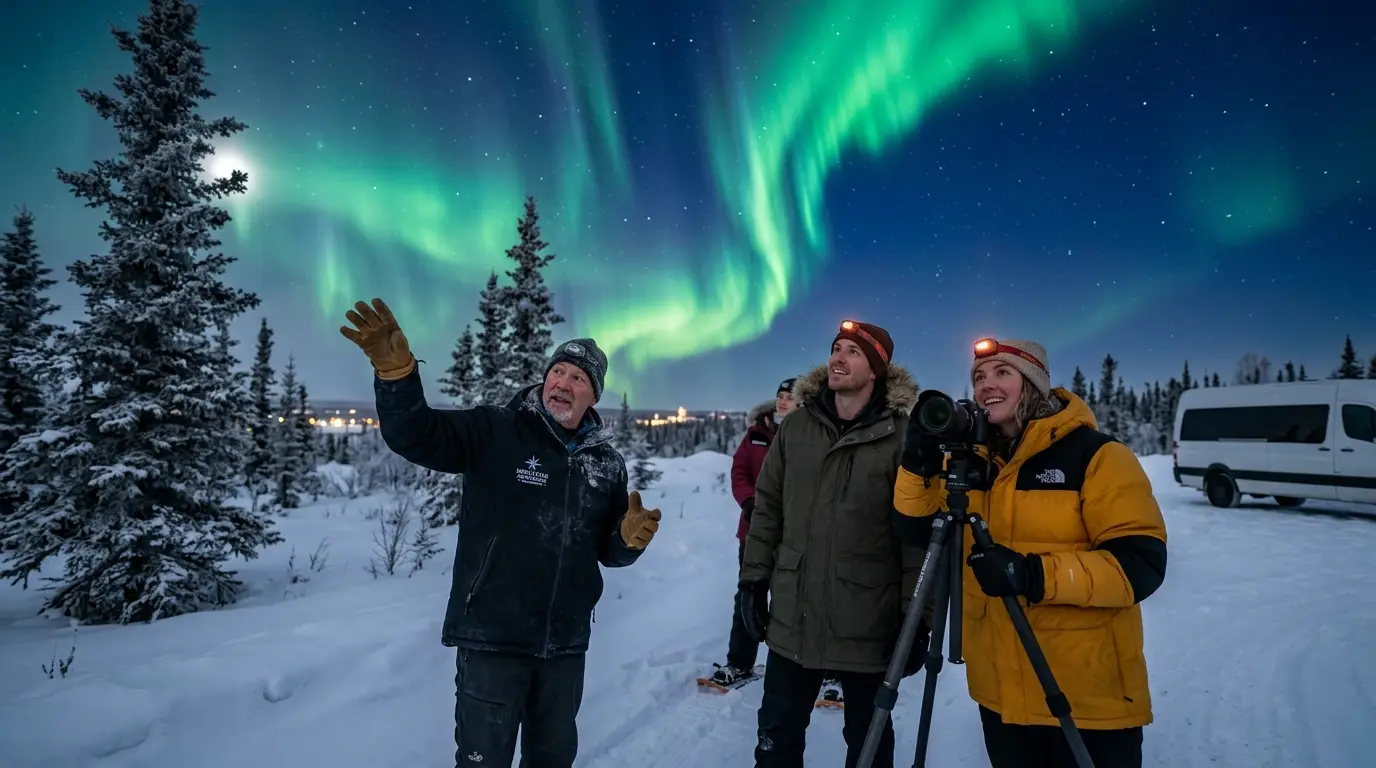
Pick-up from your Yellowknife hotel runs 9:00–10:00 PM. The group of up to 11 guests boards a heated 12-passenger van, and the guide decides the route based on live satellite cloud imagery and aurora activity readings. No two nights follow the same itinerary.
The guide scouts locations with a clean northern horizon and a foreground worth including. At each stop, the group sets up tripods while the guide identifies constellations, the Milky Way (when the season allows), shooting stars, and any wildlife. Foxes, wolves, and wood bison are not uncommon in the subarctic darkness around Great Slave Lake.
A professional photo session is included: the guide takes portraits of guests with the aurora behind them, delivering up to 20 photos per group the next day. Tripods and headlamps are available on a limited basis. Hot chocolate and Canadian maple cookies come out mid-tour. The van stays heated between stops — essential when winter temperatures sit between -10°C and -40°C.
The tour wraps between 1:00–2:00 AM, roughly four hours after departure, though an active display can stretch the night longer.
Dene Culture and Storytelling
This is what a standard aurora tour cannot offer. All guides are Indigenous, and the Dene worldview shapes the experience from the opening land acknowledgement of Akaitcho Dene traditional territory through to the final story.
The northern lights — Yàkeɂǫ in the Dene language — are understood as the spirits of ancestors dancing in the sky. Guides share this cosmology alongside the geophysical explanation, treating them as complementary rather than competing. Founder Joe was raised by his grandparents on the shores of Great Slave Lake in Deninu Kue, and the company describes itself as "North America's original tour guides," rooted in Dene traditions of welcoming travelers to their territory.
The company operates according to three Dene laws of life: respect the land, respect each other, respect yourself. For travelers who want more than a photo, this cultural layer turns a light show into a genuine encounter with people who have lived under this sky for millennia — something no cabin-and-camera tour can replicate.
Practical Details
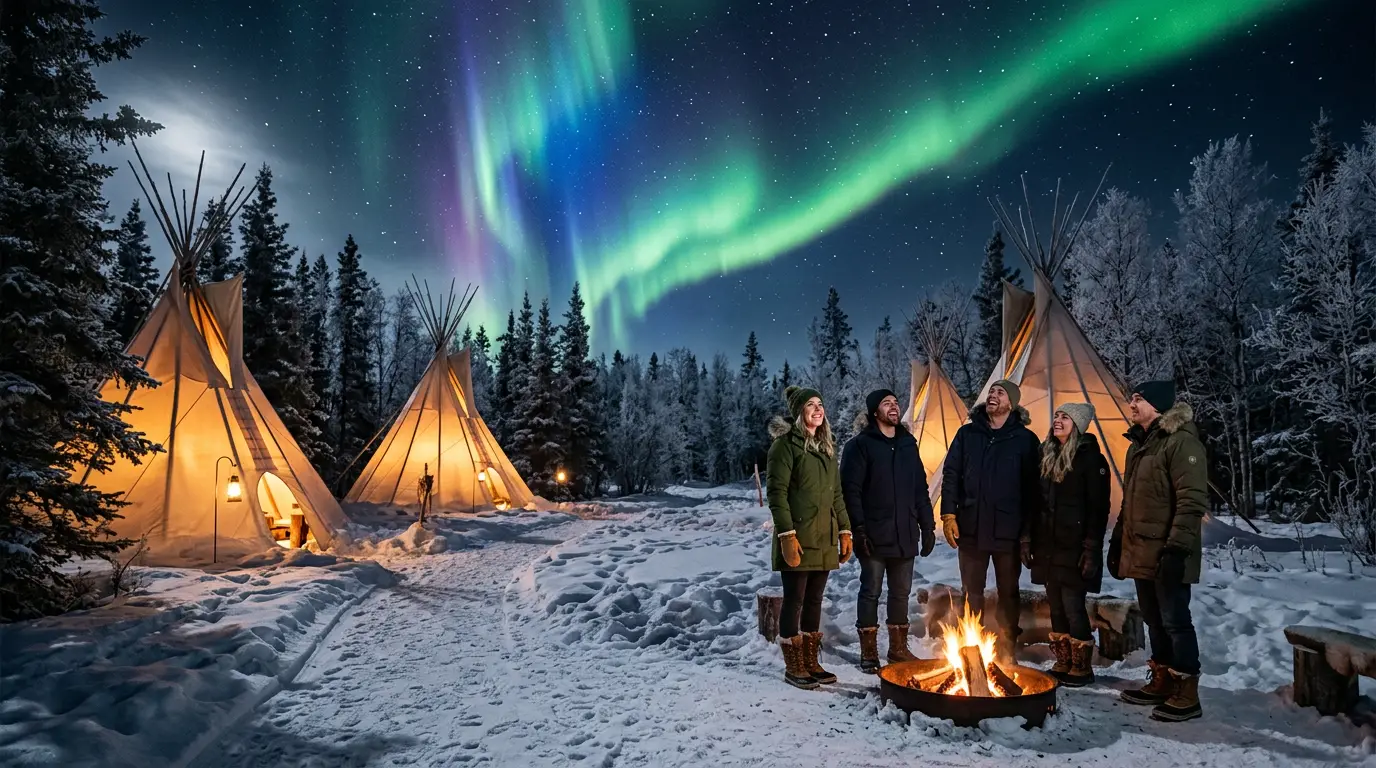
The flagship Small Group Tour runs $199 CAD per person (approximately $147 USD at mid-2026 rates) for the 4-hour outing. A Private Aurora Hunting Tour at $1,196 CAD gets you an exclusive vehicle and undivided guide attention — the right call for photographers who need extra time at each position. An Indigenous Aurora Teepee Tour at $249 CAD adds a heated teepee base to the same hunting format.
The season runs August 15 through April 15. Peak geomagnetic activity arrives around the October and March equinoxes, but the company ranks its best months pragmatically: September first (warm, the aurora reflects off the still-unfrozen Great Slave Lake), then August, March (clearer nights, the Snow Castle is open), April (blue-sky aurora visible during late civil twilight), and January (the clearest skies but -40°C cold).
The tour books exclusively through northstaradventures.ca via a Xola checkout widget. As of mid-2026, North Star Adventures is not listed on GetYourGuide or Viator — you book direct. Phone support: +1 (867) 446-2900 for English, +1 (867) 445-8299 for Korean and Chinese. WhatsApp is available at the English number. The company reports over 1,700 Tripadvisor reviews, claiming the most five-star reviews of any aurora tour operator in Canada.
What to Bring and Wear
Winter temperatures between November and March demand real cold-weather preparation. North Star rents winter clothing for guests who arrive without subarctic-grade gear. If you bring your own: thermal base layers, an insulated mid-layer, a windproof outer shell, insulated boots rated to -40°C, mittens (not gloves — dexterity at -30°C is a losing game), a balaclava, and chemical hand and foot warmers.
For photographers bringing a camera: a wide-aperture lens (f/2.8 or faster) handles the high-ISO noise floor far better than a kit lens, and a sturdy tripod is essential for multi-second exposures. The included guide photos mean you do not need a camera at all, but if you want your own compositions, plan for batteries. Cold drains lithium-ion cells fast — bring at least three spares and keep one against your body between stops. A lens heater strip prevents frost on the front element during long shoots.
If this is your first aurora trip, start with the best time to see northern lights in Yellowknife guide to match your dates to the conditions that matter.
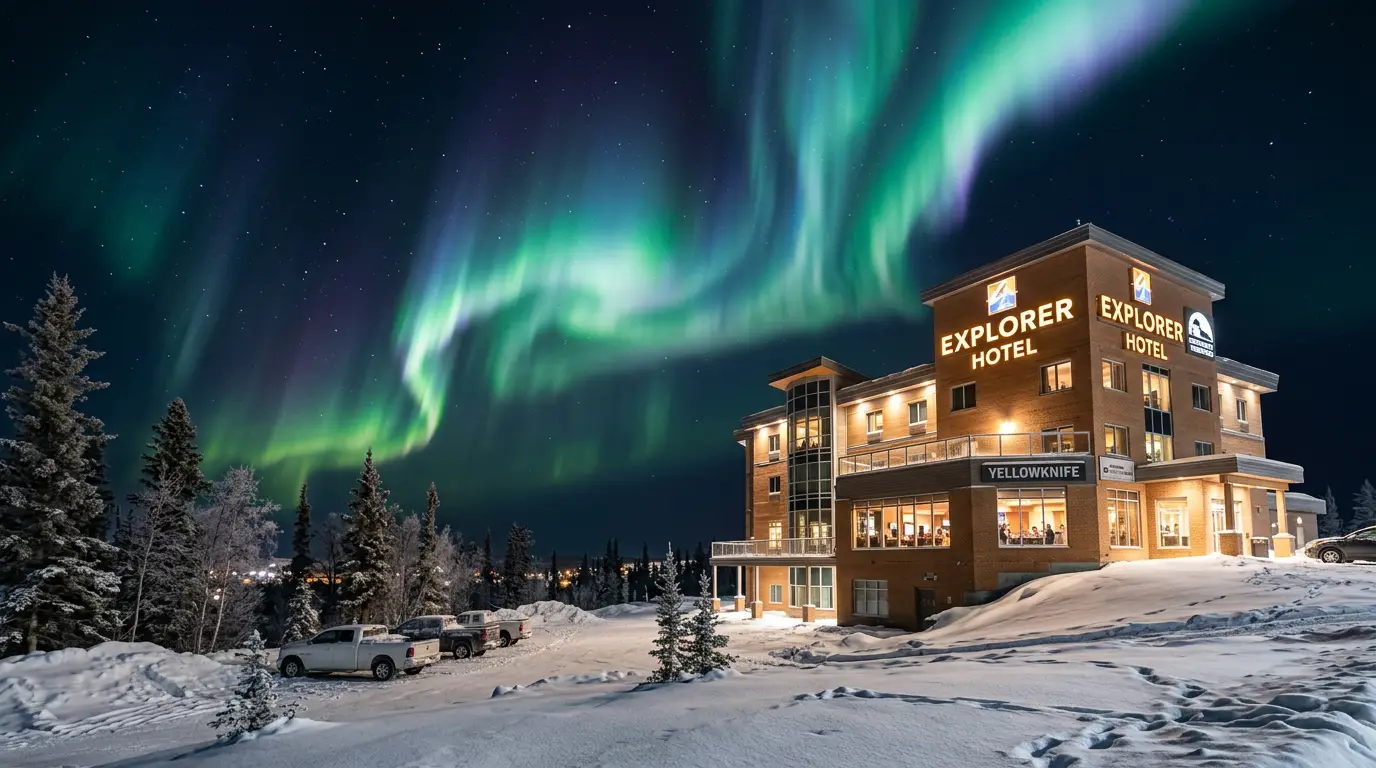
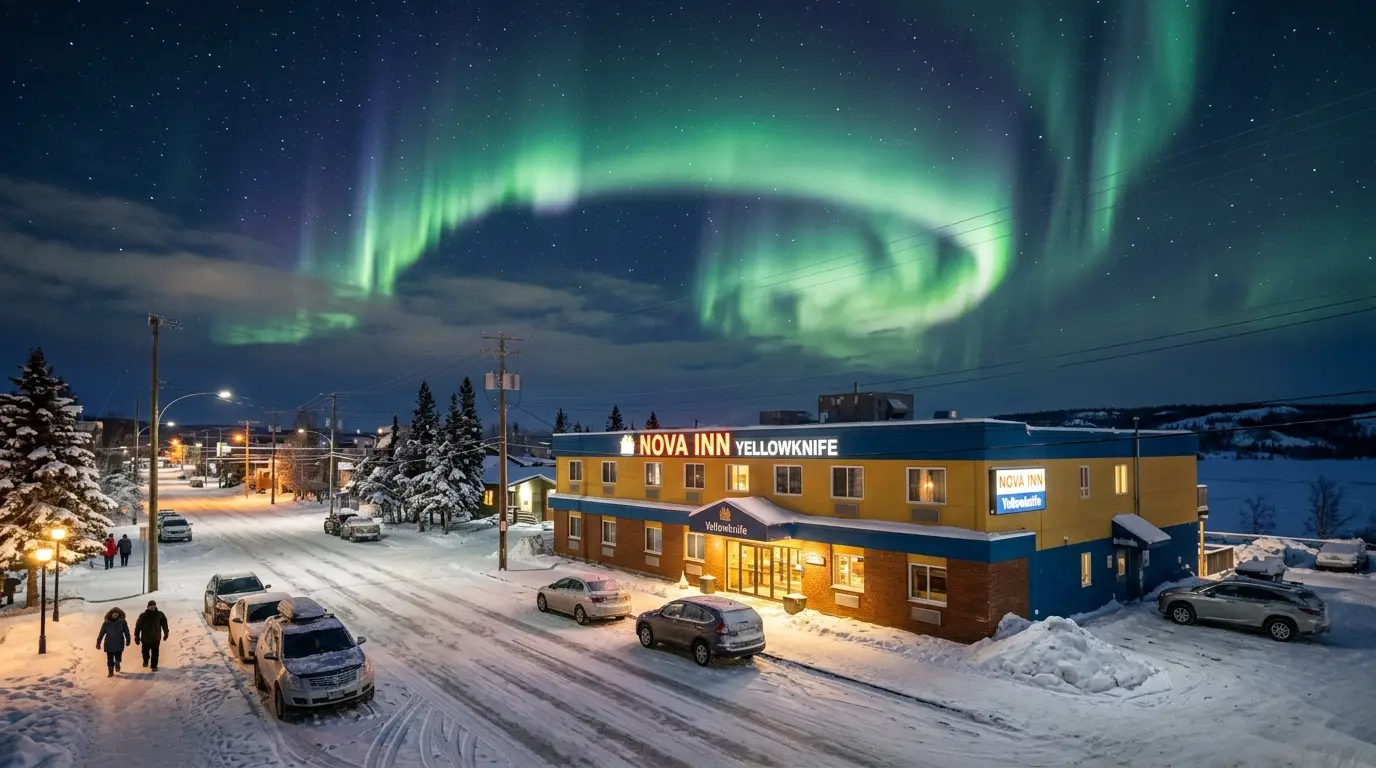
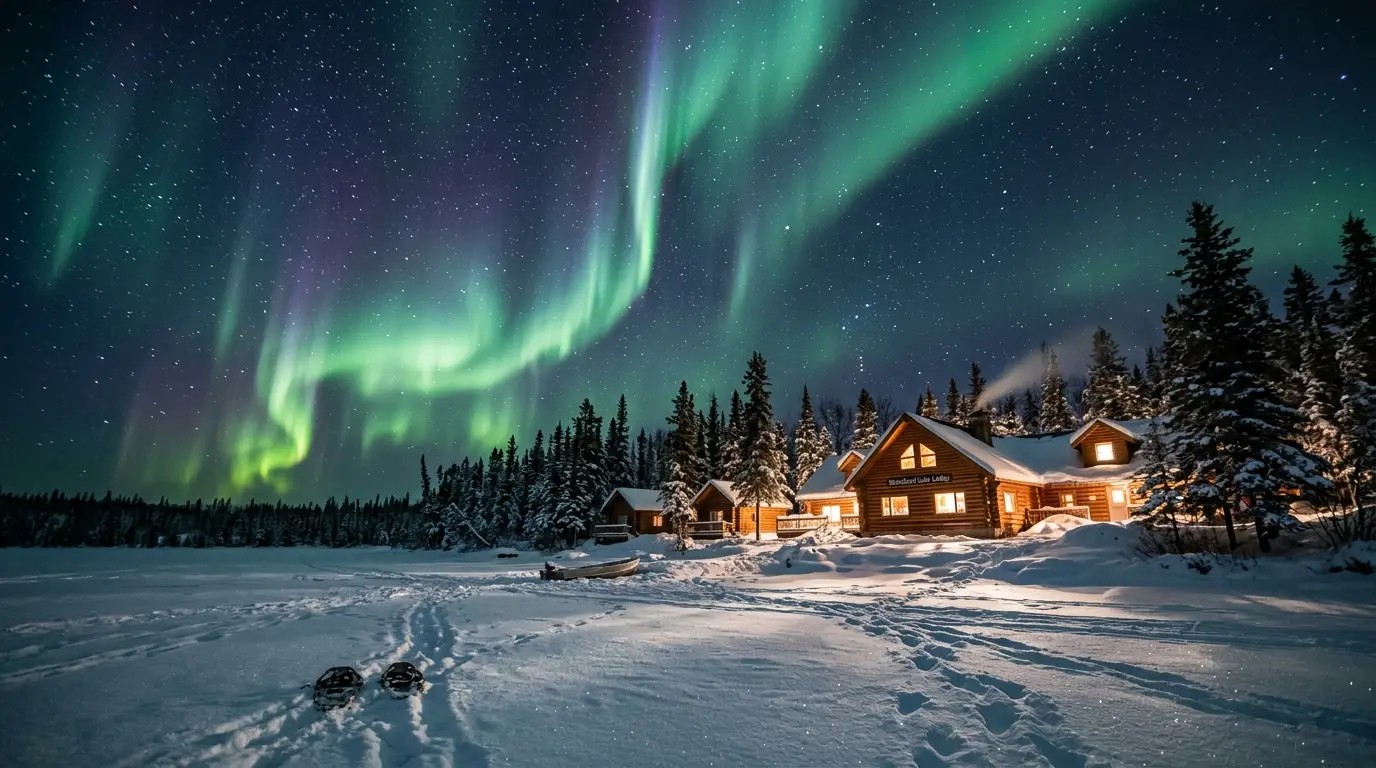
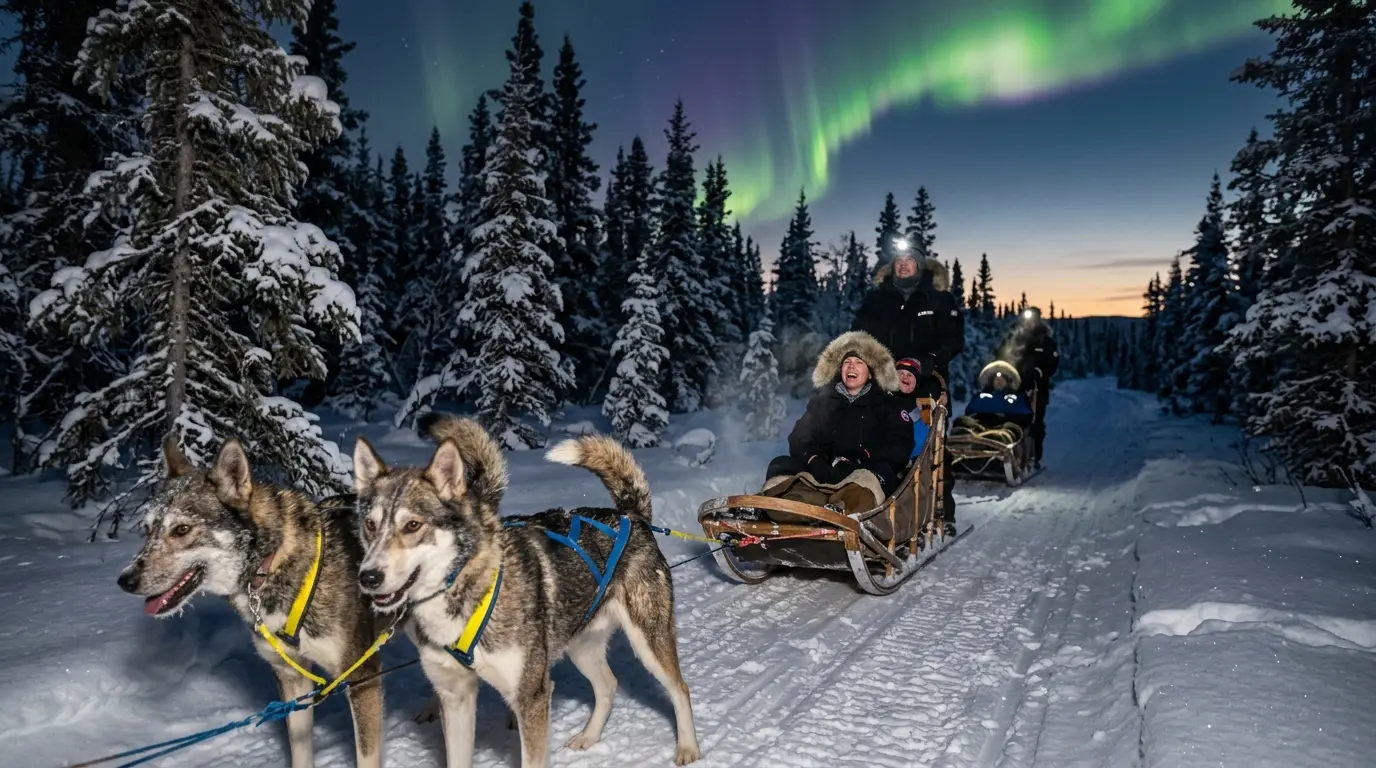
If you prefer a fixed venue over active hunting, Aurora Village runs 4.5-hour sessions from 21 heated teepees on the Ingraham Trail — a different approach, same sky. For an evening of Dene storytelling, drumming, and traditional food on Chief Drygeese Territory, B. Dene Adventures operates a lakeshore camp on Great Slave Lake. During the day, Yellowknife dog sledding with Tugáh runs 6 km across frozen Kam Lake — a cold-weather adventure that pairs easily with an evening aurora tour. The best aurora lodges in Yellowknife guide ranks the three best places to sleep under the auroral oval.