What a Tour With Tugáh Actually Feels Like
You arrive at 185 Curry Drive, a residential road on the south shore of Kam Lake, five to ten minutes by cab from downtown Yellowknife. The first thing you notice is the noise. Twenty or so sled dogs know exactly what the harness means, and they make their opinion heard at full volume. Then the musher, a member of the Dene family that owns Tugáh Northern Experiences, clips each dog into the gangline and the barking shifts to a tense, coiled silence.
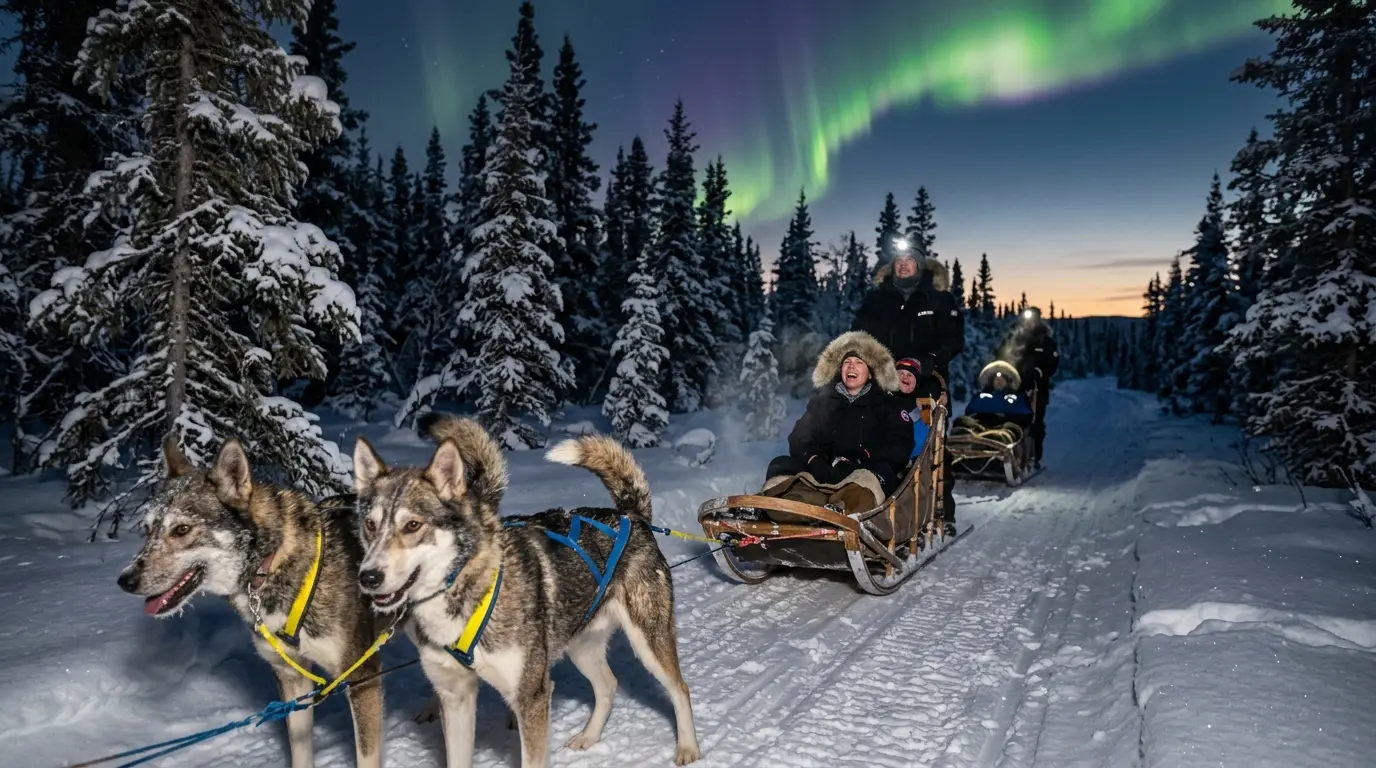
The sled leaves the shore and hits the frozen lake. The operator's own trip description promises exactly this: the peaceful sound of the dogs' paws hitting the snow as the toboggan sled runners glide over hard-packed snow, with little more than that sound and the occasional creak of wooden slats to break the silence. You sit wrapped in layers with the treeline receding, and the 6 km run feels longer than its distance suggests — not because it drags, but because the rhythm pulls you into the landscape rather than past it.
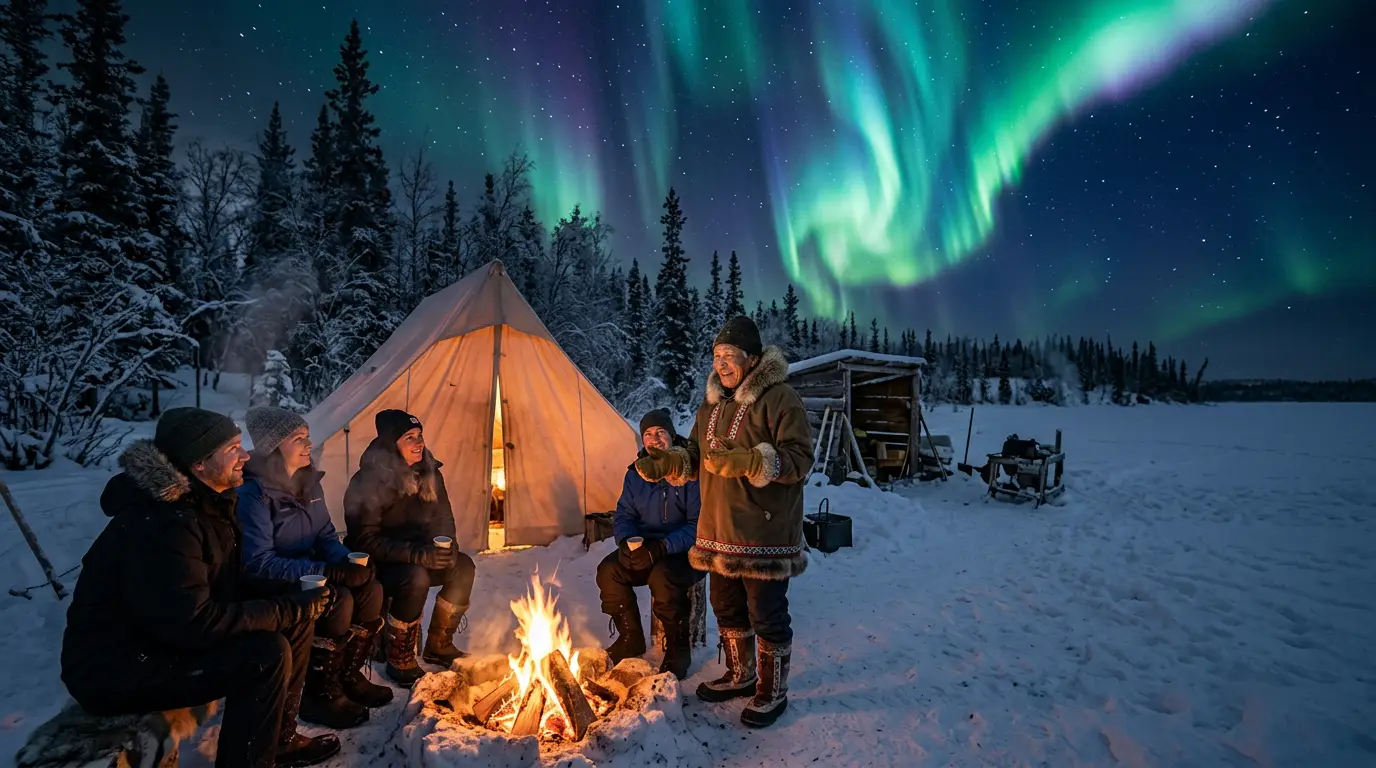
Back at the kennel, you step into a traditional log cabin with a woodstove throwing real heat. Indigenous artifacts and furs hang on the walls: traps, snowshoes, hides the family still uses. The musher fries bannock in a cast-iron pan, pours hot coffee or tea, and tells stories connecting the dogs, the land, and the Dene way of life. This is not a scripted performance. It is a family sharing what they know.
The Dogs and the Dene Story
Tugáh Northern Experiences is an Indigenous, Dene family-owned business. That distinction matters. Many dogsledding operations in the Northwest Territories are run by experienced mushers who learned the sport as adults. Tugáh's owners grew up with dogs as part of daily life in the bush: transportation, winter trapping, survival at 40 below. The dogs are not livestock. They are named, handled individually, and treated as family.
The storytelling in the cabin is where this difference sharpens into something memorable. You hear about winter traplines, about running dogs in deep cold, about what the land teaches if you listen long enough. The artifacts around you are not props arranged for a tour. They are objects the family uses and lives with. If you want a dogsled ride with a photo at the end, other kennels offer that. If you want to understand why dogsledding has mattered here for thousands of years, Tugáh is the right booking.
What You Get and What You Don't
The Traditional Dogsledding Experience runs 1.5 hours and includes:
- Meeting the sled dog team at the family kennel on Kam Lake
- A full 6 km dogsled ride over frozen lake with a skilled musher
- Storytelling in the traditional log cabin heated by a woodstove
- Pan-fried bannock and hot beverages (coffee, tea, hot chocolate)
- Indigenous artifacts and furs on display in the cabin
What is not included: transportation. You need to get yourself to 185 Curry Drive. A cab from downtown Yellowknife takes five to ten minutes and costs roughly $15–20 CAD each way. Tugáh has extra winter layers if yours are not warm enough, but dress as if you will be sitting still in cold air for half an hour — because you will.
Booking, Price, and Getting There
The tour runs three times daily at 11:00 AM, 12:30 PM, and 2:00 PM during the winter season. Pricing (before 5% GST):
- Adult (13+): $150 CAD
- Child (under 12): $65 CAD
- Private sled (min. 2 people): $175 CAD per person
- Spectator (no ride): $50 CAD
Book directly through Tugáh's website at tugah.com, which uses FareHarbor for secure online reservation. The tour is also listed on spectacularnwt.com, the official NWT tourism site, with 2026-dated packages confirming active operations. Tugáh is not listed on GetYourGuide or Viator. Direct booking is the only route.
Contact: +1 867 446 9662 or reserve.tugah@gmail.com. The kennel address is 185 Curry Drive, Yellowknife, NT, on the shore of Kam Lake. The tour itself runs entirely on the frozen lake surface.
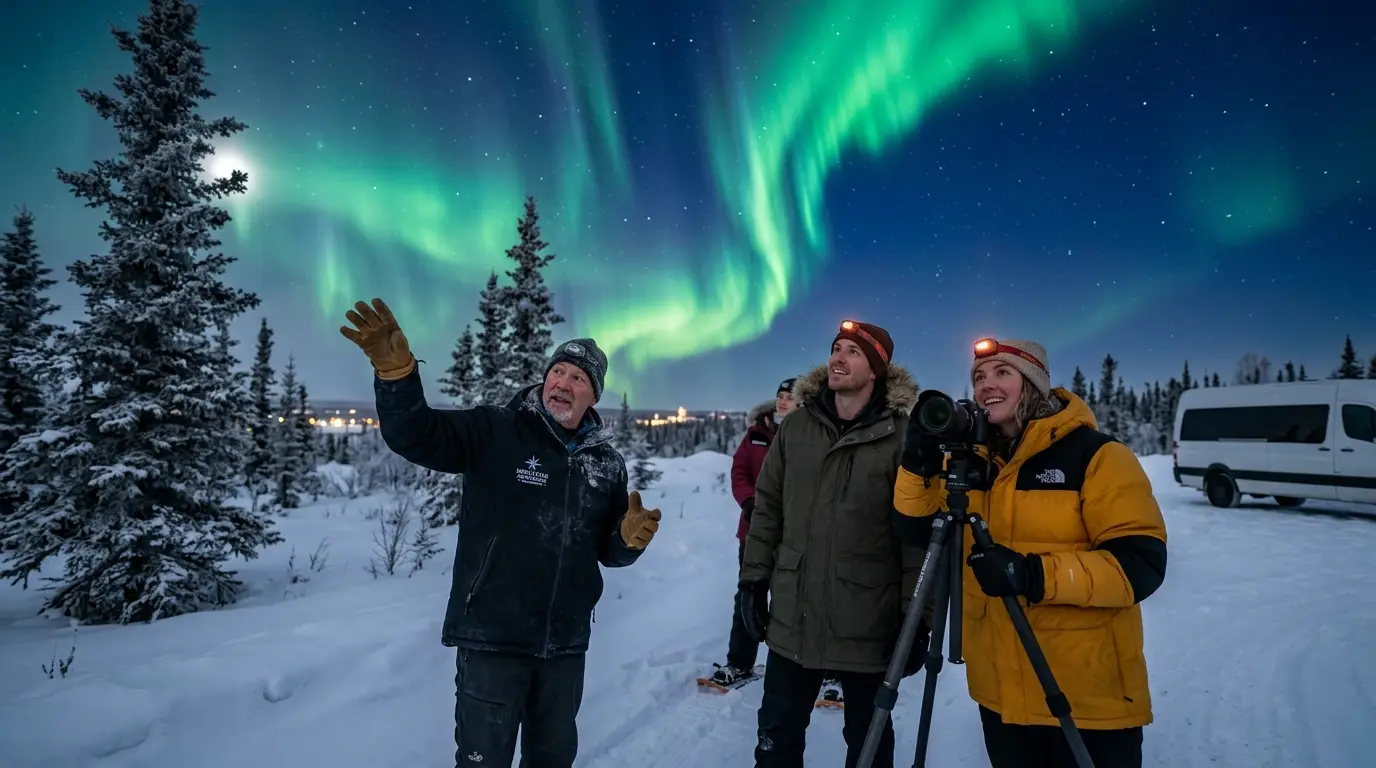
Tugáh also offers snowshoeing tours at $80 CAD per person and an Aurora Viewing by Dogteam at $250 CAD per person (3 hours, 10 PM to 1 AM, includes transportation), a shorter dogsled run followed by lakeside aurora watching. If you are combining dogsledding with northern lights, book the daytime experience first and add the evening option for the same day.
When to Go
The dogsledding season runs roughly December through March, when Kam Lake is frozen solid and snow cover is reliable. Yellowknife winters are extreme: daytime highs in January average around –22°C (–8°F) and can drop much lower. January and February offer the most dependable snow conditions; December and March are warmer and still work well. Tugáh operates in most weather. Extreme cold or blizzard conditions may lead to rescheduling, and the family will call you if that happens.
The afternoon slots (12:30 PM and 2:00 PM) are marginally warmer than the 11:00 AM departure, which matters when you are sitting still on a sled for 20 minutes. If you are staying in Yellowknife for aurora viewing as well, book the daytime sled tour and add the Aurora Viewing by Dogteam for the same evening. Tugáh can advise on coordinating both.
While you are in Yellowknife, the destination hub covers the full picture — from the auroral oval science to where to eat. For the evening aurora tours that pair naturally with a daytime sled run, this Yellowknife aurora operator is the Dene-owned aurora-hunting pioneer with a 98% sighting rate and free photos, Aurora Village offers 21 heated teepees on the Ingraham Trail, and the Dene-guided aurora evening runs a more intimate cultural evening with storytelling and traditional food on Great Slave Lake. My guide to the best aurora viewing spots near Yellowknife maps every roadside pull-off if you prefer to chase the lights on your own.