What a guided Yellowknife aurora tour actually delivers
A guided Yellowknife aurora night can mean three quite different products.
Aurora Village is a fixed-base experience with 21 heated teepees, with transfers from five named downtown hotels; it does not accept independent self-drive arrivals.[1] The property spans five viewing hills.[15] This is the comfort-first choice.
| Tour feature | Aurora Village | North Star | B. Dene |
|---|---|---|---|
| Format | Fixed viewing base | Mobile aurora hunt | Fixed cultural camp |
| Duration | Not published | Not published | 5 hours |
| Researched price | Check live booking | Check booking page | CAD 120 + GST |
| Warming setup | 21 heated teepees | Vehicle between stops | Heated cabin and teepee |
| Best fit | Comfort and fixed facilities | Small group and photography | Dene culture and fixed camp |
North Star Adventures runs a small-group mobile hunt for up to 11 guests.[2] The route changes with cloud and aurora conditions, and hotel transfers, professional photos, hot drinks, and limited tripod use are included.[2] Check the booking page for its current rate.
B. Dene Adventures runs a five-hour fixed-camp evening from 9 p.m. to 2 a.m. at CAD 120 plus GST. Hotel transport, a heated cabin and teepee, Dene storytelling, drumming, fish, bannock, and hot drinks are included.[3]
That fixed-base versus mobile-hunt distinction matters more than the marketing. Pick Aurora Village for the largest warming setup, North Star for mobility and photography, or B. Dene for a smaller cultural camp. None can guarantee the sky; Aurora Village's 98% figure applies to stays of three to four nights, not one booked evening.[4]
Self-guided aurora viewing: the honest checklist
DIY viewing means taking responsibility for transport, weather decisions, clothing, and a safe return.
Driving. Check current territorial road conditions before leaving town, carry the emergency supplies recommended for winter travel, keep the fuel tank comfortably above empty, and do not use the Ingraham Trail as your first lesson in snow or ice driving. The Yellowknife viewing-spots guide covers access and pull-offs; verify its road details against official conditions on the day.
Clothing. Every traveler needs a complete cold-weather set. Do not plan to share a parka or boots in shifts. Aurora Village rents a five-piece set, but its rental is tied to booked tour dates, so a pure-DIY traveler needs to confirm another supplier before arrival.[5] The Yellowknife winter packing list covers the full system.
1 set each
Forecast. AuroraWatch monitors Edmonton and is the wrong go/no-go tool here. Start with Astronomy North's Yellowknife forecast, use AuroraMAX for a live local sky check, then cross-check NOAA's three-day forecast and Natural Resources Canada's Auroral-zone outlook.[6][7][8][9] Cloud still decides whether any activity is visible. The Yellowknife aurora forecast guide turns those feeds into a simple nightly routine.
DIY is reasonable for a confident winter driver who wants control over location and time. If any part of the road, clothing, or emergency plan is improvised, book the driver and heated shelter.
Cost breakdown: tour vs DIY per night and per trip
Two real numbers exist here, and two honest gaps. North Star's small-group hunt caps at 11 guests[2], but North Star doesn't list a per-person rate on its tour page; check the booking page for your dates. B. Dene's fixed-camp evening runs CAD 120 plus 5% GST per person for a five-hour block from 9 p.m. to 2 a.m.[3] Aurora Village routes its own per-person rate through live booking rather than publishing a stable figure[1].
Featured · Destination
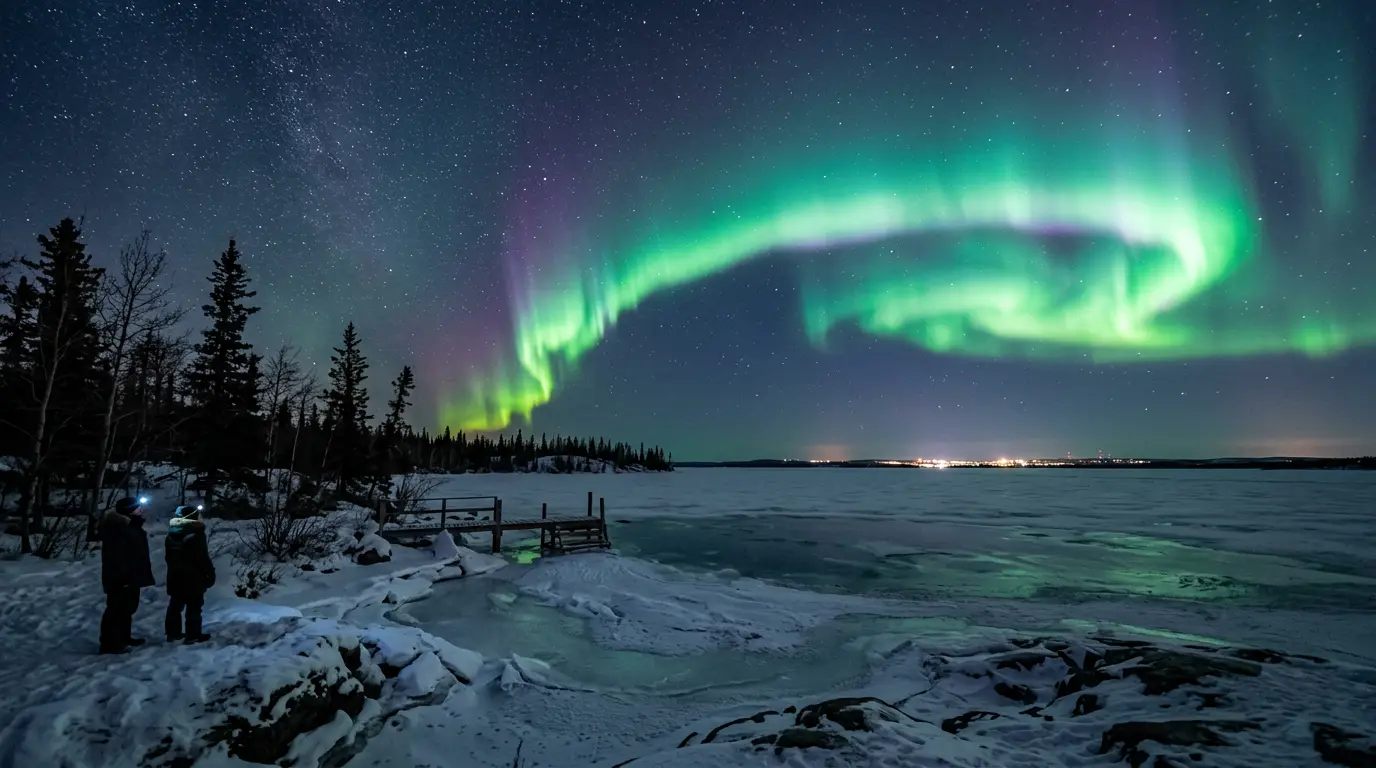
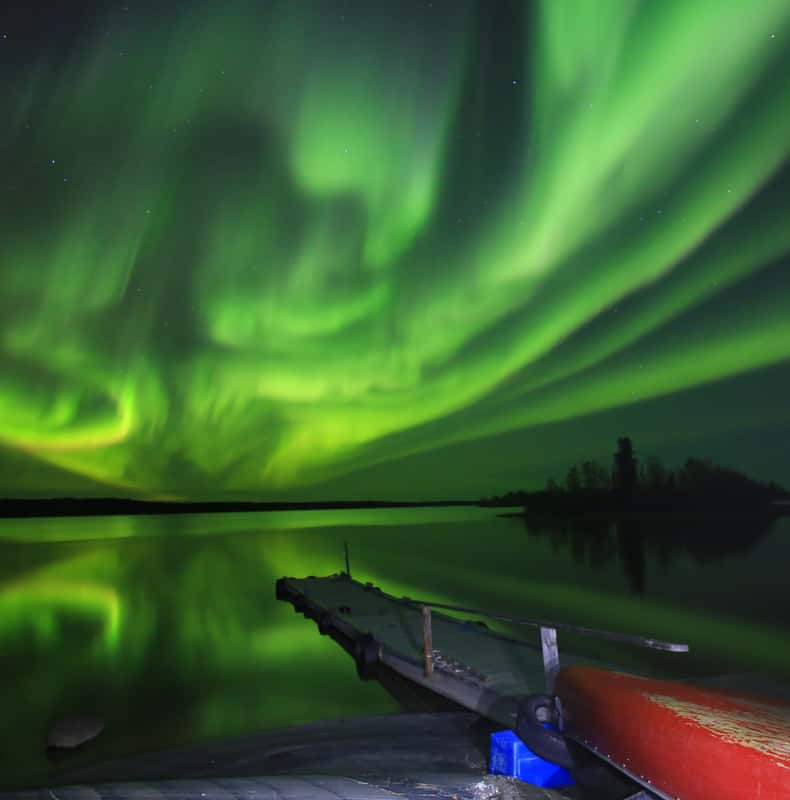
Yellowknife Northern Lights
Yellowknife sits beneath the auroral oval: up to 240 aurora nights per year. Guide to seasons, viewing spots, Indigenous-led tours, and cold-weather planning.
Clothing rental is priced too, but read the fine print before you count on it. Aurora Village only rents its five-piece cold-weather set to guests who already booked its own tour[5], at CAD 70 to CAD 145 depending on rental length[10]. North Star rents at CAD 75 plus GST a day to its own guests and CAD 150 plus GST a day to anyone else[11], which is the number a pure-DIY traveler actually needs.
Recommended tours
Tours are selected for quality, not commission. I earn a small fee if you book — at no extra cost to you.
Nobody publishes a rental-car rate for this route. Price one yourself for your exact dates; it moves with season and vehicle class, and the fuel and insurance lines belong on the same worksheet.
| Line item | Aurora Village | North Star | B. Dene |
|---|---|---|---|
| Tour rate (per person) | Live booking only | Not published, check site | CAD 120 + 5% GST |
| Format | Fixed base, duration not published | Mobile hunt, max 11 guests | Fixed camp, 5h (9pm-2am) |
| Clothing rental, tour guest | CAD 70 (1 day) to CAD 145 (4 days), + GST | CAD 75 + GST per day | Not published |
| Clothing rental, no tour booked | Not available | CAD 150 + GST per day | N/A |
What tours cost per night
Get a written, current quote from all three operators for the same date. North Star's small-group hunt is capped at 11 guests[2], but North Star doesn't list a per-person rate on its tour page; check the booking page for your dates. B. Dene lists CAD 120 plus 5% GST per person.[3] Aurora Village's per-person tour rate runs through its live booking system rather than a published figure.[1] Add clothing rental only where the tour doesn't already include it, and confirm pickup coverage before comparing totals.
What DIY actually costs
Build a five-line worksheet: a rental vehicle for the full trip, fuel for the route you plan to drive, a complete clothing set for each traveler, any parking or insurance charge shown in the quote, and a guided night if you still want one. Only genuinely shared costs, the vehicle and fuel, get divided by party size; clothing does not. If Aurora Village isn't part of your trip, price clothing at North Star's non-guest rate of CAD 150 plus GST per day, or confirm another local outfitter.[11] Compare the total against live operator quotes for the same number of nights; there is no honest universal break-even point.
Hidden costs of DIY that do not show on the receipt
The important DIY costs are operational, not invented estimates: proper clothing for every person, a vehicle appropriate to current conditions, fuel, insurance, and enough schedule margin to abandon a night when the road or cloud forecast turns. Follow the rental company's cold-weather instructions and official road guidance. Do not assume idling is required, safe, permitted, or covered by the rental agreement.
When to book a tour (and how far in advance)
Book against the operator's published season and your fixed travel dates, not a generic lead-time rule. Aurora Village operates August 12 to October 14 and November 20 to April 7.[1] North Star runs three named seasons rather than one block: summer from August 15 to October 15, fall from October 16 to November 30, and winter from December 1 to April 20.[12] B. Dene lists August 15 to October 7 and December 15 to April 7.[16] Check live availability as soon as flights are firm, especially for a small-group product with limited seats.
There is no evidence here for the old two-to-eight-week booking claims or for a blanket October shutdown across Yellowknife. The operators publish different fall and winter windows. If your dates sit near a boundary, confirm that exact night directly.
For cancellation, read the terms attached to the product you actually book. Aurora Village's researched schedule is specific: 15 or more days before departure receives a refund minus a CAD 100 administration fee per person; 8–14 days is 50% non-refundable; 3–7 days is 75% non-refundable; within 48 hours is fully non-refundable.[17] Do not assume cloud automatically earns a free rebooking.
Cancellation policies and the weather gamble
There is no safe universal policy to quote. Aurora Village publishes date-based cancellation penalties, while the other operators' terms must be checked on the booking offered for your date.[17] Cloud, a missed display, and an operator cancellation are different cases. Read each contract before paying and do not build the trip around an assumed free rebooking.
The decision framework: which approach fits your trip
The honest version of this decision has two short lists, not a break-even number.
A tour is the better call when any of these is true:
- You have no recent experience driving on snow and ice, and the Ingraham Trail would be your first lesson in it.
- You are in town for one or two nights and want a driver who already knows where the sky is clearest tonight, not a spreadsheet.
- You are counting on Aurora Village's clothing rental, which only ships to guests who already booked its tour.[5]
- You want a heated base to retreat to rather than a running engine, or a guide actively repositioning the group toward a clear patch of sky.
DIY is the better call when:
- You are staying four or more nights and can absorb a cloudy night or two without losing the trip.
- You already own, or can independently rent, a complete cold-weather clothing set and a winter-capable rental vehicle.
- You are a confident winter driver who reads a road report the same way you read a weather one.
Both North Star and Aurora Village advertise roughly 98% odds of seeing the aurora, but check what that figure actually measures before it decides anything for you: North Star ties it to a clear sky on the specific night[13], and Aurora Village ties it to staying three to four nights, not a single evening.[4] Those are operator claims, not independent measurements. The reason either number can run that high is that the aurora is physically active above the Northwest Territories on up to 240 nights a year[14]; the variable a tour or a spreadsheet can't fully control is cloud cover on the specific nights you are there. For the fuller case on why Yellowknife's position under the auroral oval makes almost any approach workable, see the Yellowknife northern lights FAQ.
The split-trip approach most experienced visitors use
A split trip can work well, but it is an option rather than a rule copied from forums. Book one guided night for the product you value most: Aurora Village for the large heated base, North Star for a mobile small-group hunt, or B. Dene for the cultural camp. Keep later nights flexible only if you have winter-driving experience, complete clothing for every traveler, and a current road and cloud check.
Price it with the worksheet above. Use live operator quotes, then add the vehicle, fuel, insurance, and individual clothing costs for DIY nights. Aurora Village clothing rental covers booked tour dates, so confirm separate coverage before relying on it for independent nights.[5]
Featured · Article
What Is Astrotourism? The Complete Beginner's Guide
Astrotourism means travel built around dark skies: meteor showers, auroras, the Milky Way. What it means, where to go, and how to plan your first trip.
I would choose the hybrid only when the driver already knows winter roads. Otherwise, several guided nights buy something no spreadsheet captures neatly: you are not making a road-safety decision at midnight while tired and cold.