
The 98% claim and what it is actually counting
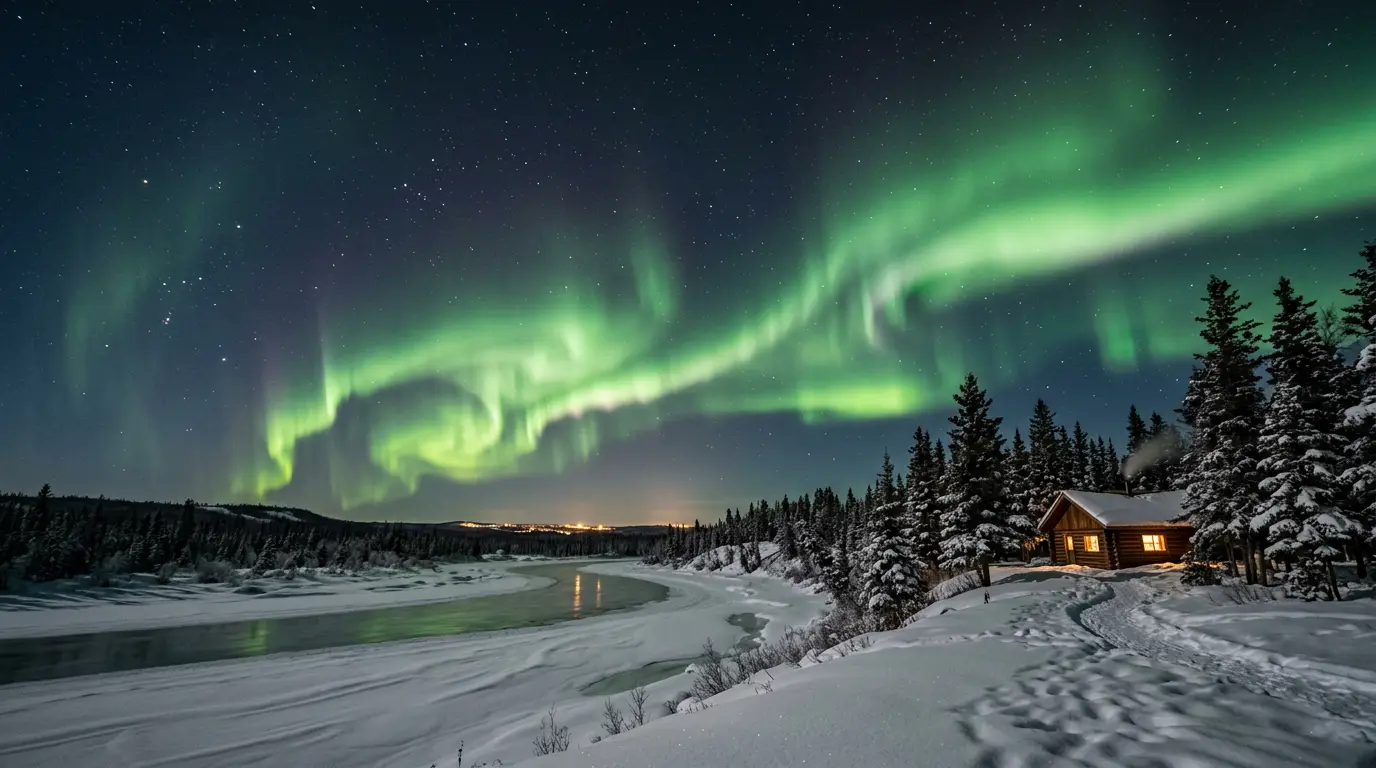
In February 2024, Canadian Geographic journalist Alexandra Pope published a figure that every Yellowknife aurora tour operator now quotes: if you spend three nights in Yellowknife during peak season, you have a 98% chance of seeing the northern lights at least once[1]. Pope saw aurora on two of three nights herself, and the number holds up to the probability math.
What nobody in the marketing copy adds is the definition of "seeing." The statistic counts any auroral detection: a pale green band low on the horizon, a faint wash that the camera picks up as vivid but your naked eye registers as gray, a 20-minute appearance before cloud cover closes in. Those all count as sightings. They are not the same thing as the display that made you buy a plane ticket.
98%
Ask a Yellowknife tour operator about the gap between "detection" and "spectacle" and you will get a more precise split. Across three nights in peak season (mid-November through late March), roughly 55 to 70% of visitors see what operators call a strong display: moving curtains, structured arcs, color variation from green to purple to red, and activity that spans more than half the sky. That is still an excellent number. It is also a coin flip, not a certainty.
Five nights pushes the strong-display probability north of 75 to 85%[2]. That gap, roughly 15 to 20 percentage points, is the price of two extra hotel nights, and this entire article exists to help you decide whether it is worth paying.
Why three nights in Yellowknife beats five nights almost anywhere else
Before you compare trip lengths, you need to understand why Yellowknife's numbers are higher than everyone else's at every duration. It comes down to two advantages no marketing department invented.
Geomagnetic position. Yellowknife sits at geomagnetic 68°N, roughly at the center of the auroral oval, the ring around the magnetic pole where the northern lights concentrate[3]. Most other aurora destinations sit closer to the oval's edge than its center. Fairbanks's magnetic latitude is commonly cited around 64°N. Iceland's inhabited viewing belt is around 65°N. Tromsø's magnetic latitude is often cited at around 67°N. At any given Kp level, Yellowknife's aurora is brighter, more overhead, and covers more of the sky than it does at destinations south of the oval's core.
Featured · Destination
Yellowknife Northern Lights
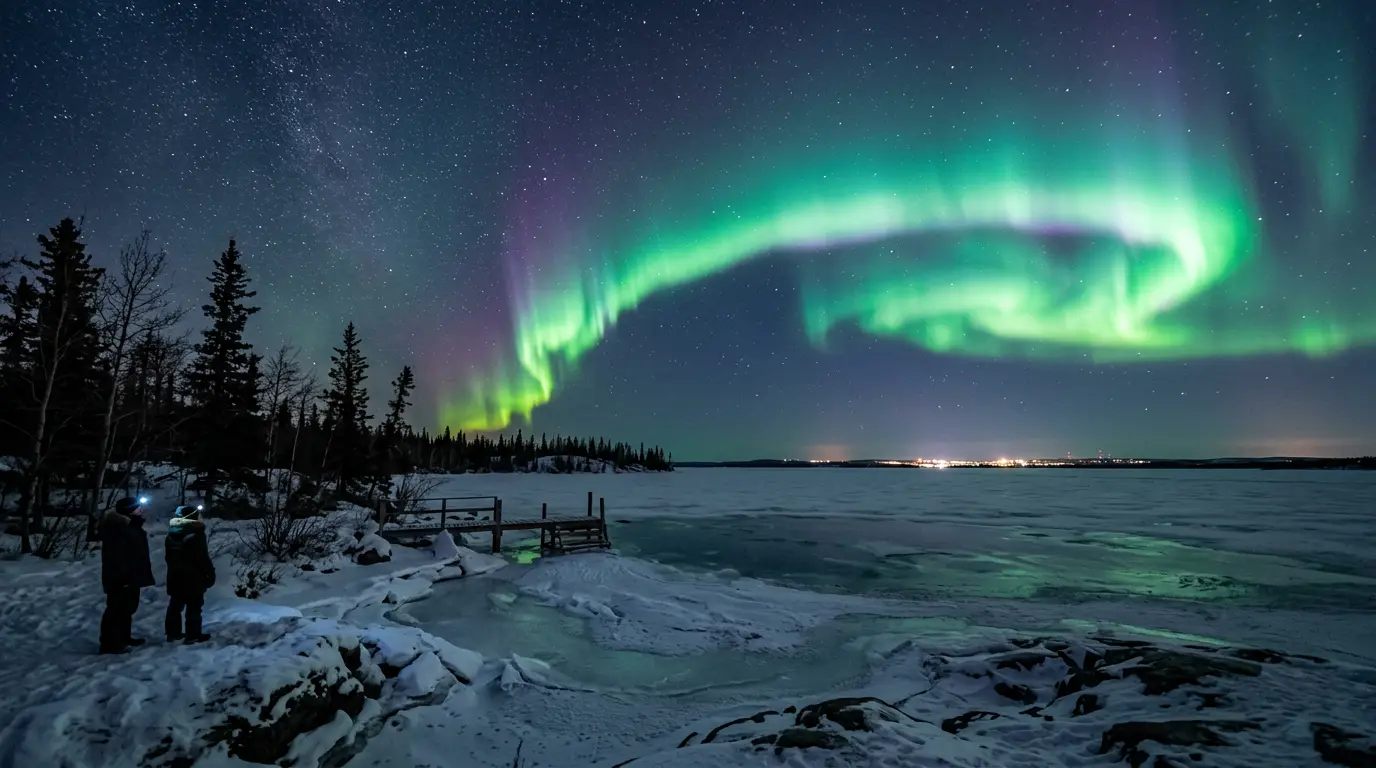
Yellowknife sits beneath the auroral oval: up to 240 aurora nights per year. Guide to seasons, viewing spots, Indigenous-led tours, and cold-weather planning.
In practice, this means Yellowknife sees overhead aurora at Kp 2, a threshold quiet enough that four out of five clear, dark nights produce a display. Fairbanks needs Kp 3 for the same overhead view. Iceland needs Kp 4+ for comparable coverage. The Kp index explained guide covers the full forecast-reading framework, but the short version is that at any given Kp level, Yellowknife gives you more aurora for less geomagnetic demand.
Subarctic continental climate. Yellowknife gets 60.4% sunny skies in spring and summer, the highest rate of any Canadian city[6]. In winter, the pattern holds: cold, dry arctic air masses suppress cloud formation from November through March, producing the steadiest clear-sky probability of any major aurora destination. Maritime competitors (Iceland, Tromsø, the Lofoten Islands) all battle North Atlantic cloud cover rates of 60 to 70% plus. In Yellowknife, cloud cover is the exception in winter, not the rule.
This is why a three-night Yellowknife trip with 98% any-aurora odds massively outperforms a three-night Iceland trip at roughly 40 to 50%. It is not that Iceland has less aurora. It is that Iceland's sky is blocked 60 to 70% of the time, and three nights gives you no buffer. A three-night traveler in Yellowknife is statistically likely to get at least two clear nights. A three-night traveler in Reykjavik may get zero. For the Fairbanks comparison at equivalent trip lengths, see the how many nights in Fairbanks guide.
Three nights: when it works and what you will actually see
Three nights is the right answer for three types of traveler, and a mistake for everyone else.
It works when you book peak season, specifically mid-November through March. The 98% figure explicitly applies to peak aurora season[1]. Book a three-night trip in early October, and that number evaporates; more on that in section five. Book three nights in March, and you are playing Yellowknife's single strongest hand: equinox-enhanced geomagnetic activity through the Russell-McPherron effect, winter's low humidity, and temperatures that have climbed to a manageable -8°C to -19°C from January's -27°C average.
It works for budget travelers. A three-night Yellowknife trip costs roughly 40 to 60% less in accommodation and meals than a five-night stay, and the savings are real: two fewer hotel nights, fewer meals, potentially one fewer tour night. If you are adding Yellowknife as a leg to a larger Canada trip and the northern lights are a high-stakes bonus rather than the purpose of the flight, three nights during peak season gives you unmatched value. You are unlikely to go home without a sighting.
It works for travelers who understand the strong-display caveat. If you are fine with a faint green arc on the northern horizon, knowing the camera saw more than you did, three nights in March will almost certainly deliver. If you will consider the trip a failure without dancing curtains, three nights leaves your outcome to approximately even odds.
The probability math by trip length, expressed as industry estimates that account for both clear-sky probability and the detection vs spectacle distinction:
| Nights booked | Any aurora | Strong display | Weather buffer |
|---|---|---|---|
| 1 night | 40–50% | 15–20% | None |
| 2 nights | 60–75% | 30–40% | Minimal |
| 3 nights | 90–98% | 55–70% | Risky if 2 nights cloud |
| 4 nights | 93–98% | 65–78% | Decent |
| 5 nights | 98%+ | 75–85% | Solid |
| 7 nights | 99%+ | 85–95% | Comfortable |
- 1 night: 40–50% any aurora, 15–20% strong display
- 2 nights: 60–75% any aurora, 30–40% strong display
- 3 nights: 90–98% any aurora, 55–70% strong display
- 4 nights: 93–98% any aurora, 65–78% strong display
- 5 nights: 98%+ any aurora, 75–85% strong display
- 7 nights: 99%+ any aurora, 85–95% strong display
Yellowknife's numbers outperform Fairbanks's published 3-night rates (80–90% any aurora[2]) and dramatically outperform Iceland's equivalent (roughly 40–50% any aurora) at every tier. For the Iceland comparison, the how many nights in Iceland for northern lights guide covers the cloud-cover math in detail.
Five nights: the strong-display sweet spot
Five nights is where the numbers shift from "you will probably see something" to "you will probably see something worth the flight." The probability of a strong display — dancing curtains, structured arcs, multiple colors, horizon-to-horizon activity — climbs from roughly 55 to 70% on three nights to 75 to 85% on five nights[2]. That gap matters because it is the difference between going home satisfied and going home wondering whether you should book again.
Five nights buys three things that three nights cannot.
A weather buffer. Yellowknife's winter skies are the clearest of any major aurora destination, but no place on Earth has zero cloud cover. In any given multi-day window, one or two overcast nights are possible. A three-night traveler who loses two nights to cloud is riding on a single attempt. A five-night traveler who loses two nights still has three more.
A display-quality buffer. Geomagnetic activity varies night to night in ways no forecast captures more than 72 hours out. Even during the current solar maximum phase (roughly 2024 through 2026), some nights produce a quiet green arc and others produce a G2 storm. Five nights gives you room for the quiet nights to pass and the active ones to arrive.
Recommended tours
Tours are selected for quality, not commission. I earn a small fee if you book — at no extra cost to you.

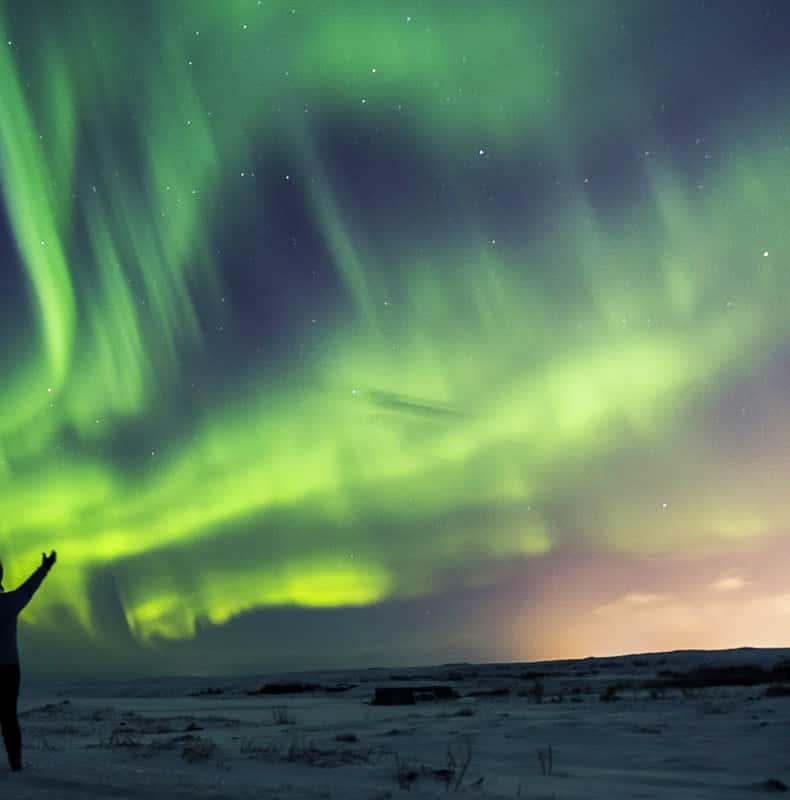

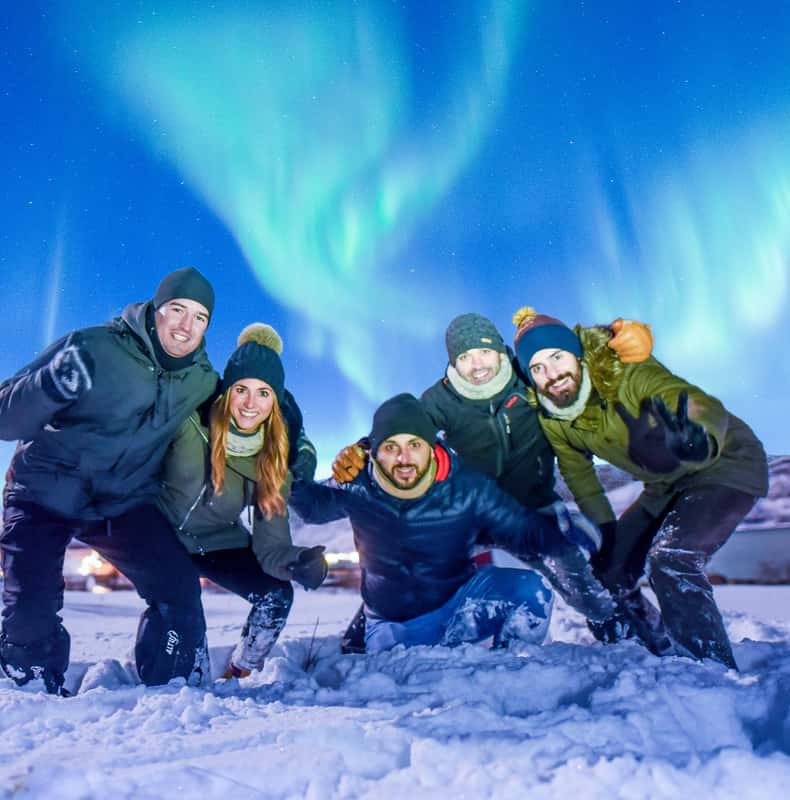
A practical rhythm. Veteran aurora travelers describe a five-night trip in three stages. Nights one and two: the learning curve. You figure out which Ingraham Trail pull-off works best, calibrate your read of the AuroraMAX forecast, confirm your camera settings don't freeze up at -25°C, and learn what your cold-weather layers can actually sustain across a two-hour vigil. Nights three and four: the prime shooting window. You know your spots, your gear is dialed in, and you can react quickly when a substorm starts building at 11 PM. Night five: the bonus round. If nights three and four delivered, you are playing with house money. If they didn't, this is your shot.
The cold weather is the hidden variable that makes five nights a smarter bet in Yellowknife than in warmer destinations. January averages -21.6°C during the day and -29.4°C overnight, with lows below -40°C not uncommon. In those temperatures, a practical viewing session lasts 45 to 90 minutes before you need to warm up, and you can realistically manage one or two sessions per night. Three nights gets you three to six sessions total. Five nights gets you five to ten. More sessions equal more chances, especially if you rotate in and out of a heated shelter, cabin, or vehicle.
For the month-by-month breakdown of what those temperatures demand, the best time for northern lights in Yellowknife guide covers seasonal strategy including the March equinox window and what each month costs in cold-weather gear.
The October cloud gap: the seasonal trap that breaks the probability math
The single most useful piece of information in this article is this: early October through mid-November is Yellowknife's cloudiest period, and booking a three-night trip during this window is a gamble most visitors lose[7].
The physics is local and specific. Great Slave Lake, one of the largest freshwater lakes on Earth by surface area, releases the heat it absorbed all summer into the cooling autumn atmosphere. That warm, moist air condenses into persistent cloud cover that can sit over Yellowknife for weeks. Snow cover has not yet established, so there is no reflective surface cooling to stabilize the boundary layer. The result is a gray lid.
NWT Tourism describes the window explicitly: the fall aurora season is said to end after the first two weeks of October because the change into winter brings a brief period of snowy cloud cover. This cloud cover disappears in late November, when humidity drops and the crisp winter sky opens for the winter season[7].
Tour operators largely pause operations during this gap. If you see a cheap flight for late October and think you will catch the aurora, the geomagnetic activity is real (October sits near the equinox peak), but a clouded sky blocks the display completely regardless of whether the Kp index reads 2 or 7. A three-night trip in early October carries an effective probability closer to 30 to 50% of any sighting, not 98%. A five-night trip in the same window buys extra attempts but still faces poor underlying odds; the cloud cover is persistent, not intermittent.
The calendar that matters:
- Mid-November through late March: the reliable window. Clear-sky probability is highest, aurora season is in full swing, and all operators are running. The 98% figure applies here.
- Mid-August through early October: the fall window. Good geomagnetic activity (September equinox), milder temperatures, and still-open lakes for reflection photography. Cloud cover is moderate, not prohibitive, and the 98% figure still broadly holds for September, but not once October's second half arrives.
- Early October through mid-November: the gap. Book either side of it.
- April: season tail. Still technically possible, but daylight extends past the usable darkness window by mid-month. AuroraMAX and operator forecasting infrastructure winds down.
The how to see the northern lights guide covers the full preparation checklist (forecast apps, gear, viewing strategy) and applies directly to Yellowknife's conditions.
Making any trip length work harder: the practical plays
Regardless of how many nights you book, four tactical decisions multiply your effective viewing hours and tilt the odds in your favor.
Pick March if you can pick any month. March combines the equinox geomagnetic surge with winter's clean, dry air mass, and temperatures at -8°C to -19°C mean you can stay outside for two to three hours rather than the 45-minute dashes January demands. A three-night March trip functionally performs like a five-night January trip because each session is longer and more comfortable.
Book accommodation with an aurora alert system. Aurora Village, Blachford Lake Lodge, and several Ingraham Trail operators offer staffed overnight viewing with wake-up calls when the display starts. If you are staying downtown at the Explorer Hotel or similar, set up the AuroraMAX forecast on your phone before you land. The Yellowknife destination guide covers the full list of lodges and tour operators with alert infrastructure.
Treat the first night as reconnaissance. Do not wait for a Kp 4 forecast on night four and then scramble to find a viewing spot in the dark. Use night one to drive the Ingraham Trail, identify two or three pull-offs with unobstructed northern horizons, and confirm your camera focus at infinity before you need it under pressure. The learning-curve nights pay off when the substorm arrives.
Featured · Article
What Is Astrotourism? The Complete Beginner's Guide
Astrotourism means travel built around dark skies: meteor showers, auroras, the Milky Way. What it means, where to go, and how to plan your first trip.
Build flexibility into your winter itinerary. At five nights in January or February, recognize that some nights you will be too cold or the aurora will be too quiet, and that is normal. Take a night off. Eat at Bullock's Bistro. Soak in the cold the next day doing something else — dogsledding, ice fishing, a day trip to Dettah. The travelers who come home disappointed are not the ones who skipped a night. They are the ones who flew for three nights, hit two overcast evenings and one quiet one, and had no buffer left.
Check the October calendar hard. If your dates fall between October 5 and November 20, check operator availability before booking flights. If most aurora tours are paused, your trip is in the gap. Shift it forward or back.
The month-by-month trade-offs, from the December dark-window advantage to what the September shoulder season is actually like on the ground, are covered in Yellowknife aurora by month.