Why Yellowknife dominates the aurora destination shortlist
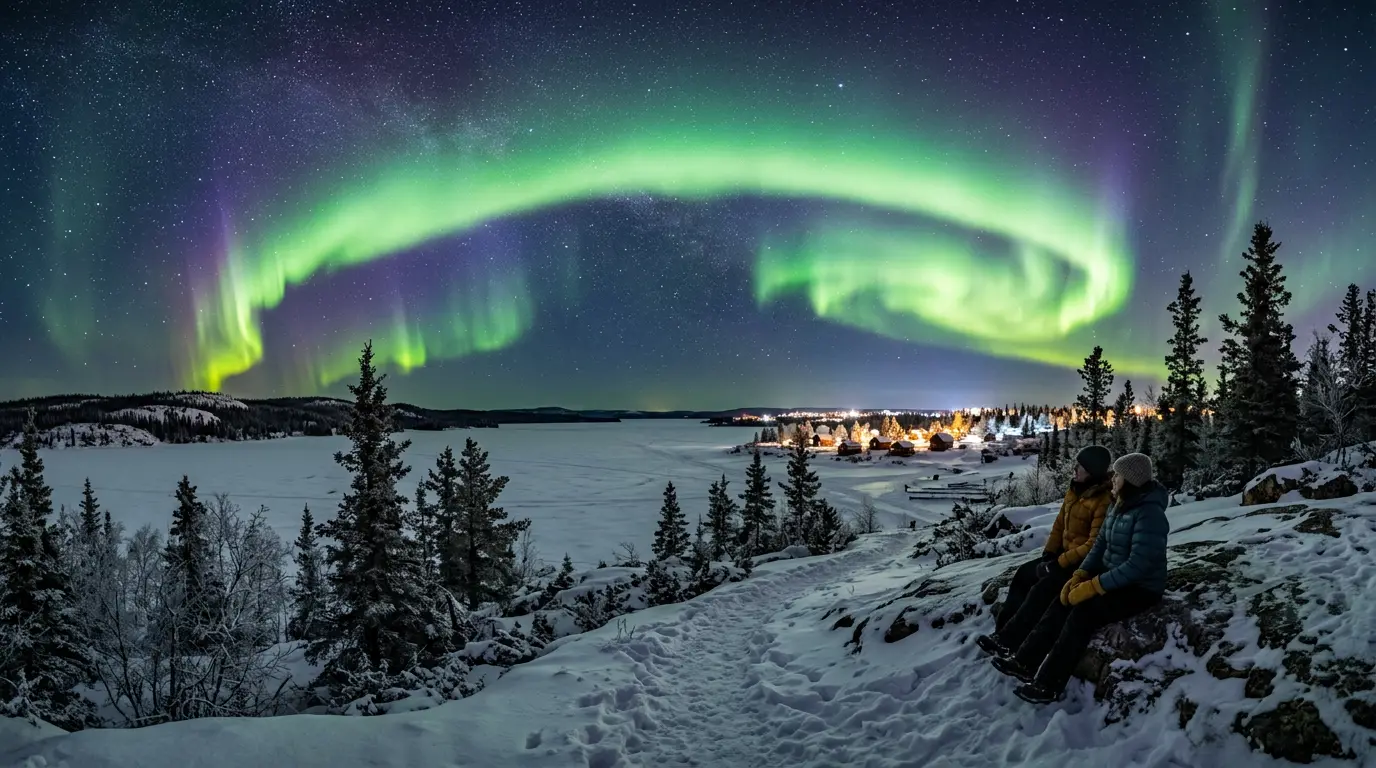
Yellowknife occupies a piece of auroral geography that few destinations can match. At magnetic latitude 68°N, the city sits directly beneath the center of the auroral oval: the ring-shaped zone where Earth's magnetic field funnels solar particles into the upper atmosphere with greatest density and frequency[1]. When the solar wind disturbs the magnetosphere, the aurora borealis appears overhead, not as a distant flicker on the northern horizon.
The practical consequence is a viewing threshold far lower than elsewhere. Overhead aurora is visible at Kp 2, a value that produces nothing from Iceland or most of northern Scandinavia. At Kp 3, the display shows structure, movement, and distinct colour separation. By Kp 5, the entire sky fills from horizon to horizon.
Three numbers frame the Yellowknife proposition:
240
- 240: nights per year with active aurora above the Northwest Territories[1]. The lights are physically present on roughly two-thirds of all nights; the limiting factors are daylight, cloud cover, and being outside to see them.
- Kp 2: the threshold for overhead visibility, versus Kp 5+ needed at mid-latitude European or North American destinations.
- Clear-sky dominance from late November through March. Yellowknife's subarctic high-pressure system suppresses cloud formation for months at a stretch, unlike coastal aurora destinations where maritime cloud cover is the primary viewing obstacle.
The Yellowknife northern lights destination page covers the full logistics of getting there, where to stay, and what the town offers beyond the sky.
The aurora season: two windows separated by a cloud gap
Yellowknife's aurora season runs from mid-August through mid-April, splitting into two distinct periods with different trade-offs, separated by an October-November cloud gap that traps uninformed travelers every year[2].
- Fall aurora season (mid-August through early October) delivers mild temperatures of 5°C to 18°C, open-water reflections on Great Slave Lake, and campfire viewing. The cost is shorter usable darkness: 6 to 8 hours by mid-September, versus the long winter windows ahead. For photographers, the still-open lake doubles as a foreground mirror — an option that vanishes once freeze-up arrives in late October.
- Winter aurora season (mid-November through early April) opens after the October-November cloud gap closes, driven by stable arctic high pressure that suppresses moisture and delivers the clearest skies of the year. The viewing window stretches from 17:00 through 08:00 in December and January. The cost is extreme cold: -15°C to -40°C on a typical winter viewing night.
- The October-November gap warrants its own bullet because it is the single most common booking error. From early October through mid-November, Great Slave Lake releases stored summer heat into the cooling atmosphere, generating persistent cloud cover that can sit over Yellowknife for weeks[2]. Tour operators largely pause operations during this window. The gap ends when snow cover stabilizes and arctic high pressure locks in.
Featured · Destination
Yellowknife Northern Lights
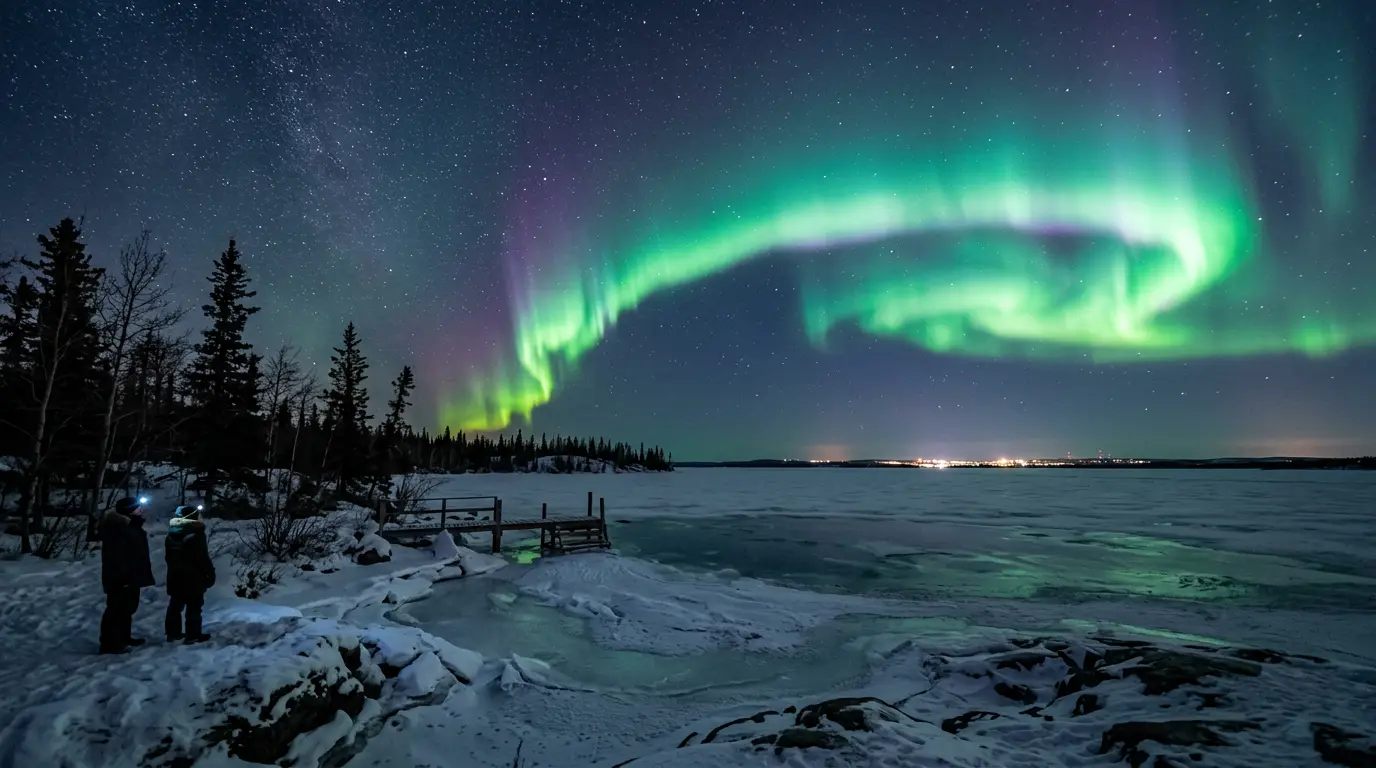
Yellowknife sits beneath the auroral oval: up to 240 aurora nights per year. Guide to seasons, viewing spots, Indigenous-led tours, and cold-weather planning.
The best time for northern lights in Yellowknife guide walks through the month-by-month breakdown, and the Yellowknife aurora by month guide compares August, September, October and April side by side in detail. Within the winter season, March is the standout month: it combines the Russell-McPherron effect (equinox geomagnetic boost), clearest subarctic skies, improving temperatures (-8°C to -19°C), and 11.5 to 13 hours of daylight so you can do things during the day before heading out for aurora by 21:00.
The cold: what the numbers mean and what to wear
Yellowknife's winter temperatures are the factor most first-time visitors underestimate, and the cold is not a footnote to the experience; it is the experience's primary constraint[3]. The city has a subarctic continental climate (Köppen Dfc) with extreme seasonal variation.
January is the coldest month, averaging -18°C by day and -27°C by night, with a recorded low of -51.2°C[3]. December through February nights routinely sit between -20°C and -35°C during aurora viewing hours. March improves to -8°C by day and -19°C by night, cold but manageable for a multi-hour vigil with proper gear.
| Month | Temp range | Daylight | Viewing window |
|---|---|---|---|
| December | -16°C / -24°C | 5–6h | 17:00–08:00 |
| January | -18°C / -27°C | 5–8h | 17:00–08:00 |
| February | -15°C / -24°C | 8–11h | 18:00–07:00 |
| March | -8°C / -19°C | 11.5–13h | 21:00–06:00 |
What these numbers mean in practice: at -30°C, exposed skin begins to freeze in under 30 minutes. At -40°C, that window shrinks to under 10 minutes. Standing still for two hours at a dark-sky site is not the same as walking around town. The car or heated shelter is the survival anchor, not the backup plan.
A working clothing system for Yellowknife winter aurora viewing:
- Insulated boots rated to at least -40°C, sized to accommodate thick wool socks without compression
- Merino wool or synthetic base layer (top and bottom) for moisture transport
- Heavy fleece or down mid-layer for insulation under a windproof shell
- Windproof outer layer with a hood that cinches tight
- Expedition mittens, not gloves (individual fingers lose dexterity too fast below -25°C)
- Balaclava and neck gaiter for full face coverage
- Chemical hand and toe warmers, cheap insurance at roughly CAD 2 per pair
Tour operators provide insulated outerwear as standard. If you are going independently, rent in Yellowknife rather than packing from a warm climate: local outfitters carry gear rated for these exact conditions.
Kp index, local forecasts, and when to look up
Yellowknife's position inside the auroral oval means the relationship between the Kp index and what you actually see is different here than at most other destinations[4].
- Kp 2: faint aurora visible overhead. The display appears as a low, milky-green band with subtle motion.
- Kp 3: moderate activity with visible structure and movement. Green bands show clear vertical striping.
- Kp 4: active displays with distinct colour variation across green, teal, and occasional pink edges.
- Kp 5+: full-sky, horizon-to-horizon coverage. Purples and magentas appear at the curtain edges. This is the show most travellers have in mind when they book.
For context, Iceland at 65°N magnetic latitude typically needs Kp 4+ for a display of equivalent visibility[4]. The Kp index explained guide breaks down what each reading means and why the Bz component of the solar wind matters alongside the headline number.
The best viewing window is 22:00 to 02:00 local time, centred on magnetic midnight, when Yellowknife sits on the night side of Earth's magnetosphere and is most directly under the auroral oval. Displays can appear anytime from dusk to dawn, but the statistical peak concentrates in those four hours. Tour operator pickups typically run 20:00 to 22:00, with returns around 01:00 to 02:00.
For real-time forecasting, the Astronomy North local forecast (astronomynorth.ca) provides a Yellowknife-specific daily aurora prediction updated before 2:00 PM Mountain Time[4]. The NOAA OVATION model gives a 30-minute lead on incoming activity. Check both in the evening, not days before you travel.
Tours, self-drive, and Indigenous cultural experiences
You do not need a tour to see the northern lights in Yellowknife, but a tour makes the experience substantially more comfortable for most first-time visitors[5]. The choice comes down to how you handle three variables: extreme cold, real-time cloud-cover routing, and the kind of experience you want beyond the lights themselves.
Touring with an operator. Yellowknife's aurora tour operators provide hotel pickup, heated shelters or teepees, thermal outerwear, hot drinks, and photography guidance. Pricing runs from roughly CAD 120 to CAD 199 per person per night:
Recommended tours
Tours are selected for quality, not commission. I earn a small fee if you book — at no extra cost to you.
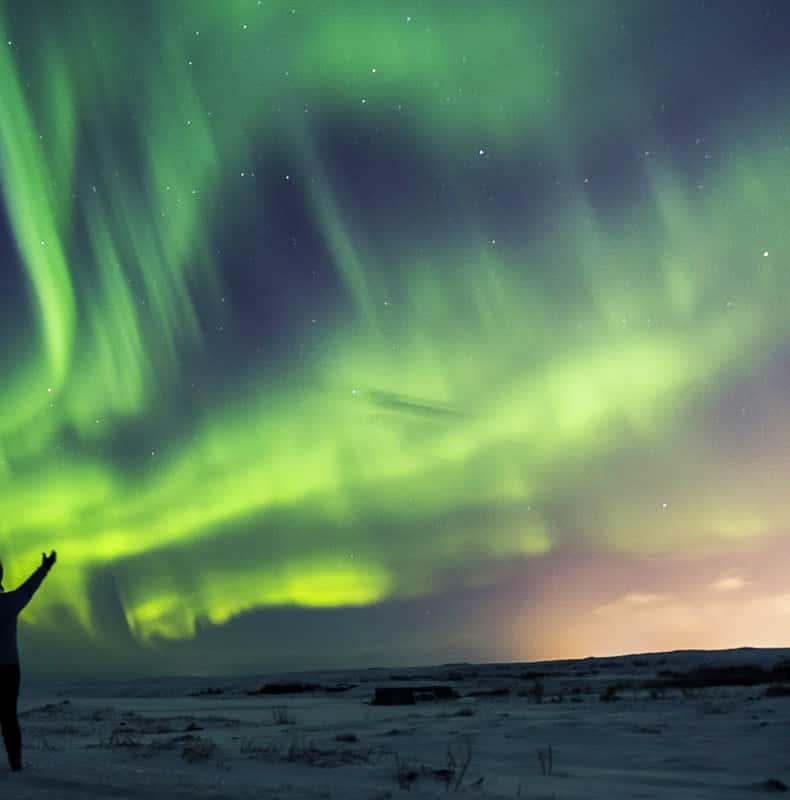
- North Star Adventures (100% Yellowknives Dene-owned, from CAD 199): aurora hunting tours with Indigenous guides, cultural storytelling, and real-time chasing using cloud-cover forecasts.
- B. Dene Adventures' cultural aurora tour (Dene-owned, from CAD 120): evening programs with northern lights storytelling, traditional drumming, Great Slave Lake fish and bannock samples, all in a heated cabin.
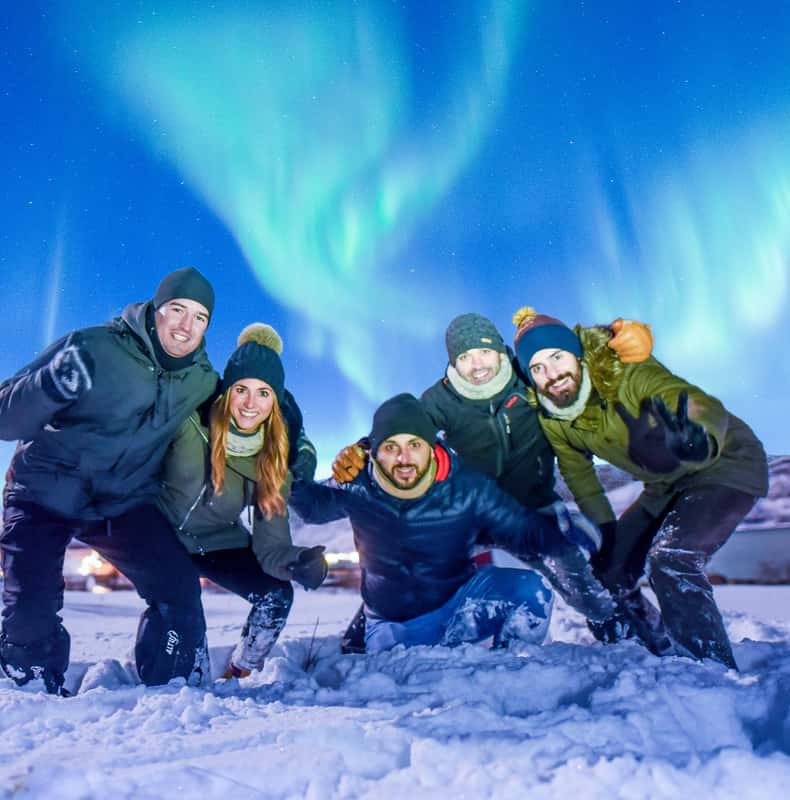
- Aurora Village (from CAD 125): heated teepees at a fixed dark-sky site with Indigenous cultural programming and structured viewing with warm-up breaks.
Self-driving. The Ingraham Trail (Highway 4) has numerous pull-offs 15 to 30 minutes from downtown that reach Bortle 2–3 skies — genuinely dark conditions. A rental car with all-wheel drive, winter tires, and a full tank is the practical minimum. The car itself is your primary warm shelter; keep it running at -30°C.
Read next · Tour
Aurora Viewing Under the Dene Skies
Indigenous-owned aurora tour on Great Slave Lake with Dene storytelling, drumming, and traditional foods under the northern lights. $120 CAD, August to April.
Without a car or tour. You can see aurora from the edges of town: Frame Lake Trail and Back Bay offer walkable options from downtown hotels. Bright displays (Kp 4+) are visible even from city streets — Yellowknife's position under the auroral oval gives it extremely high odds of sighting, with active aurora above the region on roughly 240 nights a year[1]. Faint displays wash out in the city's light dome, so a 15-minute drive or a tour booking makes the difference between a photograph and a grey smudge.
Indigenous cultural context. Yellowknife's Dene communities have lived under these lights for thousands of years, and several operators weave that knowledge into the viewing experience — something most global aurora destinations cannot offer. B. Dene and North Star integrate Dene legends, traditional drumming, and local food into the evening. If cultural depth matters to your trip, book one of those operators for at least one night.
Minimum trip length, family logistics, and what to book now
How many nights. Three consecutive nights is the standard recommendation for a roughly 95% probability of seeing aurora, according to NWT Tourism[6]. This accounts for the two variables that can block viewing on any given night: cloud cover and low geomagnetic activity. The three-night rule works because Yellowknife's continental climate delivers a high proportion of clear winter nights. For fall aurora (August–September), consider four nights, as cloud-cover probability is slightly higher before the winter high-pressure system locks in.
Family logistics. Fall aurora (August–September) is the most family-friendly window: mild temperatures (5°C to 18°C), manageable viewing hours, and daytime activities like hiking and canoeing. Winter aurora is challenging for children under about 8 due to the extreme cold and late hours (peak viewing 22:00–02:00). Several operators cater to families: Bucket List Tour Company offers small-group indoor viewing with fish chowder; Aurora Village provides heated teepees with warm-up breaks; North Star Adventures runs private tours that can be tailored for children.
Getting here and staying. Yellowknife Airport (YZF) has direct flights from Edmonton, Calgary, and Vancouver on Air Canada and WestJet. Most hotels cluster in the compact downtown core, within walking distance of restaurants and tour pickups. The best aurora viewing spots near Yellowknife guide maps the Ingraham Trail pull-offs and remote lodge options for those who want Bortle 1 skies.
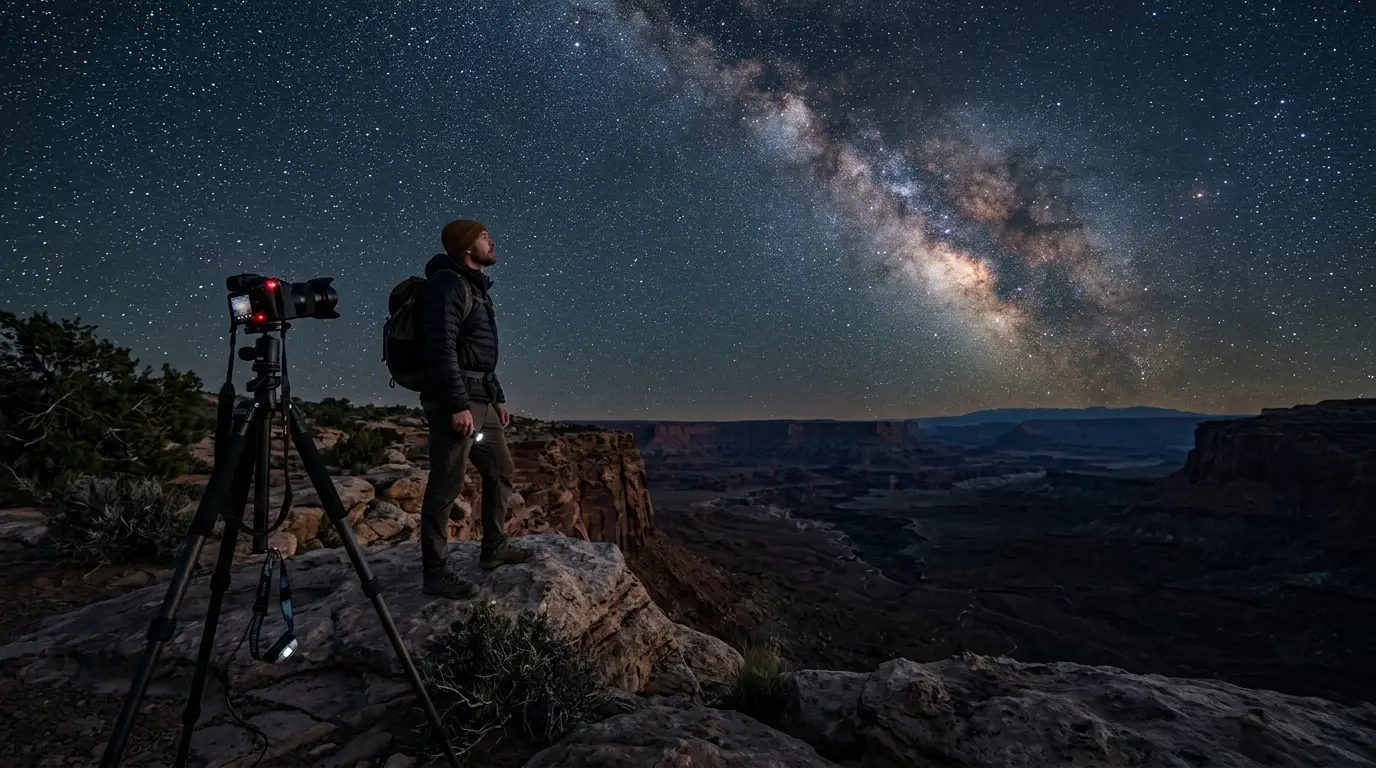
Featured · Article
What Is Astrotourism? The Complete Beginner's Guide
Astrotourism means travel built around dark skies: meteor showers, auroras, the Milky Way. What it means, where to go, and how to plan your first trip.
What to book in advance. Aurora tours fill during March (the busiest month), and rental cars with winter tires are limited. Book both at least six weeks ahead for peak-season dates. Accommodation is less constrained but still fills around the Snowking Winter Festival in March.