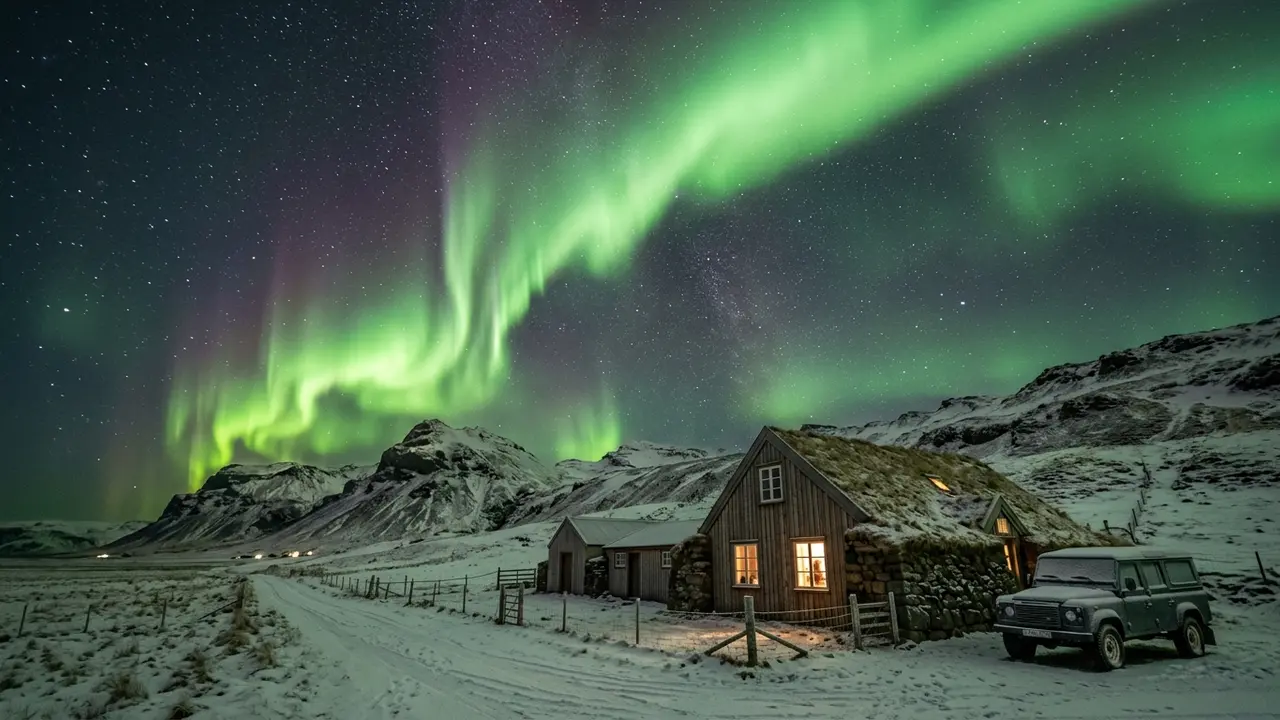

Why cloud cover, not solar activity, decides your odds
Iceland's entire inhabited landmass sits at 64 to 66 degrees north, inside or right at the edge of the auroral oval, the ring around the pole (roughly 60-70°N under quiet conditions) where the northern lights are most active[1]. That is the good news, and it is why Iceland's aurora season runs from September through April. The bad news is what actually stops people from seeing anything: not a weak Kp index, not a quiet sun, but cloud cover. For the full mechanics of what the Kp index actually measures, see Kp Index Explained.
64-66°N
Ask anyone who has spent a full week chasing the aurora in Iceland and they will tell you the same thing before you finish the question. A strong geomagnetic storm overhead is worthless if a bank of Atlantic cloud sits between you and it[2]. Iceland's maritime weather is the reason a destination with genuinely good aurora physics still frustrates travelers who fly in for two or three nights and see nothing but rain on the windscreen.
This is the entire logic behind trip length. You are not really betting against the aurora being active. You are betting against Icelandic weather, and the way you beat a weather bet is by giving yourself more nights for the odds to work in your favor.
Three nights: the minimum, and the odds you're accepting
Three nights is the number that shows up most often in casual trip-length advice, and it deserves the asterisk it rarely gets. At three nights, you are giving the weather exactly three chances to cooperate, and Iceland's own tourism sites are blunt about the tradeoff: you're statistically more likely to see the northern lights by staying in Iceland for an extended time[3]. That is not a guarantee at any length. It is a bet with fewer rolls of the dice.
The math is not really about the aurora being rare. Solar Cycle 25 is producing enough geomagnetic activity that most weeks deliver at least one strong night somewhere over the North Atlantic. The problem is that somewhere over the North Atlantic and directly above your hotel in Vík are not the same thing, and a three-night trip gives you exactly three chances for those two things to line up under a clear sky.
If you are flying in from New York or London for a long weekend and the aurora is a bonus rather than the entire point of the trip, three nights is a reasonable gamble. If seeing the northern lights is the entire reason you booked flights to Iceland, treat three nights as the floor, not the target. If this is your first dedicated dark-sky trip anywhere, the general primer on Stargazing for Beginners covers gear and expectations that apply beyond Iceland specifically.
Five nights: the sweet spot most first-time trips should book
Five nights is where the math starts working in your favor instead of against you. Every added night is another roll of the dice against the weather, and that compounding is the whole point: it is the difference between hoping the aurora shows up and actually planning around a real chance of seeing it.
What five nights buys you is recovery time. Iceland's coastal weather changes fast: a system that blankets the south coast in cloud on a Tuesday can clear out by Thursday, and a five-night trip gives that system room to pass. Three nights does not. If your only clear window falls on your travel day in or out, a three-night trip is simply over, while a five-night trip absorbs that loss and keeps going.
Five nights is also enough time to be flexible about where you are, which matters almost as much as how long you stay. Northern Lights in Iceland covers the full regional picture, but the short version is that if Reykjavík is cloudy, the south coast an hour or two away sometimes is not, and a five-night trip gives you enough slack to actually chase that gap instead of watching it from a hotel window.
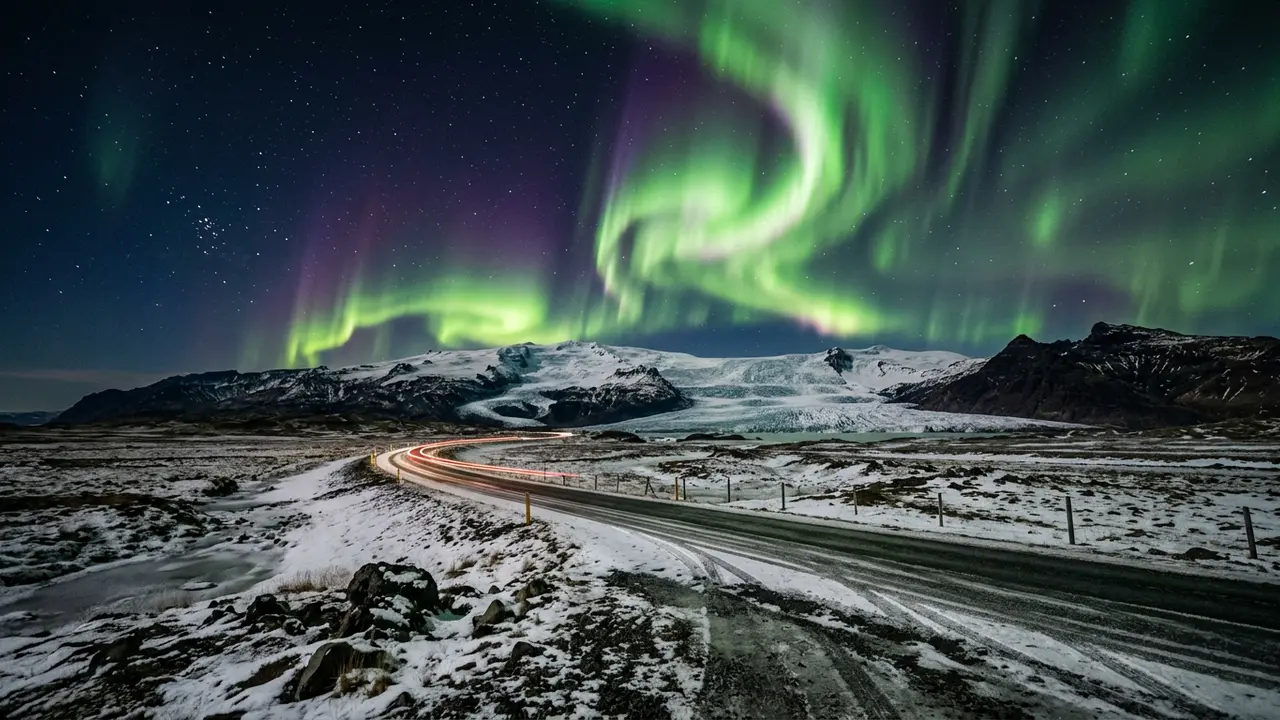
Featured · Destination
Northern Lights in Iceland
Iceland's whole-country aurora guide: best regions to base in, aurora season Sep–Mar, ice caves, winter driving reality, and where cloud cover ends every plan.
Seven nights or more: when the math tips decisively in your favor
Beyond five nights, you are no longer gambling; you are stacking chances until the odds tip decisively in your favor. Travel guidance for aurora-focused trips is consistent about the shape of that trade-off even without a hard day-count: the equinox windows in late September through October and late February through March combine long, dark nights with meaningfully more stable weather than deep winter, and longer, structured itineraries are treated as materially better odds than a long weekend[4]. The exact number of nights that tips you into near-certainty is not something any source actually states, and treating it that precisely would be its own kind of guessing.
The clearest real-world signal comes from operators running structured aurora tours: some, including eight-day winter itineraries built specifically around aurora-hunting, back the trip with a no-aurora guarantee, typically a return voucher or similar make-good if the lights never show[5]. An operator willing to put that promise behind an eight-day itinerary is telling you something real about how they rate the odds at that length, even without a published success rate to back it up.
Seven-plus nights is not the right call for everyone. It costs more, and diminishing returns set in eventually: the jump from three nights to five matters enormously, while the jump from seven nights to ten adds cost faster than it adds a meaningfully better shot. But if seeing the aurora is the entire reason for the trip and you cannot easily come back, a week or more removes most of the risk that a shorter stay accepts by default.
Ring Road vs. south-coast base camp: choosing your strategy
How you spend those nights matters almost as much as how many you book. Iceland gives you two fundamentally different strategies, and they are not interchangeable.
The Ring Road is the full counterclockwise loop around the island, Route 1, and doing it properly for aurora-hunting typically takes seven to eight days: overnighting in the countryside near Akureyri in the north, Höfn in the southeast, and Vík along the south coast, each spot chosen for minimal light pollution. In winter, this is an ambitious plan. Road closures happen with little warning (the winter driving guide covers which passes shut first), a 4x4 is strongly recommended rather than optional, and the shorter daylight hours compress how much driving you can safely do before dark, cutting into the very darkness you came for.
Recommended tours
Tours are selected for quality, not commission. I earn a small fee if you book — at no extra cost to you.

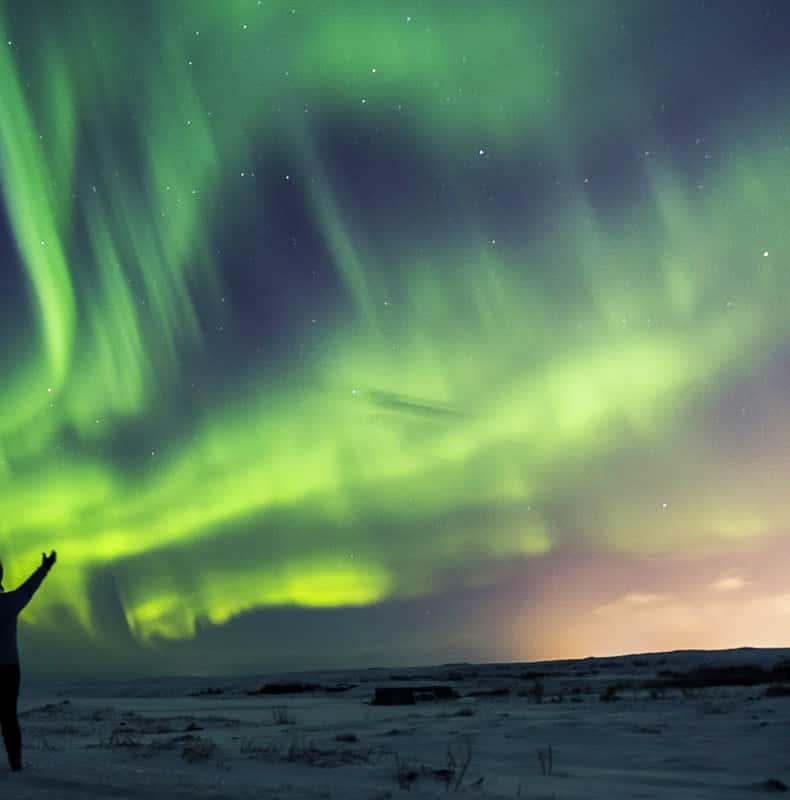

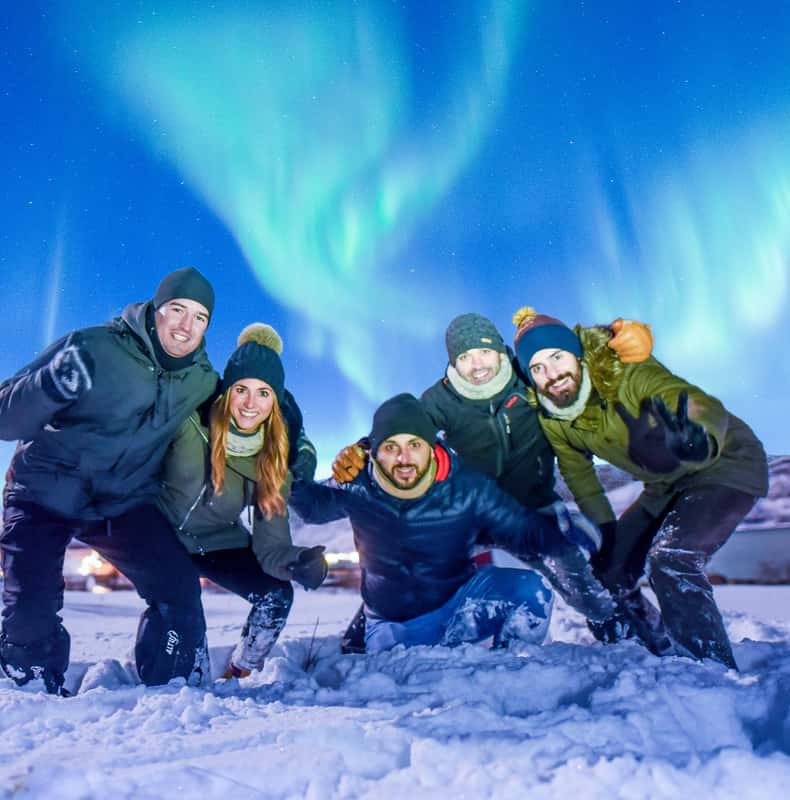
The payoff is real: you get genuinely different skies and landscapes every night, and you never sit under the light pollution of a single population center for the whole trip. The south-coast base-camp strategy trades that variety for reliability. Instead of driving the whole loop, you anchor at two or three fixed points, typically Hella, 96 kilometers and about a 90-minute drive east of Reykjavík[6], then Vík, about an hour further south, with Skaftafell and the Vatnajökull glacier zone as an option beyond that. The south coast's stretch of Route 1 tends to see fewer closures through winter than routes further inland, which means less time lost to closures and more nights actually spent outside looking up instead of driving.
- Hella offers remote countryside with genuinely low light pollution; Hotel Rangá and Midgard Base Camp both run aurora wake-up calls, so you can sleep instead of standing outside at 1 a.m. checking the sky yourself.
- Vík adds glacier and black-sand-beach scenery to the same aurora-hunting math, with hotels offering the same wake-up-call service.
- Skaftafell, further east, is worth the extra drive only if you are also building in glacier or ice-cave time.
Neither strategy is objectively better. The Ring Road rewards travelers with a full week or more, real winter-driving experience, and a genuine appetite for seeing the whole country. The base camp approach rewards travelers with three to five nights who want to spend as much of that time as possible actually watching the sky instead of watching the road. If you are working with three or five nights rather than eight or more, base camp is almost always the better call: every hour you are not driving is an hour you could be outside.
| Factor | Ring Road | South-coast base camp |
|---|---|---|
| Ideal trip length | 7-8+ nights | 3-5 nights |
| Winter driving risk | High: closures possible, 4x4 recommended | Lower: better-maintained roads |
| Scenery variety | Whole country | South coast only |
| Nights actually spent watching sky | Reduced by daily driving | Maximized: minimal driving |
| Best for | Week-plus trips, confident winter drivers | First-time aurora trips |
Timing each night: cloud forecasts and viewing windows
Once your trip length and home base are set, the nightly logistics come down to two things: which nights are worth going outside for, and when during the night to actually look up. For the general technique of reading a Kp forecast and finding dark sky anywhere, see How to See the Northern Lights.
Season shapes your odds more than most travelers expect. November through January brings the longest, darkest nights of the year, but it is also when Atlantic storm systems are most active and cloud cover is at its worst. Late September through October and late February through March trade a few hours of darkness for meaningfully more stable weather, and for a lot of travelers that trade is worth making. For the broader framework on lining up moon phase, season, and weather anywhere in the world, see When to Stargaze.
Once you have picked a clear-looking night, timing still matters. The best viewing window runs from 10:30 p.m. to 1 a.m., with a broader window from 9 p.m. to 2 a.m. that still produces sightings. Outside that stretch you can occasionally get lucky, but this is the window worth staying awake for.
Before committing to a night outside, check the Iceland Met Office cloud-cover forecast rather than guessing from the window. White and light-gray areas on their map mean clear skies[7]; for a real shot at seeing anything, pay particular attention to the low- and mid-level cloud layers, since those are what actually block the aurora even on a night that looks clear overhead from a distance. Pair that with a Kp forecast and you have the two pieces of information that actually predict a good night, not just a clear one. For the rest of the practical questions that come up once dates are booked, see the Iceland northern lights FAQ.