The Park's Own List, and Where the Hype Gets Ahead of It
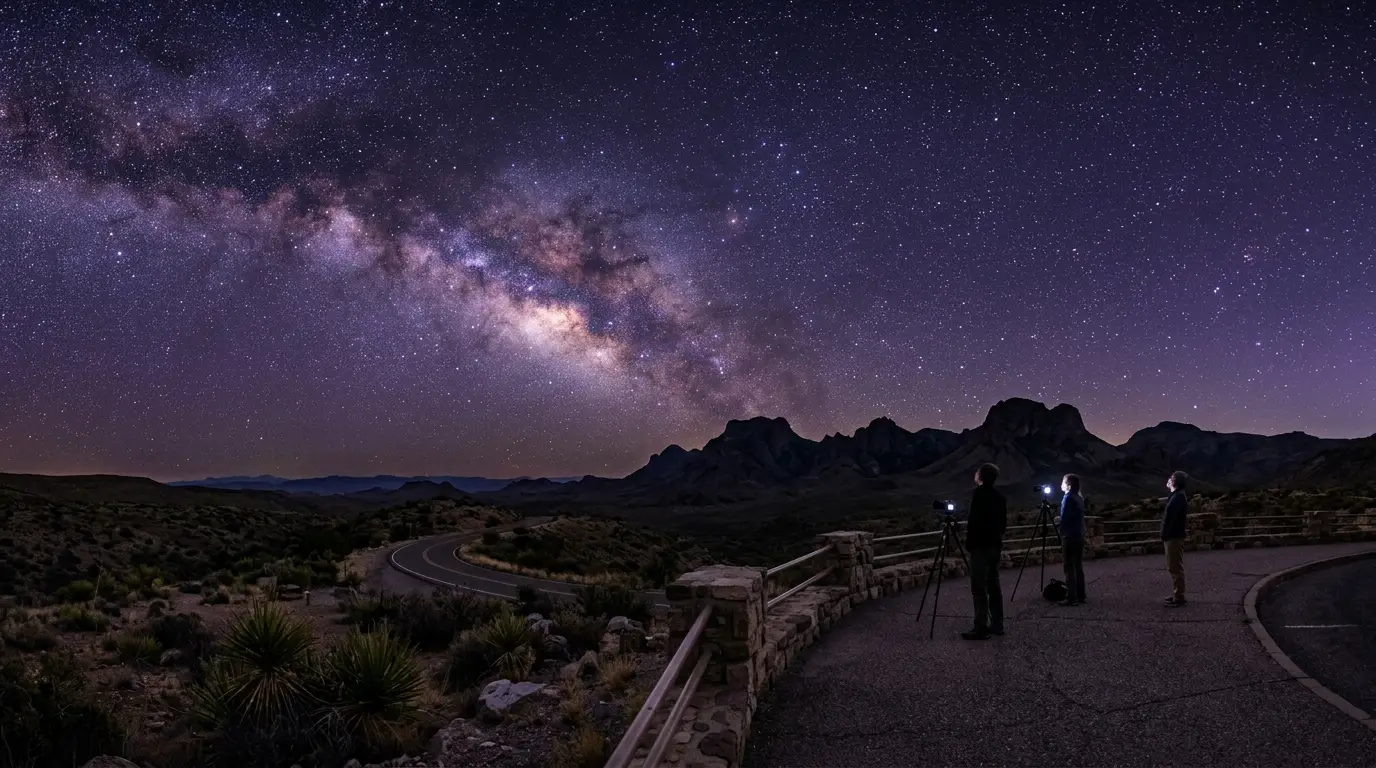
Big Bend earned International Dark Sky Park status in 2012, awarded by the International Dark-Sky Association, and the National Park Service's own stargazing page states plainly that the park carries less light pollution than any other national park unit in the Lower 48[1]. Its own night-sky page names a specific list: the Fossil Discovery Exhibit, Sotol Vista on the Ross Maxwell Scenic Drive, the Rio Grande overlook, Dugout Wells, and most backcountry campsites[2].
Notice what's missing. Chisos Basin and Santa Elena Canyon, the two spots that show up first in almost every travel blog's Big Bend stargazing roundup, aren't on that NPS list. That's not a knock against either place, both have real, verified qualities that make a strong case for stargazing. It's a distinction worth holding onto as you read the rest of this guide: some of these six spots carry the park's own explicit stargazing endorsement, and some earn their place here on elevation, isolation, and the shape of the landscape, reasoning any visitor can apply, not a National Park Service recommendation.
Some of these six spots carry the park's own explicit stargazing endorsement, and some earn their place here on elevation, isolation, and the shape of the landscape, reasoning any visitor can apply, not a National Park Service recommendation.
That distinction matters more in Big Bend than in most parks, because so much of the darkness here comes from remoteness rather than active management. Big Bend National Park sits inside a huge, mostly uninhabited stretch of the Chihuahuan Desert with almost no artificial light source for miles in any direction, and every one of the six spots below shares that same blanket of dark. Where they differ is foreground, access, and how far you're willing to drive after the sun goes down. For the Bortle Class 1 rating and Sky Quality Meter data behind that darkness, see the full certification write-up.
Sotol Vista: The Spot NPS Names Outright
Sotol Vista's case for itself is remoteness, plain and simple. It's one of the handful of overlooks the National Park Service maintains along the Ross Maxwell Scenic Drive, far enough into the park's interior that there's no artificial light source anywhere near it.
Access matches the endorsement. Sotol Vista sits 7.9 miles along the paved Ross Maxwell Scenic Drive, a loop road that needs no high-clearance vehicle, with ten pull-in parking spaces, three RV or trailer spots, two accessible spots, and a vault toilet on site[3]. Arrive, park, walk a few steps to the overlook, and the whole business of setting up for a long exposure happens without picking a route across uneven ground in the dark.
Featured · Destination
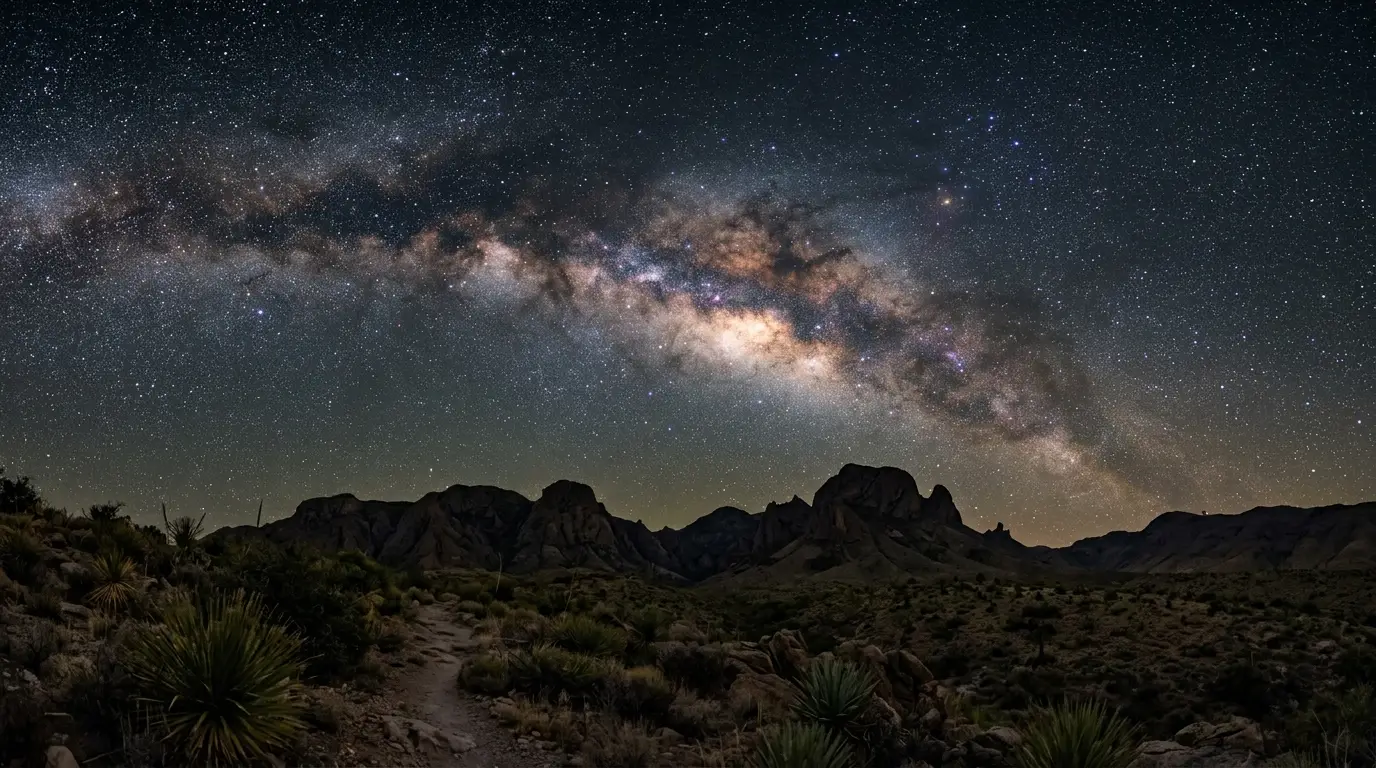
Big Bend National Park
Big Bend National Park is Bortle Class 1, the darkest rating the Bortle scale has. What that dark sky rating means on the ground, and the best months to go.
What you get for that convenience is a wide, open horizon rather than a dramatic foreground. There's no canyon wall or mountain silhouette here to frame the shot, just the desert falling away below the overlook and a genuinely dark sky above it. For a first stop, or the one to prioritize if you only get one clear night, this is it, and the ten parking spots mean you're rarely fighting for room even on a busy weekend.
Rio Grande Village: The River Overlook NPS Also Names
NPS's own recommended-spots list names "the Rio Grande overlook" directly, right alongside Sotol Vista[2]. The trail to it starts at the Rio Grande Village Nature Trail, a 0.75-mile loop with roughly 200 feet of elevation change, relatively flat until a bridge crossing and then a moderate climb up rock steps to a limestone ridge[4].
That ridge is the payoff. "The trail proceeds up and around a small ridge that has a 360-degree view of the Rio Grande, the Sierra del Carmens in Mexico, and the Chisos Mountains in the park."[4] By day it's one of the park's better sunrise and sunset spots. After dark, that same open ridge gives an unobstructed sweep of sky in every direction, with the river and two mountain ranges standing in as a genuine foreground instead of flat desert.
360°
The trade-off is that this one asks more of you than Sotol Vista does. It's a walk, not a pull-out, service dogs only, no other pets, and wheelchairs can reach the bridge but not the final climb to the ridge. Budget real time for the outbound hike before the sky gets properly dark, and don't attempt the rock-step section without a light in hand.
Chisos Basin: A Strong Case the Park Doesn't Make Itself
Here's where this guide has to be careful, and where a lot of Big Bend content isn't. Chisos Basin sits at 5,400 feet[5], the highest developed area anywhere in the park, reached via a narrow, winding paved road not suited to large RVs or trailers. Casa Grande and Emory Peak ring the basin on three sides, and the sunset through the nearby rock formation known as the Window is one of the park's signature views.
No NPS page checked for this guide calls Chisos Basin a stargazing spot outright. Third-party sites, including the lodge operating inside the basin, make that claim; the National Park Service itself does not, at least not in any page this research drew from. What is verified is the elevation and the mountain-ringed setting, and that's a reasonable case for good stargazing on its own terms, less haze at altitude, a natural horizon framed by peaks rather than flat desert. Treat it as sound visitor reasoning, not a federal endorsement, and either reading lands you in the same dark, high basin once the sun is down.
This Chisos Basin lodge is the only lodging inside the park boundary and sits a short walk from this same high ground, worth booking well ahead if a night at altitude here is part of the plan. Rooms sell out fast for a property with no real in-park competition.
Santa Elena Canyon: Dramatic Walls, an Honest Caveat
Santa Elena Canyon runs roughly eight miles through Big Bend's western reaches, its walls narrowing to as little as 30 feet apart in places[6], and its physical scale is the whole argument for going. "Santa Elena has the tallest cliffs forming the canyon wall, up to 1,500 feet."[7] Stand at the canyon mouth after dark and that height frames a narrow strip of sky between two sheer walls, instead of the wide-open horizon Sotol Vista gives you a short drive away.
As with Chisos Basin, the stargazing framing here is a reasonable read of the landscape rather than something the National Park Service states outright in any page checked for this guide. What NPS does say clearly is about access: the short trail crosses Terlingua Creek, and "this trail may be impassable due to flooding during the summer rainy season. Check with park staff about the current trail condition."[8] Conditions here shift with the weather more than at any of the other five spots.
Featured · Article
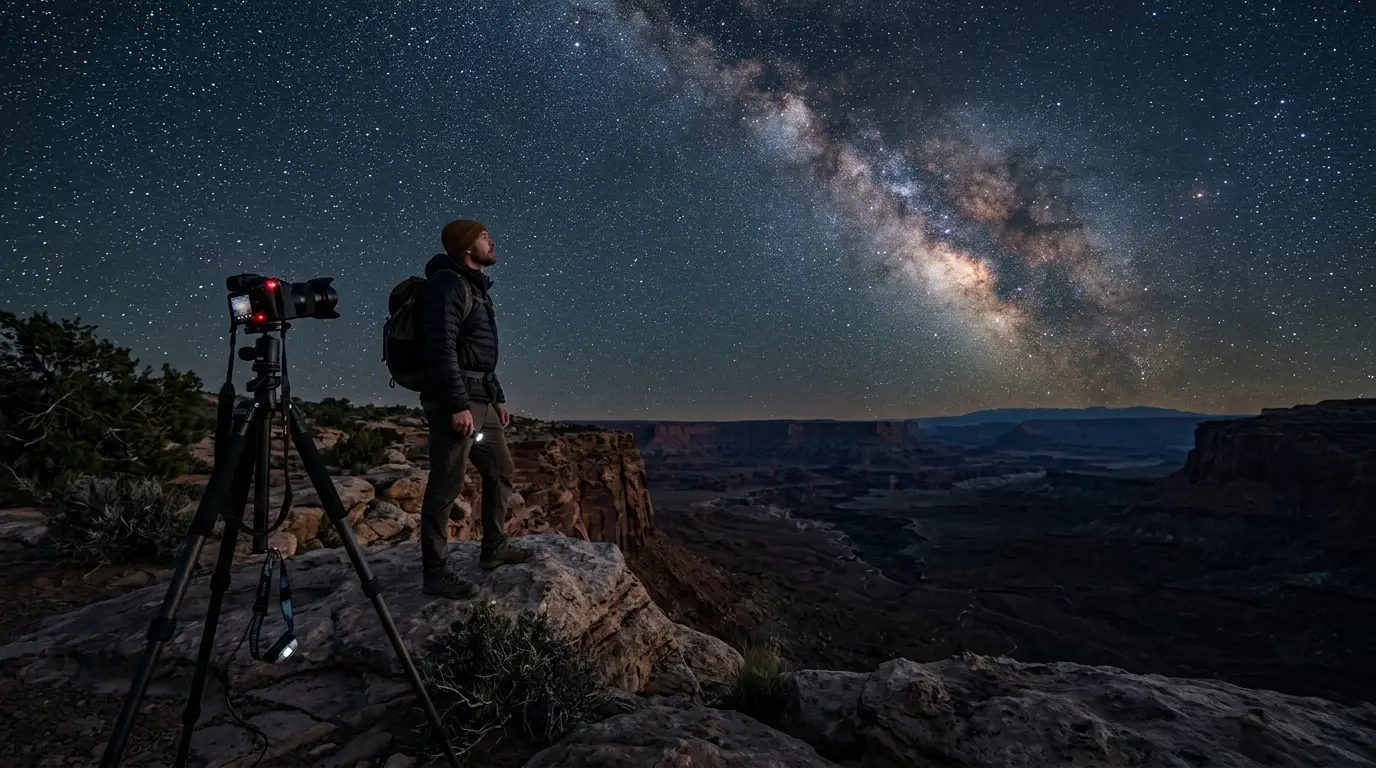
What Is Astrotourism? The Complete Beginner's Guide
Astrotourism means travel built around dark skies: meteor showers, auroras, the Milky Way. What it means, where to go, and how to plan your first trip.
Big Bend's alert pages update often enough that a closure status printed here would likely be stale by the time you read it, so check current conditions at nps.gov/bibe/planyourvisit/conditions.htm before you make the drive, especially after rain. If the creek's running high, this is the one of the six spots most likely to be a no-go on a given night, so have a backup ready. Sotol Vista sits on the same road and is a far more reliable bet regardless of season.
Two More Named Spots, and the Logistics That Actually Matter
NPS's list names two more stops worth knowing, even though neither gets its own section here: the Fossil Discovery Exhibit and Dugout Wells, both called out directly alongside Sotol Vista and the Rio Grande overlook[2]. Neither requires a hike or a high-clearance vehicle; both are vehicle-accessible stops worth a look if you're already driving past.
None of the six spots above requires four-wheel drive. High-clearance and true four-wheel drive are necessary only on the park's separate primitive dirt roads, and NPS is specific that this requirement applies to those roads alone, not to any of the paved routes covered in this guide[9]. Walking the Rio Grande Village trail after dark is the one place a light is non-negotiable: "walking the trail after dark will require a headlamp or flashlight," per NPS[10], and the same goes for the rock-step climb up to that overlook ridge.
Recommended tours
Tours are selected for quality, not commission. I earn a small fee if you book — at no extra cost to you.
For a base camp, Basecamp Terlingua puts private fire pits and stargazing chairs a few minutes from the park's western entrance, closer to Santa Elena Canyon and Sotol Vista than a stay inside the park itself. If a guided night with a real telescope sounds better than driving between overlooks alone, McDonald Observatory's Star Party program runs a few hours north near Fort Davis and is worth booking three or more weeks ahead. Closer to the park itself, Dark Texas Skies runs stargazing nights from Marathon and Astro Mucho runs public star parties from Terlingua Star Park, neither requiring the Fort Davis drive.
Here's how the six stack up against each other, and what each one actually gets you once the sun is down.
| Spot | NPS stargazing endorsement | Best for |
|---|---|---|
| Sotol Vista | Yes, named directly | Widest open horizon, easiest access |
| Rio Grande Village overlook | Yes, named directly | 360-degree river and mountain view |
| Fossil Discovery Exhibit | Yes, named directly | Quick vehicle-accessible stop |
| Dugout Wells | Yes, named directly | Quick vehicle-accessible stop |
| Chisos Basin | Not stated by NPS | Elevation and mountain-ringed setting |
| Santa Elena Canyon | Not stated by NPS | Dramatic canyon-wall framing |
What to pack, regardless of which spot you pick
- A headlamp or flashlight with a red-light mode, for the Rio Grande Village trail and any walk back to the car after your eyes have adjusted
- More water than you think you need; Big Bend's remoteness applies after dark as much as it does at noon
- Offline maps downloaded before you lose signal, since cell coverage is limited and unreliable across most of the park
- Real layers even in summer; desert nights cool fast once the sun's down