Two National Parks, One Accessibility Question

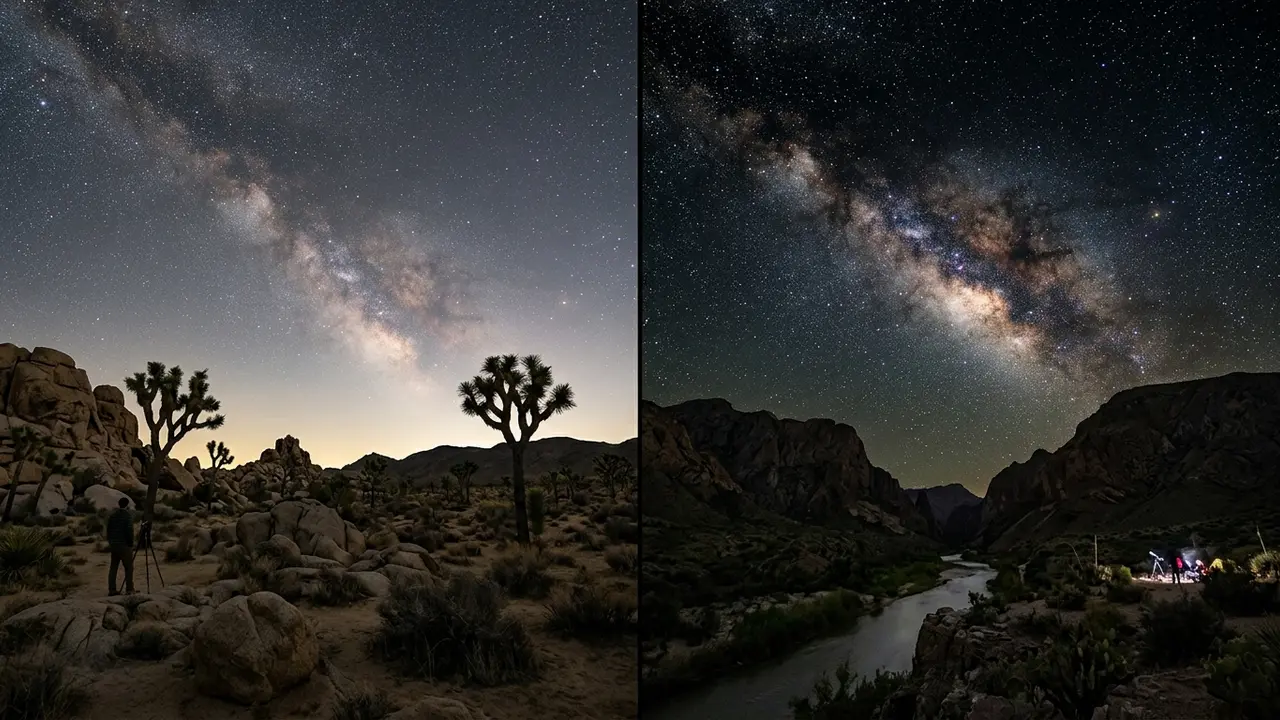
Joshua Tree and Big Bend both carry International Dark Sky Park status, Joshua Tree certified directly by DarkSky International[1] and Big Bend awarded the same status in 2012 by the International Dark-Sky Association[2]. The similarity mostly stops at the certificate. Joshua Tree sits close enough to Los Angeles and Palm Springs to work as a genuine weekend trip; Big Bend sits far enough from anywhere that reaching it is closer to a dedicated expedition than a weekend add-on. Get the accessibility trade-off wrong and you either drive home exhausted on a Sunday night, or you show up at a park remote enough that a forgotten gas can becomes a real problem.
That trade-off, accessibility against darkness, is the entire subject of this comparison, not history, not the shape of the rock formations, not which visitor center has the better gift shop. It also isn't a coincidence of geography: Joshua Tree's high-desert landscape spans the Mojave and Colorado deserts, within a few hours of Southern California's biggest metro areas, while Big Bend sits deep in the Chihuahuan Desert, hundreds of miles from the nearest comparable city. Joshua Tree wins on convenience and loses ground on how dark its sky actually gets once you're inside the boundary. Big Bend wins on raw darkness and loses ground on how long it takes to get anywhere near it. Neither fact cancels the other out, and neither park is secretly the better choice once the marketing is stripped away.
Joshua TreeBig Bend
DesignationInternational Dark Sky Park (DarkSky International)International Dark Sky Park, awarded 2012 (IDA)
Nearest major airportPalm Springs, CAMidland/Odessa or El Paso, TX (235–330 mi)
Distance from a big city140 mi from Los AngelesNo major city within a day's easy drive
Darkest-sky claimSome of the darkest nights in Southern CaliforniaDarkest night skies of any national park in the Lower 48
Best suited forA weekend trip with a rental carA dedicated, multi-day desert trip

Joshua Tree's Case: A Real Weekend Trip, With a Catch

Start with the number that makes Joshua Tree work at all: the park sits 140 miles east of Los Angeles[3] and 215 miles southwest of Las Vegas[4], distances that turn a stargazing trip into an actual weekend rather than a vacation. The closest airport is in Palm Springs[5], close enough that a traveler flying in barely needs the rest of the freeway drive. Joshua Tree also carries a Silver-tier designation within DarkSky International's Park program, one step below the top Gold tier, solid recognition rather than a marketing flourish.
None of that convenience is free. Light pollution from the surrounding communities does reach into the park[6], and NPS is upfront that some areas are simply darker than others depending on which side of the park you're standing on. The western half, closest to Palm Springs and Palm Desert, absorbs the most glow; the eastern wilderness stays noticeably darker. Cottonwood Campground is the one clear exception among the park's official campgrounds, consistently the darkest of the bunch[7]. NPS's own line about the payoff, once you're standing in the right spot, reads almost like a promise: "Boasting some of the darkest nights in Southern California, Joshua Tree National Park offers many visitors the chance to admire the Milky Way for the first time in their lives"[8].

Read next · Destination

Joshua Tree National Park

Joshua Tree earned International Dark Sky Park status in 2017, just two hours from LA. Here's where to see the Milky Way, dodge crowds, and stay the night.

Where to Actually Point the Car

Picking the right pullout matters more here than at almost any other dark-sky park, because so much of Joshua Tree still sits within reach of the Coachella Valley's glow. NPS's own directions page carries an unusually blunt warning worth repeating in full: "Do not rely on GPS directions to navigate to or within Joshua Tree National Park!"[9], since vehicle nav systems have a habit of routing visitors onto backcountry roads that were never built for it.

A short list of the spots that consistently deliver, straight from park guidance:

  • Quail Springs parking lot
  • Hidden Valley parking lot
  • Cap Rock parking lot
  • Ryan Mountain parking lot
  • Cottonwood Campground, the darkest of the park's campgrounds
  • Pinto Basin Road, between Cholla Cactus Garden and Cottonwood, for the least traffic and darkest roadside viewing
Our best stargazing spots in Joshua Tree guide goes deeper on timing each one to the new-moon window.

Big Bend's Case: The Darkest Sky in the Lower 48, the Hard Way

Every measurement Big Bend can offer supports the same conclusion already implied by its 2012 designation: NPS's own Natural Sounds and Night Skies division has determined it has the darkest night skies of any national park in the lower 48 states[10]. That's not a marketing tagline; it's the specific finding of the NPS division responsible for measuring exactly this kind of thing.
The isolation that produces that darkness is the same isolation that makes the park hard to reach. There is no public transportation to or within Big Bend[11], and the nearest airports served by major airlines sit at Midland/Odessa, 235 miles from park headquarters, and El Paso, 330 miles away[12]. The nearest Amtrak station and Greyhound stop are both in Alpine, Texas, itself 100 miles from park headquarters[13]. NPS doesn't sugarcoat what that means for trip planning: while the isolation is a draw for many visitors, "it also means your trip must be well prepared"[14].

McDonald Observatory, If You Have an Extra Day

Big Bend also sits within range of McDonald Observatory, one of the country's most active research telescopes and a public stargazing destination in its own right. The drive isn't quick; expect the better part of a half-day round trip through Terlingua, Alpine, and Fort Davis, so it works best as an add-on for travelers already committed to the multi-day trip Big Bend demands, not a side errand squeezed into a weekend.

Sky Quality Up Close: Light Domes Versus True Dark
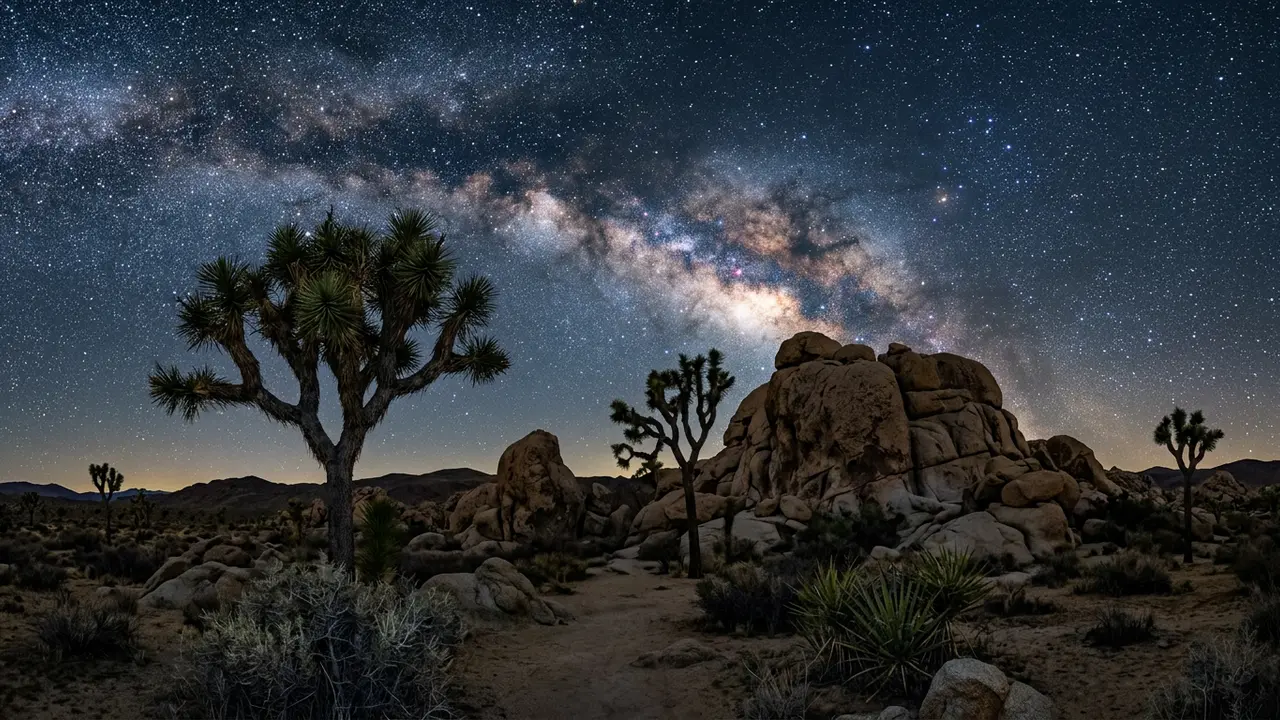
Joshua Tree's problem isn't darkness in the abstract, it's direction. Stand in the park's western half on a clear night and the horizon toward Palm Springs and Palm Desert carries a visible glow, a textbook light dome cast by a city's worth of streetlights and parking-lot fixtures. Both parks rank among genuinely dark skies on the Bortle scale overall, but the light dome pushes Joshua Tree's western horizon noticeably closer to the bright end than anything Big Bend produces. Move east, deep into the park's wilderness zone, and that glow thins out fast enough that Cottonwood Campground counts as the darkest official camping spot in the park[7]. Big Bend doesn't have this problem to solve in the first place: there's no city close enough, in any direction, to cast a comparable dome, which is exactly why NPS can back the "darkest in the lower 48" claim without an asterisk[10].
None of this makes Joshua Tree a bad first stargazing trip. NPS frames the park as a place where many visitors see the Milky Way core overhead for the first time in their lives[8], and that's a real, honest selling point, not an inflated one. It just means position matters more here than at Big Bend, where nearly the whole park delivers roughly the same dark result regardless of which pullout you pick. Our is Joshua Tree worth it for stargazing piece digs into that first-timer calculus in more detail.

Featured · Destination

Joshua Tree National Park

Joshua Tree earned International Dark Sky Park status in 2017, just two hours from LA. Here's where to see the Milky Way, dodge crowds, and stay the night.

Getting There: The Trip Logistics That Actually Decide This

The two trips barely resemble each other once you get past "drive to a national park." Joshua Tree: fly into Palm Springs or drive in from Los Angeles or Las Vegas, rent a car, and plan for one or two nights. Big Bend: fly into Midland/Odessa or El Paso, budget the better part of a day just to reach the park boundary, and plan for at least three nights to make the drive worth it.

A few things worth sorting out before either trip, doubly so for Big Bend:

  • Gas up well before entering either park; fuel stops thin out fast once you're inside
  • Cell service is unreliable to nonexistent in both parks after dark
  • Download offline maps in advance, since NPS itself warns against trusting GPS at Joshua Tree[9]
  • Pack extra water and warm layers; desert nights drop fast regardless of daytime heat
Check the new-moon window before locking in dates at either park, and build in a buffer night in case clouds roll in unexpectedly; neither park refunds a wasted trip for bad weather.

Featured · Article

What Is Light Pollution? Definition, Types, and Solutions

Light pollution is artificial light brightening the night sky, affecting 80% of the world. Learn the 4 types, wildlife and health effects, and how to fix it.

The Verdict: Which Park Fits Your Trip

Pick Joshua Tree if the trip needs to stay simple: a two-to-three-hour drive from Los Angeles or Las Vegas, a real, if imperfect, dark sky once you're past the park's western edge, and a weekend that doesn't eat a full vacation day on either end. Pick Big Bend if the darkest sky in the lower 48 is worth a half-day drive and a multi-night commitment, and if McDonald Observatory as an add-on genuinely appeals rather than feeling like an obligation.

A few situations make the choice easier than picking blind:

  • A first stargazing trip built around an LA or Vegas weekend: Joshua Tree
  • A dedicated desert expedition with McDonald Observatory folded in: Big Bend
  • Minimal trip-planning overhead and a rental car from a major airport: Joshua Tree
  • The truest, darkest sky available in the continental US, distance be damned: Big Bend
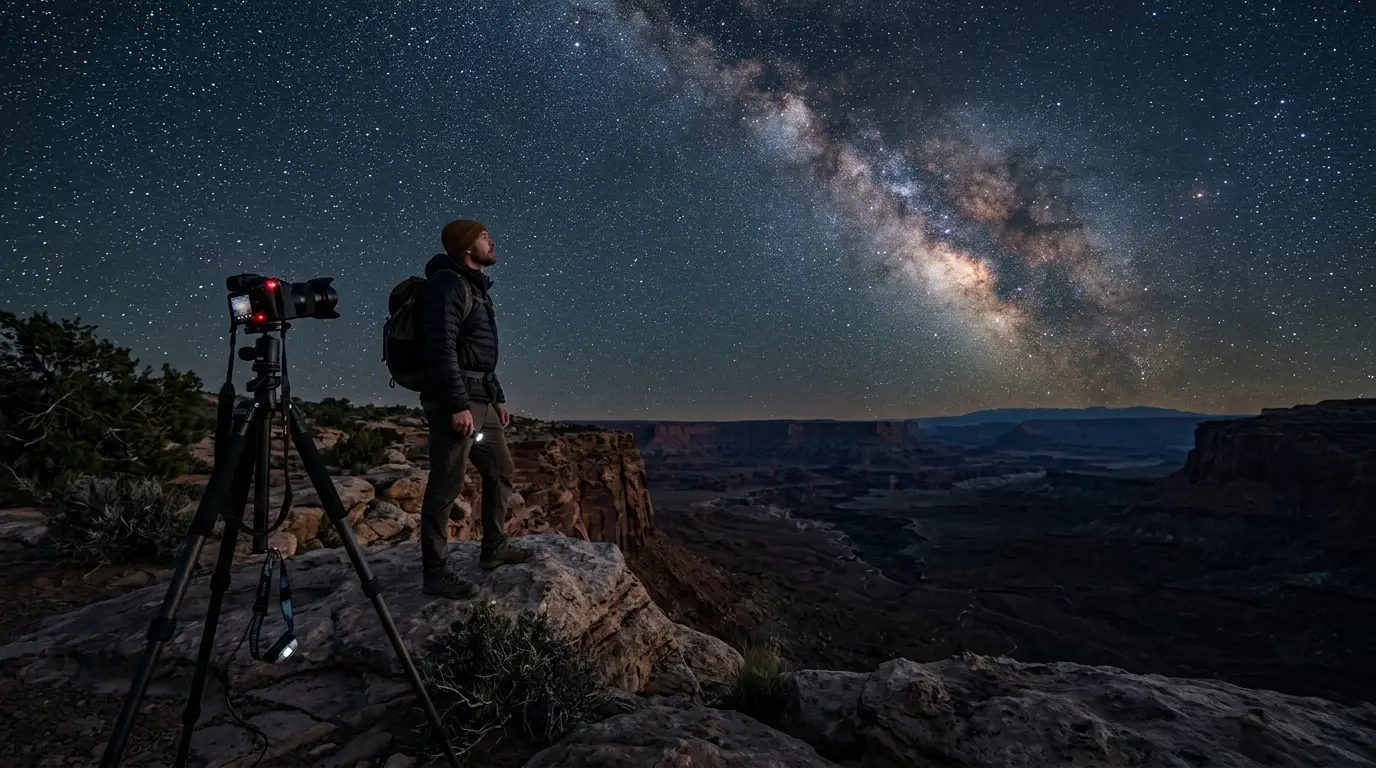
Neither answer makes the other park wrong. It comes down to how much of the trip you're willing to spend just getting there before the stars come out. Our Joshua Tree stargazing guide has the rest of the planning details if that's the park your trip actually needs.