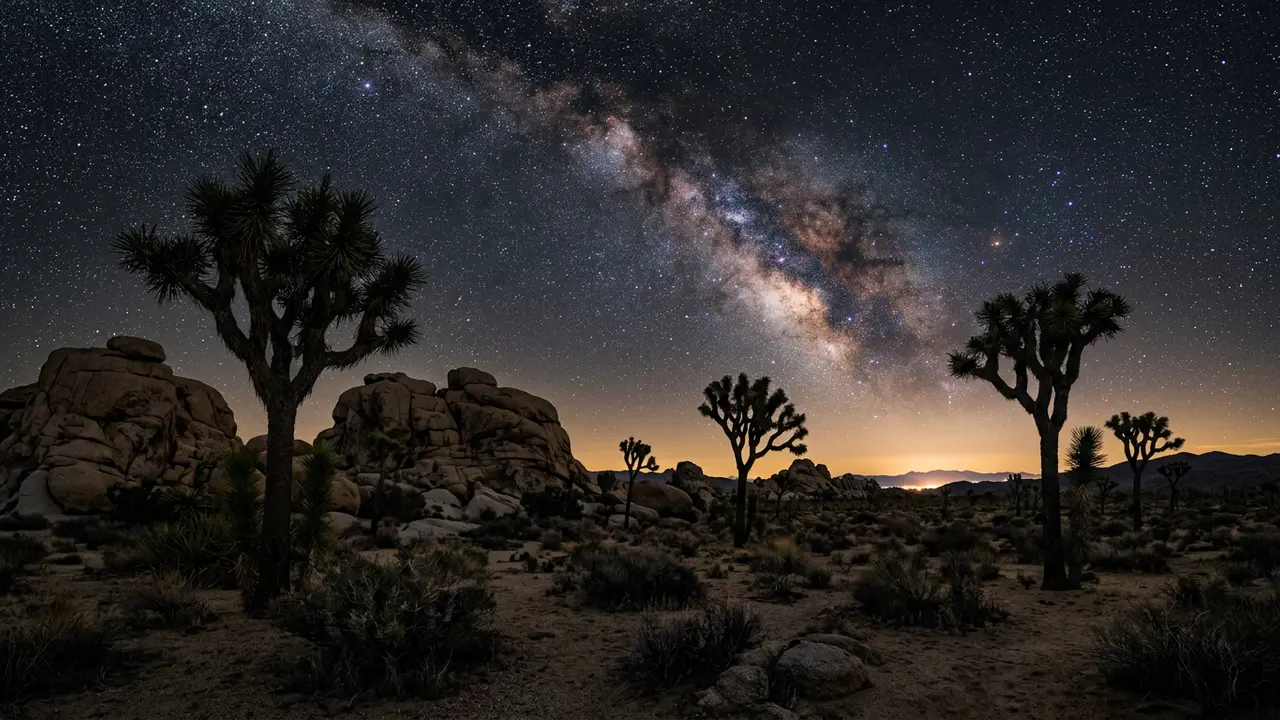
What International Dark Sky Park Certification Actually Requires
A Dark Sky Park designation isn't something a park can put on its own visitor-center sign. DarkSky International, the nonprofit formerly known as the International Dark-Sky Association, certifies parks jointly with whichever agency manages the land, in Joshua Tree's case the National Park Service. That certification program exists because one city moved first: Flagstaff's 1958 lighting ordinance led to its 2001 designation as the world's first International Dark Sky Community, and DarkSky International built its Dark Sky Places program directly out of that milestone.[10][11]
Clearing that certification takes more than a scenic reputation. An applying park has to demonstrate:
- Energy-efficient outdoor lighting already installed across park facilities
- Measured sky-quality data proving the core area's darkness against nearby light pollution
- Community support and lighting agreements with the towns pressed against the park boundary
- A public education program teaching visitors why the darkness is worth protecting
Joshua Tree cleared all four requirements before its paperwork ever reached DarkSky International for review. What makes that clearance worth a second look is the third item on that list: the towns Joshua Tree had to bring into agreement aren't small, distant outposts several hours off the interstate. They lie within a few hours of one of the largest, fastest-growing metro regions in the country. For how that compares against parks that never had to solve this problem in the first place, see the guide to the best dark sky parks in the world.
How Joshua Tree Earned Silver Tier Certification in 2017
Joshua Tree's certification became official on August 12, 2017, when park Superintendent David Smith accepted the designation plaque in a ceremony marking years of work behind it.[1] The rating that came with the plaque was Silver Tier, not the program's top rung, though DarkSky International's own announcement left the door open: the designation, it said, could rise to Gold Tier if lighting improved further in the Morongo Basin towns north of the park and in the Coachella Valley to its south and west.[2]
That stated path to Gold hasn't been completed. No source confirms Joshua Tree has been upgraded since 2017, and this piece isn't going to imply otherwise. As of this writing, Joshua Tree remains a Silver Tier park with a documented, still-open opportunity to move up, not a Gold Tier one.
Aug 12, 2017
The certification also placed Joshua Tree in select company. It became the 10th unit in the entire U.S. National Park System to earn International Dark Sky Park recognition,[3] a list that, even years later, covers only a fraction of the more than 400 units the Park Service manages.
Gold, Silver, and Bronze: Where Joshua Tree's Rating Sits
Inside the Dark Sky Park category, DarkSky International grades certified sites into three tiers based on measured darkness rather than scenery.[4] Gold Tier sits at the top, requiring a visual limiting magnitude of 6.8 or greater under clear skies, with no lighting permitted at all on towers or buildings inside the certified boundary.[5] Silver Tier, the rating Joshua Tree holds, requires magnitude 6.0 to 6.7, with the Milky Way visible to the naked eye in both summer and winter and only minor to moderate artificial skyglow tolerated.[4] Bronze Tier covers 5.0 to 5.9, the entry point for Dark Sky Park certification.[4]
None of those numbers are abstract. A visual limiting magnitude of 6.0 means a trained observer, under a genuinely dark, moonless sky, can pick out stars several times fainter than anything visible from a typical suburban backyard. Joshua Tree clears that bar across most of its vast expanse, though as the next section covers, not evenly across all of it.
| Tier | Limiting magnitude | What else is required |
|---|---|---|
| Gold | 6.8 or greater | No lighting on towers or buildings inside the boundary |
| Silver (Joshua Tree) | 6.0 to 6.7 | Milky Way visible in summer and winter; minor to moderate skyglow allowed |
| Bronze | 5.0 to 5.9 | Entry point for Dark Sky Park certification |
Why This Certification Is Harder This Close to Los Angeles and the Coachella Valley
Most International Dark Sky Parks earn their rating by being remote. Joshua Tree earned Silver Tier by being close to civilization and still measuring dark enough to qualify anyway, a different and harder problem entirely. The park's own certifying body made that difficulty explicit while the designation was still under review: the western edge of the 790,000-acre park sits so exposed to the night light of Coachella Valley cities including Palm Springs, plus the Los Angeles metro area beyond, that it was, in the program manager's own words, almost ineligible for certification at all.[6]
That's not a small caveat. Joshua Tree sits within easy weekend-trip distance of greater Los Angeles, and closer still to Palm Springs and the fast-growing Coachella Valley communities pressed against its southwestern boundary. A remote park earns its darkness partly by not having many people nearby to dim it. Joshua Tree earned Silver Tier while one of the country's largest, fastest-growing population centers sits within easy driving distance of its front gate.
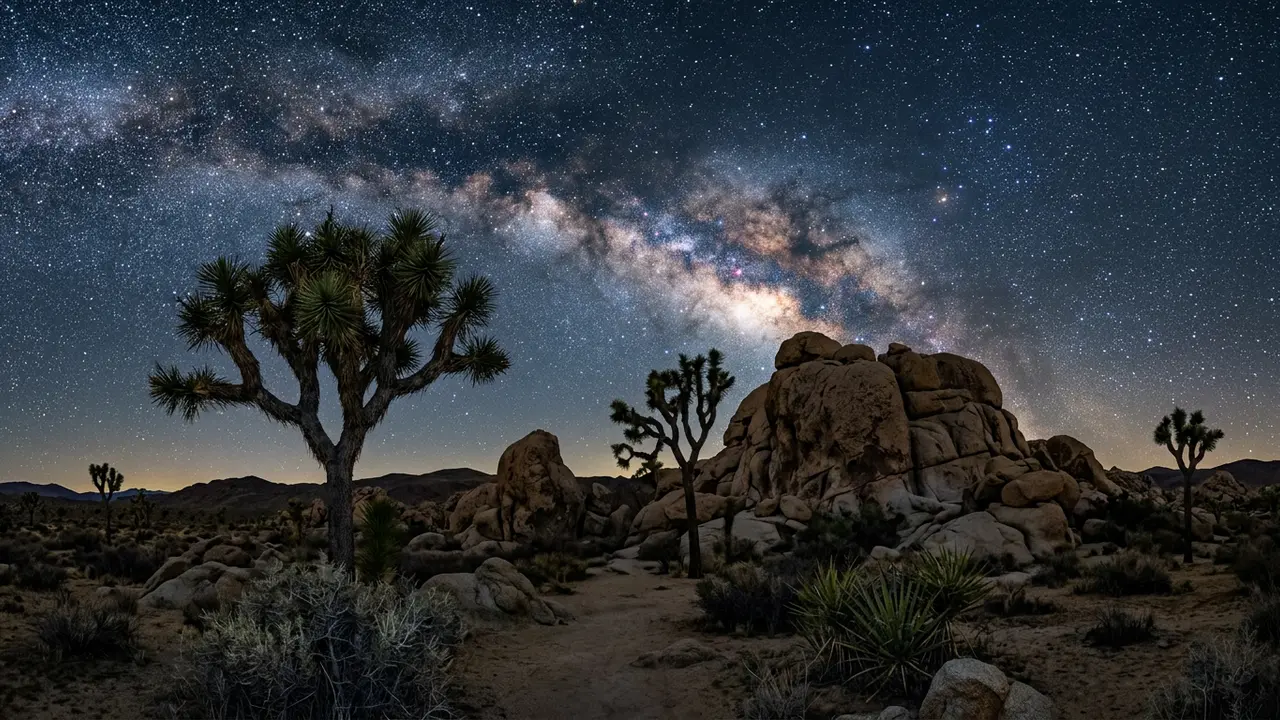
Featured · Destination
Joshua Tree National Park
Joshua Tree earned International Dark Sky Park status in 2017, just two hours from LA. Here's where to see the Milky Way, dodge crowds, and stay the night.
For a full breakdown of where to stand once you're inside the park, see the Joshua Tree National Park stargazing guide.
Keeping the Designation: An Ongoing Commitment, Not a Finish Line
A certification like this one isn't self-sustaining. NPS park scientists, Chief Physical Scientist Luke Sabala and Physical Science Technician Stacy Manson among them, actively monitor light-pollution levels inside the park, in part because stargazing ranks as one of Joshua Tree's single most popular visitor activities.[7] That monitoring data is what would eventually support a Gold Tier upgrade if outside lighting keeps improving, and what would flag a problem if conditions slid backward instead.
The Park Service is direct about where responsibility for that second outcome sits: outside the fence. Communities and individual residents can prevent, or even reverse, light pollution simply by insisting on night-sky-friendly fixtures rather than the glare-heavy floodlights that wash out a horizon.[8] Whether the Morongo Basin towns and Coachella Valley cities keep tightening their lighting choices in the years ahead, rather than loosening them as the region keeps growing, is the variable that decides whether Joshua Tree's rating holds, rises, or eventually needs re-review.
Superintendent Smith's own framing, offered when the certification was first announced, treated the park's proximity to a metro area as a feature of the achievement rather than an asterisk on it.[9]
“Even though our park is within proximity to the greater Los Angeles area and the Coachella Valley, Joshua Tree National Park still offers an amazing view of the night sky.”
What the Certification Means for Planning a Stargazing Trip
None of this is trivia for a visitor standing at a pullout after dark. A Silver Tier rating confirms the park's darkest, most protected corners have cleared a measured bar that most places within driving distance of a major metro area never will, not a guess dressed up as fact.
Practically, that means a few things worth knowing before booking a trip. The rating doesn't promise every corner of the park is equally dark: Keys View, the park's most photographed overlook, faces directly into the Coachella Valley's glow and shows noticeably more light pollution after dark than quieter spots deeper in the Colorado Desert. It doesn't guarantee any specific night will be clear, either, moon phase and weather still decide that. What the certification does confirm is that Joshua Tree's core dark-sky areas meet a real, externally audited standard, one the park and the towns around it have to keep re-earning rather than simply keep.
Recommended tours
Tours are selected for quality, not commission. I earn a small fee if you book — at no extra cost to you.
For the ground-level version of that promise, Is Joshua Tree Worth It for Stargazing? weighs the honest trade-offs of a trip here against parks farther from a metro area.
Featured · Article
What Is Astrotourism? The Complete Beginner's Guide
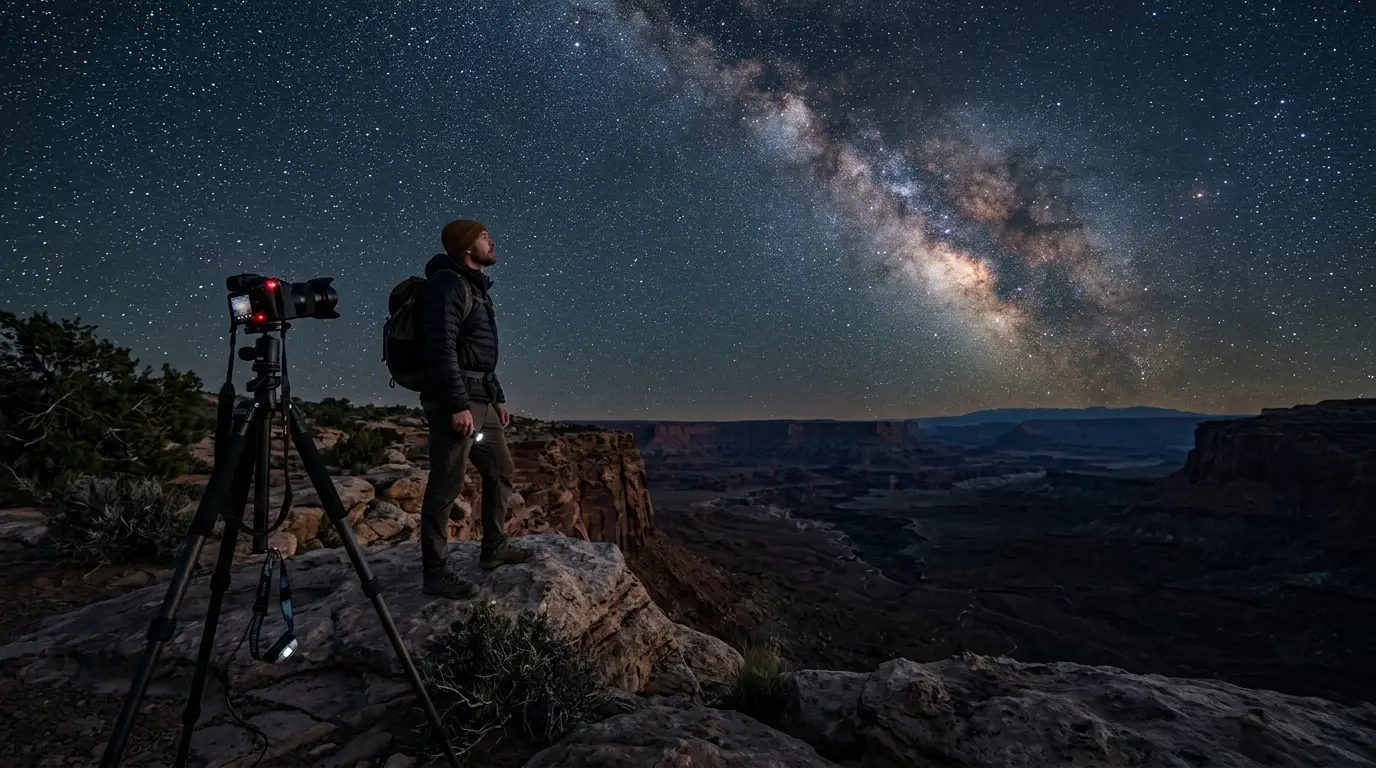
Astrotourism means travel built around dark skies: meteor showers, auroras, the Milky Way. What it means, where to go, and how to plan your first trip.
That's the practical shape of what a certification like this buys a visitor: not a promise about any one night, but confidence that a park pressed against one of the country's fastest-growing regions is holding up its end of a genuinely difficult bargain.