The telescope needed more than a bigger mirror
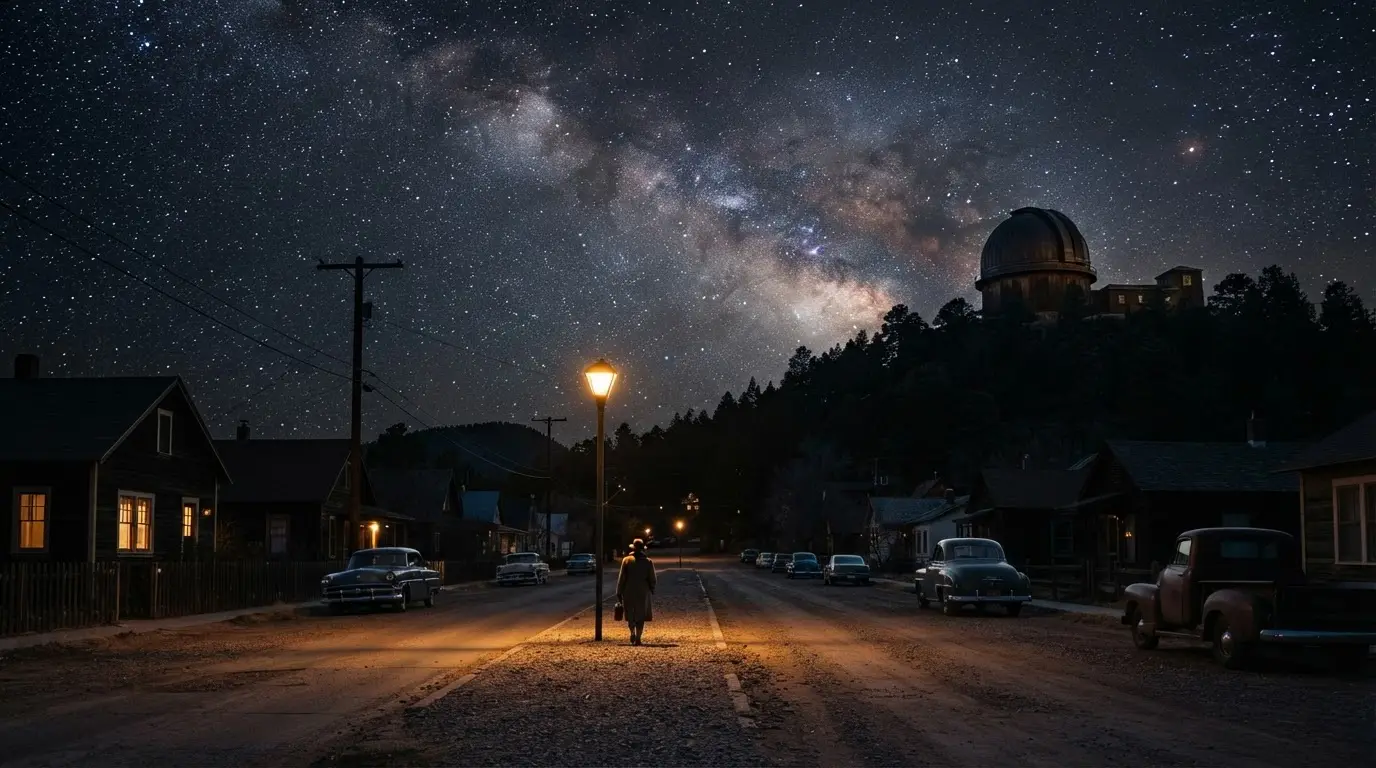
Lowell Observatory's staff were preparing to receive a 69-inch reflecting telescope from Ohio's Perkins Observatory in early 1957. According to the Flagstaff Dark Skies Coalition's historical account, they already believed light pollution on Mars Hill would prevent the instrument from reaching its full potential.[3]
Buying or moving a telescope could not, by itself, secure the darkness around it. That made the surrounding community part of an astronomical problem. A business's choice of outdoor lighting could affect work well beyond its property.
The coalition's account reproduces astronomer Harold Johnson's warning about advertising searchlights. He described experience with a beam that could spoil faint-star observations as much as 15 miles away.[1] It was a warning about a particular kind of lighting, rather than a measurement of every lamp's reach.
What catches my attention is the legal gap. Johnson's objection was that the operator had the right to keep using the searchlight. The observatory needed a rule that could change that. The broader physics of light pollution explains why controlling light at its source matters beyond the person operating it.
A narrow law with a serious penalty
Flagstaff's Ordinance 400, passed in 1958, addressed searchlights specifically.[2] The coalition's account records a penalty of a $300 fine or 90 days' imprisonment for operating one within city limits.[4] This was a concrete restriction on an activity that astronomers said threatened their work.
DarkSky International credits Flagstaff with the world's first outdoor lighting ordinance.[5] But a searchlight rule did not settle every question about ordinary street lighting or the total light produced by development. The city still had to work through how everyday lighting should change, and how residents would respond to those changes.
Featured · Destination
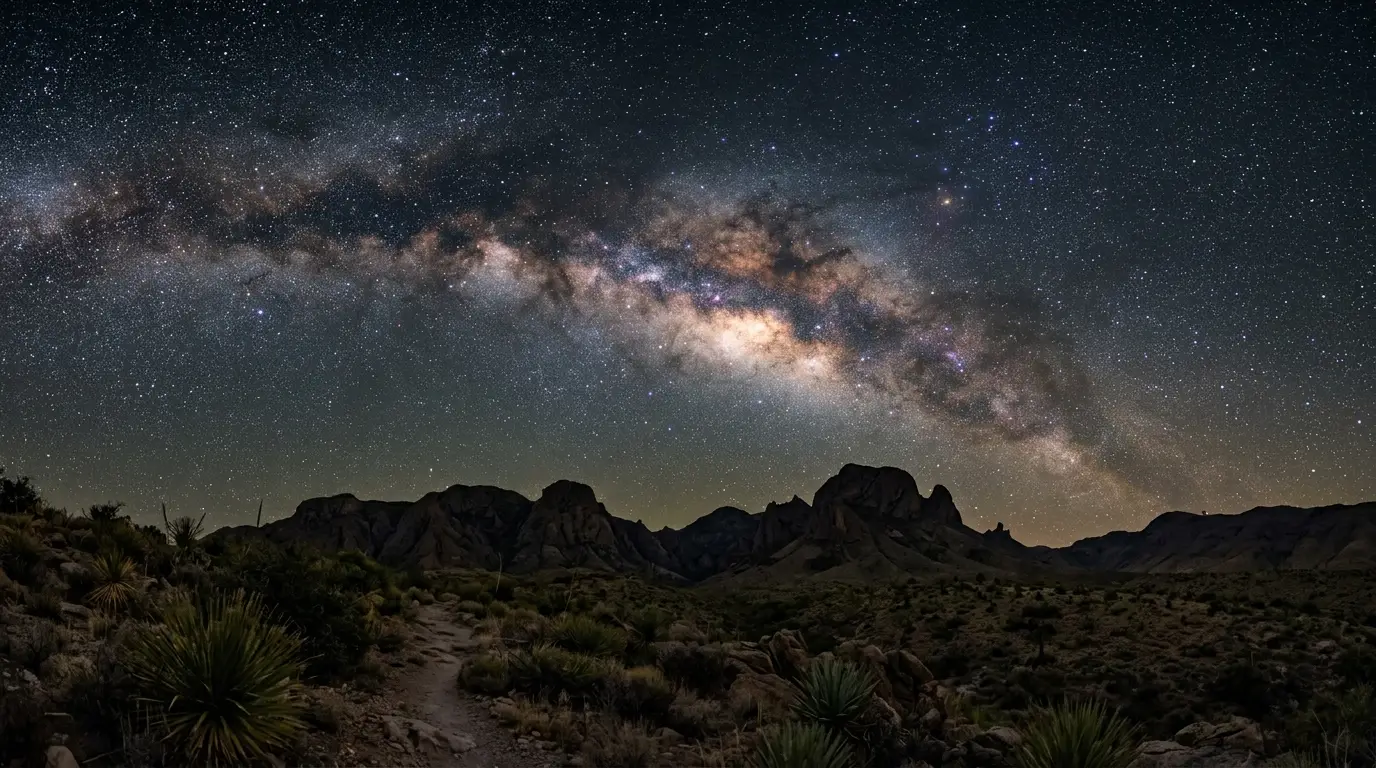
Big Bend National Park
Big Bend National Park is Bortle Class 1, the darkest rating the Bortle scale has. What that dark sky rating means on the ground, and the best months to go.
Residents got to see the proposed streetlights
The later debate reached the street itself. Lowell director Arthur Hoag and city planners worked with Arizona Public Service to try low-pressure sodium lighting on Santa Fe Avenue downtown. The coalition's history says the trial was intended to gauge public reaction to its amber colour.[6]
A proposed change in lighting is something residents have to live with; a demonstration gives them something concrete to judge. The historical account describes an October 1987 APS survey in which nine out of ten residents were ready to switch after seeing the trial.[7] The trial connected an observatory's technical preference with a community accepting a visible change.
Featured · Article
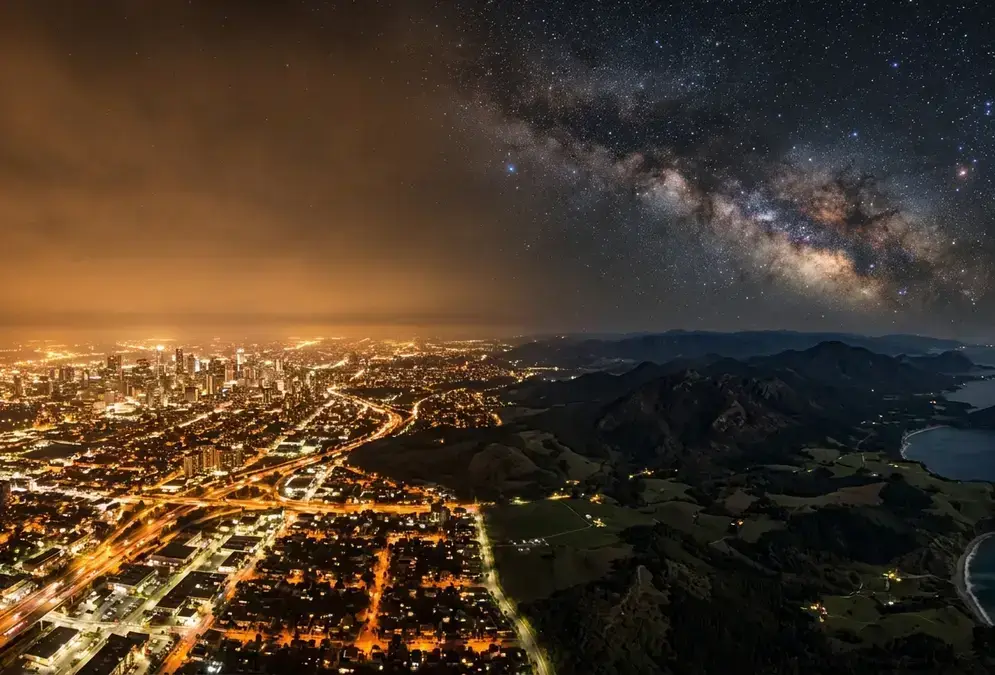
What Is Light Pollution? Definition, Types, and Solutions
Light pollution is artificial light brightening the night sky, affecting 80% of the world. Learn the 4 types, wildlife and health effects, and how to fix it.
Then came a budget for the light itself
By 1989, both the city and Coconino County had approved zoning codes restricting the amount of outdoor light per acre, according to the city's history.[8] Lumens per acre brought the quantity of light into the rules, alongside earlier attention to particular sources.
1989
A restriction aimed at one conspicuous searchlight and a limit on a development's total light address different parts of the same problem. Later rules dealt with questions the original ban could not answer on its own.
The city's account says those codes were subsequently updated and strengthened.[8] The policy history behind a place can explain something that the designation alone cannot: what people actually agreed to control. That context matters when comparing dark-sky parks around the world.
The title came after the work
On 24 October 2001, the International Dark-Sky Association recognised Flagstaff as the world's first International Dark Sky City.[9] The date belongs at the end of this sequence, well after the searchlight ordinance and the later lighting decisions.
Recommended tours
Tours are selected for quality, not commission. I earn a small fee if you book — at no extra cost to you.
In its retrospective on the programme, DarkSky described Flagstaff's work to retrofit city-owned lighting and build community support as part of the example it set.[10] Those are tangible actions behind a designation that can otherwise sound like a tourism slogan.
The growing interest in astrotourism gives readers another reason to care about these histories. Flagstaff's record shows that a city's night sky depends partly on decisions made at street level, long after the first searchlight is addressed.
Sark, in the Channel Islands, earned a comparable title a decade later: the world's first Dark Sky Island, won not through a lighting ordinance like Flagstaff's but by having no cars and no streetlights at all — a deliberate policy choice, unlike the 1994 Los Angeles earthquake that cut the power for one night and let the Milky Way reappear over the city by accident.