
Five years of blackout: how Britain went dark
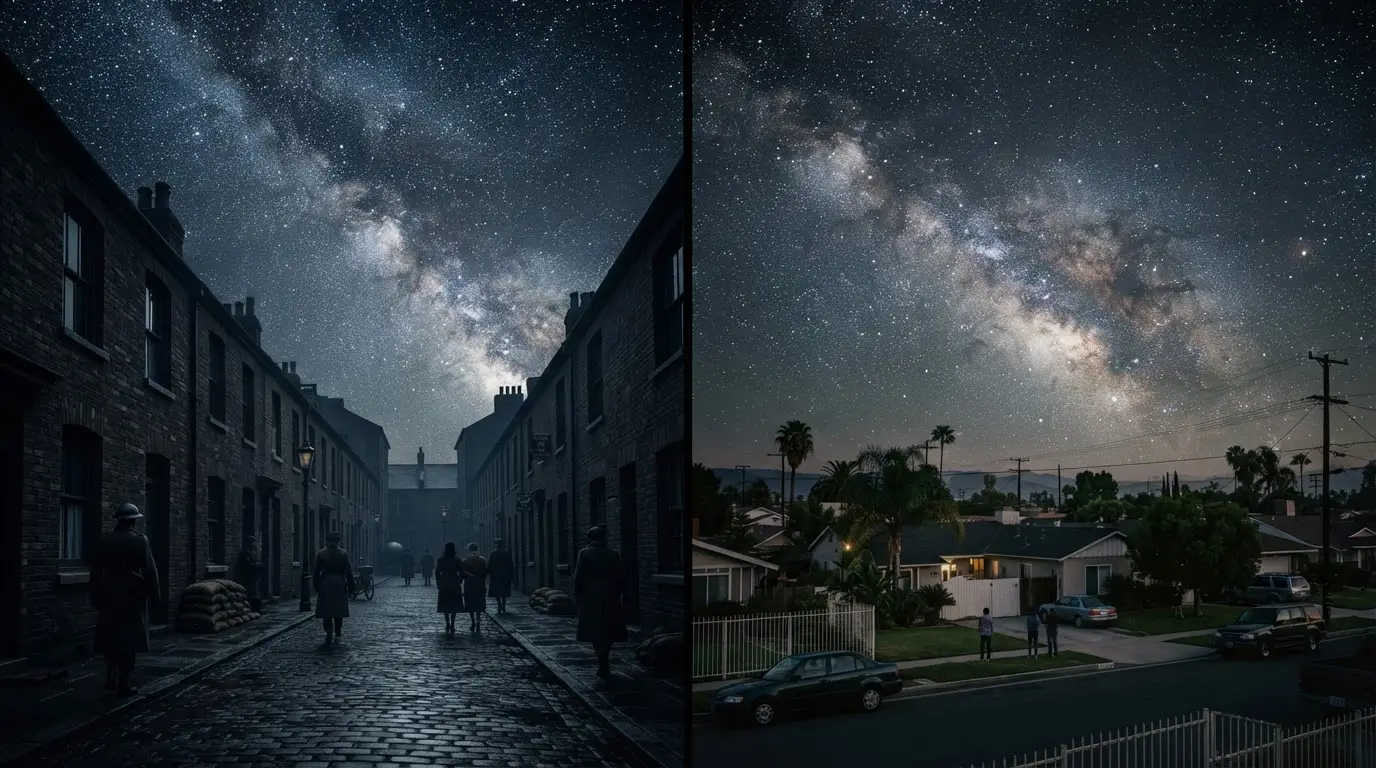
Blackout regulations came into force across Britain on 1 September 1939, two days before the country was formally at war[4]. Every household needed heavy curtains, cardboard, or paint thick enough to stop even a sliver of light escaping after dark, on pain of prosecution. The stated goal was to deny German bombers a lit target to navigate by. Whether the blackout actually worked as a bombing deterrent is still argued by historians, but the ambition itself was total: tens of millions of people, plunged into full darkness, every single night, for years on end.
It wasn't a stunt, and nobody involved was thinking about astronomy. By spring 1941, more than 40,000 people had already been killed in the Blitz[5], and blacking out every city was the government's blunt answer to it: switch off the target, and the bombers have nothing to aim at. The blackout that followed ran, in one form or another, for just over five years[1] — longer than most people living through it expected the war itself to last.
For a population used to a lit city, the change was immediate and unsettling. The diarist and politician Harold Nicolson described stepping out of his London club into the new dark: "When I leave the Club, I am startled to find a perfectly black city. Nothing could be more dramatic or give one more of a shock than to leave the familiar Beefsteak and to find outside not the glitter of all the sky-signs, but a pall of black velvet"[6]. What he noticed was the absence of London's own lights, not the presence of anything overhead — a distinction that matters for the rest of this story.
Britain wasn't the first place to have its night sky rewritten overnight by forces nobody chose. The 1833 Leonid meteor storm had already shown, a century earlier, how disorienting an altered sky could be, when meteors by the tens of thousands convinced whole towns the world was ending. But the comparison only goes so far. Nobody in blacked-out London was writing home about a transformed night sky. They were writing about curtains, prosecutions, and the dark itself.
The same war cut the equation the other way in the Arctic. At Tromsø, a Naval Intelligence report gave the RAF just 23 days to sink the battleship Tirpitz before the returning polar night made accurate bombing impossible for the rest of the winter.
ARP wardens and the war's deadliest side effect
The blackout was enforced street by street by civilian ARP wardens — Air Raid Precautions volunteers who patrolled after dark and could report anyone showing even the slightest glow of light[7]. Offenders faced real legal penalties, not a warning: a bedroom lamp left on, a curtain hung slightly wrong, a match struck outside a doorway, any of it could end in a court date and a fine.
The dark itself turned out to be more dangerous than anyone had planned for. A royal surgeon, writing at the time, put the arithmetic bluntly: by frightening the nation into blackout regulations, the Luftwaffe had managed to kill roughly "600 British citizens a month" on the roads, without a single aircraft in the air, at a cost to itself of exactly nothing[8]. Streets built around headlamps and streetlamps suddenly had neither, and the accident rate climbed immediately and stayed high for years.
Featured · Destination
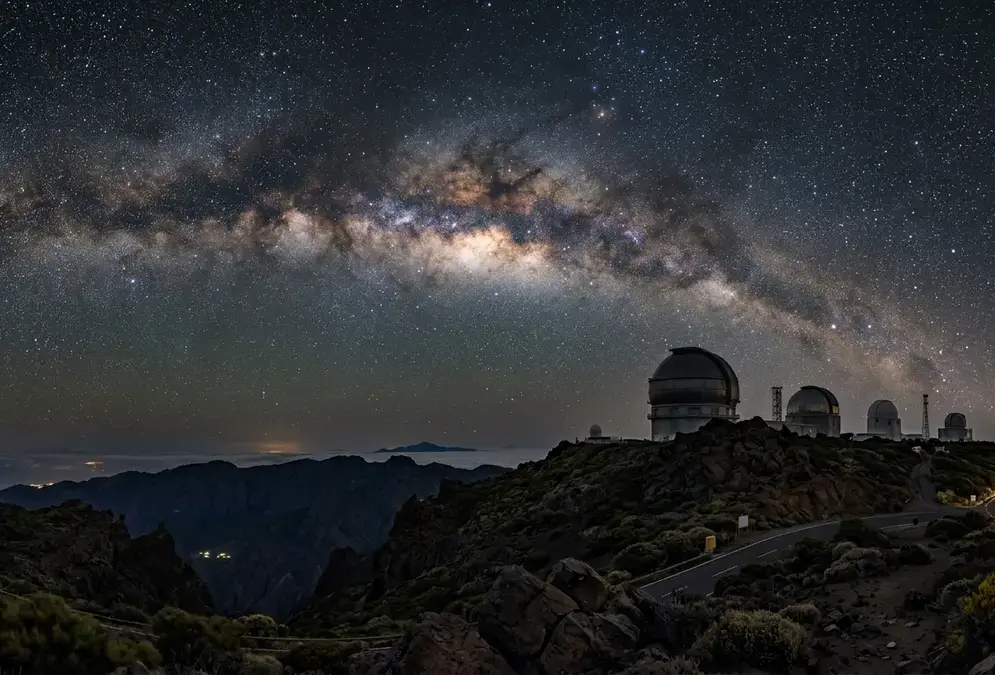
La Palma Stargazing
La Palma stargazing guide: the world's first Starlight Reserve since 2012, Bortle 1-2 skies above Roque de los Muchachos, plus where to stay and go year-round.
None of this was designed with a night sky in mind, but the byproduct was real: a country's worth of streetlights, shop signs, and household lamps switched off simultaneously, night after night, for years on end. Whatever that did to the sky above wartime Britain, it isn't why anyone alive at the time picked up a pen.
Why no one wrote home about the stars
As the German threat receded, the full blackout eased into something gentler: a dim-out, introduced in September 1944, which allowed lighting equivalent to moonlight and reverted to full blackout only if an alert sounded[9]. By then the emergency was winding down, and so, gradually, were the restrictions that had defined nighttime Britain for half a decade.
What survives from those years is not stargazing testimony. It's court records. The diarist Jean Lucey Pratt was fined after leaving a bedroom light on, then prosecuted a second time weeks later for the same offense, later writing that she was "excused from attending court for first summons and was fined 30 shillings"[10]. That's the texture of the wartime blackout that actually made it into the historical record: fines, courtroom appearances, and curtains checked twice.
The physics of what a five-year, nationwide blackout would have done to the visible sky isn't in dispute: strip that much artificial light from that much territory and the sky gets darker, full stop. What's missing is a name. No diary entry, newspaper column, or wartime account turned up in the research behind this piece documents a Briton remarking on an unusually star-filled sky during those years. Such an account may exist somewhere in an archive nobody has digitized yet. It's also possible that when your streets are blacked out under threat of prosecution and your city is being bombed, the Milky Way simply isn't what you notice. For the mechanism behind why so few people get that chance today either, see what is light pollution.
January 17, 1994: the earthquake that turned off Los Angeles
The Northridge earthquake struck the San Fernando Valley at 4:30:55 a.m. local time on January 17, 1994, and lasted roughly eight seconds[11] — long enough to snap the power grid across huge sections of Los Angeles before the sun came up.
Angelenos who stepped outside into the sudden dark looked up and saw a sky most of them had never seen from home: "twinkling stars, clustered galaxies, distant planets, even a satellite or two," and trailing over the city, a strange silvery shape some found sinister enough to call 911 about. That cloud was the Milky Way. Many callers had never seen it before[12].
The calls didn't stop with the police. Griffith Observatory, just north of Hollywood, fielded its own wave of them from residents wondering why the sky suddenly looked so wrong[13]. Observatory director Dr. Edwin Krupp later put it simply: the callers weren't confused because something unusual had appeared in the sky. They were confused because something ordinary had, for one night, been allowed to reappear.
“The quake had knocked out most of the power, and people run outside and they saw the stars. The stars were in fact so unfamiliar, they called us wondering what happened[14].”
Krupp wasn't being poetic. Los Angeles in 1994 was already deep into the same artificial glow that blankets most major cities today, and for one night an earthquake switched enough of it off to let the ordinary sky through. It took a disaster, not a choice, to make that happen, which is the detail separating the Los Angeles blackout from Britain's wartime one. Nobody had to be fined into darkness that night. The power was simply gone.
Why the sky went quiet again the next morning
Los Angeles didn't stay dark. Power was restored within hours in most neighborhoods, streetlights came back on, and the Milky Way that had briefly reappeared over the city vanished again, this time for an ordinary reason rather than a disaster. The sky hadn't changed. The lighting had, again.
Krupp had a theory for why so many callers didn't recognize their own galaxy. "Since so many of us never see a non-light-polluted night sky from one year to the next, a mythology about what the people think a true star-filled sky looks like has emerged," he said[15]. Most people's mental picture of "the night sky," in other words, is built from photographs and planetarium domes rather than the sky itself.
Featured · Article
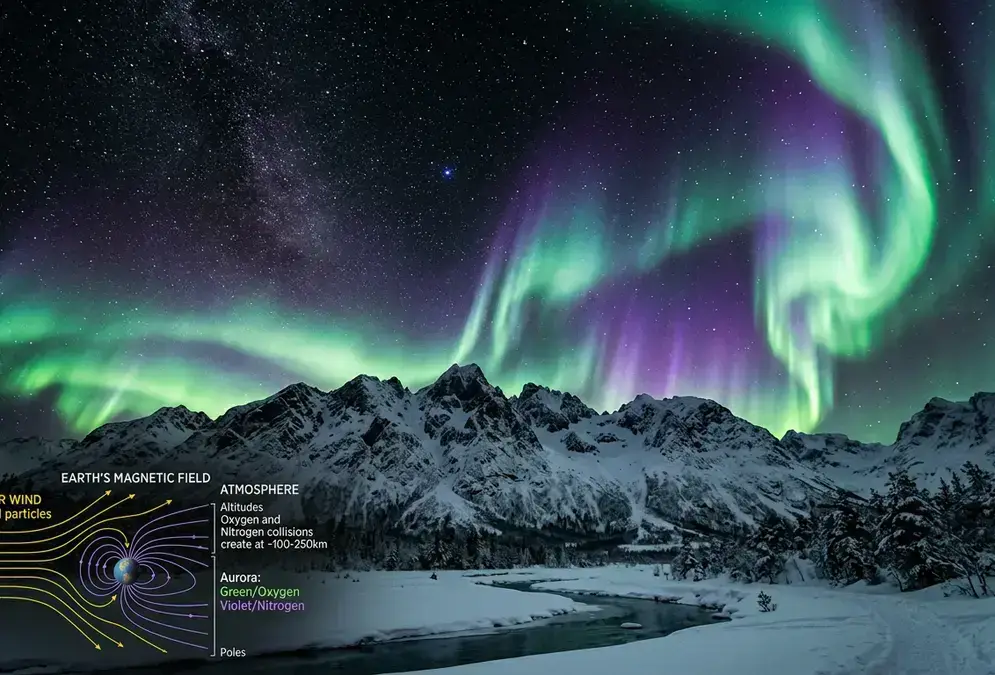
What Causes the Northern Lights? The Science Explained
Solar wind collides with Earth's magnetic field, funneling charged particles toward the poles, where they excite oxygen and nitrogen into glowing color.
That gap hasn't closed since 1994. If anything it's widened, which is the subject the why we lost the Milky Way article covers in full: the measured spread of skyglow across cities worldwide, and how much sky an ordinary resident has lost since Krupp took those calls. What the WWII blackout and the Northridge earthquake actually share isn't a happy ending — it's proof that the loss is reversible on short notice, given the right kind of forced darkness: a blackout, an earthquake, or, more usefully for anyone planning an actual trip, a drive to somewhere the lights were never turned on in the first place.