
The light between us and the stars
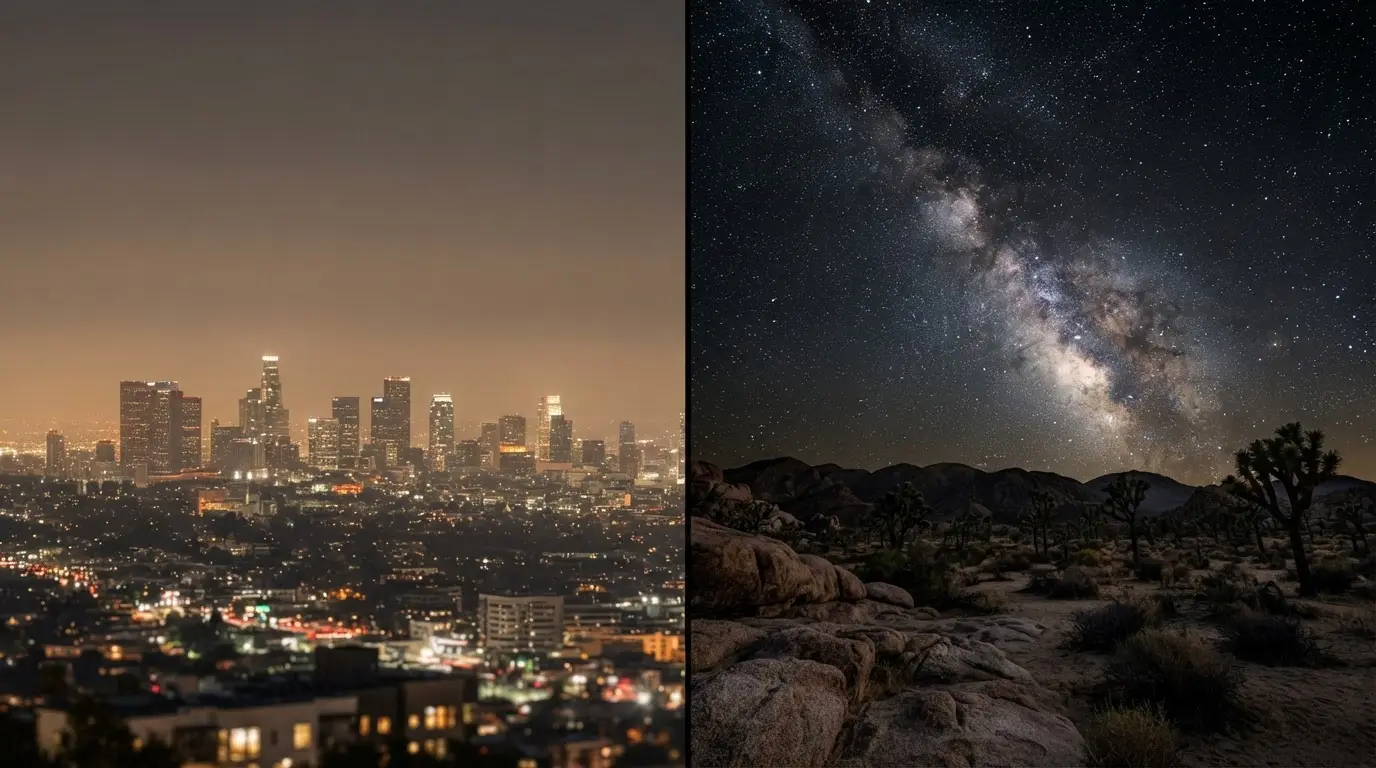
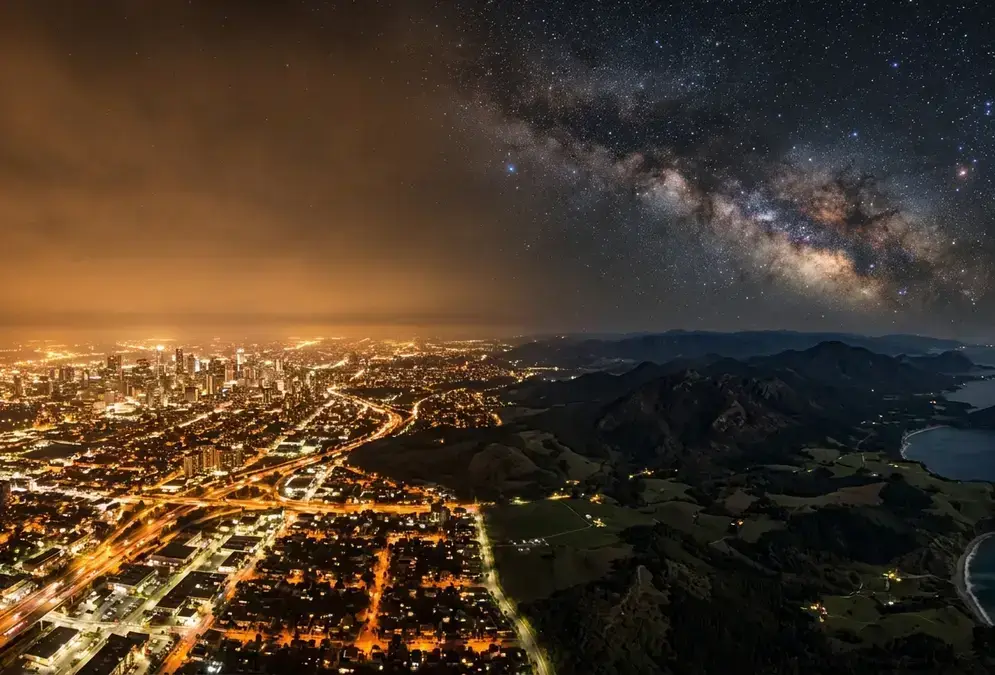
A bright sky can look empty even when the stars are still there. The problem is contrast: faint celestial light becomes difficult to distinguish against a brighter background. Skyglow is the artificial brightening of that background, caused by light scattered through the atmosphere. Our explanation of light pollution separates this sky-wide effect from the glare of an individual lamp.
That distinction matters. Blocking a streetlamp from your eyes can make observing more comfortable, but it does not remove the light already scattered across the sky. The obstacle can extend beyond the fixture you can point to. Looking away from a bright road and escaping the glow of a built-up area are different things.
The Milky Way's faint band makes the loss easy to recognize. A sky can retain conspicuous stars while losing the background detail that makes the galaxy visible. Seeing a few stars overhead therefore tells you much less than you might hope about how much of the night remains visible.
What the 2016 atlas actually tells us
The World Atlas of Artificial Night Sky Brightness gave the loss a global scale. Its published estimate put more than 80% of the world's population under light-polluted skies.[2] That is a broader category than a sky bright enough to hide the Milky Way, so the two figures should not be treated as interchangeable.
The Milky Way estimate was more specific: more than a third of humanity overall, including 60% of Europeans and nearly 80% of North Americans.[1] These are findings from the atlas published in 2016. They are not a fresh census of what people can see tonight.
Featured · Destination
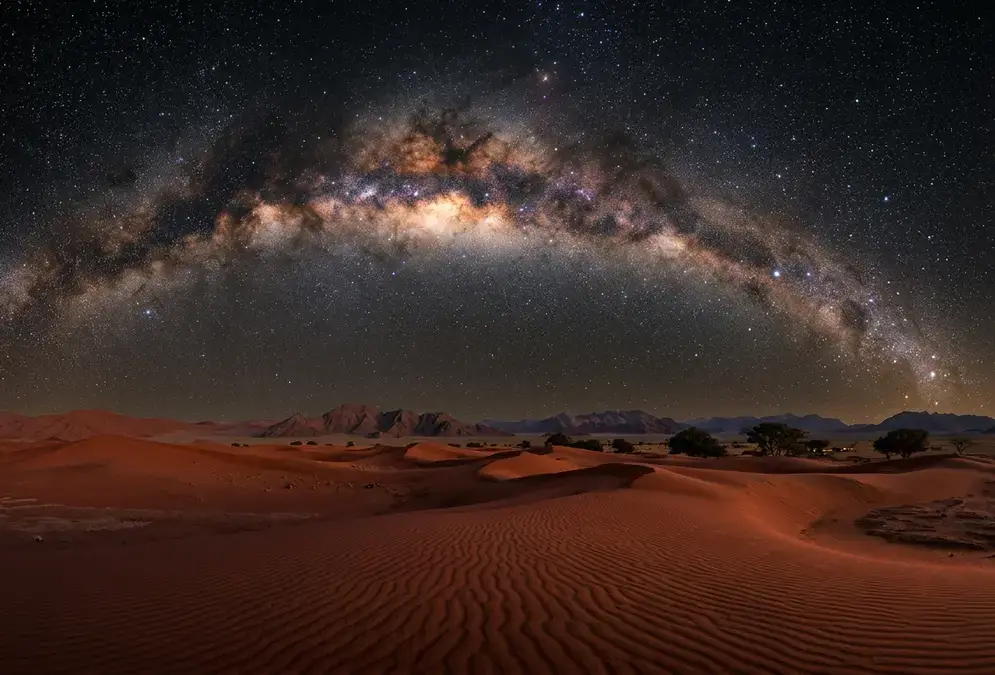
NamibRand Nature Reserve
NamibRand is Africa's only Gold Tier Dark Sky Reserve: extreme Namib Desert isolation, the Southern Cross, Magellanic Clouds, and luxury safari lodges.
Population-level estimates cannot settle the question for a particular observing spot. They describe the scale of a shared problem; evaluating an individual sky is a separate task. The Bortle scale is useful background for thinking about visible sky conditions.
Why the later study found a faster change
A study published in 2023 asked a different question: how was the visible sky changing? Using observations from 2011–2022, Christopher Kyba and colleagues inferred an average annual increase in light pollution of 9.6%, with 10.4% for North America, as reported by the American Astronomical Society.[3]
Recommended tours
Tours are selected for quality, not commission. I earn a small fee if you book — at no extra cost to you.


The estimates came from Globe at Night observations of naked-eye limiting magnitude: the faintest stars people could make out. The programme collects these estimates alongside Sky Quality Meter measurements.[4] That makes the observer's view central to the evidence.
The AAS account contrasted this result with satellite-based studies reporting a roughly 2% annual global increase. It also identified a limitation of the satellite instruments discussed: their wavelength range missed short-wavelength emissions characteristic of modern white LEDs.[5] Measurements looking down at emitted light and observations of stars from the ground do not capture precisely the same thing.
That is why I would keep both the method and the dates beside the headline number. The 9.6% estimate describes the study period and its observations. It is not a measured annual rate for every town, and carrying it forward to the present would require newer evidence.
A loss of view, with a local answer
Put together, the research tells a coherent story. The atlas describes the reach of artificial sky brightness at the time of its publication. The later observer-based study documents change over its stated measurement period.
For someone who wants to see the galaxy, places to see the Milky Way are the practical next question. But the wider issue remains at home: the quality of the sky above a populated place is something worth examining in its own right.
Featured · Article
What Is Light Pollution? Definition, Types, and Solutions
Light pollution is artificial light brightening the night sky, affecting 80% of the world. Learn the 4 types, wildlife and health effects, and how to fix it.
The galaxy has stayed overhead; the conditions of the view are ours to change — a 1994 earthquake that knocked out power across Los Angeles for one night proved it, when residents saw a Milky Way most of them had never noticed before.