Merzouga Village: The Walkable Dune Edge
Merzouga village sits on the western lee of the dunes and works as the main tourist base for all of Erg Chebbi[1]. It's where almost everyone starts, and for good reason: the dunes begin directly behind the last row of guesthouses, and the walk from a hotel courtyard to the first ridge takes minutes, not hours, with no guide or vehicle required for daylight access. Erg Chebbi itself runs roughly 28 kilometers north to south and 5 to 7 kilometers east to west[2], with individual dunes climbing as high as 150 meters above the flat, rocky hamada around them[3]. That makes it Morocco's tallest true dune field, though not its largest.
150m
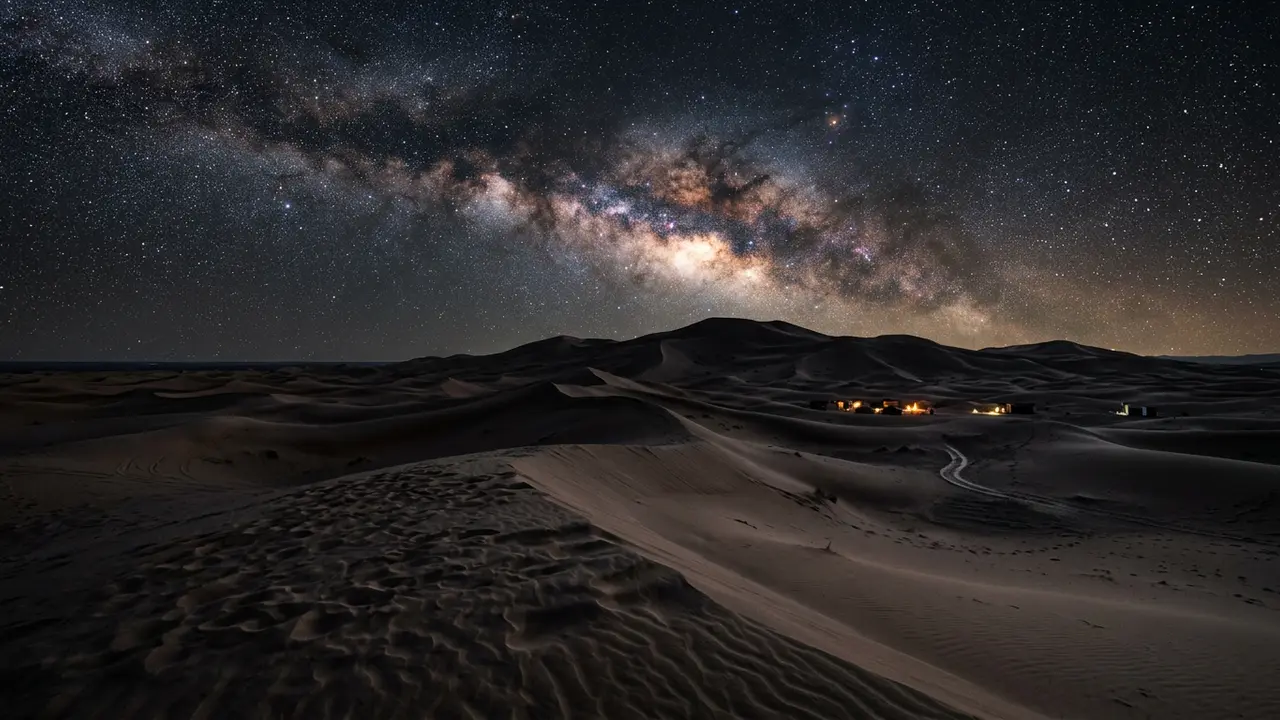
Here's the honest trade-off. Merzouga is the busiest access point by a wide margin. Most hotels, camel-trek operators, and day-tour desks cluster here, and their lighting doesn't switch off once the sun does. Standing at the literal edge of the village, camp lanterns and guesthouse porch lights blur the horizon enough to mute the faintest stars overhead. Walk a few hundred meters up the nearest dune crest, away from that light, and the sky opens up in a way it simply doesn't at ground level. The same fix works everywhere at Merzouga stargazing: distance from any light source, however small, matters more than distance from the village itself.
Hassi Labied: A Quieter Approach North of the Dunes
North of Merzouga, a paved or graded road leads to Hassi Labied, a smaller settlement that opens onto the same dune field from a different side. Guesthouses here sit right against walkable dunes too, and a handful of independent travel guides describe the area as noticeably quieter than the Merzouga-side entrance: fewer camps, fewer headlights sweeping across the sand at dusk, less ambient glow bleeding into the sky above the tents. That's a plausible reason to choose Hassi Labied over the village edge if quiet matters to you as much as darkness does. It lines up with the basic logic of light pollution: fewer lit buildings nearby generally means a darker sky above them.
That's a plausible reason to choose Hassi Labied over the village edge if quiet matters to you as much as darkness does.
It's also a claim this guide can't fully stand behind. The less crowded description traces back to search-summarized travel blogs rather than a source pulled and checked directly for this piece, so treat it as a strong lead rather than a settled fact. If a dark, quiet dune crest is the priority, ask a camp or driver about Hassi Labied specifically before you book. Don't plan a whole evening around it assuming it's confirmed emptier than Merzouga itself, since camp density on both sides of the erg shifts from one season to the next as new properties open and others fold.
The Tall Dune Above Merzouga
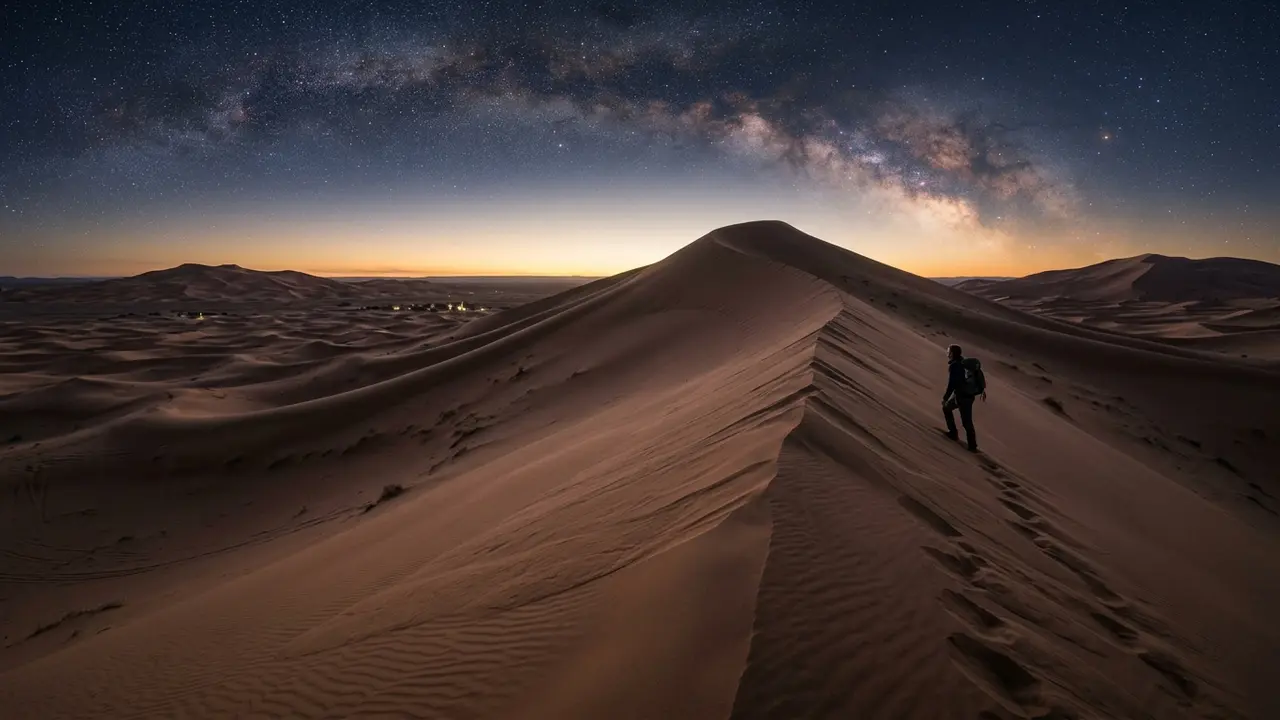
One dune above the village stands out from the rest of the field by height alone, tall enough that a sunset-climb outing built around it is a fixture on every camp's daily schedule. Guides describe the walk up as roughly an hour from the village center, steep enough near the top that a red-light headlamp earns its weight on the way back down once the color has drained out of the sky.
No source consulted for this piece gives the tall dune above Merzouga a single, settled proper name. Camp marketing sometimes attaches one, but nothing confirmed enough to print here as an established toponym. Call it what the guides do. What matters more than the name is the timing. Sunset draws a genuine crowd, tripods and phone cameras lined up along the ridge, and most of that crowd heads back down once the color fades. Stay another twenty or thirty minutes past the point everyone else turns around, and the same dune that was a photo line an hour earlier becomes a private, elevated stretch of horizon: no tent lights at that height, just the erg falling away in every direction.
Featured · Destination
Merzouga Stargazing
Erg Chebbi's dunes rise 150m above Morocco's Sahara, hours from city light. Stargaze from Berber-led desert camps: when to go, where to stay, how to get there.
A pick like this pairs naturally with a camp that treats after-sunset lingering as part of the program rather than an afterthought. This camp's own guided setup is built around exactly that kind of extra half hour, with guides who know which nights are worth staying up on the dune for.
Deeper Into the Erg: Camel Treks and Interior Camps
The darkest option isn't a walk from the village at all. It's a booked overnight, by camel or by 4x4, to a permanent camp further into Erg Chebbi's interior. Many operators run exactly this trip: an overnight camel trek to a permanent campsite on the outer sections of the erg[4], far enough from Merzouga's guesthouse lights that the sky reads noticeably darker by the time you've unrolled a mat next to the fire.
Recommended tours
Tours are selected for quality, not commission. I earn a small fee if you book — at no extra cost to you.
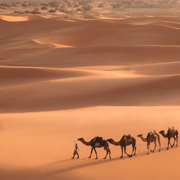
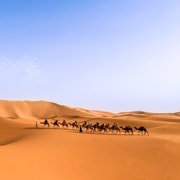
This is also where Amazigh (Berber) hospitality is most on display, not the Bedouin traditions some travelers expect from desert-camp trips elsewhere. Drumming, a shared tagine dinner, and a short walk away from the fire pit once your eyes adjust make up the standard shape of the evening at a traditional Amazigh-run camp. The best desert camps in Merzouga roundup compares specific, currently-bookable options if you want a name to book rather than a general description.
Book by camp name and let the operator handle the rest. Some individual camps advertise the exact dune pocket they sit within on their own marketing pages. That's useful as a sense of place and less useful as a fixed toponym you could hand to a driver who doesn't already work for that camp. The Merzouga camel trek into Erg Chebbi tour is the standard way in if you'd rather not arrange the logistics yourself.
Comparing Merzouga's Four Stargazing Spots
Four spots, four different trade-offs, and none of them is objectively best without knowing how far you're willing to travel and how much company you can tolerate for the sake of a darker sky.
- Merzouga village edge: walkable in minutes, busiest, most ambient light right at the tree line
- Hassi Labied: a short drive north, plausibly quieter (unconfirmed), similar walkable dune access
- The tall dune above Merzouga: about an hour's climb, best once the sunset crowd leaves
- Interior camel-trek camps: the most remote of the four and, on the evidence available, the darkest
The table below lines them up directly, so you can weigh convenience against darkness before you commit a whole evening, or an entire overnight booking, to one of them.
| Spot | How to reach it | Crowd level | Best for |
|---|---|---|---|
| Merzouga village edge | Walk from village, minutes | Busiest | A quick look up with no booking required |
| Hassi Labied | Short paved or graded drive north | Quieter (unconfirmed) | Prioritizing quiet over a guaranteed darker sky |
| The tall dune above Merzouga | About an hour's walk from village | Crowded at sunset, empty later | Staying past the sunset crowd for a private view |
| Interior camel-trek camps | Booked overnight camel or 4x4 trip | Least crowded | The darkest sky, for those who can commit to an overnight |
Getting There, Staying Safe, and What to Pack
None of these four spots require a special stargazing permit. Erg Chebbi is open desert, not a fenced dark-sky park with gated hours. What you do need is a plan for how you'll get back. Walking a dune crest in the dark is disorienting even a few hundred meters from a lit village, since sand doesn't hold a path the way a trail does, and one ridge looks a lot like the next once your eyes have adjusted and the horizon has gone black in every direction.
For the village-edge or Hassi Labied options, that mostly means going out with someone who already knows the terrain, or staying close enough to your accommodation's lights that backtracking stays simple. For the tall dune or an interior camp, it means trusting the guide or camp staff who make this walk nightly rather than improvising a route of your own.
Featured · Article
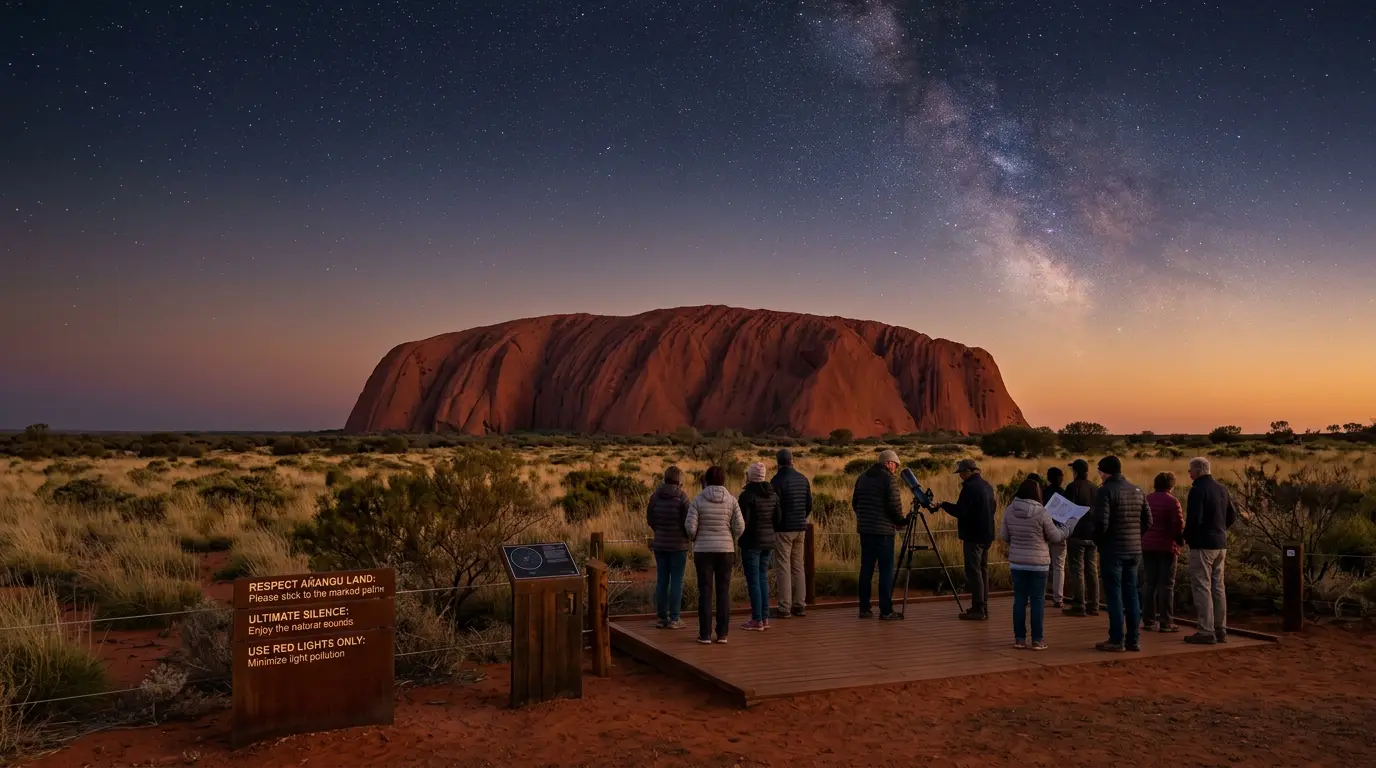
Uluru Cultural Significance and Visitor Etiquette
Uluru is Anangu land under joint management. Here's why the 2019 climb closure is settled policy, what you can't photograph, and real visitor etiquette.
Check the best time to stargaze in Merzouga guide before locking in dates. Season decides how brutal the walk feels and how long you'll want to stay out, not just how dark the sky gets once you're there.
Access and guides
Merzouga is reached as part of a multi-day desert loop out of Marrakech or Fez, arranged either through a tour operator or booked directly with a camp. A typical multi-day tour package folds the road trip, the camel trek out, and a night at camp into one booking, which sidesteps most of the access questions above by default. If you're arranging your own accommodation instead, confirm current pickup points and evening schedules directly with your chosen camp rather than assuming last season's routine still holds.
What to bring
A few things matter more here than a telescope:
- A red-light headlamp, for the walk back from any of these four spots, especially the tall dune's steeper upper section
- Warm layers regardless of season, since desert nights drop hard once the sand stops holding the day's heat
- A basic star chart or phone app, since none of these spots come with a ranger talk or visitor center display
- Sand-specific protection for camera gear, given how fine and wind-blown Erg Chebbi's sand runs
The stargazing gear guide covers the rest, and it's worth reading before you're standing on a dark dune trying to work out camera settings by headlamp light.