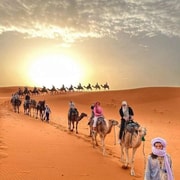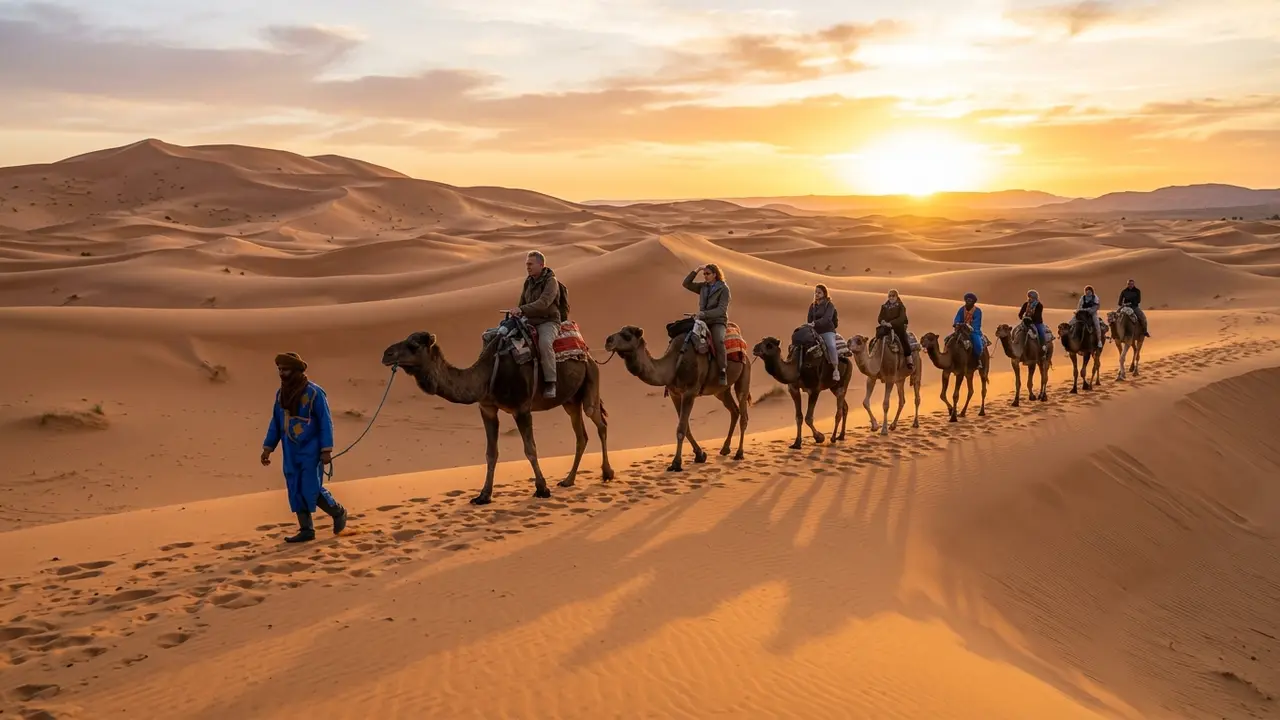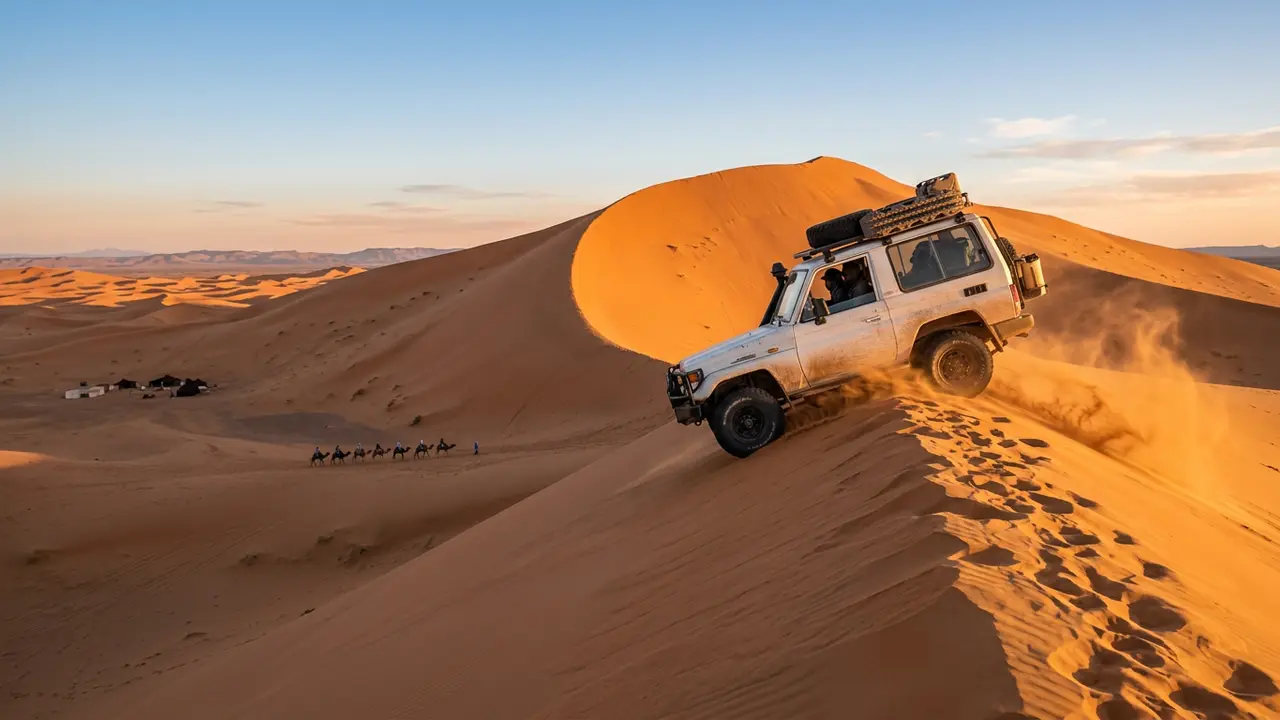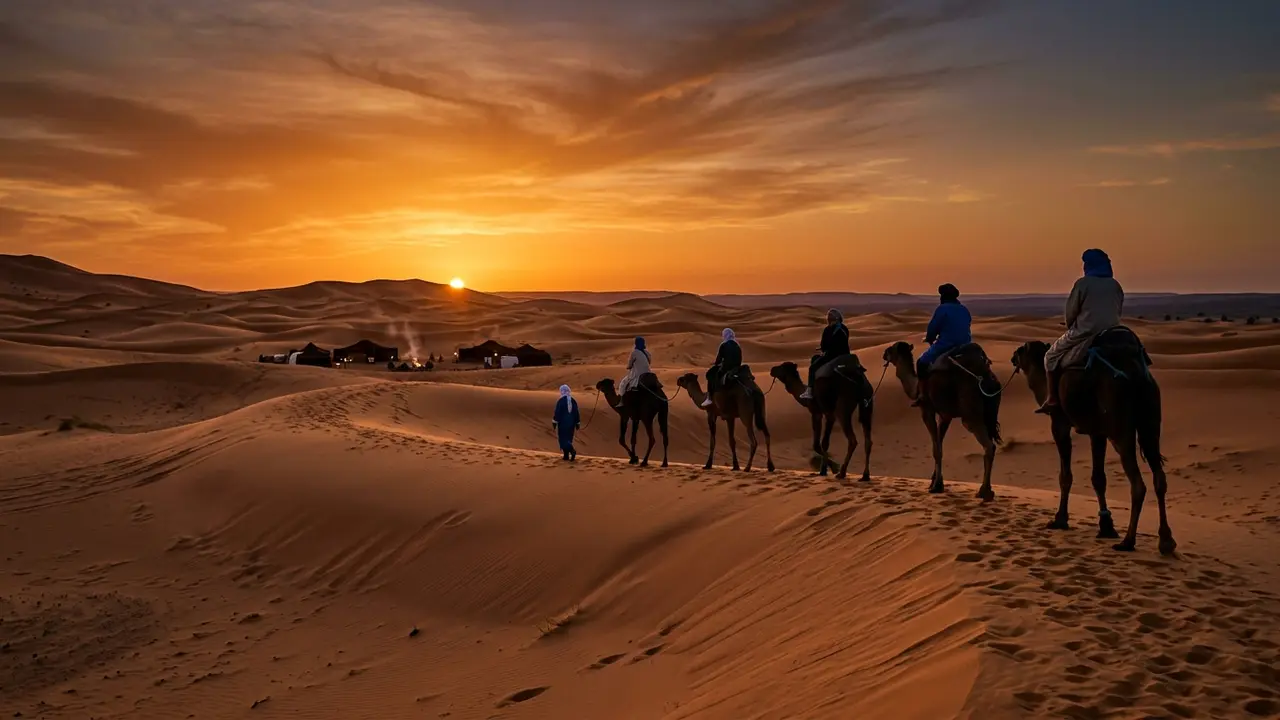
Most camel treks out of Merzouga are day-trip theater: mount up at golden hour, snap the postcard shot, and ride back to town before the sky actually turns dark. This one is built around the opposite premise. Riders leave around 17:00-18:00, cover roughly two to four hours of dune track as the light drains from gold to rust, and don't head back toward Merzouga until roughly 09:30 the following morning, which means the one thing a sunset-only ride can never deliver, a full night with nothing electric for kilometers in any direction, is the entire point of booking this one.
A night that runs sunset to sunrise
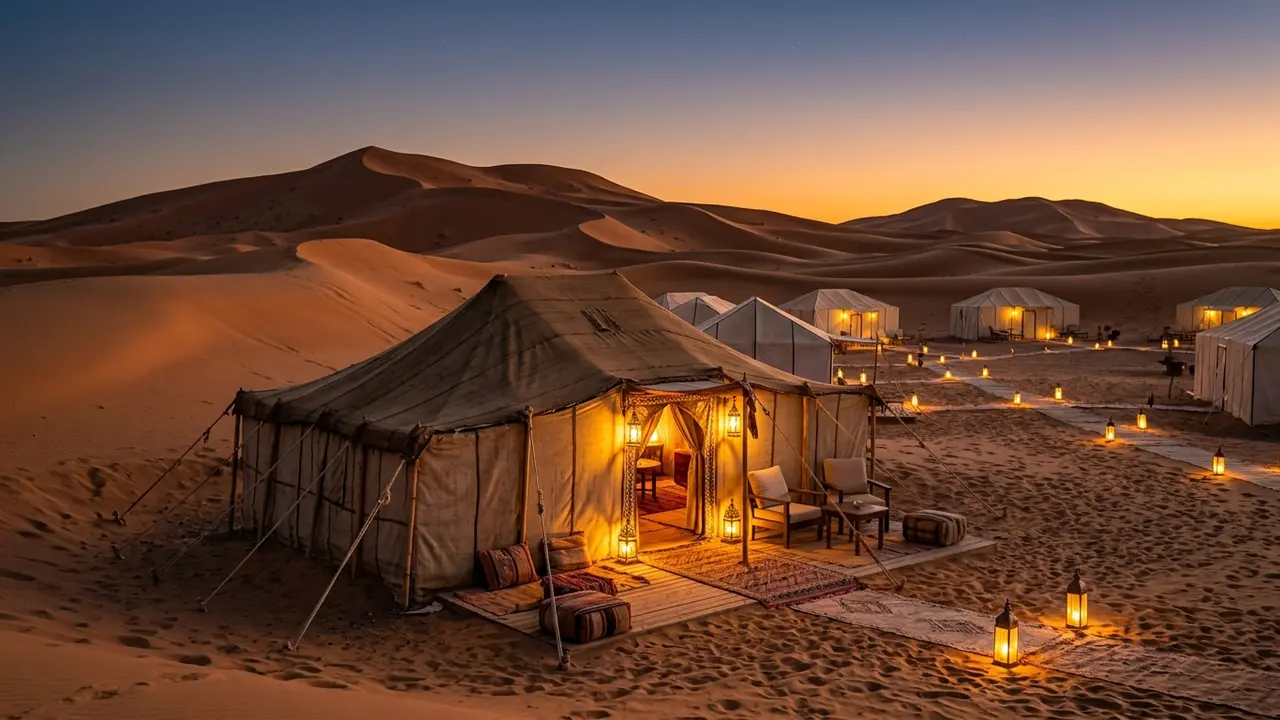
The structure is simple and doesn't vary much operator to operator: a camel ride in both directions, a Berber tent camp somewhere inside Erg Chebbi's dune field, and an overnight stay built around dinner, dark sky, and a slow morning departure. A typical booking includes:
- Camel ride into the dunes at sunset and back out the next morning
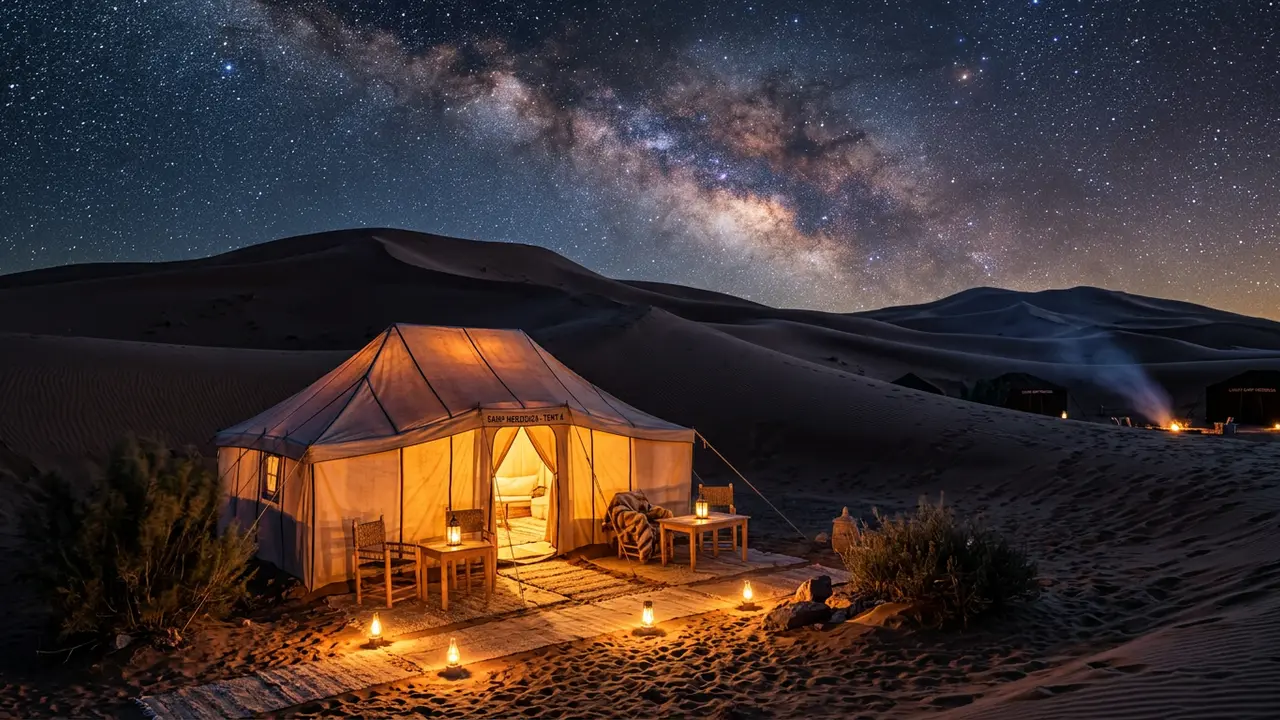
- A Berber tent for the night (shared or private, depending on the tier you book)
- Dinner, usually a slow-cooked tagine or grilled meat, plus fresh bread
- Mint tea and water throughout the evening
- Breakfast before the ride back (bread, jam, cheese, eggs on request)
- A head scarf, provided new and yours to keep
Groups run small, typically 4 to 12 riders, with private treks bookable at roughly 1.5-2x the group rate if you'd rather not share a tent with strangers. Guides work in English, French, and Arabic (Darija or Standard), and no prior camel-riding experience is expected. First-timers report mild hip or thigh soreness the next day, which fades quickly and isn't a reason to skip it.
Why the sky here needs no certification
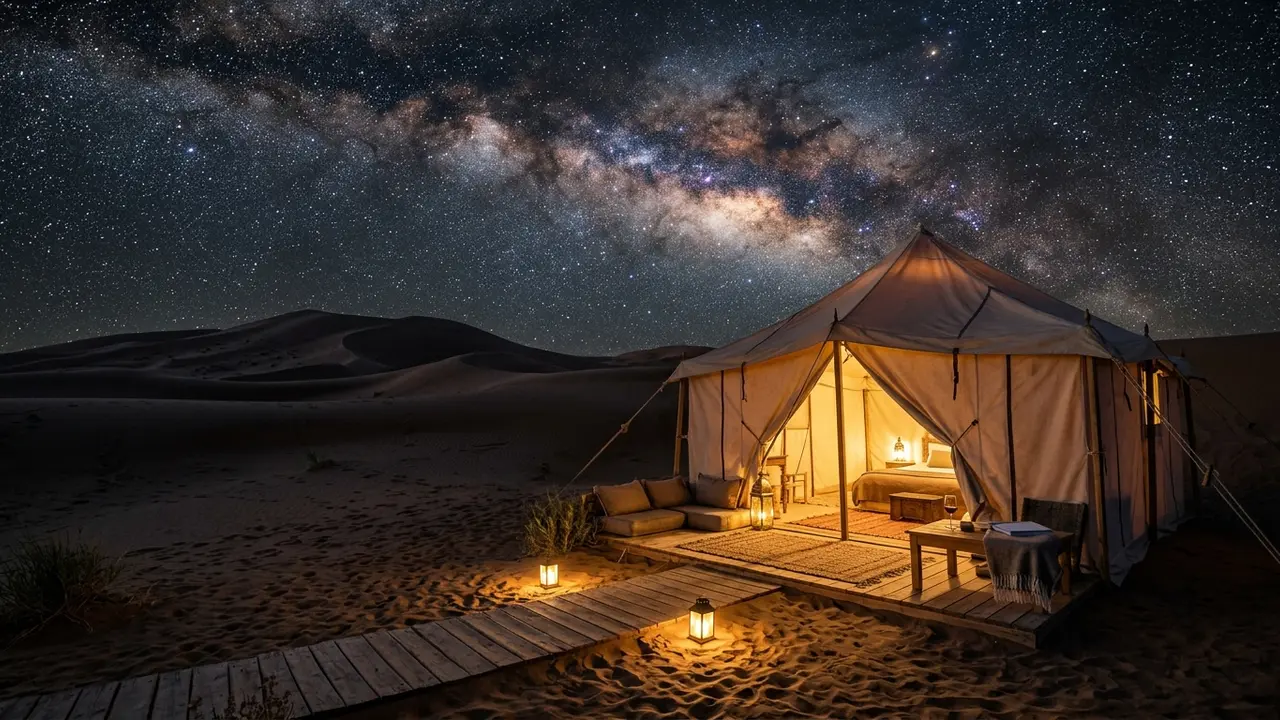
Merzouga carries no official IDA or UNESCO dark-sky designation, and it's worth saying that outright rather than dressing the tour up with a badge it doesn't have. What Erg Chebbi has instead is distance: the nearest town large enough to register meaningfully on a light-pollution map, Erfoud, sits roughly 60 km north, and the open desert between the dune camp and the Algerian border holds almost nothing that runs on electricity after dark. One Merzouga operator puts the pitch plainly: the Sahara has "zero light pollution and one of the clearest skies on Earth." That's a matter of geography, not a promotional line, a camp built dozens of kilometers from any settlement doesn't need a certifying body to be dark.
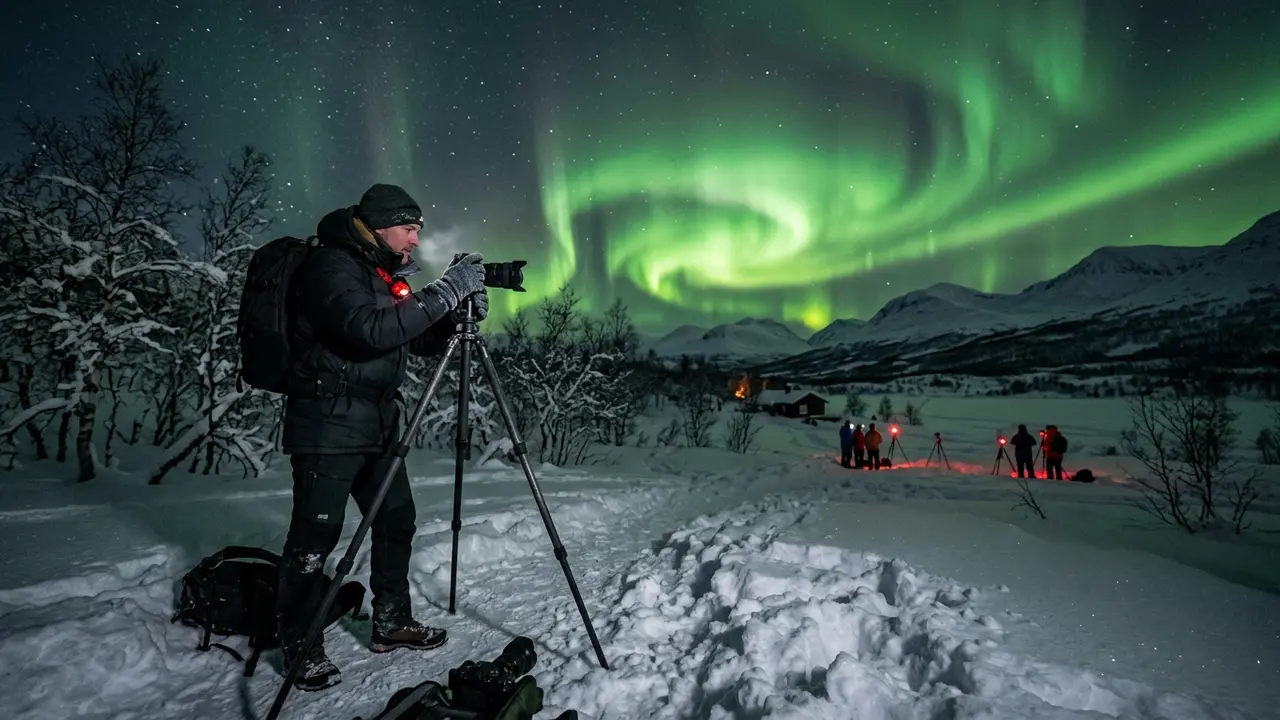
Guides on most bookings point out the Milky Way and bright stars once the fire dies down, but don't expect a technical astronomy lecture. If you want a Dobson telescope and a guided deep-sky session rather than naked-eye orientation, Desert Astro Camp runs that as its whole program, worth booking instead of, or alongside, a straight camel trek.
Berber hospitality, not a Bedouin stand-in
Erg Chebbi's camp culture is Amazigh (Berber)-led, distinct from the Zalabia Bedouin camps that run Jordan's Wadi Rum, even though the two destinations get compared on dunes-plus-camels-plus-stars alone. Expect drumming and singing that runs late around the fire rather than a scripted show, rooted in the Amazigh communities native to this stretch of the Sahara. What a specific camp offers on any given night varies by operator, so treat any promised "Berber music night" as worth confirming at booking rather than assumed.
What it costs, and how to book it
Pricing splits into three rough tiers, and every figure below is a starting point to confirm, not a locked-in rate:
- Budget camps: roughly 200-350 MAD per person (about $20-$35)
- Mid-range camps: roughly 600-1,200 MAD (about $60-$120)
- Luxury tents: roughly 2,000-4,000 MAD (about $200-$400)
Operators and camp standards shift often enough in this market that last season's quoted price isn't worth planning a budget around; confirm current rates directly before you pay a deposit. Book through GetYourGuide or Viator for buyer protection and verified reviews, or go directly through a local outfit like Mouhou Tours if you'd rather deal with an operator one-on-one. If you want a fixed luxury tent instead of a trekking camp, Luxury Camp Merzouga runs its own stargazing terrace without the saddle time, and Berber Camp Merzouga is the family-run, lower-cost alternative if you want the culture without the tent upgrade.
When to go, and what to pack
Skip June through August if you can. Daytime desert heat regularly clears 40°C, and the ride out to camp happens in the worst of the afternoon sun even though the nights themselves cool down well. October-November and March-April are the sweet spot: warm days, genuinely cold nights, and low odds of the rare desert rain. Check the moon phase separately from the season, the same way you would anywhere else. Full details on timing live in when to go stargazing in Merzouga.
Layer up regardless of month. A light long-sleeve shirt protects against both sun and blowing sand during the ride, but temperatures fall to 5-10°C after dark even in the mild seasons, so bring a proper fleece or blanket, not just a jacket. Sunscreen, lip balm, and the provided head wrap aren't optional extras out here.
Who this trip suits
This works best for travelers who already want at least one night in the desert as part of a longer Marrakech-to-Merzouga loop, not a quick add-on between city stops. It isn't wheelchair accessible: mounting and dismounting a camel and walking on soft sand both require a working degree of mobility, and claustrophobic riders should flag it to the operator before the trek starts, since leaving mid-ride isn't always straightforward. An overnight trek also leaves phone signal behind by design, so run the Merzouga desert tour safety checks before you book. For the fuller picture on getting to Merzouga, how many nights to budget, and where else to stay, see the Merzouga stargazing guide.