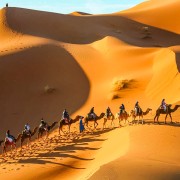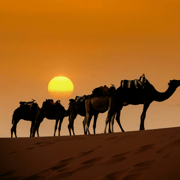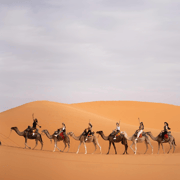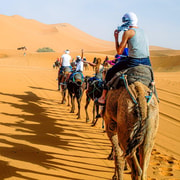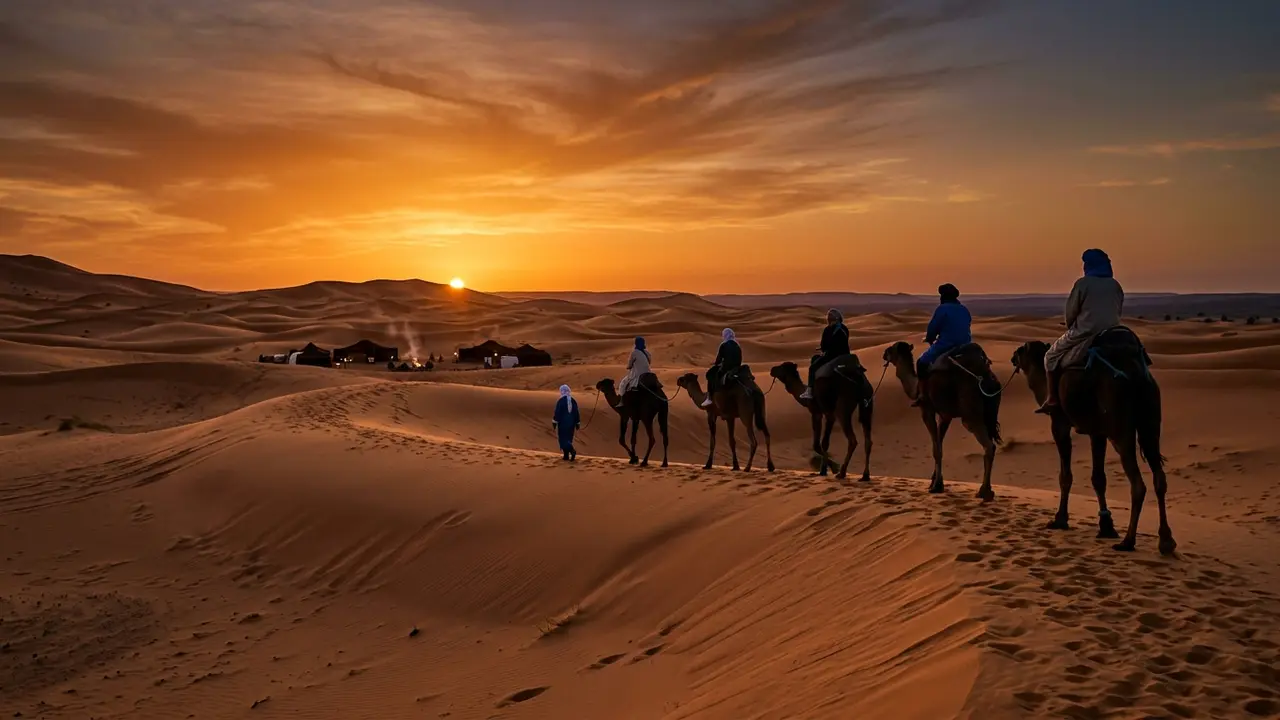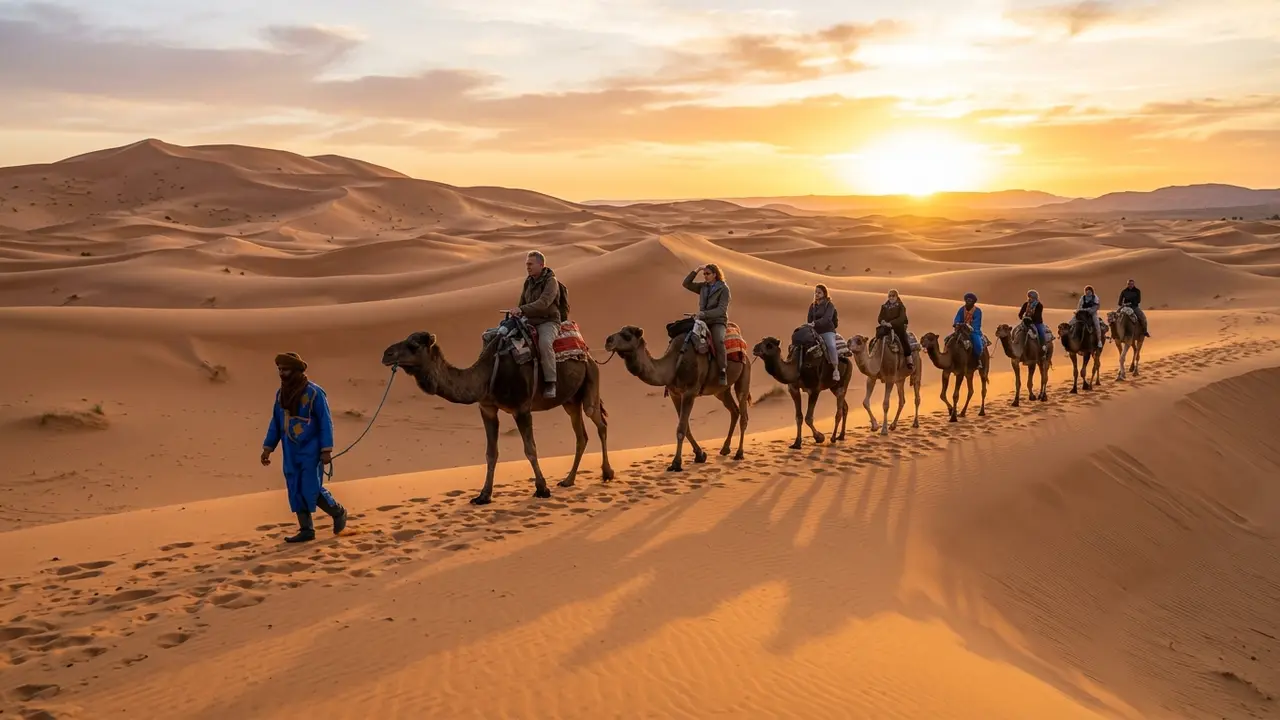
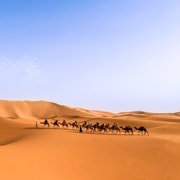
Camel caravan crossing the sand dunes of Erg Chebbi at sunset near Merzouga, Morocco, on a multi-day desert tour from Marrakech
Night-Sky Experience

Three Days from Marrakech to the Dunes of Erg Chebbi

3-4 days
Daily departures year-round, with shared and private options
Hotel or riad pickup in Marrakech, confirmed the evening before departure
All activities

Almost nobody reaches Merzouga on a short hop. The dunes sit far enough into eastern Morocco that the journey itself becomes the itinerary: a 3-4 day loop from Marrakech that climbs the High Atlas, stops at a UNESCO kasbah, cuts through two mountain gorges, and ends with a camel walking you into Erg Chebbi as the light drops. This is the route most travelers actually take to reach stargazing in Merzouga, and it shapes the whole trip more than the destination itself does.

Day-by-day: what a 3-day tour actually looks like

Operators vary the order slightly, but the core route holds steady across nearly every listing. Day one covers roughly six hours of driving: Marrakech, up through the High Atlas Mountains, a stop at the UNESCO-listed kasbah of Aït Ben Haddou, on to Ouarzazate, and a hotel night in the Dadès Valley. Day two runs about four hours: the Todra Gorges, then on to Merzouga itself, where the vehicle stops and camels take over for a sunset ride into Erg Chebbi and an overnight desert camp. Day three starts before sunrise with a second camel ride, then the long drive (roughly eight hours) back to Marrakech. Four- and five-day versions exist too, adding a second desert night or a slower return, worth the extra day if the sky matters more to you than the driving.

One night in the dunes, sometimes not enough

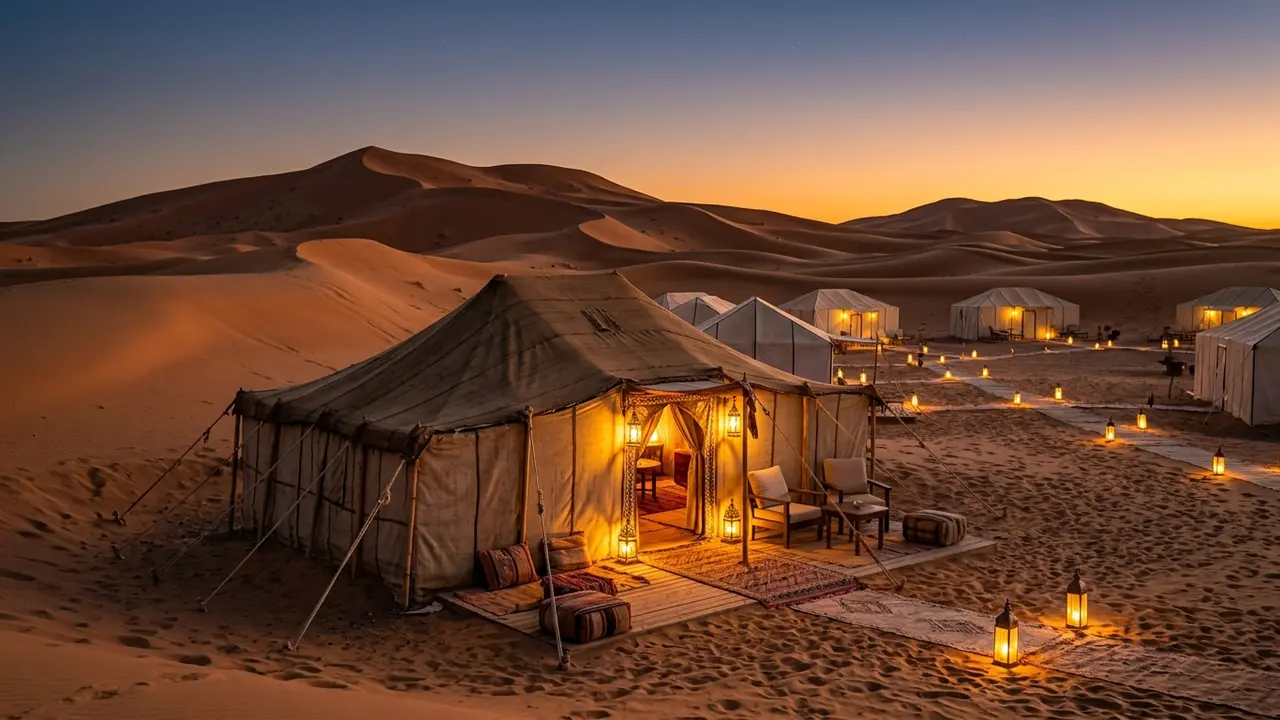
A single desert night is the standard inclusion, built around the camel trek and camp dinner rather than the sky itself, though the sky is what shows up once the fire dies down. Package tours typically book into a shared or partner camp rather than a named boutique property, and tent quality varies more than the marketing photos suggest: some are close to what Luxury Camp Merzouga offers, with private bathrooms and real beds, others closer to Berber Camp Merzouga's simpler, family-run setup. If a telescope and a guided sky lecture matter more to you than the drive itself, ask your operator whether they can book you into somewhere like Desert Astro Camp instead of a generic package tent, since standard multi-day tours don't confirm which camp you'll land in until closer to departure. Our ranked comparison of Merzouga's desert camps lines up all four options side by side if you want to request one by name.

No certified dark sky, just genuine distance

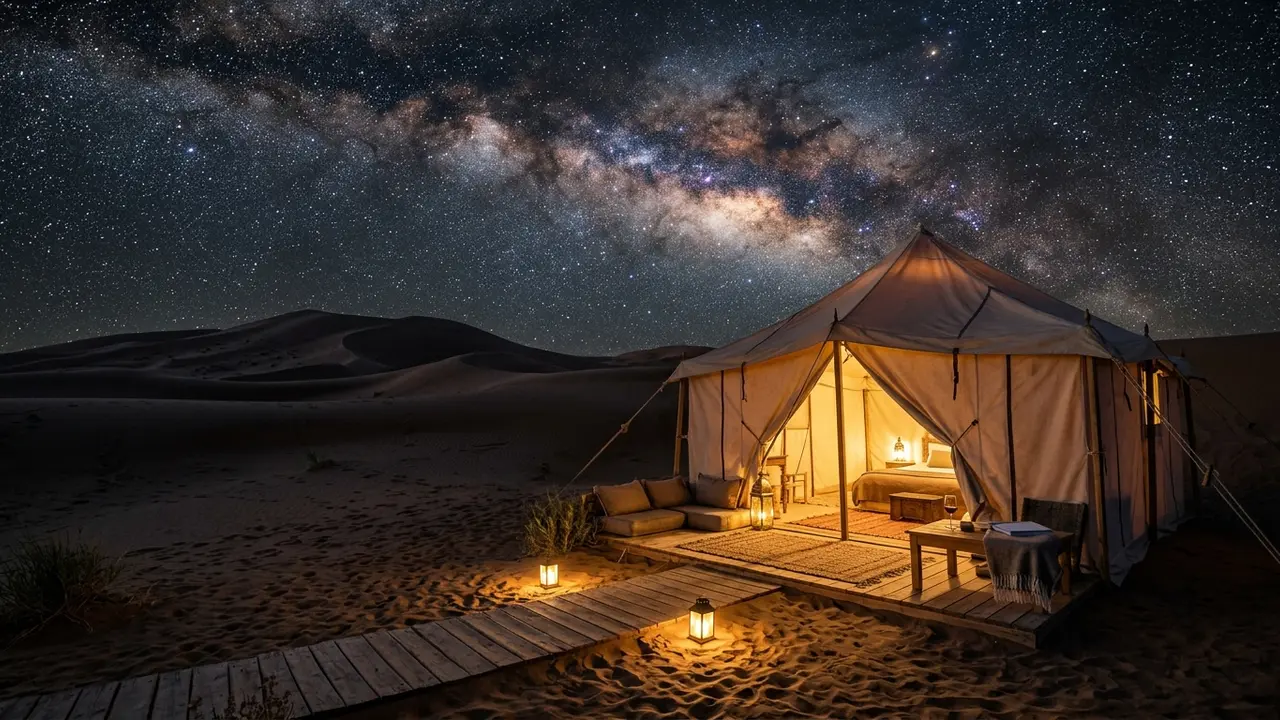
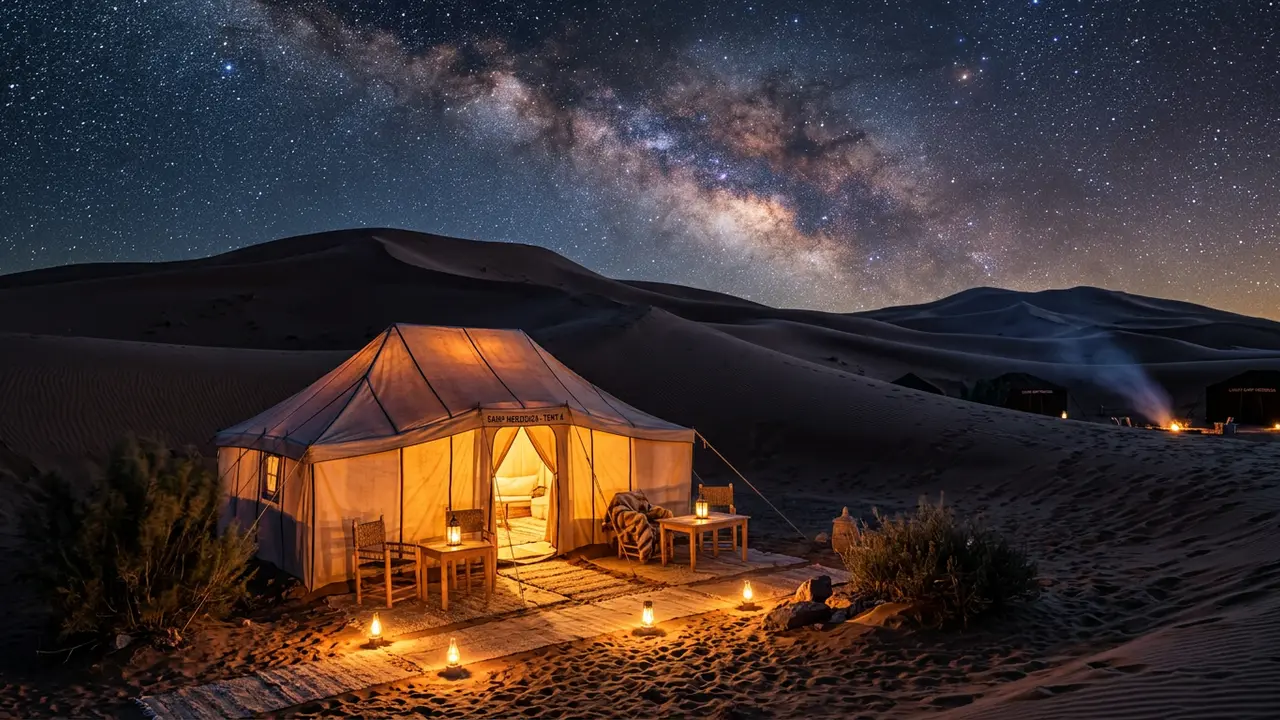
Nobody has given Erg Chebbi an official IDA or UNESCO dark-sky designation, and no operator running this route can honestly claim one. What the tour delivers instead is distance: hundreds of kilometres of mountain and gravel plain between Marrakech's light and the dunes, and almost nothing running on electricity in the desert itself. On a clear, moonless night, that's enough. Check the moon phase before you lock in dates. Camel treks run every night regardless of the calendar, but a trip timed around a new moon window shows a noticeably denser Milky Way than the same route a week either side of full.

Camel treks, kasbahs, and a long day of driving

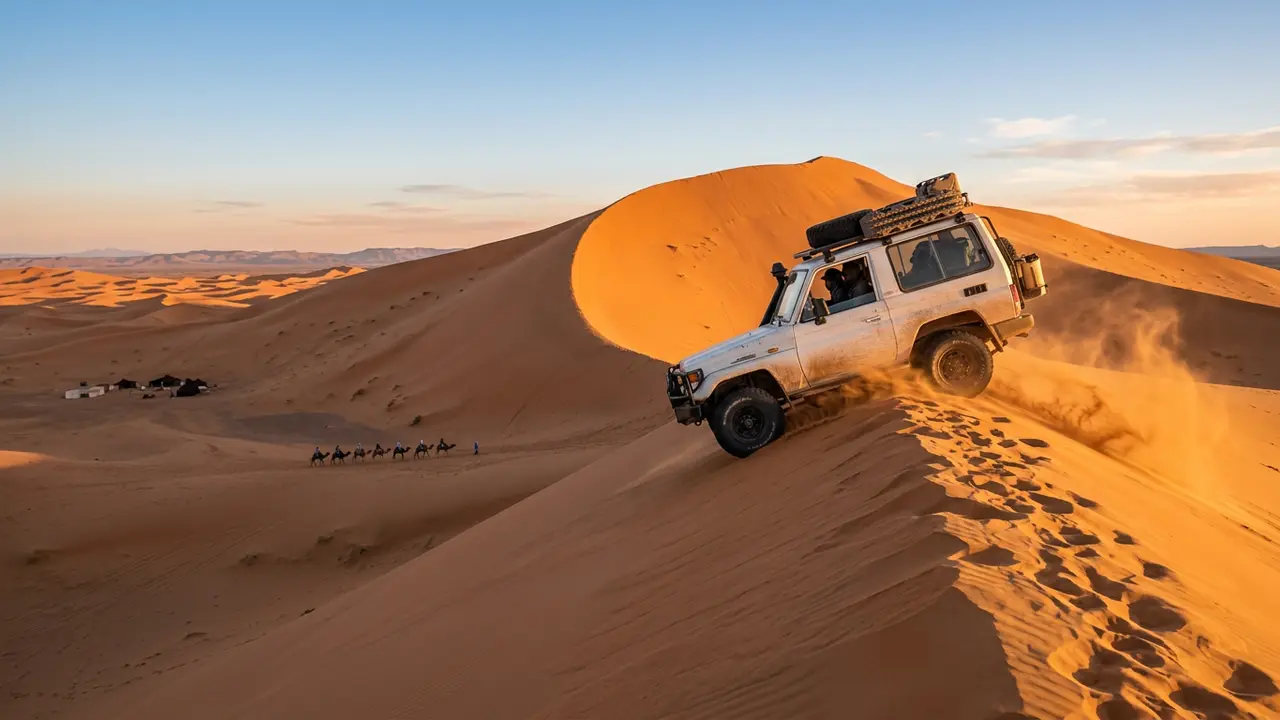
The camel trek itself runs about 40 minutes each way, timed for sunset on arrival and sunrise on departure, paced for people who have never ridden one before rather than anyone in a hurry. Aït Ben Haddou is worth the stop even though it's not the destination; the kasbah's mudbrick towers have stood in enough films that the walk through them feels familiar before you've arrived. Rissani's market, near Merzouga, runs on a rotating schedule of specific weekdays that's worth confirming with your guide rather than planning around in advance, since market days shift and aren't reliably published. Travelers who'd rather build a whole trip around the desert night instead of one stop on a longer loop can book the overnight camel trek directly out of Merzouga instead.

Berber hospitality, not a Bedouin show

Erg Chebbi's desert-camp tourism is Amazigh (Berber)-led, a different culture from the Bedouin-run camps of Jordan's Wadi Rum, and the dinner, music, and hosting style on a Merzouga tour reflect that. Expect a shared meal of tagine or couscous around the fire, sometimes with drumming, rather than a fixed cultural performance; programming varies by camp and season, so treat any specific act as something to confirm rather than assume. Ask before photographing camp staff or anyone in traditional dress, the same courtesy you'd extend anywhere.

Booking, pricing, and what actually gets included

Shared group tours run roughly $180-250 USD per person as of 2026, a figure that moves with season and operator, so treat it as a starting point and confirm the live rate on GetYourGuide or Viator before booking rather than budgeting around an old quote. Private and luxury variants cost considerably more but buy a smaller group and more say over the itinerary. Most packages include the vehicle, a multilingual guide, most meals, one hotel night, the desert camp stay, and the camel trek; drinks, some lunches, monument entrance fees, and tips are usually extra. Free cancellation up to 24 hours before departure is standard across most listings, worth using if a weather or moon-phase check changes your plans close to the date.

Packing for heat, cold, and sand

Bring layers that work for both ends of a desert day: sun protection and light clothing for daytime highs that can pass 40°C in summer, and something warm for a night that drops hard once the sun is down, cold enough in winter to bring frost. Closed-toe shoes handle the camel saddle and the sand better than sandals, and a headlamp with a red-light mode preserves your night vision once you're out on the dune crest waiting for the sky to come up.
Highlights

  • Sunset and sunrise camel treks into Erg Chebbi's dunes
  • Overnight stay in a Berber-run desert camp under open sky
  • UNESCO-listed Aït Ben Haddou kasbah
  • High Atlas Mountains scenic crossing
  • Todra Gorges stop
  • Dadès Valley hotel night (3-4 day itineraries)
  • Shared or private group options
  • Free cancellation up to 24 hours before departure

Included

  • Air-conditioned vehicle (4WD SUV for private tours; minibus for shared tours)
  • Professional multilingual guide
  • Fuel and tolls
  • Most meals (breakfast, lunch, dinner)
  • One hotel night in the Dadès Valley
  • Desert camp accommodation with blankets
  • 40-minute camel trek at sunset and sunrise
  • Aït Ben Haddou entrance stop

Not included

  • Some lunches
  • Drinks and alcohol
  • Monument entrance fees beyond the Aït Ben Haddou stop
  • Gratuities
  • Personal expenses
  • Travel insurance
  • Optional add-ons (sandboarding, quad biking)

Practical information

Availability

Best in March-May and September-November; also runs in summer (hotter days) and winter (colder nights)

Languages

English, French, Arabic, Spanish

Group size

Shared tours: roughly 4-15 people; private tours: customizable, often just your own group

Accessibility

Limited. Rough desert terrain and camel mounting/dismounting are not well suited to severe mobility restrictions; ask operators directly about vehicle and camp accessibility.

Good to know before booking

  • Valid passport, valid at least 6 months beyond your travel dates
  • Check current Morocco visa and entry requirements with an official government source before booking
  • Comfortable clothing and closed-toe shoes for camel riding and desert terrain
  • Sun protection: sunscreen, hat, sunglasses
  • A warm layer for cold desert nights, even in the mild season

Prices & Booking

Bookable online

From €166 approx.

From $180-250 USD per person for shared group tours; private and luxury variants cost considerably more (confirm current rates before booking)

Daily departures year-round, with shared and private options

Book directly through the operator's booking platform — see the options below.

Tags

desert tour sahara camel trek erg chebbi berber culture multi day tour marrakech stargazing

Book With Local Experts

Tours are selected for quality, not commission. We earn a small fee if you book — at no extra cost to you.

Best Seller
From Marrakech: 3-Day Merzouga and Sahara Desert Tour

From Marrakech: 3-Day Merzouga and Sahara Desert Tour

Experience the Moroccan Sahara Desert on a 3-day trip from Marrakech to Merzouga. Explore nomadic life, visit iconic kasbahs, ride camels at sunset and sunrise, and camp in the majestic desert.

3 days

€119.63

4.9 (21,773)
Reserve Your Spot

✓ Verified reviews · 21,773 travelers

Popular — books up weeks ahead in peak season

Best Seller
From Marrakech: Merzouga 3-Day Desert Safari with Food

From Marrakech: Merzouga 3-Day Desert Safari with Food

Discover the magic of the Merzouga Desert on a 3-day journey from Marrakech. Explore nomadic life, ride camels, watch stunning sunsets, and sleep under the stars in a Bedouin camp for an unforgettable desert adventure.

3 days

€104.21

4.7 (14,124)
Reserve Your Spot

✓ Verified reviews · 14,124 travelers

Popular — books up weeks ahead in peak season

Best Seller
Marrakech: 3-Day Merzouga Desert Experience Camel & Meals

Marrakech: 3-Day Merzouga Desert Experience Camel & Meals

Embark on a 3-day tour of southern Morocco from Marrakech. Sleep in the Sahara, see Ait Ben Haddou, and visit Tinghir Ouasis. Cross the landscapes of the Atlas Mountains and the Erg Chebbi dunes.

3 days

€86.4

4.6 (6,419)
Reserve Your Spot

✓ Verified reviews · 6,419 travelers

Popular — books up weeks ahead in peak season

3-Day Merzouga Desert Safari from Marrakech with Food

3-Day Merzouga Desert Safari from Marrakech with Food

Discover the Sahara on a 3-day trip from Marrakech. Visit Ait Ben Haddou, explore valleys and gorges, ride camels in Erg Chebbi, and sleep under the stars in a desert camp.

3 days

€107.34

4.4 (134)
Reserve Your Spot

✓ Verified reviews · 134 travelers

Frequently asked questions

How long is the Marrakech to Merzouga desert tour?

Most tours run 3 days, with 4- and 5-day variants also common. The extra days typically add a second desert night or a slower return trip rather than new stops, so if the sky is your priority over the driving, a 4-day version buys you more time in the dunes.

What's included in the price?

Standard packages include the vehicle, a multilingual guide, fuel and tolls, most meals, one hotel night in the Dadès Valley, the desert camp stay, and a 40-minute camel trek at sunset and sunrise. Drinks, some lunches, monument entrance fees beyond Aït Ben Haddou, and tips are usually extra.

Is Merzouga an officially certified dark-sky destination on this tour?

No. Erg Chebbi holds no IDA or UNESCO dark-sky designation, and no operator running this route can honestly claim one. What the tour delivers is genuine remoteness, hundreds of kilometres from major light sources, which is enough for a strong Milky Way view on a clear, moonless night.

Which desert camp will I stay in?

Standard multi-day tours book into a shared or partner camp rather than a named boutique property, and you often won't know exactly which one until close to departure. If a specific camp matters to you, ask the operator directly, or book a stay at a named property like Luxury Camp Merzouga or Desert Astro Camp separately.

Is camel riding difficult, and is this tour suitable for kids?

The trek runs about 40 minutes each way and is paced for first-time riders, so most people manage it without trouble; expect some soreness if you're not used to riding. Families are welcome, though the long driving days can be tiring for younger children, so this tends to suit families with kids 10 and up best.

What's the best time of year for this tour?

March-May and September-November offer the mildest temperatures for both the drive and the desert night. The tour runs year-round, but summer daytime heat is intense and winter nights turn genuinely cold, so pack accordingly whichever season you book.

Do I need a visa to visit Morocco?

Requirements vary by nationality and change periodically. Many passport holders, including EU, US, and Australian citizens, receive visa-free entry for short stays, but check current government travel advisories directly before booking rather than relying on a past trip's rules.

Further reading

Sources