Best best dune-crest access and the only guest-review score in this cluster
Sahara Stars Camp
Direct dune-crest access, 16 tents across 4 tiers, 4.0/5 TripAdvisor (22 reviews), €150-340/night bundled
Erg Chebbi's dunes rise 150m above Morocco's Sahara, hours from city light. Stargaze from Berber-led desert camps: when to go, where to stay, how to get there.
Photo tour of the lodges, night-sky trips, and guides for this destination.
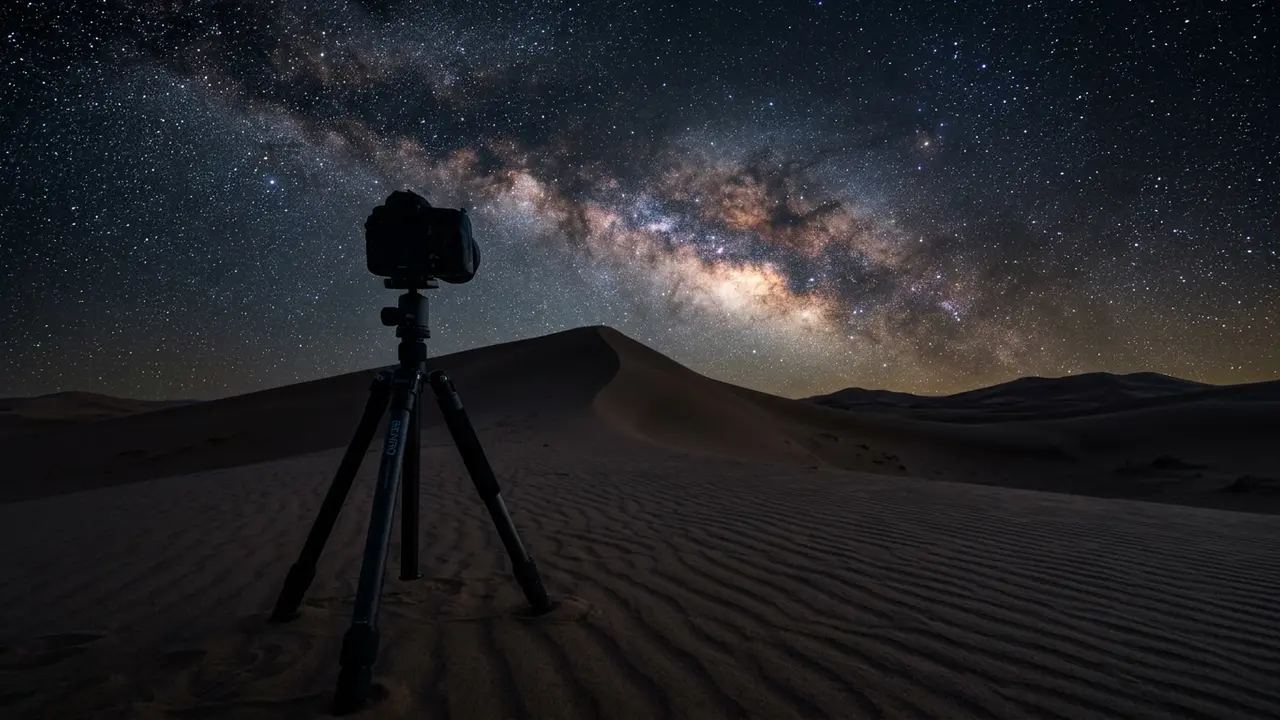
Best best for dedicated astronomy equipment and guided sky lectures
Multi-day desert tour from Marrakech to Merzouga's Erg Chebbi dunes, with Atlas Mountain stops, camel treks, and Berber camp stargazing in the Sahara.
Four Merzouga desert camps ranked for stargazing in Erg Chebbi: a Dobson telescope, dune-crest access, Berber hospitality, and the honest trade-offs of each.
Merzouga's Sahara sky stays dark all year, but summer daytime heat above 40°C and cold desert nights make season and moon phase the real planning decision.
Best best overall: dune-top access plus the most direct booking of the four
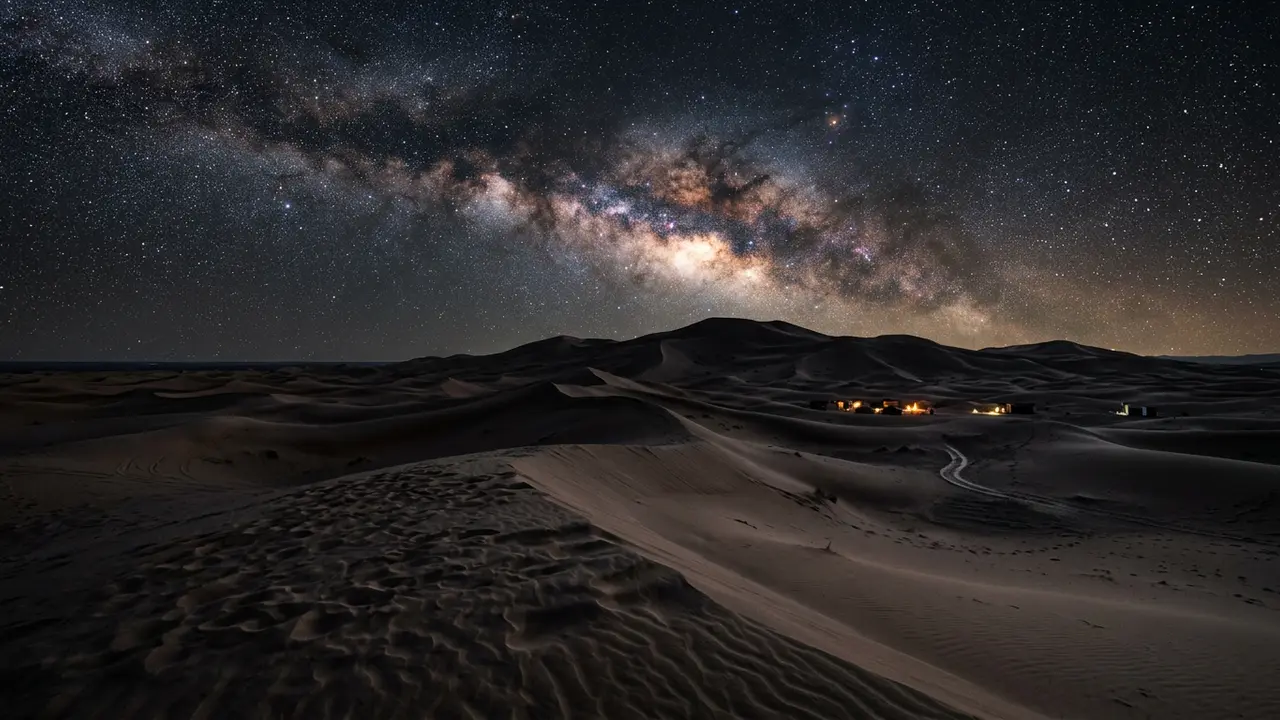
Ranked by Bortle darkness, clear-night odds, and galactic-core season: 14 places worldwide where the Milky Way is genuinely visible, from Atacama to Uluru.
How to reach Merzouga: nearest airports at Errachidia and Ouarzazate, drive times from Marrakech and Fez, plus Morocco's visa-free entry rules explained.
Weighing it against somewhere else? Merzouga vs Wadi Rum Stargazing: Full Comparison
Bortle 1-2 sky
What the Bortle scale meansThe Milky Way casts a faint shadow. Zodiacal light and airglow are obvious.
This destination rates Bortle 1-2 on the 9-level Bortle dark-sky scale, where 1 is a pristine dark sky and 9 is an inner-city sky. The Milky Way casts a faint shadow. Zodiacal light and airglow are obvious.
On this page
Updated
Erg Chebbi's dunes rise to about 150 metres above the flat gravel plain that surrounds them, the tallest true sand in Morocco, and once the sun drops behind them there is nothing between you and the sky but sand still warm from the day. Merzouga sits at the country's eastern edge, close enough to the Algerian border that the erg itself lines it, hours by road from any city bright enough to blur the horizon. Nobody has certified this stretch of Sahara as an official dark-sky site. Nobody needed to: the nearest sizeable town, Erfoud, is roughly 60 km north, and the desert in between holds almost nothing that runs on electricity after dark.
Computed for Merzouga at 31°N. Updates nightly.
First quarter tonight, 36% illuminated
Next new moon August 12. The nights either side of it are the darkest of the month.
About 7 hours of astronomical darkness tonight
The sun drops more than 18 degrees below the horizon, so the sky gets genuinely dark for deep-sky viewing at 31°N.
Hours of astronomical darkness by month at Merzouga: January 11 hours, February 10 hours, March 9 hours, April 8 hours, May 7 hours, June 7 hours, July 7 hours, August 8 hours, September 9 hours, October 10 hours, November 11 hours, December 11 hours.
Perseids active now
Peaks August 12. Up to 100 meteors per hour at maximum. The 2026 peak lands on a new moon — a dark-sky year with zero lunar washout.
See the Perseids guideWhere to go stargazing in July
DarkSky International hasn't drawn a protected boundary around Erg Chebbi the way it has around Aoraki Mackenzie or NamibRand, and it's worth saying that plainly rather than dressing the destination up with a designation it doesn't hold. What Merzouga has instead is distance. Rissani, the closest market town, sits about 40 km away. Erfoud, the nearest place large enough to register on a light-pollution map, is another 60 km past that. Between the dunes and the Algerian border there's open hamada (rocky plain), not a grid of towns.
That's a genuinely different kind of dark from a place like Bryce Canyon, where lighting ordinances and a management authority actively hold the sky at a measured standard. Merzouga's darkness is a byproduct of geography rather than policy: nobody built streetlights out here because there was never a reason to. It's held up well so far, and remoteness this total tends to be durable, but it isn't defended by any body the way an IDA-accredited park's is. For the fuller science behind that remoteness argument, and why a Bortle number you might see quoted for Merzouga shouldn't be trusted, see why Merzouga is so dark.
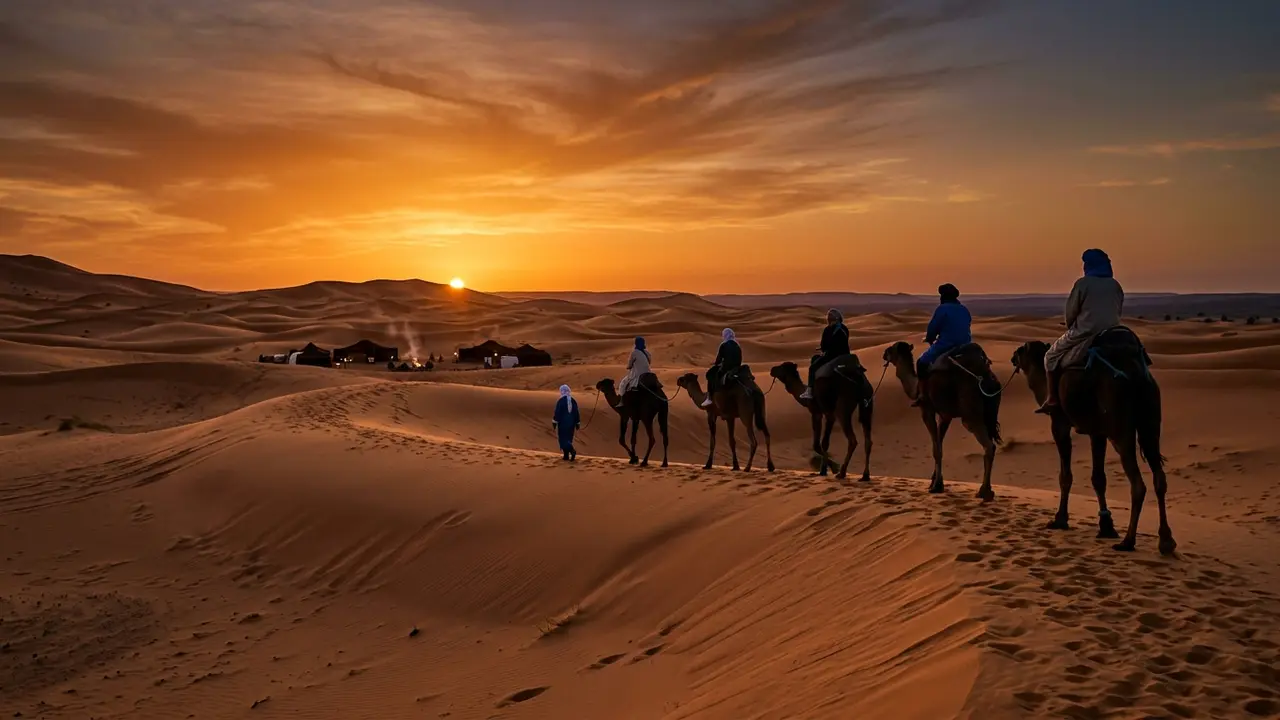
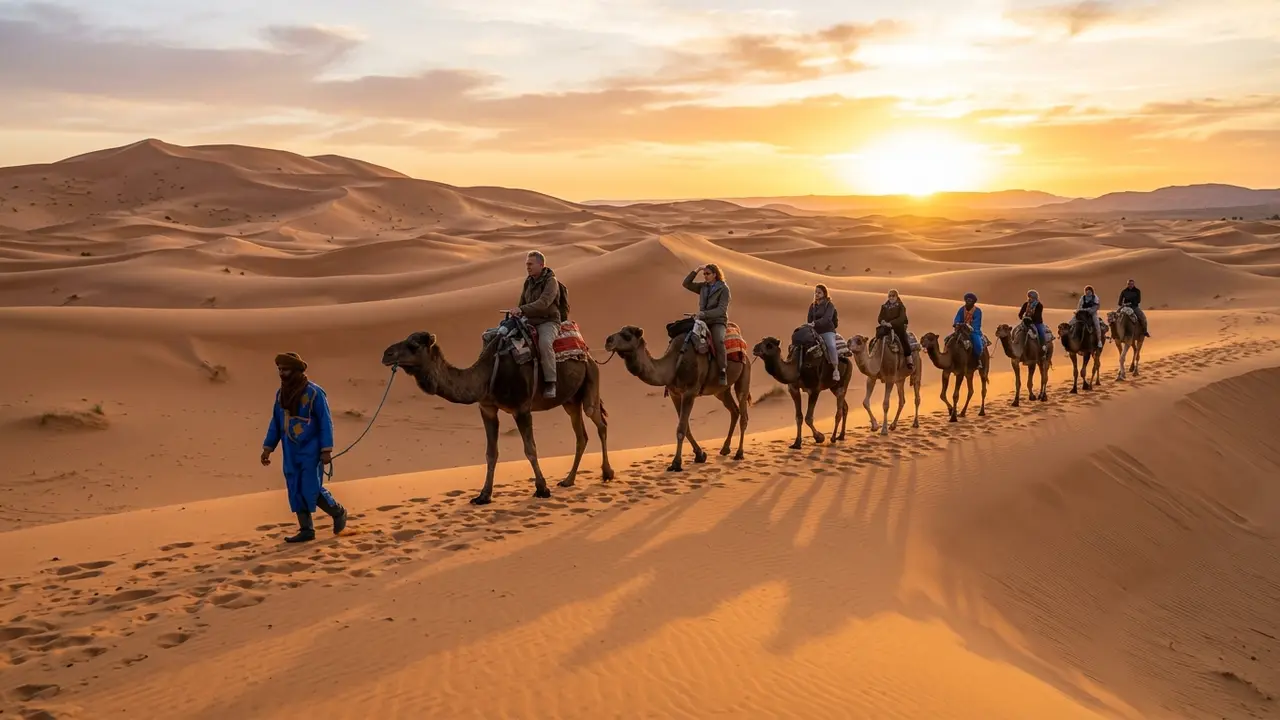
Erg Chebbi is a compact field of true Saharan sand, roughly 28 km north to south and 5-7 km east to west, small enough that a camel trek from the village puts you among the tallest dunes within an hour or two. The sand runs fine and pale gold by day, and turns a deep rust-orange at sunset before the colour drains out of it entirely. Climbing a dune crest before dark isn't just a photo stop: it's the difference between watching stars come up from ground level and watching them come up from 100 metres above the plain, with the whole erg spread out flat and dark below you.
Sandboarding down the same slopes is the daytime version of the same terrain, and most camps offer it as a between-trek activity rather than a standalone booking.
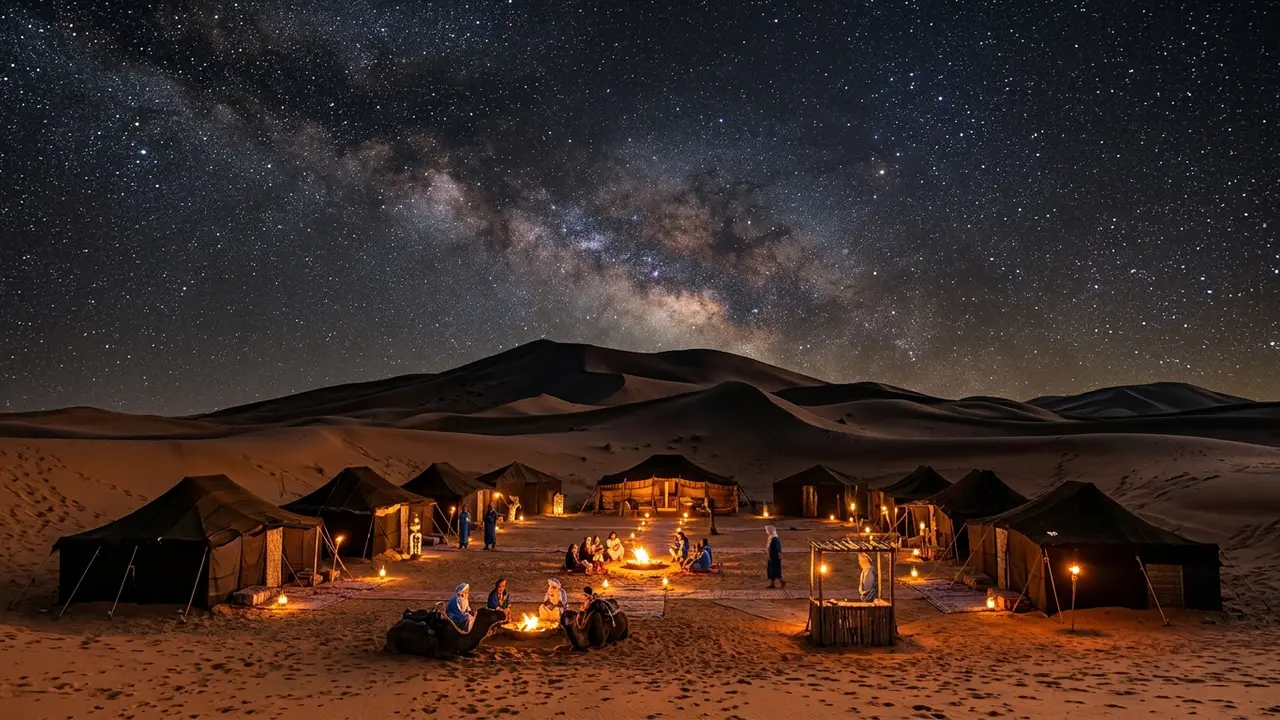
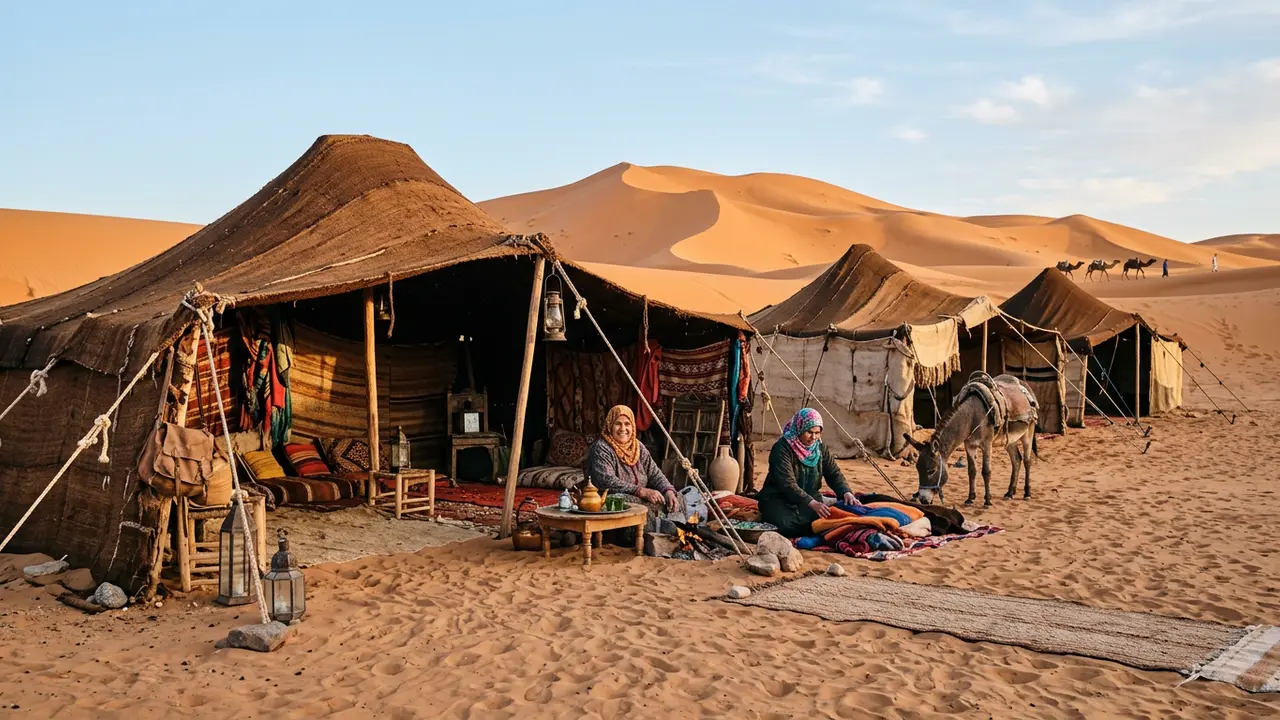
Morocco's desert-camp tourism in Erg Chebbi is Amazigh (Berber)-led, not Bedouin, and that distinction matters: the guides, the music, and the hospitality traditions on offer here come from a different culture than the Zalabia Bedouin camps of Jordan's Wadi Rum, even though the two destinations get compared on the strength of dunes-plus-camels-plus-stars alone. A night at an Erg Chebbi camp typically means a shared dinner under canvas, live drumming and singing that runs late, and then a short walk from the fire pit to somewhere the light doesn't reach.
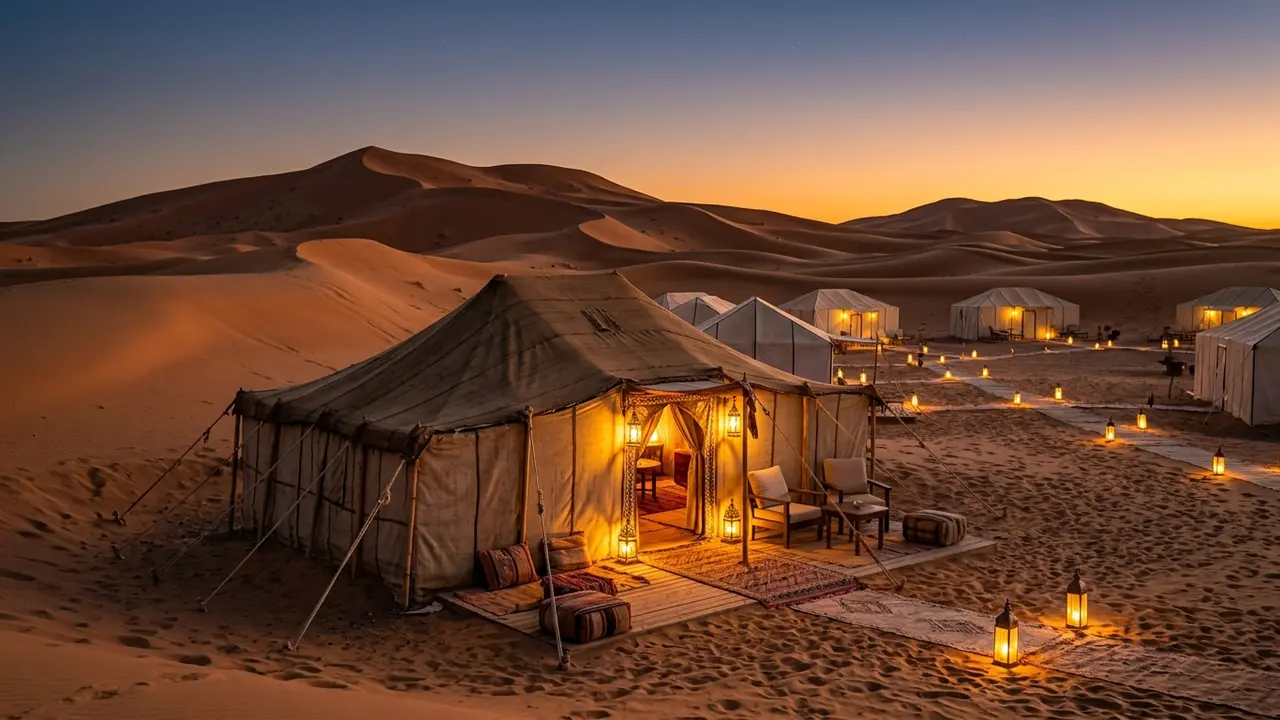
Camps here range from simple traditional setups to properties that build a stargazing platform into the itinerary, some pairing the night sky with a look at Amazigh sky knowledge alongside the Western constellation names. The camp market is dense and prone to rebranding, so treat any specific camp name as worth confirming at booking time rather than assuming last season's listing still holds.
October through April is the window most sources agree on for Erg Chebbi, and the reason is comfort rather than cloud cover: rainfall out here is uncommon in any season, so clear skies aren't really the variable. What changes is temperature. Desert days can still run warm even inside the cooler months, and nights drop hard once the sand stops holding the sun's heat, a swing sharp enough that the blanket the camp hands you at dinner is not a gimmick.
Whatever month you land in, check the moon phase separately from the season. A bright moon mutes the Milky Way here the same way it does anywhere else on Earth, so a trip timed around a new moon window will show you more sky than the same trip a week later.
Erg Chebbi's skies stay clear nearly 300 nights a year, so this grid scores comfort and safety, not darkness. The cool season here runs **October through April**, but the calmest, clearest nights cluster November through February, cold dry air under 10% cloud cover. Reliability drops off as Chergui winds start building from March, and by June the window closes entirely: June through August's Chergui sandstorms and 40°C-plus heat make an all-night session miserable or dangerous.
Going in January? See what else the sky offers that month
Nobody arrives in Merzouga on a short domestic hop. Most travelers reach it as part of a multi-day organized loop from Marrakech or Fez, typically a two- or three-day tour with stops in the Atlas Mountains, Todra or Dades Gorge, or the Ziz Valley on the way, rather than a direct drive booked purely to reach the dunes. The road distance from either city runs to several hundred kilometres, most of it on winding mountain roads, so budget a full day of driving each way if you aren't building in overnight stops.
Confirm current routes, drive times, and entry requirements directly with an operator or an official source before booking. Morocco's road conditions and visa rules both change often enough that a figure quoted a year ago isn't worth planning around.
Tap a pin to open the lodge, tour, or destination page.
Best season
October through April for milder desert temperatures; rainfall is uncommon in any season, so the real driver is comfort rather than cloud cover
Quietest hours
After camp dinners wind down and lanterns are put out, once your night vision has had ten to fifteen minutes away from the fire pit
Visit duration
1-2 nights in the desert itself as part of a longer 3+ day loop from Marrakech or Fez
Accommodation clusters into two shapes: a hotel or guesthouse in Merzouga village itself, useful as a base if you want a real bed and a shower between desert nights, and a camp out on the dunes, which is the point of the trip if stargazing is the priority. Camp quality varies widely, from a few rugs around a fire to properties with private tents, a dedicated stargazing terrace, and a full kitchen staff. Booking directly through a camp's own site or a well-reviewed listing, rather than an unnamed reseller, is the safer route in a market this prone to rebranding.
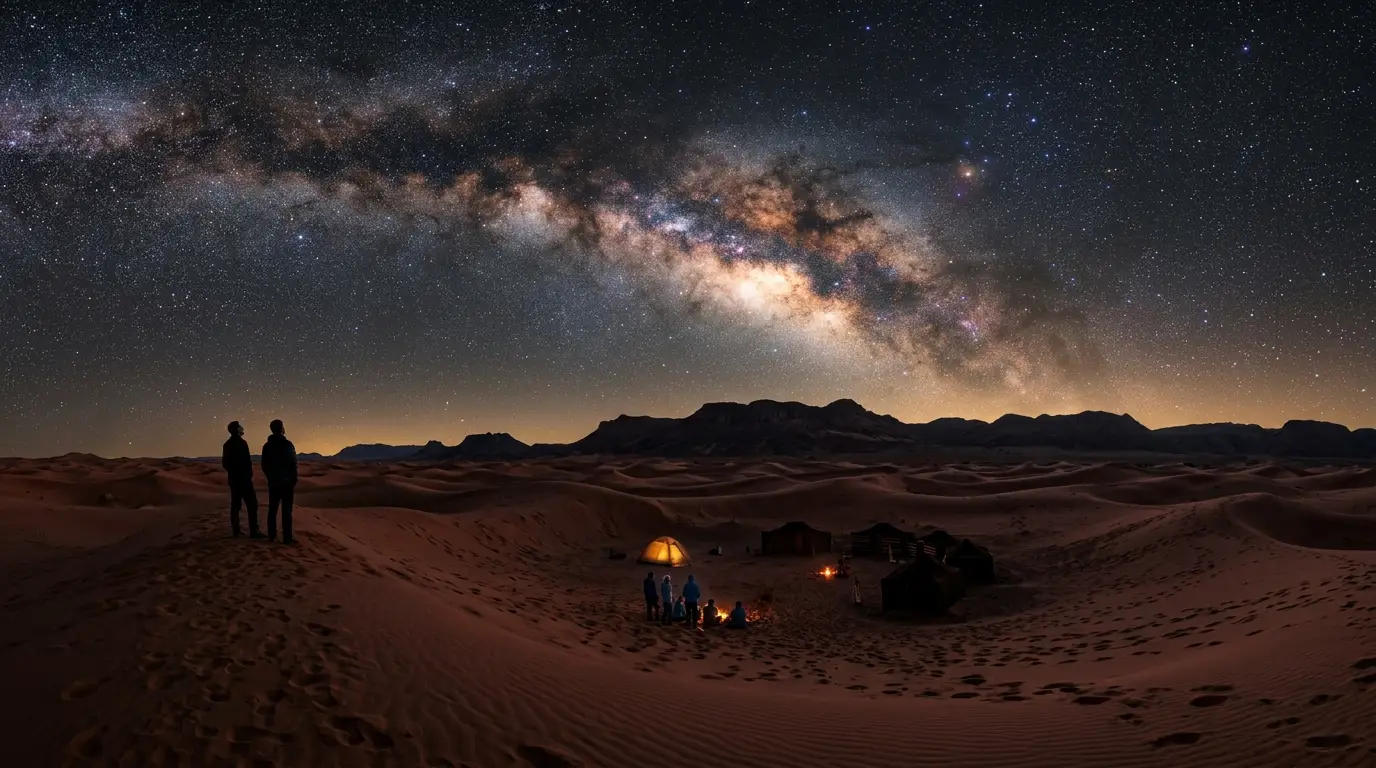
Best best dune-crest access and the only guest-review score in this cluster
Direct dune-crest access, 16 tents across 4 tiers, 4.0/5 TripAdvisor (22 reviews), €150-340/night bundled
Best best value and the most culturally authentic pick
100% Berber family-owned and operated, GetYourGuide + TripAdvisor listed, budget-tier (rates not published)
For more on any of this before you book: check the Merzouga stargazing forecast for how to read season, wind, and moon conditions ahead of your trip, weigh the full trade-offs in is Merzouga worth it for stargazing, fill the daylight hours with things to do in Merzouga beyond stargazing, or run through the Merzouga stargazing FAQ for quick answers to the most common questions.
Packing for the trip? Our Merzouga stargazing packing list covers what to bring for the day-to-night temperature swing and Erg Chebbi's fine sand, and Merzouga astrophotography gear walks through the camera setup for a dune-crest Milky Way shot, or smartphone astrophotography in Merzouga if you're traveling without a dedicated camera. Weighing Merzouga against another desert-camp destination? Merzouga vs Wadi Rum stargazing lays out the trade-offs between Erg Chebbi's dune sea and Jordan's rock-canyon valley.
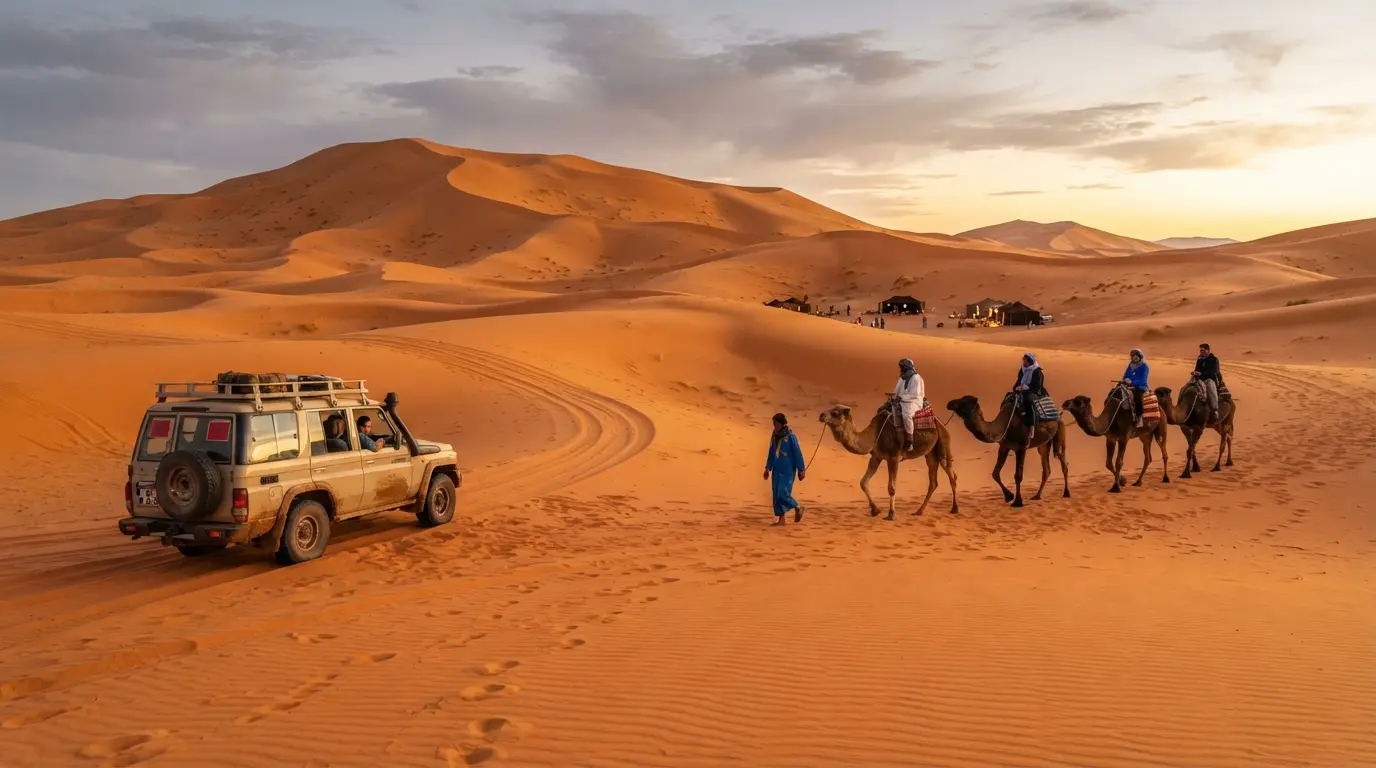
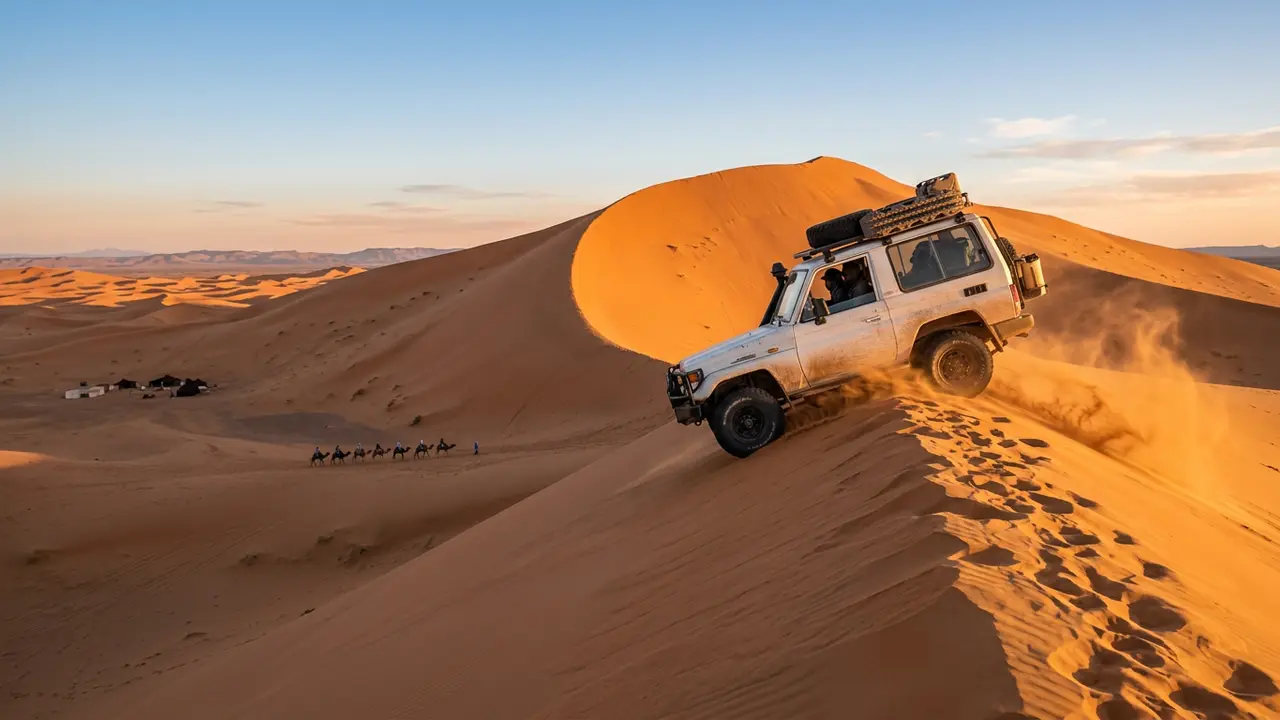
Dune-bash Erg Chebbi's 150-meter dunes by 4x4, then stargaze under Merzouga's darkest Sahara skies: what's included, real prices, and how booking works.
An evening camel ride into Erg Chebbi's dunes at sunset, an overnight Berber desert camp, and a sky with zero light pollution: Morocco's best stargazing tour.
Reporter notebook
October to April is the comfort window, but the moon phase matters more for what you'll actually see. A full moon washes out the Milky Way here exactly as it does anywhere else, so check a moon calendar before locking in dates, not just the month.
Desert days can still run warm inside the October-April window, but the sand stops holding heat fast after sunset. Bring a proper mid-layer and something to cover your head for the walk from the fire pit to wherever you're actually watching the sky, not just a light jacket.
A dune camp's own lanterns and cooking fire are enough to dull your night vision. Give your eyes ten to fifteen minutes away from camp light before judging how dark the sky really is, and pick a dune crest rather than the flat ground near the tents for the clearest view.
Further reading
The 2026 Geminid meteor shower peaks December 13–14 under a waxing crescent moon, with up to 120 meteors an hour. Here's when to look up and where to watch.
The Lyrid meteor shower peaks April 22–23, 2027, with bright, colorful meteors from Comet Thatcher. A waning gibbous moon cuts the count, so timing matters.
Watch up to 20 meteors an hour during October's Orionid shower, born from Halley's Comet debris. Peak nights Oct 21-22, 2026, best viewed just before dawn.
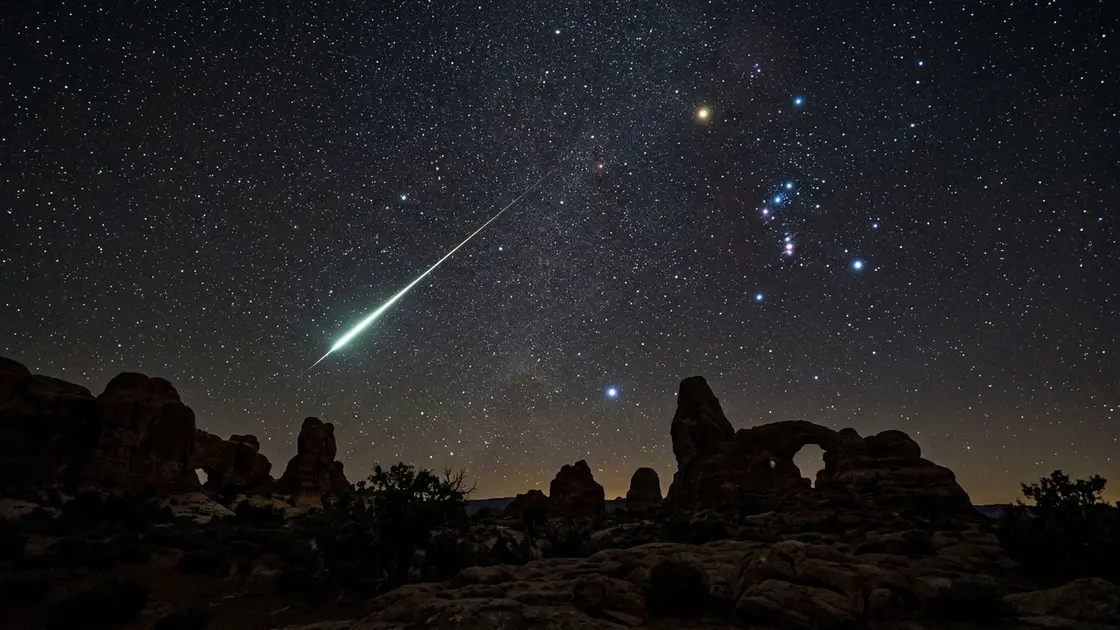
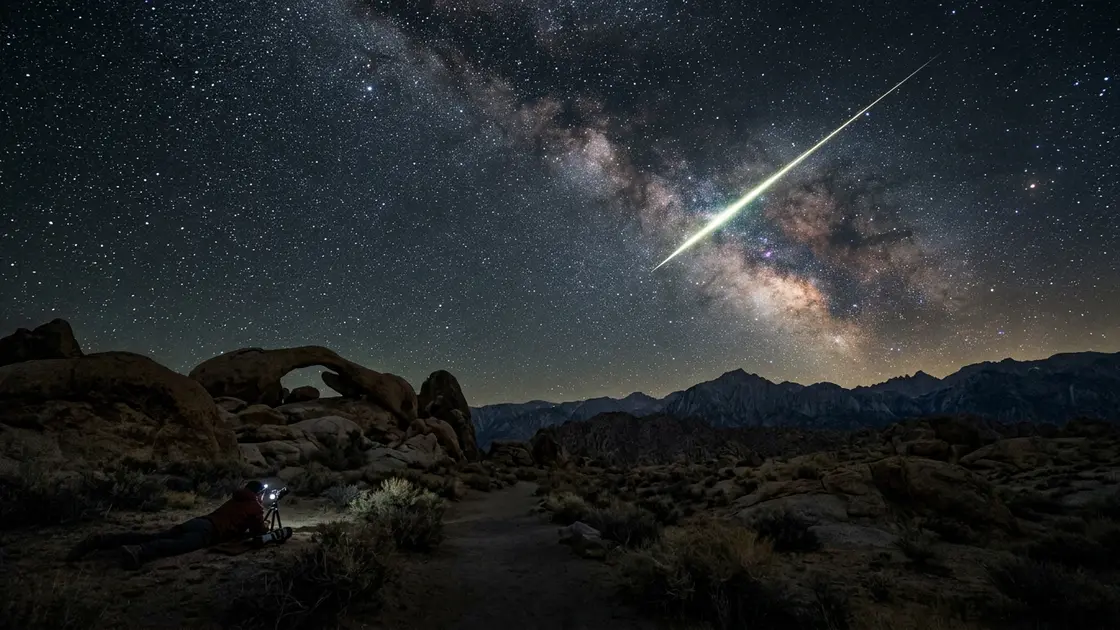
The 2026 Perseid meteor shower peaks August 12–13 under a new moon, with up to 90 meteors an hour. Here's when to look up and the best dark-sky places to watch.
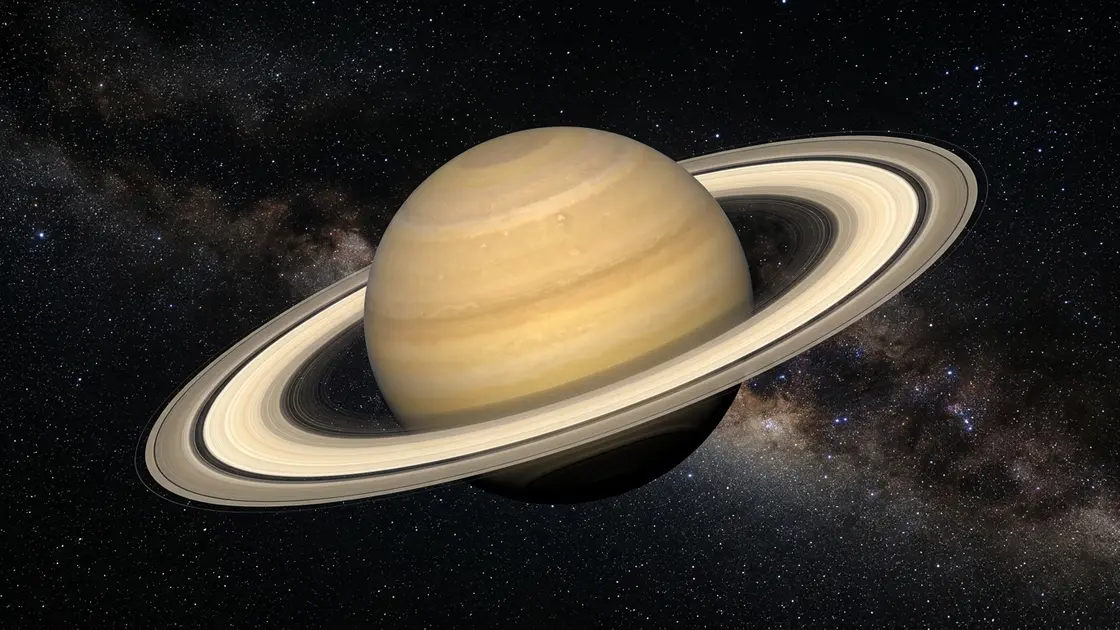
Saturn reaches opposition October 4, 2026, at magnitude 0.3 with rings tilted 7.5° south — naked-eye bright, and striking through even a small telescope.
Saudi Arabia · Best Oct–Apr
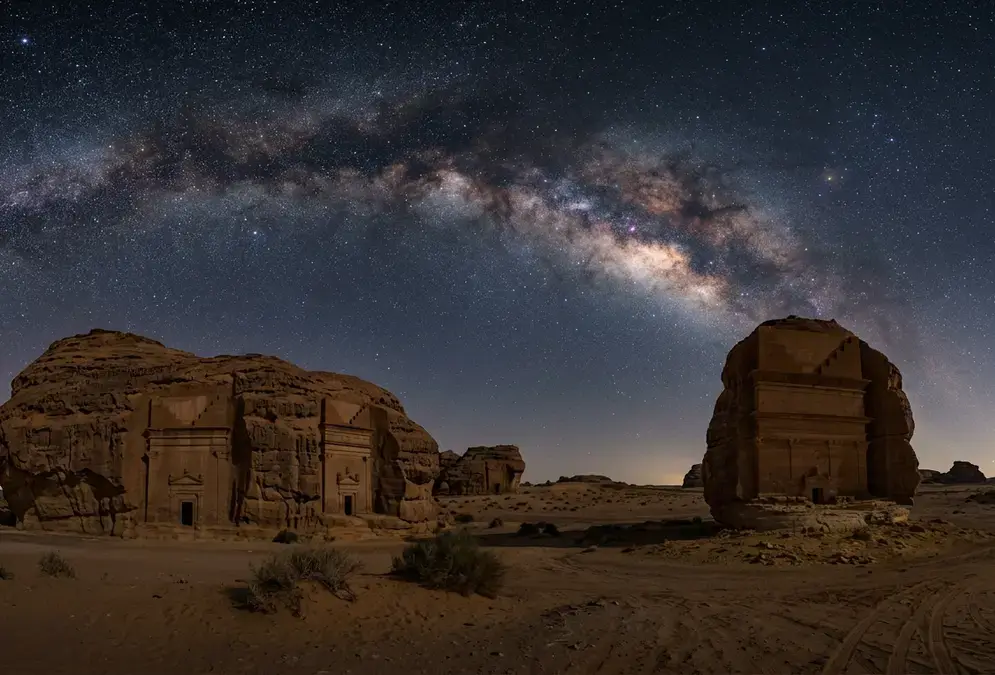
Stargaze above Hegra's 2,000-year-old Nabataean tombs in AlUla, the Gulf's first DarkSky-accredited Dark Sky Park. When to go, where to stay, and how to plan.
United States (Hawaii) · Best Apr–Oct (dry season, most reliable summit road access)
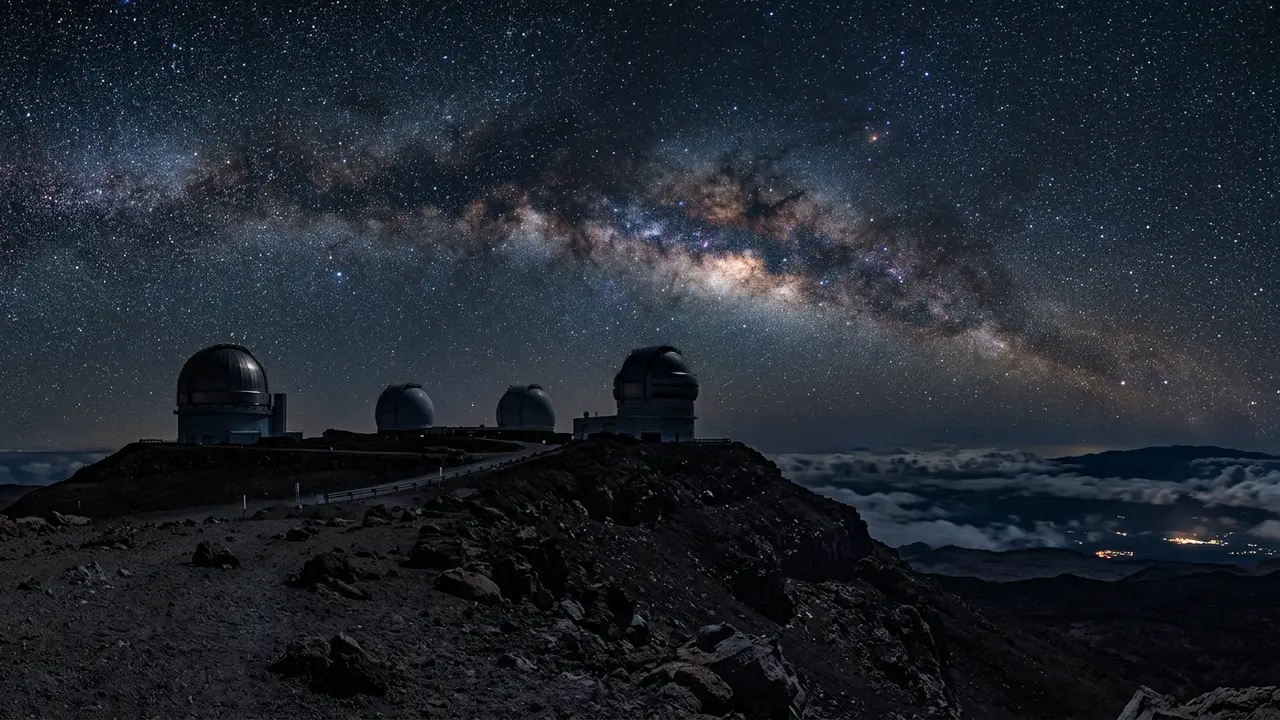
Mauna Kea is sacred to Native Hawaiians and home to world-class observatories. Here's how to plan respectful, safe Mauna Kea stargazing at the Onizuka VIS.
United States · Best Oct–Apr (Dark Sky Festival in spring)
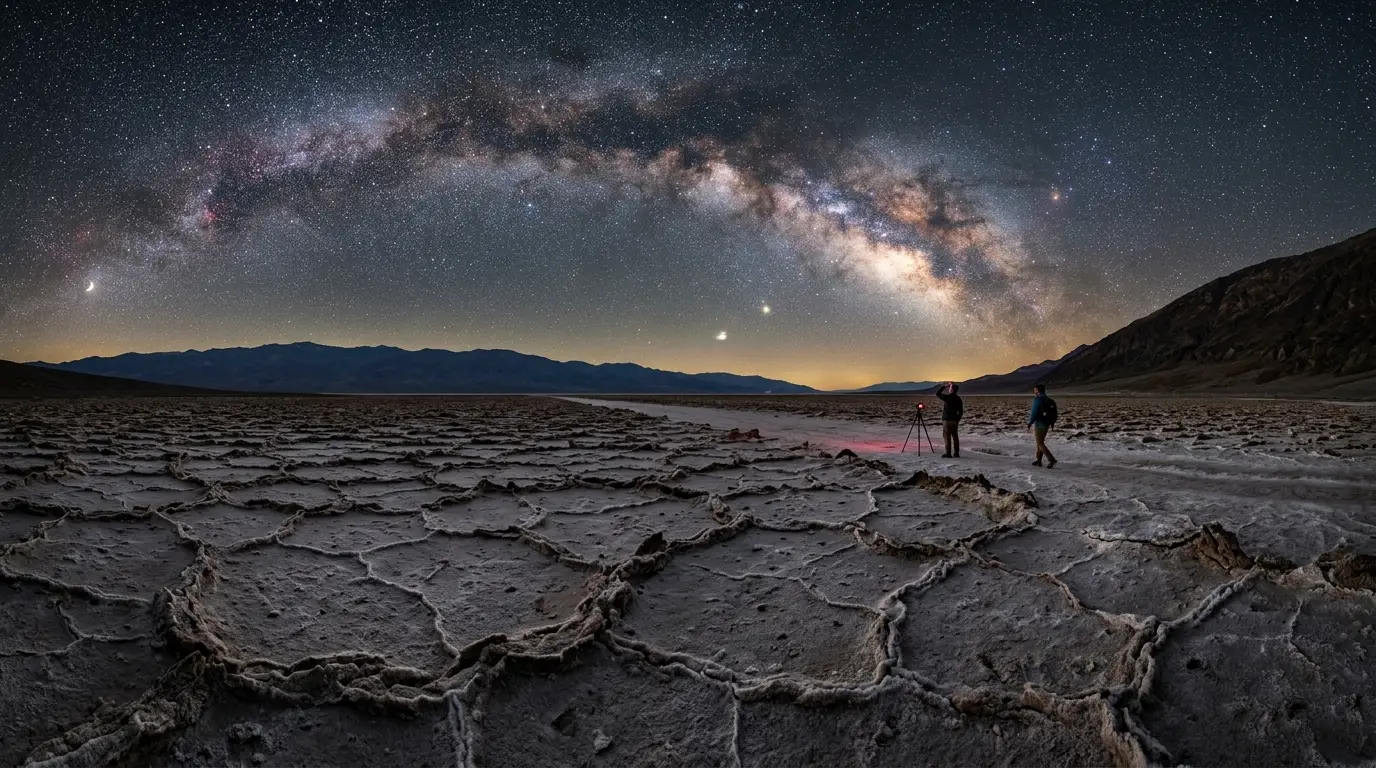
Death Valley's Gold-tier dark sky sits at the lowest point in North America. Here's when to visit, where to stay, and how to handle the extreme summer heat.