Why Erg Chebbi's Sky Actually Works for a Phone

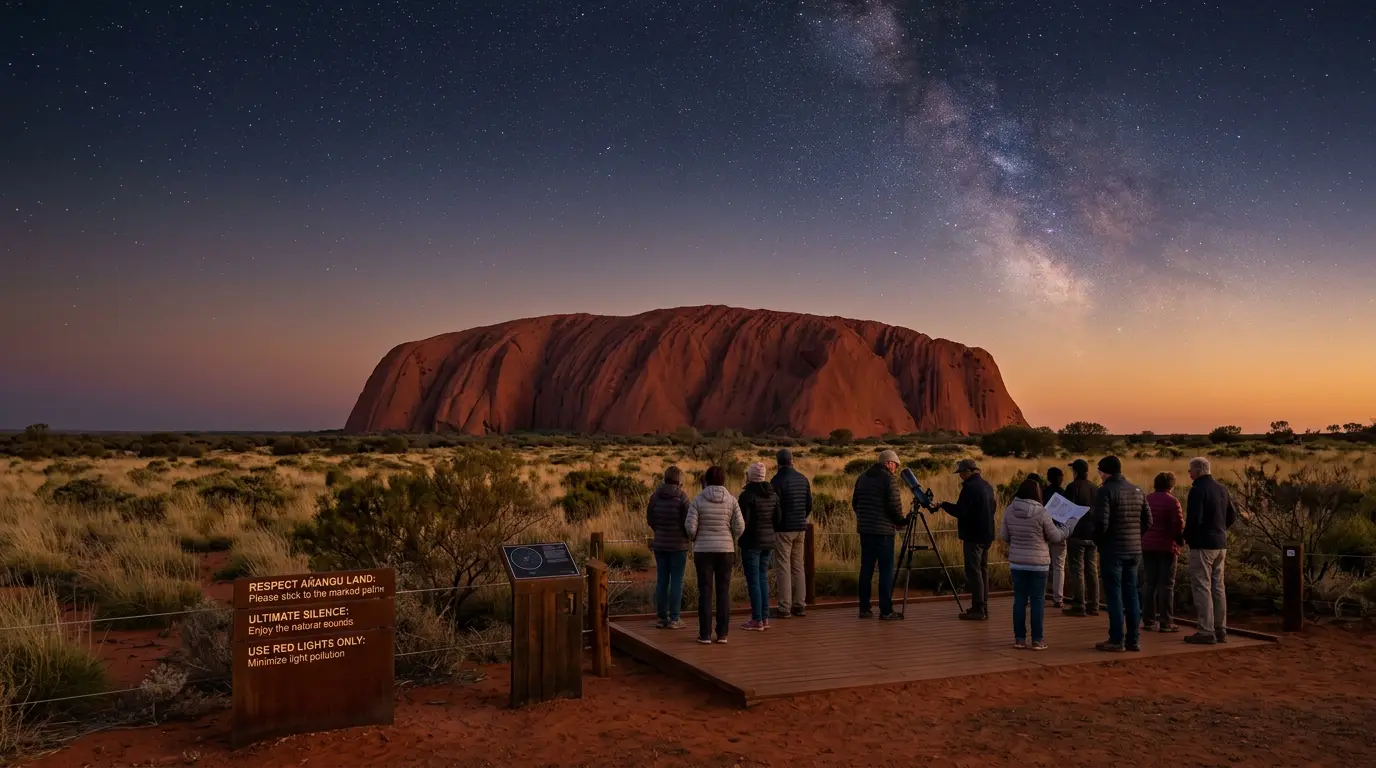
Merzouga holds no official dark-sky certification, and this guide won't invent one. There's no IDA plaque staked into Erg Chebbi's dunes and no UNESCO boundary drawn around the camp where you'll likely be sleeping, nothing like the badge attached to a formally designated dark sky park. What the dunes have instead is distance. Erg Chebbi sits hundreds of kilometers from the nearest city bright enough to wash out a horizon, and Merzouga's camp operators market that isolation directly, describing conditions with almost no light pollution and exceptional Milky Way visibility to the naked eye[1]. Treat that as an honest selling point rather than an audited figure, since nobody has run a formal sky-quality survey out here.
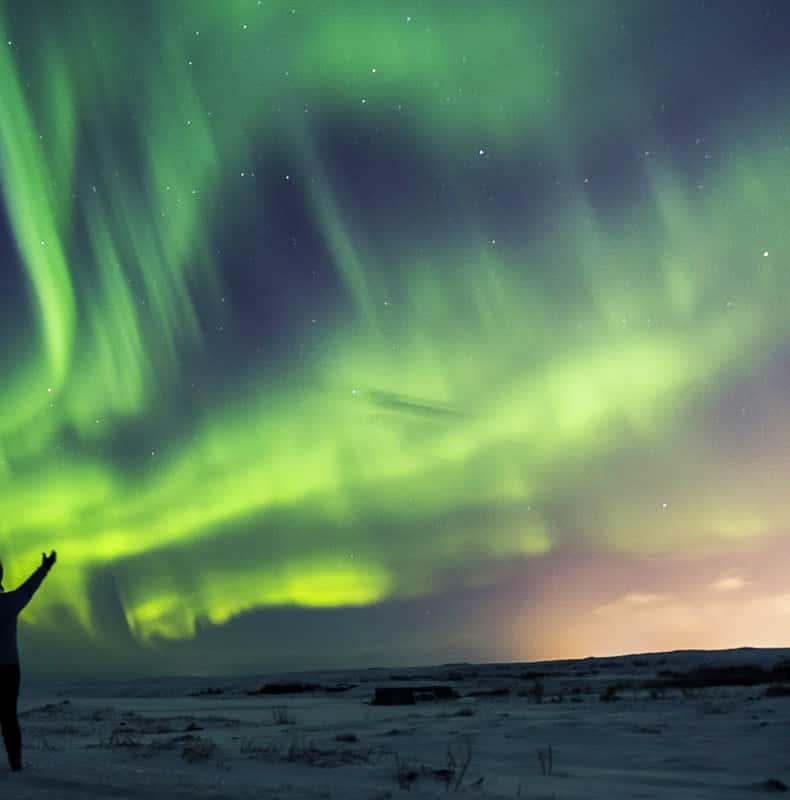
That isolation is also the reason a phone has a genuine shot at this. Under skies at Bortle 4 or darker, the range of darkness Erg Chebbi's remoteness plausibly delivers on a clear night, phones with large sensors can record the Milky Way's core as a faint band rather than a sharp, high-detail image[2]. That's the honest bar worth setting before climbing a dune with a phone in hand: not a postcard shot, but a real, recognizable trace of the galaxy overhead, on a sky dark enough that almost nowhere nearby comes close to matching it.
This guide walks through what your phone's camera modes are actually doing, the setup that stops a night shot from blurring, how to point the frame at something worth shooting on Erg Chebbi's dunes, and what a realistic result looks like once you're back at camp reviewing the shots.

Bortle 4

The rough darkness threshold where a phone's sensor starts picking up the Milky Way's core as a faint band rather than nothing at all. Erg Chebbi's remoteness plausibly gets you there on most clear, moonless nights.

Night Mode, Pro Mode, and What Your Phone Is Actually Doing
Most trips to stargazing in Merzouga happen with whatever camera is already in your pocket, and a recent phone is more capable at this than it gets credit for, provided you know which mode to reach for and when. Two settings do almost all of the work: the phone's automatic night mode and its manual Pro mode, and neither one substitutes for the other.

Night Mode and Astrophotography Mode

Most current phones ship with some version of a dedicated night mode or astrophotography mode, a setting that captures a burst of frames at high ISO and blends them into one cleaner image rather than betting everything on a single long exposure[3]. That's the mode worth reaching for first: point the camera roughly at the sky, hold it as still as you can manage even without a mount, and let the phone's own processing handle the stacking work a dedicated camera leaves to editing software afterward.
Night mode wasn't built with stars specifically in mind, though, and it shows. It exists to brighten a dim room or a poorly lit street, and it applies roughly the same logic to a night sky: useful for lifting the general scene, not built to chase out the faint detail in a target as genuinely dim as starlight.

Manual (Pro) Mode: Control Over the Exposure

A phone's manual or Pro camera mode, tucked a tap or two under the main camera app on most current Android flagships and unlocked through a settings menu on recent iPhones, hands over direct control of shutter speed, ISO, and focus instead of leaving the decision to an algorithm. That control is what separates a genuinely dark, moonless Erg Chebbi night from a night-mode shot that's merely adequate.
Two adjustments matter more than the rest once you're in Pro mode. Push the shutter speed as long as your specific phone's camera app allows, since a longer exposure gathers more of the sky's faint light before the frame closes; treat whatever ceiling your model sets as fixed rather than expecting exposure times closer to a dedicated camera's. And switch focus to manual, using an app that lets you take control of focusing if your phone's camera supports it[4], since autofocus hunts uselessly against a black sky with nothing bright enough to lock onto. Tap to focus on the brightest star or planet in frame instead, then zoom in on the preview to confirm the point looks genuinely sharp before committing to the full exposure.

Building a Setup That Actually Holds Still

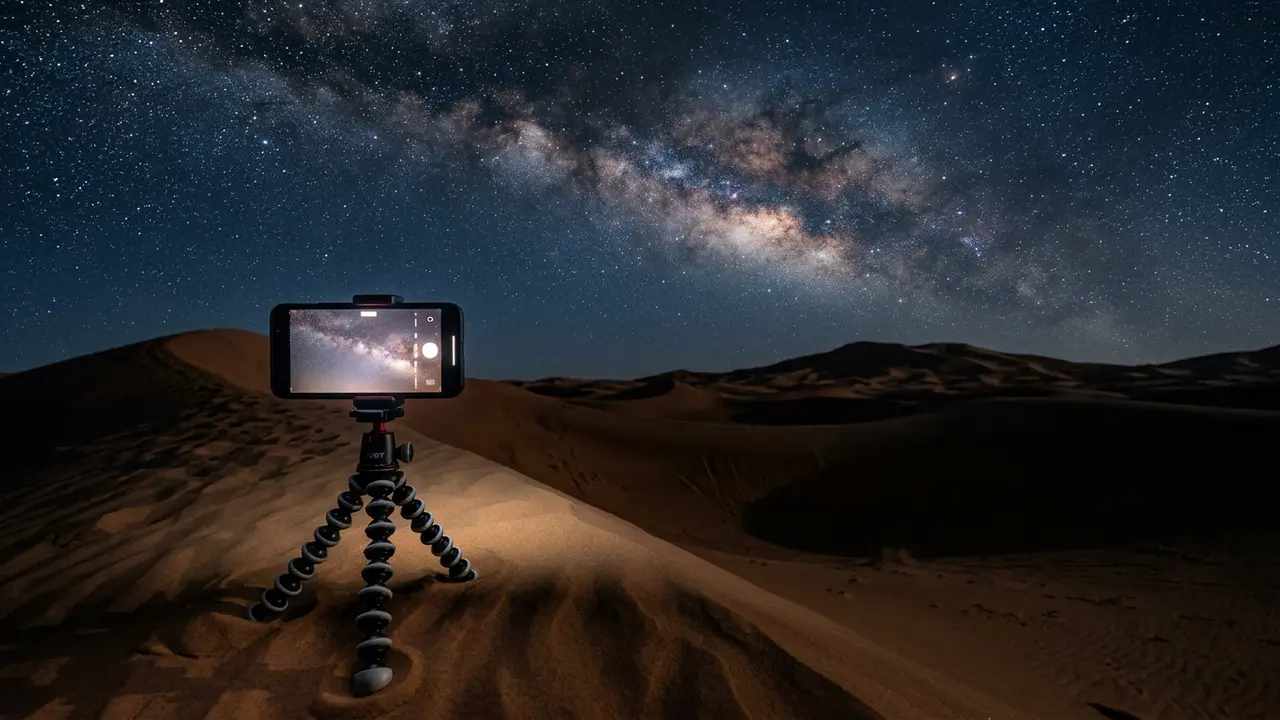
Nothing above matters if the phone moves during the exposure. Phone astrophotography succeeds or fails almost entirely on one factor: whether the phone stayed completely still for the whole exposure, more than the specific model, the app, or the settings dialed in[5]. Hand-holding is not viable once an exposure runs past a fraction of a second, since the tiny tremor in even a braced hand is enough to smear a star into a short streak.
Two things fix this: something to hold the phone dead still, and a way to trigger the shutter without touching the screen at all. Both are cheap, and both matter more here than any camera-app setting covered above.
Phone astrophotography succeeds or fails almost entirely on one factor: whether the phone stayed completely still for the whole exposure, more than the specific model, the app, or the settings dialed in.

A Mount, Not Just a Tripod

A dedicated phone tripod mount, the cheap clamp-and-ballhead adapter sold everywhere from camera shops to airport kiosks, makes a genuinely large difference to a night shot's sharpness[6]. It's the single cheapest upgrade on this list, worth buying before a Merzouga trip rather than improvising with a rock or a rolled jacket once you're standing on a dune in the dark.

  • A compact travel tripod with a phone clamp attachment, light enough to carry up a dune crest without a second thought
  • A simple phone-to-tripod adapter clamp, if you already own a small camera tripod and just need the connector
  • A beanbag or a rolled jacket braced against a rock or a dune's firm base, a workable stand-in if you're traveling without any tripod at all

Trigger the Shutter Without Touching the Phone

Even the act of pressing the phone's own shutter button introduces enough vibration to blur a several-second exposure, which sounds minor until you see the smear on the rear screen. A built-in timer, usually a 3-second or 10-second delay tucked into the camera app's settings, gives the phone time to settle once your finger leaves the screen and before the exposure actually starts. A Bluetooth remote shutter, the same small clicker sold for selfies, does the same job without waiting out a timer, cheap enough to toss in a bag alongside the tripod mount without much thought.

Composition at Erg Chebbi: Give the Frame Something to Hold Onto

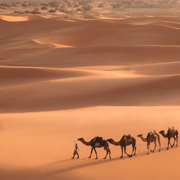
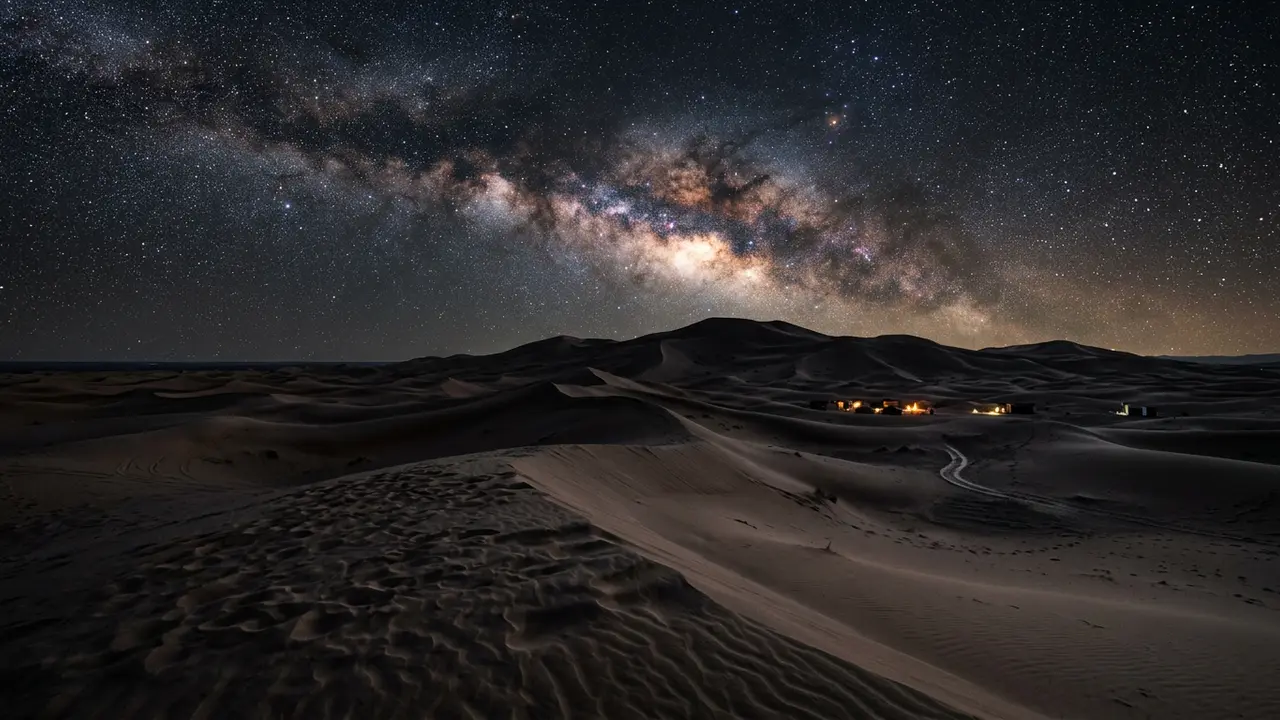
A phone pointed straight up at a starfield with nothing else in frame reads as a gray smudge more often than not, even with every setting above dialed in correctly. Erg Chebbi hands you a better option for free: Merzouga's dune crests, the sharp ridgeline where one dune's edge cuts against the sky, give a frame something solid to hold onto besides scattered points of light.
Frame low and wide rather than pointing the phone straight overhead. A dune-crest silhouette cutting a diagonal line across the bottom third of the frame does more compositional work than a technically sharper shot of stars alone with nothing beneath them. Shooting from a desert camp rather than open sand, the warm glow from a camp tent or a distant lantern tucked into one corner of the frame adds a genuine sense of place, the kind of detail that turns a generic night-sky photo into one that's recognizably Merzouga rather than any dark patch of desert anywhere else.
Keep the horizon roughly level and resist the pull to zoom in. A phone's digital zoom degrades a night shot fast, trading away real resolution for a false sense of getting closer to the sky. A wide, unzoomed frame with a strong dune-crest foreground beats a cropped-in attempt at the galactic core every single time.

What to Actually Expect From Your Photos

Set the bar honestly before climbing a dune expecting a magazine cover. Stars are a genuinely harder target for a phone camera than planets or the Moon, since they simply lack the brightness to register properly on a small sensor, however good the processing behind it is[7]. A phone that photographs a crisp, detailed Moon with ease will often struggle to record more than the brightest handful of stars in the very same frame.
That doesn't mean the exercise fails. As long as you're not expecting to resolve genuinely faint stars, a modern phone camera can produce a recognizable image of the brighter constellations on a clear, dark night, and under Erg Chebbi's darkest, moonless skies, a faint trace of the Milky Way's core is a real possibility too, not a guarantee, but a real one. What won't happen on a phone is the level of detail a dedicated camera pulls from the core's dust lanes: that needs a genuinely dark sky, RAW capture or extended night mode, and a solid mount working together, more than a handheld or lightly mounted phone alone can manage[8].
The honest range, from a quick handheld frame to the best a mounted phone can realistically do, looks roughly like this:
Bring a realistic goal to Erg Chebbi's dune crest, not a disappointed one. A phone can genuinely capture a real piece of this sky. It was never going to capture all of it.
SetupMoon and bright planetsBright constellationsMilky Way core
Handheld, no mountSharp and easyBlurred, unusableNot visible
Phone + tripod mount, Night modeSharpRecognizableFaint trace on a genuinely dark, moonless night
Phone + mount, Pro mode, manual focusSharp with real detailClearly resolvedVisible as a faint band, not resolved detail

When a Phone Stops Being Enough

A phone setup like the one above is a real starting point, not a permanent ceiling. Once you've got a recognizable constellation shot or a faint Milky Way trace and want the core's actual dust-lane detail, the next real step is a dedicated camera, not a better phone. Merzouga astrophotography gear walks through the camera body, wide-aperture lens, and dune-tolerant tripod that pick up where a phone's sensor runs out of room.
Timing still matters more than any single piece of gear, phone or camera. Check best time to stargaze in Merzouga for the season and moon-phase window that gives either setup its best shot, and look at best stargazing spots in Merzouga before committing to a dune-crest climb in the dark. No setting covered above compensates for a bright moon washing out the sky or a viewpoint with another camp's lights bleeding into the frame.
Most people arrive at Erg Chebbi already carrying a phone and nothing else, and for a first attempt, that's genuinely enough. The upgrade to a dedicated setup is worth making once you know you'll keep shooting the night sky beyond this one desert trip, not before it.

Featured · Article

What Is Light Pollution? Definition, Types, and Solutions

Light pollution is artificial light brightening the night sky, affecting 80% of the world. Learn the 4 types, wildlife and health effects, and how to fix it.