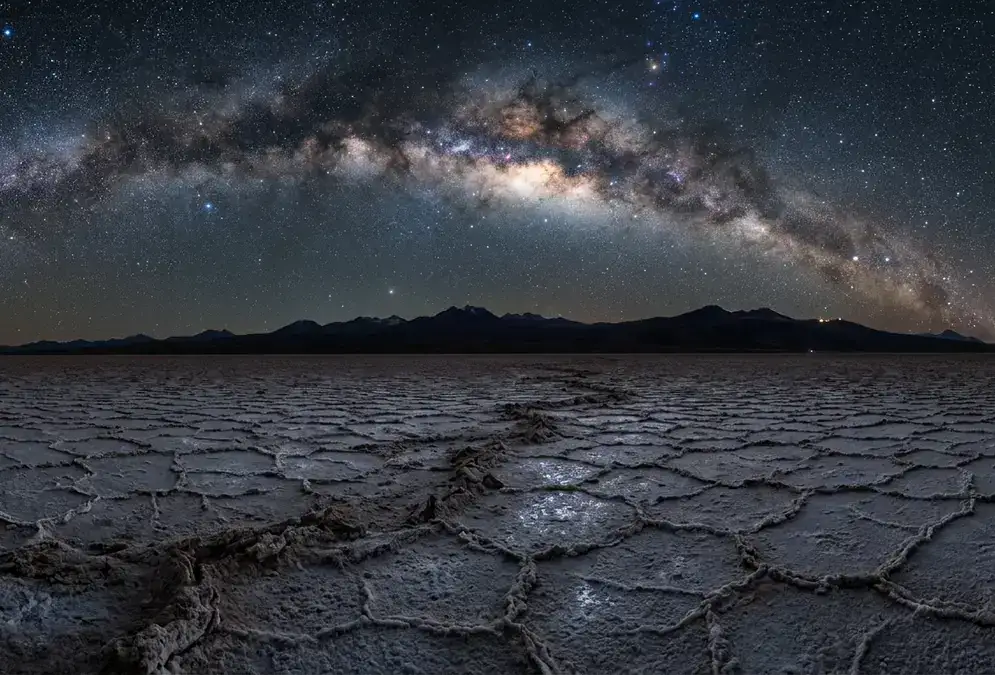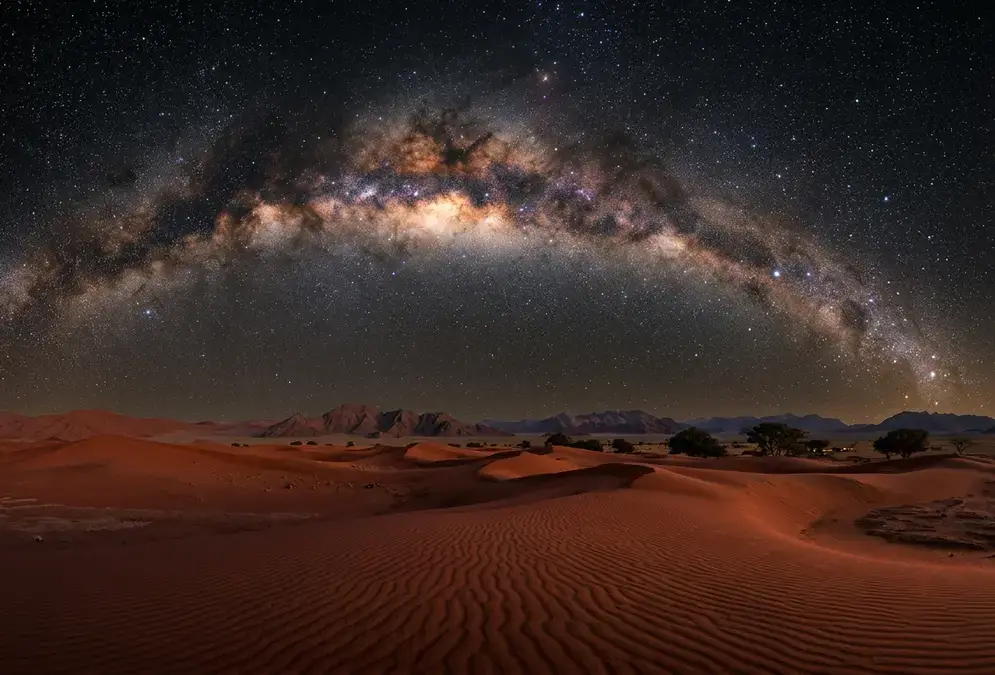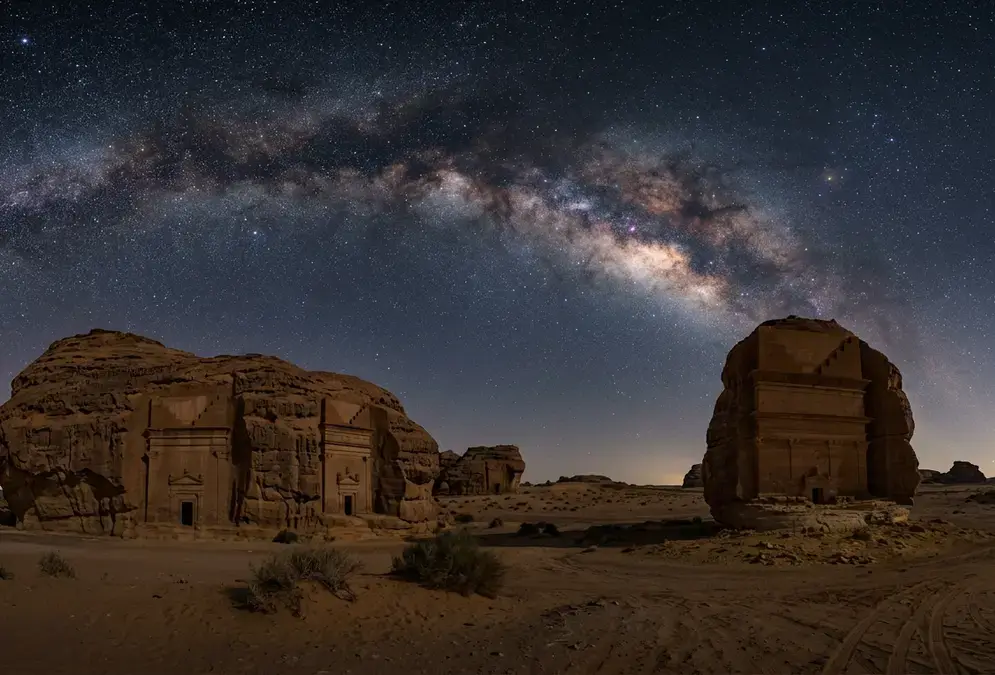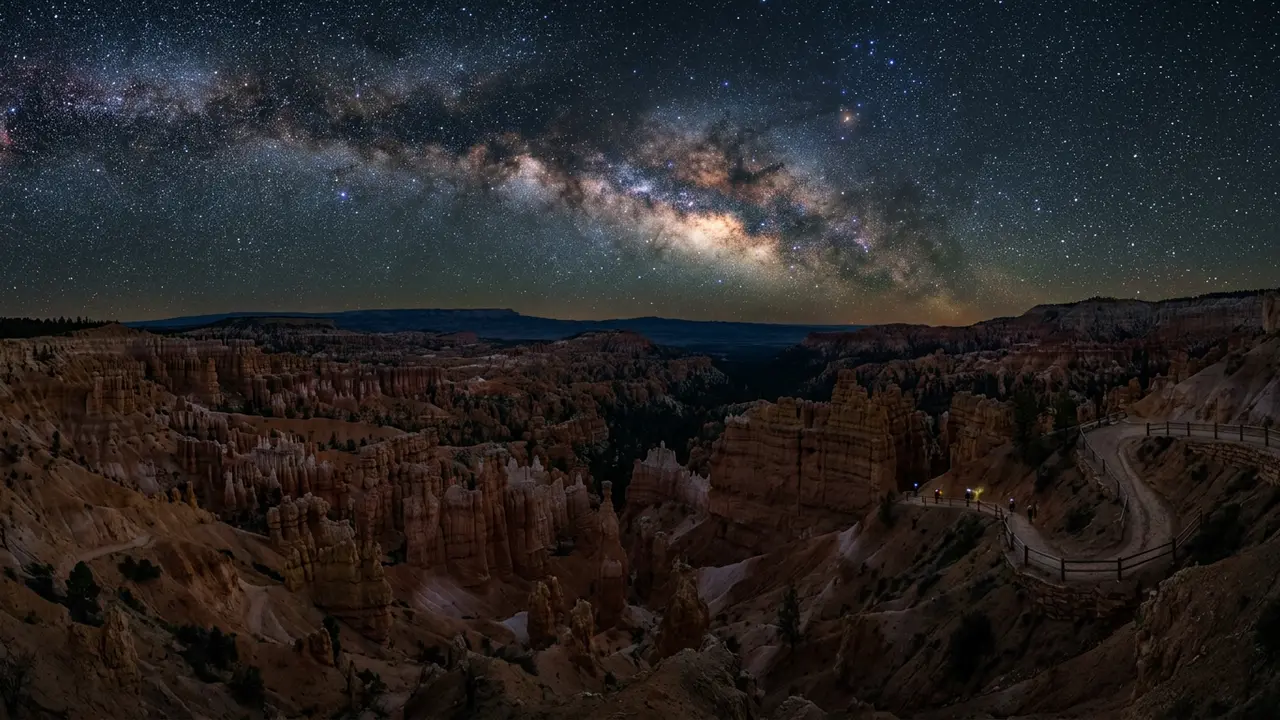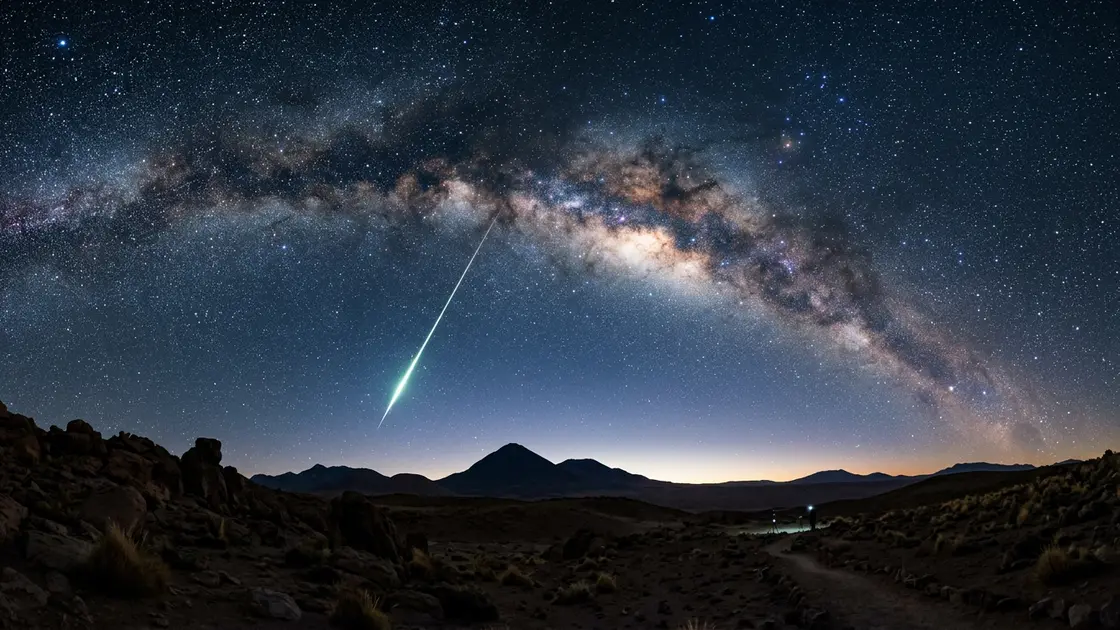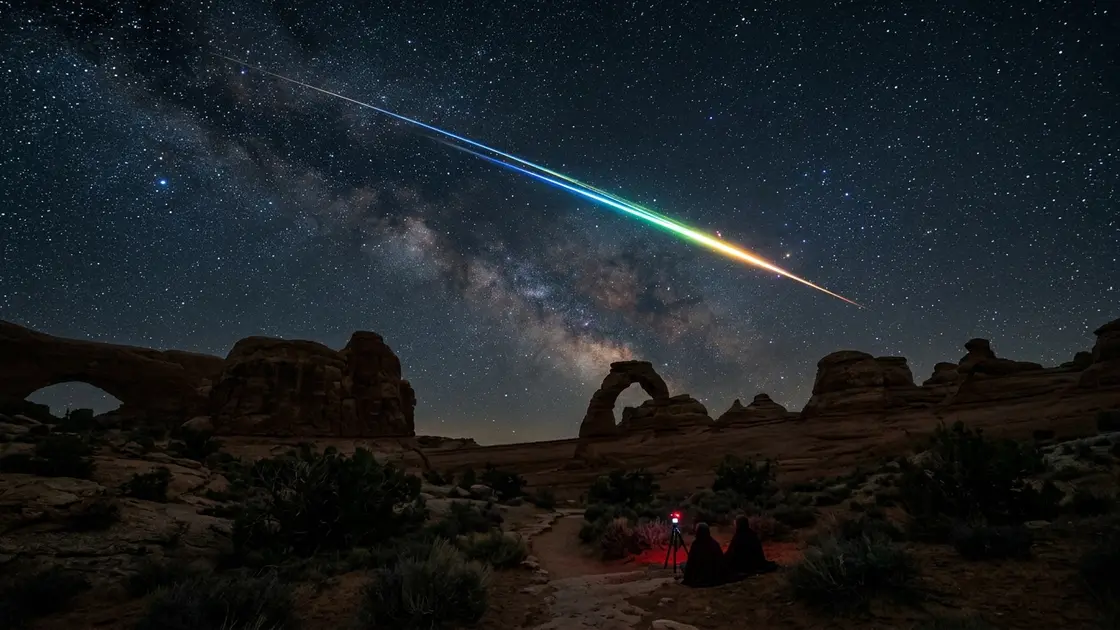
The Geminid meteor shower is the most productive of the year, and 2026 lines up close to as well as this shower ever gets. The peak falls on the night of December 13–14, with the American Meteor Society's predicted maximum landing at 5:44 UTC on December 14. Under a genuinely dark sky, the expected rate runs up to 120 meteors an hour, tied with the Quadrantids for the highest ZHR of any annual shower, and the moon cooperates rather than competing: a waxing crescent, only 21% illuminated, sets by mid-evening (around 9:30–10:30 PM local) and leaves the rest of the night, including the best post-midnight viewing window, completely moon-free. Add in that Geminid meteors are unusually bright and often multicolored, and that the shower starts performing from early evening rather than making you wait for a pre-dawn window, and it's easy to see why this is the shower most worth building a trip around.
Peak night: December 13–14, 2026
With the predicted peak at 5:44 UTC on December 14, the practical window runs the whole night of the 13th into the pre-dawn hours of the 14th, not a single minute to set an alarm for. The radiant sits near the bright star Castor in Gemini, and unlike showers that only get going after midnight, the Geminids are visible from around 9 PM local time onward as the radiant clears the horizon. Rates keep climbing as the night goes on, though, and the best viewing window is closer to 2 AM local time, when the radiant is highest overhead and more of each meteor's path clears the horizon rather than skimming along it.
Best places to watch the 2026 Geminids
Where you watch from changes what you actually see. Southern Hemisphere destinations trade radiant height for open, dry skies: from Atacama or NamibRand, the Gemini radiant stays comparatively low in the northern sky all night, which knocks the effective count below that 120-per-hour headline even on a flawless night. What the south gives back is warm, transparent December air instead of a northern winter's cloud risk.
- Atacama Desert — austral summer means exceptionally dry, clear skies, but the radiant never climbs far above the horizon this far south, so expect fewer meteors than the 120/hr headline rate.
- NamibRand — Bortle 1–2 transparency at Africa's Gold Tier reserve, with the same low-radiant tradeoff as Atacama.
- AlUla — newly DarkSky-accredited in 2024, far enough north that the radiant climbs high overhead for most of the night, among the better vantage points this shower gets anywhere.
- Bryce Canyon — Gold Tier certified with the radiant riding high overhead too, though December nights here carry real northern winter cloud risk.
The honest read: AlUla and Bryce Canyon give the radiant more sky to work with, while Atacama and NamibRand trade some of that height for a better shot at a clear night to begin with.
Where the Geminids come from
Most major showers are comet debris. The Geminids are the odd one out, shed by asteroid 3200 Phaethon, discovered in 1983, an asteroid rather than a comet doing the work of seeding a major meteor stream. Earth crosses that debris trail every December, and the dust burns up as meteors that appear to radiate from the point near Castor in Gemini, the shower's namesake constellation. None of that changes how to watch it: naked eye, wide field of view, well away from town glow. For the full-year calendar and general watching technique that applies to the Geminids and every other shower, see the meteor showers guide.
Free, no equipment beyond warm layers and patience, and the best moon-phase alignment this shower gets in years: the Geminids reward simply showing up.