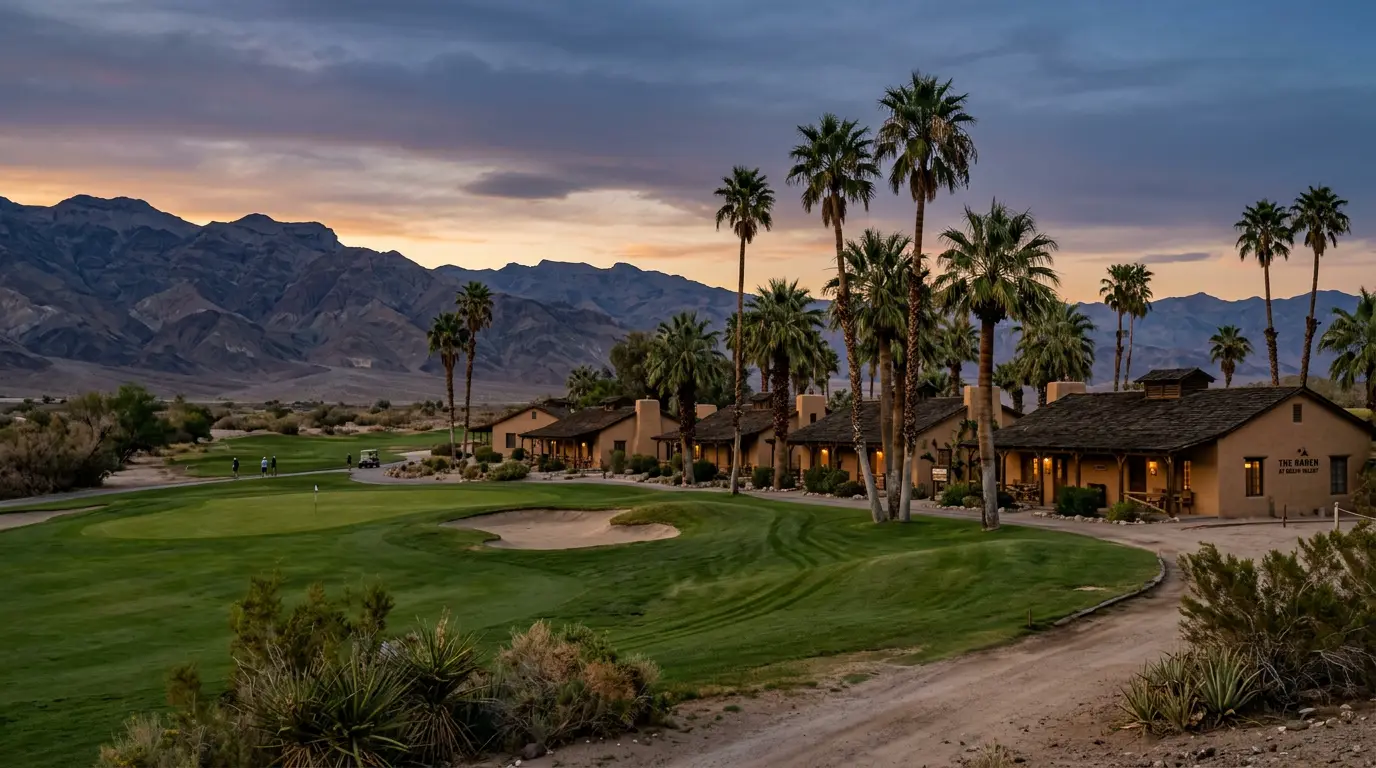
Best best for families and golf, not just the sky
The Ranch at Death Valley
Same Furnace Creek address as The Inn, from $138/night; golf course, no stargazing deck
Death Valley's Gold-tier dark sky sits at the lowest point in North America. Here's when to visit, where to stay, and how to handle the extreme summer heat.
Photo tour of the lodges, night-sky trips, and guides for this destination.
Best best dedicated stargazing amenity
DarkSky International certifies 250+ places worldwide. Here are 12 best dark sky parks ranked by continent, with tiers, seasons, and moon-phase timing.
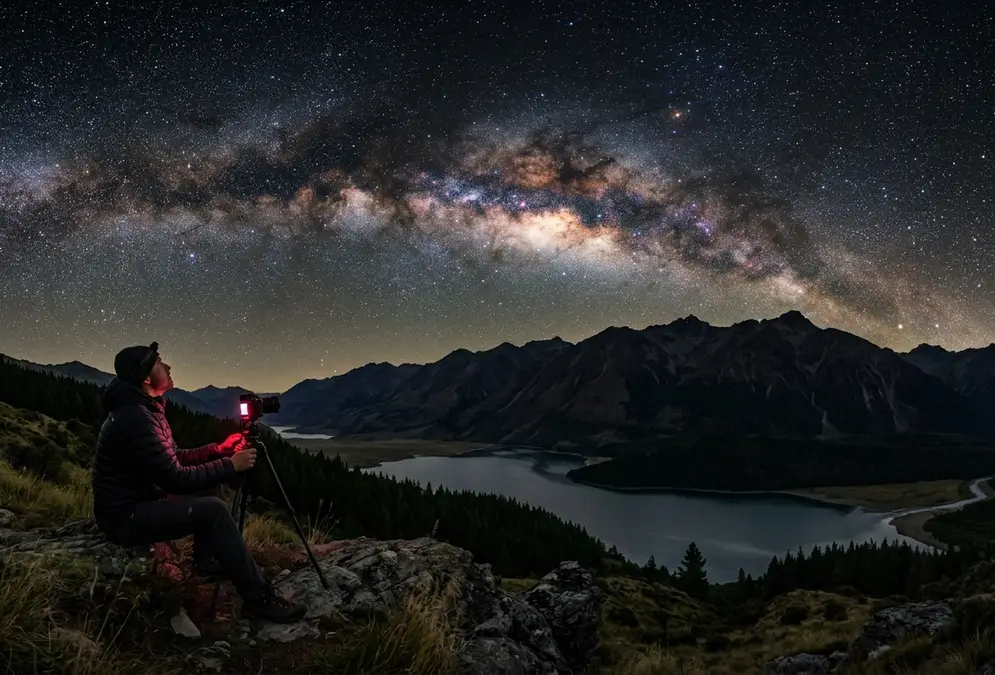
Camera, lens, and tripod picks for Death Valley's Gold-tier sky: wide apertures for the Milky Way, salt-flat foregrounds, and gear care for extreme heat.
Best best in-park base for the money
Four Death Valley lodges ranked for stargazers: proximity to dark viewing areas, bookability, and heat-ready amenities, matched to your trip priorities.
iPhone and Pixel Night mode can capture Death Valley's Milky Way with no extra gear: a steady phone, manual focus, and battery care for warm desert nights.
Weighing it against somewhere else? Death Valley vs Joshua Tree Stargazing: Which Fits Your Trip
Bortle 1-2 sky
What the Bortle scale meansThe Milky Way casts a faint shadow. Zodiacal light and airglow are obvious.
This destination rates Bortle 1-2 on the 9-level Bortle dark-sky scale, where 1 is a pristine dark sky and 9 is an inner-city sky. The Milky Way casts a faint shadow. Zodiacal light and airglow are obvious.
On this page
Updated
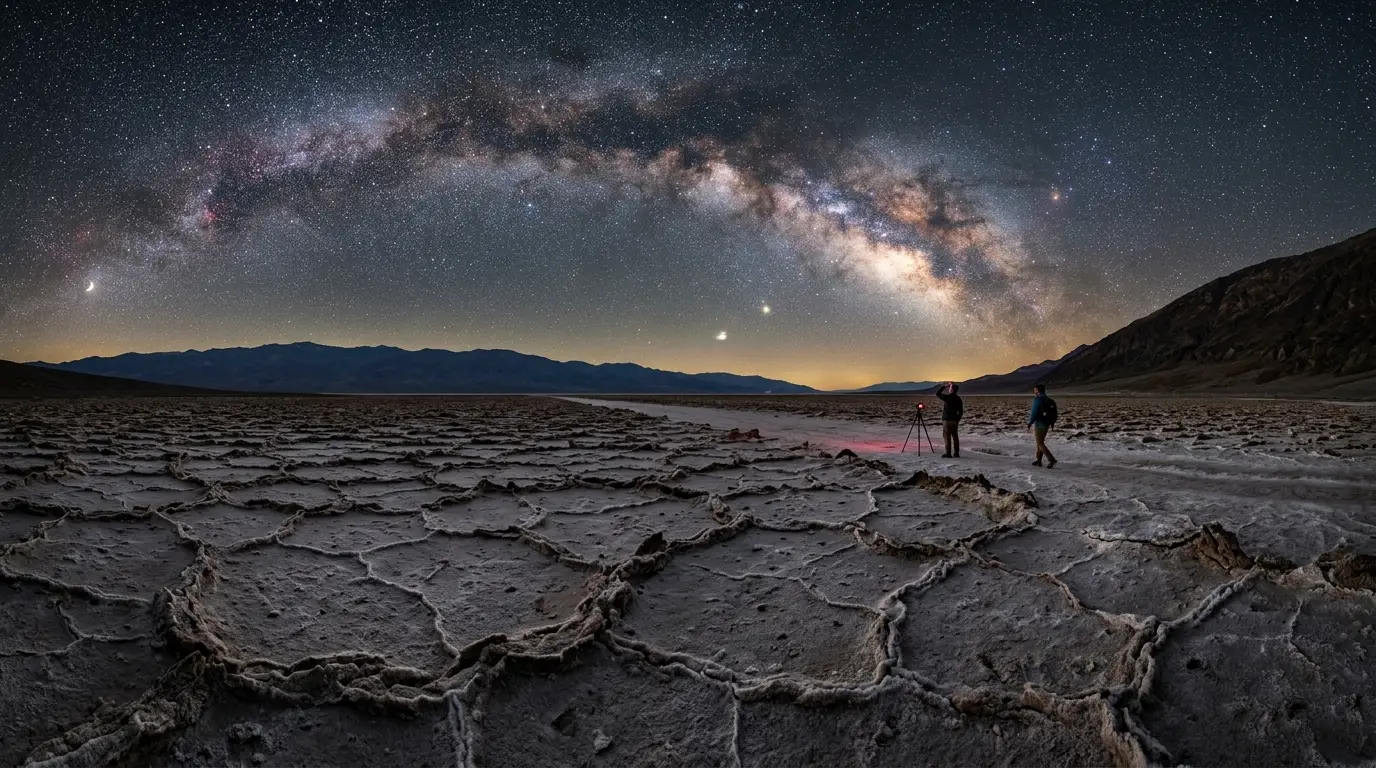
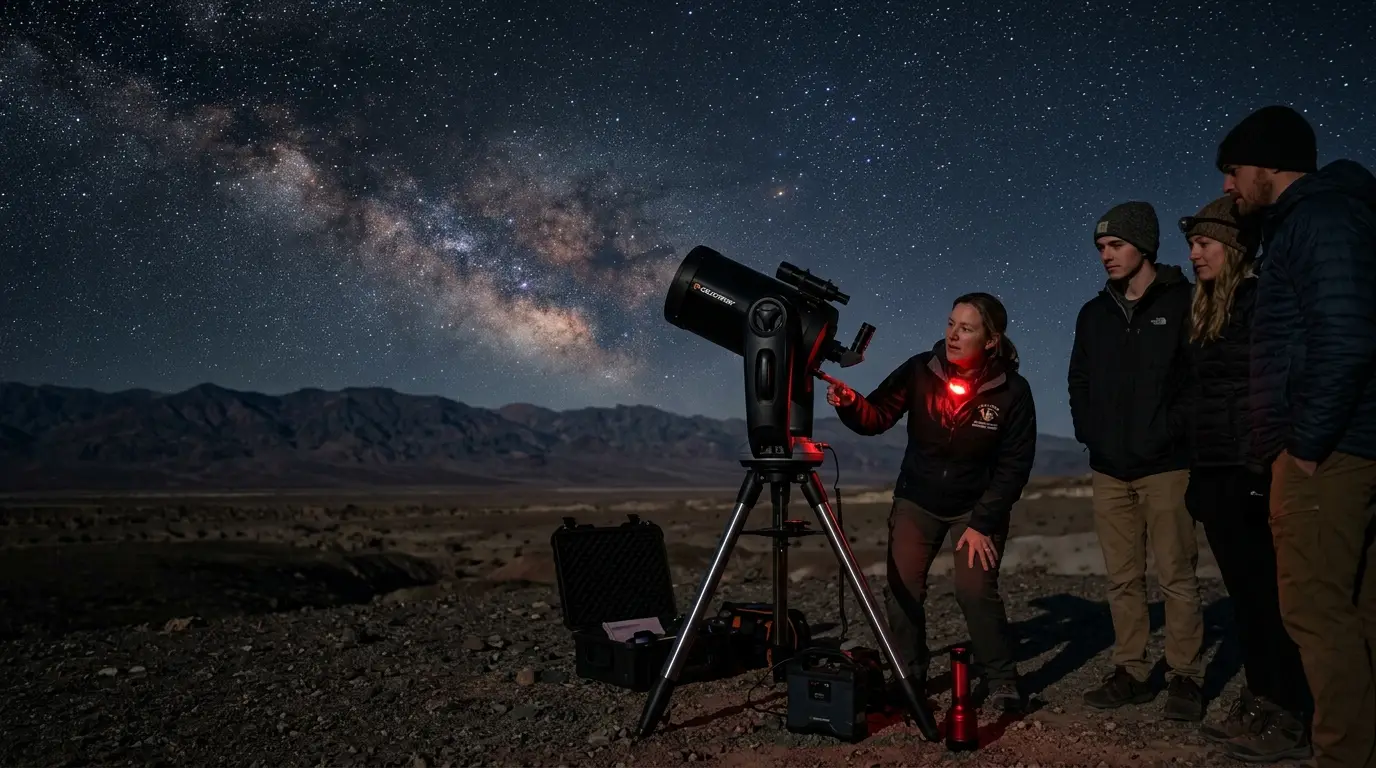
Stand at Badwater Basin after dark, 282 feet below sea level and the lowest point in North America, and the salt crust underfoot still holds the day's heat while the sky above goes properly black. Death Valley National Park earned Gold Tier certification, DarkSky International's highest rating, in 2013, and it holds the largest designated area of any International Dark Sky Park on the planet: 8,540 square miles of protected night sky, more than most people's mental map of a national park can hold. This hub covers what that certification actually means, where inside those 8,540 square miles to point a camera or a pair of eyes, when to go, and, because skipping this would be irresponsible, how to survive the heat that also produced the hottest air temperature ever reliably measured on Earth.
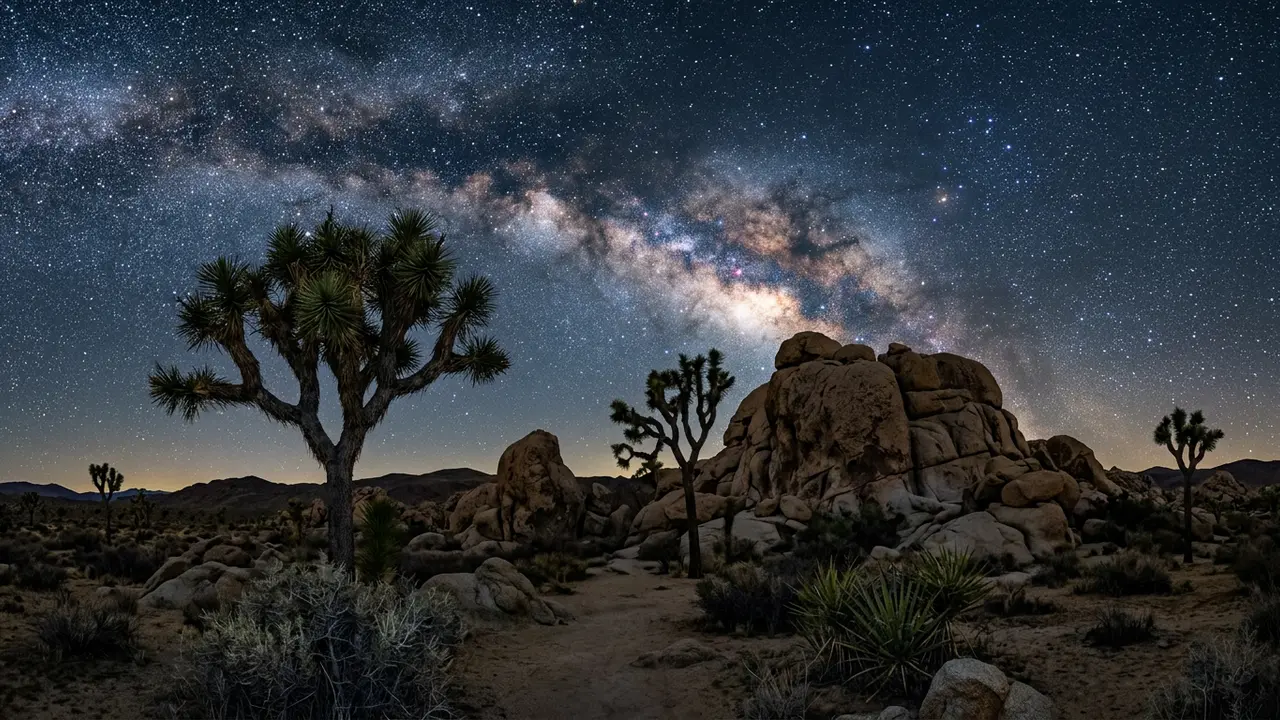
Death Valley isn't the only Gold Tier park worth knowing about. Bryce Canyon earned the same rating on a high plateau in Utah, and Joshua Tree does something similar within weekend range of Los Angeles. What makes Death Valley's Gold Tier different is the extremes underneath it: the lowest, the hottest, and one of the largest protected dark-sky areas anywhere. For how the tier system works across the roughly 250 certified places worldwide, our guide to the best dark sky parks in the world breaks down what Gold, Silver, and the other ratings actually require.
Computed for Death Valley at 36°N. Updates nightly.
First quarter tonight, 36% illuminated
Next new moon August 12. The nights either side of it are the darkest of the month.
About 6 hours of astronomical darkness tonight
The sun drops more than 18 degrees below the horizon, so the sky gets genuinely dark for deep-sky viewing at 36°N.
Hours of astronomical darkness by month at Death Valley: January 11 hours, February 10 hours, March 9 hours, April 8 hours, May 7 hours, June 6 hours, July 6 hours, August 7 hours, September 9 hours, October 10 hours, November 11 hours, December 11 hours.
Perseids active now
Peaks August 12. Up to 100 meteors per hour at maximum. The 2026 peak lands on a new moon — a dark-sky year with zero lunar washout.
See the Perseids guideWhere to go stargazing in July
The National Park Service is direct about what the certification covers: Death Valley maintains "some of the darkest night skies in the United States," the product of extreme dryness, a huge buffer of protected land, and almost no nearby cities bright enough to wash out the horizon. At 8,540 square miles, it's the largest International Dark Sky Park anywhere, not just within the National Park System. That scale matters practically: drive an hour from any developed area, at Furnace Creek or Stovepipe Wells, and you're still well inside the certified dark-sky boundary.
Badwater Basin does double duty as the park's most photographed feature and its most literal superlative: 282 feet below sea level, the lowest point in North America. Standing there at night, in a basin, staring up at a Milky Way core that most U.S. cities haven't seen in decades, is the single strangest, most specific sensation this park offers. It's also, not incidentally, one of the largest national parks in the contiguous United States, which is part of why the certified dark-sky area is so large in the first place.
For the full story of how that Gold Tier rating was earned, and why a desert floor below sea level produces some of the clearest air on Earth, see our breakdown of Death Valley's dark sky certification, explained.
This section isn't a curiosity aside. Death Valley holds the hottest air temperature ever reliably recorded on Earth: 134°F at Furnace Creek on July 10, 1913, a reading the World Meteorological Organization formally certified in 2012 after retiring an even higher (and unreliable) claim from Libya. Ground temperatures at Furnace Creek reached 201°F in July 1972. In the summer of 2001, the park logged 154 consecutive days above 100°F. Daytime summer highs routinely clear 120°F in the shade.
That heat is not a novelty. People have died of heat exposure in Death Valley, and rangers respond to heat-related medical emergencies here every summer. Treat the following as non-negotiable, not optional advice:
There's a genuine upside buried in all this for stargazers, and it's worth stating carefully so it doesn't read as minimizing the risk above: summer overnight lows at low elevation typically fall to 85–95°F, meaning the evening hours right after sunset, when it's finally safe to be outside without shade, are also when the sky is darkening. Elevation helps too — temperatures drop roughly 3–5°F for every thousand feet gained, so the higher pull-outs toward Panamint or Wildrose run noticeably cooler than the valley floor. None of that changes the daytime math. It just means the safest hours to be outdoors and the best hours to look up mostly overlap. If all of this has you wondering whether the trade-off is worth it, our breakdown of whether Death Valley is worth it for stargazing weighs the heat and remoteness against the payoff in full. For a full water, vehicle, and gear checklist built around this exact heat swing, see our Death Valley extreme heat stargazing packing list.
Four spots inside the park do most of the work for stargazers and night photographers:
Any of the first three work as a straightforward after-dinner drive from Furnace Creek. Racetrack Playa is its own trip, best planned with daylight to spare on both ends of the drive. For driving distances, access notes, and what each location is actually good for, see our guide to the best stargazing spots in Death Valley. Before you drive out to any of them, it's worth checking whether the sky will actually cooperate that night — our guide to reading a Death Valley stargazing forecast covers the Clear Sky Chart and moon-phase timing worth checking the week of a trip.
Park rangers run free Star Party nights at the Furnace Creek Airport, with constellation tours and telescope viewing, mostly through February and into early spring. The same winter window brings Astronomy on Tap, informal talks by Caltech scientists held at local taverns like the Badwater Saloon and Wildrose Tavern. Spring brings the park's annual Dark Sky Festival, a free, multi-day collaboration between the park, NASA's Goddard Space Flight Center, JPL, the SETI Institute, and Caltech.
Outside those windows, October through January is the quietest stretch for stargazing, aside from major holidays, with comfortable daytime temperatures for exploring and full dark skies at night. For a full month-by-month breakdown of moon phases, crowd patterns, and which season actually suits your trip, see our guide to the best time for stargazing in Death Valley. Once you've picked a season, how many days to plan for Death Valley stargazing covers whether two nights or three fits your itinerary better.
Three of these four lodges run year-round, but the trade-off that actually matters here is heat, not closures. The Inn at Death Valley closes completely June through September, and even the properties that stay open see brutal daytime temperatures that make an evening on any deck or patio a different experience depending on the month. October through April is when the most lodges are at their best and the nights are genuinely comfortable to stand outside in.
Going in January? See what else the sky offers that month
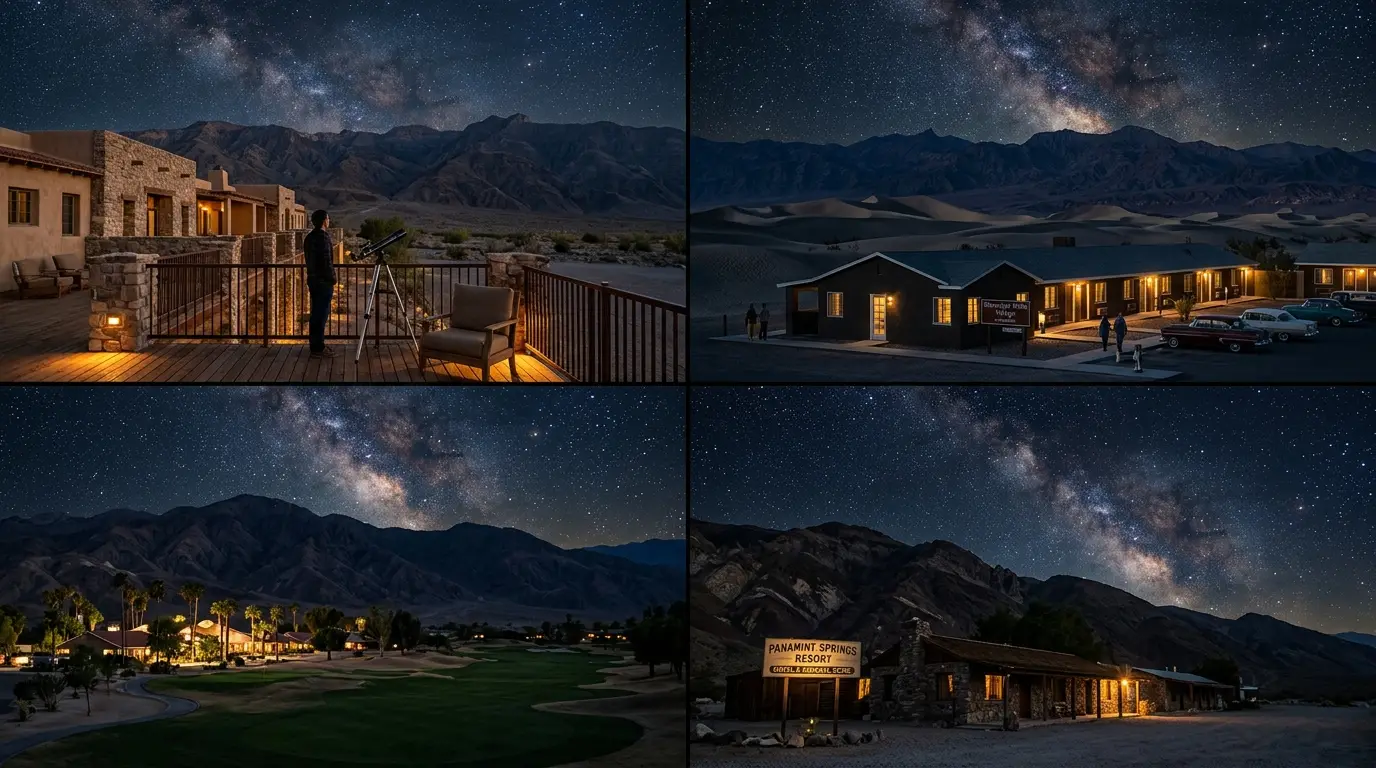
Most stargazing trips base out of Furnace Creek, the park's small hub, home to two properties under the same ownership at opposite ends of the price scale. The Inn at Death Valley is the park's historic, higher-end option, an oasis-style resort with palm trees and a spring-fed pool a short walk from dark overlooks. Its more casual sibling, The Ranch at Death Valley, sits just down the road with simpler rooms and easier weeknight rates.
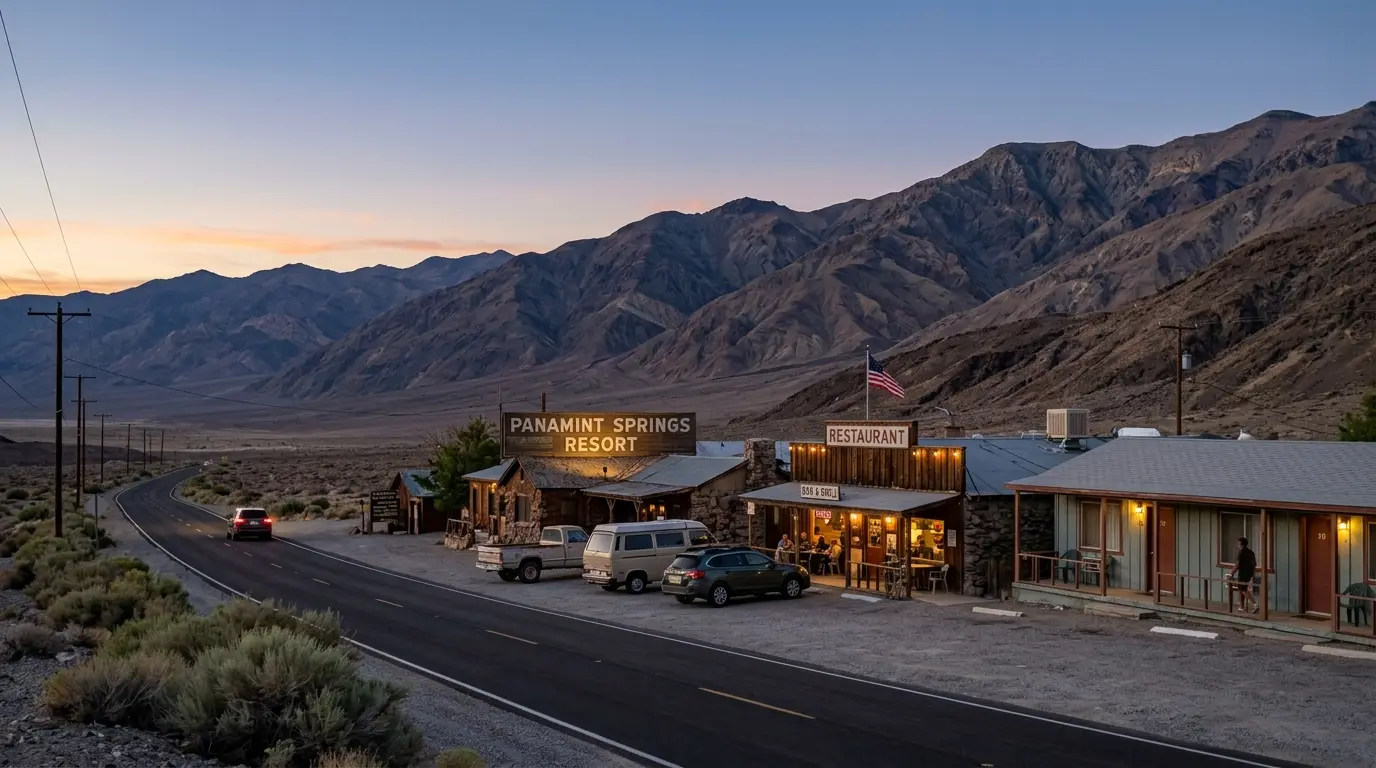
For a more central base near the dunes, the Stovepipe Wells Village Hotel puts you closest to Mesquite Flat. On the park's remote western edge, Panamint Springs Resort trades convenience for elevation and distance from any light source at all, a genuine consideration if darkness is the whole point of the trip. Book well ahead for the Dark Sky Festival and any spring weekend; rooms inside the park are limited and sell out first.
For a full ranked comparison of all four properties — proximity to dark viewing areas, bookability, and amenities in extreme heat — see our guide to the best lodges for Death Valley stargazing.
Best best for families and golf, not just the sky
Same Furnace Creek address as The Inn, from $138/night; golf course, no stargazing deck
Best best for genuinely dark skies and the west-side gateway
Bortle Class 2 skies; 32 miles from Stovepipe Wells; smallest, hardest-to-book property
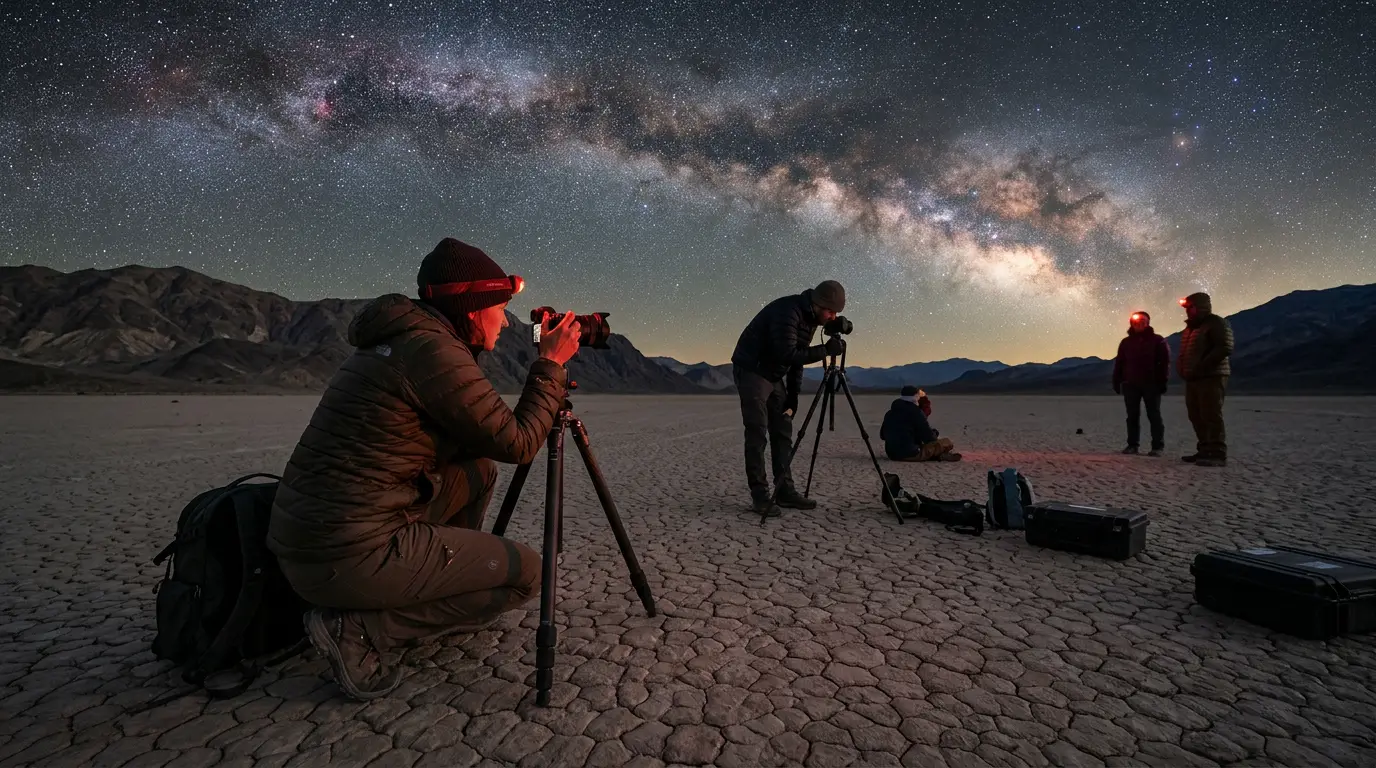
If you'd rather not plan the logistics yourself, two operators cover different sides of a Death Valley night out. Stardust Astrotours runs guided stargazing sessions with telescopes and expert commentary for anyone who wants the sky explained rather than just pointed at. For a deeper, hands-on approach, the Death Valley astrophotography workshop walks photographers through camera settings and composition for shooting the Milky Way over Badwater Basin's salt flats or the Mesquite dunes.
3-day Milky Way astrophotography workshop in Death Valley with Casey Kiernan: Racetrack Playa, Panorama, and Lightroom editing. $1,499; next session April 2027.
Stardust Astrotours guides small-group stargazing in Death Valley's Bortle 2 skies with expert astronomers — pricing is custom-quote only, no flat rate.
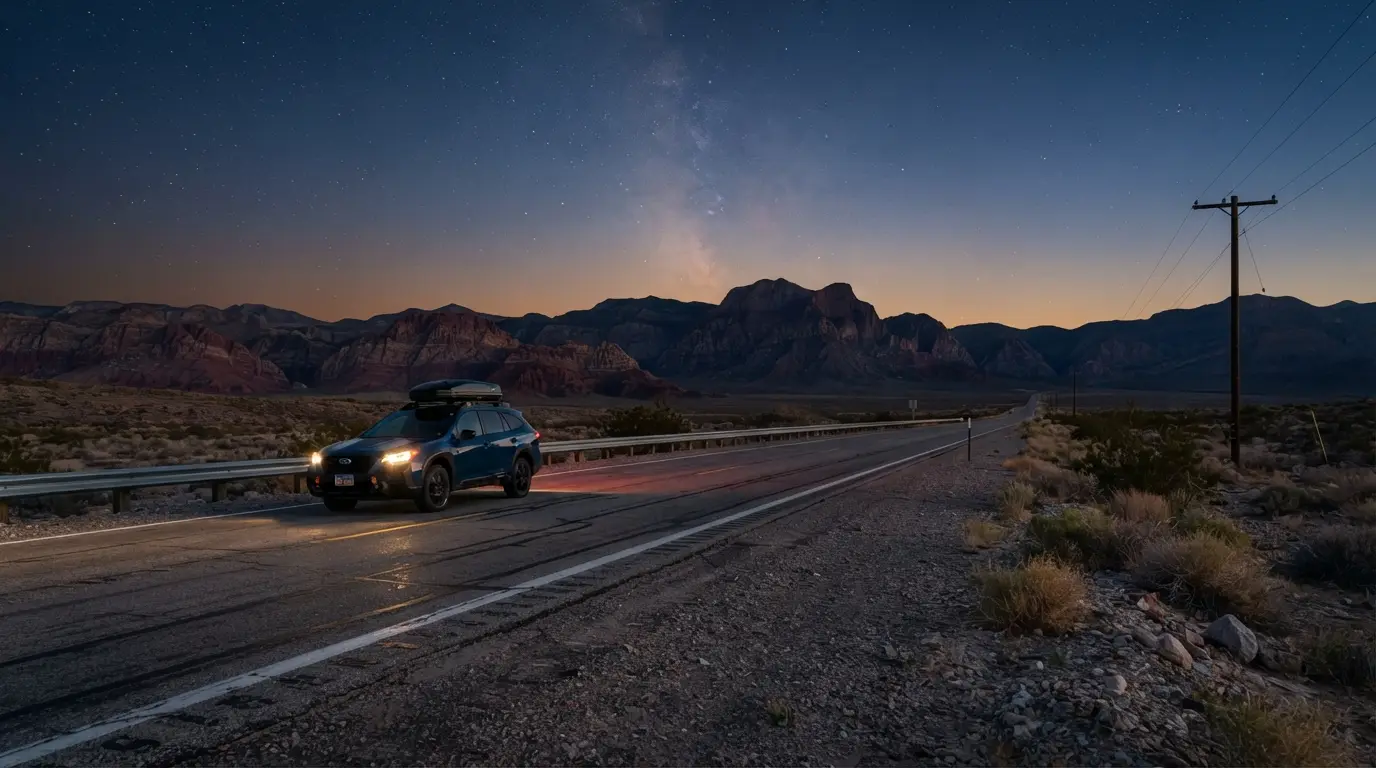
Death Valley sits roughly 130 miles northwest of Las Vegas, about a two-to-two-and-a-half-hour drive, and four to five hours from Los Angeles. There's no public transit into the park and no realistic way to see it without a car; a rental with good tires and a full tank is the whole plan, not a backup option.
A per-vehicle entrance pass, or an America the Beautiful annual pass, covers park admission and runs a modest $30 for seven days. Stargazing viewpoints throughout the park are free once you're inside, and the ranger-led Star Party and Astronomy on Tap programs cost nothing beyond that. For the exact routes from Las Vegas and Los Angeles, what kind of vehicle you actually need, and what to check before you lose cell service, see our full guide to getting to Death Valley.
The shape of a trip here is simple, even if the logistics take some planning: come between October and April if daytime comfort matters as much as nighttime darkness, book a room at Furnace Creek or Stovepipe Wells if you want a short drive to a dark overlook, and take the heat seriously in every season, because it's the one thing about this park that doesn't forgive being underestimated. For quick answers on permits, family-friendliness, and safety, see the Death Valley stargazing FAQ. Do that, and Badwater Basin at 282 feet below a black, star-filled sky is one of the stranger, more memorable nights this site can point you toward.
The park earns its keep in daylight too — Badwater's salt flats, Artist's Palette, and Dante's View fill the hours before the stars come out, covered in full in our guide to things to do in Death Valley beyond stargazing.
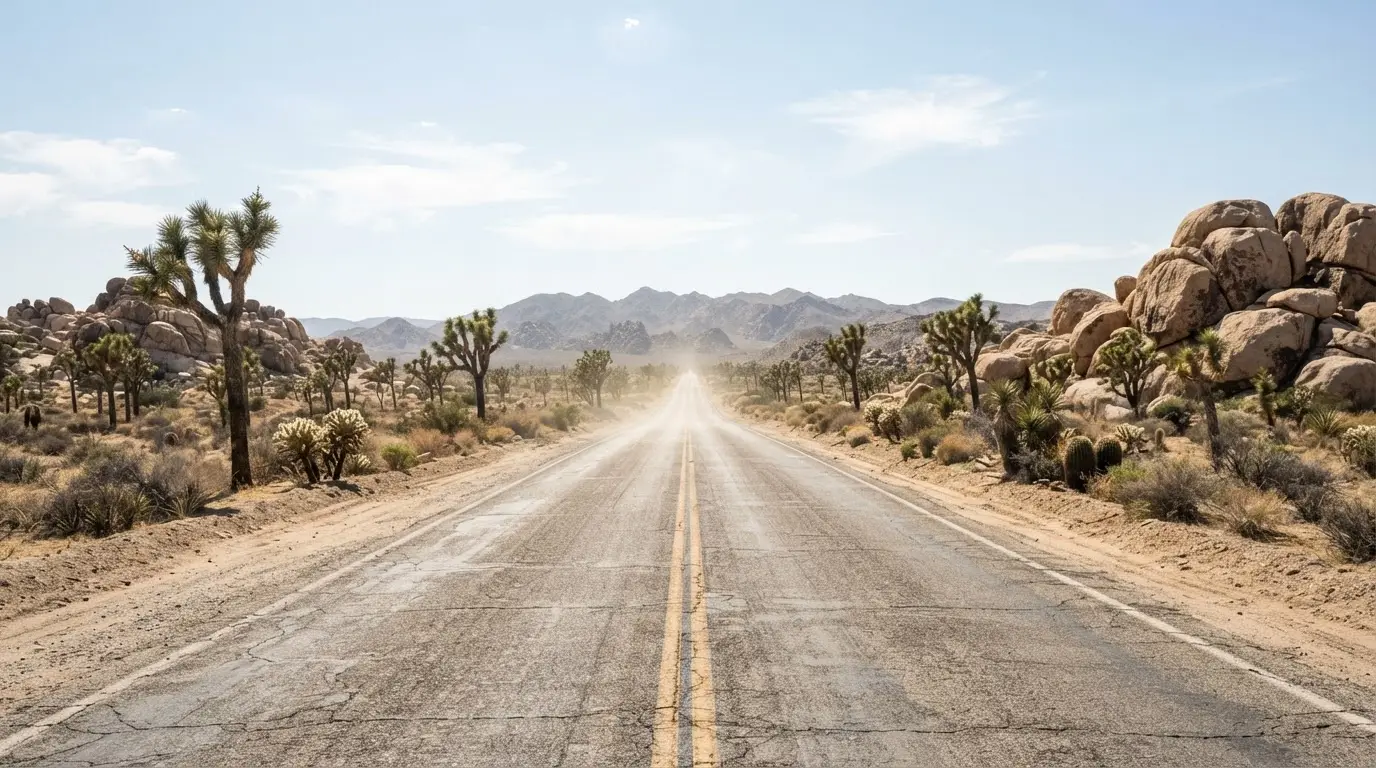
For photographers deciding how much gear to bring, our guides to Death Valley astrophotography gear and Death Valley stargazing photos with your phone cover the dedicated-camera and phone-only approaches side by side. And if Joshua Tree is also on the shortlist, Death Valley vs Joshua Tree stargazing breaks down which of the two parks actually fits your trip.
Tap a pin to open the lodge, tour, or destination page.
Best season
Year-round for Gold-Tier dark skies; October through April brings comfortable daytime temperatures alongside full darkness at night, with the Dark Sky Festival timed to spring.
Quietest hours
After sunset once daytime visitors clear the main overlooks, especially October through January outside major holidays.
Visit duration
2-3 nights covers Furnace Creek, Zabriskie Point, and Badwater Basin; add a night if a 4x4 trip out to Racetrack Playa is part of the plan.
Reporter notebook
Carry more water than feels necessary, check your radiator and tire pressure before driving in, and download offline maps — cell coverage disappears fast away from Furnace Creek, and a breakdown in summer heat is a genuine emergency here, not an inconvenience.
Overnight lows in summer typically drop to 85-95°F even after triple-digit daytime highs. If you're visiting in warm months, plan stargazing for right after sunset and skip anything strenuous during the day.
The dry salt pan at 282 feet below sea level gives an unbroken horizon line for wide Milky Way shots. For texture instead of flatness, Mesquite Flat Sand Dunes near Stovepipe Wells is the better call.
Further reading
“The International Dark-Sky Association has designated Death Valley National Park a Gold Tier Dark Sky Park, which is the highest rating of darkness.”
“The park maintains exceptional stargazing conditions with 'some of the darkest night skies in the United States.'”
“Park rangers offer Night Sky Talks most Friday and Saturdays through March, and ranger programs are posted at nps.gov/deva about two weeks in advance.”
“On July 10, 1913, a world record temperature of 134 degrees Fahrenheit was recorded at Greenland Ranch at Furnace Creek within Death Valley.”
“Temperatures drop 3 to 5°F (2 to 3°C) with every thousand vertical feet gained.”
“During the annual spring Dark Sky Festival, visitors are invited to explore the night sky, a collaboration between Death Valley National Park, Death Valley Natural History Association, NASA's Goddard Space Flight Center, Jet Propulsion Laboratory and Ames Research Center, SETI Institute and California Institute of Technology.”
United States · Best Year-round (Astronomy Festival in June)
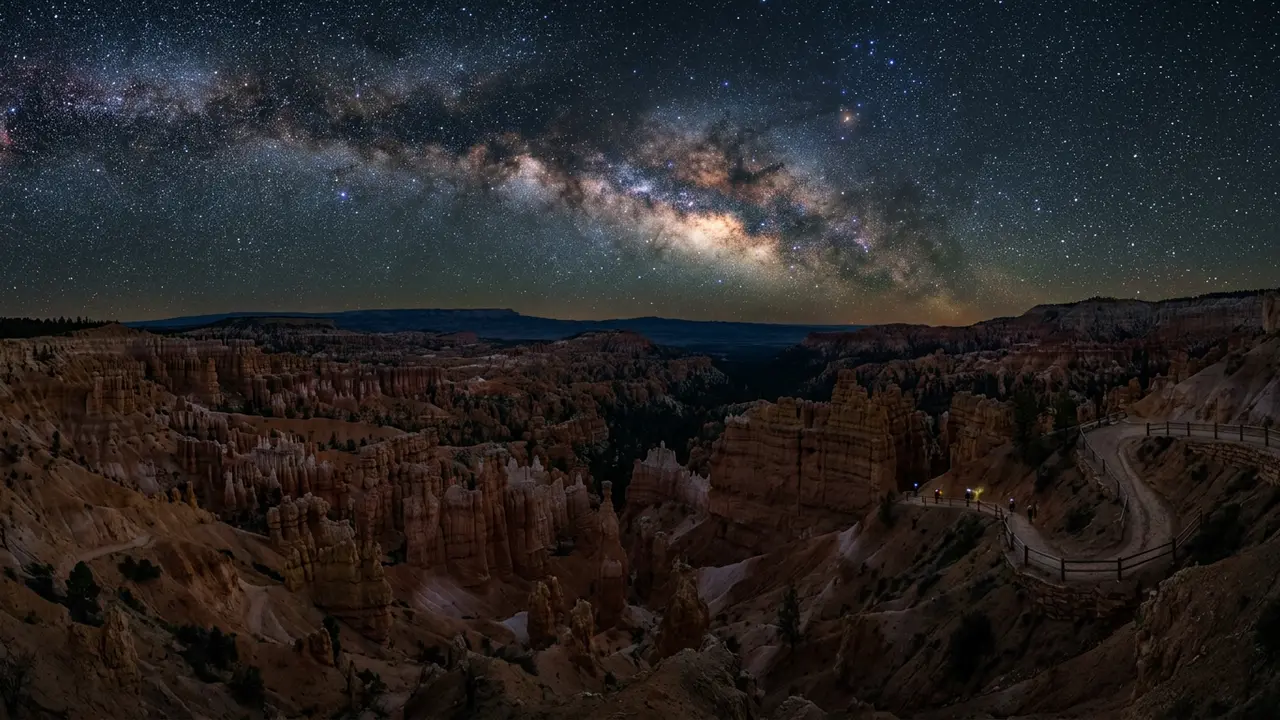
Bryce Canyon earned Gold-Tier Dark Sky Park status in 2019 after 50 years of astronomy programs. Drive in from Vegas or Salt Lake City to see it for yourself.
United States · Best Year-round (moonless summer nights best)
Joshua Tree earned International Dark Sky Park status in 2017, just two hours from LA. Here's where to see the Milky Way, dodge crowds, and stay the night.
United States · Best Year-round (avoid summer heat)
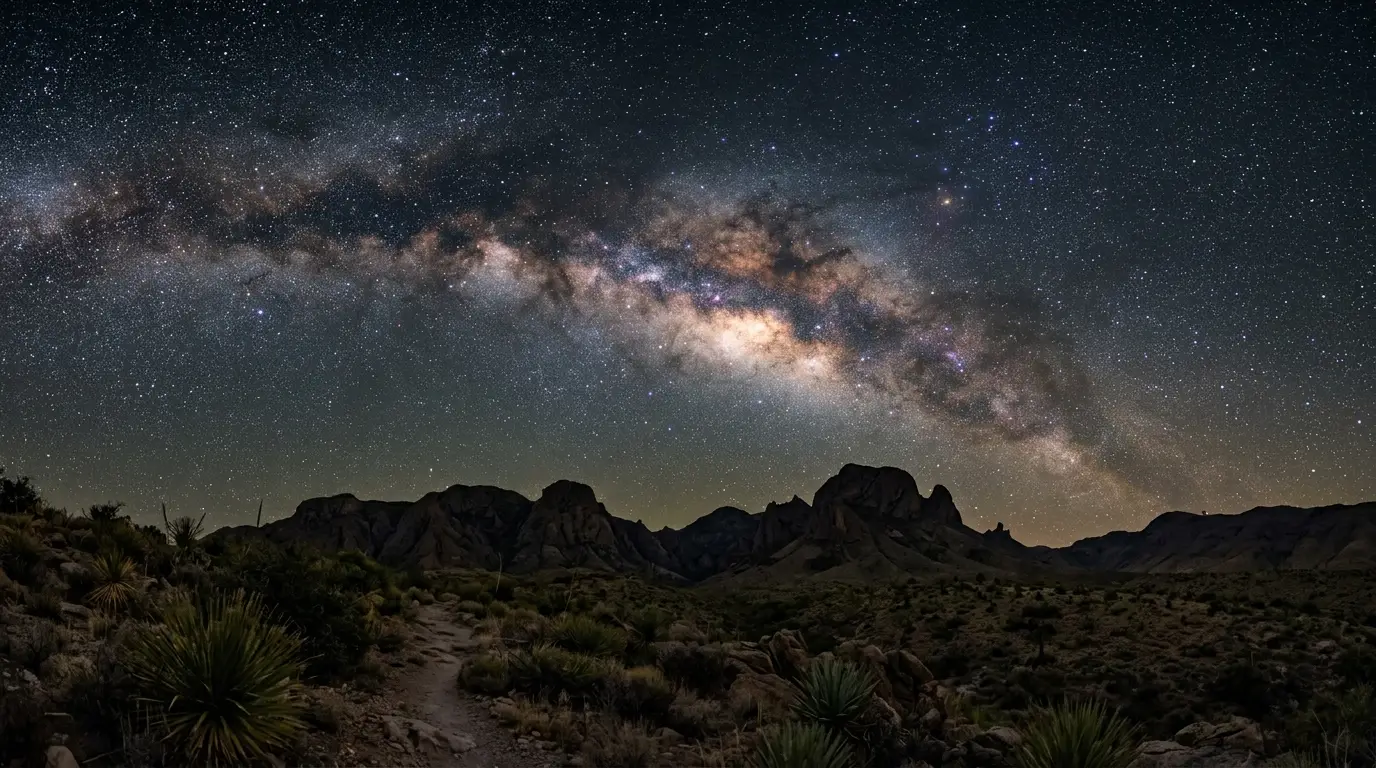
Big Bend National Park is Bortle Class 1, the darkest sky rating in the US. An honest look at McDonald Observatory, when to go, and where to stay near it.