Is Death Valley a Dark-Sky Destination?
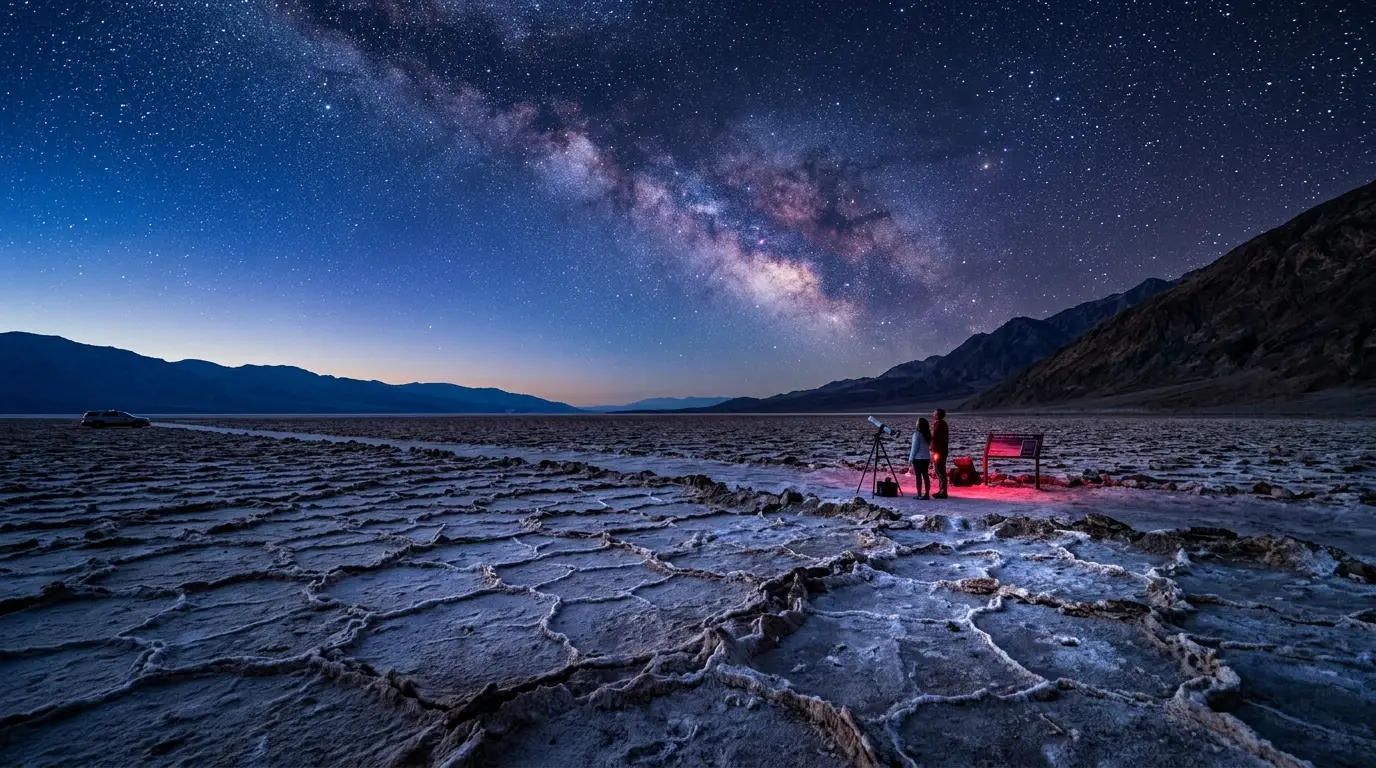
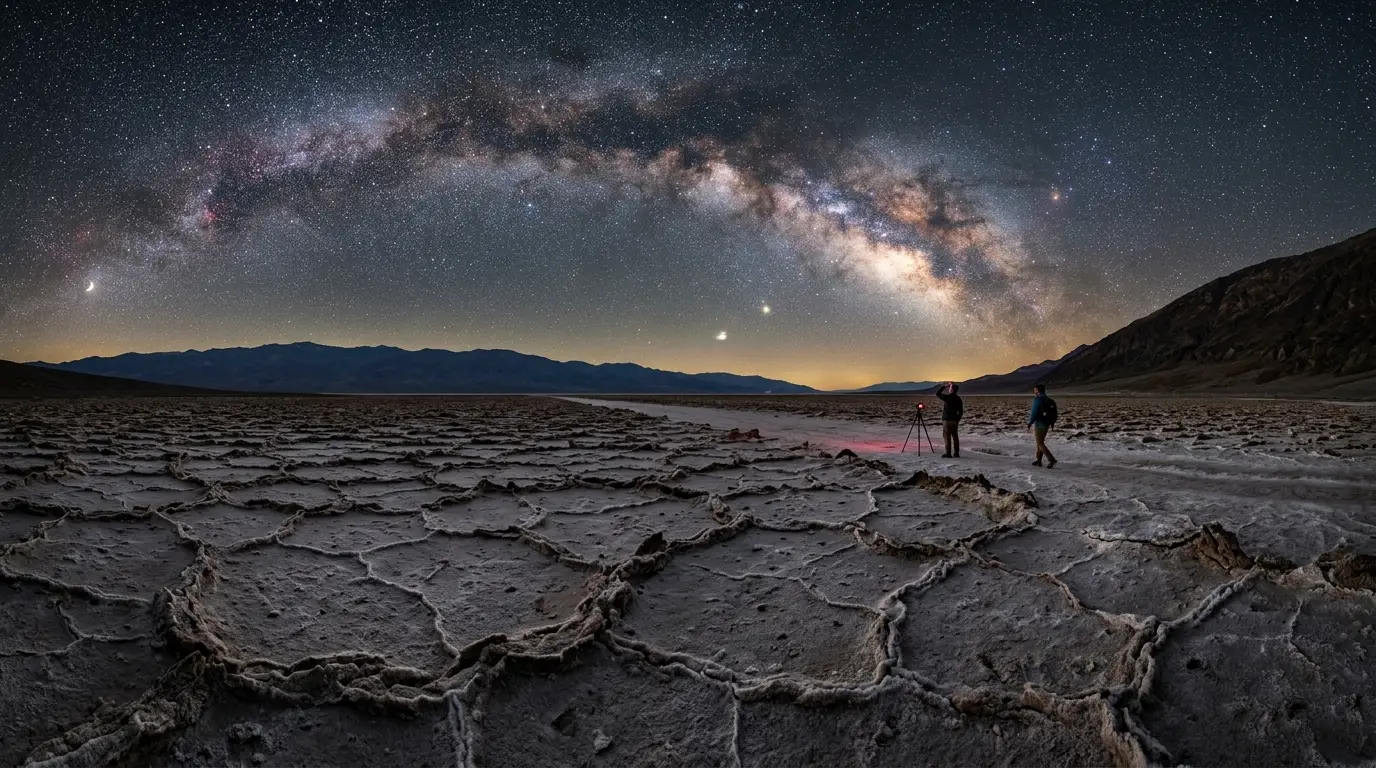
The National Park Service and DarkSky International certified Death Valley as the third International Dark Sky Park in the U.S. National Park System[1], a designation built on skies that reach Bortle Class 1[2] in the park's most remote back-country — the darkest rating the scale has. That's dark enough for spectacular naked-eye views of the Milky Way on a clear, moonless night.
What backs that rating up physically is isolation. Death Valley's protected, sparsely populated location has kept its skies free of the light pollution that dims the view near any Western city large enough to glow on a satellite photo at night[3]. It's one of the most reliably remote stargazing destinations in the continental United States, and because the valley floor sits well below sea level under dry desert air, clouds rarely interfere the way they do at a higher, wetter mountain park.
Featured · Destination
Death Valley
Death Valley's Gold-tier dark sky sits at the lowest point in North America. Here's when to visit, where to stay, and how to handle the extreme summer heat.
For the specific pullouts, the closest overlooks to Furnace Creek, and where to base a night trip, see stargazing in Death Valley National Park. To compare it with another Gold Tier park, see Death Valley against Great Basin for stargazing.
Do You Need a Permit to Stargaze at Death Valley?
No. Independent stargazing anywhere in Death Valley National Park requires no reservation, no night-sky ticket, and no fee beyond the standard park entrance fee. That single payment, a private vehicle rate of $30 valid for seven days[4], covers every night you're inside the boundary, whether you're parked at a pullout ten minutes from Furnace Creek or standing on the salt flat at Badwater Basin after sunset.
The one place this question keeps coming up is Racetrack Playa. Its remote, rough-road reputation makes people assume it needs a backcountry permit on top of the entrance fee. It doesn't: standard park admission is the only requirement. What the Racetrack actually demands is a vehicle built for the drive, a different question from a permit and one worth answering on its own, covered further down.
$30
What's the Best Month for Stargazing at Death Valley?
There's no single best month, but there is a clear window: October through April, when temperatures are far more moderate than the dangerous summer heat covered below, and comfortable enough most nights to stand at an overlook for an hour — though December and January call for real cold-weather layers, not the light jacket the mild-desert reputation suggests.
The Milky Way core follows its own calendar, and it doesn't line up neatly with the comfortable-weather window. It first becomes visible in the pre-dawn hours around March and April, for anyone willing to be up before sunrise, and only shifts to a convenient near-midnight viewing time by June through early August[5] — deep into the heat danger covered below. Chase that near-midnight window and you're trading safety for convenience; stick to the cooler months and you're trading a lie-in for a clear pre-dawn sky instead.
| Season | Sky & temperature | Trade-off |
|---|---|---|
| October-April | Highs swing low-90s°F (Oct/Apr edges) to mid-60s°F (Dec/Jan); nights run 50s (fall/spring) to high-30s/low-40s°F (Dec/Jan) | The comfortable window overall, but the Milky Way core is visible only pre-dawn until early summer |
| March-April | Mild temperatures continue | Milky Way core visible only in the pre-dawn hours — waiting up at night won't help yet |
| May-September | Hottest, most dangerous months of the year | Daytime heat becomes dangerous, see below — the Milky Way core reaches a convenient near-midnight hour in June-early August, right in the least safe stretch |
Moon phase moves the needle more than the calendar does. A new moon window delivers a darker sky than the brightest nights around any full moon[6], so check the lunar calendar for your actual travel dates before building a trip around a single best month. For the full season-by-season breakdown, see the best time to stargaze at Death Valley.
How Hot Does It Get, and Is Death Valley Stargazing Safe?
Summer is where the danger is real, not theoretical. Daytime temperatures climb into genuinely dangerous territory, and that heat doesn't reset the moment the sun goes down: the ground keeps radiating warmth long after dark, and the desert's dry air, the same trait that keeps the sky so transparent, does nothing to cool things off quickly. A summer night at Death Valley is a hazard, not a stargazing plan; the October-to-April window covered above exists specifically because the rest of the year genuinely isn't safe to stand around in after dark.
Recommended tours
Tours are selected for quality, not commission. I earn a small fee if you book — at no extra cost to you.
Death Valley heat safety is only half the concern. Beyond it: there is no cell phone coverage across most of the park[7], and help, if you need it, is not a quick call away. Before a night stargazing trip:
- Tell someone your route and expected return time
- Carry more water and fuel than feels necessary
- Check the forecast for wind and dust, not just clear skies
- Know that a breakdown or injury off the main road could mean hours before anyone finds you
None of this is unique to stargazing after dark, but it matters more then: fewer other visitors are around, and the same isolation that produces the Bortle Class 1 skies covered earlier means fewer people around to notice if something goes wrong.
Is Death Valley Stargazing Family-Friendly, and What Does Racetrack Playa Actually Require?
There's no official family-friendly rating for Death Valley stargazing, so this is judgment, not a cited fact. Independent stargazing is free and unrestricted, but the same heat and remoteness covered above apply to a five-year-old just as much as an adult, arguably more. A short evening at a pullout near Furnace Creek, an hour after dinner and back to the car before anyone gets cold or cranky, is a realistic first stargazing trip with kids. A full night camped out at a remote overlook is a harder sell.
Racetrack Playa is where the permit question and the family-friendly question collide. Getting there takes at least 3.5 hours of driving each way from Furnace Creek[9] over a road rough enough that 4x4 and high-clearance vehicles are strongly recommended; standard rental cars frequently come back with flat tires[8]. None of that is a permit requirement, it's a vehicle requirement, and the distinction matters: you won't be turned away at a ranger station for lacking paperwork, but you might be stranded for lacking the right tires.
That combination, a long drive, no cell signal, and a real chance of a flat, makes Racetrack Playa a stretch for a family stargazing night. It's a better fit for a dedicated day trip planned around daylight driving, with the option to linger after dark once you've already made the drive out — see camping vs. day trip at Racetrack Playa, and how to photograph the sailing stones at night for how that trip actually comes together. For where else in the park to look up without that commitment, see the best stargazing spots in Death Valley.
Can You See the Milky Way at Death Valley, and Do You Need a Telescope?
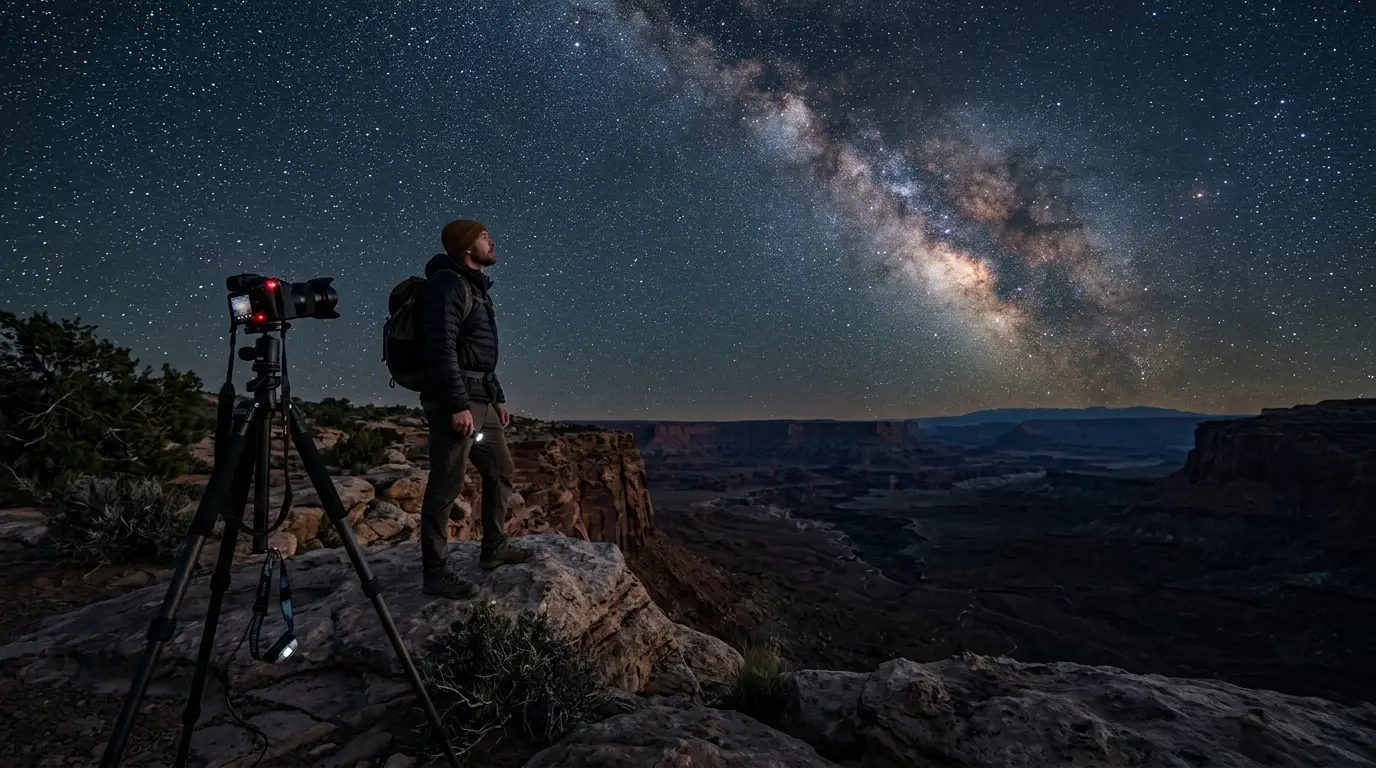
Yes, on any clear, moonless night during Milky Way core season covered above, and the Bortle Class 1 ratings discussed earlier mean the core reads as a genuine band across the sky rather than a faint smudge, provided you're away from Furnace Creek's scattered lighting.
You don't need a telescope for what most first-time visitors come for:
- The Milky Way's core
- Meteor showers
- Familiar constellations, visible in far greater number than at home
Featured · Article
What Is Astrotourism? The Complete Beginner's Guide
Astrotourism means travel built around dark skies: meteor showers, auroras, the Milky Way. What it means, where to go, and how to plan your first trip.
A telescope earns its weight for a narrower set of targets: planets, the Moon's craters, and faint deep-sky objects that need real aperture to resolve. For a first trip built around naked-eye viewing, a reclining chair and a red-light flashlight will do more for the experience than any optic, and a decent pair of binoculars covers the middle ground if you want a bit more than bare eyes.