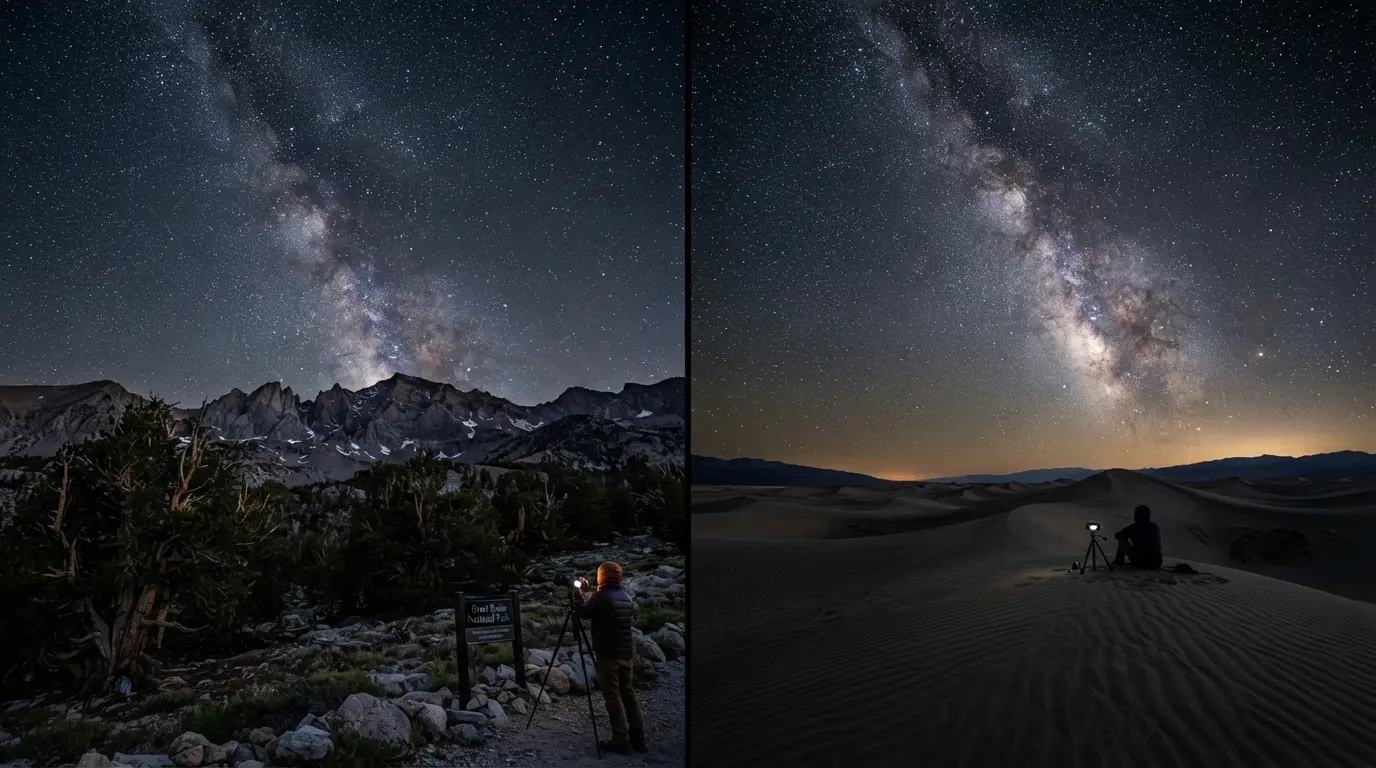

Two Gold Tier Parks, One Question
Both parks carry the same certificate. DarkSky International (formerly the International Dark-Sky Association) designated Great Basin National Park a Gold Tier dark sky park in 2016[2], its highest rating. Death Valley earned the same Gold Tier in February 2013[4], becoming the third certified park in the U.S. National Park System[9]. Not many places on Earth hold this rating, and two of them sit within reach of Las Vegas.
The shared certificate is where the similarity ends. Great Basin is a high-altitude park in remote east-central Nevada, five miles west of the town of Baker[8], with a research observatory and ranger-led telescope programs[2]. Death Valley is the largest national park in the lower 48 states, partly below sea level, dark enough at its northwestern edge to reach Bortle class 1[10]. One is a climb; the other is a descent.
| Death Valley | Great Basin | |
|---|---|---|
| Dark Sky certification | Gold Tier (2013) | Gold Tier (2016) |
| Darkest published sky | Bortle class 1, northwest | Bortle class 1 (third-party) |
| Elevation at typical viewing | Near sea level, down to -282 ft | 7,000 ft to 10,000+ ft |
| Drive from Las Vegas | About 2 hours | About 5.5 hours |
| Best suited for | A short desert trip from Vegas | A dedicated high-altitude dark-sky trip |
Because the two parks ask for different money, time, and body positions, this comparison is less about which sky is better and more about which trip you will actually complete. Start with the trip, and the choice makes itself.
Great Basin: Altitude, an Observatory, and a Real Drive
Great Basin's argument is altitude and isolation. The park sits at a base elevation of 7,000 feet at the Lehman Caves Visitor Center, and the paved, 12-mile Wheeler Peak Scenic Drive climbs past 10,000 feet[1]. Wheeler Peak itself tops out at 13,063 feet[5]. Nights at 7,000 feet run cool even in July, and low humidity plus high elevation is exactly the combination astronomers look for[2].
The centerpiece is the Great Basin Observatory, the first and only research-grade observatory ever built inside a U.S. national park[6]. It is remotely operated and not open for public tours the way commercial observatories are, but its presence says what the park's sky measures like. The National Park Service describes Great Basin as having some of the darkest measured skies in the lower 48 states, with no significant man-made light for 70 miles in any direction[6].
What you actually do at night: from roughly Memorial Day to Labor Day, rangers run free astronomy programs at a purpose-built Astronomy Amphitheater near the visitor center, Thursday through Sunday, a thirty-minute talk followed by ninety minutes of telescope viewing[2]. A volunteer-run astronomy festival lands around the new moon in September every year[7], and Wednesday constellation talks happen in Baker. This is the most structured, beginner-friendly stargazing experience of the two parks.
70 miles
The cost is the drive. Great Basin is about 290 miles and 5.5 hours from Las Vegas[8][3], or 234 miles from Salt Lake City[8]. The route crosses open Nevada with little to no cell coverage, and services thin out fast beyond Ely[8]. Baker, the closest settlement, counts residents in the hundreds. This is not a park you visit by accident, and it does not reward a rushed overnight.
Death Valley: Bortle 1, Below Sea Level, Two Hours Out
Death Valley's pitch is accessibility plus extremity. The park was certified Gold Tier on February 20, 2013, the third International Dark Sky Park in the U.S. National Park System[4][9]. Its darkest sky sits in the northwest, where Ubehebe Crater is rated Bortle class 1, astronomy's darkest class, while most southern areas run Bortle class 2[10]. For many travelers, the darkest sky they have seen before this trip is a Bortle 4 or 5.
The park's elevation story runs the opposite direction from Great Basin. Death Valley drops to 282 feet below sea level at Badwater Basin, the lowest point in North America, and rises to 11,049 feet at Telescope Peak[11]. The valley floor where most visitors sleep sits near sea level, so a night under the stars does not tax your lungs. What it taxes instead is heat: Death Valley holds the world record for the highest reliably measured air temperature, 134°F at Furnace Creek on July 10, 1913, a reading the World Meteorological Organization recognizes and some meteorologists dispute[13]. Summer nights can still run above 100°F[19].
Where to actually stargaze is well documented. Park rangers point visitors to Mesquite Flat Sand Dunes, Harmony Borax Works, Badwater Basin, and Ubehebe Crater[14]. The park runs winter ranger programs and an annual spring Dark Sky Festival with NASA centers and the SETI Institute as partners[15].
The logistics are the whole point of the park's popularity. The eastern entrance sits about two hours from Las Vegas, with another thirty minutes to the Furnace Creek Visitor Center[12]. On paper that is a day trip, though for stargazing you want at least one overnight so you are awake after midnight. Getting to Death Valley covers the routes from Las Vegas and Los Angeles and what to check before you lose cell service.
Sky Quality Head-to-Head: Bortle 1 vs Bortle 1
Both parks reach Bortle class 1 under some rating. The National Park Service never publishes a Bortle number itself; the class is astronomer's shorthand that third parties apply, and Bortle scale explained walks through what each class means. Great Basin's Bortle class 1 rating comes from third-party astronomy directories[17], while NPS reports its Night Sky Team surveys found the park's skies among the darkest in the country[16] and that no significant light source sits within 70 miles[6]. Death Valley's northwestern interior reaches Bortle 1, with Bortle 2 in the south[10]. By every measurement available, both are world-class skies, and on a clear, moonless night you will not notice a meaningful difference between them.
What separates them is where the darkness comes from. Death Valley's is a function of emptiness: a vast desert basin, almost entirely uninhabited, dry enough for exceptional transparency. Great Basin's is a function of altitude and remoteness: thin air, low humidity, and nothing around for 70 miles[6]. Both parks lose to the same thing on the same nights, a bright moon. The new-moon window matters more than the certification, which is why checking it before booking is the single most useful planning step at either park.
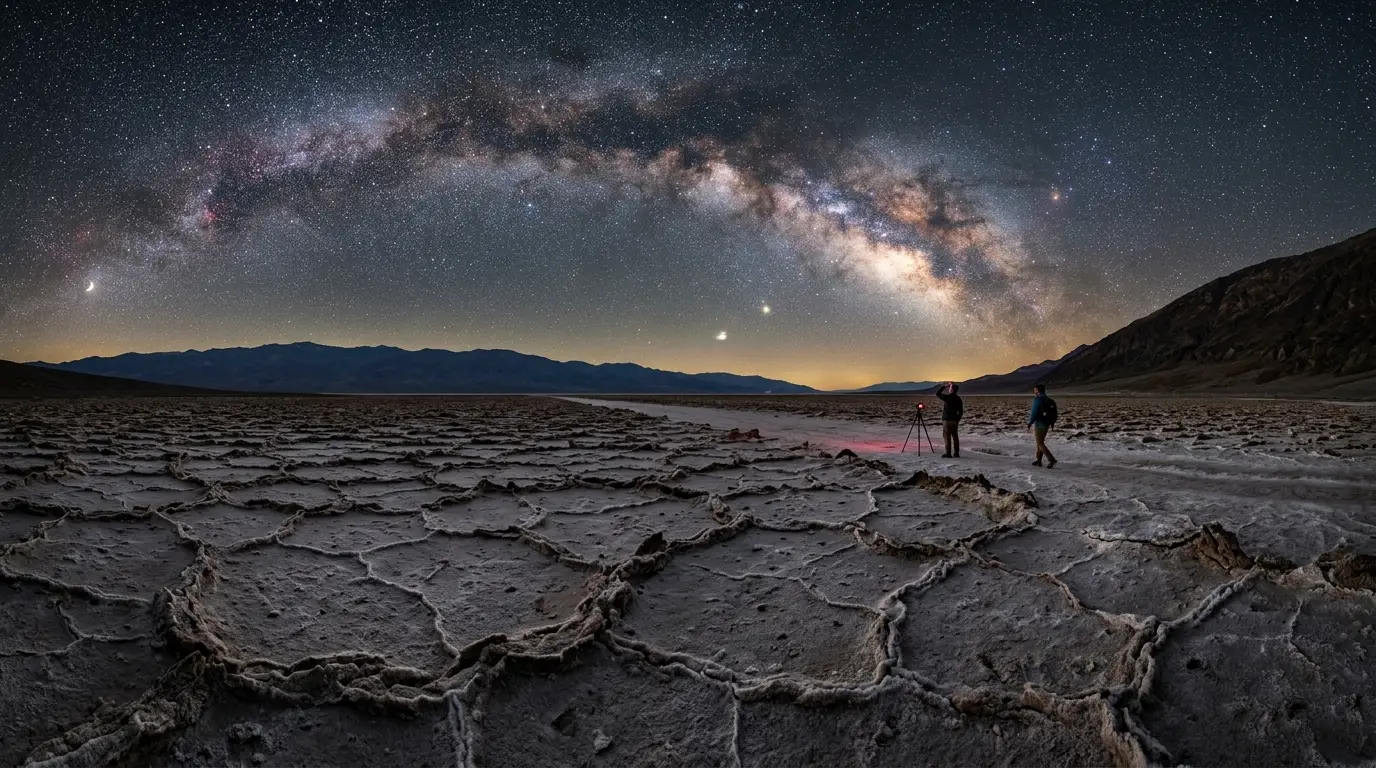
Featured · Destination
Death Valley
Death Valley's Gold-tier dark sky sits at the lowest point in North America. Here's when to visit, where to stay, and how to handle the extreme summer heat.
Practicalities: Two Hours of Heat or Five and a Half of Altitude
The decision between these two parks is a logistics decision dressed up as a sky decision. Lay the numbers out side by side and the trade becomes obvious.
Death Valley is the short trip. Two hours from Las Vegas[12], lodging at Furnace Creek and Stovepipe Wells, a 24-hour park, and winter to spring as the reliable season because summer nights stay above 100°F[19]. You can fly in, sleep one night under a Bortle 1 sky, and be back in Vegas the next evening. The planning burden is heat and water discipline, not distance.
Pack differently for each park
- Death Valley: extra water and sun protection, hot even at night in summer
- Great Basin: warm layers, July nights at 7,000 ft run cool
- Great Basin: acclimatize before the 10,000 ft scenic drive overlook
- Both: check the new-moon window before locking in dates
Great Basin is the expedition. About 5.5 hours from Las Vegas[3], a drive that loses cell service[8], and a base elevation of 7,000 feet that climbs past 10,000 on the scenic drive[1]. You want two nights minimum to justify the drive, which means booking a room in Baker or Ely. The upper scenic drive opens only about June through October[3]. The reward is cool nights, a ranger program every summer night, and an observatory on site.
Recommended tours
Tours are selected for quality, not commission. I earn a small fee if you book — at no extra cost to you.
Altitude is the factor most Las Vegas visitors underestimate. Arriving from sea level and sleeping at the park's 7,000-foot base is not a mountain day trip; it is a night at altitude, and the park treats high elevation as a genuine hazard for unprepared visitors[1][5]. It is also the factor that quietly rules Great Basin out for some travelers, and makes Death Valley the easier first dark-sky park for anyone with kids, health limits, or a tight schedule.
Budget and style differ too. Great Basin is a self-drive park with free ranger programs and modest lodging. Death Valley has more lodging options across a wider price range, from campgrounds to resort stays. The best time of year for Death Valley stargazing settles the seasonal question if the shorter trip wins.
The Verdict: Pick a Trip, Not a Park
If you can only do one, pick based on what you are willing to drive, climb, and sweat. Pick Death Valley when you want a Bortle 1 weekend from Las Vegas, when heat discipline beats altitude worries, and when the trip needs to fit in a night or two. Pick Great Basin when you want the most structured stargazing in the West, a research observatory on site, cool nights, and the days for a five-and-a-half-hour drive and a two-night minimum.
If you have four or five days, do both. Nevada has turned the connection into an official route: Park to Park in the Dark, the state's first astronomy route, links the two parks through Beatty, Goldfield, Tonopah, Ely, and Baker along US-95 and US-6[18]. Drive the loop, spend a night at each park, and you see both sides of the same phenomenon: Death Valley's empty-basin darkness and Great Basin's high-altitude clarity.
A few situations make the choice easier:
- A short Bortle 1 trip from Las Vegas: Death Valley
- The most structured ranger-led stargazing in the West: Great Basin
- A first dark-sky park with kids or heat concerns: Death Valley
- A research observatory and cool July nights: Great Basin
- A four-day two-park loop: both, via Park to Park in the Dark
Featured · Article
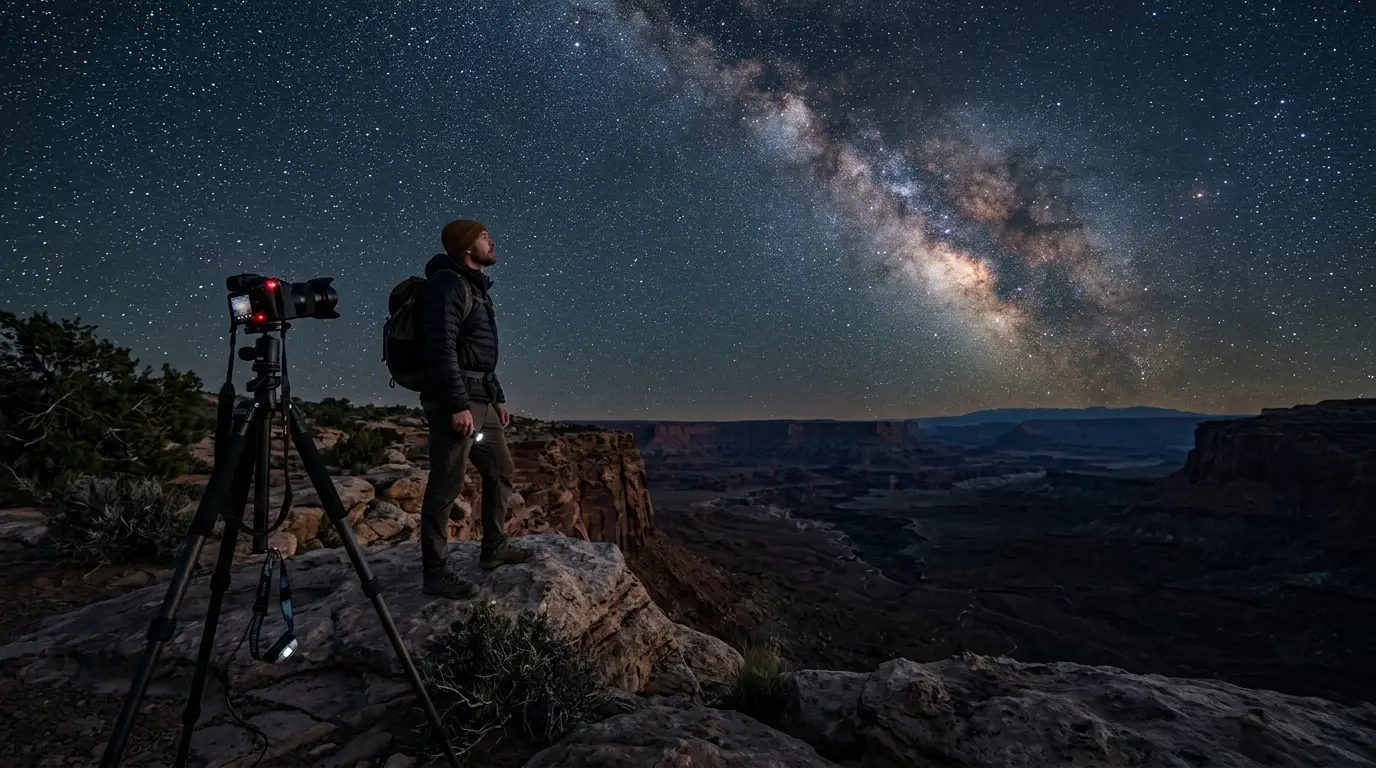
What Is Astrotourism? The Complete Beginner's Guide
Astrotourism means travel built around dark skies: meteor showers, auroras, the Milky Way. What it means, where to go, and how to plan your first trip.
The California-centered version of this comparison is Death Valley vs Joshua Tree stargazing, and if Death Valley wins your trip, the best lodges for Death Valley stargazing covers where to sleep.