What three days in Death Valley actually buys you
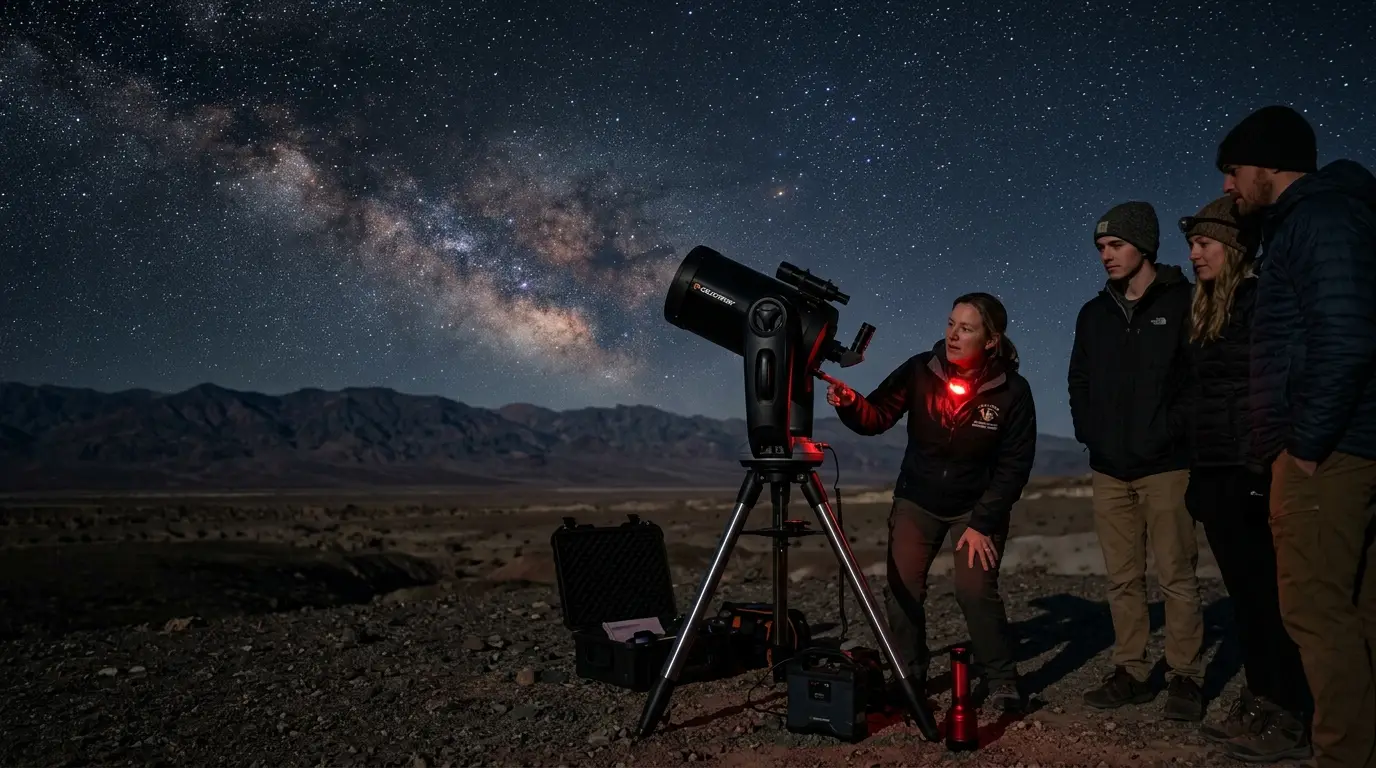
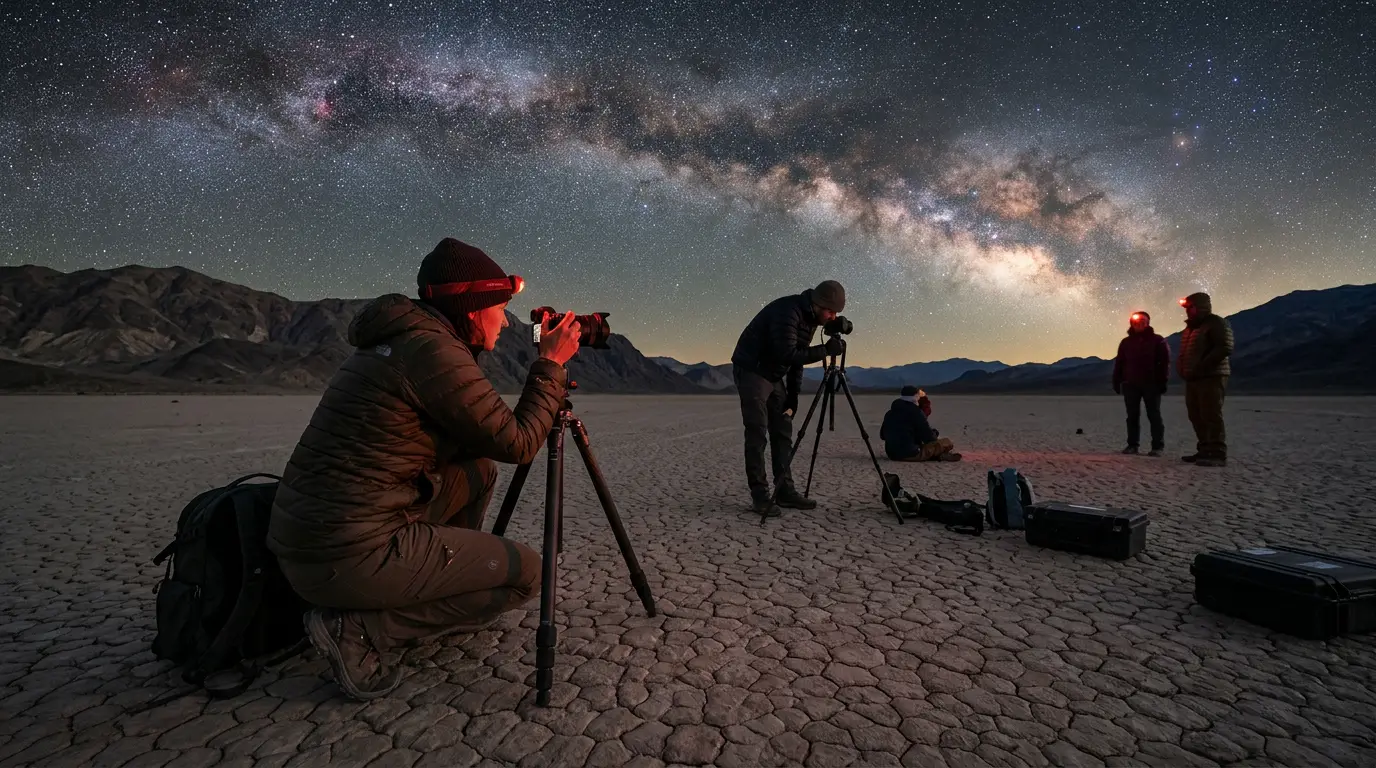
Most stargazing tours put you in a chair and point a telescope at something. This one puts a camera in your hands and doesn't let go for three days. Joshua Tree Workshops, run by photographer Casey Kiernan, built this Death Valley session around the two things a Milky Way shot actually needs: a genuinely dark sky and someone standing next to you when the exposure comes out wrong. Group size is capped at 3 photographers maximum — smaller than the operator's own Joshua Tree sessions — which means real one-on-one coaching across three consecutive nights rather than a single evening of settings and hope.
The itinerary runs 3 days and 2 nights, built around two locations chosen for very different reasons. Racetrack Playa is the park's most remote shooting location: a dry lakebed famous for its "sailing stones," reached only by rough gravel road, which is why the workshop includes four-wheel drive transportation within the park rather than expecting participants to navigate it themselves. Panorama is the second location, chosen for Milky Way composition against Death Valley's badland terrain rather than the flat, mirror-like foreground Racetrack offers. Shooting both across a single trip gives you two genuinely different compositions to work with, not two nights of the same shot.
Lightroom, not just a lecture on ISO
What separates this from a one-off night-photography tour is the 3-hour hands-on Lightroom Classic training session built into the schedule. Most workshops stop at "here's how to expose for the Milky Way" and leave you to figure out the edit alone at home, staring at a raw file that looks nothing like the images that sold you on the trip. This one carries through to post-processing: stacking, noise reduction, and pulling detail out of the core, taught on your own files from the nights before. If you've shot the Milky Way before and came home disappointed by the edit rather than the exposure, that's the gap this session is built to close.
Booking, price, and the honest caveat about dates
The cost is $1,499 per photographer, with a $499 non-refundable deposit to hold a spot — a meaningful commitment for a workshop capped at 3 people, which is exactly why the deposit exists. There's no online booking cart; reservations go through casey.l.kiernan@gmail.com or the contact form at joshuatreeworkshops.com/death-valley-spring.
Here's the part worth being direct about: the spring 2026 sessions have already run. As of mid-2026, the operator's confirmed, bookable dates are the April–May 2027 block listed above, six sessions running Friday through Sunday. One of those (April 9–11) is already sold out. This isn't a year-round or drop-in experience — it's a small operator running a handful of scheduled sessions a year, and the honest next opportunity to book is more than half a year out. If you're planning around this trip, treat April–May 2027 as the real target date, not "sometime next spring."
What's included, and what you're responsible for
Included in the $1,499:
- Small-group instruction capped at 3 photographers for the full 3 days
- Four-wheel drive transportation within Death Valley National Park, including the rough access road to Racetrack Playa
- Access to Racetrack Playa and Panorama, the workshop's two Milky Way shooting locations
- 3-hour hands-on Lightroom Classic post-processing session, working with the images shot on-site
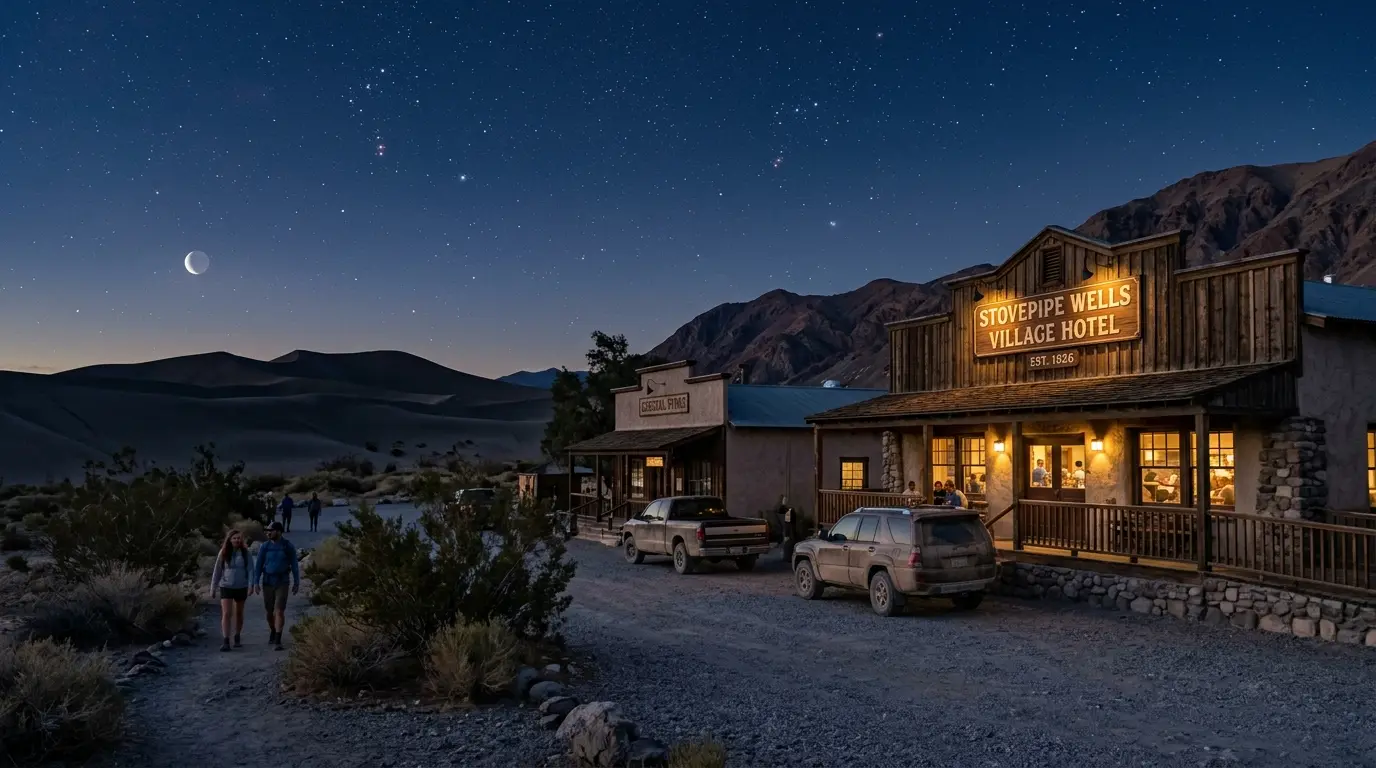
Not included: travel to Death Valley National Park, lodging, and meals. The operator recommends the Stovepipe Wells Village Hotel as a base for roughly two nights, which puts you close to both the park's dune fields and the drive out toward Panorama and Racetrack. Plan your own arrival, book that lodging early, and bring food and water for genuinely long, remote days — this isn't a trip with a restaurant around the corner.
Why spring, and how this fits the wider Death Valley picture
The operator schedules this workshop for spring (April–May) specifically: Milky Way visibility is strong, and daytime temperatures are cool enough that the drive out to Racetrack and the hike around Panorama don't turn into a heat-safety problem, unlike Death Valley's brutal summer months. If you want the fuller seasonal picture, including why summer here is genuinely dangerous rather than just uncomfortable, the guide to the best time for stargazing in Death Valley breaks down the month-by-month tradeoffs. And if you're building a trip around this workshop rather than the other way around, start with the Death Valley stargazing hub for the park's Gold Tier certification, where else to look up while you're there, and where to stay beyond the workshop's own recommendation. Still weighing whether the trip is worth it at all? Is Death Valley worth it for stargazing works through that question directly.