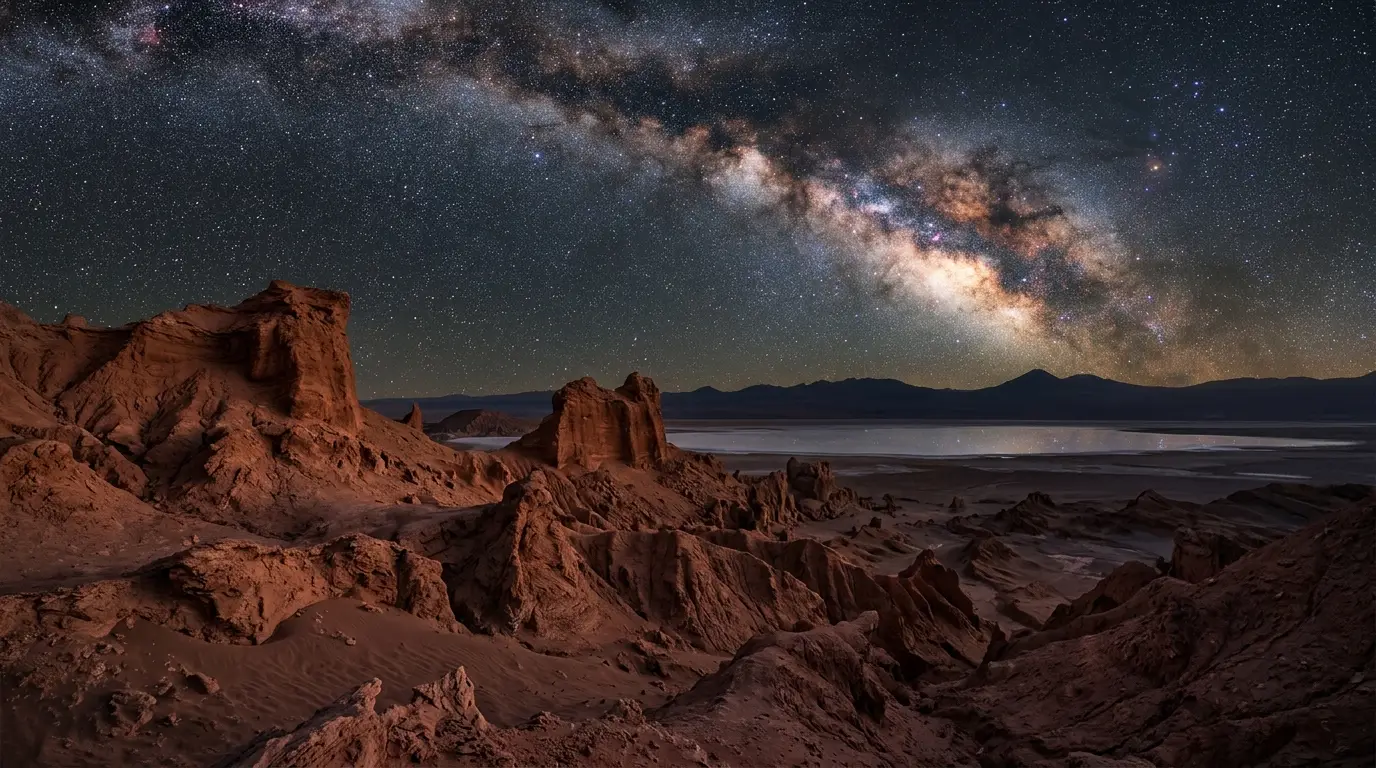

San Pedro de Atacama: The Base, Not the Sky
San Pedro de Atacama sits at roughly 2,400 meters, a short drive north of the Salar de Atacama[1], and it's the oasis every stargazing trip in this desert is built around rather than the dark spot itself[2]. The town's dust streets and adobe walls hold the region's tour operators, a handful of commercial observatories, and almost every hotel worth booking. What it doesn't hold is the darkest sky in reach. That's a short drive away in one direction or another, depending on which of the spots below you pick. For the full case for why this particular desert ranks the way it does, see Atacama Desert stargazing.
Tour marketing around San Pedro throws the phrase Bortle scale[3] at every itinerary, usually landing on 'Bortle 1-2' as if that were a settled fact. It isn't, not independently. The confirmed Chilean DarkSky sanctuary sits elsewhere, in the Elqui Valley, a greener region with its own microclimate, not the Atacama proper. That doesn't make San Pedro's sky ordinary; it makes the specific number worth treating as marketing copy rather than a certification.
What does hold up is the count of usable nights. Northern Chile logs more than 300 clear nights a year[4], and on the ground that means picking a spot by what it actually shows you, an open horizon, a reflection, altitude, or a working observatory's footprint, rather than by whichever name shows up first in a search result.
300+
Valle de la Luna: The Widest Horizon Near Town
Thirteen kilometers west of San Pedro[5], Valle de la Luna opens into wind-carved rock and salt crust with almost nothing standing between you and the horizon in any direction. The Cordillera de la Sal ridges nearby give the valley its name and its texture, folded salt-and-clay formations that read as lunar by day and disappear into the dark by night, leaving a wide, uninterrupted bowl of sky overhead. It's part of the Reserva Nacional Los Flamencos and was declared a Nature Sanctuary in 1982[6], protected ground rather than a random pull-out off the highway.
The catch is access. Valle de la Luna runs as a day-use park with an entry ticket, and it typically closes before the sky gets properly dark. Almost every operator handles this the same way: a sunset visit inside the park, then a short drive to stargaze just outside the boundary once the gates shut. Book the Valle de la Luna tour's sunset-into-stargazing combination rather than assuming you can linger inside after dark on your own.
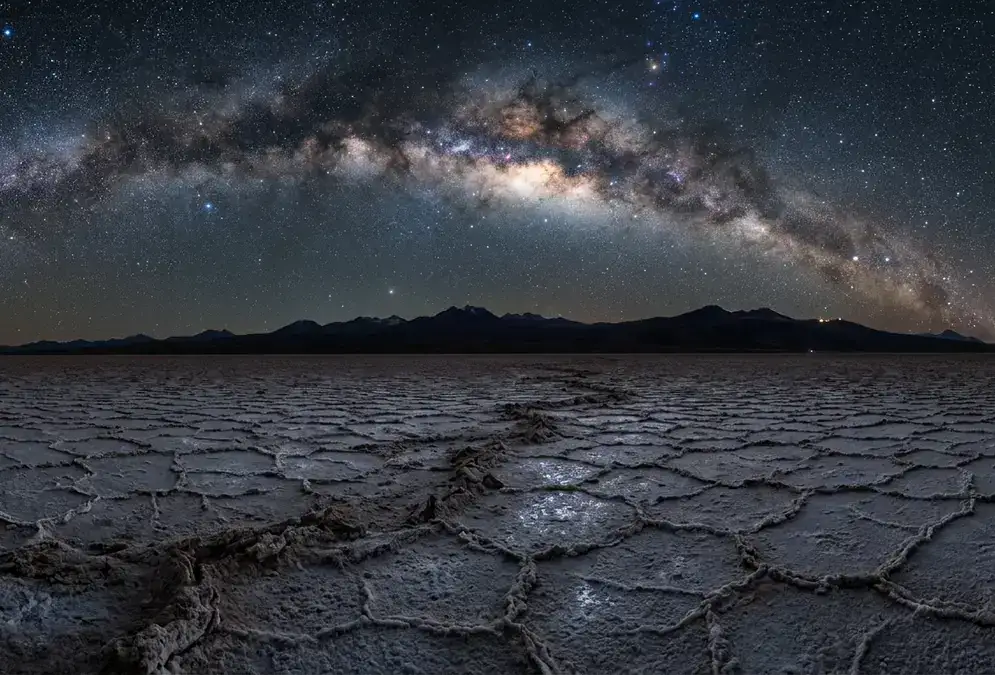
Featured · Destination
Atacama Desert Stargazing
Earth's driest desert delivers Bortle 1–2 skies, 330+ clear nights a year, and the galactic core almost overhead. Guide: tours, lodges, season, getting there.
Valle de Marte, next door
Valle de Marte, sometimes called Valle de la Muerte, sits immediately alongside Valle de la Luna in the same red-rock, dune-and-canyon country, usually paired with sandboarding rather than a dedicated night program. Treat it as a sunset stop on the way to somewhere else rather than an independent stargazing destination. Its exact distance from town gets reported inconsistently across guidebooks, so don't plan around a specific kilometer figure. What matters is that it shares Valle de la Luna's open, vegetation-free horizon, and most itineraries fold the two together before the real stargazing starts elsewhere.
Salar de Atacama and Laguna Cejar: The Mirror Shot
The Salar de Atacama begins about 55 kilometers south of San Pedro[7], a flat white salt crust sitting at an average elevation of roughly 2,300 meters[8], mild enough that altitude isn't a real concern here the way it becomes further up the altiplano. The salar stretches wide enough that there's no terrain anywhere near it to block a horizon, and on a calm night the salt itself holds enough residual pale light to separate ground from sky without a single artificial light anywhere in view.
Laguna Cejar, a sinkhole lake within the salar's edge, sits only 18 kilometers from San Pedro and carries a salt concentration between 5 and 28 percent[9], dense enough that swimmers float without trying. Its real value after dark is the reflection: still, hyper-saline water doubling the stars overhead into a mirror shot that Valle de la Luna's dry rock can't match. What isn't confirmed is a fixed night-access policy. The concession runs daytime swim hours, and whether astrophotography access after dark is currently permitted depends on the operator and the season, so book a specific evening tour rather than assuming you can drive out on your own once the gates close.
Piedras Rojas and the Altiplanic Lagoons: The Highest Vantage Point
Piedras Rojas and the twin lagoons of Miscanti and Miñiques sit in the altiplanic lagoon basins near Salar de Talar, reached on a day tour that climbs to a maximum altitude of about 4,300 meters[10], via the Piedras Rojas altiplanic lagoons tour, a round trip that spans roughly 200 kilometers[11], the thinnest air a standard tour reaches anywhere near San Pedro. Iron-oxide rock stains the shoreline a deep rust red against volcano silhouettes, dramatic enough in daylight that most visitors never think to ask what the sky looks like once the tour buses leave.
That's the honest limitation. Nobody sleeps at that altitude here; there's no lodging up that high, so Piedras Rojas works as a high-drama sunset and blue-hour stop rather than a deep-night stargazing base. Real altitude sickness risk, soroche, applies to anyone who hasn't spent at least two nights acclimatizing at San Pedro's own 2,400 meters first[1]. Book the evening astronomy session separately, back down near town, after the day trip returns.
A few things worth settling before you book:
- Two acclimatization nights at San Pedro's altitude before going any higher
- A real jacket; wind at that altitude cuts through anything lighter
- A separate evening astronomy session back near town, since nobody actually stargazes at Piedras Rojas itself
| Spot | Distance from San Pedro | Best for |
|---|---|---|
| Valle de la Luna | 13 km west | Widest open horizon |
| Salar de Atacama / Laguna Cejar | 18-55 km south | Mirror reflection on calm nights |
| Piedras Rojas & altiplanic lagoons | ~100 km south, 200 km round trip | Highest altitude, dramatic red rock |
| Chajnantor plateau (ALMA) | 40 min drive to the OSF | Why the sky here is dark, not a night-visit site |
Two lagoons, one long drive
Miscanti and Miñiques sit side by side at the far end of the circuit, twin altiplanic lagoons that most tours treat as a single extended stop rather than two separate destinations. The drive out and back eats most of a day on its own, which is exactly why almost no operator tries to pair Piedras Rojas with a night session at the same location. By the time the light fades, the smart move is already back on the road toward San Pedro.
ALMA and the Chajnantor Plateau: Why the Sky Is This Dark
The Chajnantor plateau hosts the Atacama Large Millimeter Array, ALMA's radio-telescope site, at an elevation of about 5,000 meters[12], roughly 40 driving minutes from San Pedro to the lower Operations Support Facility[13], one of the highest observatory sites anywhere on Earth. That extreme altitude and the desert's near-zero humidity are exactly why radio astronomers picked this particular stretch of rock over anywhere else on the planet, and it's the same combination that keeps the sky dark enough for every spot covered above.
Here's the part worth being direct about: you can't currently visit ALMA as a tourist. Public visits to ALMA are not currently possible[14], and the high-altitude Array Operations Site where the antennas actually sit is closed to visitors for safety reasons regardless of tour format[15]. Treat ALMA as the observatory that explains why this desert is dark, not a place you can walk up to at night. If seeing a working telescope matters to your trip, check the current status directly with ESO before building an itinerary around it. ALMA is only one piece of the picture — Paranal's Very Large Telescope and the 39-metre Extremely Large Telescope taking shape nearby round out the corridor; Atacama observatories explained covers all three.
Booking a Guided Session, and What Actually Works
Virtually every commercial astronomy tour in the region launches from San Pedro itself rather than from the remote sites above, which makes the town the logical base even though the darkest views sit just outside it. A two- or three-hour guided session with a telescope already cooled and aligned beats squinting at a phone app, and it's the easiest way to see the sky properly on a first night without driving unfamiliar desert roads in the dark.
A few decisions matter more than which named spot you visit first:
- Book around the new moon, not just the month; a full moon washes out the reflection at Laguna Cejar and the faint detail everywhere else
- Spend two nights acclimatizing at San Pedro's own altitude before Piedras Rojas or any higher-altitude excursion
- Pick one spot for reflection (Laguna Cejar), one for open horizon (Valle de la Luna), and treat Piedras Rojas as a sunset stop rather than a repeat of the same night's session
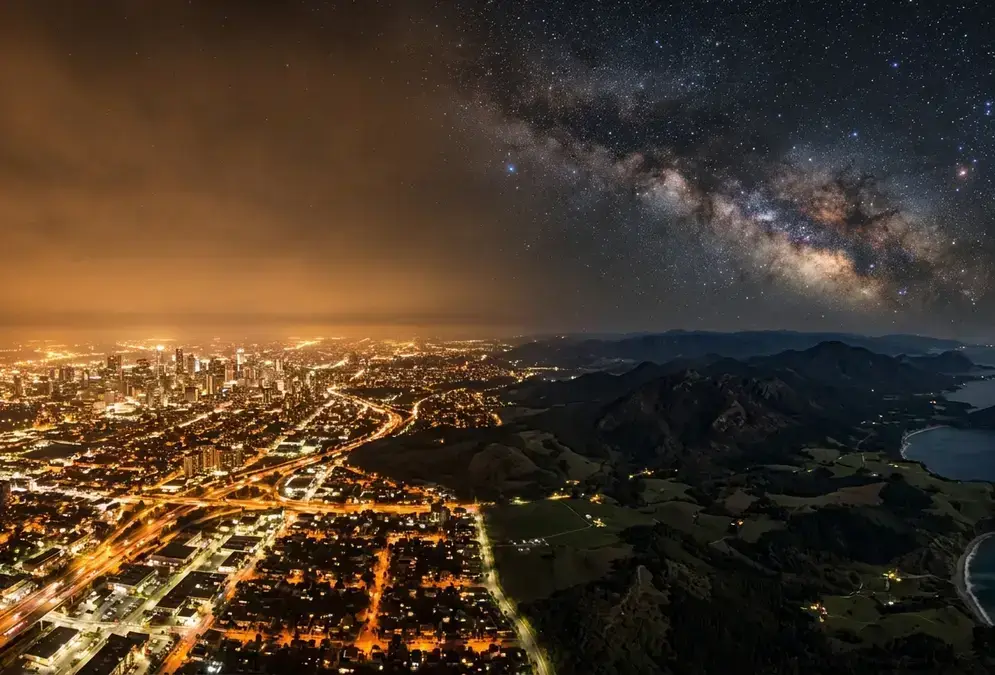
Featured · Article
What Is Light Pollution? Definition, Types, and Solutions
Light pollution is artificial light brightening the night sky, affecting 80% of the world. Learn the 4 types, wildlife and health effects, and how to fix it.
Recommended tours
Tours are selected for quality, not commission. I earn a small fee if you book — at no extra cost to you.
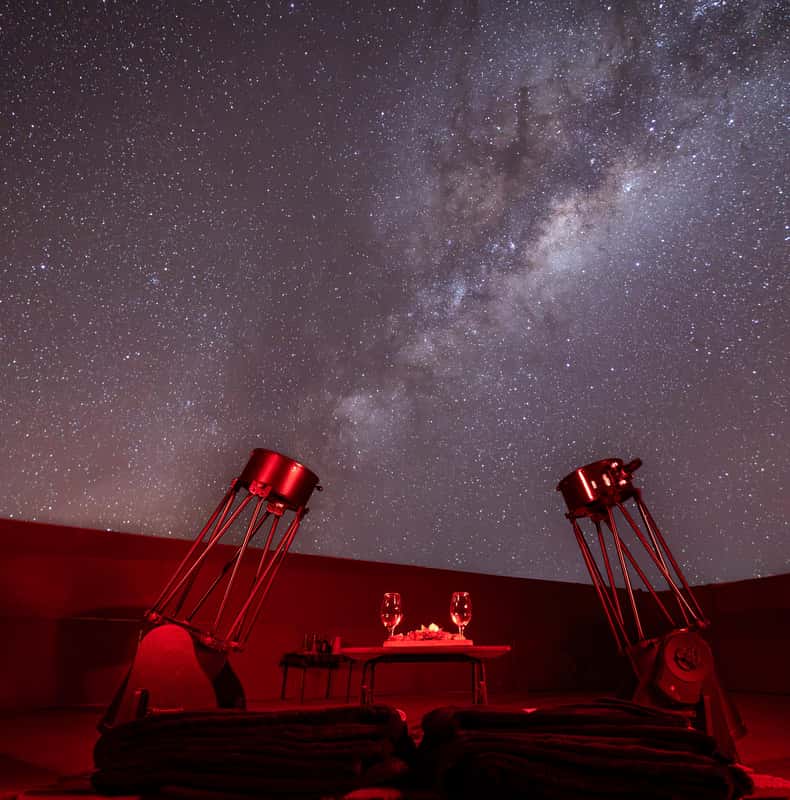
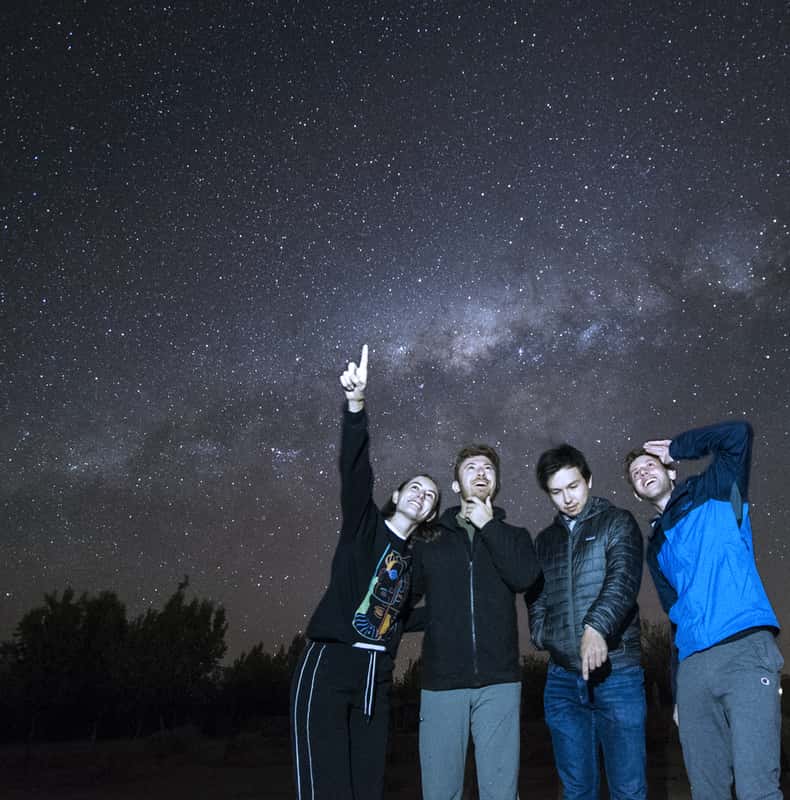
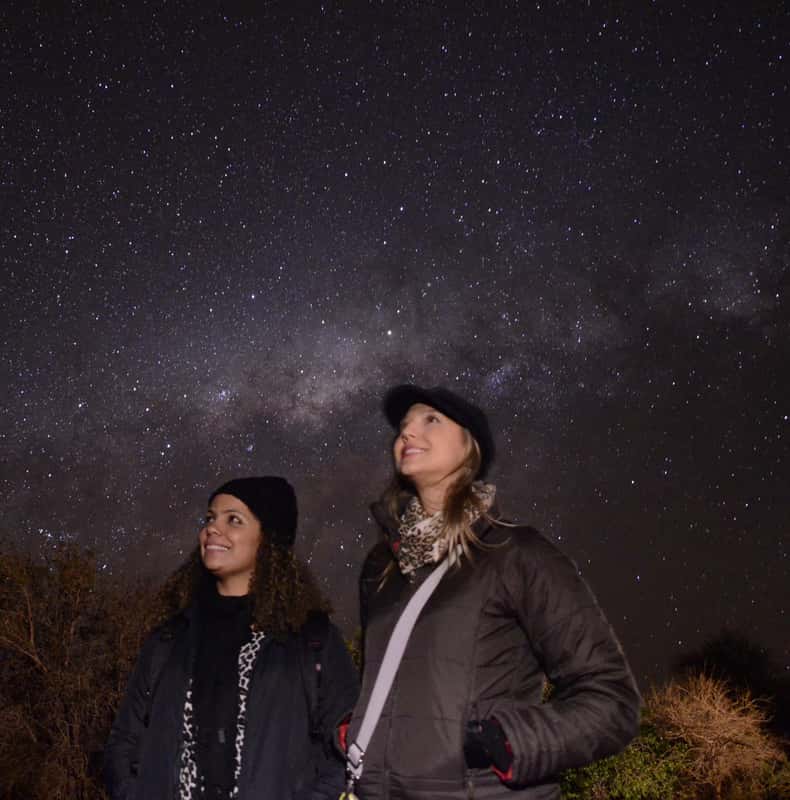
Chile's stretch of desert draws astronomers looking for the driest, clearest darkness on the planet[16], and that reputation is earned on the ground, not just in marketing copy. For the logistics beyond where to point a telescope, how many days in the Atacama for stargazing, adjusting to the Atacama's altitude before you go, and the ranked guide to Atacama stargazing lodges cover the rest of the trip.