
Why your trip length starts with the moon, not the map
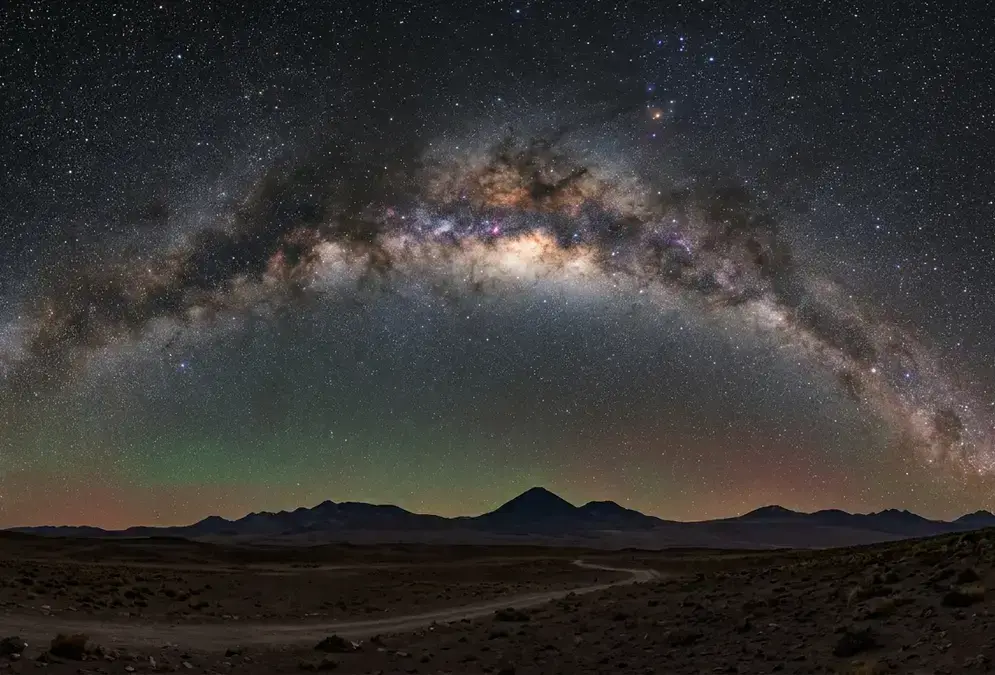
Most Atacama planning guides open with a list of landmarks and work backward from "how long does it take to tick them off." That approach breaks down here because the SPACE Observatory cancels all tours for approximately one week around the full moon[1] — not one night, one week. If you arrive on the wrong phase and your stay is only three nights, you may not get a single clear telescope session.
330+
The practical implication: choose your travel dates before you choose your trip length. Pull up a lunar calendar, find the new-moon window that fits your schedule (roughly the five-day window centred on new moon, when the Atacama sky reaches its darkest), then build your stay around it. Once your arrival date is locked to a favourable phase, the question of how many nights follows naturally from what you want to do with the days.
A second constraint is altitude. San Pedro sits at 2,443 m above sea level[2] — not extreme, but enough to cause headaches, poor sleep, and nausea in visitors arriving from sea level who immediately attempt strenuous activity. The El Tatio geyser field is at roughly 4,300 m[3], and the altiplanic lagoons reach similar elevations. Both require at least two full nights of acclimatisation in town before you attempt them safely. That buffer is not optional time you can compress.
3 nights: the real minimum
Three nights in San Pedro is doable, but only if everything falls in your favour. You need a good moon phase, no altitude setbacks, and no travel delays. There is almost no room for anything to go wrong.
A realistic three-night sequence looks like this. Day 1 is arrival and acclimatisation — fly Santiago to Calama in roughly two hours[2], transfer the 100 km road to San Pedro in about 70 minutes, check in by early afternoon, and rest. Most visitors feel the altitude within a few hours of landing at Calama, which sits at 2,260 m — there is no low-altitude buffer anywhere on this route. A gentle walk to the edge of town is the ceiling for Day 1.
Day 2 opens at Salar de Atacama in the morning — the flamingo lagoons sit at roughly 2,300 m, slightly lower than town, which is useful after just one night at altitude. Afternoon rest, then your first stargazing session in the evening if the moon phase is right.
Read next · Tour
Atacama Stargazing & Astronomy Tour
Evening telescope session under the world's clearest skies. Book near new moon, avoid full moon. SPACE Observatory, San Pedro de Atacama — CLP 45,000.
Day 3 leaves you with a choice: Valle de la Luna at sunset before your departure transfer, or an early transfer to Calama to catch a late flight. What you give up is non-negotiable: El Tatio geysers and the altiplanic lagoons are off the table on a three-night stay. El Tatio's pre-dawn 4,300 m departure is too aggressive for a body that has had only two nights at altitude. So is the altiplanic circuit at 4,200 m. If those are on your list — and they should be — you need more nights.
4 to 5 nights: where most trips find their balance
Four or five nights is the range most specialist operators and experienced travellers recommend, and the logic is straightforward. You have time to acclimatise properly, attempt El Tatio safely (which demands a pre-dawn departure around 04:00[4]), work in two or three stargazing sessions, and cover the main day excursions without feeling chased by the clock.
With four nights, a workable sequence runs like this:
- Night 1 (arrival): Rest, hydrate, a light dinner in San Pedro. No strenuous activity.
- Day 2: Salar de Atacama flamingo lagoons in the morning. Afternoon rest. First stargazing session in the evening if the moon phase aligns.
- Day 3: Pre-dawn departure for El Tatio geysers — this is the earliest you should attempt the 4,300 m field after two nights of acclimatisation. Back in San Pedro by midday. Rest in the afternoon. Second stargazing session.
- Day 4: Full-day altiplanic lagoons circuit — Piedras Rojas and Lagunas Miscanti and Miñiques at around 4,200 m[5]. Valle de la Luna at sunset.
- Day 5 (departure): Morning transfer to Calama, flight to Santiago.
Five nights opens up the pace considerably. You can push El Tatio to Day 4 instead — giving your body a full extra day at town altitude before the high-elevation stress. It also allows a third stargazing session, which is genuine insurance: if the first evening was partly cloudy, having a second and third attempt within the new-moon window means you will almost certainly have at least one exceptional night. You can also fit Laguna Cejar, the high-salinity floating lagoon run by Nomades each afternoon, without it competing with anything else on the schedule.
Days vs what you can realistically do
The table below maps each trip length to what is achievable, assuming you arrive during the new-moon window and stay healthy at altitude. "Achievable" means completing the experience without serious altitude fatigue or a compressed schedule that turns excursions into a blur.
| Trip length | Stargazing sessions | El Tatio geysers | Altiplanic lagoons | Pace |
|---|---|---|---|---|
| 3 nights | 1 (moon-dependent) | No — altitude risk | No | Rushed |
| 4 nights | 2 sessions | Yes, Day 3 earliest | Yes, Day 4 | Tight but doable |
| 5 nights | 2–3 sessions | Yes, Day 3 or 4 | Yes, Day 4 or 5 | Comfortable |
| 6–7 nights | 3–4 sessions + backup | Yes, optimal Day 4 | Yes | Relaxed; Bolivia option opens |
Note the pattern: the experiences that require acclimatisation (El Tatio, altiplanic lagoons) do not become available until Day 3 or 4. No amount of physical fitness changes this — the altitude is the constraint. Plan your trip length around which of those experiences you want rather than around the number of landmarks you want to photograph.
For a fully fleshed-out day-by-day structure, the Atacama itinerary guide maps out the complete 3-to-5-day sequence with specific morning and afternoon slots.
When 6 or 7 nights makes sense
Most travellers treat six or seven nights in San Pedro as excessive. For astrophotography or a first serious look at the southern sky through a large telescope, it becomes logical rather than indulgent.
Recommended tours
Tours are selected for quality, not commission. I earn a small fee if you book — at no extra cost to you.
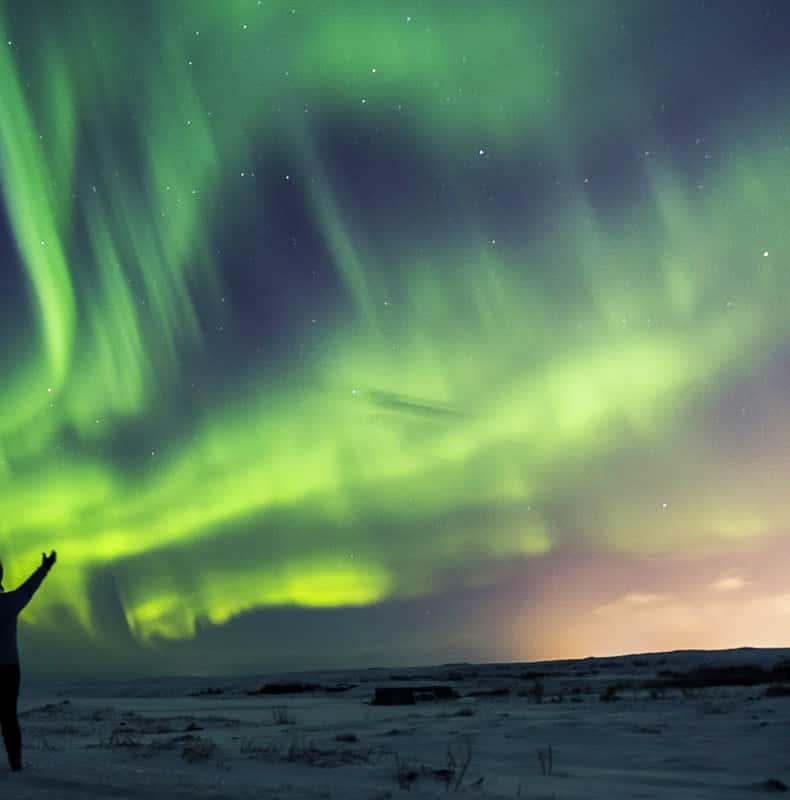

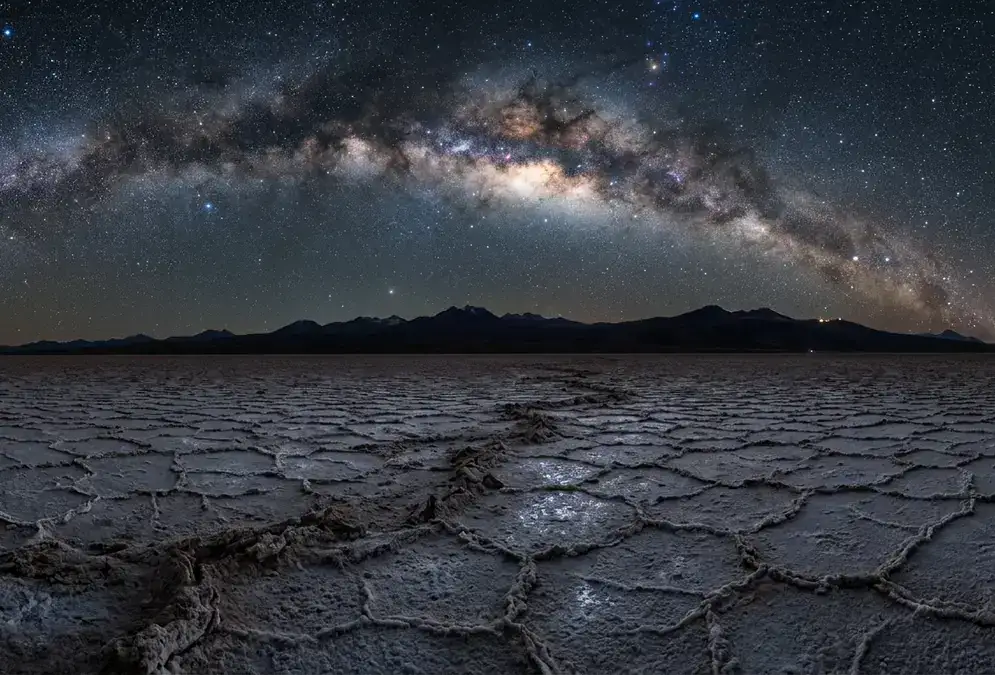
The galactic core is most dramatic during the Southern Hemisphere winter — June through August — when it transits nearly overhead[6]. Nights are cold: June average low in San Pedro is 0.3°C[7], and pre-dawn temperatures at El Tatio can reach -15°C. The atmosphere is also at its driest, which sharpens the sky. A week-long stay lets you wait out one partly-cloudy evening and still have three or four properly dark-sky nights. For astrophotography, that redundancy matters — you need multiple attempts to get the composition, the foreground, and the atmospheric seeing to cooperate at once.
Featured · Destination
Atacama Desert Stargazing
Earth's driest desert delivers Bortle 1–2 skies, 330+ clear nights a year, and the galactic core almost overhead. Guide: tours, lodges, season, getting there.
Six-plus nights also opens the Bolivia crossing. Several operators in San Pedro run three-day jeep tours across the Hito Cajón border crossing at roughly 4,400 m to the Uyuni salt flats. Combining the two destinations requires checking visa requirements for both Chile and Bolivia, but for travellers who want to do it, the extra nights are the only way to make it work without sacrificing Atacama experiences.
If you are flying from North America or Europe and San Pedro is your sole destination, the return routing via Santiago already makes a short stay feel wasteful. Six nights removes the pressure: an acclimatisation walk on Day 1, the high-altitude excursions spread across Days 3 through 5, and two full evenings inside the optimal dark-sky window.
How to sync your stay with the new-moon window
The best time for Atacama stargazing is May through August by season, but within any month the new-moon phase overrides everything else. SPACE Observatory cancels all tours for roughly one week around full moon — the sky background rises enough to wash out the Milky Way's dust lanes and the faint deep-sky objects the telescopes target. On those nights, even Bortle 1–2 conditions do not save you.
Practically: open a moon-phase calendar (timeanddate.com covers San Pedro de Atacama directly) and find the new-moon dates for your preferred travel month. Your ideal stay is centred on that date — the nights from roughly three days before to four days after new moon are your darkest window. If you are flying internationally, try to land at least two days before new moon rather than two days after, so the first part of your stay sits in the building darkness rather than the rapidly brightening post-new-moon phase.
Some travellers aim for a crescent or quarter moon instead. That works fine for daytime excursions and gives a partial Milky Way view in the early evening before the moon rises, but the SPACE Observatory session is unavailable during the full-moon week. Book the telescope tour first, confirm flights around it.
The arithmetic most satisfied visitors land on: arrive two days before new moon, stay four nights. Three of those nights fall inside the optimal window. Add a fifth night and you extend the dark window to four nights — meaningful insurance if one evening is compromised by cloud.