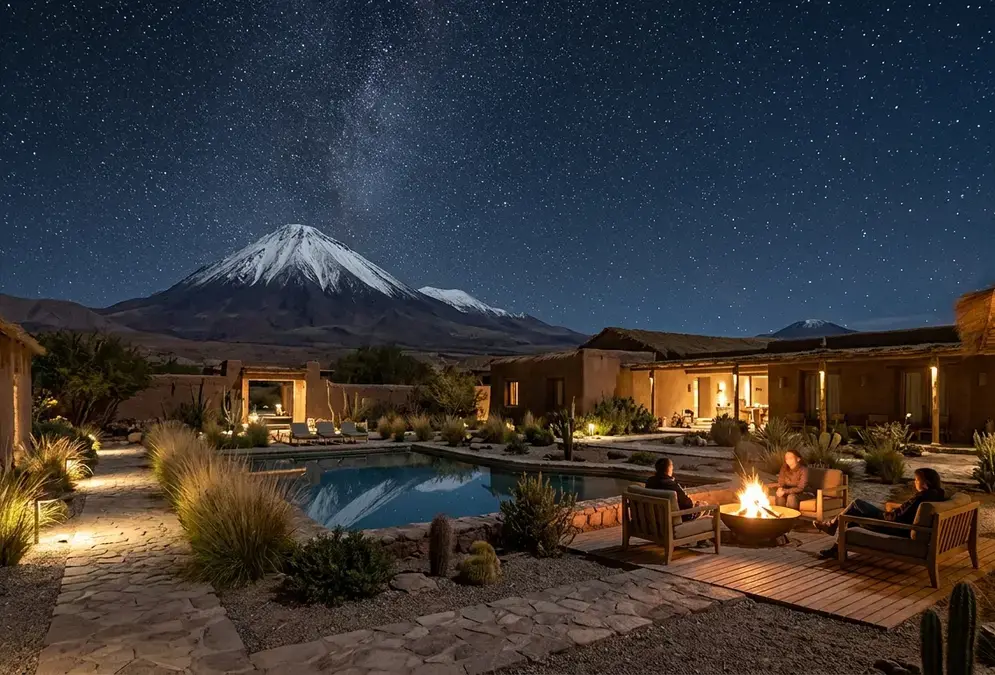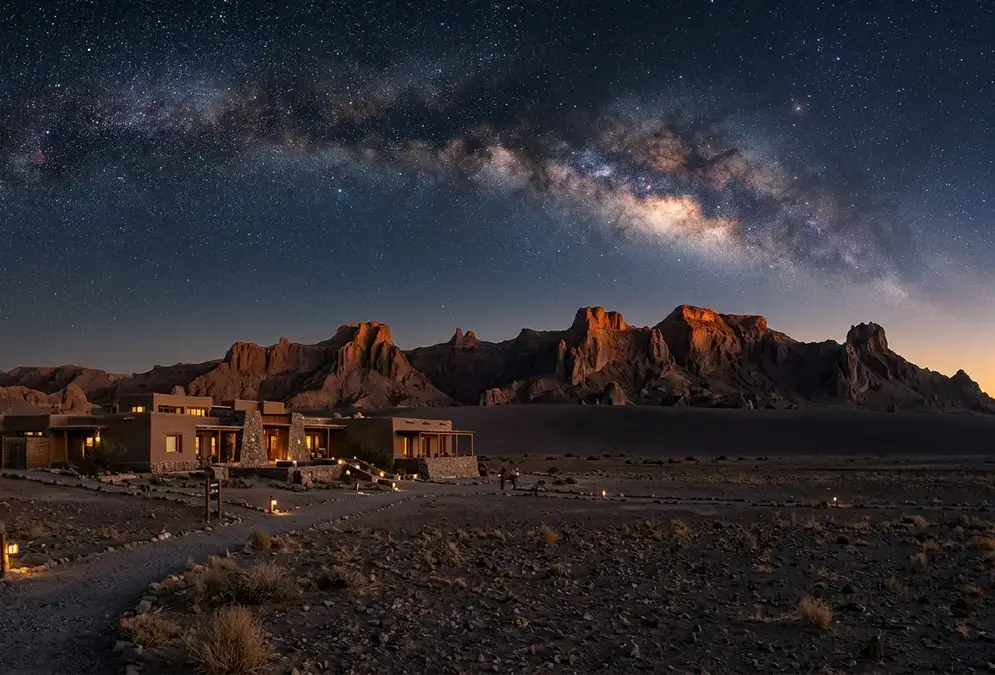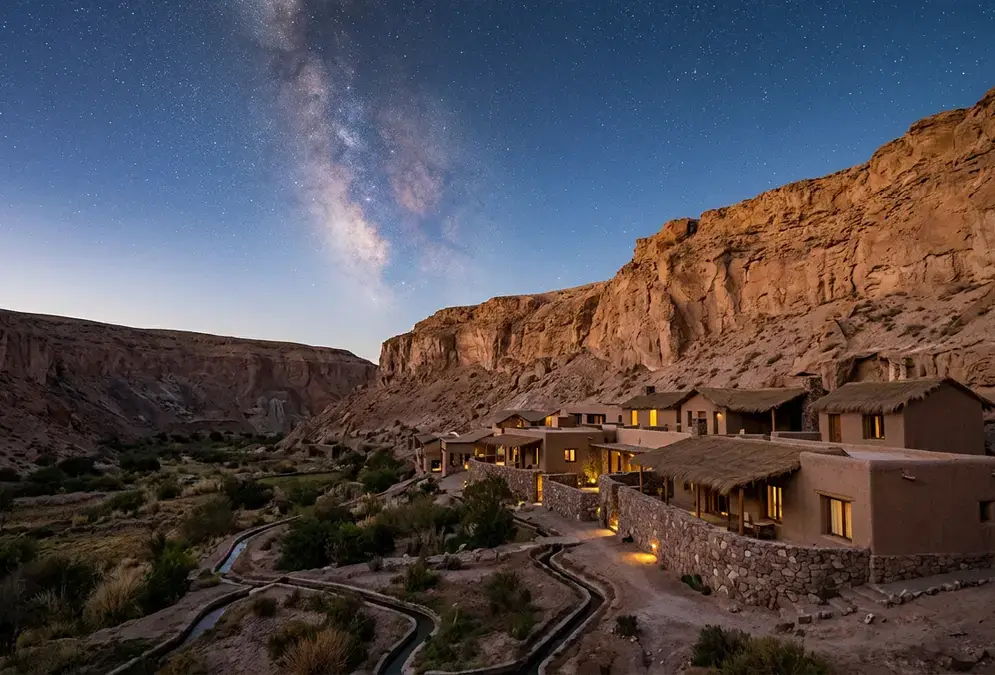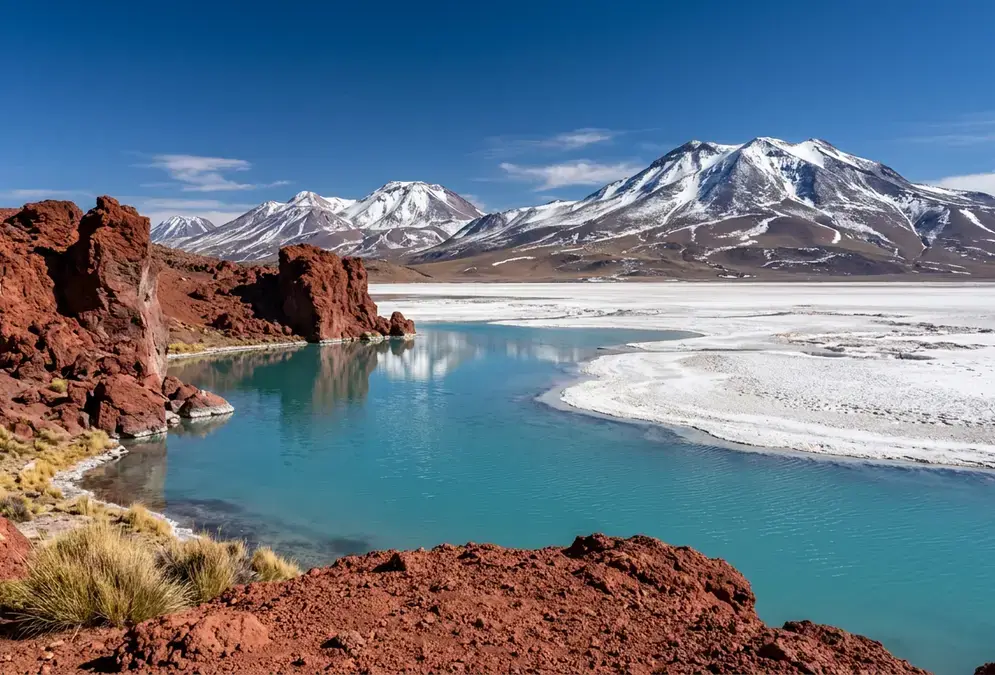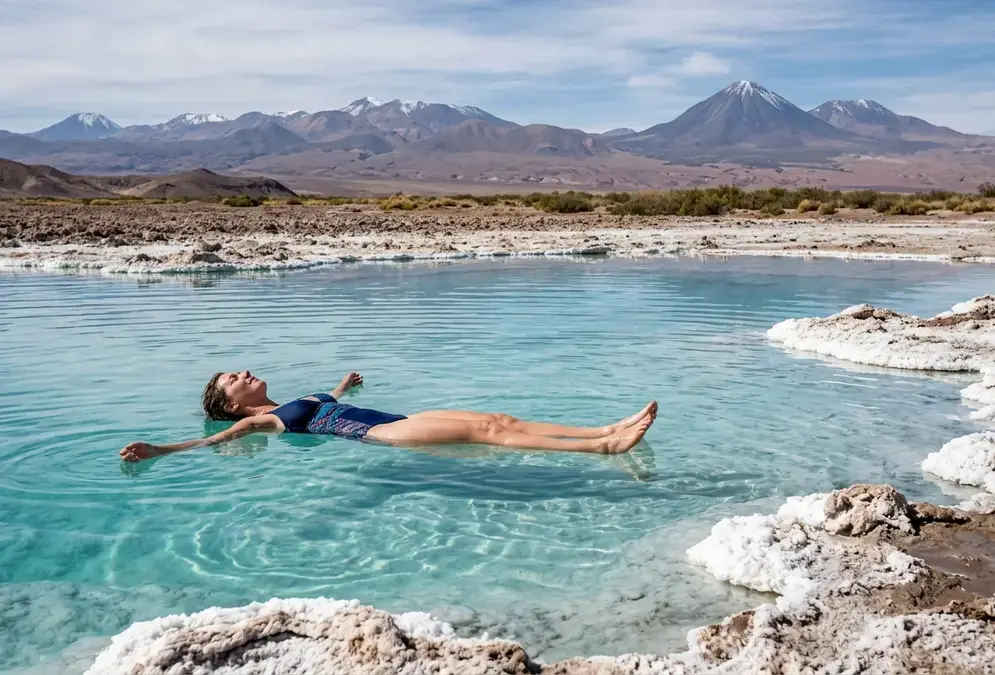
Laguna Cejar sits about 14 km west of San Pedro de Atacama inside the Reserva Nacional Los Flamencos, at roughly the same altitude as town. The hypersalinity here — a salt concentration near 30%, close to the Dead Sea — means the moment you wade past waist depth, your feet lift off the bottom. Most people laugh when it happens. You cannot sink. Swimming conventionally is harder than floating; the buoyancy threshold fights you back.
What the tour covers
The principal operator, Nomades, runs an afternoon circuit that leaves San Pedro at 14:00 and returns around 18:30. The route moves through three distinct features of the Salar de Atacama, each representing a different layer of the altiplano's hydrological chemistry.
Ojos del Salar comes first: two circular freshwater pools where subsurface aquifers breach the salt crust. A lens of freshwater, lower density than brine, sits perfectly still on top of the denser saline layer without mixing. They look geologically improbable. Give it 15–20 minutes and move on.
Laguna Cejar is the main event. Swimming is restricted to the Piedra Lagoon area, where guides manage group entry. The mineral composition here — gypsum, lithium, and potassium salts concentrated by millennia of Atacama evaporation — is what drives the hypersalinity. The water is cold even in summer, which surprises most visitors who expect a warm spa. Bring a towel and be prepared to shiver for the first minute. After that, floating on your back with the Atacama sky overhead earns its cliché.
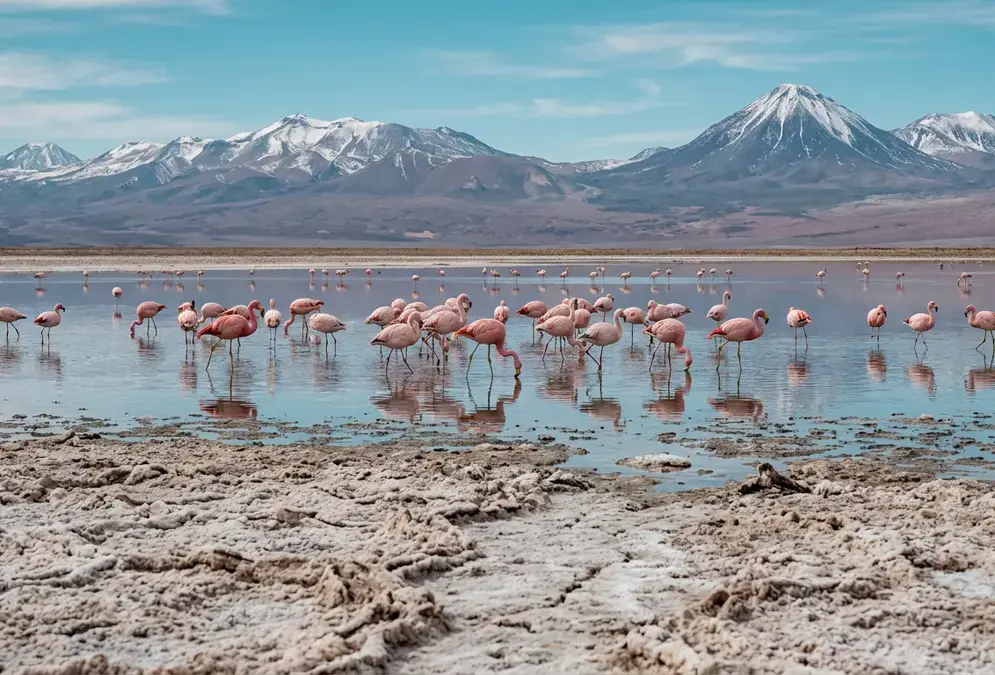
Laguna Tebinquinche closes the circuit. A wide brine lagoon and active flamingo habitat: the water goes mirror-flat around sunset while flamingos feed in the shallows. Nomades includes a pisco sour here. The timing, frankly, is well-judged.
The no-sunscreen rule and why it matters
You must rinse off all sunscreen before entering Laguna Cejar, and guides check at the water's edge. This is Chilean national law inside Los Flamencos, not an operator preference. Sunscreen chemicals disrupt the microorganisms and mineral balance essential to the lagoon's ecology. Wear a UV-protective rash guard instead — it solves the sun protection problem and keeps you warmer on the drive back.
Practical logistics
The Tebinquinche entrance fee — CLP 6,000 for adults, CLP 3,000 for children aged 5–17 — is paid in cash the day before the tour. Plan accordingly and bring small denominations. The Laguna Cejar entrance alone is CLP 15,000 per person for independent visitors, though reserve logistics favor booking through an established operator.
Nomades closes Laguna Cejar every Tuesday for environmental maintenance. Book any other day. Tour packages typically run USD 40–60 per person all-in.
Desert thermal shock and what to expect
The cold-water immersion surprises most people. Afternoon air in the Atacama can reach 25–30°C; the lagoon stays cold year-round due to high-altitude groundwater input and minimal thermal stratification. The desert thermal shock on entry is more jarring than it sounds. Bring something warm for the drive back to San Pedro.