Most Atacama tours drag you out of bed at 4 AM. This one doesn't. The salt flats and flamingo lagoons at Salar de Atacama run on a sensible schedule — morning or afternoon departures, no altitude concerns (the salar sits at around 2,300 m, slightly lower than San Pedro itself) — and you're back in town well before dark.
What you'll see on the drive south
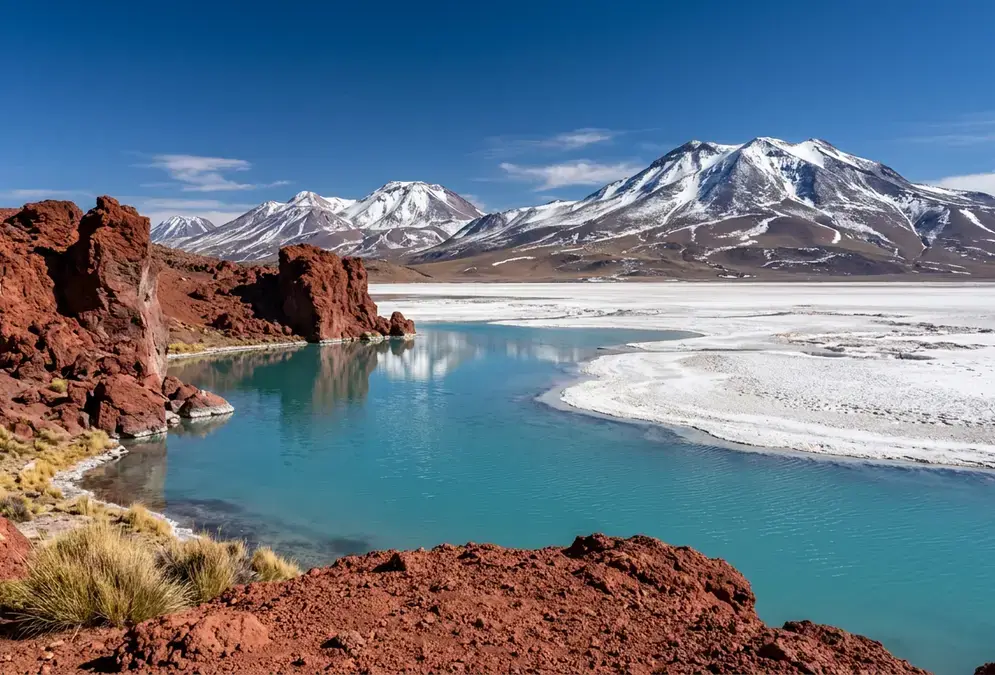
The hour-long drive down Ruta 23 crosses scrubby altiplano until the road levels onto the world's third-largest salt flat: roughly 3,000 km² of crystalline white crust interrupted by pale turquoise brine pools. Most tours stop first in Toconao, a whitewashed village at the salar's edge with a 16th-century volcanic-stone church and narrow irrigation channels that have watered orchards since pre-Columbian times. Worth 30 minutes.
The salar's northern section holds active lithium brine extraction operations, visible from the road. The wildlife lagoons sit on the southern and central portions of the reserve, well separated from the industrial fringe.
Three flamingo species at Laguna Chaxa
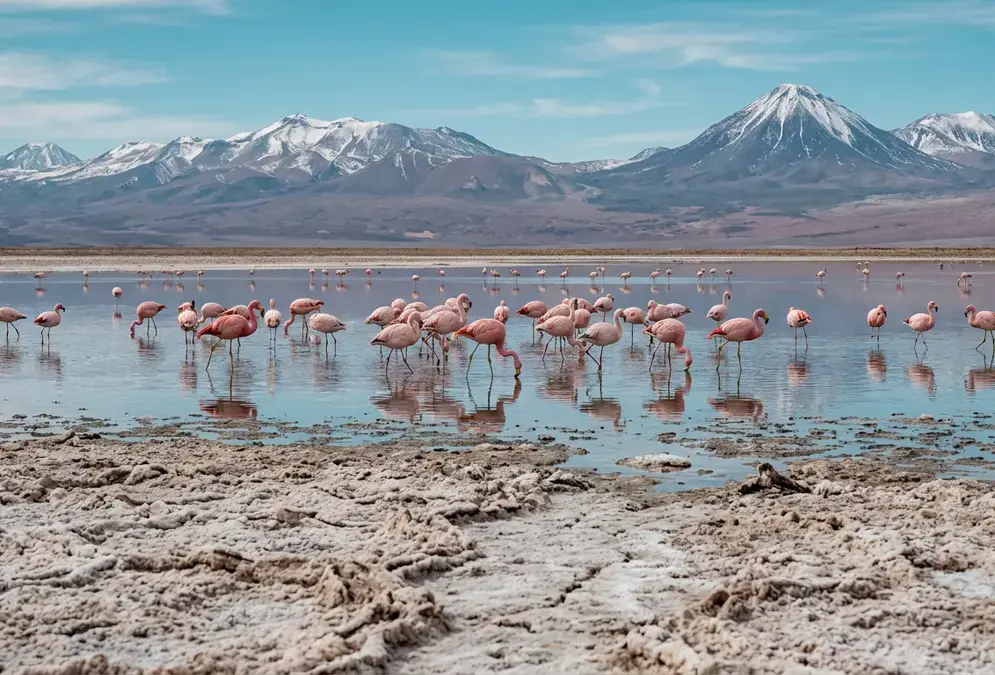
Laguna Chaxa is the tour's centrepiece. A shallow, mineral-rich brine lagoon inside Reserva Nacional Los Flamencos, it holds something genuinely unusual: all three Andean flamingo species in the same frame. Chilean Flamingos (Phoenicopterus chilensis) wade in the shallows in the largest numbers. Andean Flamingos (Phoenicoparrus andinus) are stockier with more yellow on the bill. James's Flamingos (Phoenicoparrus jamesi) — also called Puna flamingos — are the smallest of the three, with a distinctive crimson flush at the wing base.
All three share these high-altitude lagoons because Chaxa's mineral-rich brine sits at an elevation that bridges their separate ecological niches, making it one of the few sites in South America where they reliably overlap. A naturalist guide who can tell them apart on the wing is worth having. The boardwalk loop takes about 45 minutes at an unhurried pace.
Morning vs afternoon: which to choose
Morning light is better for photography. The flamingos feed actively, the salt crust catches directional sun, and the Andes to the east stay sharp before midday haze builds. Afternoon tours are perfectly good, and some operators extend them to Laguna Tebinquinche — a shallower lagoon whose mirror-flat brine surface reflects the Andes dramatically at sunset.
Bring strong sunscreen regardless. The salt-flat glare is relentless, and at 2,300 m the UV exposure is higher than it looks.
The Atacama at night: same sky, different show
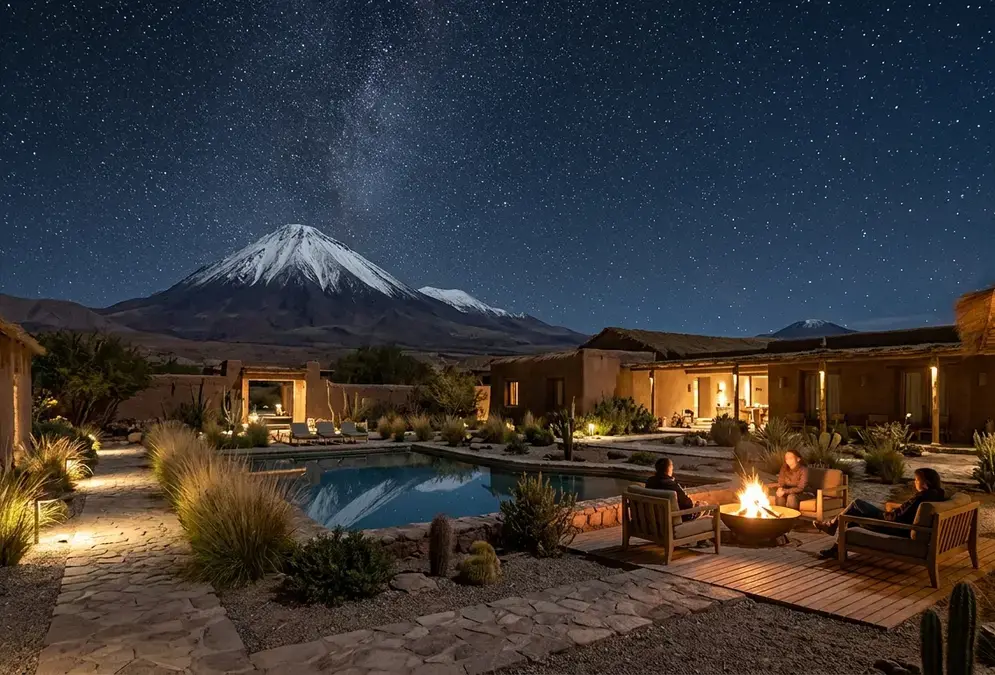
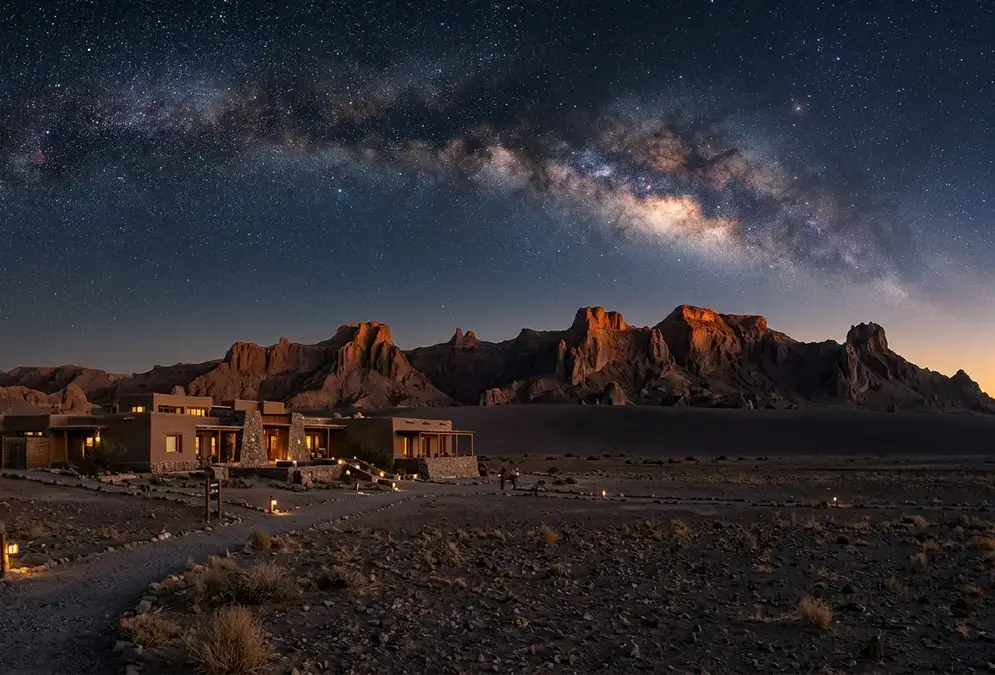
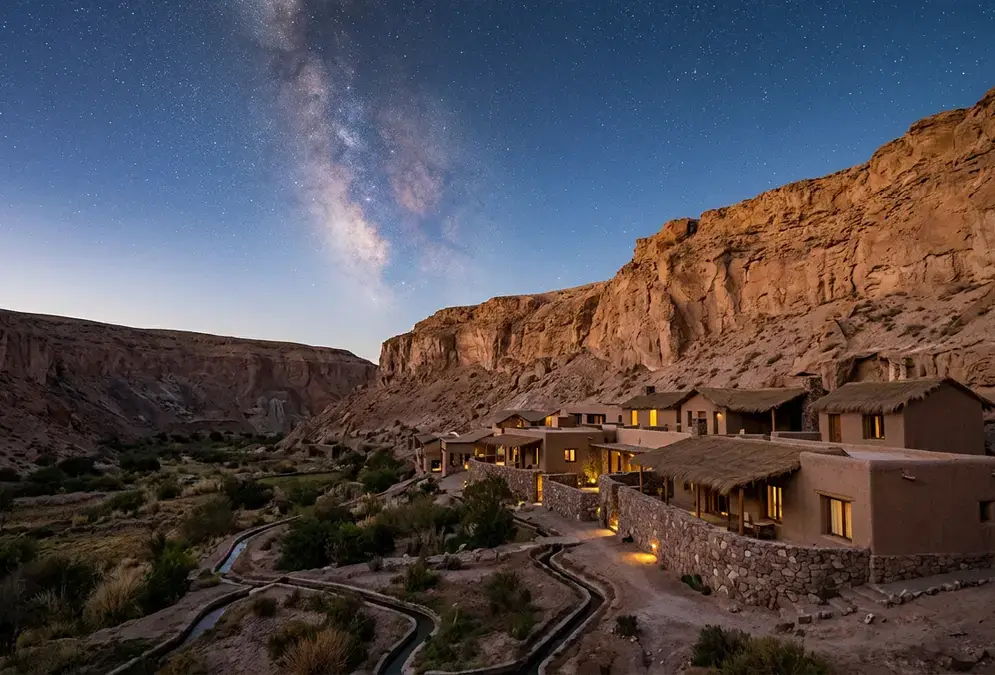
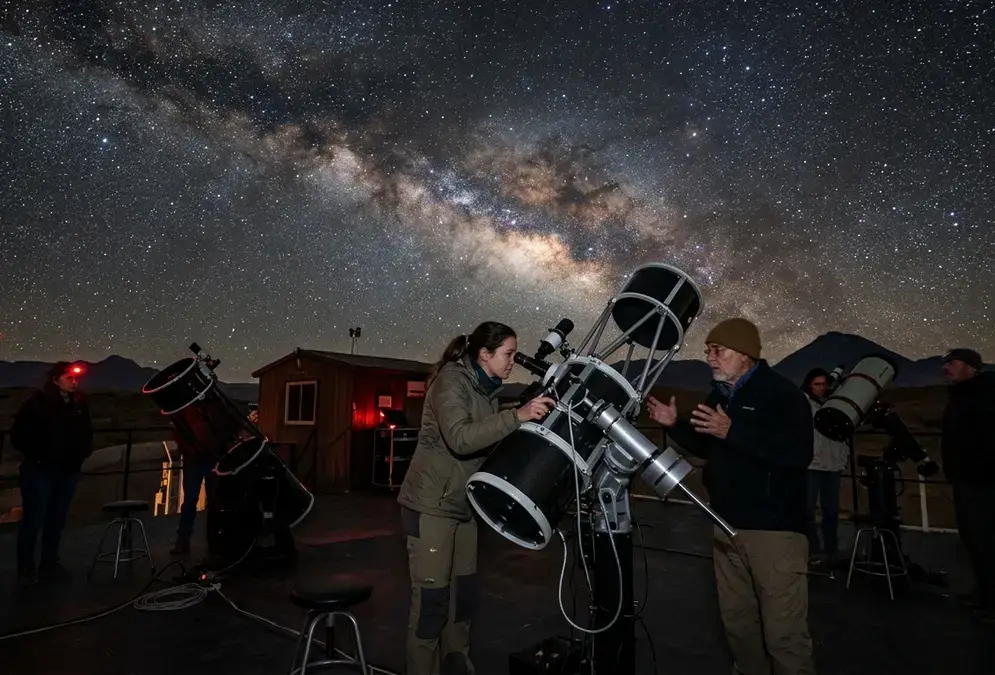
The same geographic qualities that make this region exceptional for flamingo photography — flat terrain, zero light pollution, 300+ clear nights annually, and near-zero atmospheric humidity — make the Salar de Atacama one of the world's best platforms for dark-sky observation. Atmospheric transparency here is among the highest on Earth, which is why more than half of the world's ground-based telescopes are located in the Atacama region. The flamingos are strictly diurnal (they roost at night), but the salt flat's open horizon makes it a serious astrophotography site after dark. Some operators offer day-plus-evening packages combining the flamingo tour with a stargazing session.