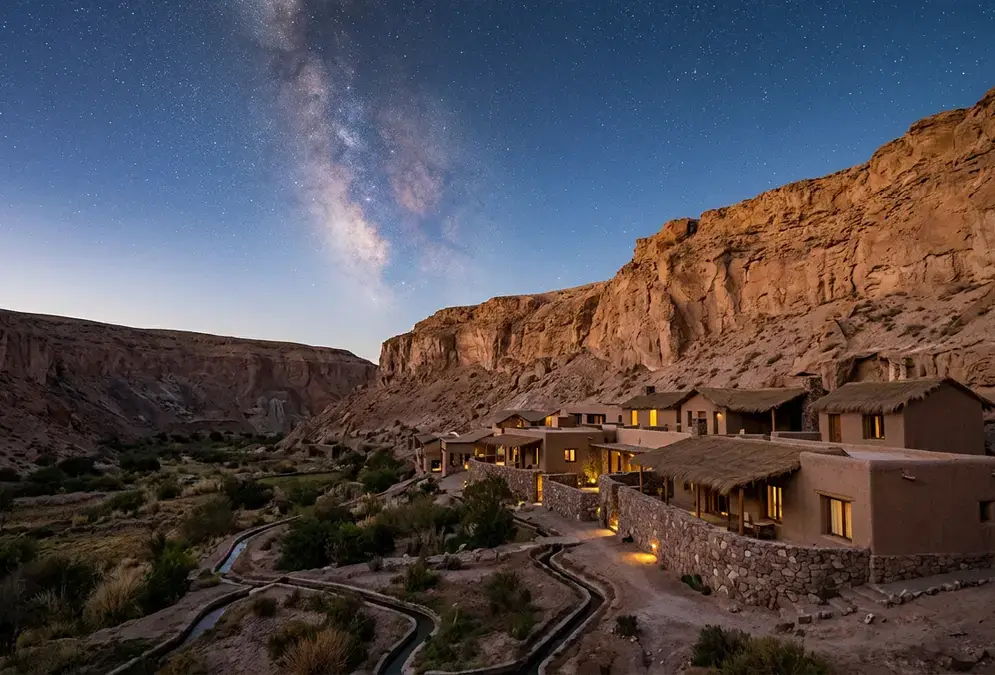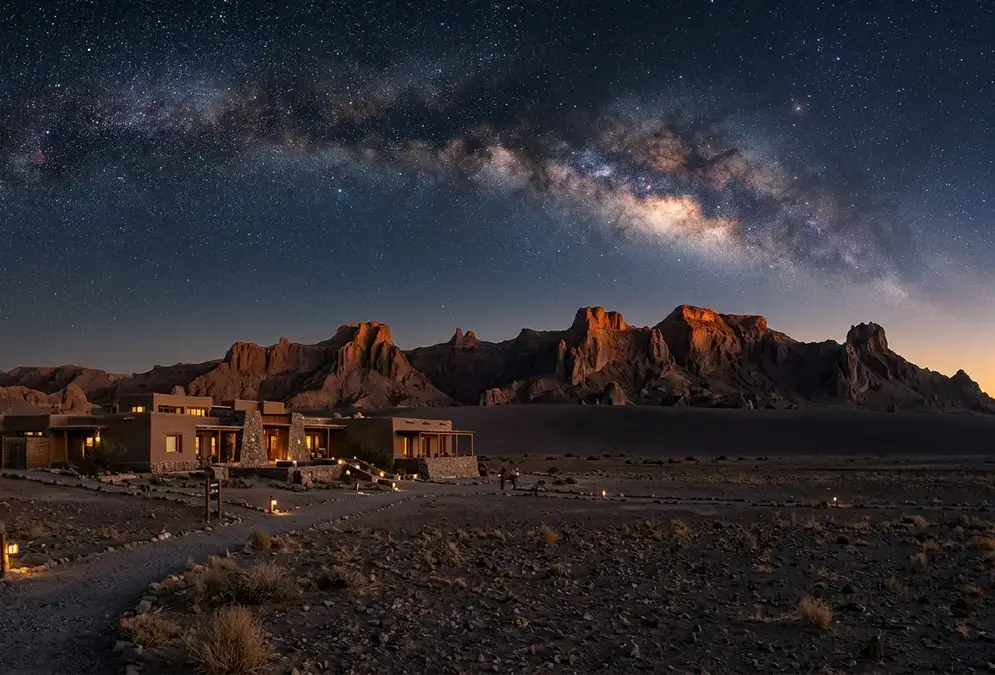
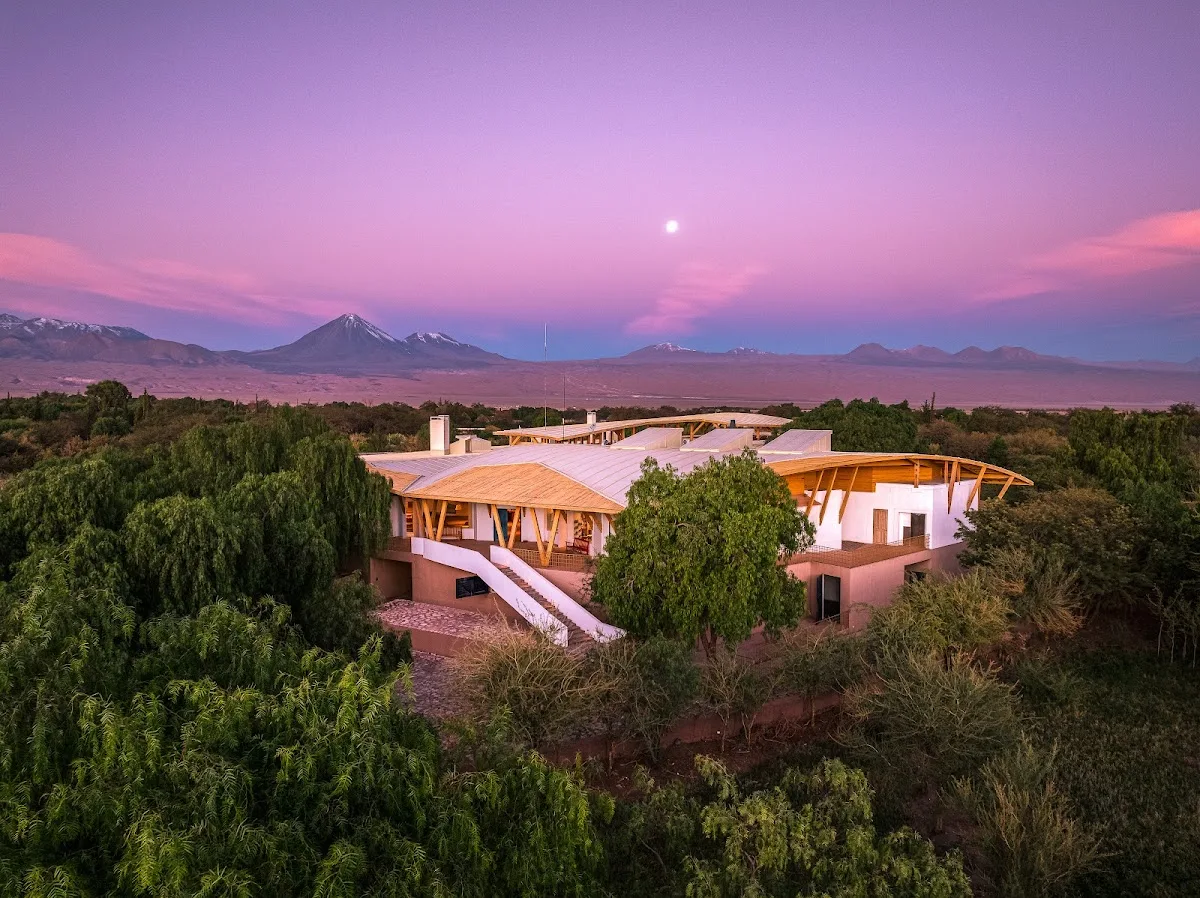
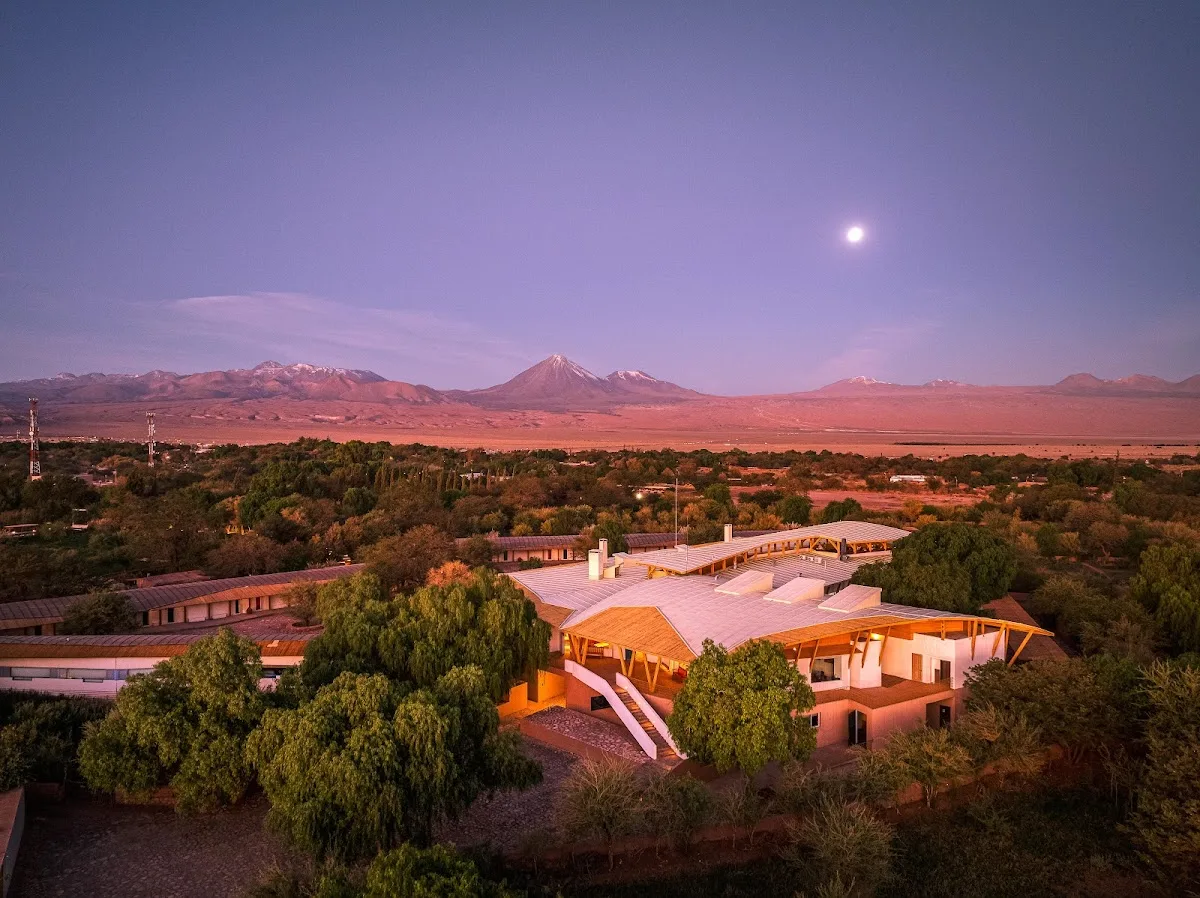
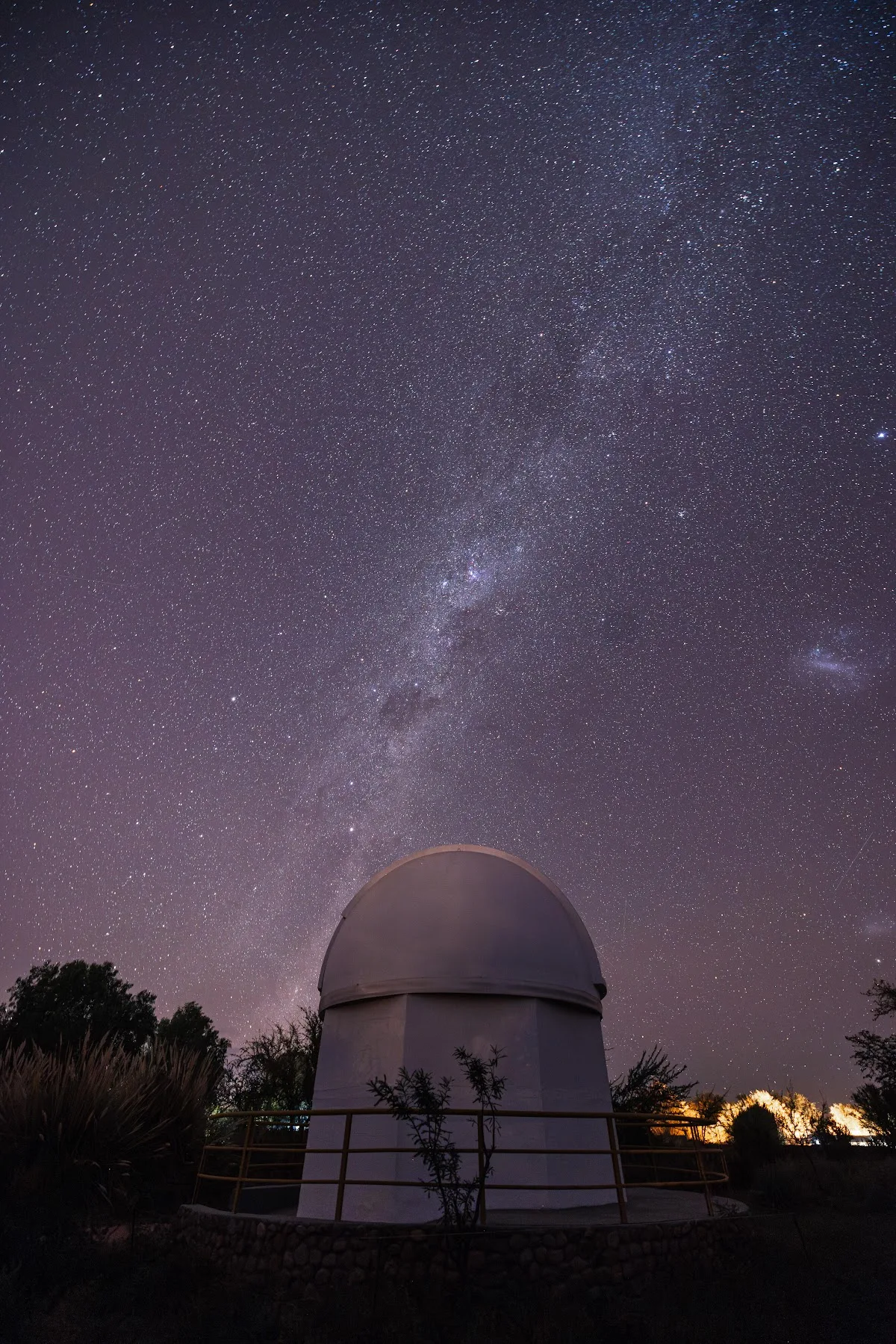
Explora Atacama sits on a 42-acre estate at the Ayllu de Larache — a pre-Hispanic irrigation hamlet on the flat pampa at the edge of San Pedro de Atacama — and it is the only lodge in the valley with its own observatory built into the programme. At 2,408 m elevation under Bortle 1-2 skies, the Milky Way in June and July is bright enough to cast faint shadows on the desert floor. The nightly astronomy session is included; there is no separate tour to book.
What the telescope programme actually delivers
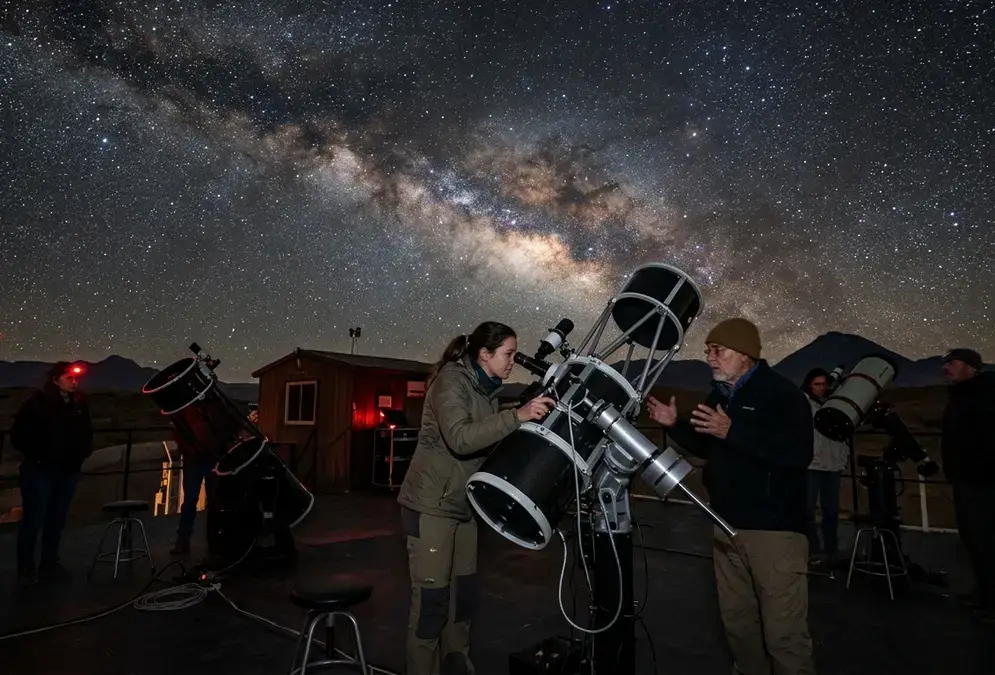
The on-site telescope is a Meade 16-inch (406 mm) Schmidt-Cassegrain reflector. The Schmidt-Cassegrain design gives it range: wide enough for the Magellanic Clouds, sharp enough to resolve globular clusters and emission nebulae at high magnification. Each session begins with a naked-eye orientation to the Southern Hemisphere sky before moving to the eyepiece for proper deep-sky objects.
The Southern Hemisphere advantage matters here more than people expect. The galactic bulge overhead in June and July reaches 60-70° elevation in the southern sky — from any Northern Hemisphere site, it barely clears the treeline. From San Pedro, you are looking nearly straight up at the densest part of the galaxy. Atmospheric transparency at this altitude is 40-60% better than at sea level, because 2,408 m carries a fraction of the water vapour column that blurs starlight at lower elevations. Atmospheric seeing (how steady the air column is) is also consistently good outside the January-February altiplano moisture window. The result: on a clear winter night, a 16-inch telescope under Bortle 1-2 conditions is not a novelty piece of kit. It resolves detail. I've been skeptical of bundled, big-name astronomy programs since visiting — most oversell the view. This is the one place I'd say the tour is worth it precisely because of where it happens to sit.
The all-inclusive model
The all-inclusive rate covers meals, open bar, all guided excursions on foot, horseback, bicycle, or 4x4, the nightly observatory programme, and private airport transfers from Calama. There is no upsell, no astronomy package to purchase separately, no transport to arrange to a remote dark site. The observatory is 200 metres from your room.
Explora guides run a curated excursion menu each day; guests choose from the current programme rather than booking independently. That structure pushes the rhythm toward something between an expedition and a resort: up early, out into the desert, back for lunch, rest, then the night programme. If you want to do El Tatio at 4,300 m on day three, the day-by-day pacing matters.
What is and is not included
All meals, open bar, all guided excursions (foot, horseback, bicycle, 4x4), the nightly observatory session, and private transfers from Calama's El Loa airport are included. International flights are not. Indicative rates run approximately USD 700-1,100 per person per night at standard double occupancy; suites are higher. Explora does not publish live pricing on its website — request via reservations.explora.com or a specialist travel agent.
Rooms and the estate
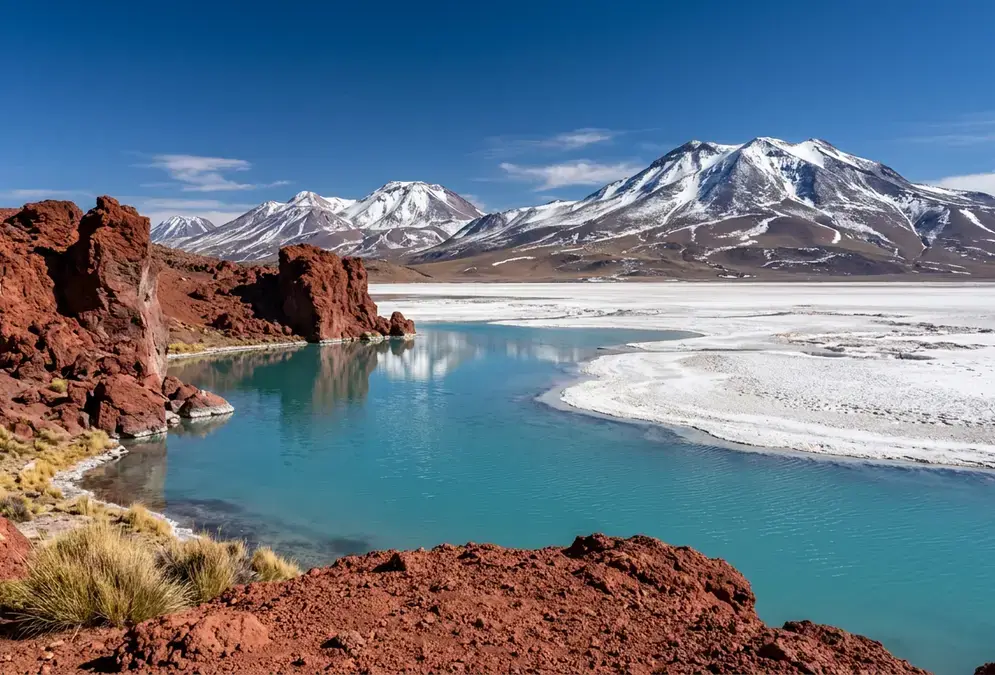
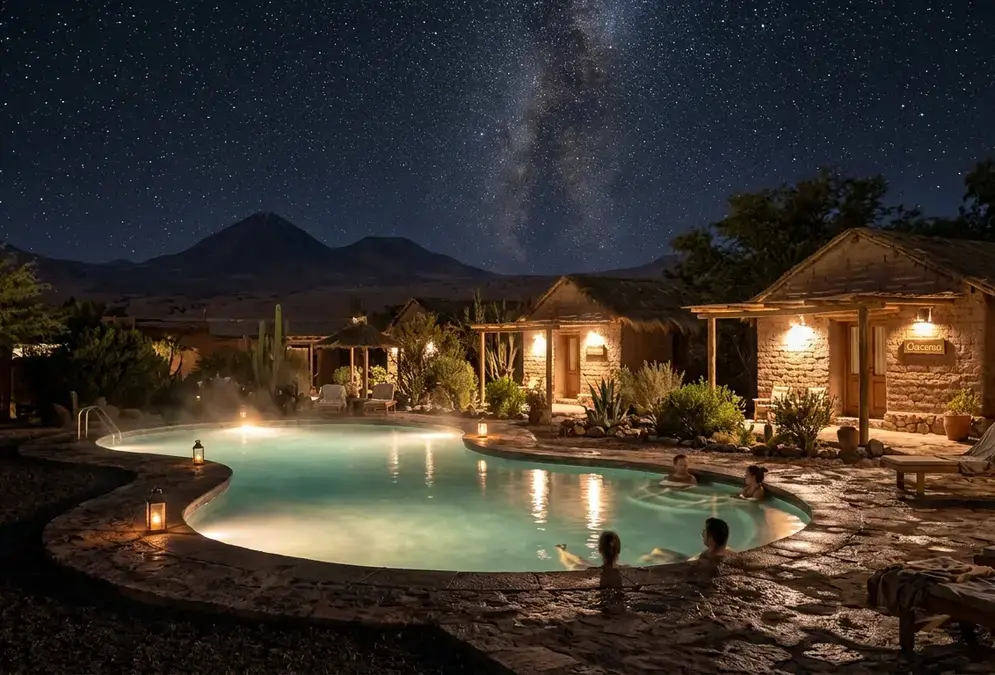
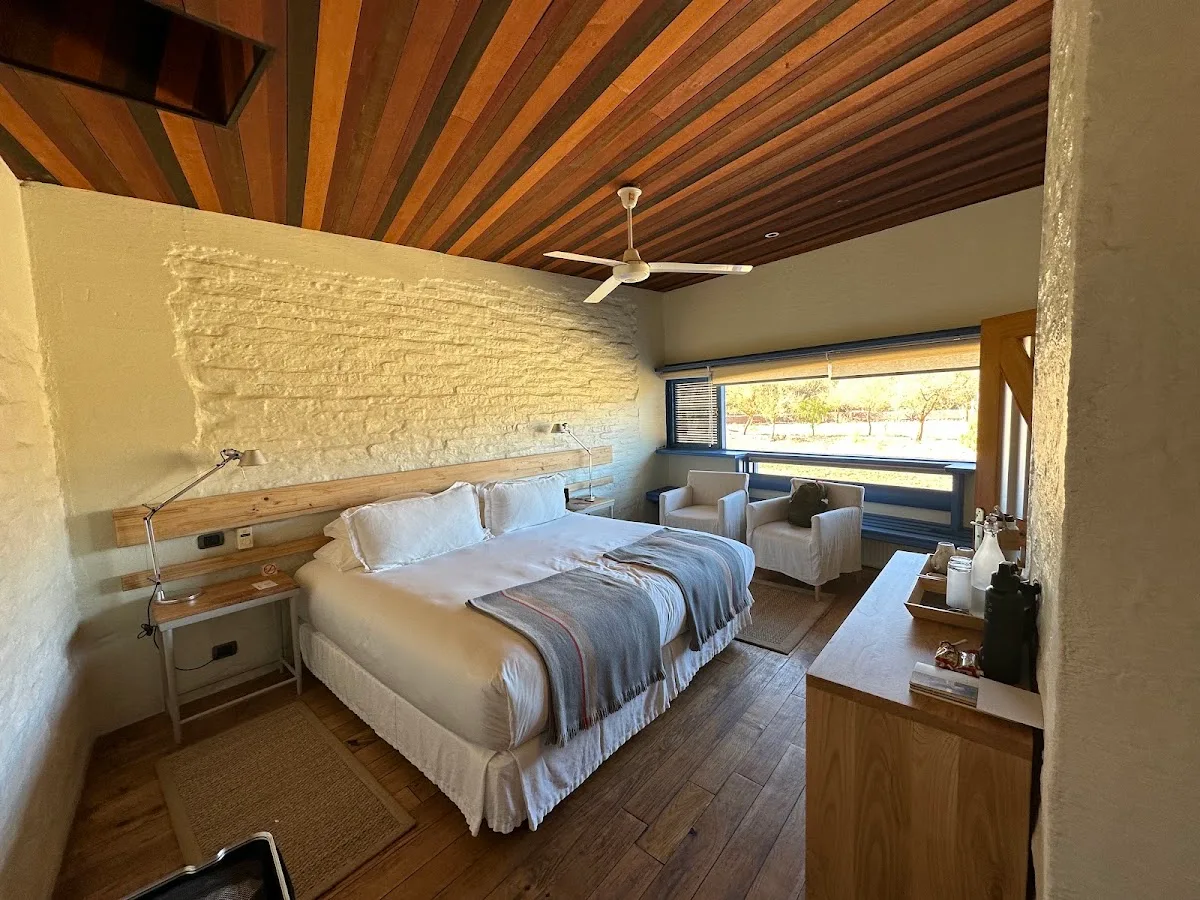
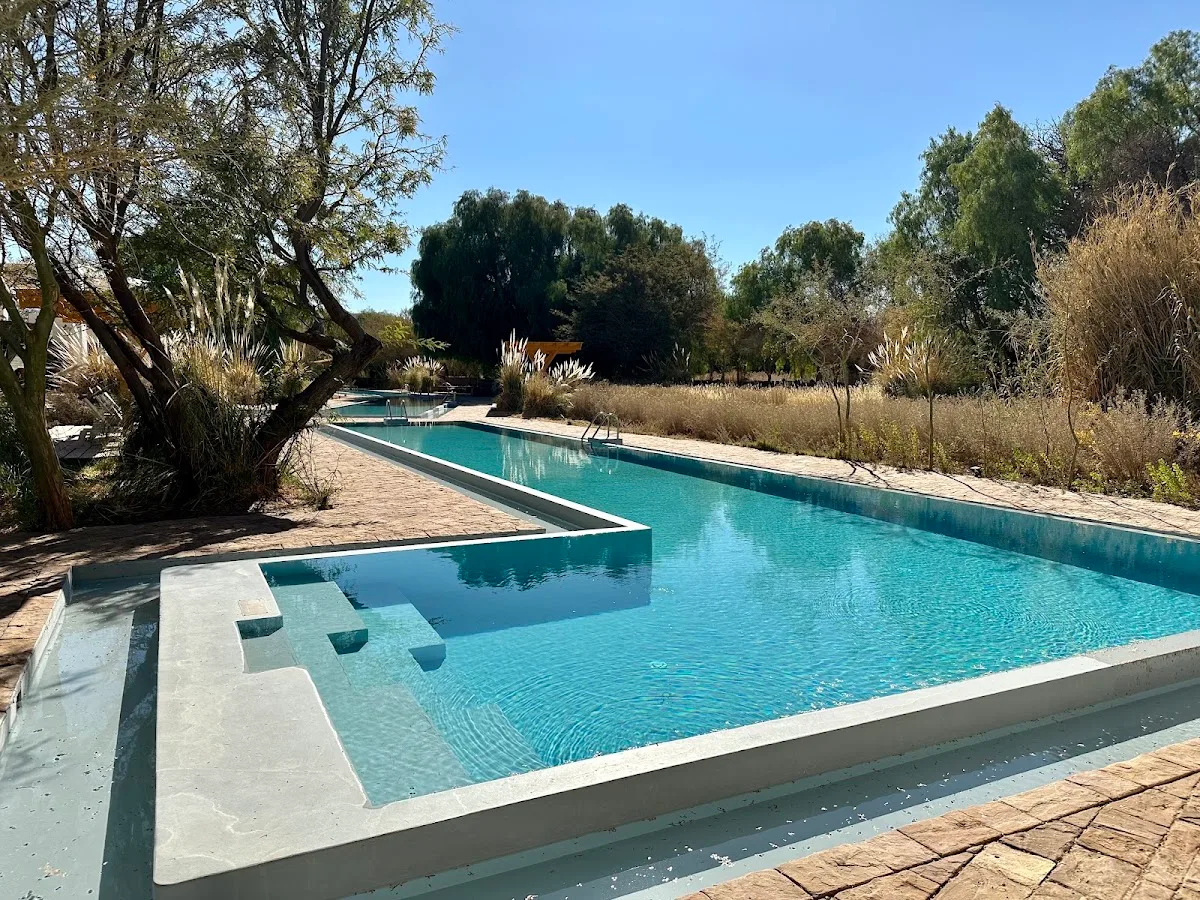
The 50 rooms divide into three categories: 4 Catur Suites at around 50 m², and two standard configurations, Yali and Tulur, at roughly 33 m² each. All face the desert landscape with views toward the Cordillera de la Sal or the pre-Incan Pukará de Quitor fortress on the ridge above. Four infinity pools are scattered across the grounds.
The property stays deliberately dim after dark. There are no floodlit terraces or bright lobby lights burning during the observatory programme. The restaurant sources from Atacameño producers and local agricultural oases; the kitchen treats the altitude and the aridity as culinary context rather than a problem to manage.
When to go — the astronomy calendar
May through August is the prime window. June and July are peak: the galactic core is highest in the southern sky, pre-dawn temperatures drop near freezing (which keeps water vapour near zero), and high-pressure systems give 90-98% clear-night probability. The new-moon window — the five nights centred on astronomical new moon — is when naked-eye galactic detail is fully visible. Faint nebulae, the outer edge of the Milky Way's disc, the fainter stars of the Magellanic Clouds: all of these disappear under even a quarter moon. Many astrophotographers plan around the lunar calendar, and Explora's reservations team can advise on which dates in your window fall within the new-moon phase.
January and February carry more cloud risk from altiplano moisture pushed northwest from Bolivia. With 300+ clear nights per year, most visits are fine — but a 2-night stay in January is a gamble. A 4- or 5-night stay gives you multiple chances.
Getting there and booking
Fly into Calama (CJC, Aeropuerto El Loa), approximately 2 hours from Santiago. The private transfer to the lodge, roughly 100 km and 1 hour 10 minutes, is included in the rate. Coordinate your arrival flight time with Explora reservations when booking — early arrivals can start the excursion programme on day one.