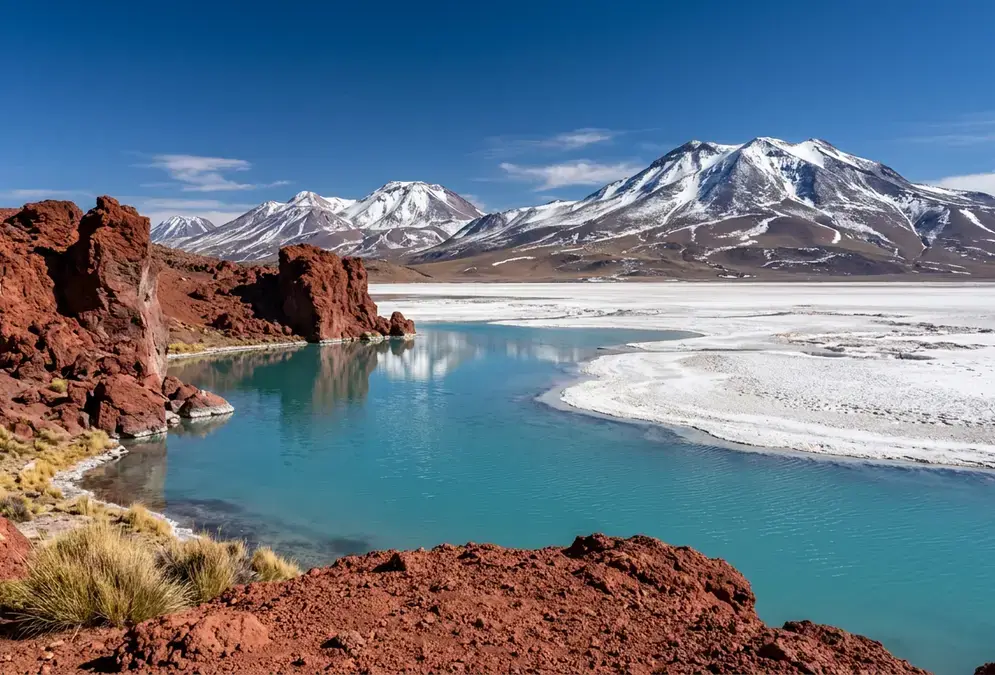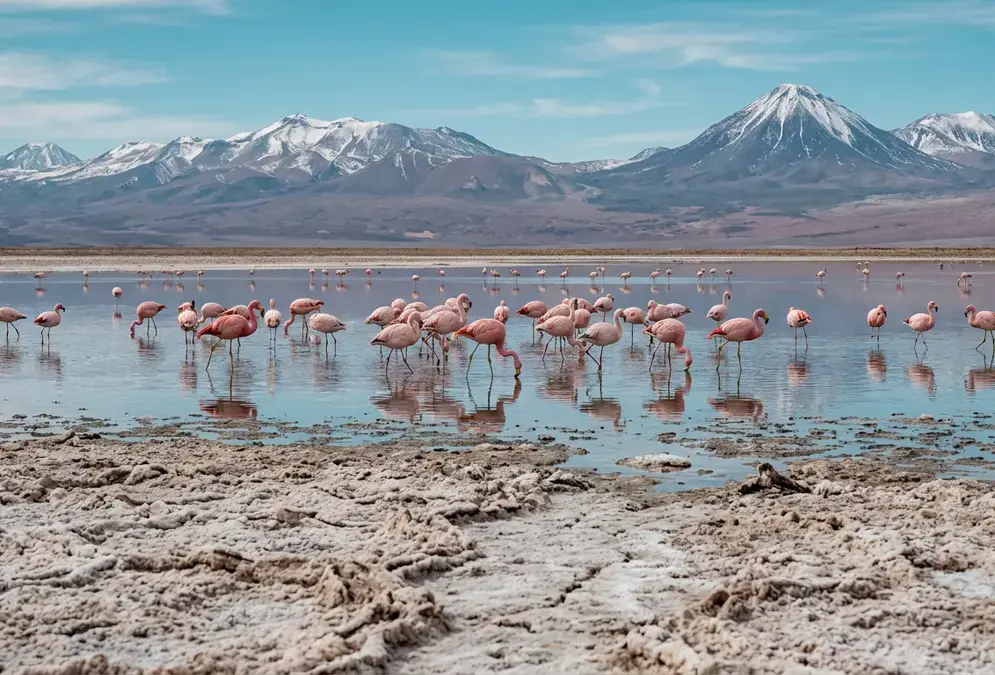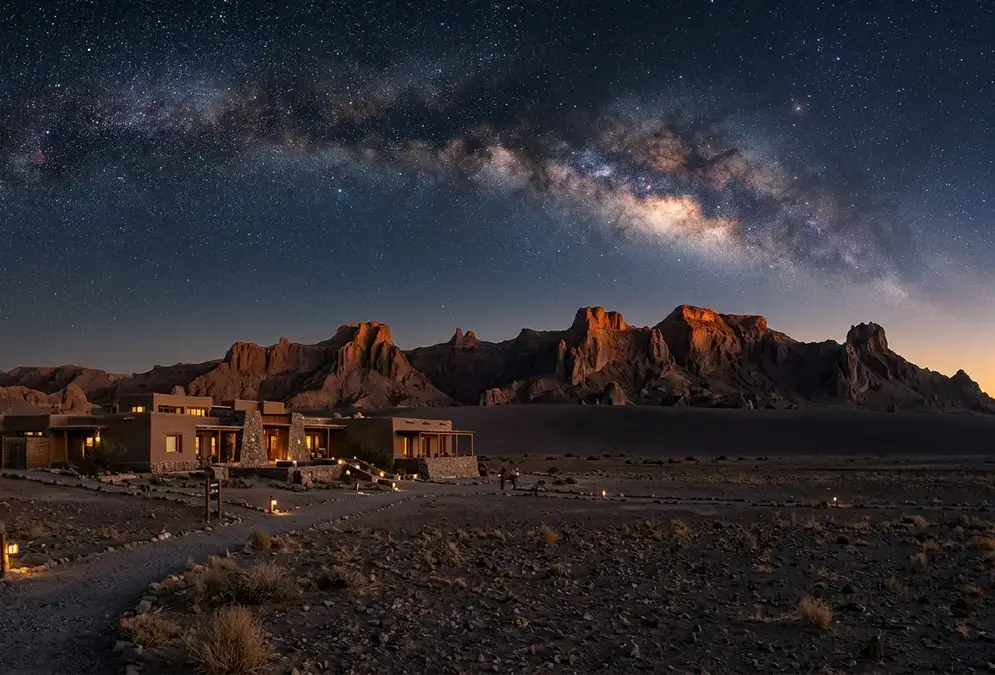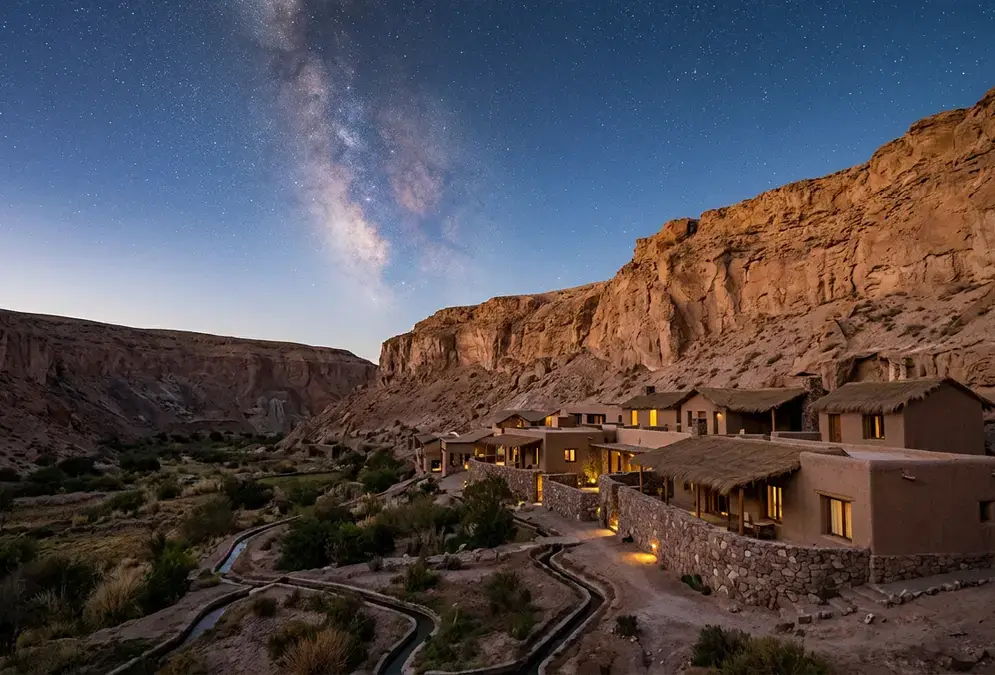
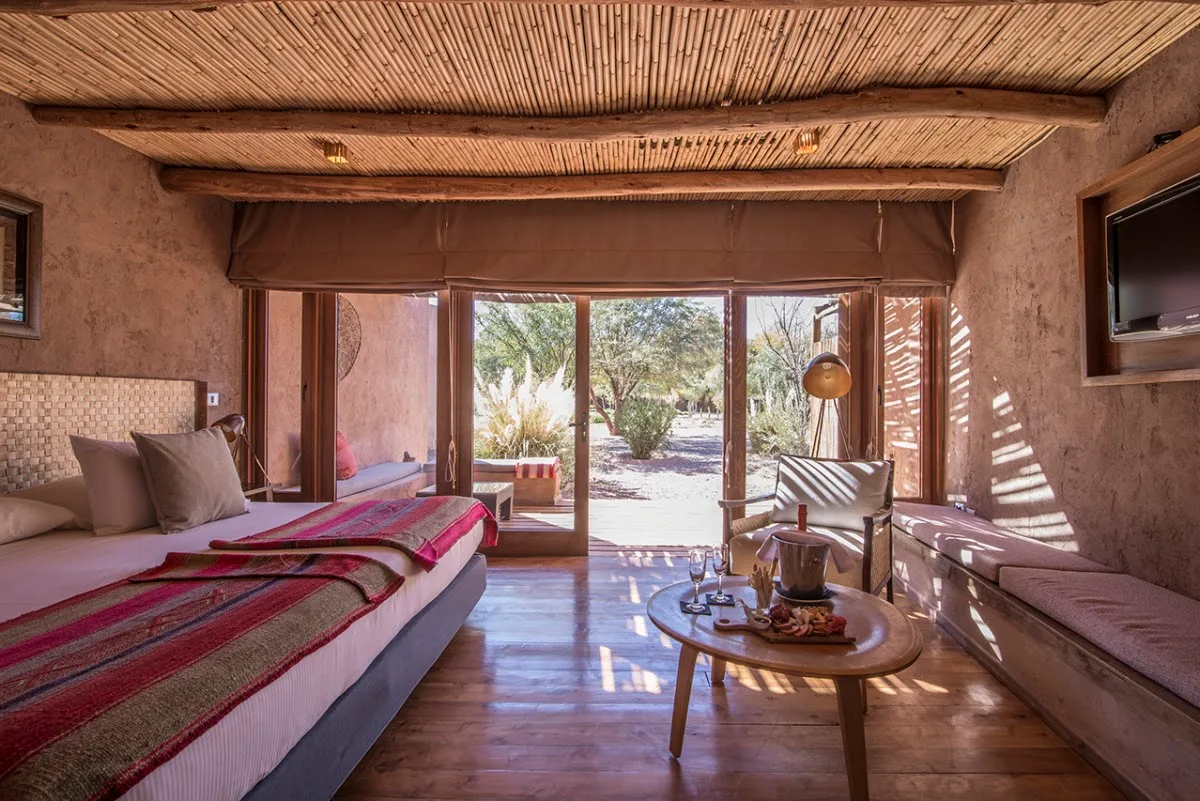
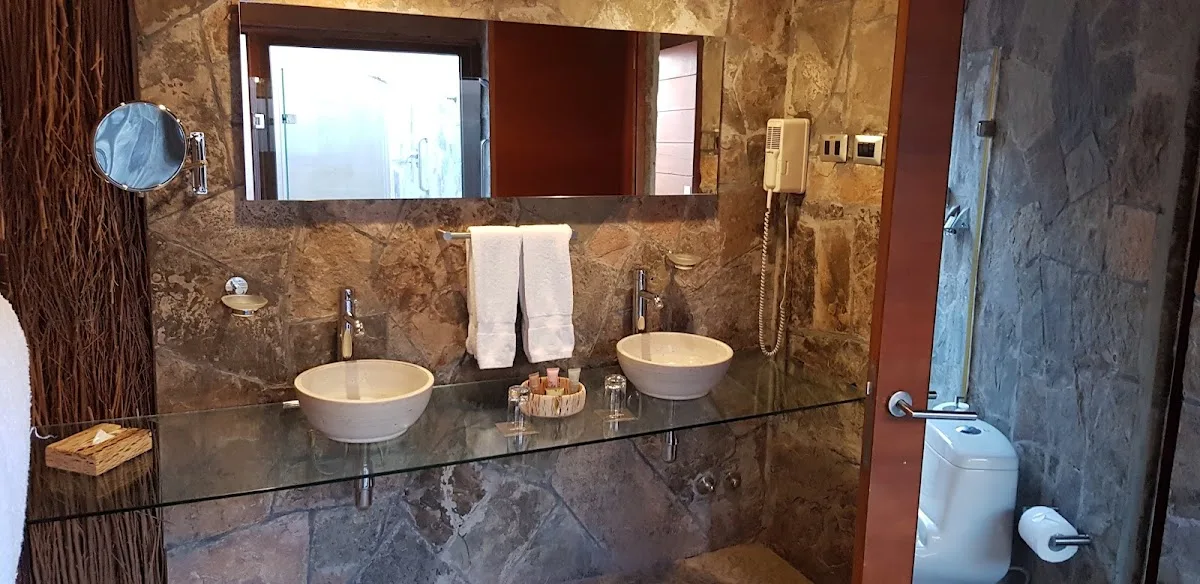
Hotel Cumbres San Pedro de Atacama sits about 2 km from the village centre, far enough from the streetlights on Calle Caracoles to make a real difference at night, close enough to walk to a restaurant or book a tour with one of the astronomy operators in town. It runs room-only or bed-and-breakfast depending on the rate. That matters: you can structure your schedule around the moon calendar and El Tatio departure times without a fixed all-inclusive programme pulling you in another direction.
What you are actually getting
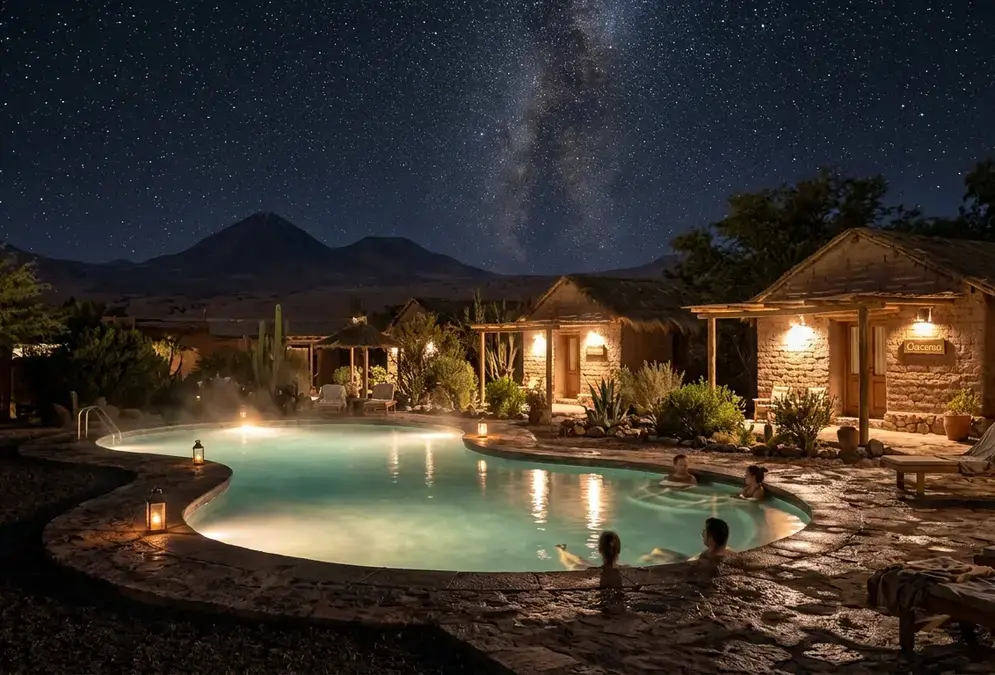
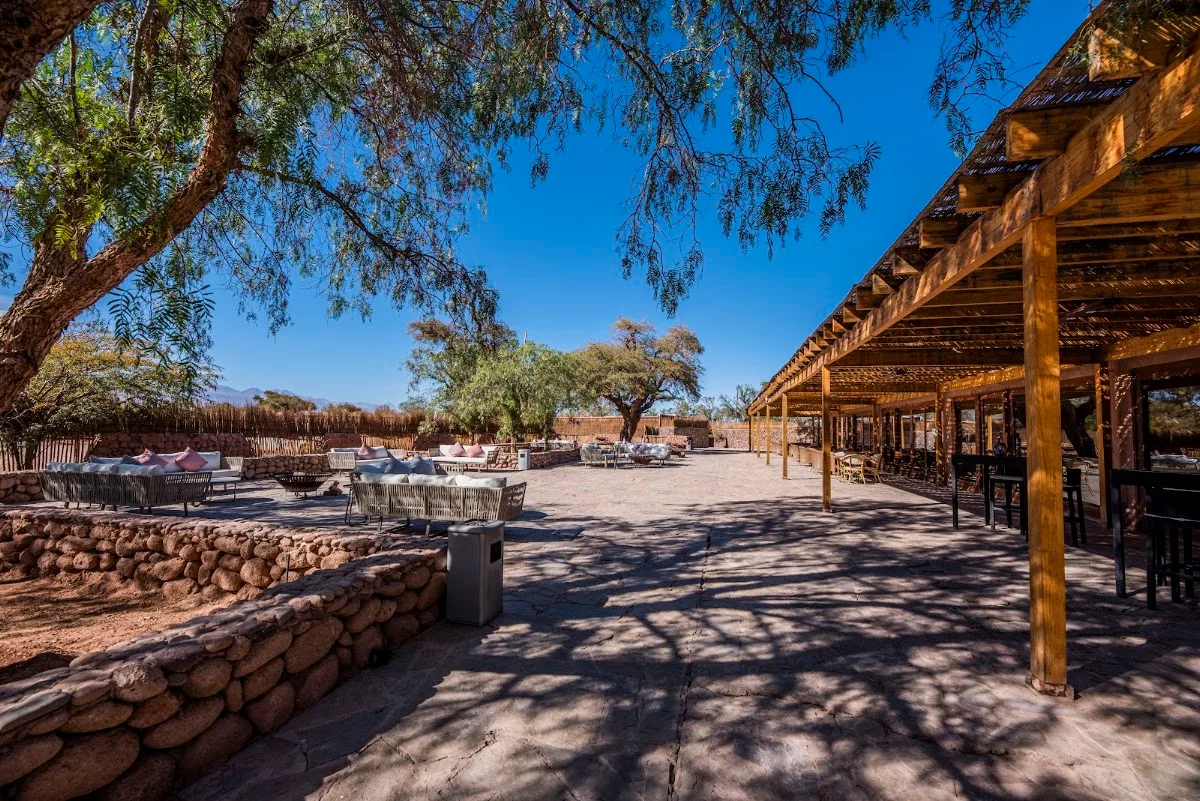
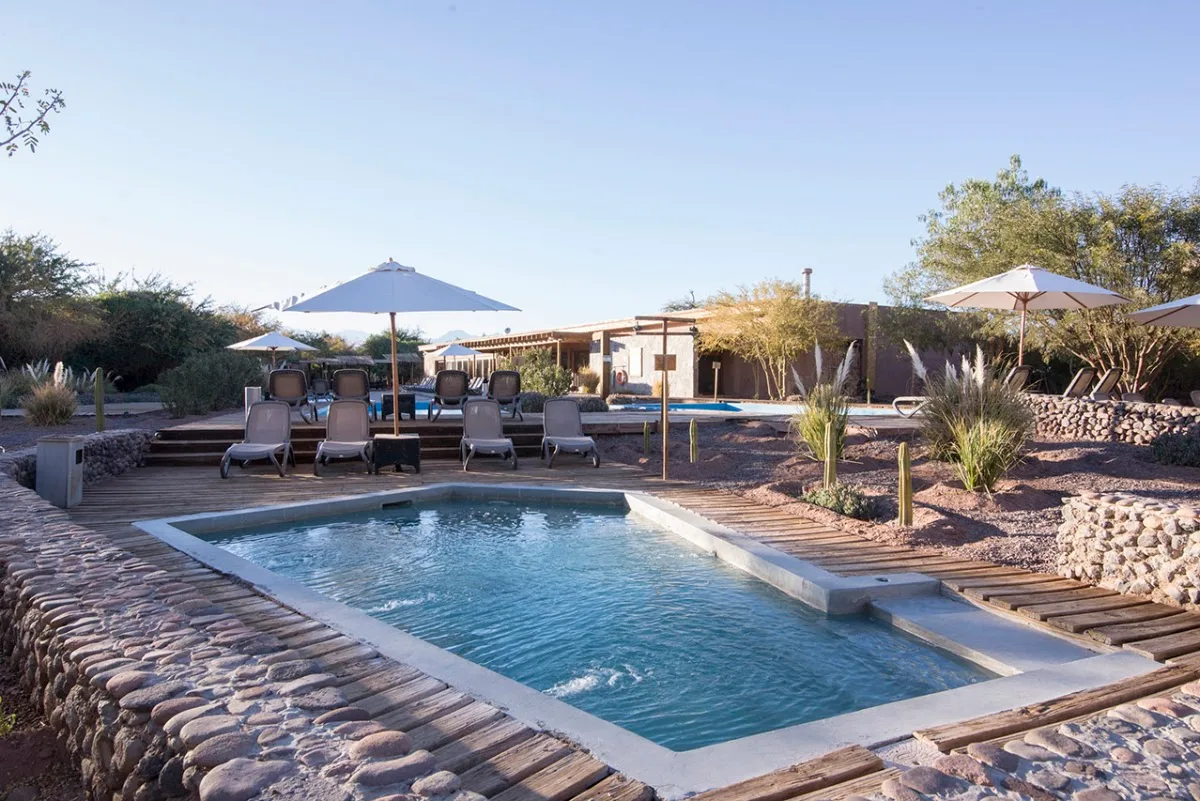
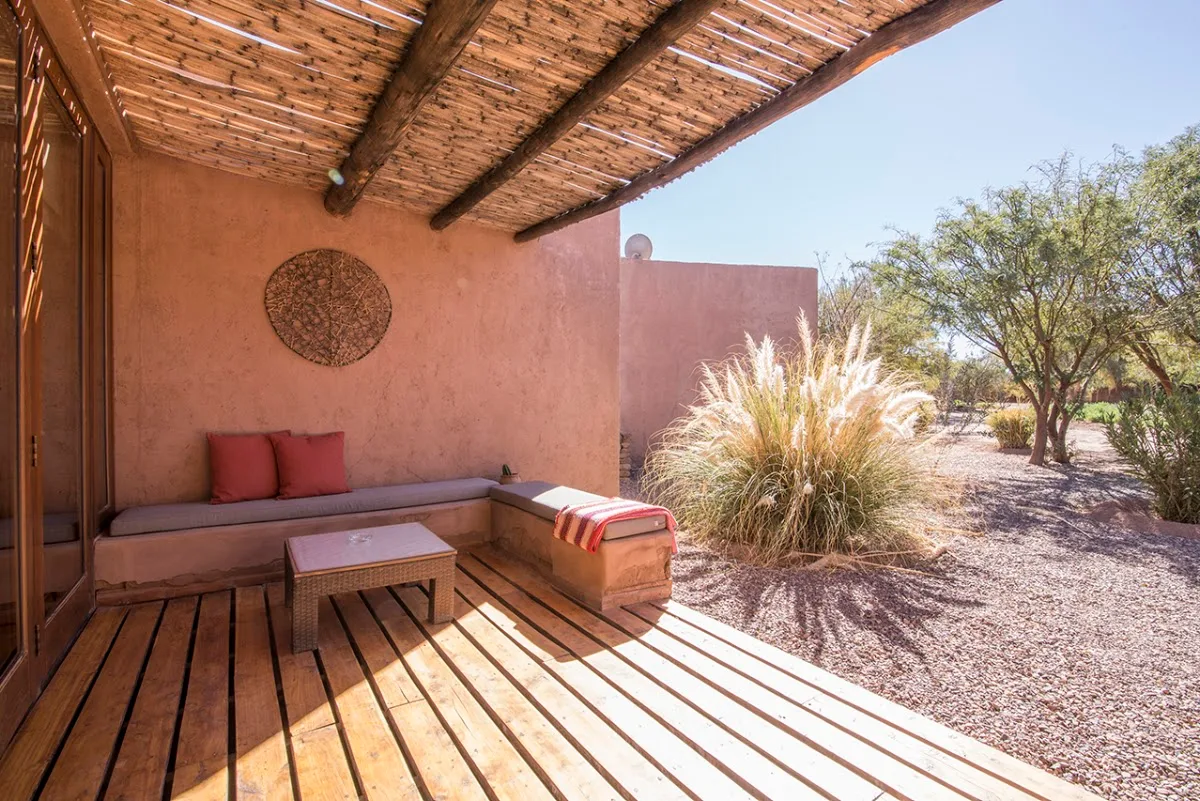
The property is laid out as a low-rise pueblo of private casitas rather than a single hotel block. Each room has its own patio. The three heated outdoor pools are positioned so that after dark, with the pool lights off and skies clear, you are sitting under one of the better Bortle-scale skies in South America. There is no onsite telescope and no guided astronomy programme — that is worth stating plainly. The Kunza Spa runs massages and body treatments, two hot tubs flank the pool area, and fire pits are scattered around the grounds where guests tend to gather after dinner. If you want structured deep-sky access, you arrange it yourself through one of the San Pedro operators. The hotel makes that easy; it does not pretend to replace it.
Sky conditions: altitude, humidity, and atmospheric transparency
San Pedro sits at 2,443 m (8,015 ft) with 330+ clear nights annually. Atmospheric transparency here is exceptional: the Atacama's atmospheric humidity regularly drops below 5%, which eliminates the water vapour that degrades visible-light and infrared observations at lower, wetter elevations. Seeing — the steadiness of the air column above you — is also consistently good in the dry winter months (May–September), when the sky is more stable and thermal disturbance from the salt flat surface is lowest. The combination puts conditions near Bortle 1–2 on clear new-moon nights. From the hotel grounds, at 2 km from the village on its periurban edge, light pollution is minimal.
One physiological note: altitude acclimatisation takes most visitors a day. At 2,443 m, Night 1 often brings lighter sleep and mild headache. A rest day at the pool with coca tea is genuinely useful preparation, not wasted time.
What you see from the hotel grounds
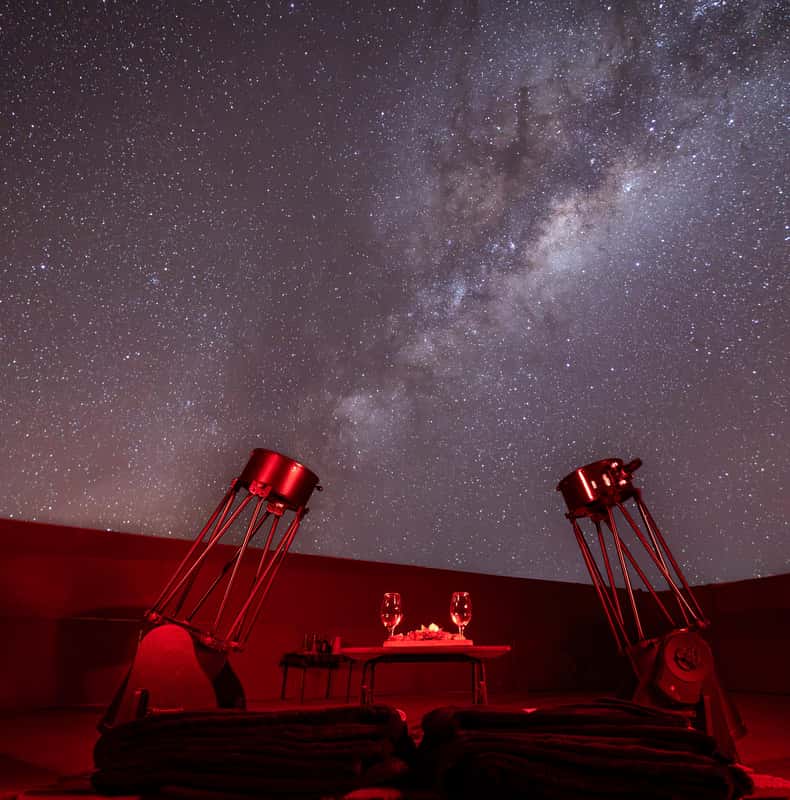
On a clear new-moon window — the five or so nights either side of new moon — the Milky Way core rises in the southeast around 21:00 from May through September. From a private patio or the pool area, it is naked-eye visible and bright enough to cast faint shadows on pale ground. Jupiter, Saturn, and Venus are sharp and steady. Southern-hemisphere constellations unfamiliar to northern visitors (the Southern Cross, Centaurus, the Magellanic Clouds) are all above the horizon before midnight in winter.
This is ambient observing — no equipment, no guide, just the sky. For deep-sky objects (planetary surface detail, nebulae, binary star colours), you need a telescope at a dedicated dark site.
Using Cumbres as a base for SPACE Observatory
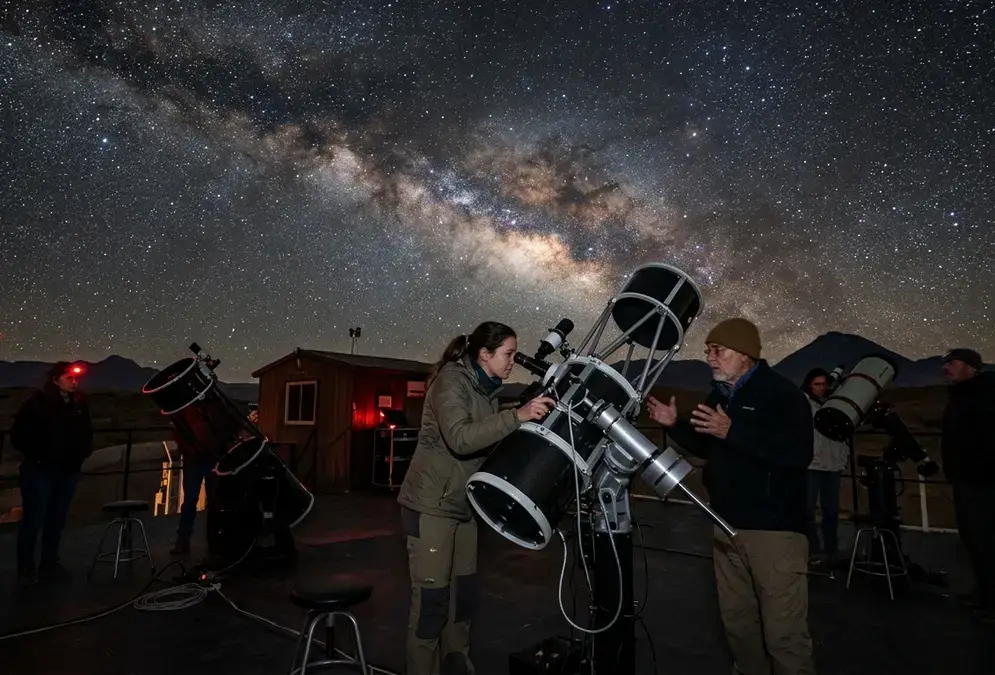
SPACE (Observatorio Astronómico, run by professional astronomer Alain Maury) is the most consistently recommended telescope operator in the region. It uses enhanced-vision smart telescopes including the eVscope 2, which produces colour images of nebulae and galaxies in real time even under partly lit skies. Sessions run a short drive from San Pedro. The hotel concierge can arrange bookings.
The case for room-only over an all-inclusive lodge comes down to flexibility. With a clear schedule and the SPACE booking in hand, you can align your telescope session with the darkest nights of your trip — whichever two or three nights fall closest to new moon and carry the best weather forecast. All-inclusive programmes bundle guides and schedules that may not coincide with optimal new-moon window timing or with conditions a SPACE astronomer would actually take you out in.
Rates and how Cumbres compares
Room-only rates run approximately USD 200–400 per room per night (2025 OTA data). July and August are peak season, with rates at the higher end. That range is considerably below the all-inclusive tier: Explora, Tierra Atacama, and Nayara Alto Atacama typically charge USD 600–1,100 per person per night including all excursions and meals. The gap reflects real trade-offs — you give up on-site guides, included meals, and a private observatory — but for travellers who plan most of their days through independent or third-party-guided excursions anyway, the arithmetic is straightforward.