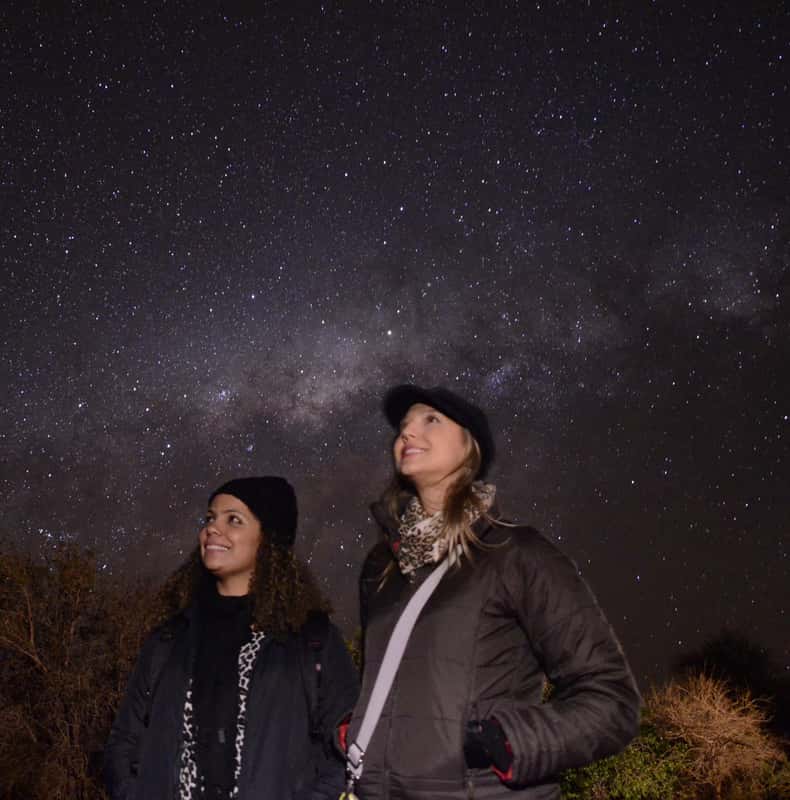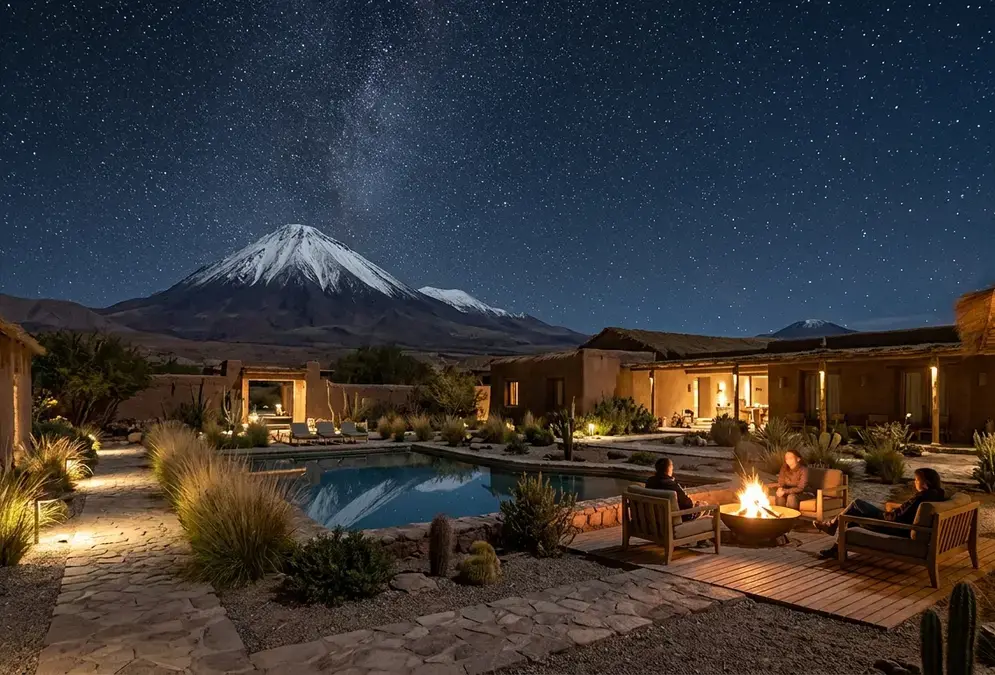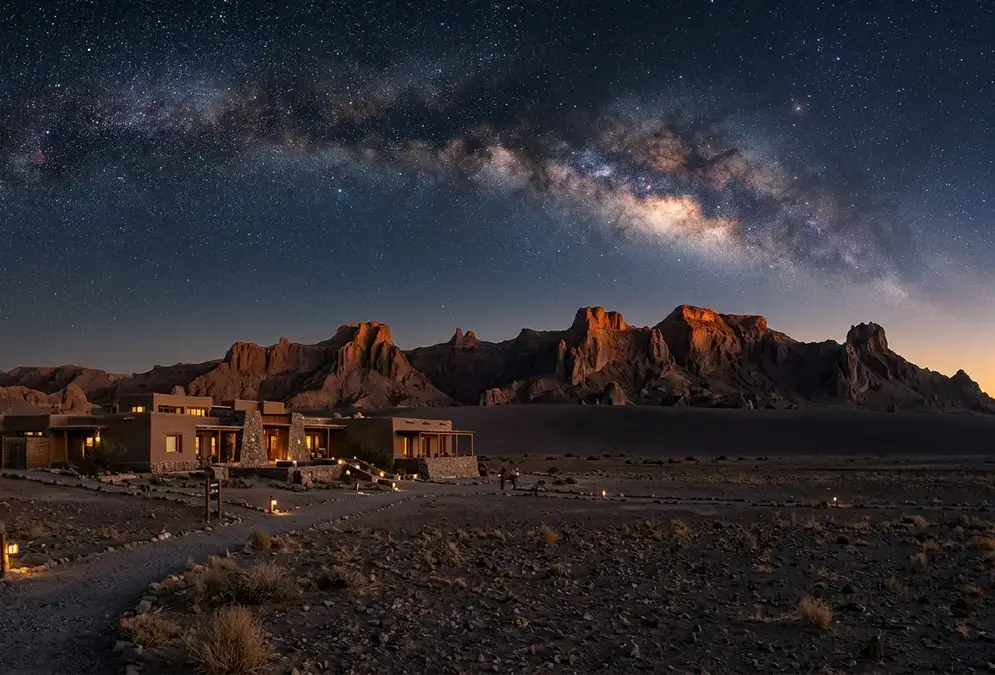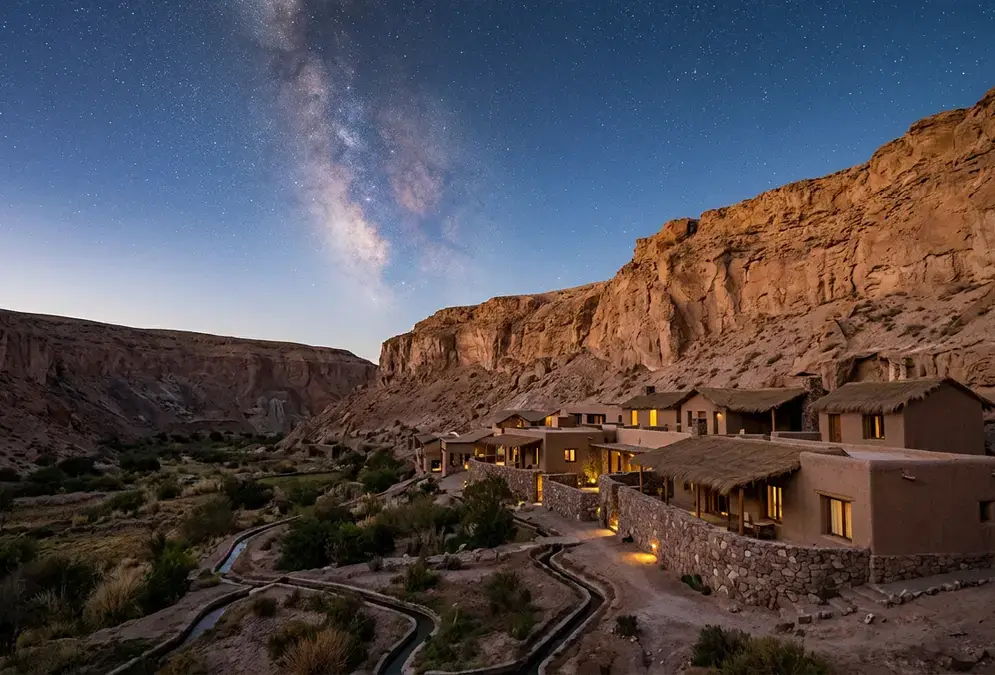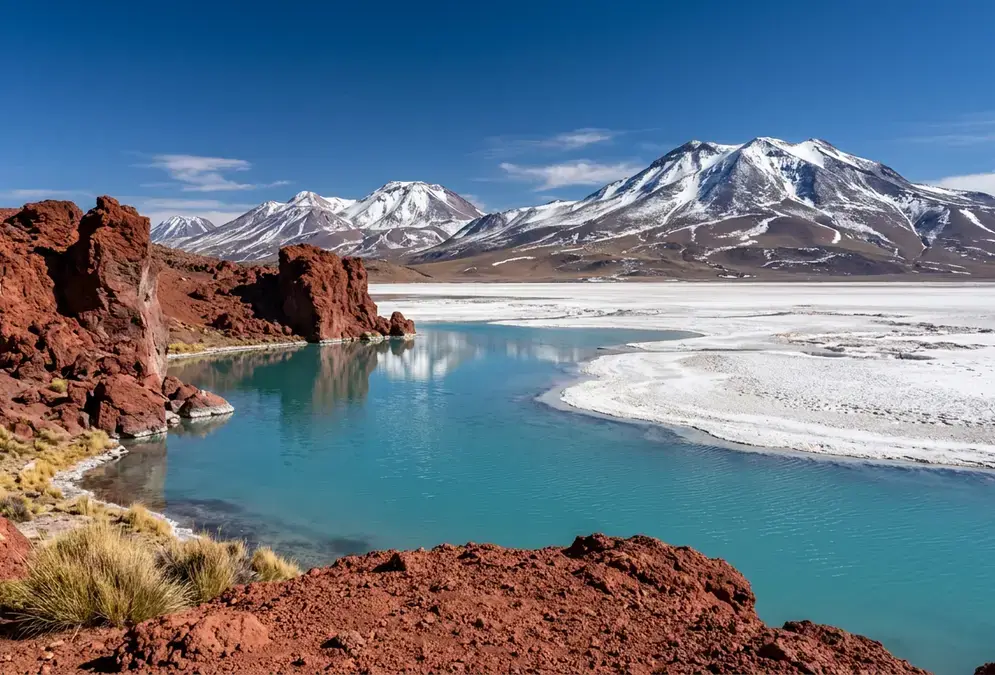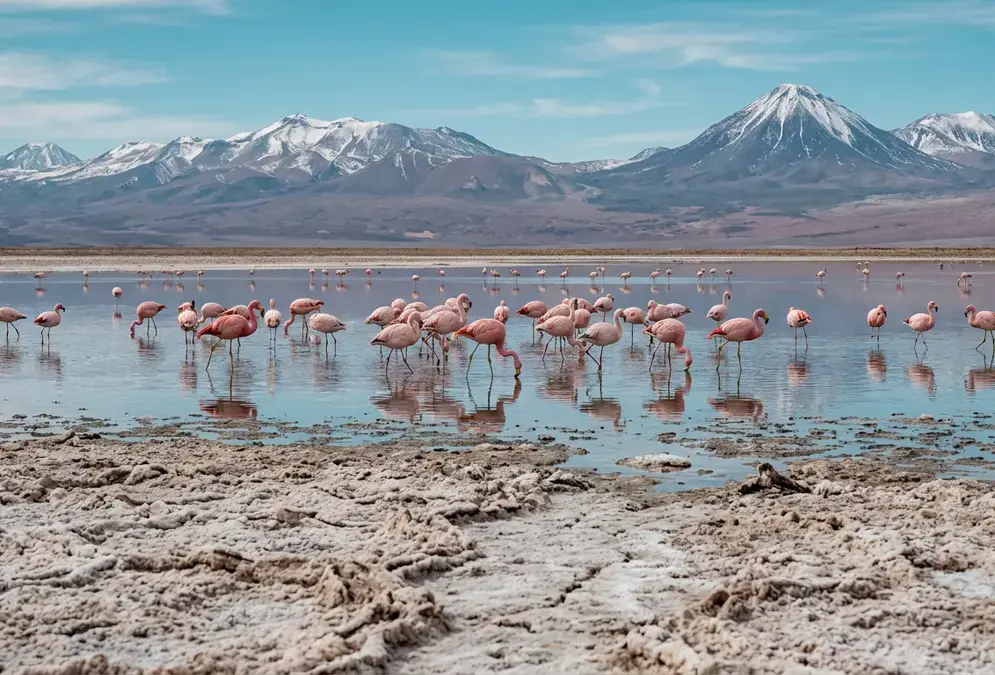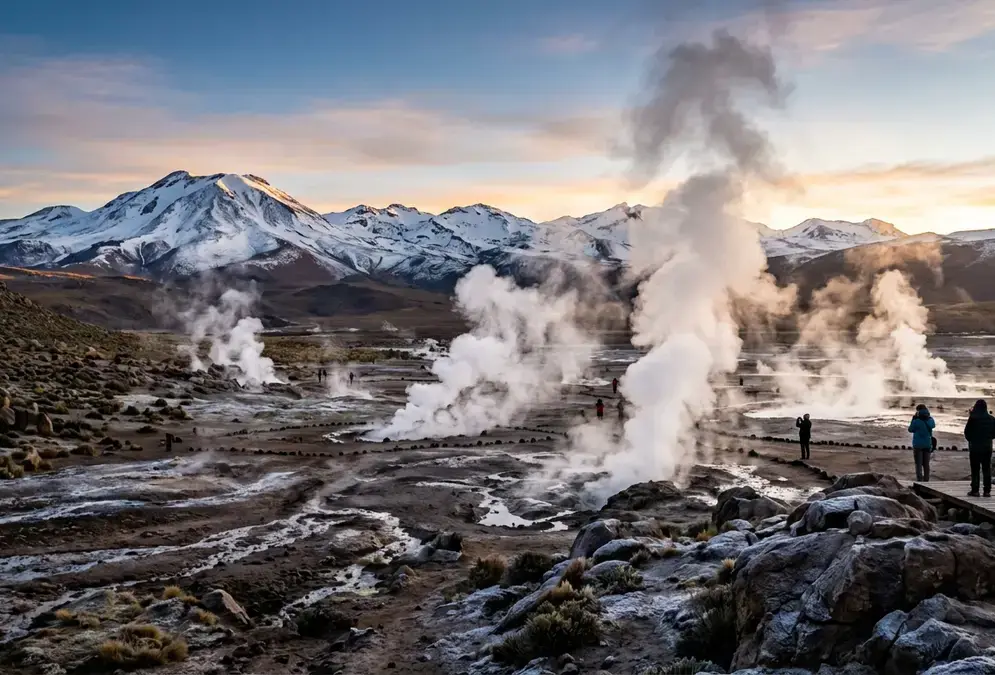
The Atacama is the driest non-polar desert on Earth, and San Pedro de Atacama sits at 2,443 m above sea level on the altiplano with virtually zero light pollution, minimal atmospheric water vapour, and more than 300 clear nights per year. Those numbers translate into something you notice the moment you step outside after dark: the stars are not overhead, they are surrounding you. The Atacama consistently achieves Bortle 1 — the highest dark-sky rating on the standard scale — meaning artificial light is effectively absent and the sky reveals objects invisible from nearly everywhere else on Earth.
SPACE Observatory: the operator to know
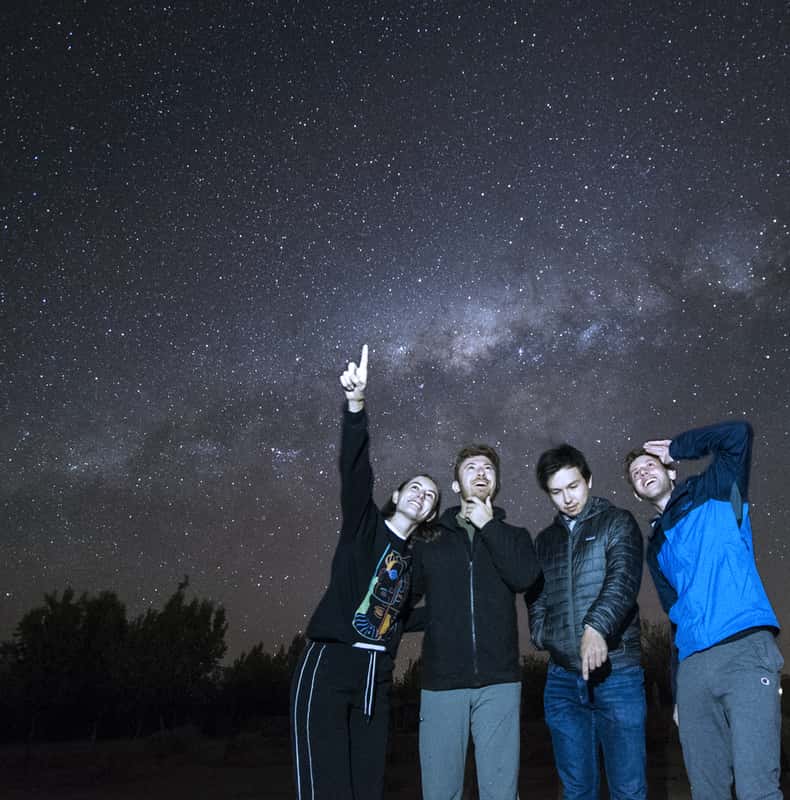
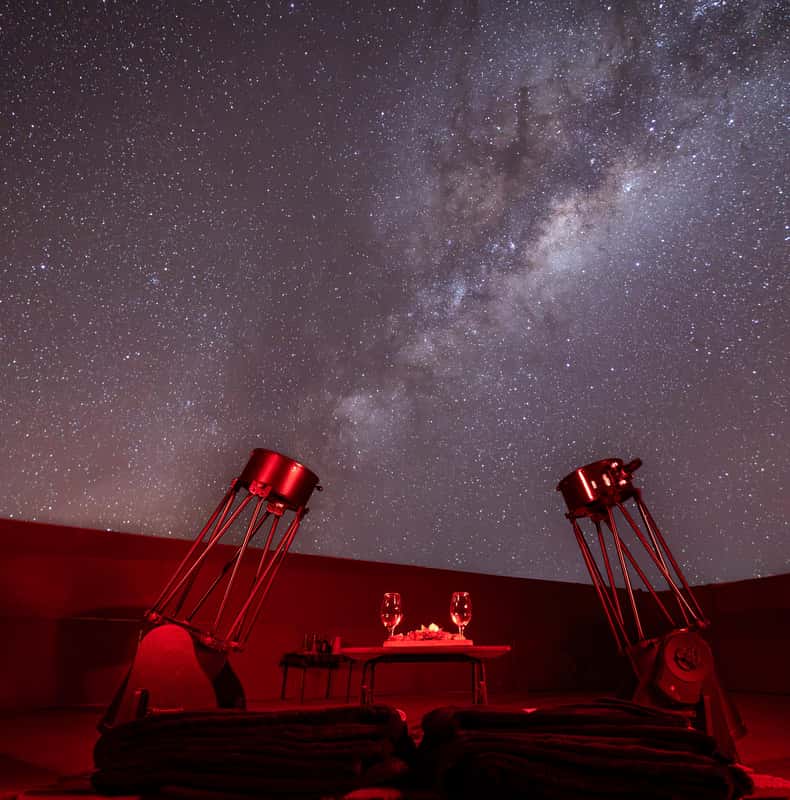
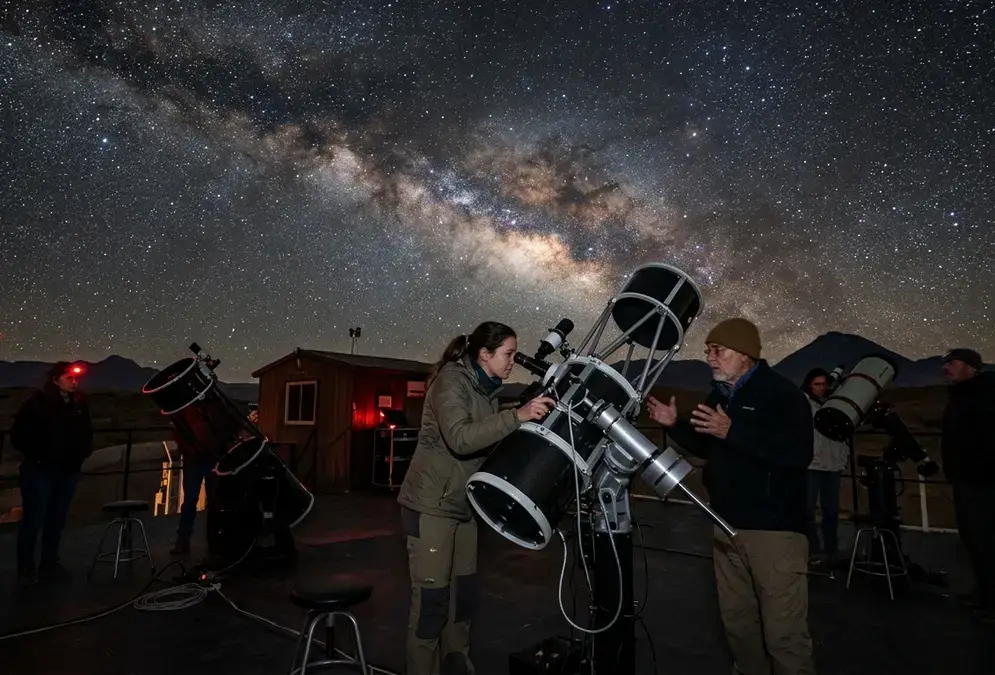
SPACE (San Pedro de Atacama Celestial Explorations) has run the principal public observatory here since 2003. The setup is not a tourist stunt — the site operates large-aperture instruments, including 16-inch and 12-inch reflectors, that SPACE markets among the largest public telescope setups in the Southern Hemisphere (an operator claim, not independently verified). Sessions begin with a naked-eye orientation: a guide uses a laser pointer to trace southern constellations you will not recognise from the Northern Hemisphere — the Southern Cross low on the horizon, the Magellanic Clouds hanging above the Andes like detached pieces of Milky Way. Then the group moves to the telescopes.
Groups of roughly 14–16 people share each instrument. The guide targets objects suited to the night's conditions: globular clusters like Omega Centauri, the diffuse glow of the Eta Carinae Nebula, the rings of Saturn, the Galilean moons of Jupiter. Deep-sky objects look faint at the eyepiece even through a large mirror — what the guide does is explain what you are seeing and why it matters. That translation layer is what distinguishes a SPACE session from just putting your eye to a telescope alone.
I generally go in wary of big commercial astronomy tours — most feel like a queue for a shared eyepiece with a rehearsed script. This is the one place I've done one and thought the price was genuinely earned; the guiding and the sky both held up their end.
Why the Atacama sky is genuinely different
At 2,443 m, you are above a significant proportion of the atmosphere's water vapour. Atmospheric transparency — how cleanly light travels from star to eye — is exceptional here, and atmospheric seeing (the stability and sharpness of the image through a telescope, measured in arcseconds) regularly matches professional observatory benchmarks. Studies of the upper Atacama report median optical seeing around 0.5–0.6 arcseconds, among the sharpest measured anywhere. The extreme aridity — humidity below 1% on most nights — eliminates the thermal turbulence that blurs images at wetter sites.
This is why the Atacama altiplano hosts ALMA, ESO's Paranal, and other world-class facilities nearby — for what ALMA, Paranal, and the ELT actually do, see Atacama observatories explained. On a clear, moonless night — what astronomers call a photometric night — the galactic core transits nearly overhead, and the dark nebulae visible as gaps in the Milky Way band are sharp enough to trace with the naked eye.
The one rule that overrides everything else: moon phase
The full moon blocks this entirely. SPACE cancels all tours for approximately seven nights centred on the full moon — roughly three nights before, the full-moon night itself, and three nights after. Near full moon, scattered lunar light raises the sky's background brightness enough to wash out nebulae, dust lanes in the Milky Way, and faint deep-sky objects completely.
If you are building an Atacama trip around stargazing, arrive within five days either side of new moon. This is not a preference — it is the functional boundary between a spectacular night and a compromised one. Check the lunar calendar before you book anything: accommodation, flights, the tour itself.
Booking, alternatives, and what to expect on arrival
SPACE books out weeks in advance and regularly turns away walk-in visitors — internet reservation only, no phone bookings. A secondary operator, AtacamaStargazing (atacamastargazing.com), runs similar evening tours with bilingual guides and is worth checking when SPACE is full.
Guide sessions run in Spanish, English, French, and occasionally Portuguese. The site is flat and fully accessible; no physical fitness is required. Temperatures drop to 5°C or below even in summer after dark — winter nights can reach −5°C — so dress significantly warmer than you would for daytime. Avoid white lights during the session: the guide asks everyone to switch to red-only illumination from arrival so eyes maintain dark adaptation, which takes roughly 20 minutes and is easily destroyed by a phone screen. Hot drinks are provided on return.