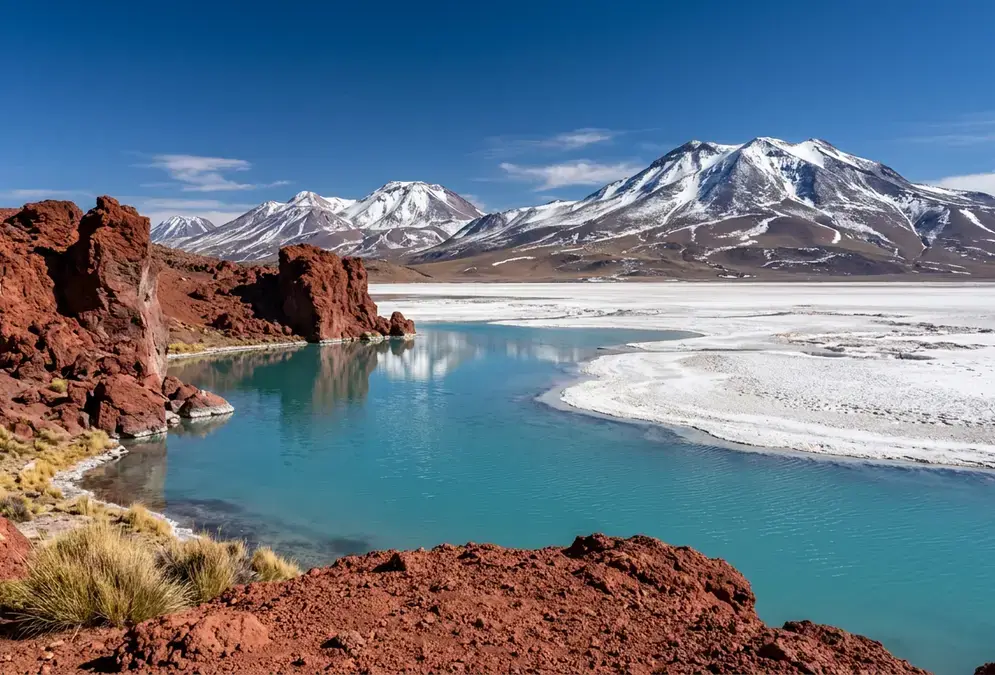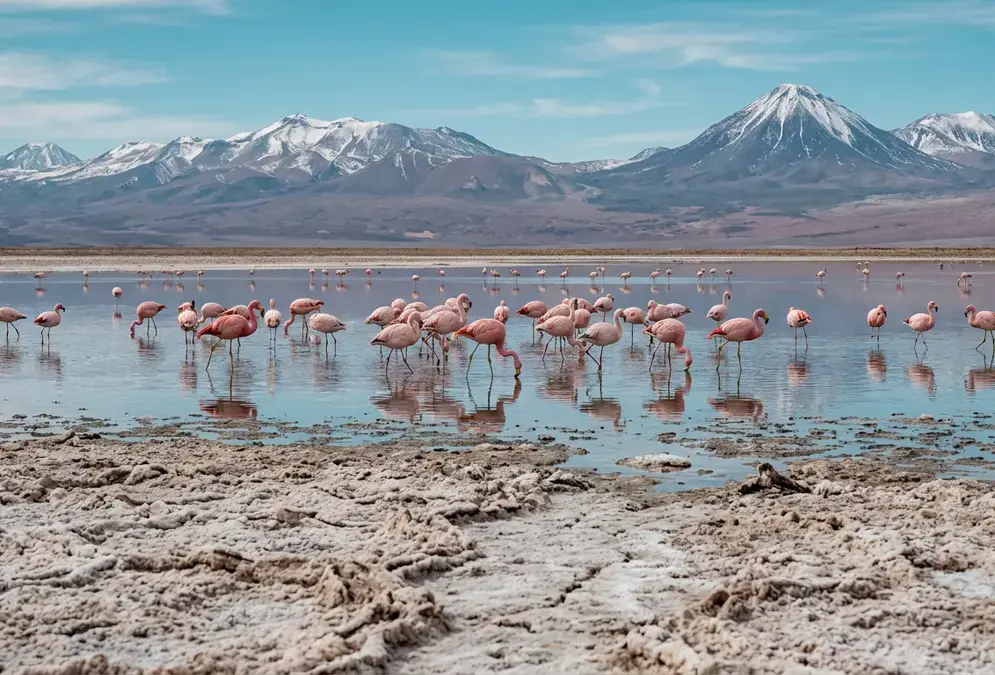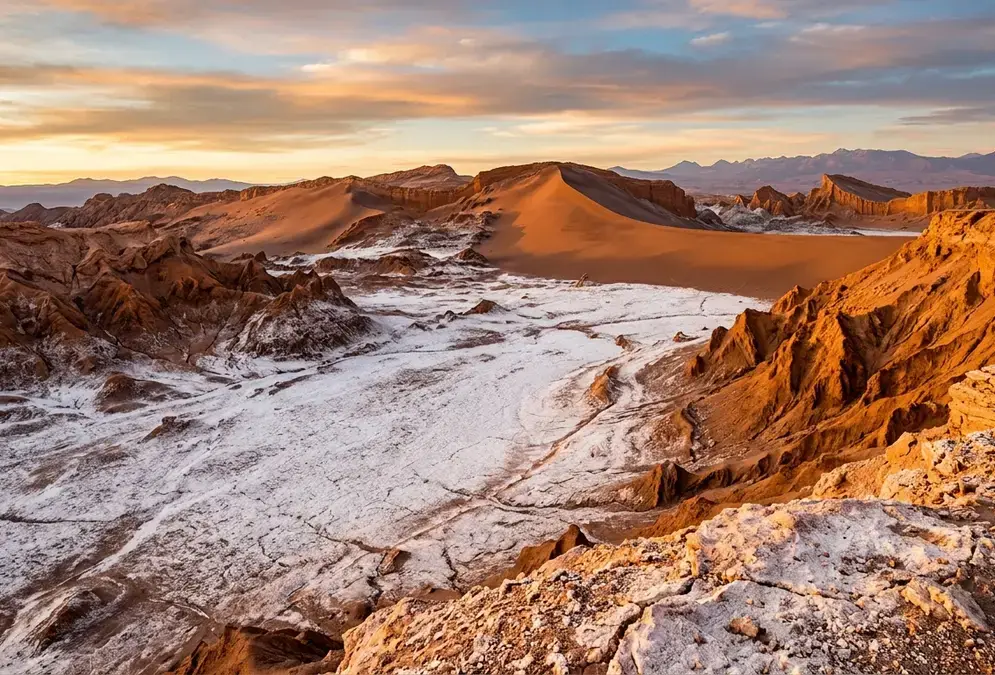
The valley earned its name from Apollo-era astronauts who said the Atacama looked like the moon. Standing on the white halite crust at 2,400 metres in the Cordillera de la Sal, with nothing alive in your field of view and the Andes behind you, the comparison still works. This afternoon tour runs the geology lesson backwards — colour first, explanation after.
What the valley actually is
Valle de la Luna sits inside the Reserva Nacional Los Flamencos, carved into the Cordillera de la Sal (Salt Mountain Range) by tens of millions of years of tectonic uplift and wind erosion acting on ancient salt-lake sediments. The result is layers of volcanic tuff, sandstone, and halite compressed into canyon walls, then sculpted by the Atacama's persistent wind into the amphitheatre formations visible today. The white halite crust covering the valley floor is why the place looks the way it does — and why the name stuck.
At this altitude, atmospheric transparency is exceptional. The altiplano air carries almost no moisture (humidity under 1%), so on a clear afternoon you can see the geological layering in the canyon walls with unusual sharpness. This same dryness is what puts the Atacama in the Bortle 1-2 range after dark.
The tour: afternoon timing and what you walk through
The tour departs San Pedro de Atacama between 15:30 and 16:30 depending on season — earlier in winter when sunset arrives around 18:00-18:30, later in summer when it falls near 19:30-20:00. You have roughly four hours in total.
Before the Duna Mayor viewpoint, guides take the group through the main formations: the large salt canyon with its wind-hollowed walls, the white salt flat along the valley floor, and a smaller dune field built against the canyon's south face. The canyon geometry concentrates the Atacama wind, which is why the erosion here is sharper than most of the reserve. The halite crust forms visibly along the canyon walls — your guide can show you where it's actively building.
The final stop is Duna Mayor. In the 30 minutes before and after sunset, the salt surfaces turn amber and the dune shadows lengthen into hard geometry. The midday version of this scene is flat and bleached. Afternoon is not a preference — it's the right call.
Pairing with a stargazing night
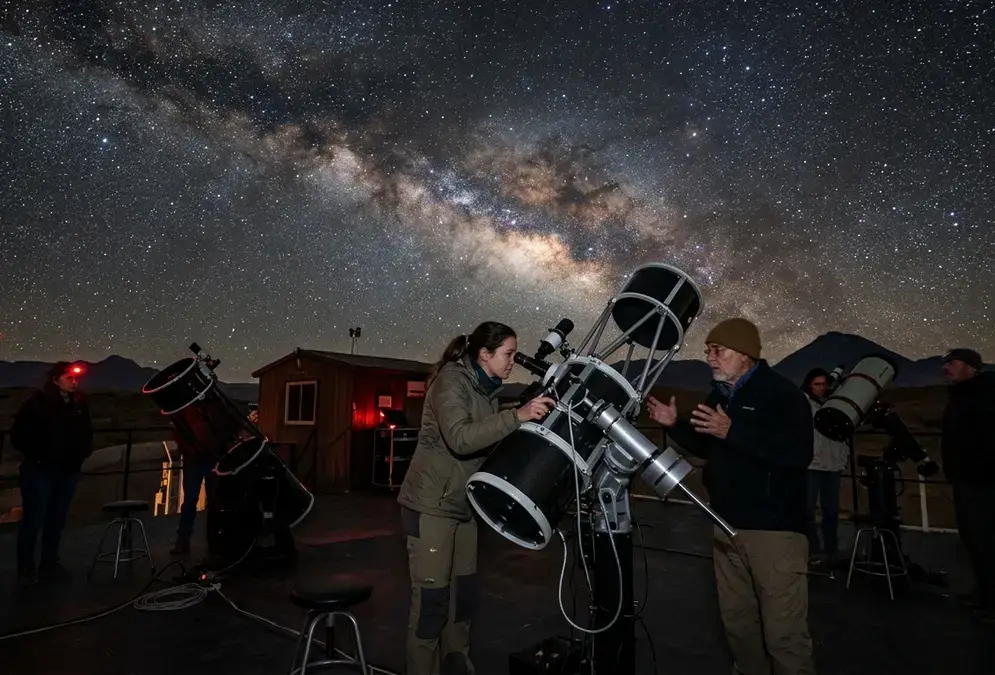
The tour returns to San Pedro around 19:00-20:30. SPACE observatory's astronomy tours depart between 19:00 and 21:00 depending on the season. The two do not overlap.
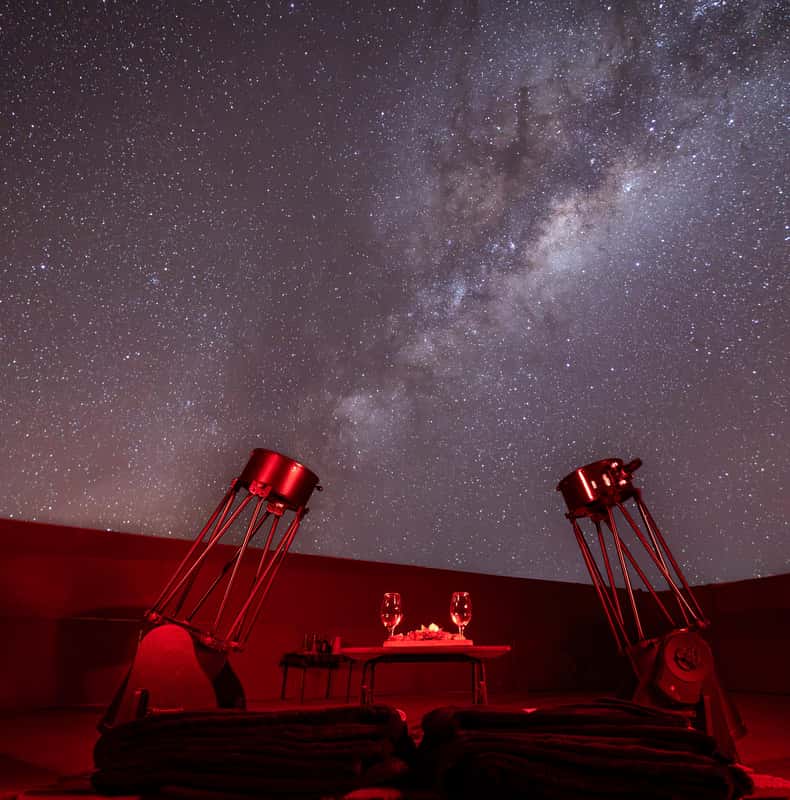
If you're planning your first dark-sky night in the Atacama, the day-two sequence most specialists recommend is exactly this: Valle de la Luna in the afternoon, an evening telescope session after dark. The Atacama has over 300 clear nights annually — roughly 85-90% cloud-free — with light pollution near zero and seeing conditions that few sites on Earth match. Plan around a new-moon window (the 5-day dark period centred on new moon) if Milky Way visibility matters; during a new-moon window under Bortle 2 conditions, the galactic core is visible to the naked eye.
Practicalities
The walk is easy: marked trails, mostly flat, some sandy sections near the dunes. The valley sits at the same 2,400-2,500 metres as San Pedro itself, so no altitude jump. Standard group tours include round-trip minibus transfer from your accommodation, a bilingual guide (Spanish and English), and the walk through the main formations. Park entry to the Reserva Nacional Los Flamencos (approximately CLP 3,000-5,000 per person) is sometimes included and sometimes collected at the gate — confirm with your operator. Groups run 8-15 per minibus; private tours are available and give you more time in the canyon formations before the viewpoint crowds build at Duna Mayor.
Bring sun protection — Atacama UV is intense even late afternoon. Pack a warm layer for the return: temperatures drop fast at 2,400 m after dark.