
One Night: The Purest Stargazing, the Least Travel

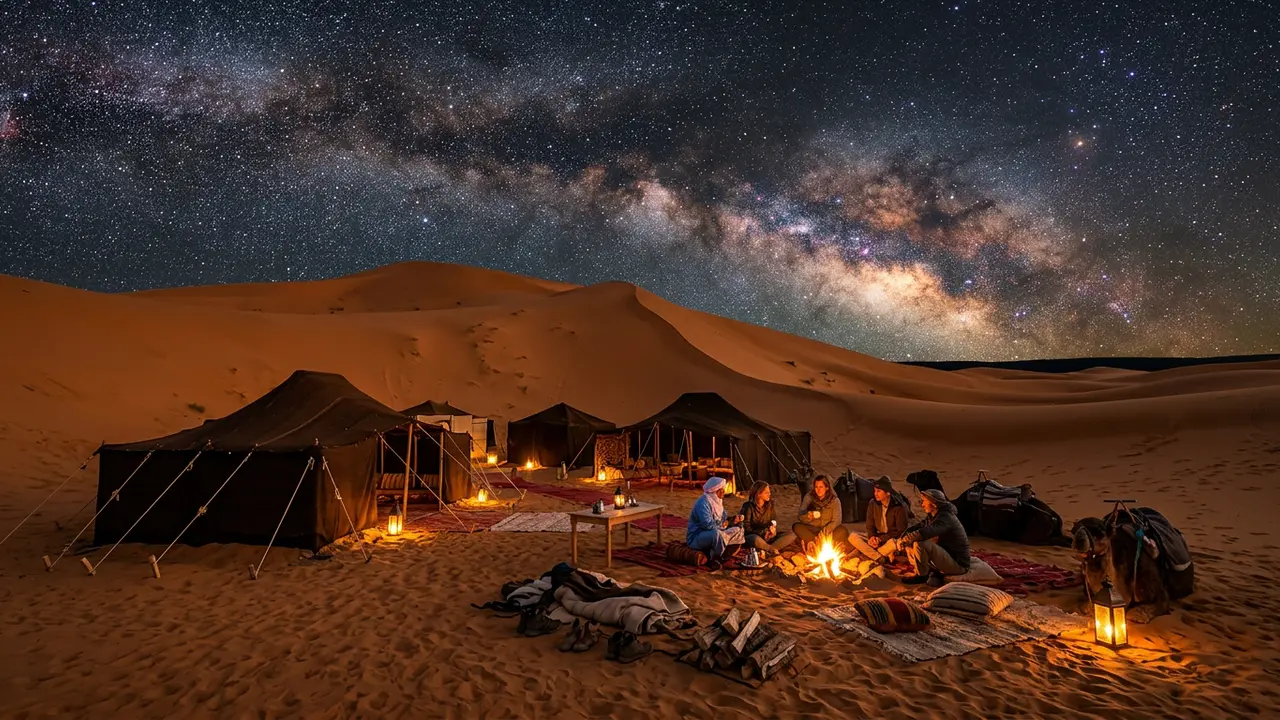
A single overnight in an Erg Chebbi desert camp is the compact option: a camel ride into the dunes at sunset, dinner and music around the fire, one full night under a sky with zero light pollution, and a ride back out the next morning[1]. It's sold as a standalone package by camps and operators across Merzouga, distinct from the longer Atlas loop, and it's the version most travelers pick if stargazing is the entire point of the trip rather than one stop on a longer itinerary.
The road distance from Marrakech to Merzouga runs roughly 560 kilometers (about 350 miles)[2], and driving it nonstop takes 9 to 10 hours, stretching to 10 to 14 hours once you add photo stops and breaks[3]. Almost nobody attempts that as a same-day round trip purely to sleep one night in a camp. A one-night trip only makes real sense if you're flying into a nearer regional airport, Errachidia or Ouarzazate rather than Marrakech, or if you're already somewhere close enough that the drive itself isn't the whole day.
If the maths works for you, the overnight camel trek into Erg Chebbi is the standard way to book it: one camel ride out, one night at camp, one ride back, with the sky as the only reason for the trip.

560km

The one-way road distance from Marrakech to Merzouga, a drive that runs 9 to 14 hours depending on stops. It's the single biggest factor in deciding whether a one-night desert stay makes sense for your trip.

Two Days: The Rushed Version Nobody Quite Recommends

A 2-day Marrakech-Merzouga package exists, and operators do sell it[4], but it compresses a genuinely long drive into two legs instead of three, which means less time at any single stop along the way, the High Atlas passes, the kasbahs, the gorges, and more hours spent moving rather than looking around.
Because of the sheer one-way distance, most travelers who aren't flying into a regional airport split the drive over 2 or 3 days with overnight stops in places like the Dades Valley or Ouarzazate, rather than pushing straight through[5]. A 2-day tour technically fits that pattern, but it leaves almost no slack: one long driving day out, one desert night, one long driving day back, with barely any daylight left over for the towns and gorges that make the drive worth doing in the first place.
It's not a bad option if your schedule genuinely has no room for a third day. It's just the version where the road wins and the scenery loses, where a single travel delay, a flat tire or a border-town traffic jam, eats directly into the one night you actually booked for stargazing.
Who this actually suits: travelers on a tight one-week Morocco itinerary who still want a genuine desert night without giving up three full days to it, and anyone who has already seen the High Atlas on a previous trip and doesn't need a second look at Ait Ben Haddou or Todra Gorge along the way. For a first visit to southern Morocco, the extra day the standard loop adds is usually worth more than the day it saves.

Three Days, Two Nights: The Standard Loop
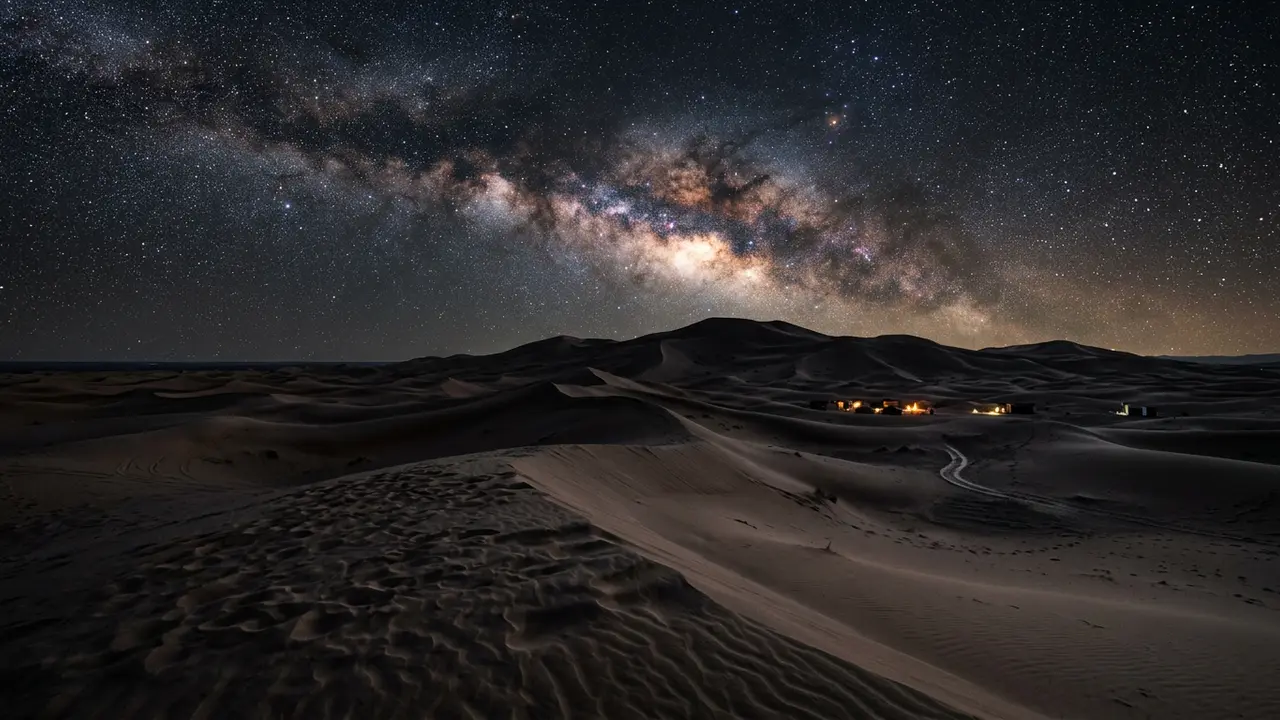
This is the shape almost everyone actually books. The most common Marrakech-Merzouga circuit runs Marrakech to Ait Ben Haddou and the Dades Valley or Tinghir on day one, on to Todra Gorge and Merzouga (camel trek and desert camp) on day two, then back through Ouarzazate and the Draa Valley to Marrakech on day three[6]. One desert night sits inside a three-day frame built mostly around the road itself.
That's the trade worth naming plainly: you're not getting two nights of stargazing on this version, you're getting one, wrapped in two full days of driving through some of the most striking scenery in Morocco. The Tizi n'Tichka pass through the High Atlas, the mudbrick towers of Ait Ben Haddou, the walls of Todra Gorge, all of it happens because the drive out to Merzouga is long enough to justify spreading it over the mountains rather than rushing it.

Featured · Destination

Merzouga Stargazing

Erg Chebbi's dunes rise 150m above Morocco's Sahara, hours from city light. Stargaze from Berber-led desert camps: when to go, where to stay, how to get there.

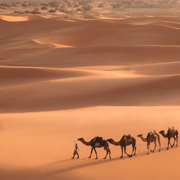
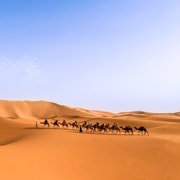
Camel caravan and Berber guide arriving at an Erg Chebbi desert camp at dusk near Merzouga, tents lit ahead of a clear night for stargazing

Camel caravan and Berber guide arriving at an Erg Chebbi desert camp at dusk near Merzouga, tents lit ahead of a clear night for stargazing

For anyone who wants exactly this shape without arranging the logistics themselves, the Marrakech to Merzouga desert tour runs the standard 3-4 day version, camel trek and desert camp included, with the stargazing in Merzouga hub covering what happens once you're actually at the dunes.

Four Days (and Longer): More Atlas, Maybe a Second Desert Night

Four-day itineraries extend the same route rather than reinventing it, adding more time in the High Atlas and Berber villages before and after the night at camp[7]. Some four-day packages add a genuine second desert night; others just slow the pace of the same three-day route, giving you a fuller look at Dades Valley or Todra Gorge instead of a rushed drive-through. Read the day-by-day itinerary carefully before booking, since «4 days» doesn't automatically mean «two nights in the dunes».
A second desert night is worth having if stargazing matters as much to you as the road trip around it. One clear night is often enough. Two nights buys you a backup if weather or a hazy sky ruins the first one, and it means you're not staring at a single photograph's worth of Milky Way and hoping it was the right night.
Five days and beyond exist too, mostly for travelers who want the whole southern-Morocco road trip, Fez, the Middle Atlas, Ziz Valley palmeries, rather than a fast there-and-back to the dunes. Past four or five days, you're planning a Morocco trip that happens to include Merzouga, not a Merzouga trip with some driving attached.
Two nights buys you a backup if weather or a hazy sky ruins the first one, and it means you're not staring at a single photograph's worth of Milky Way and hoping it was the right night.

Match Your Trip Length to What You Actually Want

Every option above trades desert time against road time: how much of your trip goes to the dunes versus how much goes to the kasbahs and gorges in between. There's no version that maximizes both.
  • Pure stargazing priority: one night at an Erg Chebbi camp, ideally reached via a nearer regional airport (Errachidia or Ouarzazate) rather than the long Marrakech drive, gets you the dark sky with the least time spent in transit
  • Full Morocco desert-experience priority: the standard 3-day, 2-night Marrakech loop uses the long one-way drive as part of the sightseeing itself, delivering Atlas passes, kasbahs, and gorges alongside one desert-camp night, the shape most travelers actually book
  • Slower pace, maybe a second desert night: 4 days or more adds High Atlas and Berber-village time, and sometimes a genuine second night in the dunes, at the cost of a longer overall trip
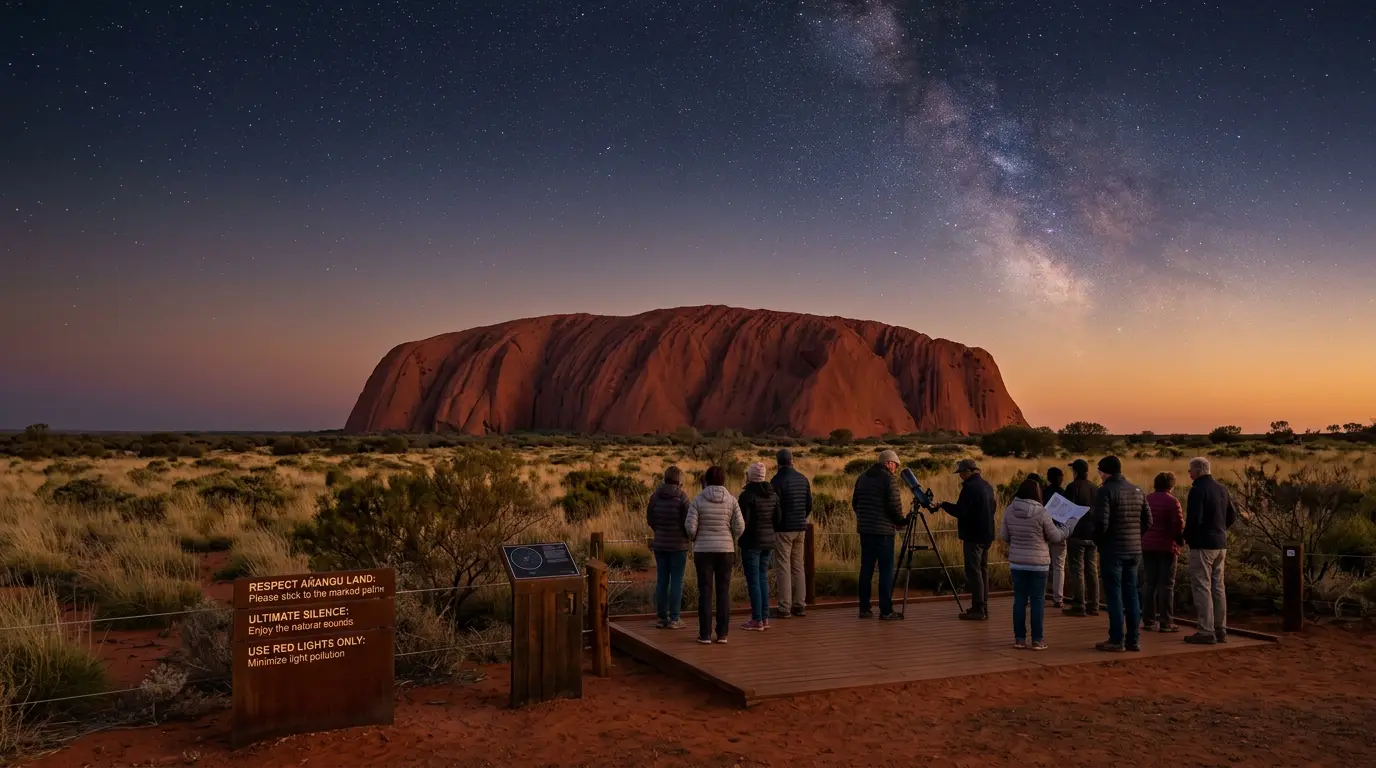
None of these is objectively correct. A photographer chasing a specific new-moon window cares about the second option, or a booked second night, far more than someone who just wants to say they slept in the Sahara once. Someone splitting a two-week Morocco trip across Marrakech, Fez, and the coast is more likely to default to the standard loop simply because it fits the rest of the itinerary without extra planning.

Featured · Article

What Is Light Pollution? Definition, Types, and Solutions

Light pollution is artificial light brightening the night sky, affecting 80% of the world. Learn the 4 types, wildlife and health effects, and how to fix it.

Planning the Trip: Getting There, Costs, and the Moon

Whichever length you choose, two planning factors matter more than the number of nights itself. First, the moon phase: a trip timed around a new moon shows a noticeably denser Milky Way than the same nights either side of full, regardless of whether you're staying one night or four. Check when to go stargazing in Merzouga before you lock in dates, then match the calendar to your new-moon window rather than the other way around.
Trip lengthDesert nightsBest forTrade-off
1 night1Pure stargazing, minimal travelNeeds a nearer regional airport, or accepting the full drive just for one night
2 days1Tight schedules onlyCompresses the Atlas and gorge scenery into the least time
3 days, 2 nights1 (standard)The full Morocco desert experienceMost-booked shape, but still just one desert night
4+ days1-2A slower pace, maybe a second desert nightLonger overall trip, more Atlas and Berber-village time
Second, camp choice. A standard multi-day tour books you into a shared or partner camp, and you often won't know exactly which one until close to departure. If a specific camp, or a specific level of comfort, matters more to you than the drive, the best desert camps in Merzouga roundup compares currently-bookable options directly, worth checking before you request one by name.
On cost, exact pricing for a single overnight camp package versus a full multi-day loop shifts by operator and season often enough that any specific dollar figure quoted here would likely be stale by the time you book. Treat published prices as a starting point to confirm directly with the operator, not a locked-in number. As a rough shape rather than a fixed rate: a single-night camp stay tends to sit well below a full 3-4 day loop with a vehicle, driver, and multiple meals included, which is one more reason the one-night option suits travelers already weighing cost against how much of the trip they want to spend on the road.
For where to actually stand once you're at the dunes, see best stargazing spots in Merzouga.

Booking Tips by Trip Length

Booking a single overnight camp works best through a direct camp website or a well-reviewed listing, since the market is dense and prone to rebranding season to season. Booking a 3-4 day loop is usually simpler through GetYourGuide or Viator, both of which show current itineraries, group size, and cancellation terms before you commit a deposit.

  • Confirm your desert camp's exact current name before paying anything
  • Ask whether your package includes one desert night or two, since «4 days» doesn't guarantee the second one
  • Check free-cancellation terms in case a moon-phase or weather check changes your dates close to departure

What to Pack Either Way

Desert nights swing cold regardless of trip length, and the packing list barely changes whether you're staying one night or four.

  • A warm layer for after dark, since the sand stops holding the day's heat fast once the sun is down
  • A red-light headlamp for walking back from any dune-crest viewing spot without wrecking your night vision
  • Sand-specific protection for cameras and phones, since Erg Chebbi's dust is fine and gets into everything
None of this requires specialized gear beyond warm layers and sand protection, whichever length of trip you end up booking.