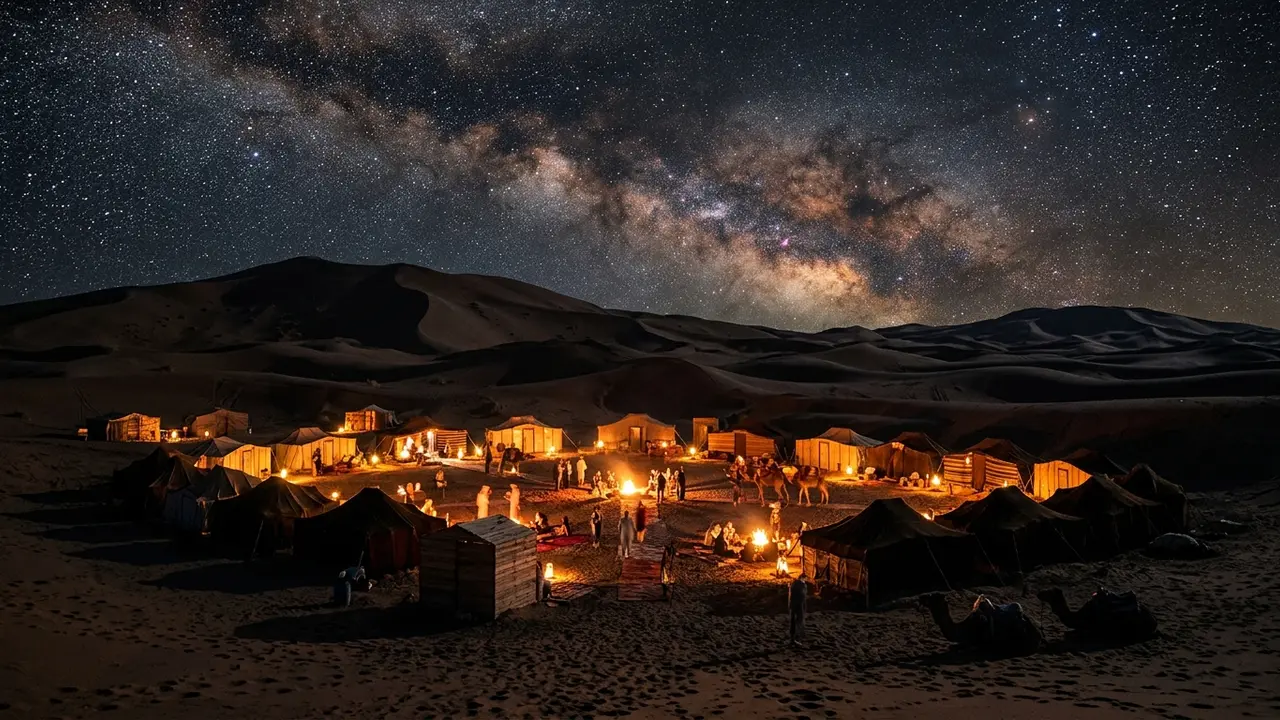
When to Go: Best Months and Merzouga's Day-Night Extremes
March, April, October, and November are the shoulder-season answer most travelers actually want: mild days, cool (not brutal) nights, and the lowest sandstorm risk of the year[1]. Winter (December through February) argues a different case: the clearest, driest air of the year, at the cost of near-freezing nights.
Push either end of that calendar and the numbers turn extreme fast. Summer (June through August) daytime highs run 35-46°C (95-115°F), with direct-sun peak heat between 11am and 5pm regularly climbing past 46°C[2] and making any dune activity before dark genuinely punishing. Winter swings the other way: nights in December and January drop to 0-6°C (32-43°F), with the coldest pre-dawn hours around 5am sometimes touching freezing[3]. That same cold, dry winter air is exactly what keeps the sky transparent enough to make the trade worth it.
- Shoulder season (Mar, Apr, Oct, Nov): the easiest daytime and nighttime comfort trade-off
- Winter (Dec-Feb): the coldest nights, but the clearest air of the year
- Summer (Jun-Aug): the harshest daytime heat, softened only after dark
46°C
For the full month-by-month breakdown, including the moon-phase planning that matters more than the calendar month, see best time to stargaze in Merzouga.
Guides, Visas, and Camel-Trek Safety
Three practical worries come up before almost every Merzouga booking, and all three have fairly straightforward answers.
Do you need a guide? Yes, in practice. Nearly every overnight desert-camp or camel-trek stargazing trip already comes guided by default, since camps sit across trackless dune terrain reached by 4x4 or camel caravan[4]. Independent night navigation across Erg Chebbi without local knowledge isn't something operators or this site recommend attempting.
Do you need a visa? Citizens of the US, UK, Canada, Australia, and all EU member states can currently enter Morocco visa-free for stays of up to 90 days[5], with an entry stamp issued on arrival rather than a pre-arranged visa. Entry rules shift without much notice, though, so verify current requirements with your government's travel advisory or the nearest Moroccan consulate before you book flights. The getting to Merzouga guide covers the fuller logistics picture, including airports, drive times, and the current visa-policy detail.
Independent night navigation across Erg Chebbi without local knowledge isn't something operators or this site recommend attempting.
Is the camel trek safe? Generally, yes. Camel treks into Erg Chebbi are described as safe in the large majority of cases[6], and the one piece of advice that actually matters is narrow: follow your guide's instructions closely while mounting and dismounting, the point of highest fall risk on any camel trek anywhere in the world.
Camp or Hotel, and What It Actually Costs
For stargazing specifically, an in-dune desert camp beats a village hotel or guesthouse every time; it puts you well past Merzouga's ambient light rather than viewing the sky from a rooftop terrace inside town. That's the one clear-cut answer in this whole FAQ.
Camp tiers vary more than first-time visitors expect:
- A shared-bathroom 'standard' or 'nomad' tent, the budget end of the market
- An ensuite 'luxury' tent with a private hot shower, the comfort end
One widely booked overnight package prices the shared-bathroom tier at roughly $45-50 per person, camel ride, dinner, and breakfast included; the ensuite luxury tier on the same package runs roughly $70 and up per person[7]. Camp hospitality across Erg Chebbi is Amazigh (Berber)-led[7], not Bedouin, worth knowing before you compare Merzouga to a desert like Jordan's Wadi Rum.
| Camp tier | Bathroom | Typical cost/person | Best for |
|---|---|---|---|
| Standard / nomad tent | Shared, outside | ~$45-50 | Budget-conscious, authentic basic stay |
| Luxury tent | Private, ensuite hot shower | ~$70 and up | Comfort-first stargazing stay |
This dune-top camp, a dune-top stay in this cluster, sits at the upper end of that range with private-bathroom tents and its own dining tent, while a lower-cost, family-run camp exists too if a shared bathroom doesn't bother you.
Multi-day Marrakech-to-Merzouga tours cost meaningfully more once transport and several extra nights stack on top of a single overnight package. Treat any specific quoted figure as a starting point to confirm directly with the operator, since Erg Chebbi's camp and tour market shifts by season and by rebrand.
For a side-by-side of currently-bookable camps ranked on dune access, cultural authenticity, and stargazing features, see the ranked camp comparison.
What to Pack for the Day-Night Swing
Erg Chebbi's sand releases the day's heat fast once the sun goes down, so packing for Merzouga means dressing for two very different climates inside the same 24 hours.
Recommended tours
Tours are selected for quality, not commission. I earn a small fee if you book — at no extra cost to you.
- Light, breathable layers for daytime, loose cotton or linen holds up better than synthetic fabric against direct desert sun
- A genuine warm layer for after dark, a fleece or light down jacket, since even a hot summer day gives way to a surprisingly cool night once you're standing still on a dune crest
- A headlamp with a red-light mode, to preserve night vision while setting up camera gear or walking back from a viewing spot
- A scarf or shesh for blowing sand, plus sealed bags for camera or phone gear, since Erg Chebbi's dust is notably fine and finds its way into zippers and lens caps that would keep it out anywhere else
Featured · Destination
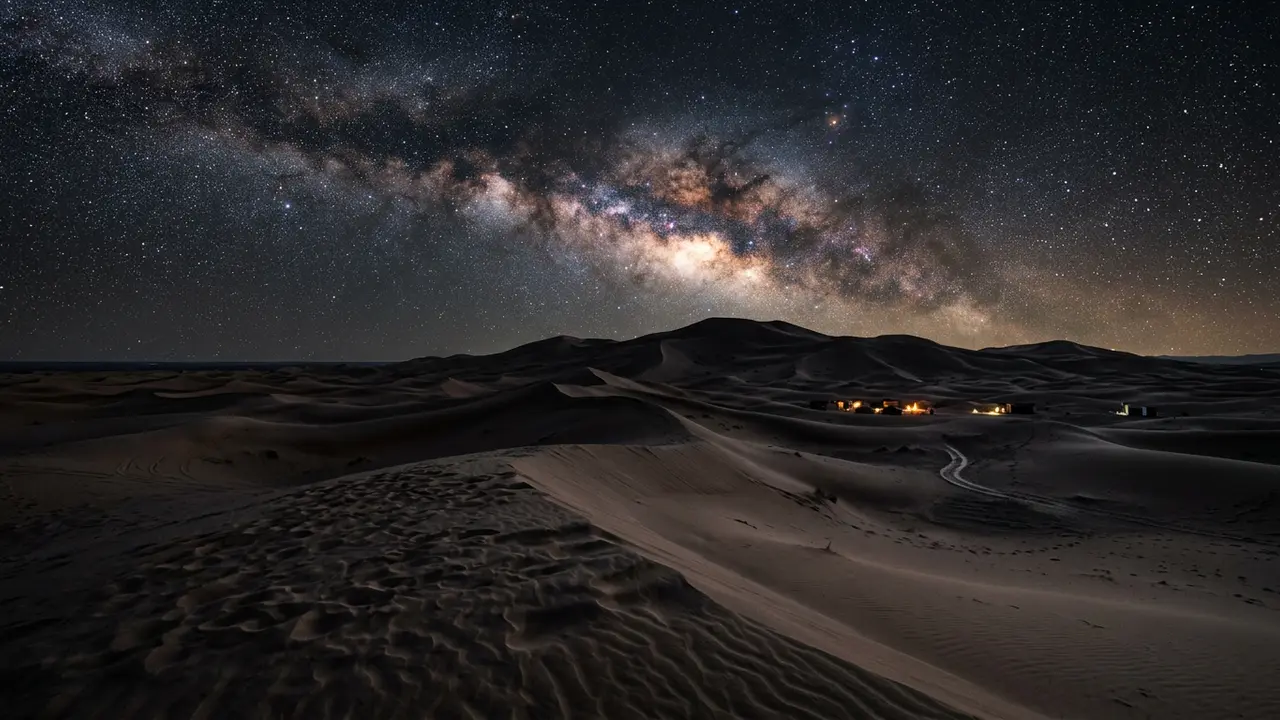
Merzouga Stargazing
Erg Chebbi's dunes rise 150m above Morocco's Sahara, hours from city light. Stargaze from Berber-led desert camps: when to go, where to stay, how to get there.
None of this requires specialized equipment beyond warm layers and basic sand protection, whatever camp or tour length you end up booking.
How Many Nights You Actually Need
One overnight in the dunes covers the core stargazing experience: a camel ride out, one full night under a genuinely dark sky, and a ride back the next morning. That single night is enough if seeing the Milky Way is the entire point of your trip.
Most visitors don't stop there, though, because getting to Merzouga usually means a multi-day Marrakech-or-Fez access route rather than a short local drive. Once that travel is factored in, two to three nights (one in the desert, the rest in transit or riad stays along the way) becomes the realistic minimum for a trip that doesn't feel entirely consumed by driving.
The exact math, including the standard three-day, two-night loop most operators actually sell and when a longer four-day version is worth the extra time, is covered in full in how many nights in Merzouga for stargazing.
Putting a Merzouga Trip Together
Every answer above points to the same shape of trip: book a dune-based camp rather than a village hotel, confirm your guide and camel trek are included by default, check current visa rules before locking in flights, and pack for a temperature swing wider than almost anywhere else you've traveled.
None of it needs to be complicated. The desert-camp market runs on repeat bookings and word of mouth more than glossy marketing, so a direct booking through a camp's own site or a well-reviewed listing tends to be the safer route, whatever tier of tent you choose.
Featured · Article
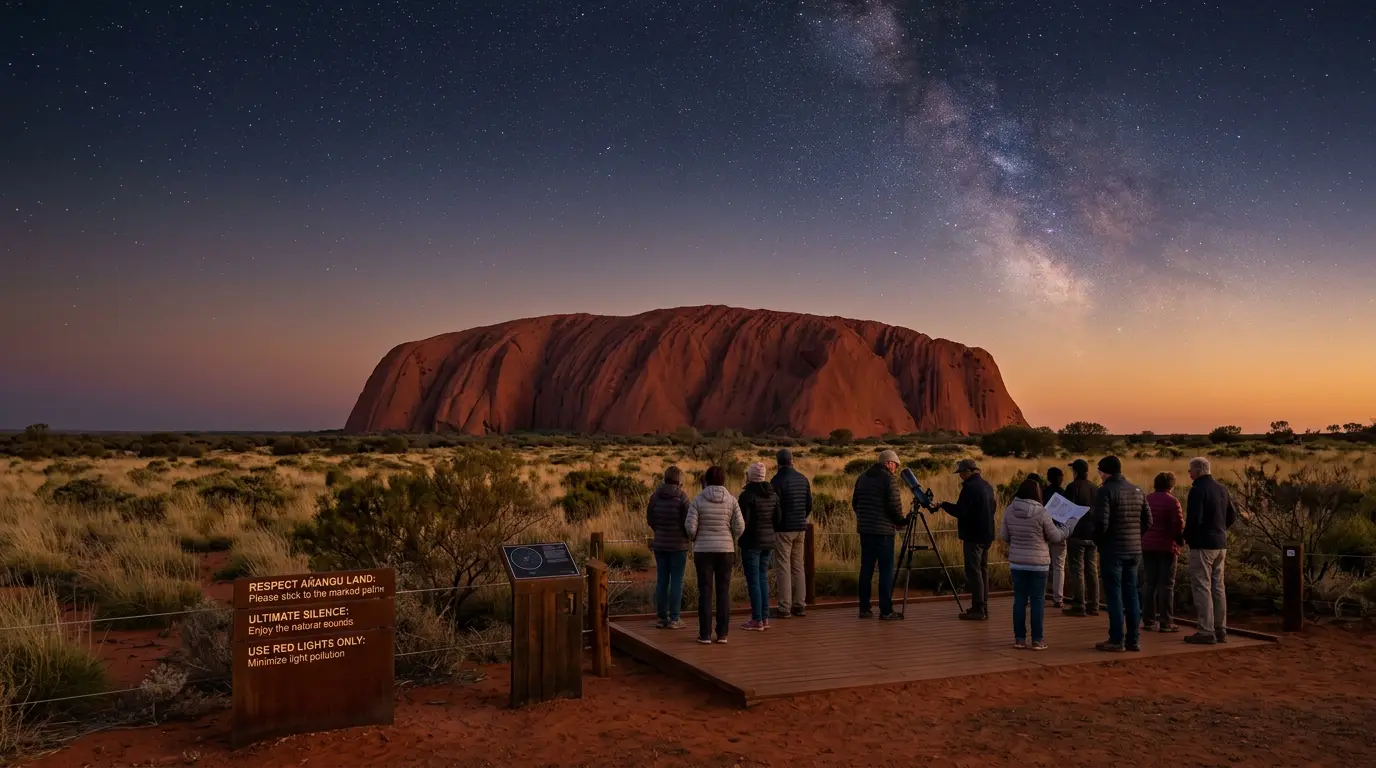
Uluru Cultural Significance and Visitor Etiquette
Uluru is Anangu land under joint management. Here's why the 2019 climb closure is settled policy, what you can't photograph, and real visitor etiquette.
Start with the Merzouga destination guide for the full destination picture, then work outward to the specific camp, tour, or season that matches your own trip.