Joshua Tree's Four Official Stargazing Areas

Start with the map the National Park Service actually publishes, not the one every travel blog recycles. NPS designates exactly four official stargazing areas in Joshua Tree National Park, all of them parking lots rather than open stretches of desert[1]:

  • Quail Springs — a wide pullout on Park Boulevard near the west entrance, an easy first stop coming from Yucca Valley
  • Hidden Valley — a rock-ringed picnic area that's busy by day and empties out fast after sunset
  • Cap Rock — a flat, open lot beneath one of the park's most recognizable boulder piles
  • Ryan Mountain — the trailhead parking lot at the base of a popular hiking trail, not the summit itself
None of the four requires a reservation or a separate permit. Standard park admission covers access to all four after dark the same way it covers the daytime crowds at any of them.
What NPS asks in return is modest but specific: stay awake, and stay within 20 feet (6 meters) of your vehicle rather than wandering off or setting up an overnight camp[2]. That rule is built around wildlife and visitor safety more than sky quality, and it applies equally at all four spots. Bring a folding chair, park close, and you're within it without having to think twice. Comparing the four side by side beats guessing which one to pick once you're already standing in a dark parking lot:

Keys View: A Postcard Panorama With a Light-Dome Problem
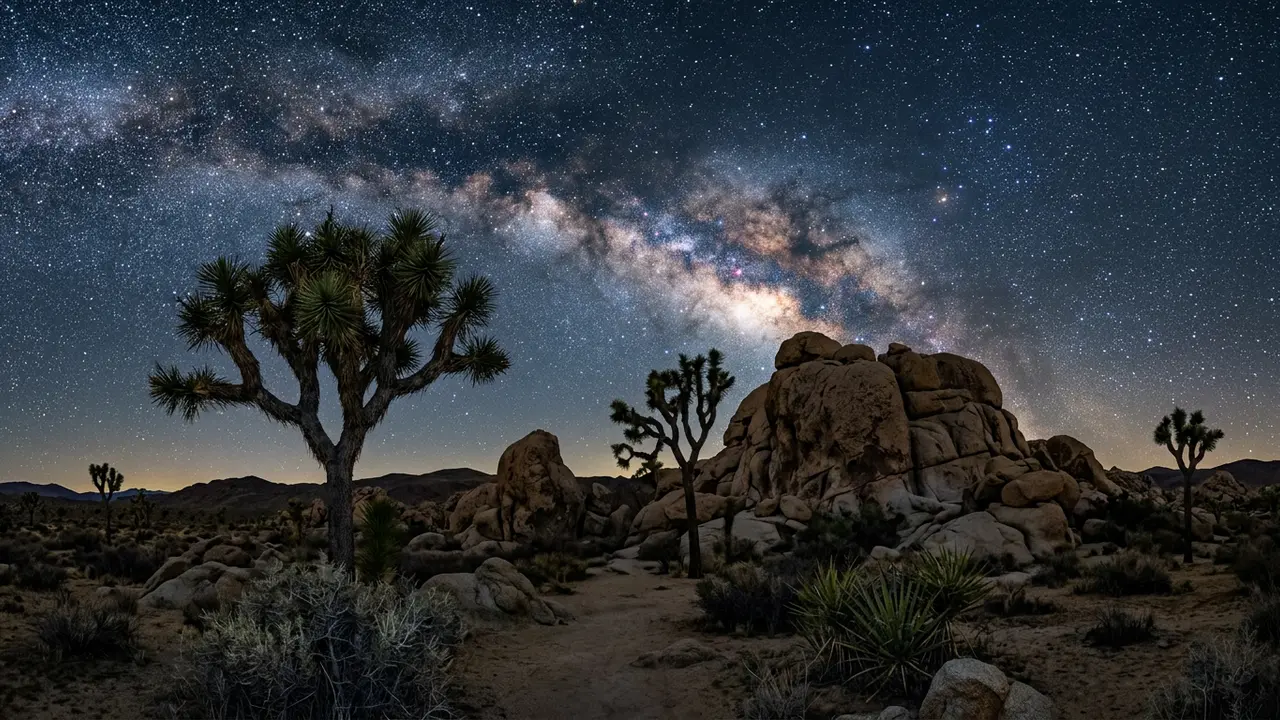
Keys View is the postcard shot every Joshua Tree brochure uses: a paved overlook high on the park's western ridge, looking straight down into the Coachella Valley below. It's also one of the easiest overlooks to reach, a short walk from the parking area with no hike required, and it draws some of the heaviest evening traffic of anywhere covered here, though NPS hasn't published visitor counts to confirm it.
That same view is the problem after dark. NPS's own lightscape assessment doesn't soften it: large light domes from nearby cities impair views of the night sky across the park's exposed western reaches[3], and the park's overall light pollution, rated medium to high, traces mostly to poorly regulated lighting in Los Angeles, Las Vegas, and the Coachella Valley[4]. Keys View sits closer to that glow than anywhere else covered in this guide, looking straight out over the valley the light comes from, and the Milky Way's fainter detail washes out here in a way it doesn't farther east.

Featured · Destination

Joshua Tree National Park

Joshua Tree earned International Dark Sky Park status in 2017, just two hours from LA. Here's where to see the Milky Way, dodge crowds, and stay the night.

Some sections of the park close from dusk to dawn to protect wildlife[5], so check current conditions before planning a Keys View night visit around that spur road specifically, rather than assuming a daytime map still applies. If a wide, dramatic panorama matters more than the darkest possible sky, Keys View still earns the drive. If it's the Milky Way's core you're chasing, it looks better from almost anywhere else in the park; light pollution explains why one overlook washes out while another doesn't.

The Eastern Corridor: Cottonwood and Pinto Basin Road

Drive across the park toward its quieter eastern half, and the sky's character changes before the road does. Cottonwood Campground, down in the park's Colorado Desert section, has the darkest skies among the park's developed sites, according to NPS[6]. It's the payoff for skipping the postcard view in favor of the actual best sky in the park.
Between the two lies the Pinto Basin Road corridor. NPS singles out the stretch between Cholla Cactus Garden and Cottonwood as carrying the least traffic and the darkest skies of any road in the park[7], a long, straight, sparsely trafficked run where pulling over almost anywhere works. Farther out still, Pinto Wells, in the park's remote eastern reaches, sits far enough from the western light domes that NPS calls it far less impacted by light pollution than the rest of the park[8]. Even this darkest corner of Joshua Tree doesn't match the true remoteness of a park like Big Bend; see our Joshua Tree vs Big Bend stargazing comparison for how the two stack up.
The honest trade-off is distance, not difficulty. Cottonwood and the Pinto Basin corridor sit well past the park's main visitor centers, farther still if you're starting from the west entrance near Joshua Tree Village. Nobody stumbles onto this stretch of road by accident, which is exactly why it stays dark.

Ryan Mountain: The Parking Lot, Not the Summit

One of NPS's four designated stargazing areas carries the name of a landmark it doesn't actually sit on top of. The Ryan Mountain listing is the trailhead parking lot at the base of the trail[1], not the summit above it. That distinction matters if you're picturing a ridge-top view: the designated stop is the flat lot where the trail begins, at roughly the same elevation as the park's other western viewpoints, not above them.
Hiking to the actual summit at night is a separate, far more serious undertaking that NPS's stargazing guidance doesn't address at all. It's a steep, unlit trail with real fall risk after dark, one some photographers attempt for the higher vantage, but not something the park endorses as a stargazing option the way it does the trailhead lot. Treat any account of a summit night-hike as an experienced hiker's call, not a beginner-friendly detour.
For most visitors, the parking lot is the better decision anyway. It keeps you close to the car once your eyes have adjusted and your hands have gone cold, and it's flat, open, and easy to leave the moment the temperature or the crowd makes that call for you.

Featured · Article

What Is Light Pollution? Definition, Types, and Solutions

Light pollution is artificial light brightening the night sky, affecting 80% of the world. Learn the 4 types, wildlife and health effects, and how to fix it.

Roadside Pullouts: Stargazing Anywhere in the Park
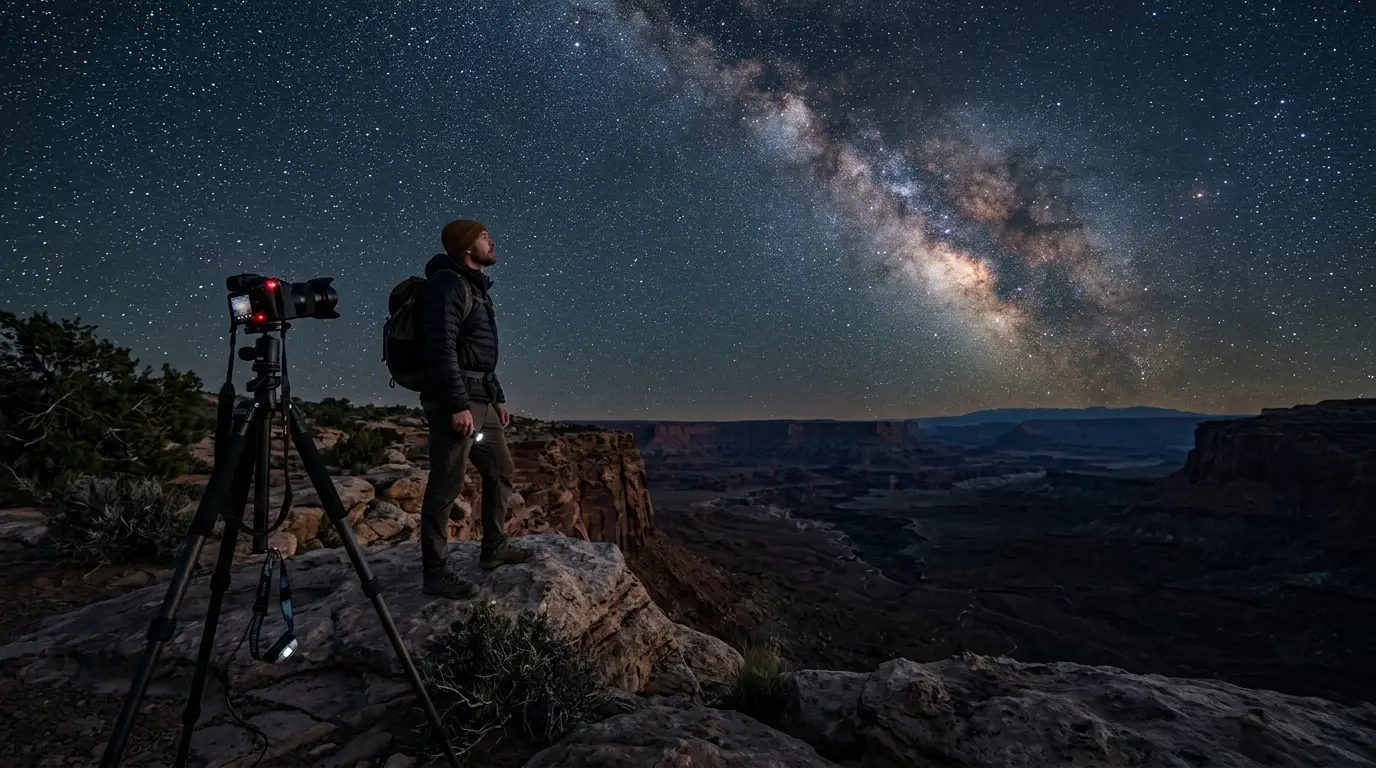
None of this is limited to four named lots. NPS is explicit that visitors can park at any roadside pullout throughout the park and set up chairs to watch the stars overhead[9], not only at the four designated stops. That's the workaround for anyone who drives up to Cap Rock or Hidden Valley on a Saturday night and finds every space already taken.
A couple of rules apply everywhere, not just at the named areas. Overnight camping isn't allowed along roadsides or in parking lots anywhere in the park[10]; this is a place to watch and then leave, not to sleep. Some sections of road also pass through areas marked Day Use Only, closed from dusk to dawn specifically to protect wildlife[5], so check current park alerts before committing to an unfamiliar pullout after dark rather than assuming every road stays open all night.
A handful of rock formations, Skull Rock and Arch Rock among them, show up constantly in photography blogs and travel-Instagram captions as go-to night spots. NPS doesn't name either one specifically as a recommended stargazing location, so treat them as informal pullout stops under the same general roadside guidance, not as an official endorsement equal to the four designated areas.

Planning Your Night: Moon Phase, Season, and Etiquette

Joshua Tree holds its International Dark Sky Park status at the Silver Tier level from the International Dark-Sky Association[11], a real, audited designation rather than a marketing label, one tier below Gold-Tier parks. In practice, that buys a visitor a genuinely dark sky within an easy weekend drive of Los Angeles, provided you pick the right spot and the right night.
Timing does as much work as location. A new moon window is worth building a trip around no matter which stargazing area you choose, since even a half moon washes out the fainter detail that makes any of these spots worth the drive. Summer's moonless nights are the best stretch for the Milky Way's galactic core, low in the southern sky; winter trades that for an early sunset and more total hours of darkness. The best time to stargaze in Joshua Tree breaks that trade-off down month by month.

A few habits carry across every spot on this list:

  • Let your eyes adjust for a full 20 minutes before judging how dark the sky actually looks
  • Switch to a red-light headlamp or phone filter once they have, not the white flashlight from your glovebox
  • Pack real layers; desert nights can swing dramatically colder than the afternoon high
  • Check current road and closure conditions before a night visit to any less-familiar pullout
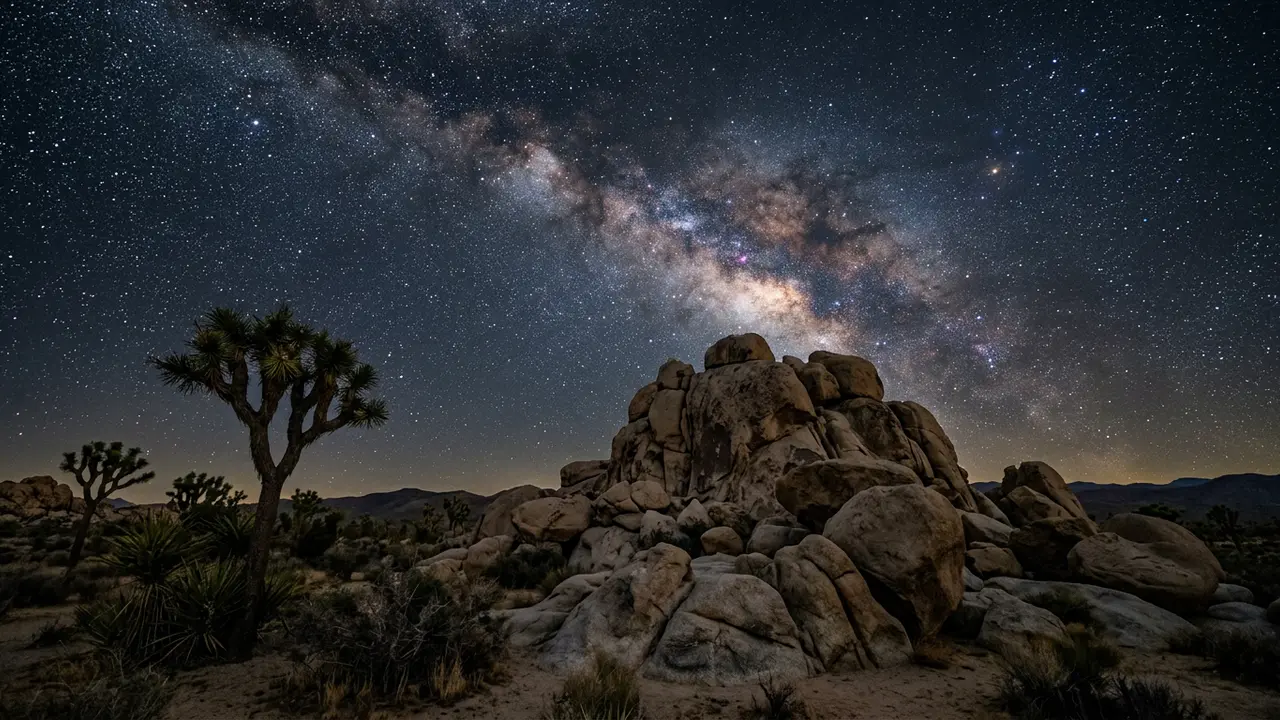
Night sky over Joshua Tree National Park with the Milky Way's galactic core rising above boulder silhouettes, one of the best stargazing spots for a moonless summer night

Night sky over Joshua Tree National Park with the Milky Way's galactic core rising above boulder silhouettes, one of the best stargazing spots for a moonless summer night

None of Joshua Tree's stargazing areas is the objectively best one. Keys View wins on drama and easy parking, Cottonwood and the Pinto Basin corridor win on actual darkness, and the four designated lots split the difference for anyone who doesn't want to drive far each way. The sky doesn't care which parking lot you started from, only whether you gave your eyes time to adjust and picked a night with no moon in the way. For the full comparison against other Silver and Gold Tier parks worth the same drive, see our guide to the best dark sky parks in the world.