Jasper is named for Jasper Hawes, a fur trader who ran a North West Company post from 1815 to 1821. His name lives on in the town, park, and Dark-Sky Preserve.
I've seen dark skies firsthand in the Atacama altiplano, Namibia's NamibRand Nature Reserve, and Morocco's Merzouga dunes; every other destination I write about is built from measured Bortle and SQM data, cloud climatology, and primary sources like park services and the International Dark-Sky Association.
Updated Published
Jasper, Alberta is named after Jasper Hawes, a Maryland-born fur-trade clerk who ran a North West Company supply post called Jasper's House from 1815 to 1821. The town, the national park, and the Dark-Sky Preserve all carry the name of one voyageur who spent six years managing a log depot on Brûlé Lake before the fur-trade mergers of the 1820s ended his posting. A single postmaster's given name, surviving across a townsite, 11,000 square kilometres of protected wilderness, and a formal dark-sky designation, is a very Canadian kind of accident: corporate paperwork, administrative convenience, and sheer inertia turned a fur trader's first name into something permanent.
In this article
Jump to a section
⌄
The Short Answer: It's Named After a Fur Trader
Jasper is not named after the gemstone jasper, a variety of chalcedony quartz found in reds, yellows, and greens across the Canadian Rockies. It's named after a person: Jasper Hawes (sometimes spelled Haws in Parks Canada records), a fur-trade clerk and postmaster who ran a supply depot for the North West Company in the Athabasca River valley between roughly 1815 and 1821[1].
35 km
The distance between the original Jasper's House on Brûlé Lake and the present-day Jasper townsite. The post was close enough for the name to migrate downstream, far enough that the fur trade and the railway era left footprints in two different places.
The post he managed, originally called Rocky Mountain Portage House and later renamed Jasper's House after him, sat on Brûlé Lake about 35 kilometres north of where the modern townsite stands today. When the railway arrived in 1911 and named its divisional point Fitzhugh, the name didn't stick. Residents and railway officials alike preferred Jasper, the name already attached to the historic fur-trade post, the forest park established in 1907, and the landscape itself[2]. By 1913, Fitzhugh was gone, and Jasper was official. The name had outlived the post, the company, and the man by decades.
Who Was Jasper Hawes?
Jasper Hawes was born in Maryland in 1770, but he didn't stay there long. His parents were United Empire Loyalists who sided with the British Crown during the American Revolution and, when the war ended, joined the migration of loyalists leaving the new United States. The family resettled in Sorel, Québec, where Hawes grew up along the St. Lawrence River, a few hundred kilometres downstream from Montréal and the fur-trade networks that would shape the rest of his life[1].
At age 25, in 1795, Hawes traveled to Montréal and entered the service of the North West Company as a middleman: the lowest rung on a fur brigade canoe, positioned between the bowman and the steersman, paddling freight and trade goods from Montréal to Fort William (now Thunder Bay) and on toward the Red River. The job was physical, dangerous, and unglamorous: long hours on the paddle, portages measured in kilometres, winters in company posts learning the trade. He stuck with it for two decades, working the Missouri River from 1797 to 1802, then pushing west into the Athabasca River District by 1804[1].
By the time the North West Company gave him command of a post in 1815, Hawes had accumulated twenty years of service, long enough to know the river systems, the Indigenous trading partners, the seasonal rhythms of the fur brigades, and the brutal economics of getting beaver pelts across a continent. He married an Iroquois woman whose name does not appear in surviving records and fathered at least five children: three sons and at least two daughters. When the North West Company was forcibly merged with the Hudson's Bay Company in 1821, Hawes found himself out of work. Leaving his wife and daughters with family in the West, he returned to Québec with his sons and homesteaded in Hinchinbrooke, south of Montréal, where he died in 1855 at the age of 85[1]. Haws Creek in Québec's Châteauguay Valley still carries his name, one of the few traces of the man himself outside the park that bears his given name. The same valley where Hawes once managed a log supply depot now draws visitors from across the world to Stargazing in Jasper National Park, two centuries and a continent removed from a fur-trade clerk's posting.
Jasper's House: The Post That Started It All
The post that became Jasper's House started with a different name entirely. In 1813, the North West Company built Rocky Mountain Portage House on the west shore of Brûlé Lake as a provision depot for the brigades crossing Athabasca Pass toward the Columbia River and the Pacific coast[3]. The location was strategic: it sat at the approach to one of the few passable routes through the Canadian Rockies, on the York Factory Express, a transcontinental corridor that linked Hudson Bay with the Pacific Northwest, moving correspondence, personnel, and intelligence across the continental divide.
When Jasper Hawes took command in 1815, the name began to shift. To avoid confusion with Rocky Mountain House, another North West Company post on the North Saskatchewan River hundreds of kilometres to the east, traders and voyageurs started calling the Brûlé Lake depot "Jasper's House." The name was unofficial, then common, then permanent: the kind of bottom-up renaming that happens when a post is known more by its postmaster than its corporate designation[1]. Under Hawes's management, the post became a small but functioning community hub: provisioning westbound brigades with horses and supplies, trading goods for meat and furs with Iroquois and Métis families who lived nearby, and maintaining the horse herd that grazed the Athabasca Valley.
The original post (1813-1829) sat on Brûlé Lake, roughly 35 km north of present-day Jasper
In 1830, under Hudson's Bay Company control, the post was relocated to the west bank of the Athabasca River, just north of Jasper Lake
The second location served travellers on both the Athabasca Pass route and the Yellowhead Pass route further north
The post operated until 1853, then sporadically; Henry John Moberly ran it seasonally from 1858 to 1861
It was officially closed in 1884, though it had been largely abandoned for years; the buildings were destroyed in 1909 when Grand Trunk Pacific Railway surveyors used the lumber to build a raft
The post was designated a National Historic Site of Canada in 1924. A commemorative stone and plaque mark the site today, but no structures remain[3].
Timeline
1813
Rocky Mountain Portage House built
North West Company builds the supply depot on Brûlé Lake to provision Athabasca Pass brigades.
1815
Jasper Hawes takes command
Post becomes known as Jasper's House to distinguish it from Rocky Mountain House on the North Saskatchewan.
1821
Hawes leaves the post
North West Company merges with Hudson's Bay Company; Hawes is out of work and returns to Québec.
1830
Post relocated
Under HBC, Jasper's House moves to the Athabasca River near Jasper Lake, serving both the Athabasca and Yellowhead Pass routes.
1884
Officially closed
The post had been abandoned for years; the HBC formally closes it.
1924
National Historic Site
Jasper House designated a National Historic Site of Canada. A commemorative stone marks the location.
From a Fur-Trade Post to a National Park
The name Jasper jumped from a defunct trading post to a national park through a series of decisions that each made sense at the time and added up to a permanent rebranding of the landscape. The chain runs like this:
1907: Jasper Forest Park was established by federal order in council on September 14, carving roughly 12,950 square kilometres out of the Rocky Mountain Forest Reserve[4]. The name Jasper was chosen because of its existing historical association with the area, the old fur-trade post, even in ruins, had already fixed the name to the geography. That land wasn't empty when the reserve was drawn: Stoney Nakoda and Métis families were already living there, and by 1910 they had been forced from their homes to make way for the new park — a history the naming story alone doesn't tell. See Jasper National Park's Indigenous history for that fuller account.
1911: The Grand Trunk Pacific Railway laid track through the park and founded a divisional point called Fitzhugh, after a GTP vice president. The Canadian Northern Railway, arriving the following year, established its own station nearby and called it Jasper Park[2].
Recommended tours
Tours are selected for quality, not commission. I earn a small fee if you book — at no extra cost to you.
1913: Fitzhugh fell out of favour and the townsite was surveyed and renamed Jasper. The name that had started as a postmaster's nickname had now survived the dissolution of the North West Company, the abandonment of the post, and a competing corporate railway name[2].
1930: The National Parks Act converted Jasper Forest Park into Jasper National Park, formally protecting 10,878 square kilometres and stripping out resource-extraction zones along the eastern boundary[4]. The park that carries Jasper Hawes's name is now a UNESCO World Heritage Site (inscribed in 1984 as part of the Canadian Rocky Mountain Parks) and hosts over two million visitors annually.
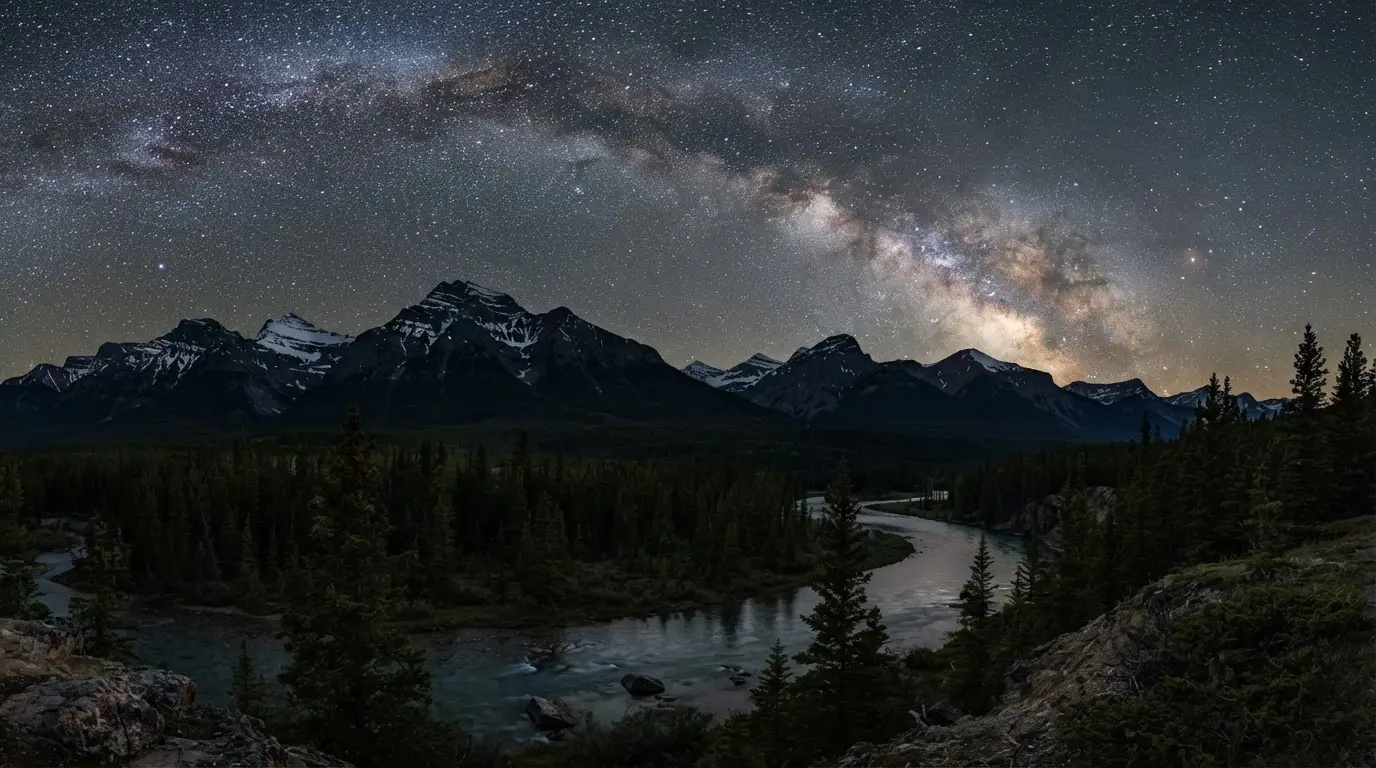
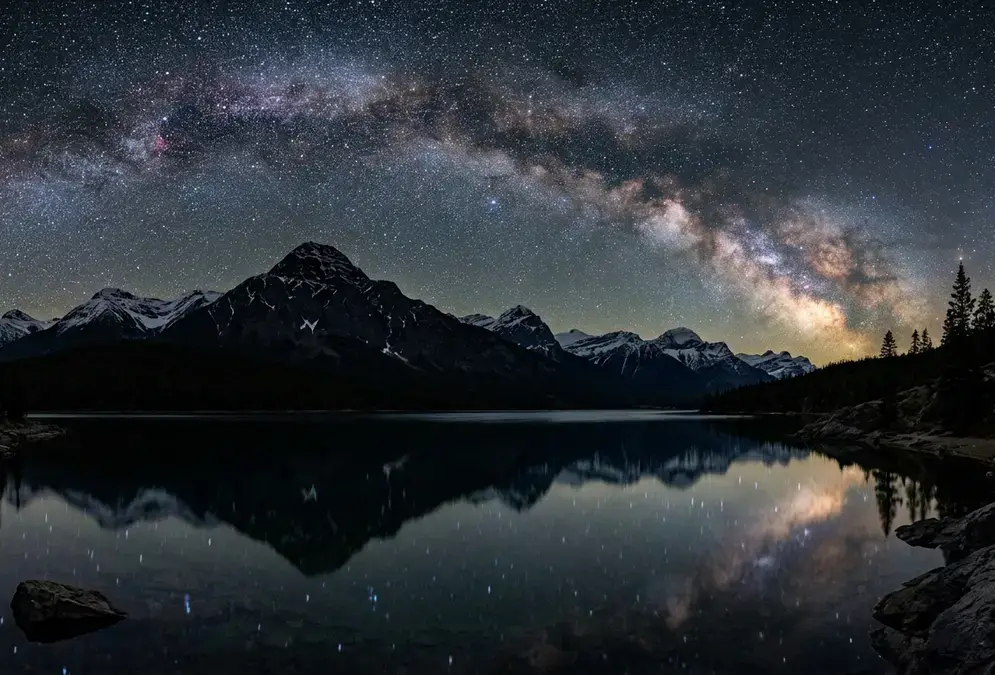
2011: The Royal Astronomical Society of Canada designated Jasper National Park a Dark-Sky Preserve on March 26, the second-largest such preserve in the world, and the largest one accessible by road with a town inside its boundaries[5]. The skies here rate Bortle 1 to 2 on the nine-point dark-sky scale — as dark as the scale goes — making it one of the best places in North America to see the Milky Way with the naked eye.
The best time for stargazing in Jasper runs September through October, when nights turn dark by early evening and temperatures haven't yet dropped to deep-winter lows. Fall also brings the Jasper Dark Sky Festival, an annual event built around the preserve's dark-sky status, layering telescope stations, talks, and planetarium sessions on top of skies that are already excellent without any programming at all.
No, It's Not Named After the Gemstone
A visitor to Jasper who picks up a piece of red or yellow jasper from a Rockies streambed has a fair reason to guess the town is named after the stone. The mineral jasper, an opaque, fine-grained variety of chalcedony quartz, is common across Western Canada, turns up in river gravels throughout the park, and shares the exact spelling of the town, the park, and the preserve. The coincidence is real, and it's produced a persistent piece of folk etymology: the idea that prospectors, surveyors, or railroad builders named the place after the colourful rock underfoot.
It didn't happen that way. Every primary source, from Parks Canada historical records and the Dictionary of Canadian Biography to the Canadian Encyclopedia and the naming history maintained by the Jasper-Yellowhead Museum and Archives, traces the name to Jasper Hawes, the postmaster, and not to the mineral[1][2][3]. The gemstone and the fur trader share a name by chance, not by causation. Jasper the stone takes its name from the Greek iaspis, via Old French jaspre, and was in use in English centuries before Jasper Hawes was born. Jasper the person was presumably named after the Biblical figure (one of the three Magi in medieval tradition) or simply because it was a common given name in the English-speaking world.
Why does the distinction matter? The gemstone theory, though wrong, is satisfying in a way the truth isn't: it connects the place name to the visible landscape, to something you can pick up and hold. The real story is messier: one person, a modest career, a corporate merger, a railway renaming, and a century of administrative decisions that layered a town onto a person's first name. But that messiness is also what makes it worth telling. A place named after a rock is forgettable. A place named after a voyageur who paddled trade canoes for twenty years, managed a remote post, married into an Iroquois family, got fired in a merger, and homesteaded quietly in Québec has a name with an actual life behind it.
If you're planning a trip to see those skies for yourself, the getting to Jasper guide breaks down both driving routes from Edmonton and Calgary, and what to expect at the park gates.
What the Name Means for Stargazers Today
The story of why Jasper is called Jasper matters for stargazers because it's the first clue that this isn't a destination manufactured from scratch around its dark-sky designation. The name predates the park, the park predates the preserve, and the preserve was layered onto a landscape that already had a century of conservation behind it and two centuries of human history before that.
The Dark-Sky Preserve status, conferred by the Royal Astronomical Society of Canada in 2011, is what makes Jasper a destination for stargazers specifically, not just for hikers and skiers[5]. At Bortle 1-2, these skies deliver a naked-eye Milky Way that casts a shadow on the right night, a threshold most people living within an hour of a city have never experienced. The preserve covers the entire park, roughly 11,000 square kilometres[4], which means you can drive in almost any direction from the townsite and find genuinely dark sky within twenty minutes.
But the infrastructure matters too, and it traces right back to the name. A town named for a fur-trade post means a townsite that has been continuously inhabited since the railway arrived in 1911, which means lodges, planetarium sessions at the Fairmont Jasper Park Lodge, and stargazing pullouts reachable by car rather than by multi-day backcountry trek. That's the practical difference between Jasper and a wilderness-area dark-sky site: you can check into a hotel, eat dinner, and still be under Bortle-2 skies before midnight. For a full breakdown of where to set up, the Jasper stargazing FAQ covers the best pullouts, whether you need a guide, and what to pack for a night under Rockies skies.
The name itself, in the end, is a small piece of trivia that opens onto something larger. Every visitor who drives into Jasper National Park to see the Milky Way is standing in a landscape named for a man who paddled canoes, managed a supply post, and probably never imagined that his first name would end up on a UNESCO World Heritage Site, let alone one of the best places on Earth to look at the stars.
Frequently asked questions
Why is Jasper called Jasper?
Jasper is named after Jasper Hawes, a Maryland-born fur trader and North West Company postmaster who ran a supply depot called Jasper's House from 1815 to 1821. The name migrated from the trading post to the forest park (1907), then to the townsite (1913), and finally to the national park (1930).
Who was Jasper Hawes?
Jasper Hawes was born in Maryland in 1770 to United Empire Loyalist parents who fled to Québec during the American Revolution. He joined the North West Company at age 25 as a canoe middleman, spent 20 years working the Missouri and Athabasca river systems, and was appointed postmaster of Rocky Mountain Portage House in 1815. He married an Iroquois woman, had at least five children, and returned to Québec after the 1821 NWC-HBC merger. He died in Hinchinbrooke, Québec in 1855.
Is Jasper named after the gemstone?
No. Despite the identical spelling and the fact that the mineral jasper is common in Western Canada, every primary historical source, from Parks Canada and the Canadian Encyclopedia to the Jasper-Yellowhead Museum and Archives, traces the place name to Jasper Hawes the fur trader, not to the stone. The gemstone and the person share a name by coincidence; the Greek word iaspis and Old French jaspre predate Hawes's birth by centuries.
Where was Jasper's House located?
The original Jasper's House (1813-1829) sat on the west shore of Brûlé Lake, roughly 35 km north of present-day Jasper, Alberta. In 1830, under Hudson's Bay Company control, the post was relocated to the west bank of the Athabasca River just north of Jasper Lake. The second site is now a National Historic Site of Canada, marked by a commemorative stone and plaque.
When did Jasper Hawes work at Jasper's House?
Jasper Hawes managed the post from approximately 1815 to 1821. The post itself was built in 1813 by the North West Company under the name Rocky Mountain Portage House, and became known as Jasper's House after Hawes took command.
When did Jasper become a national park?
Jasper Forest Park was established on September 14, 1907. It was renamed Jasper National Park in 1930 under the National Parks Act, which also finalized the park's boundaries at 10,878 square kilometres. The park was inscribed as a UNESCO World Heritage Site in 1984 as part of the Canadian Rocky Mountain Parks.
When did Jasper become a Dark-Sky Preserve?
Jasper National Park was designated a Dark-Sky Preserve by the Royal Astronomical Society of Canada on March 26, 2011. It is the second-largest Dark-Sky Preserve in the world, and the largest one accessible by road with a working town inside its boundaries. Skies here rate Bortle 1 to 2 on the nine-point dark-sky scale.