
When to go: Jasper's stargazing season

Jasper's skies are dark enough to stargaze on almost any clear night, but the calendar still changes what the experience feels like. September and October sit in the sweet spot: nights turn properly dark by early evening, skies tend to stay clear, and temperatures haven't dropped into deep-winter numbers yet[1]. Summer works against you in the opposite direction: this far north, June nights barely turn dark before 11pm, trading a warm evening for a genuinely narrow window of actual darkness, sometimes only three or four hours before the sky starts lightening again.
Winter delivers the longest run of darkness the Rockies have to offer, up to sixteen hours in December, but it comes with real cold (more on packing further down). If you can only manage one trip, lean toward the shoulder season: fall pairs workable temperatures with dark skies, and if your dates land on the Jasper Dark Sky Festival, you get a week of programming layered on top of a sky that's already good without any of it. Rockies weather can turn quickly regardless of month, so check a short-range cloud forecast the evening you head out rather than trusting the seasonal average alone. For the full month-by-month breakdown, including how moon phase changes what's visible on a given night, best time for stargazing in Jasper covers it in detail.

Can you see the northern lights in Jasper?

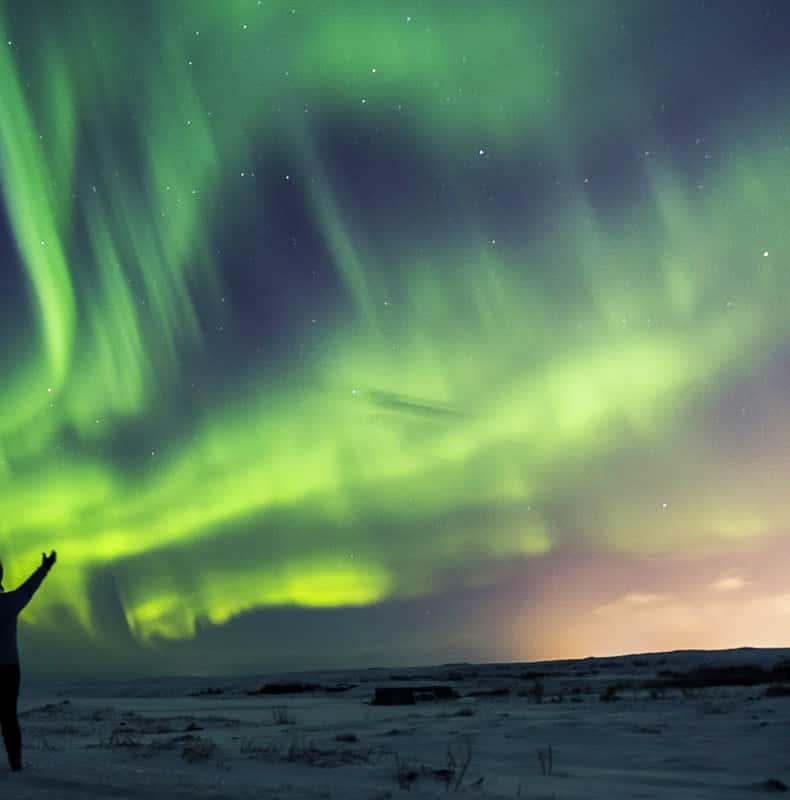
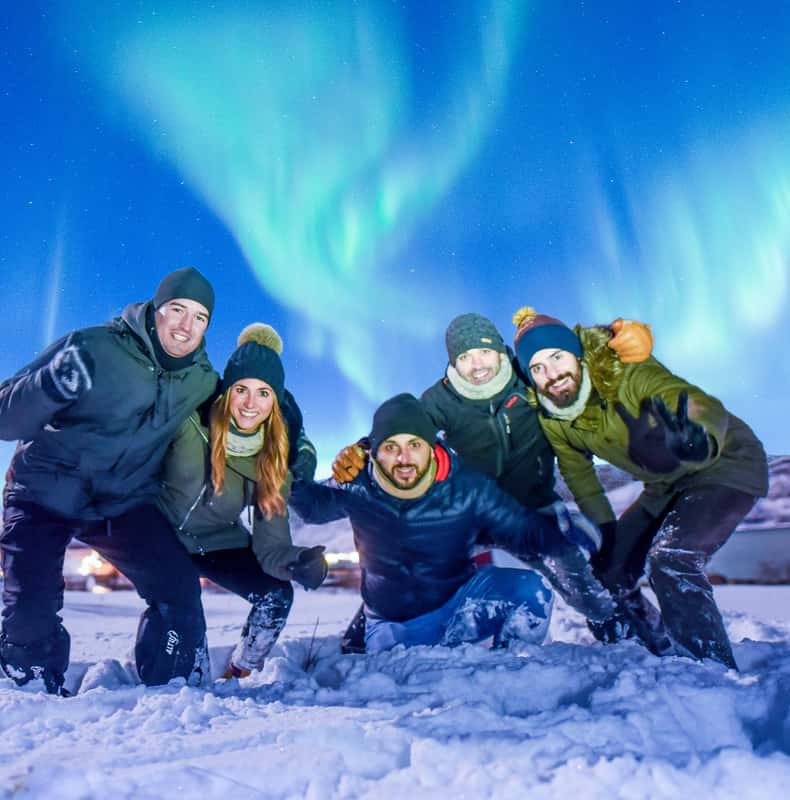
Yes, sometimes, but treat it as a bonus rather than the reason for the trip. Jasper isn't marketed as an aurora-chasing destination the way Tromsø or Fairbanks are, and there's a reason for that: the park sits far enough south that a display is occasional rather than a nightly bet. On average, the aurora borealis shows up over Jasper about once a week, based on regional aurora-tracking data, more often during stretches of high solar activity and less during quiet ones[1]. Some visitors catch a strong green arc on their first night; others spend a week under excellent skies and never see a hint of it. Both outcomes are normal.

Once a week

Roughly how often the aurora borealis appears over Jasper on average, based on regional tracking data, more during active solar stretches, less during quiet ones. It's a bonus on top of the Milky Way, not the reason to book the trip.
If a display does appear, magnetic midnight, roughly 11pm to 1am, is considered the prime window, though it's a loose guideline rather than a rule: sightings happen outside that stretch almost as often as within it[2]. It's also worth dropping the idea that aurora only happens on the coldest, latest nights: solar activity doesn't check a clock, it's simply harder to notice against a bright evening sky or thin cloud. A quick glance at a Kp-index app before heading out is enough; you don't need to build a whole forecasting routine around a possibility this occasional. Build the trip around the Milky Way and Jasper's genuinely dark sky, and let any aurora sighting be the surprise on top, not the plan itself.

How dark are Jasper's skies, and do you need a guide?
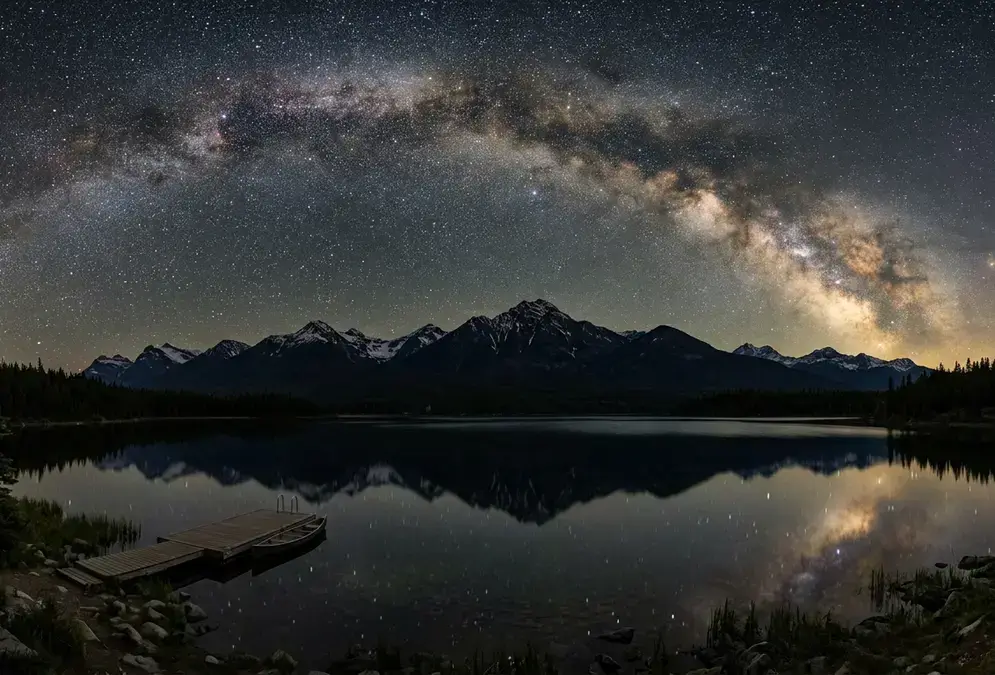
Jasper National Park is the second-largest Dark-Sky Preserve in the world, and the largest one you can actually drive into, with a working townsite inside its boundaries. The Royal Astronomical Society of Canada made that designation official on March 26, 2011, and the numbers hold up: night skies here rate 1 to 2 on the Bortle scale, as dark as the scale goes[3].

Featured · Destination

Stargazing in Jasper National Park

Jasper National Park is widely called the largest accessible Dark Sky Preserve in Canada: 11,228 km², an October Dark Sky Festival, and a 38-seat planetarium.

You don't need a guided tour to see any of it. The preserve is large and genuinely accessible, with pullouts and viewpoints reachable by car, so independent stargazing works fine for a first-timer with a warm coat and a parking spot. Further south, pullouts along the Icefields Parkway toward the Athabasca Glacier offer some of the darkest, least-visited stretches of sky in the whole preserve, worth the extra drive if you have a second night to spend. What a guide, or a session at the Jasper Planetarium, adds instead:

  • A telescope already set up and pointed at something worth looking at
  • Someone who can explain what you're actually seeing, not just naming it
  • A warm indoor option when your fingers give out before your enthusiasm does
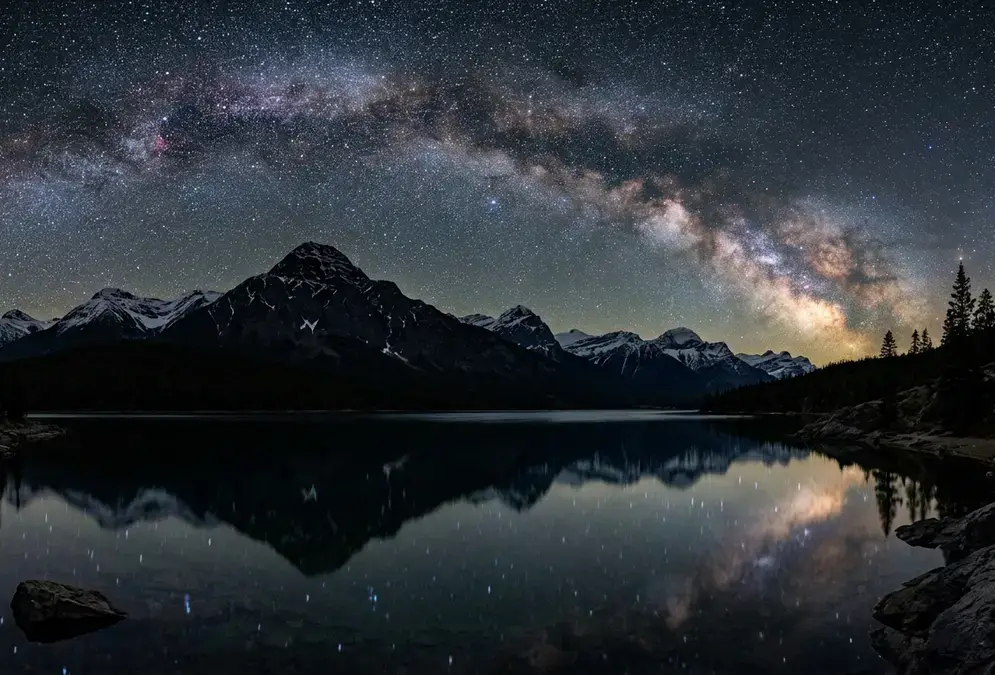
Milky Way arcing over Pyramid Lake in Jasper National Park at night, Rocky Mountain silhouettes reflected in still water under Bortle 1-2 dark sky, the view every Jasper stargazing FAQ points toward

Milky Way arcing over Pyramid Lake in Jasper National Park at night, Rocky Mountain silhouettes reflected in still water under Bortle 1-2 dark sky, the view every Jasper stargazing FAQ points toward

That combination matters most during festival week, when the best pullouts fill early and a booked session guarantees a spot regardless of demand. For named viewpoints, parking notes, and which ones face the right direction for the Milky Way's core, best stargazing spots in Jasper covers Pyramid Lake, Old Fort Point, and the rest of the shortlist.

What to pack for a night under Jasper's sky

Jasper's night cold is real, but it's mountain cold, not Arctic cold. The townsite sits around 1,060 metres[6], so temperatures drop fast once the sun clears the ridgeline, but you're not dealing with the -30°C nights that define a Tromsø or Fairbanks winter. Pack for the season you're actually visiting, not the season you assume:

  • September-October: base layer, fleece, insulated jacket, hat, and gloves; expect a few degrees above freezing after dark
  • Deep winter (December-February): full expedition layers, boots insulated well below freezing, hand warmers, and a plan for how long you'll actually stay outside
  • Summer: a lighter insulated layer still earns its place once the sun drops behind the peaks and the temperature falls with it
A red headlamp is worth packing regardless of season: it preserves your night vision and won't wreck the session for anyone else set up nearby. Layering beats bulk, two mid-weight layers trap more warmth than one heavy coat, and you can shed a layer if the walk back to the car warms you up faster than expected. A thermos of something hot does more for morale than an extra layer once you've been standing still in one spot for an hour, and it gives you a reason to stay out for the display that shows up at minute forty-five instead of packing up at minute thirty.

Is the Jasper Dark Sky Festival worth attending?

For most stargazers, yes. The Jasper Dark Sky Festival layers guided stargazing sessions, telescope stations, talks, workshops, live music, and (oddly enough) rocketry demonstrations on top of a sky that's already excellent without any of it. The 2026 festival runs October 16 to 25[4], and organizers typically release the full programme closer to the date, so check the official site before locking in specific sessions rather than planning around last year's schedule.

Read next · Tour

Jasper Planetarium Night Tour

Jasper Planetarium's dome show and telescope session under Dark Sky Preserve skies, from $99. First Nations sky stories and a 2-year clear-night raincheck.

The trade-off is crowds. Festival week is Jasper's busiest stretch of the stargazing season: pullouts fill early, lodges book out months ahead, and planetarium sessions sell through fast. Ticket tiers typically separate general stargazing sessions from ticketed headline talks, so budget for both if a specific speaker or workshop is the reason you're coming. If a quiet, solitary night under the Milky Way is what you're after, come outside the festival dates; if you want structured programming, telescopes staffed by people who actually know the sky, and company while you wait for a display, festival week earns the trip. The Jasper Dark Sky Festival guide has the full programme breakdown and booking timeline.

Planning your visit: park passes, cost, and who it's for

Jasper is a Canadian national park, so a park pass is required for entry no matter what you're there to do. A daily pass runs roughly CAD $12.25 per adult (about $24.50 for a family or group), and if you're combining a Rockies road trip with stops at other Parks Canada sites, the annual Discovery Pass costs about $83.50 per adult ($167.50 per family or group) and pays for itself after a handful of visits[5]. Pack your pass confirmation, digital is fine, since entry gates do check, and note that the daily rate resets at 4pm, so an evening arrival for stargazing may only need a single day's fee rather than two.
Pass typeAdultFamily/Group
Daily passCAD $12.25CAD $24.50
Annual Discovery PassCAD $83.50CAD $167.50
That modest cost is the whole point of Jasper's pitch as a stargazing destination. Compared to a long-haul trip to Chile's Atacama Desert or Namibia's NamibRand Reserve, Jasper is drivable, or a short flight from Edmonton or Calgary, with a townsite, lodges, and a planetarium sitting inside the preserve itself. That makes it a genuinely good fit for beginners and families: nobody needs backcountry logistics to see a proper dark sky here, just a car, a warm layer, and a parking spot. Whether you fly into Edmonton or Calgary, the getting to Jasper guide breaks down both routes and the drive time from each.