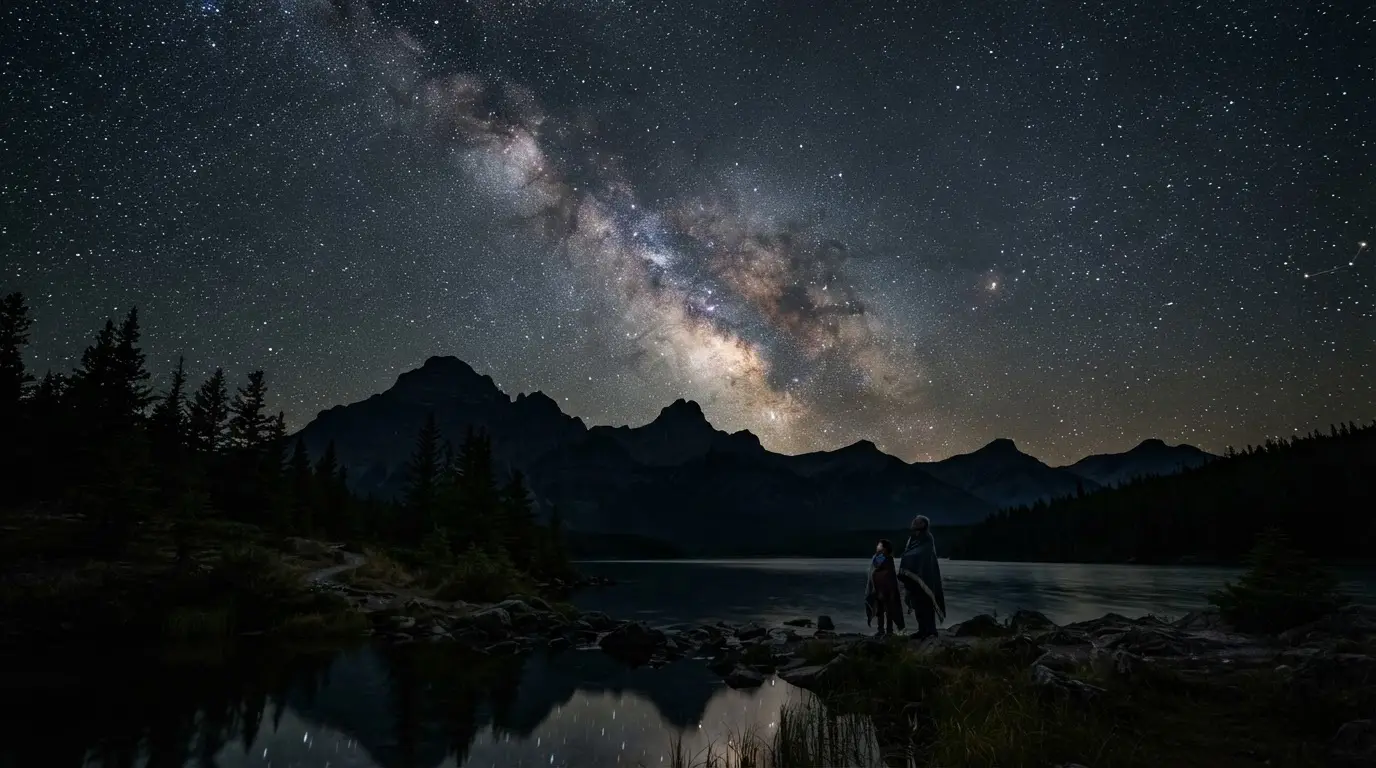
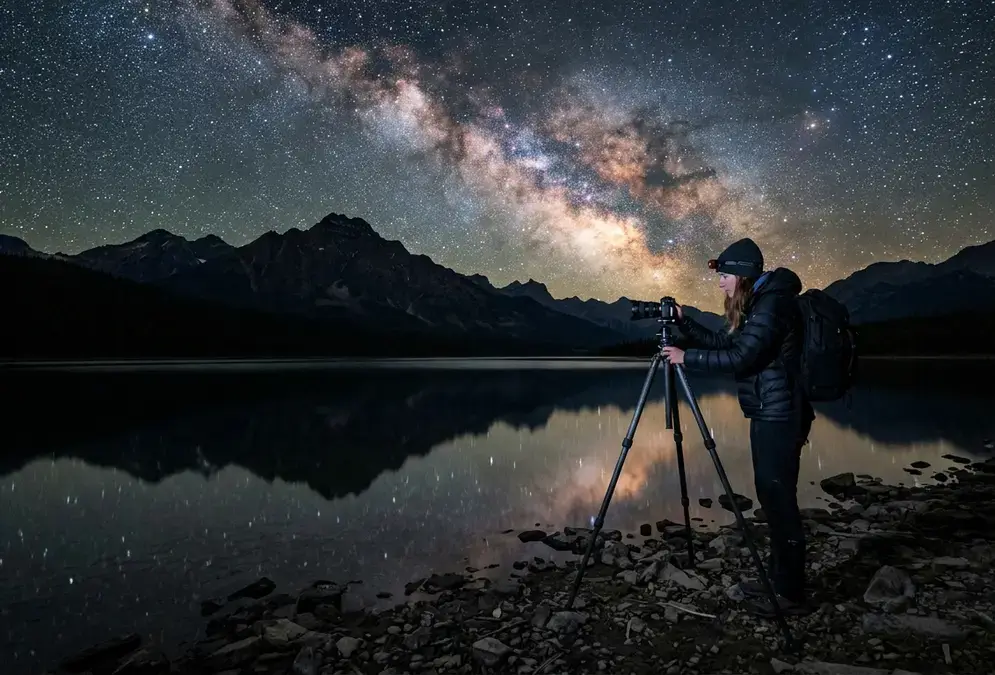
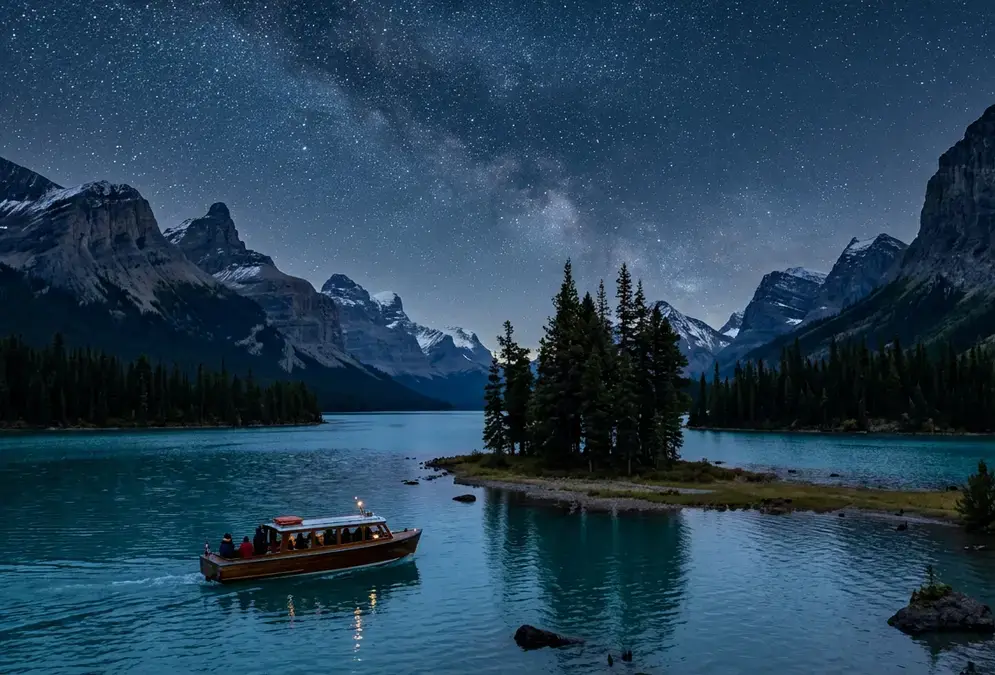
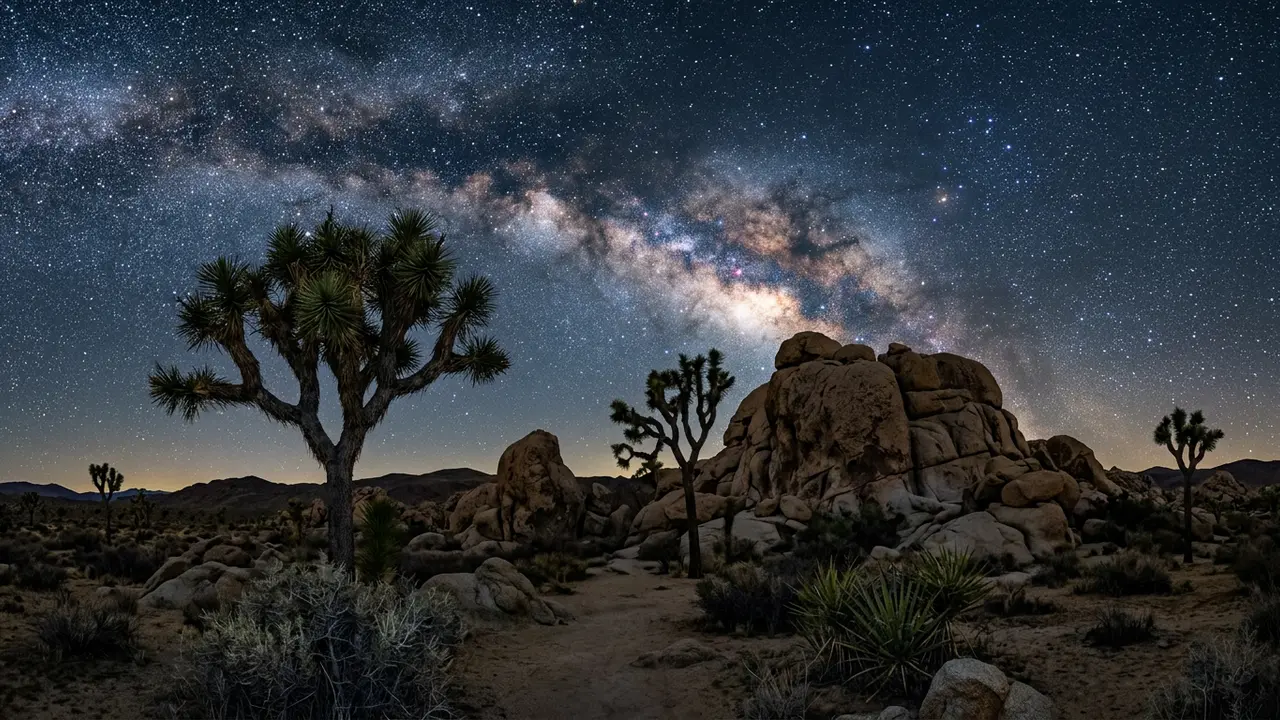
Star-filled night sky over Pyramid Lake in Jasper National Park, Alberta, with a mountain silhouette and calm water reflecting the Milky Way
dark sky preserve jasper national park alberta

Jasper: Canada's Accessible Dark Sky Preserve

Jasper National Park is widely called the largest accessible Dark Sky Preserve in Canada: 11,228 km², an October Dark Sky Festival, and a 38-seat planetarium.

Darkness: Bortle 3-5
Latitude: 53°N
Best months: Year-round (Dark Sky Festival in October)

Dark-sky facts

Darkness
Bortle 3-5
Best months
Year-round (Dark Sky Festival in October)
Country
Canada
Coordinates
52.87°N, 118.08°W
Designation
Jasper National Park Dark Sky Preserve
Night access
Park accessible year-round; night sky viewing best on clear, new-moon nights, with the Dark Sky Festival held every October.
Costs & fees
A Parks Canada park pass (day or annual) is required to enter Jasper National Park; stargazing viewpoints and trailheads inside the park are free once you're in. The Jasper Planetarium and Dark Sky Festival events are ticketed separately.

The Milky Way still shows real detail. Light domes glow low over distant towns.

This destination rates Bortle 3-5 on the 9-level Bortle dark-sky scale, where 1 is a pristine dark sky and 9 is an inner-city sky. The Milky Way still shows real detail. Light domes glow low over distant towns.

On this page

Updated

Jasper National Park is widely billed as the largest Dark Sky Preserve you can actually drive into. At 11,228 square kilometres, it's the second-largest Dark-Sky Preserve on the planet, and in Canada, behind only Wood Buffalo National Park to the north. But size isn't the interesting number here. The Jasper townsite, with its grocery store, hotels, and the Fairmont Jasper Park Lodge, sits inside the preserve boundary, which is why it's widely described as the largest accessible Dark-Sky Preserve anywhere, not a backcountry reserve you need a permit and three days of hiking to reach.

That's the whole pitch, and it's a deliberately modest one. Jasper isn't chasing the aurora tourists who fly to Tromsø or Fairbanks, and it isn't selling remote-observatory prestige the way Aoraki or NamibRand do. It's a Rockies national park with a night sky good enough to matter, a working town you can walk to dinner from, and a four-hour drive from Edmonton, accessible in a way the aurora-chasing and remote-observatory clusters aren't. For a lot of travelers planning their first real stargazing trip, that accessibility is the draw, as much as the darkness.

The sky this month

Computed for Jasper National Park at 53°N. Updates nightly.

  • First quarter tonight, 36% illuminated

    Next new moon August 12. The nights either side of it are the darkest of the month.

  • No astronomical darkness right now

    At 53°N the summer sun never sinks far enough below the horizon for a fully dark sky. Proper darkness returns in August.

    Hours of astronomical darkness by month at Jasper National Park: January 12 hours, February 10 hours, March 8 hours, April 6 hours, May 1 hours, June 0 hours, July 0 hours, August 4 hours, September 7 hours, October 10 hours, November 11 hours, December 12 hours.

  • Perseids active now

    Peaks August 12. Up to 100 meteors per hour at maximum. The 2026 peak lands on a new moon — a dark-sky year with zero lunar washout.

    See the Perseids guide
New moons August 12 September 10 October 10
Add new-moon reminders Full sky calendar

Where to go stargazing in July

A Dark-Sky Preserve you can actually drive into

The Royal Astronomical Society of Canada designated Jasper a Dark-Sky Preserve on March 26, 2011, in partnership with Parks Canada. It's one of 17 such preserves across the country, and it sits inside the Canadian Rocky Mountain Parks UNESCO World Heritage Site, a designation shared with Banff, Yoho, and Kootenay.

Sky quality readings back up the designation, though they vary sharply depending on where you're standing. Near the townsite, the reading is around 21.1–21.2 mag/arcsec², bright enough that streetlights compete with fainter stars. Move out to the core protected area and it improves to roughly 21.4. Push further, to the backcountry site known as Big Bend, and readings run darker than 21.7, genuinely dark sky, the kind where the Milky Way core casts a faint shadow on a clear, new-moon night. That range is worth knowing before you arrive: the view from the hotel parking lot and the view from Big Bend are not the same night sky.
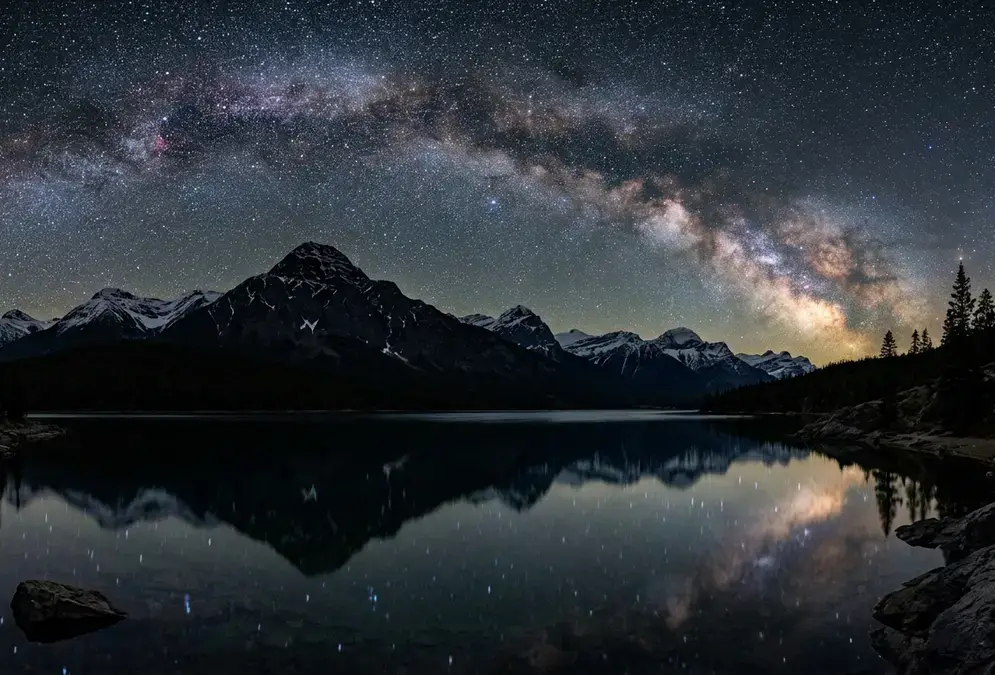
The Jasper Dark Sky Festival: October's marquee week

Every October, Tourism Jasper runs the Jasper Dark Sky Festival, timed to Parks Canada's Dark-Sky Month and historically scheduled around the weekend after Canadian Thanksgiving. The 2026 edition runs October 16–25, worth confirming again closer to your trip since festival dates shift year to year.

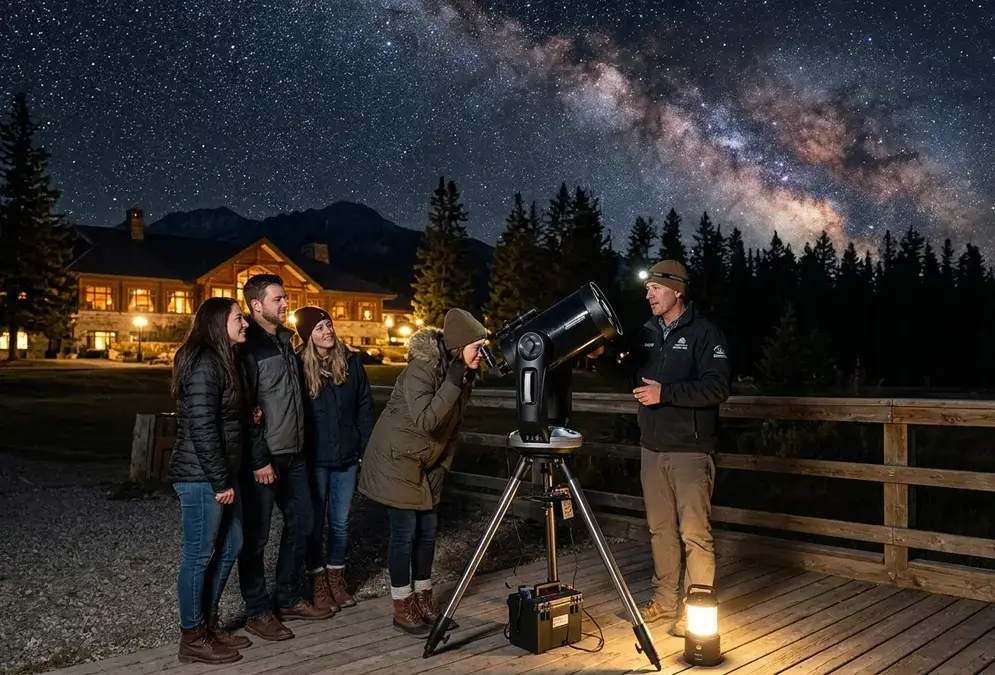
The programming goes well beyond a few telescopes set up on a field. Recent editions have paired guest speakers and science demonstrations with nights built around something bigger: strings from the Edmonton Symphony Orchestra performing under open sky, a free public concert, Slooh's travelling astronomy hub with hands-on demos, and a Dark Sky Festival trivia night. Star parties and telescope stations run most evenings, often tied into the Jasper Planetarium's programming. If you're building a trip around one specific week, this is it: our full guide to the Jasper Dark Sky Festival covers the year-by-year programming in more depth.

Month by month

Jasper's Dark Sky Preserve is accessible year-round, but the mix of darkness and comfort shifts with the season. Long, cold nights run November through February; the Dark Sky Festival each October brings the year's best balance of dark, clear skies and manageable temperatures. Aurora sightings are possible during active solar periods, but Jasper isn't an aurora-chasing destination the way Fairbanks or Tromsø are, so treat any northern lights view here as a bonus, not the reason to book.

  • January: Good — Long, dark nights, but sub-zero cold and icy mountain roads test comfort.
  • February: Good
  • March: Good
  • April: Fair
  • May: Fair
  • June: Off-season — Near-solstice twilight barely fades this far north, so true darkness is scarce.
  • July: Off-season
  • August: Fair — Nights start turning genuinely dark again by late August.
  • September: Good
  • October: Peak — Dark Sky Festival month: cool, clear nights and the year's best mix of darkness and comfort.
  • November: Peak
  • December: Good — Longest nights of the year, but expect deep cold and variable mountain-pass conditions.

Going in October? See what else the sky offers that month

Where to look up: the park's best stargazing spots

You don't need the backcountry to see a good sky here, though it helps. The short list:

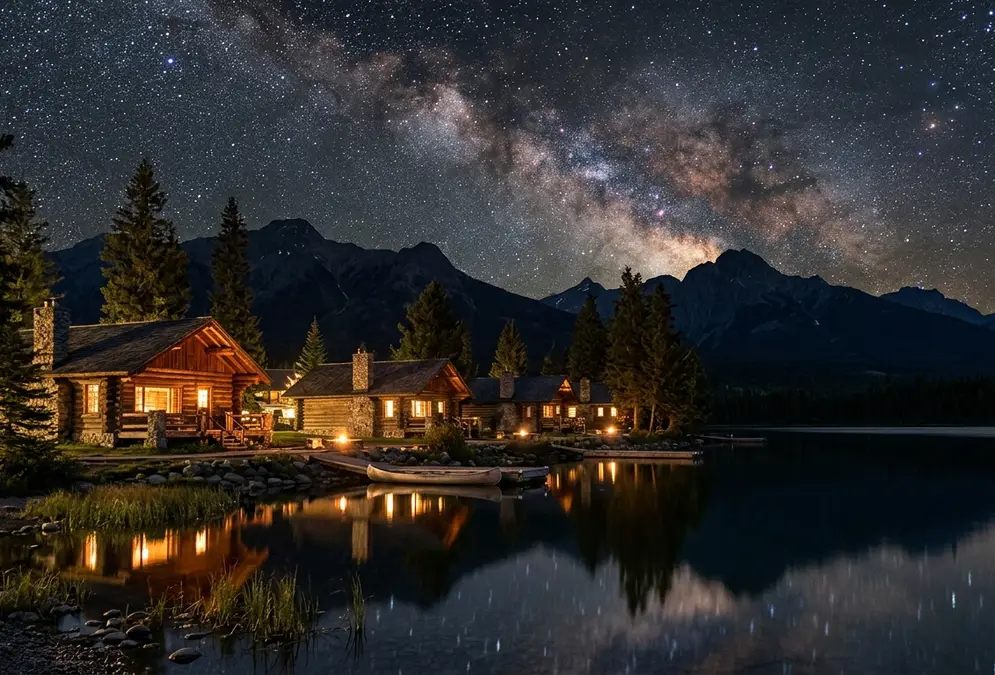
  • Pyramid Lake and Pyramid Island: a flat, family-friendly walk across a footbridge, with the lake giving a reflective foreground on calm nights
  • Old Fort Point: a short climb above the Athabasca River valley, with open sightlines
  • Maligne Lake: further out and quieter, one of the park's classic after-dark drives
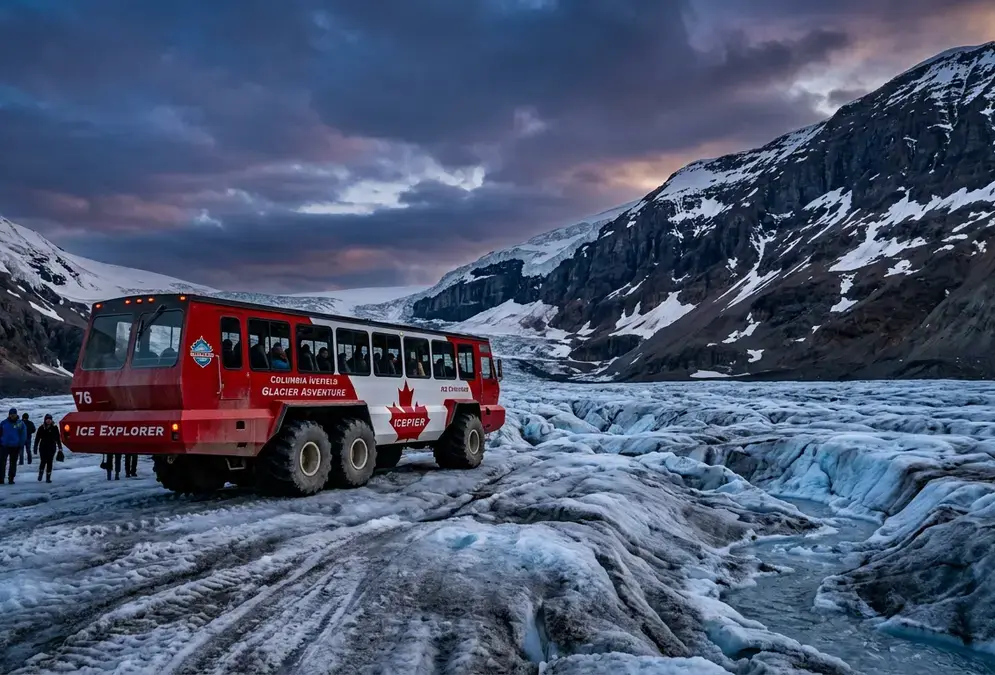
  • Athabasca Glacier and the Icefields Parkway pullouts: Parks Canada specifically names the toe of the glacier as a viewing point
  • Miette Hot Springs area: pairs a soak with a dark sky, if you're willing to drive the extra distance
  • Big Bend: the backcountry option, and the darkest reading anywhere in the park

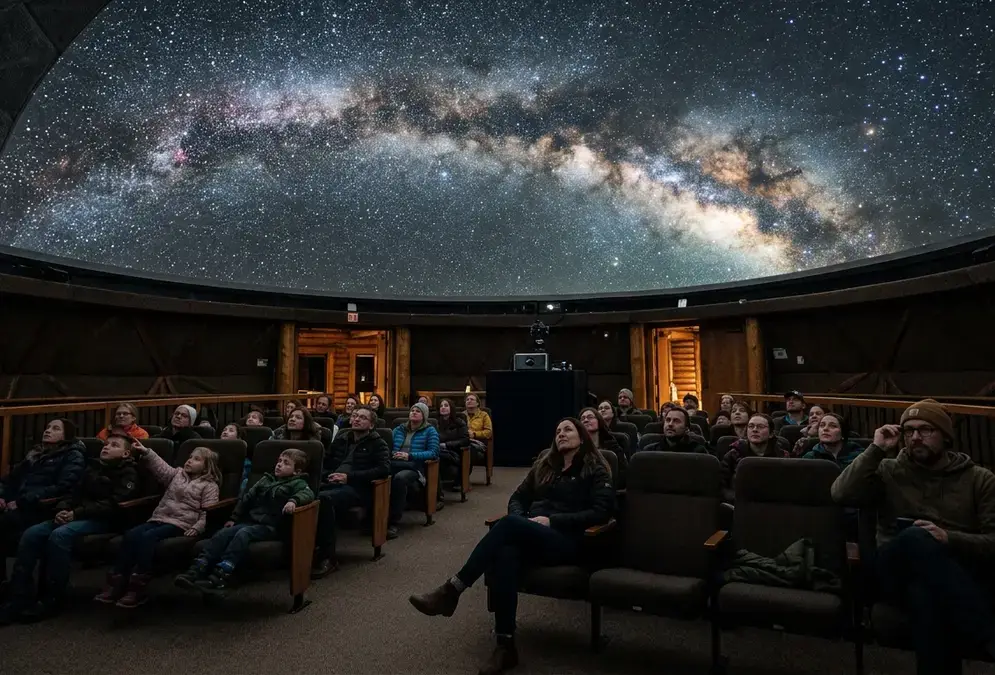
For directions and what each spot is actually good for, see our dedicated guide to the best stargazing spots in Jasper. And if you'd rather have someone else find the clear patch of sky, the Jasper Planetarium's night tour at Fairmont Jasper Park Lodge runs a 38-seat dome show and what's billed as the largest telescope in the Rockies, with some tours continuing outside to a dark-sky site for the naked-eye finish. Beyond the planetarium, Jasper has a small but growing astrotourism scene: independent operators running guided night walks and astrophotography tours, with more options showing up each year around the Festival.

Interactive map — loads as you scroll (requires JavaScript)

Tap a pin to open the lodge, tour, or destination page.

All tours

Aurora in Jasper: a possible bonus, never the plan

Jasper sits far enough north, and dark enough, that the aurora borealis does show up on clear, cold nights, more often in fall and winter, and more often during periods of higher solar activity. Parks Canada's own description treats it as an aside: something you might see, not something you came for.

That's the honest framing to carry into your trip. If what you want is a real aurora-chasing itinerary, built around forecasts and Kp thresholds, Tromsø, Fairbanks, and Iceland are where to go. Jasper's sell is the Milky Way, the preserve, and the Festival. Treat any green light on the horizon as a lucky extra, not a reason to book the trip.

Getting to Jasper: Edmonton, Calgary, and the Icefields Parkway

Most visitors fly into one of two Alberta hubs. From Edmonton, it's about 380 km and a four-hour drive west along the Yellowhead Highway (Trans-Canada 16), the direct route. From Calgary, it's roughly 429 km and about five hours, and the scenic option runs via the Icefields Parkway (Highway 93) from Lake Louise and Banff, one of the most photographed drives in the world and worth treating as a destination rather than a transit leg.

Rent a car at either airport; you'll want one inside the park regardless. Winter driving needs real caution: snow is possible in any month, and conditions on the Icefields Parkway can turn quickly.

How long to stay

Best season

Year-round for the Dark Sky Preserve itself; new-moon nights give the darkest views, and October adds the Dark Sky Festival as a reason to time a trip around it.

Quietest hours

Well after the townsite's restaurants close, roughly 10 PM to 2 AM, once day-trip crowds from the Icefields Parkway have cleared out.

Visit duration

2–4 nights covers the highlights; longer trips let you pair a clear night at Pyramid Lake with a drive up the Icefields Parkway toward the Athabasca Glacier.

Where to stay, and what to book

Where you sleep changes what you can see without driving anywhere. The Fairmont Jasper Park Lodge is the obvious anchor property: it hosts the Jasper Planetarium on-site, meaning you can walk from your room to a telescope session. Lakeside options like Pyramid Lake Lodge put you steps from one of the park's best reflective-water viewpoints, while townsite hotels trade a few minutes of dark-sky access for walkability to festival venues and dinner.

For a full ranked breakdown (dark-sky proximity, Rockies views, what's bookable and where), see our guide to the best places to stay for stargazing in Jasper, and our full review of the Fairmont Jasper Park Lodge if you want the anchor property in more detail.

Top lodges at a glance

3 4.6 Traditional

Best best quiet lakeside stay

Patricia Lake Bungalows

Self-catering cabins on quiet Patricia Lake; 9.7 rating across 82 Booking.com reviews

$$ · $211-307/night (2026) View lodge
4 3.6 Budget

Best best townsite location

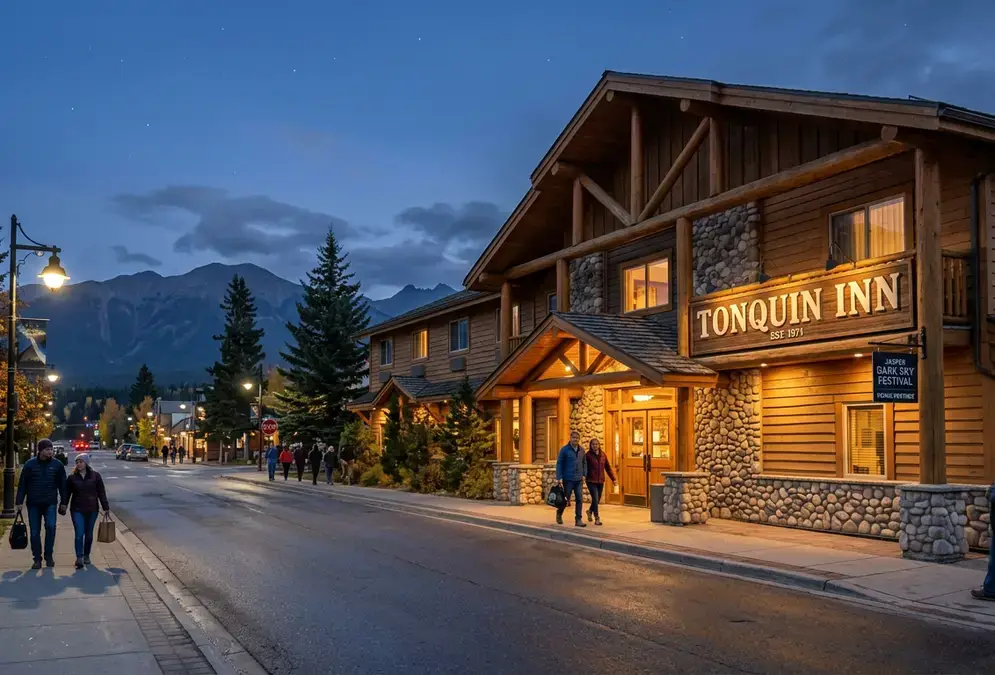
Tonquin Inn

About a 10-minute walk to the town centre; CAD 108-175/night, the most affordable pick here

$ · CAD 108-175/night View lodge
5 4.1 Modern

Best best for the icefields parkway

Glacier View Lodge

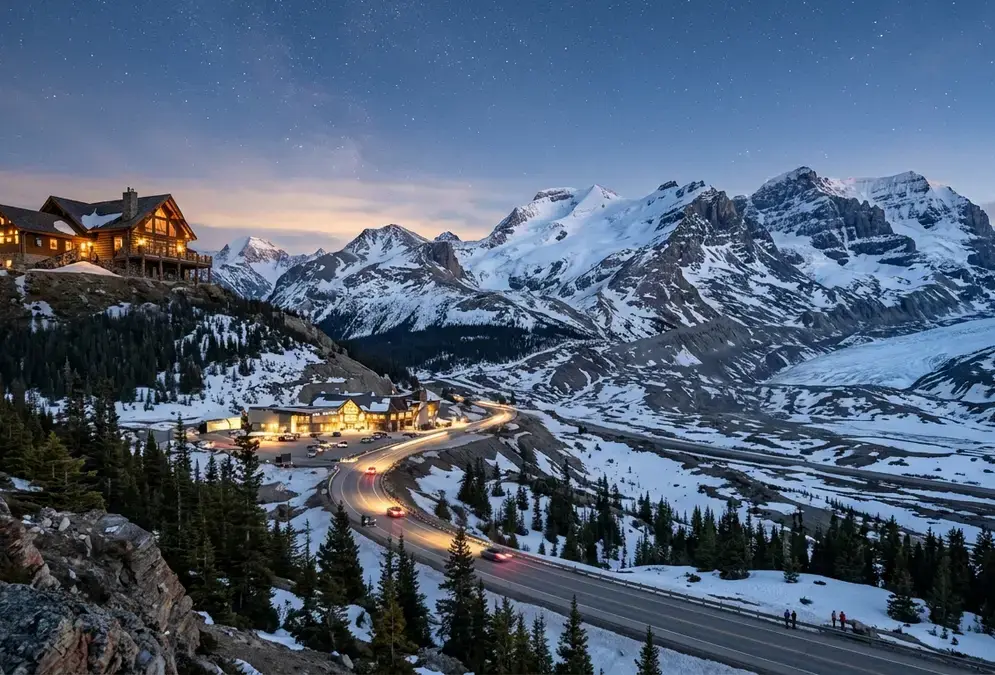
Only lodging at the Columbia Icefield; glacier tour and stargazing bundled together

$$ · CAD 127+/night (seasonal) View lodge
See the full ranking: Best Places to Stay in Jasper for Stargazing

Planning the rest of your Jasper trip

Getting here is its own decision: our guide to getting to Jasper breaks down the Edmonton and Calgary routes, including whether the train is worth considering. Once you've picked a hub, how many days to spend in Jasper for stargazing works through two-, three-, and four-night itineraries, and best time to stargaze in Jasper covers the season-by-season breakdown in more depth than the aurora note above. If you're weighing this park against its Rockies neighbour, see Jasper vs Banff stargazing for how the two compare, and for the honest verdict on whether Jasper deserves the trip at all, read is Jasper worth it for stargazing.

Once you're here, Jasper's stargazing FAQ answers the questions that come up most, our stargazing forecast guide covers how to actually check sky clarity before you head out, and our Jasper stargazing gear list and astrophotography gear guide cover what to pack, camera included. Cloudy night, or just want a break from the sky? Things to do in Jasper beyond stargazing covers the glaciers, hot springs, and wildlife drives that fill the daylight hours.

Reporter notebook

Insider tips

Best time

Don't build the whole trip around the Festival week

October's Dark Sky Festival is the marquee event, but it also means the highest prices and the busiest lodges in the park. If a big program of talks and telescope stations isn't the point for you, a clear new-moon night in September or a shoulder-season winter week gives you the same dark sky with a fraction of the crowd.

Photo spot

Walk out to Pyramid Island before the sky goes fully dark

The footbridge to Pyramid Island is flat and short enough for anyone, but the reflective shot depends on calm water and a low horizon. Get there at blue hour, before the stars are out, and pick your foreground while you can still see the shoreline clearly.

Booking tip

Book Planetarium and Festival tickets ahead, not just a park pass

The Parks Canada pass gets you into Jasper, but it doesn't get you a seat at the Jasper Planetarium's dome show or a spot at Dark Sky Festival events, both of which sell out during the October week. Book those separately, and well before you arrive if you're coming for the Festival.

Frequently asked questions

Is Jasper National Park a Dark Sky Preserve?

Yes. The Royal Astronomical Society of Canada designated Jasper a Dark-Sky Preserve on March 26, 2011, in partnership with Parks Canada.

How big is the Jasper Dark Sky Preserve?

It covers 11,228 square kilometres, making it the second-largest Dark-Sky Preserve in the world and in Canada, smaller only than Wood Buffalo National Park.

Is Jasper the largest Dark Sky Preserve in the world?

No, it's the second-largest, behind Wood Buffalo National Park (also in Canada). Jasper is widely described as the largest accessible Dark-Sky Preserve, though, since the Jasper townsite sits inside the protected boundary.

When is the Jasper Dark Sky Festival?

Typically in October, historically around the weekend after Canadian Thanksgiving. The 2026 edition runs October 16 to 25, but confirm exact dates each year since they shift.

Can you see the northern lights in Jasper?

Sometimes, on clear, cold nights, especially in fall and winter during periods of higher solar activity. Jasper isn't an aurora-chasing destination the way Arctic locations are, so treat any sighting as a bonus rather than the reason to plan the trip.

Where is the Jasper Planetarium?

At the Fairmont Jasper Park Lodge. It's a 38-seat dome theatre with an outdoor telescope experience billed as the largest telescope in the Rockies.

What are the best stargazing spots in Jasper National Park?

Pyramid Lake and Pyramid Island, Old Fort Point, Maligne Lake, the Athabasca Glacier and Icefields Parkway pullouts, and the Miette Hot Springs area are the most commonly recommended spots, with Big Bend as the darkest backcountry option.

How do you get to Jasper National Park for stargazing?

Most visitors fly into Edmonton (about a four-hour drive via the Yellowhead Highway) or Calgary (about five hours, often via the scenic Icefields Parkway from Banff and Lake Louise), then rent a car.

What is the best time of year to stargaze in Jasper?

New-moon nights with clear, cool skies give the best views year-round, with fall and winter generally favoured for darker, longer nights. October adds the Dark Sky Festival as an extra reason to time a visit.

Further reading

Sources