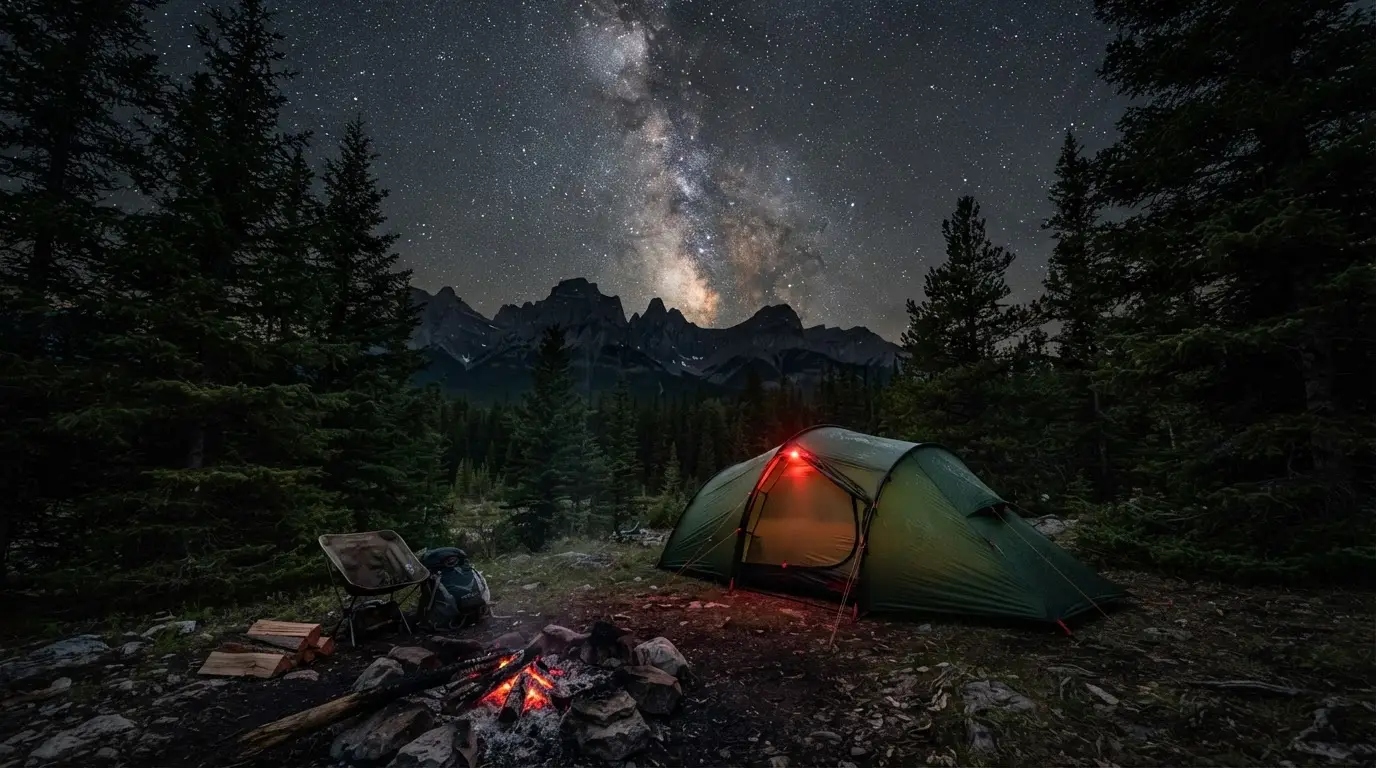

The price case: $19.50 versus $935-plus
A night in Jasper's frontcountry campgrounds starts at $19.50 for a primitive site with no fire pit[1], and park entry adds $12.25 per adult per day or $24.50 for a family or group[4]. At the far end of the scale, the Fairmont Jasper Park Lodge starts at $935 a night on its AAA/CAA rate[2] and layers a $65-per-room-per-night Resort Experience Fee on top[5], before tax.
$19.50
The gap is arithmetic, not taste. KAYAK's averages put the lodge's cheapest month at $294 a night in March and its most expensive at $972 in June[6]. Camping also wins on a point the lodge pages skip: you are already outside the town's light glow. The preserve's core measures about 21.4 mag/arcsec², dropping to 21.1 to 21.2 near the townsite[7], so a campground bed lands you on the darker side of that gradient for the price of a tent.
Where to camp: Whistlers, Wapiti, or an oTENTik
The two campgrounds that matter for stargazers split the season between them.
- Whistlers Campground is the largest in the park, with 781 sites, and shower use is included in the campsite fee[8]. It runs May 6 to October 12, fully reservable[9]. It closes October 12, before the festival's main week, so this is the summer option.
- Wapiti Campground runs May 13 to October 28 and sits minutes from the townsite[10], which keeps it open through the October Dark Sky Festival. It operates at reduced capacity in 2026 after the 2024 Jasper Wildfire[10], so book early. Its winter season runs 40 sites first-come-first-served with no reservations[11].
- oTENTik tents at Whistlers are the middle option for people who want a bed, not a pitch: $147.50 a night, sleeping up to six people (max four adults), with heaters and wooden floors[12].
Featured · Destination
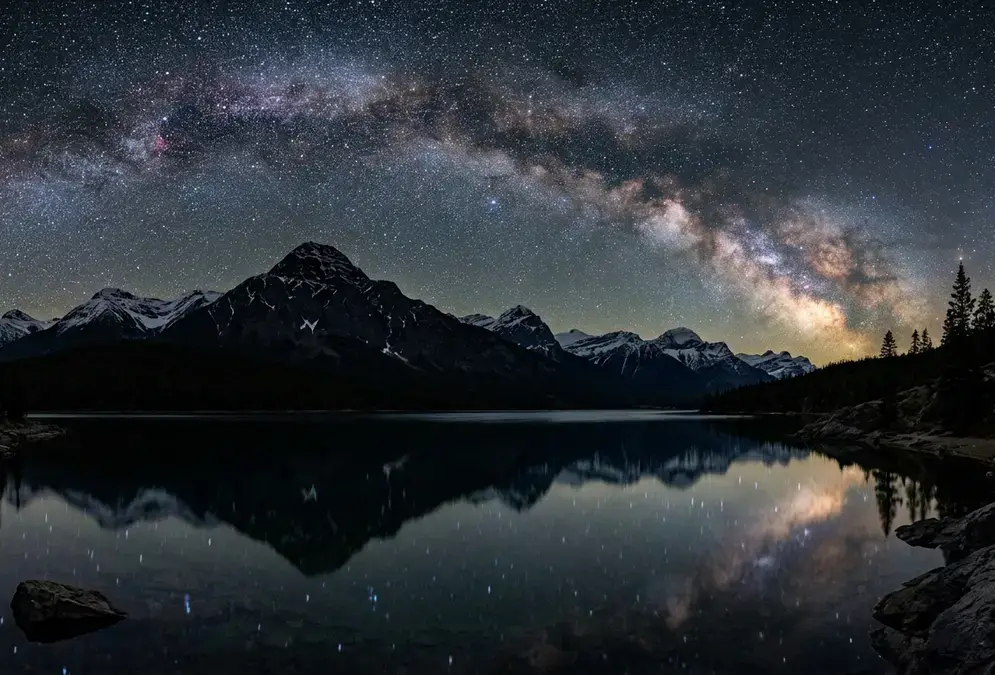
Stargazing in Jasper National Park
Jasper National Park is widely called the largest accessible Dark Sky Preserve in Canada: 11,228 km², an October Dark Sky Festival, and a 38-seat planetarium.
Site tier matters more than the campground name for what you pay. An unserviced site with showers runs $34[13], and full service with a fire pit runs $61[14]; a fire permit, if you want a campfire, is $13.75 a day[15]. Two more things trim your options in 2026: Wabasso and Whirlpool Group Campground remain closed[16], and the smaller first-come-first-served grounds are tent-sized and unserviced, with no showers and no reservations. For most stargazing trips the decision is one question: are you going in summer (Whistlers) or October (Wapiti)?
Stargazing from your tent
Camping hands you the sky without a drive, but a campground is a shared space, and its own lighting is the thing most likely to spoil your night vision. There is no park rule banning white light at the sites, so treat this as etiquette rather than regulation: use a red-light headlamp after dark, point torches at the ground, and let your eyes adapt for twenty minutes before you judge the sky. Campground quiet hours run 11 pm to 7 am, with generators permitted only from 8 am to 10 am and 5 pm to 7 pm[17], which keeps the post-midnight hours both dark and quiet.
A few practicalities. Firewood is included in the camping fee, and the Bare Campsite program requires all food and toiletries locked in a vehicle or hard-sided trailer, since coolers are not bear proof[18]. Family-friendly connector trails run from both Whistlers and Wapiti into the townsite in under fifteen minutes on foot or bike[19], which means a dark viewpoint is never a drive away. The four spots Parks Canada names for the best sky are Pyramid Island, Jasper Lake, Old Fort Point, and the Toe of the Athabasca Glacier[20]; the first three sit within easy reach of both campgrounds.
Time the moon, not just the season. The Milky Way's bright core is a summer object over Jasper, so a July or August campsite gets the densest band of stars, and a new moon keeps the faintest detail visible instead of washed out. Winter trades the core for long, cold nights, which is why most budget stargazers aim for summer or the October shoulder.
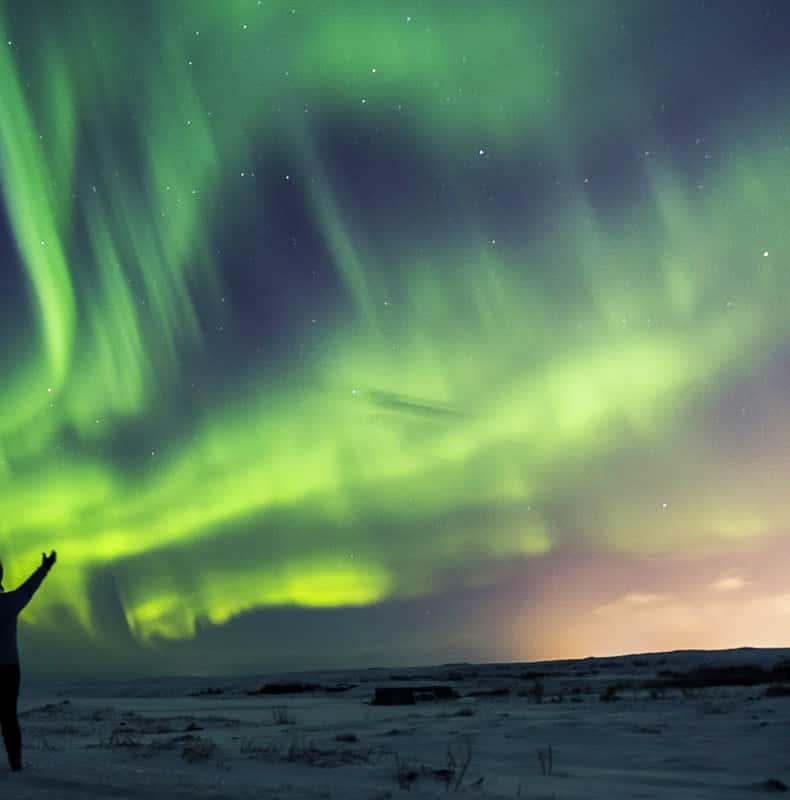
Keep the aurora in the right frame: it shows up over Jasper roughly once a week, most likely around magnetic midnight, the 11 pm to 1 am window[21]. A campground on the darker edge of town sees the weaker displays that the townsite's glow washes out. Treat a green night as a bonus on a Milky Way trip, not the reason to book; if the northern lights are the whole point, this is the wrong destination for that.
Booking windows and the October festival
The single most important date on the calendar is the reservation launch: frontcountry bookings for Jasper open Tuesday, January 27, 2026 at 8 am MT[22]. Whistlers and Wapiti's summer season are reservable, and the $11.50 online reservation fee[23] is a rounding error against the dates you are competing for. Book the day the window opens, not the week before your trip.
Recommended tours
Tours are selected for quality, not commission. I earn a small fee if you book — at no extra cost to you.
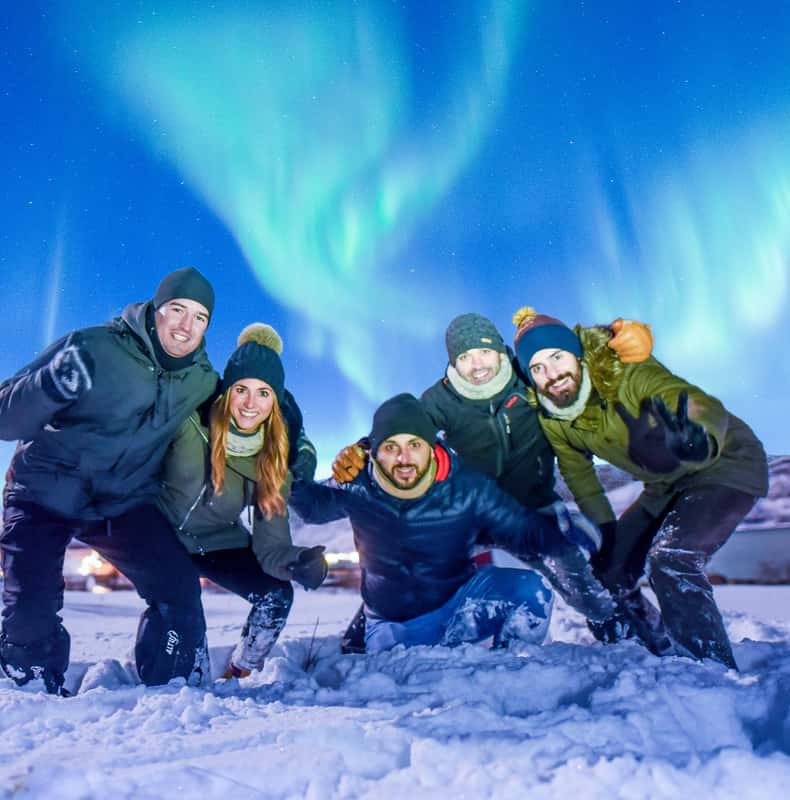
October is the month the two systems collide. Whistlers closes October 12[9], but the park marks every October as Dark-Sky Month and hosts the annual Jasper Dark Sky Festival[24], so the best camping-and-stargazing pairing is Wapiti, which stays open through October 28[10]. That makes the festival the one event worth planning a budget trip around: programming, planetarium shows, and a campground bed all in the same week. If your dates are flexible, aim for a new-moon stretch rather than the festival's exact dates, since a dark sky outranks any single evening of programming.
Featured · Article
What Is Astrotourism? The Complete Beginner's Guide
Astrotourism means travel built around dark skies: meteor showers, auroras, the Milky Way. What it means, where to go, and how to plan your first trip.
For the broader best time to go question, campers get a short answer: summer for the Milky Way core, October for the festival and shoulder-season quiet, and winter only if you accept cold, snow, and Wapiti's 40 first-come-first-served sites[11]. One budget lever is worth a look if your dates land in summer: the Canada Strong Pass runs June 19 to September 7, 2026 with free park admission and 25% off camping[25].
When camping is not the answer
Camping is the right call most of the time, but it is not unconditional. Shoulder-season cold is the honest exception: by late October, nights at the campsite sit well below freezing, and a $34 unserviced site[13] with a frozen water tap is not the bargain it was in August. Families with small kids, anyone with limited mobility, and travellers who will not sleep in the cold should price the alternative instead.
The usual fallback is Hinton, east of the park gates, where motels run roughly $151 to $248 a night[26] and the trade is plain: you leave the in-park dark sky for a commute back. Before you make that call, consider the in-park middle ground: an oTENTik keeps you under the preserve sky with a real bed and a heater for $147.50 a night[12], which is the honest option for families or cold-sensitive travellers who still want the sky. If the Hinton trade is worth it, see how the costs actually compare before you commit. But if you can take a cold night, the arithmetic stays where it started: a tent under Jasper's sky costs a fraction of a lodge bed, and it puts you in the right place when the Milky Way comes up.