Pyramid Lake and Pyramid Island
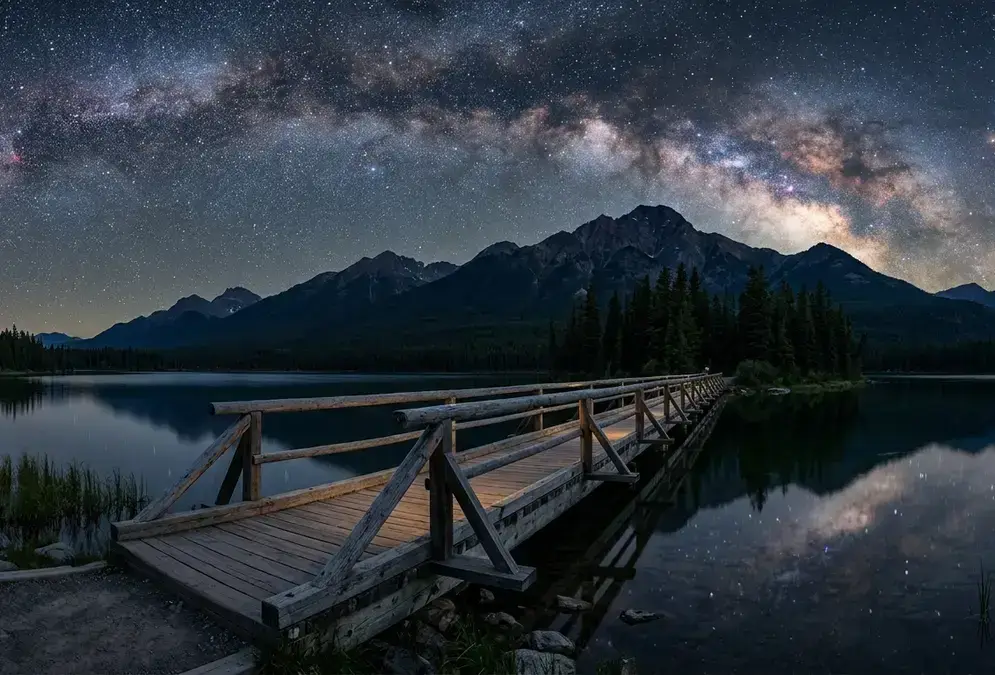
Pyramid Lake and Pyramid Island sit at the base of Pyramid Mountain, a few minutes' drive from Jasper townsite along Pyramid Lake Road[2]. A small wooden footbridge crosses from the lakeside parking lot onto the island itself, and that short walk is enough to leave the last porch light in town behind you. Parks Canada designated the surrounding park a Dark Sky Preserve in 2011 through the Royal Astronomical Society of Canada (RASC), and at more than 11,000 square kilometres, it's officially the second largest Dark Sky Preserve in the world[1], not the largest, whatever some tour copy still claims.
Pyramid Island is one of exactly four spots Parks Canada names as officially highlighted stargazing locations inside the park[1]:
- Pyramid Island
- Jasper Lake
- Old Fort Point
- Toe of the Athabasca Glacier
11,000 km²
That short list is the backbone of this guide. Pyramid Island is the easiest of the four to reach and the flattest walk, which is why families with young kids gravitate here first.
On a windless night in the new moon window, the lake surface holds a faint reflection of the Milky Way, doubling whatever's overhead. Bring a red-light headlamp for the footbridge. It isn't technical, but it's still a plank walkway over water in the dark, and fumbling for a phone flashlight ruins your night vision and everyone else's.
Old Fort Point
Old Fort Point is the second of Parks Canada's four official spots, and the only one that asks for real effort to reach. A short, moderately steep trail climbs from a trailhead a few minutes' drive from Jasper townsite, an easy walk from the lakeside lodge on Lac Beauvert if that's where you're staying, up to an exposed rocky viewpoint above the Athabasca River valley.
What the climb buys you: a genuinely panoramic sweep of sky, unobstructed by trees or canyon walls, sitting high enough that ambient valley haze stays below rather than in front of you. It's the pick for anyone who wants elevation over convenience, and unlike some of the more remote spots on this list, it works most of the year rather than only in deep winter.
Featured · Destination
Stargazing in Jasper National Park
Jasper National Park is widely called the largest accessible Dark Sky Preserve in Canada: 11,228 km², an October Dark Sky Festival, and a 38-seat planetarium.
The climb is the only real caution here. It isn't technical, but footing gets loose in the dark and the drop-offs near the top are real. A red-light headlamp matters more here than at Pyramid Island, both for your own footing and for not blinding anyone already set up at the summit.
Maligne Lake
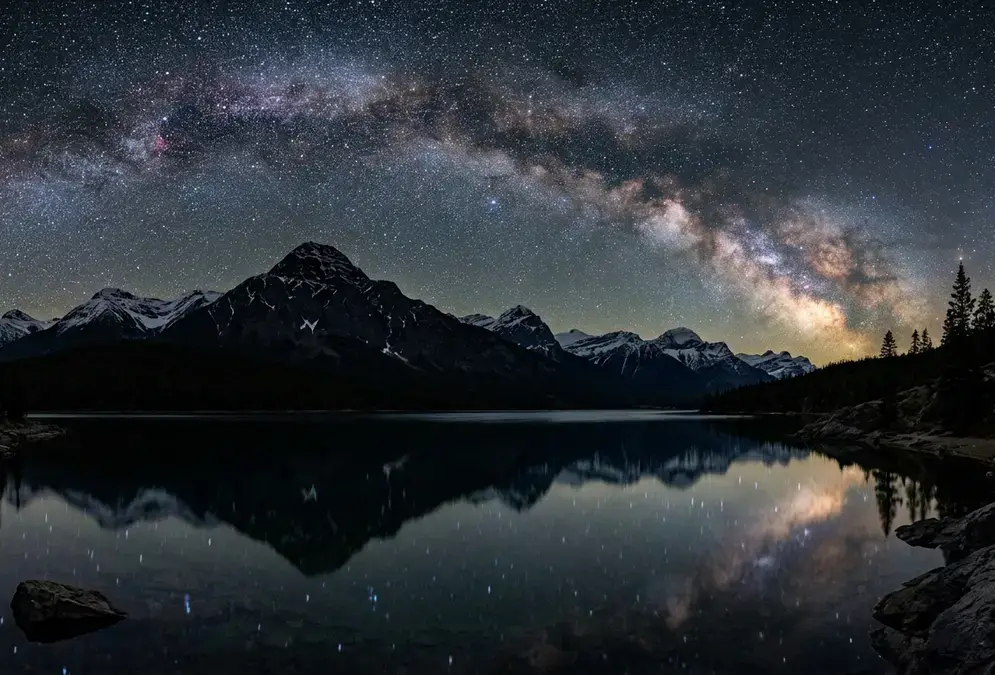
Maligne Lake is where you go once Pyramid Island and Old Fort Point start to feel too close to town. It's one of the largest glacier-fed lakes in the Canadian Rockies, home by day to the well-known Spirit Island boat tour, and the drive out runs roughly 45 minutes from Jasper townsite along Maligne Lake Road[6].
That distance is the entire point. Maligne Lake sits far enough from the townsite's light pollution that the sky reads noticeably darker than it does at the two closer spots, especially near the horizon. Spirit Island itself is boat-access only and closed after dark, so this isn't a Spirit Island stargazing trip. It's a lakeside stargazing trip that happens to share a parking lot with a famous daytime view.
The lake's size and distance from town give genuinely dark, wide-open sky compared to viewpoints closer to the townsite. Because it's a longer drive, Maligne Lake suits visitors staying overnight nearby, or anyone willing to commit to a dedicated late-evening outing rather than folding it into a shorter night.
The lake's size and distance from town give genuinely dark, wide-open sky compared to viewpoints closer to the townsite.
Toe of the Athabasca Glacier and the Icefields Parkway
The Toe of the Athabasca Glacier is the fourth of Parks Canada's four official spots, and the most remote. It sits toward the southern edge of the park, in the Icefields Parkway corridor between Jasper townsite and the Columbia Icefield, well inside the Dark Sky Preserve's boundaries.
Getting there means driving south along the Icefields Parkway, one of the most scenic drives in Canada by day and a genuinely dark, empty road after sunset. Marked pullouts line the route, and the Icefield Centre parking area gives a safe, obvious place to stop rather than pulling onto the shoulder blind. Glacier ice and mountain silhouettes frame the horizon instead of trees, which changes the character of the sky compared to the lake spots closer to town.
Recommended tours
Tours are selected for quality, not commission. I earn a small fee if you book — at no extra cost to you.
This is the spot to combine with a daytime drive rather than a dedicated night trip on its own. The road is remote and wildlife crosses it at dusk, so driving the Icefields Parkway for the first time after dark is a worse idea than driving it once in daylight and returning once the stars are out. If you're bringing a camera for astrophotography, the How to Photograph the Milky Way guide is worth reading before you're standing in the cold fumbling with a tripod. Glacier and mountain foregrounds photograph differently than open water.
Miette Hot Springs Area (via Pocahontas)
The road out to Miette Hot Springs runs through the park's quieter eastern end, and the drive itself, away from townsite lighting, is a genuine dark-sky experience on its own. It's about 61 km (roughly 45 minutes) east of Jasper townsite via Highway 16 and the narrow, winding Miette Road, and trailers and large motorhomes aren't permitted past Miette Campground[4].
Here's the detail worth getting right: the hot springs facility itself closes in the evening, so this isn't a stargazing-in-the-water spot. Pocahontas Campground, at the start of the Miette Road near the park's eastern entrance, is the more secluded option for dedicated night-sky viewing[7]. Treat the whole route as a drive-and-pull-over stargazing outing, with Pocahontas Campground as the anchor stop, rather than a session at the springs themselves.
Neither Maligne Lake nor the Miette Hot Springs area makes Parks Canada's official four-spot list, but both show up repeatedly in Jasper's own tourism board recommendations, and locals reach for them when the official spots feel crowded during the Dark Sky Festival.
| Spot | Drive from townsite | Difficulty | Official Parks Canada pick |
|---|---|---|---|
| Pyramid Island | A few minutes | Easy, flat footbridge | Yes |
| Old Fort Point | A few minutes to trailhead | Moderate climb | Yes |
| Maligne Lake | About 45 minutes | Easy, roadside | No, tourism-board pick |
| Toe of the Athabasca Glacier | 1 to 1.5 hours | Easy, roadside pullouts | Yes |
| Miette Hot Springs area (Pocahontas) | About 45 minutes | Easy, roadside | No, tourism-board pick |
Planning Your Night: Timing, Permits, and Gear
None of the five spots above require a special stargazing permit. What you do need is whatever gets you into Jasper National Park in the first place: a valid Parks Canada park pass, checked at the highway gates on the way in, day or night. Camping and backcountry travel carry their own separate permits, but pulling into a day-use lot after dark for an hour of stargazing doesn't. After the 2024 wildfire forced months-long closures of many pullouts, checking current access and recovery conditions before you head out is a sensible extra step.
Timing matters more than paperwork. Aim for the week around new moon at any of these spots. A full moon washes out everything but the brightest stars and planets, and the Milky Way core, the reason most people make this trip, disappears under a bright moon. If you can also align the visit with Milky Way core season, roughly April through October in the northern hemisphere, the galactic core arcs higher and dominates the view rather than skimming the horizon.
Bring layers regardless of season. Rockies nights drop fast even in July, and winter stargazing here means genuine cold, not the mild chill of a coastal dark-sky trip. Building a kit gradually works better than buying a telescope you won't use again. Read Stargazing Gear for Beginners for what actually matters on a first trip, and once you're standing at any of these viewpoints, basic Dark Sky Etiquette protects the experience for everyone else at the same railing: red light only, quiet voices, no headlights left running toward the viewpoint.
Wildlife and safety after dark
Elk, deer, and the occasional bear use these same roads and pullouts at dusk and after dark, so drive slower than feels necessary, especially along the Icefields Parkway and the Miette Road. At remote spots like the Toe of the Athabasca Glacier or the Miette Road pullouts, stay close to your car and to other people rather than wandering off alone for a slightly better angle. None of the five spots above are deep backcountry, but they're not lit parking lots either.
Aurora in Jasper: a bonus, not the plan
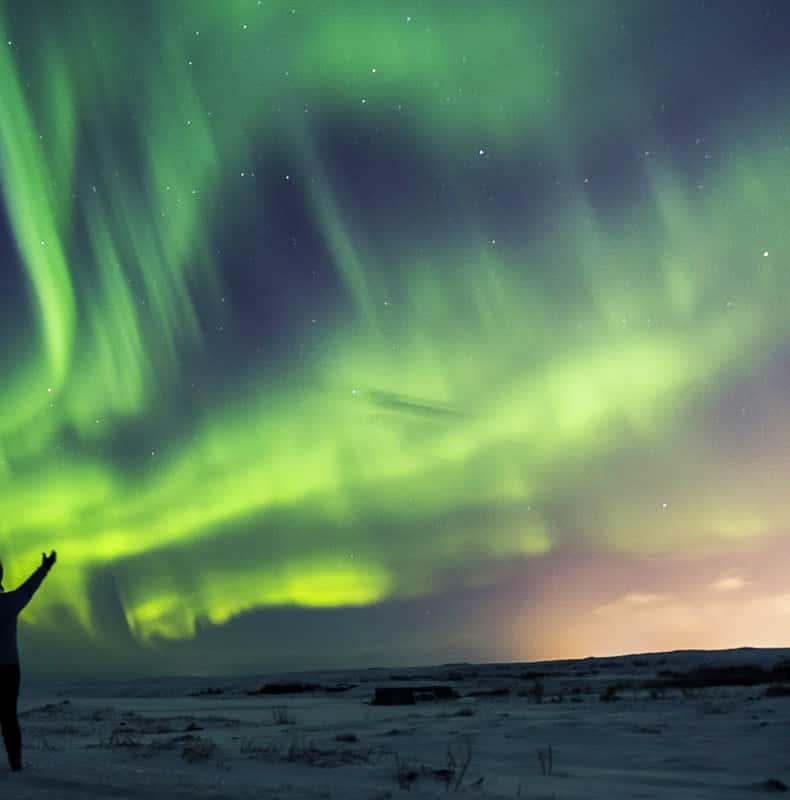
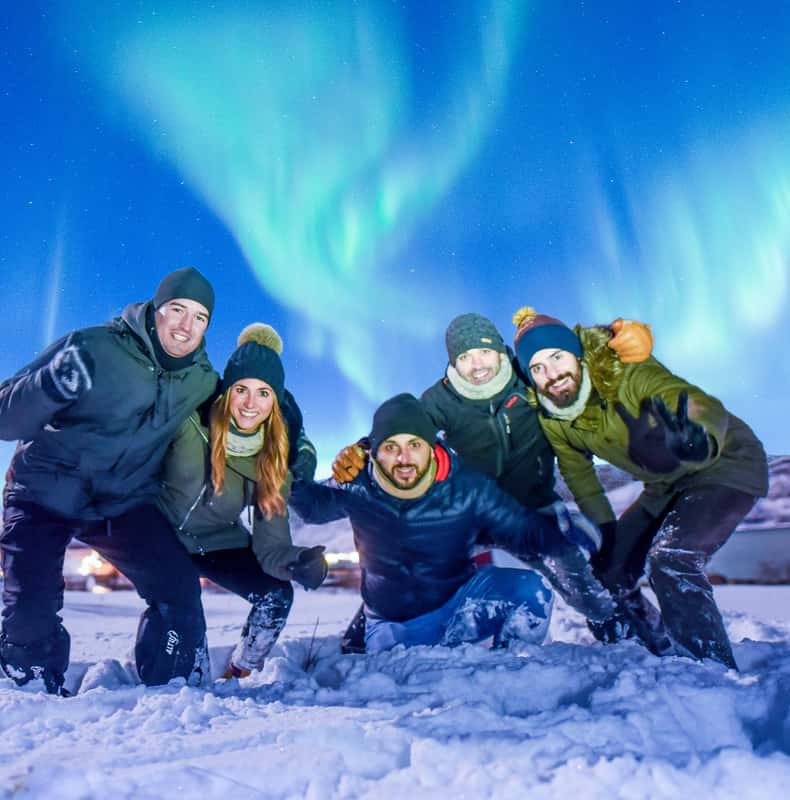
Jasper sits far enough north that aurora borealis does show up during active solar periods, and you'll see it mentioned in local tour marketing. Treat it exactly as marketing should be treated: a possible bonus, not the reason to book the trip. Jasper isn't positioned as an aurora-chasing destination the way Tromsø or Fairbanks are, and building an itinerary around a Kp forecast here sets you up to be let down by a park that's genuinely good at the thing it does promise: accessible, moderate-cost Milky Way viewing. If you want to track the odds anyway, Kp Index Explained covers what the number means and how to read it.