Two Rockies Parks, One Real Dark-Sky Difference
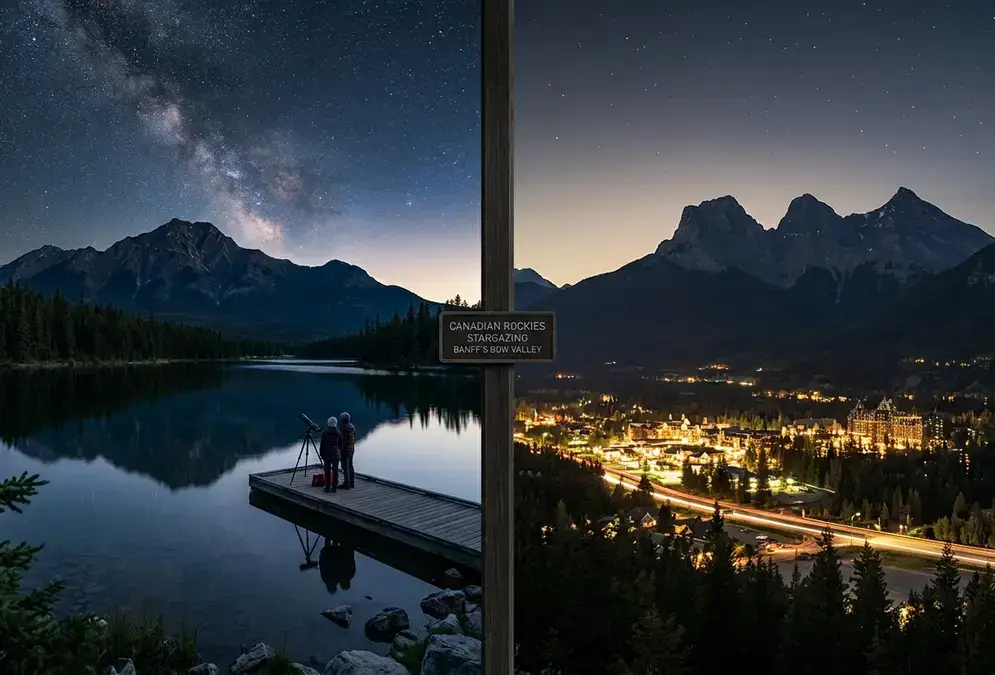
Drop a pin on a map of the Canadian Rockies and Jasper and Banff look almost interchangeable: same mountain range, same glacier-fed lakes, same Icefields Parkway running between them, the same highway signage pointing to trailheads and viewpoints on both sides. Travelers planning a Rockies trip often assume the two parks are a package deal, and driving-distance-wise they nearly are. For stargazing specifically, though, one difference matters more than distance or scenery: only Jasper carries a formal dark-sky designation.
Jasper National Park was named a Royal Astronomical Society of Canada (RASC) Dark-Sky Preserve in March 2011, one of 28 sites on RASC's own Dark-Sky Sites list, and Banff is not among them[1]. Some travel blogs describe a 2017 Banff dark-sky designation, but that claim doesn't show up on RASC's official site or on Parks Canada's dark-sky pages, so it's worth treating as unverified rather than repeating as fact. Banff's night skies are genuinely dark once you're clear of the townsite (a large mountain park earns that much on its own), but it doesn't carry the paperwork Jasper does, and it doesn't have a body like RASC putting its name behind that darkness in writing.
That single fact reshapes the rest of this comparison. Everything from festival programming to how each park markets its own night sky, to which one gets cited first in a "best dark sky parks" roundup, follows from who actually holds the designation. It's not a knock on Banff's real, physical darkness away from town; it's a distinction between a park with paperwork and a park without it.
| Jasper | Banff | |
|---|---|---|
| RASC Dark-Sky Preserve status | Yes, designated March 2011 | Not on RASC's official list |
| Distance from Calgary | ~429 km (via Icefields Parkway) | 128 km |
| Distance from Calgary airport | Considerably further | ~144 km, ~90-minute drive |
| Dedicated dark-sky festival | Jasper Dark Sky Festival (October) | None |
| Park character | Larger, less-visited, quieter town | Busier, more day-trip traffic |
| Best for | A dedicated dark-sky trip | An easy add-on to a Calgary trip |
Jasper's Case: A RASC-Designated Preserve and Its Own Festival
Jasper's preserve covers roughly 11,000 square kilometers, described at its 2011 designation as the world's largest Dark Sky Preserve, and specifically the largest accessible one, because the town of Jasper sits inside the preserve boundary rather than requiring a drive to reach dark ground[2]. That's a genuinely rare setup among the Best Dark Sky Parks in the World: most large dark-sky reserves keep towns and lodging outside their darkest zones entirely.
The park backs that designation with programming. The Jasper Dark Sky Festival runs every October (check the current year's exact dates before booking, since they shift), with talks, telescope stations on townsite streets, and dome shows at this lakeside lodge's own Planetarium on the Lac Beauvert shoreline, not a separate facility visitors have to drive to[3]. No other Rockies park stages anything comparable.
~11,000 km²
None of this is a knock on Banff's actual skies. It's a note about what Jasper has built around its skies: an official designation, an annual event calendar, and a flagship lodge that treats the night sky as a programmed activity rather than an incidental view. A trip built around that calendar has a fixed point to plan against, rather than hoping a clear night happens to line up with your dates.
Banff's Case: 128 Kilometers From Calgary, Not 400
Banff wins on a different axis entirely: proximity. Parks Canada's own visitor page puts Banff townsite 128 km (80 miles) west of Calgary, with Calgary International Airport roughly 144 km away, about a 90-minute drive from touchdown to townsite, and notes that parking at its own popular destinations "fills up quickly"[4]. Jasper sits considerably further out, reached via Edmonton International Airport or via Calgary along the Icefields Parkway, a half-day's drive rather than a quick hop, with no airport of its own inside the park.
That gap changes what kind of trip each park suits. Banff works as a genuine weekend add-on: fly into Calgary Friday night, be in the park by Saturday morning, home Sunday, with time left over for a Monday flight home. Jasper asks for a longer commitment, either a dedicated multi-night stay built around the drive in and out, or a leg tacked onto a Banff trip via the Parkway once you're already out there.
The parking note reflects a broader pattern: Banff absorbs heavy day-trip traffic from Calgary that Jasper, farther from any major airport, simply doesn't see as much of. For a stargazer, that translates into a practical difference at the viewpoint itself: Banff's best-known pullouts fill with cars well before dark on a clear night, while Jasper's equivalents tend to stay open later into the evening before anyone else shows up. None of that makes Banff's skies worse once you're actually looking up; it just means getting to a good, unlit spot takes a bit more planning and a bit more patience with other cars doing the same thing.
Park Character: Bigger and Quieter vs Busier and Closer
Beyond the stargazing paperwork, the two parks feel different to actually be in. Jasper is the larger, less-visited of the two, with a smaller, quieter townsite and a bigger contiguous stretch of land sitting away from any real light source. Banff townsite is busier and more built-up, oriented as much toward Calgary day-trippers as overnight guests, with a denser strip of hotels, restaurants, and shopfronts lit up well past dark.
Recommended tours
Tours are selected for quality, not commission. I earn a small fee if you book — at no extra cost to you.
Neither character is better; it depends what you want the evenings to feel like. A quieter townsite means less light pollution bleeding into your sky and fewer people at whatever viewpoint you pick, so a modest Milky Way arc reads clearly instead of competing with streetlight glow. A busier townsite means more restaurants open past 9 PM and an easier time filling a rainy or cloudy evening with something other than staring at an overcast sky, which matters if your trip has only one or two nights to spare on stargazing anyway.
Featured · Destination
Stargazing in Jasper National Park
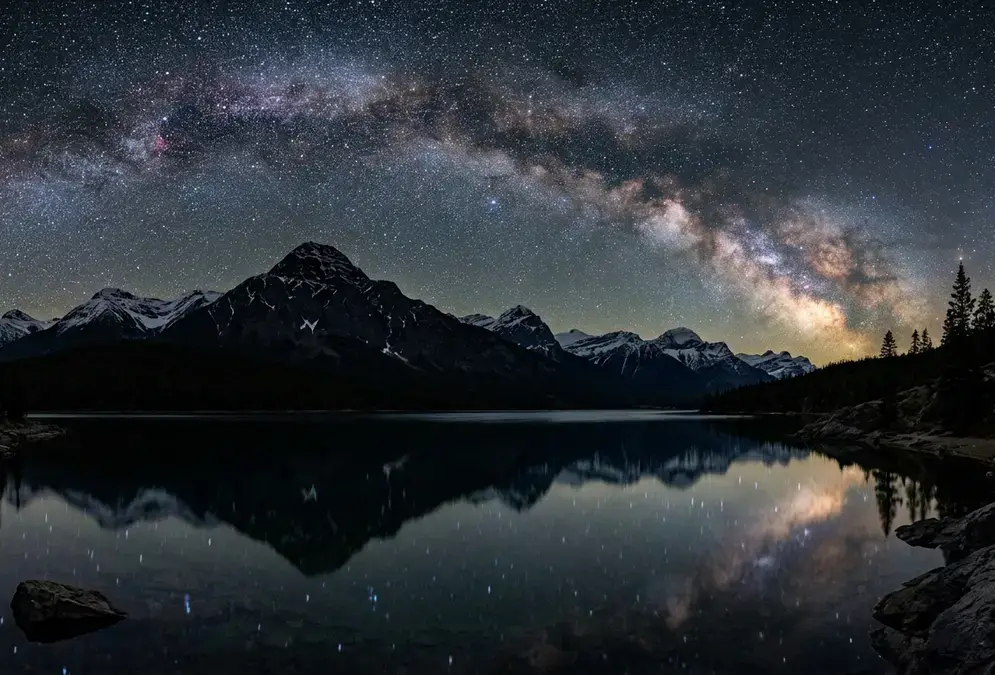
Jasper National Park is widely called the largest accessible Dark Sky Preserve in Canada: 11,228 km², an October Dark Sky Festival, and a 38-seat planetarium.
Jasper's signature sights lean toward Pyramid Lake, Maligne Lake, Mount Edith Cavell, and the glacier country along the Icefields Parkway, all reachable without fighting for a parking spot. Banff's signature sights (Lake Louise, Moraine Lake, the Banff Gondola) draw some of the heaviest day-trip crowds in the entire Canadian Rockies, which is also why its skies, while genuinely dark outside town, sit under a bigger light dome from nearby development than Jasper's do.
Aurora, the Icefields Parkway, and Combining Both Parks
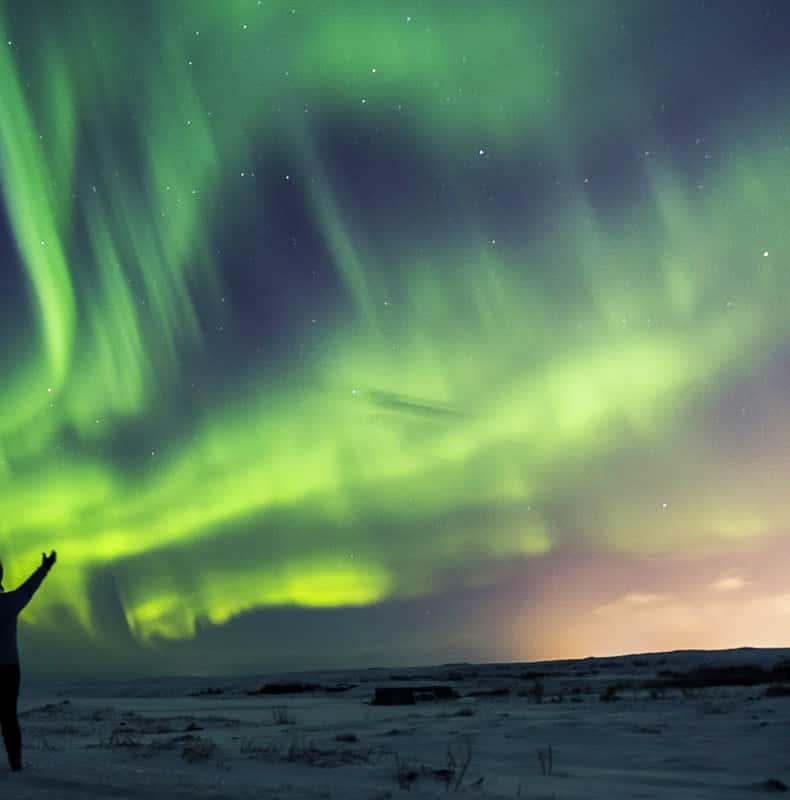
Both parks sit far enough north that aurora does show up during active solar periods, tracked with the same Kp index aurora-chasers in Tromso or Fairbanks watch. Neither park markets itself as an aurora destination, though, and neither should be booked with the northern lights as the main event the way a Tromso or Fairbanks trip is. Treat any aurora sighting in Jasper or Banff as a bonus on top of a Milky Way and dark-sky trip, not the reason for booking one. For the mechanics behind that bonus, see how the Kp index actually works, including which threshold you need at this far-south a latitude.
The honest answer for most travelers is that you don't strictly have to choose. Parks Canada markets a combined Banff-and-Jasper road trip along the Icefields Parkway as a single itinerary[5], and plenty of visitors drive it in one direction, sleeping a night or two in each park rather than committing fully to one. Glacier View Lodge, the only overnight stay built directly at the Columbia Icefield partway along the Parkway, works as a genuine midpoint: a stargazing session and a glacier walk between a Banff night and a Jasper one, without adding a separate detour to either park's own attractions.
Read next · Lodge
Glacier View Lodge
Glacier View Lodge sits above the Columbia Icefield Discovery Centre on the Icefields Parkway — Jasper's only on-glacier stay, with a stargazing package.
The Verdict: Which Rockies Base Fits Your Trip
If stargazing is the actual point of the trip, not a side activity squeezed between hikes, Jasper is the more deliberate choice. It's the park with the RASC paperwork, the October festival, and a lodge that put a planetarium on its own shoreline. It also asks more of you logistically: the longer drive in, the smaller town for evening downtime, the need to plan around festival dates if that's the draw. Whichever park you land on, moon phase matters more than which side of the Parkway you're standing on, so check the new-moon window before locking in dates, and hold your festival-week booking loosely enough to shift a night if the forecast turns against you.
If stargazing is one activity among several (hiking, a Calgary connection, a shorter trip window), Banff is the easier add-on. It's genuinely dark once you're clear of the townsite, it's 128 km from Calgary instead of a half-day's drive, and it doesn't ask for the dedicated multi-night commitment Jasper does. What it gives up is the certificate on the wall: no RASC designation, no dedicated festival, and more competition for the darkest pullouts on a clear night.
The version most people actually end up doing: drive the Icefields Parkway, spend a night or two in each park, and let Jasper's designation set expectations for the darkest stretch of the trip while Banff handles the easy arrival and departure. Pack for genuinely cold, clear Rockies nights either way, even in midsummer once the sun drops behind the ridgeline; the stargazing gear for beginners guide covers what that kit actually needs to include.