
Jasper's Dark-Sky Preserve doesn't have an off-season, your comfort does
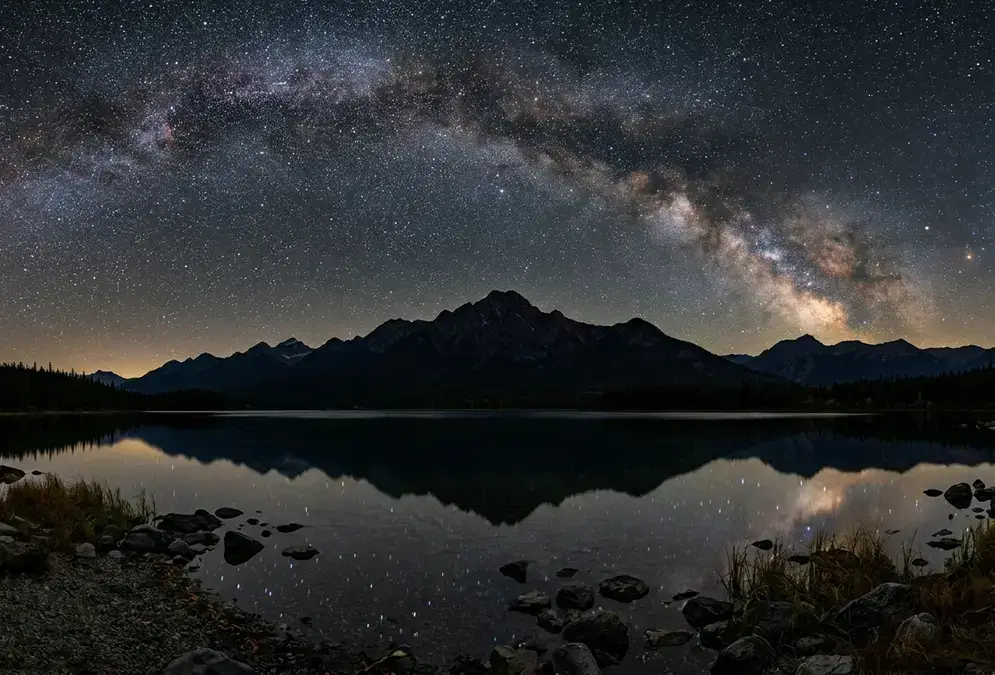
Jasper National Park's Dark-Sky Preserve is one of the largest Dark Sky Preserves in the world, designated by the Royal Astronomical Society of Canada (RASC), and it is open for stargazing 365 nights a year[1]. That fact makes the usual framing of a best-time question a little misleading. The sky itself does not get darker in October than it does in July; what changes, sharply, is how long the darkness lasts each night, how cold you will be standing in it, and whether the mountain road you drove in on is even open.
Three broad windows compete for the recommendation. Late September through October balances early darkness with mild temperatures and lands inside the annual Dark Sky Festival. Winter, November through February, hands you the longest true-dark hours of the year, plus the reliable Geminid meteor shower, if you are willing to dress for it. Summer makes the Icefields Parkway and every trail effortless to reach, but the trade-off is a sky that does not turn properly dark until close to midnight. None of the three is the wrong answer. They suit different travelers, and the rest of this guide works through why, season by season.
Featured · Destination
Stargazing in Jasper National Park
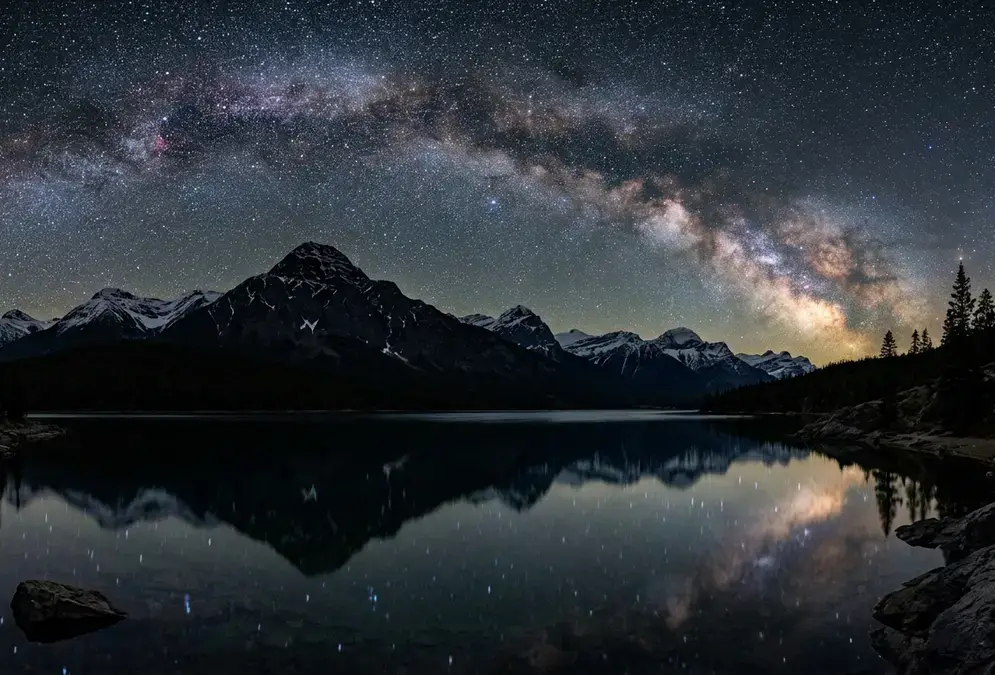
Jasper National Park is widely called the largest accessible Dark Sky Preserve in Canada: 11,228 km², an October Dark Sky Festival, and a 38-seat planetarium.
Late September through October: the strongest all-around pick
If this guide has one recommendation to take away, it is this: aim for the back half of September into October. Nights darken noticeably earlier than they do in summer, days stay warm enough for hiking or driving the Icefields Parkway without four layers, and the shoulder-season crowds thin out well before winter's cold sets in. Jasper sits among a small group of exceptional dark-sky destinations profiled in best dark sky parks in the world, and this window shows off why it belongs there.
September specifically gets singled out as the balance month: warm enough during the day for the park's usual roster of hikes and drives, with nights that turn dark early without yet being punishing[4]. October adds one more reason to book: the park's Dark Sky Festival runs across several weeks that month, mixing free and ticketed programming, guided night walks, and telescope stations. This piece is not the place for festival dates or ticket details, since those shift year to year and belong to a dedicated guide to the Jasper Dark Sky Festival, but if your travel dates are flexible, checking whether they overlap with the festival calendar is worth five minutes of research.
| Season | Darkness | Typical night conditions | Best for |
|---|---|---|---|
| Late Sept-Oct | Falls early, moderate length | Cool, comfortable in layers | Balance of comfort and dark skies, Dark Sky Festival |
| Winter (Nov-Feb) | Longest of the year, dark by early evening | Well below freezing | Longest viewing window, Geminids, Orion |
| Summer (Jun-Aug) | Shortest of the year, true dark near midnight | Mild days, cool nights | Easy logistics, hiking, wildlife, driving |
Spring gets far less attention in the available research than autumn does, and that gap is worth being honest about rather than papering over. April and May likely offer something similar in reverse, lengthening daylight rather than shortening it, but the evidence supporting spring as a stargazing window is considerably thinner than the case for September and October. Treat it as a plausible second option, not a confirmed one.
Winter (November-February): the longest darkness, if you can take the cold
Winter is the extreme-sports answer to when you should stargaze in Jasper: the darkness is real, and so is the cold. From November through February, the sky reaches full darkness by early evening rather than making you wait until 10 or 11 pm, so a proper stargazing session fits before a reasonable bedtime rather than after one. Orion, with its unmistakable three-star belt, climbs into the eastern sky through this stretch, and the reliable meteor showers guide places the Geminid meteor shower squarely in mid-December, one of the most consistent annual displays anywhere[3].
The cold is not a minor detail. Average winter highs in Jasper run roughly -8°C to -7°C, with lows dropping to around -17°C to -15°C across December through February[2], and some nights go colder still. Heavy snowfall through the winter months can also affect road conditions on mountain routes like the Icefields Parkway, so build flexibility into any itinerary that depends on driving after dark. None of this rules winter out. Plenty of dedicated stargazers prefer it precisely because the dark arrives without waiting, but it does mean the packing list matters as much as the calendar.
-17°C to -15°C
If cold-weather stargazing is new to you, treat this season as a commitment rather than a casual add-on to a ski trip. Layered insulation, hand and toe warmers, and a vehicle you actually trust on winter roads all matter more here than they do for the shoulder-season crowd.
Summer (June-August): the easiest season, the weakest sky
Summer is when Jasper is easiest to visit and hardest to stargaze in, and both are true for the same reason: the sun barely leaves. Every trail is open, the Icefields Parkway is clear, wildlife is at its most active, and logistics are about as simple as a Rockies trip gets. None of that helps once you actually want to see stars.
Recommended tours
Tours are selected for quality, not commission. I earn a small fee if you book — at no extra cost to you.
In midsummer, sunset in Jasper does not arrive until after 10 pm, and the sky does not reach true darkness until closer to midnight[4]. That is a real inconvenience if you are used to destinations where full dark falls by 9 or 10. It means committing to a very late night, or an early session before dawn, to get the kind of sky that a winter evening hands you for free by 6 or 7 pm.
Average summer highs run around 13°C to 17°C, with July the warmest month on average[2]. Comfortable days, easy access, genuinely short astronomical nights. Summer is the right call if stargazing is one item on a longer Rockies itinerary rather than the entire point of the trip.
The new-moon window: a monthly reset that layers on top of season
Season decides how long the darkness lasts. Moon phase decides how dark that darkness actually is, and it resets roughly every 29.5 days no matter what month it is. The best nights for stargazing anywhere, Jasper included, are clear nights that fall during a new moon, when the Moon contributes essentially no sky glow of its own[4].
That means the seasonal advice above, aim for late September through October, or accept winter's cold in exchange for its darkness, is only half the planning. Once you have settled on a season, check the new-moon dates for your actual travel window rather than assuming any night in a good month will do. A trip booked for the strongest week of October can still land on a bright, nearly full moon if you do not check first.
The mechanics of moon phase, twilight length, and how both interact with a destination's latitude apply everywhere, not only in the Rockies. When to stargaze works through the full logic, including how to read a moonrise and moonset table so a bright moon does not automatically rule out a night that is genuinely dark for the hours you will actually be outside.
Aurora is a possible bonus here, not a reason to book the trip
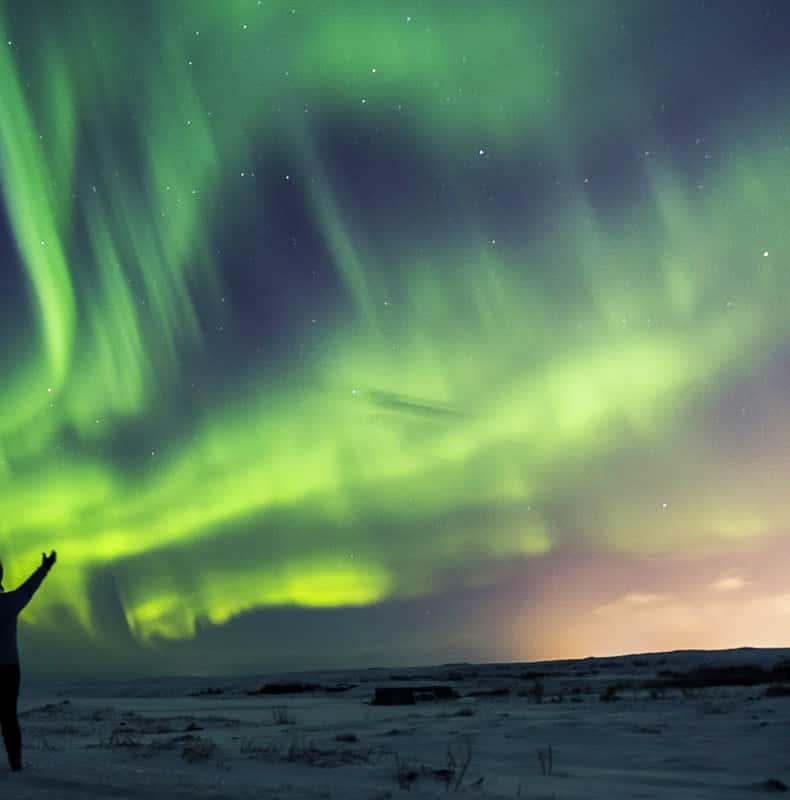
Jasper sits far enough north that the aurora borealis does show up, with sightings most commonly reported from September through November and again from February through March[3]. That overlaps neatly with both of the seasons already recommended above for entirely different reasons, which is a useful coincidence rather than the point of going.
Treat any aurora sighting in Jasper as a bonus, not a plan. This is not a destination built around guaranteed displays the way Tromsø or Fairbanks are, and building a trip around seeing the northern lights in Jasper sets an expectation the park was never designed to meet. If geomagnetic conditions line up on a clear night during your stay, you will know it when you see it. If they do not, you still came for the Milky Way and the Rockies skyline, and that part was never left to chance.
For anyone who wants to understand what actually drives a good aurora night, in Jasper or anywhere else, the Kp index explains the geomagnetic scale forecast apps are built around, along with the cloud cover, moon phase, and darkness that matter just as much as the number itself.