
Wildlife viewing along Maligne Lake Road
Jasper's elk population today runs roughly 300 to 400 animals[12], down sharply from a historic peak near 3,000 in the 1930s, and Maligne Lake Road is the single corridor in the park where a slow drive turns up more than one species. It runs from the townsite past the closed Maligne Canyon turnoff out to the lake itself, through wetlands, conifer forest, and open meadow that different animals use for different reasons depending on the hour.
300-400
Along the road you might see:
- Elk, grazing wetland edges and roadside meadows, especially near dawn
- Bighorn sheep, working the rock cuts and gravel pullouts
- Black bears, and occasionally grizzlies, moving along the tree line
- Moose, in the wetland pockets past the lake turnoff
Bighorn sheep also turn up reliably on Highway 16 near Miette Road, at Old Fort Point, on the access road into Miette Hot Springs, and at Wilcox Pass further south on the Icefields Parkway[2]. None of these spots require a permit or a guide, just a car, a slow pace, and a willingness to pull over.
Spring and fall bring the heaviest wildlife traffic. In midsummer, Maligne Lake Road gets busy enough that some animals shift toward Pyramid Lake Road and Old Lodge Road instead, both a few minutes from the townsite. Time your drive against the same low-sun hours you'd use for stargazing, and see when to stargaze for how those windows line up with astronomical twilight.
A quieter alternative near the lodges
Pyramid Lake Road, a few minutes from Fairmont Jasper Park Lodge, carries the same elk traffic as Maligne Lake Road without the extra drive time. It's the route most Jasper locals use for a quick evening wildlife loop, and the same stretch doubles as one of the park's better stargazing pullouts once the animals have bedded down.
Athabasca Glacier and the Icefields Parkway
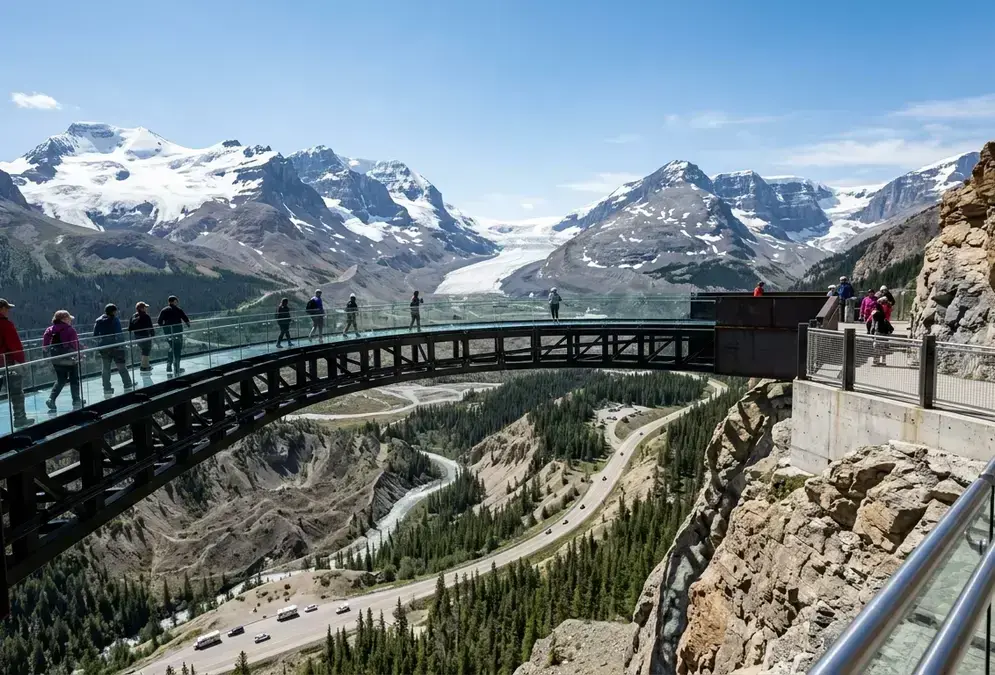
The Columbia Icefield is the largest icefield in the Rocky Mountains, straddling the boundary between Jasper and Banff national parks along the Icefields Parkway. The signature way to see it combines two different experiences: the Ice Explorer glacier tour, an all-terrain bus that drives directly onto the Athabasca Glacier so you can walk on real glacial ice, and the Glacier Skywalk, a glass-floored platform cantilevered 280 meters (918 feet) above the Sunwapta Valley[3].
Book the combined tour and budget close to two hours including transfers[4]. There are no restrooms between stops, so use the facilities at the Columbia Icefield Centre before boarding. Meltwater on the ice is genuinely cold, and the wind at the Skywalk's edge cuts harder than the parking lot temperature suggests, so a windproof layer matters more than how warm the day looks from the car.
Dining at the Columbia Icefield Centre afterward is the easiest way to warm back up, and it's the only real food option along this stretch of the parkway unless you've packed your own.
What the combined tour actually involves
Both experiences run from the same visitor center and share a shuttle system, so you don't drive between them yourself. The Ice Explorer stop puts you directly on the glacier's surface for a short guided walk; the Skywalk stop is a brief platform visit with a longer approach trail on either side. Neither requires hiking fitness, which makes this the most accessible glacier encounter in the park for visitors who aren't up for the Wilcox Pass trail nearby.
Miette Hot Springs
Miette Hot Springs sits about 45 minutes from Jasper townsite via Miette Road, itself a good stretch for spotting bighorn sheep on the way. The water surfaces at 54°C (129°F), the hottest source in the Canadian Rockies, then gets cooled to roughly 40°C (104°F) in the main soaking pool, with a cooler 29°C pool alongside it for easing in gradually[5].
Featured · Destination
Stargazing in Jasper National Park
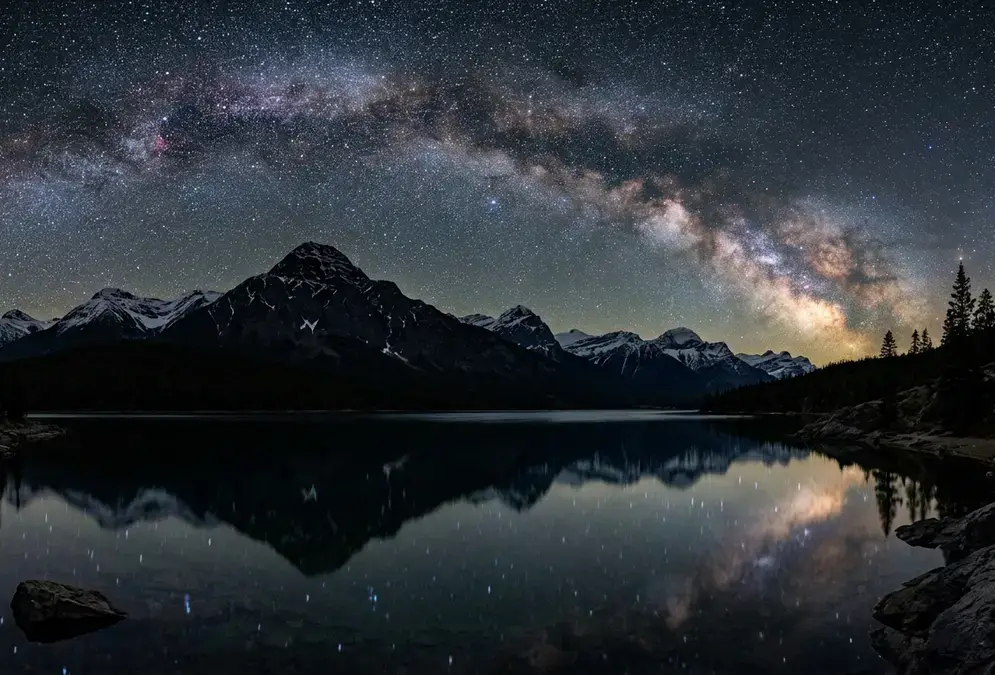
Jasper National Park is widely called the largest accessible Dark Sky Preserve in Canada: 11,228 km², an October Dark Sky Festival, and a 38-seat planetarium.
The 2026 season opens May 15, with hours running 11 a.m. to 9 p.m. daily and last entry at 8:30 p.m. Admission is $19.75 for adults and $17.25 for youth and seniors[13]. It's first-come, first-served, tickets in person only, no online booking, so arriving right at opening avoids the midafternoon queue.
Soaking here after a cold morning on the Icefields Parkway does something a heated indoor pool can't: steam rising off 40°C water against Rockies air that's still carrying the morning chill. It pairs naturally with a stargazing trip built around the best dark sky parks in the world, where Jasper's own Dark Sky Preserve sits alongside some of the planet's darkest protected skies.
Why the cooler pool matters
The 29°C pool isn't an afterthought. Going straight from a Rockies parking lot into a 40°C soak works for most people, but the cooler pool gives kids, older visitors, and anyone still adjusting to elevation a gentler way in before the main pool's heat becomes the point.
Jasper SkyTram
The Jasper SkyTram climbs Whistlers Mountain just outside town, trading a multi-hour hike for a quick aerial ride to alpine terrain most visitors would otherwise skip. 2026 pricing runs CA$49.30 for adults, CA$26.20 for youth (6-15), free under 5, with a family package at CA$124.80[7]. The tram runs seasonally, roughly April through late October, and temperatures drop noticeably as you climb: about 2°C cooler at the lower station and up to 12°C cooler at the upper station compared to the townsite. Pack a layer even if it's warm when you board.
From the upper station, the Whistlers Mountain summit trail is 1.4 kilometers with about 200 meters of elevation gain, a 30-45 minute walk that's genuinely easy by alpine standards[8]. The view from the top takes in the Athabasca River valley, the townsite, and on a clear day, a long stretch of the Icefields Parkway.
Read next · Lodge
Fairmont Jasper Park Lodge
Fairmont Jasper Park Lodge hosts the Jasper Planetarium on its own Lac Beauvert grounds: dome shows, telescope tours, and a two-year rain-check guarantee.
Packing for the summit
A fleece or windbreaker that packs small is enough for most days. Wind at the upper station matters more than raw temperature, so something that cuts wind beats something rated for deep cold that you'd only need in midwinter, when the tram isn't running anyway.
What's closed right now: Maligne Canyon and Mount Edith Cavell
Two of Jasper's best-known daytime attractions are not currently accessible, and it's worth being upfront about that rather than let an outdated itinerary waste a day of your trip.
Maligne Canyon, a limestone gorge carved into bedrock deposited roughly 365 million years ago, narrowing to 2 meters across in places while dropping more than 50 meters deep[9], is closed for the entire 2026 season while Parks Canada assesses and repairs damage from the 2024 wildfires[10]. No reopening date has been confirmed.
Cavell Road, the only access point for Mount Edith Cavell, Angel Glacier, and the Edith Cavell Meadows trail, remains closed as well. The lower 3 kilometers of road sustained wildfire damage; a geotechnical assessment wrapped up in October 2025, and the closure was still under Parks Canada review heading into the 2026 season[11]. Because Cavell Road is the only way in, every trail that starts from it is currently off-limits too, not just the road itself.
Check Parks Canada's What's Open page for Jasper National Park before you build your itinerary around either site. Closures like this shift as rehabilitation work progresses, and a five-minute check saves a wasted morning. For the wider picture — which stargazing spots and pullouts have reopened, whether the Dark Sky Festival is back, and how the burned landscape affects night viewing — read how the wildfire changed Jasper's Dark Sky Preserve.
Planning daytime activities around your dark-sky nights
Jasper's appeal is that it doesn't force a choice between daytime sightseeing and a real shot at dark skies. Most of what's covered above runs during daylight hours that don't compete with your stargazing plans at all, which is part of what makes this park different from a long-haul aurora trip where every clear night matters and every day is recovery time.
| Activity | Price | Duration | Season |
|---|---|---|---|
| Wildlife drive (Maligne Lake Road) | Free | 1-3 hours | Year-round, best spring & fall |
| Columbia Icefield tour (Ice Explorer + Skywalk) | Paid, book ahead | ~2 hours incl. transfers | Seasonal, summer |
| Miette Hot Springs | $19.75 adult / $17.25 youth-senior | 1-2 hours | May 15 through fall |
| Jasper SkyTram | CA$49.30 adult | 1-2 hours incl. summit walk | April to late October |
A reasonable two-day split looks like:
- Day one: morning wildlife drive on Maligne Lake Road, afternoon at Miette Hot Springs, dark-sky viewing after dinner
- Day two: the Icefields Parkway and Columbia Icefield tour, SkyTram on the way back if daylight allows, another night under the preserve's skies
If this is your first real stargazing trip, stargazing for beginners covers dark adaptation and what to look for before you spend a night out in the cold learning it the hard way. None of it requires gear beyond warm layers and patience, the same two things that make the daytime activities above worth doing properly rather than rushing through them.
If you're visiting during the Dark Sky Festival
October's Dark Sky Festival adds a packed evening schedule to whatever you've already planned during the day. Book daytime activities for the morning and early afternoon during festival week, since evening slots at the Jasper Planetarium and other festival venues sell out first and shape the rest of your schedule around them.